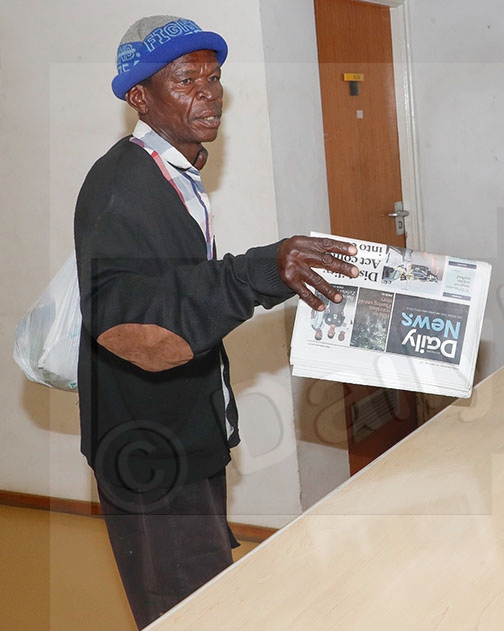
Readers warmly embraced the revamped DailyNews newspaper, with many celebrating it as a modern and more engaging evolution of a paper that has long shaped Botswana’s public conversation.Among those impressed were Mr Duncan Balothanyi and Mr Benson Goatweng, who both applauded the cleaner layout, richer visuals and expanded editorial depth, noting that the refreshed design felt more contemporary while still honouring the publication’s heritage. Their reactions echoed a broader public sentiment that the new look not only revitalised the reading experience, but also reinforced the DailyNews’ enduring role as a unifying national voice and a platform for storytelling across the country.
Blog
-
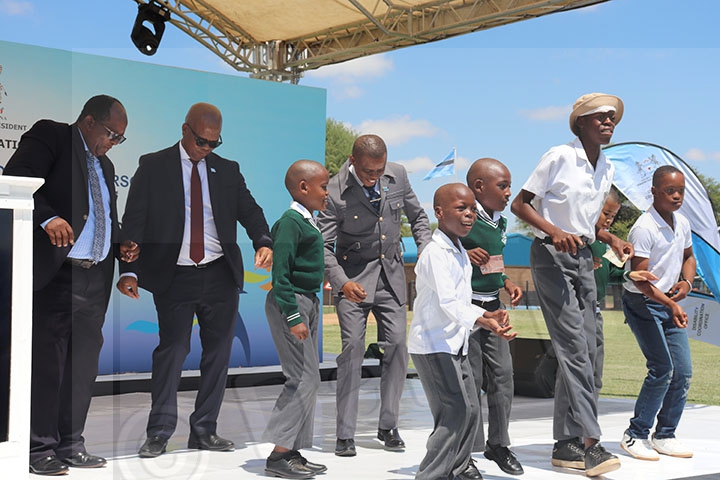
Disability Act Comes to Effect
The Minister for State President, Mr Moeti Mohwasa has declared the official commencement of Persons with Disability Act of 2024, which aims to advance the rights of persons with disabilities and promote inclusion and equal opportunities.
He said in addition to aligning with the United Nations Convention on the Rights of Persons with Disabilities, which Botswana was party to, the legislation also resonated with the government’s commitment to being human rights-based.
“This historic moment signifies that the rights of persons with disabilities are now fully recognised and enforceable under the law,” said the minister at the UN International Day of Persons with Disabilities Commemoration held in Jwaneng yesterday.
Consequently, Mr Mohwasa noted that the official commencement of the Act implied that the Disability Coordination Office and the National Disability Council were fully operational, while the regulations defining a person with disability had been finalised. He noted that this development paved way for the effective implementation of the statute, urging all institutions to immediately align their operations with the Act.
The Minister underscored the need to adopt inclusive programmes through providing accessibility in all public buildings and transport to cater for persons with disabilities, as well as getting rid of all barriers that were against the new framework.
“With the Act now in force, we call on all institutions, communities and citizens to take immediate action. Public buildings, businesses and transport must meet accessibility standards. All forms of communication must be inclusive and the attitudinal barriers that hinder full participation must be dismantled,” he said.
Furthermore, Mr Mohwasa implored persons with disabilities to unapologetically stand by their rights as espoused by the law and utilise all opportunities availed to them. He also appreciated the role played by care givers of persons with disabilities.
However, while he appreciated that Botswana had made strides in advancing the rights of all citizens, he said there was need for further action to close all gaps to ensure no one was left behind.
“We are committed to creating systems that respond to the need of every citizen, particularly those who are historically faced with barriers to opportunities,” he said.
For her part, the Disability Coordination Officer Director, Ms Peggy Garebaitse noted that creating an inclusive society called for celebrating diversity and promoting full participation of persons with disabilities.
She noted that this also extended to ensuring equal access to health services, education and social protection, among other essentials for the benefit of the larger society.
“Inclusive societies amplify the voices of the marginalised groups, empowering them to contribute to sustainable development and advancement of human rights,” she noted.
Ms Garebaitse said Botswana had a significant number of persons with disabilities, and therefore excluding them from full participation was tantamount to hindering the collective growth of the country. The commemoration was held under the theme: Fostering Disability-Inclusive Societies for Advancing Social Progress.
-
The A1 Rush and Festive Season
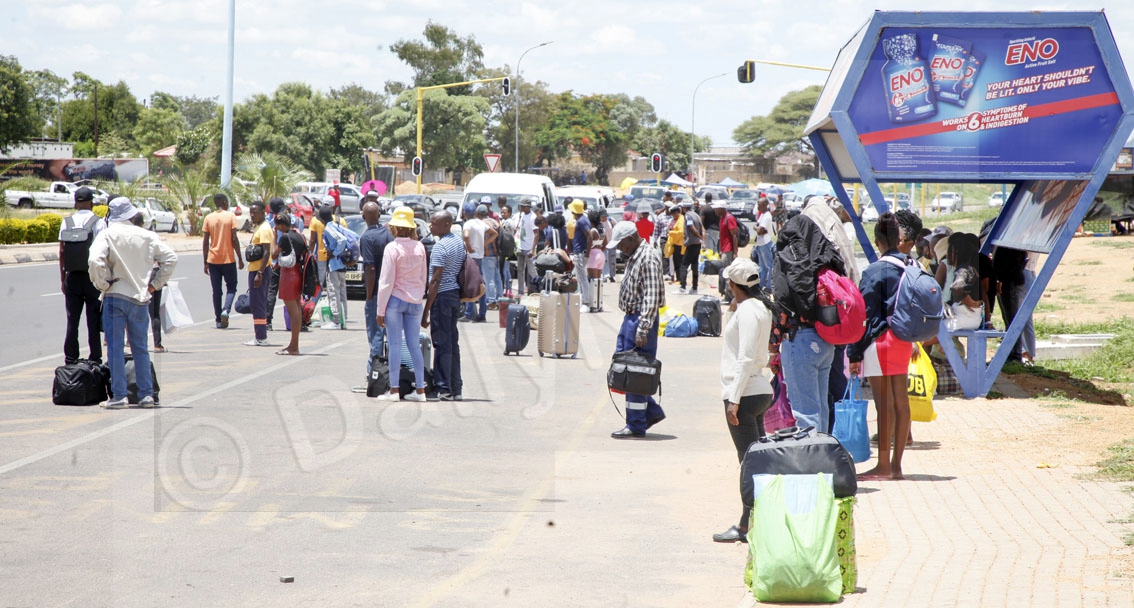
As the holiday season reaches its peak, picture the A1 Road. The heat shimmering above the tar. Engines humming through sun-drenched scrubland.
A burst of brake lights after a near-miss. And that shared, uneasy breath we all take when a risky overtake ends — this time — without tragedy. This is the scene of our annual pilgrimage home: a restless national migration powered by longing, memory and the simple desire to be with family again. Under the weight of summer heat and brewing rain, Botswana stirs.
The air begins to hum with anticipation as the A1 — our country’s main artery — fills with movement, conversation, and the familiar chaos of the festive rush. Stretching from Gaborone to the Ramokgwebana border, the A1 is more than a road; it is a thread stitching communities together.
And when December arrives, thousands pour onto it with one mission: get home. From the bus ranks to the petrol stations at the city’s edge, the starting point vibrates with energy. Car boots bulge with luggage.
Grocery bags overflow with festive treats. Children press their faces to the glass, scanning the horizon for the turn-off that leads to grandma’s yard, to cousins, to laughter. This is the A1 rush — a season when distance collapses and the nation beats with one reunited heart. Yet the same long, straight stretches that make the A1 iconic also make it dangerous.
The monotony can lull even the most seasoned drivers. Which is why rest points — those familiar stops in Mahalapye, Palapye and beyond — become critical lifelines this time of year.
These stops are not just for fuel. They are for revival. Every festive season, the Motor Vehicle Accident (MVA) Fund sets up temporary rest stations offering water, coffee, reflective wristbands and gentle reminders to stretch and stay alert. Police use the same spaces for checkpoints, but they are also small sanctuaries — places where the nation collectively exhales before pushing on.
These intentional pauses are not formalities; they are lifesaving. Fatigue remains one of the most stubborn drivers of holiday accidents. For long-distance regulars like Ms Taboka Ngwako, who travels between Gaborone and Francistown, the A1 festive rush is equal parts beauty and brutality.
“It’s always the first two hours out of Gaborone that are the worst,” she says, leaning on her faithful sedan before a recent December drive.
“You see the impatience straight away. Speed becomes king. The two-lane road turns into an arena.” She describes the old choreography of small cars darting from behind heavy haulage trucks, attempting to overtake on blind ascents.
“It’s terrifying,” she says. “You see a truck crawling uphill, its trailer swaying slightly, creating what looks like the perfect gap. And then a small sedan, maybe carrying a whole family, shoots out — not noticing oncoming traffic. Lights flash, tyres screech, and the whole world seems to pause.” Sometimes, she says, luck intervenes.
“By miracle brake or sheer chance, the overtaking car squeezes back in, just inches from the truck’s bumper. Your heart races — but it’s a cheap thrill. Because a few kilometres ahead you might find wreckage where someone else’s luck ran out.” At rest stops, however, she finds comfort: strangers in SUVs, combis and weathered sedans trading weary smiles, small talk and warnings about the road ahead. “That’s when you realise we’re all just trying to get home,” she says softly.
But statistics remain unforgiving. December consistently records some of Botswana’s highest road fatalities. Speed limits are ignored. Reckless overtaking around 18-wheelers turns the highway into a stage of near disasters.
Police and safety officers mount campaigns and checkpoints each year, yet fatigue — and worse, intoxicated driving — continue to claim lives. Rollovers, head-on collisions, loss of control — these are not abstractions.
They are patterns. They are names in reports. They are families left incomplete. Even beyond the holidays, the A1 demands respect. Botswana relies heavily on this corridor for work, trade and travel.
The cost of high-speed modern mobility is evident in the rising toll of lives lost. The pressure to save time — to push harder, gain a few minutes, beat the rush — creates a silent tension between the speed we covet and the danger it brings. Yet the A1 remains a symbol. A ribbon tying today’s Botswana to the generations that travelled it before seatbelts and hazard lights.
Each December, it carries our hopes, even as it whispers caution. Because the truth is simple: It is a two-way street.
One lane carries joyful expectation. The other carries avoidable peril.
So whether you are behind the wheel, a passenger in the back seat, or waiting at home preparing the welcome feast, remember: safety will always matter more than speed. Exercise patience.
Respect the limits. Obey the signs. And let the exhilarating rush of homecoming be the only rush you entertain. Drive safely. Every journey is a journey for the nation. Wishing you a safe and joyful festive season. -
Refreshed DailyNews Legacy of Nation-Building
Founded with the clear ambition to drive and document Botswana’s development across infrastructure, politics, technology and entertainment, the DailyNews has a storied history, chronicling the nation’s journey from its pre-colonial days as the Bechuanaland Protectorate to its post-independence growth.
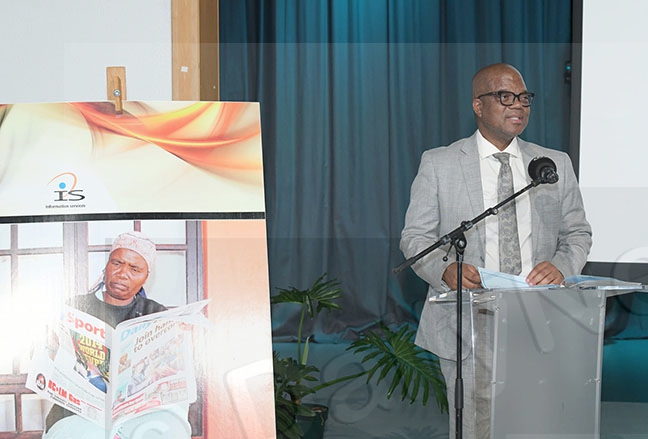
On December 2, a refreshed look of the DailyNews and an expanded editorial vision, one designed to elevate feature storytelling and amplify voices from across Botswana, was launched in a bold rebrand that honoured its origins while embracing modern journalism.
Telling its story, the former DailyNews managing editor, Mr Keboeletse Nkarabang, who served from 1973 to 2004, recalled that the publication started from a single A4-sized page and had since navigated challenges, celebrated milestones and continued to thrive as a vital voice in the country.
Mr Nkarabang said the latest relaunch was set to strengthen that legacy further.
Delivering the keynote address, Minister for State President, Mr Moeti Mohwasa, said for decades the DailyNews had informed, guided and inspired generations while connecting government to citizens.
With its new design, enhanced editorial focus and increased space for citizen perspectives, Mr Mohwasa said the publication would now be a platform for dialogue, reflection and participation for every Motswana.
The Minister also lauded the newly launched Mass Media Website, which brings together all government media – BTV, Radio Botswana, Kutlwano and Daily News, into a single and mobile-friendly digital destination.
He indicated that commercialising government media would generate revenue, foster partnerships and enable reinvestment into quality local content production.
“Today is not simply about launching a newspaper or a website, but about making a statement that government media will not only inform, but inspire and create history while preserving it,” said Mr Mohwasa, adding that the media belonged to the entire nation and not any single entity.
For his part, secretary for public administration in the Ministry for State President, Mr Richard Molosiwa, said the new DailyNews design amplified the paper’s long-standing mandate to inform and educate, this time with a fresh, competitive and contemporary appeal.
Mr Molosiwa noted that the strengthened editorial approach, featuring deeper analysis and richer visual storytelling, will reinforce the DailyNews’ role as a platform for digital dialogue and community engagement nationwide.
On the Mass Media website, Mr Molosiwa highlighted its advantage as an integrated hub for all government media content, positioning it strongly in an evolving media landscape and establishing government media as a central pillar in the creative industry.
“The goal is to generate new revenue, reinvent content and ensure that government media remains strong, modern and supportive of Botswana’s creative sector,” he said.
-
MAELE Urges African Universities to Lead Development
African higher education leaders have been urged to strengthen university leadership, deepen collaboration and accelerate innovation to help drive the continent’s socio-economic transformation.
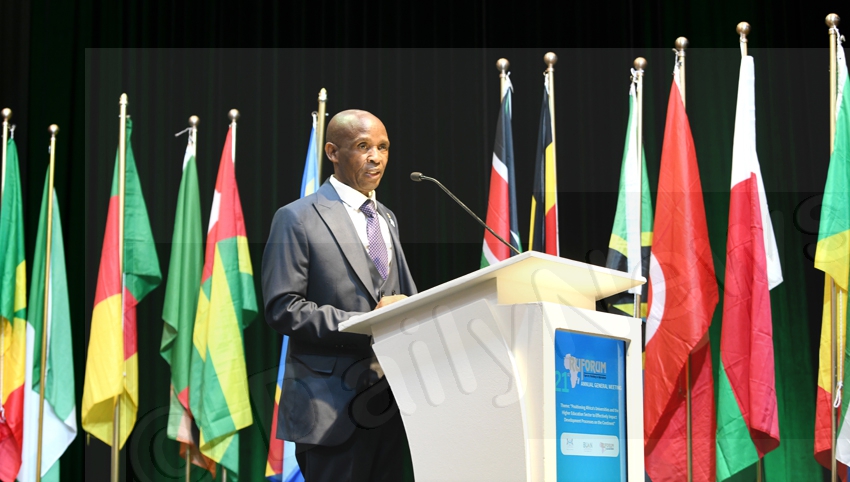
Speaking at the 21st Regional Universities Forum for Capacity Building in Agriculture (RUFORUM) Annual General Meeting (AGM) in Gaborone on Monday, Minister of Higher Education Mr Prince Maele said Africa’s development challenges demanded a new model of university engagement, one that moved beyond traditional roles and prioritises real-world impact.
He identified youth unemployment, climate change, food insecurity, low value addition, sluggish economic growth and rising insecurity as persistent barriers undermining Africa’s progress.
“Our science output must receive a catalytic boost. Universities must evolve from centres of teaching and research into mission-driven institutions that generate solutions, technologies, products and services aligned with national and regional priorities,” he said.
Minister Maele described the conference theme: Positioning Africa’s universities and the higher education sector to effectively impact development processes on the continent as timely and forward-looking, reflecting growing recognition that African universities must be more proactive in shaping national and regional development.
“The theme clearly recognises that it is through innovation that higher education can build resilient societies and advance economic development,” he added.
Mr Maele challenged institutions to lead Africa’s transition to a green and climate-resilient economy, noting that the continent currently secured only 3.6 per cent of global climate finance, far below what was needed.
He urged universities and the private sector to critically assess the bottlenecks limiting Africa’s participation in global climate financing and to scale efforts to attract investment into clean energy, climate-smart agriculture and green job creation.
The minister also commended long-standing development partners, including the Mastercard Foundation, Bill & Melinda Gates Foundation, the African Development Bank and the World Bank, for sustained investment in Africa’s higher education sector, and appealed for continued support to help build work-ready graduates and resilient economies.
Botswana University of Agriculture and Natural Resources (BUAN) Vice Chancellor Professor Ketlhatlogile Mosepele echoed the call for cohesion and purposeful partnerships, describing the conference as “a historic convergence of knowledge, action and purpose.”
Prof. Mosepele stressed that Africa’s agricultural and higher education transformation depended on stronger collaboration between universities, governments, communities and industry.
He urged public universities to demonstrate measurable impact and ensure society received a meaningful return on investment.
He further said universities must redesign curricula, embed entrepreneurship, strengthen inclusion for women and youth, and ground research in real community challenges.
Prof. Mosepele also highlighted digital transformation and leadership development as critical levers for building globally competitive African institutions.
The five-day meeting has attracted delegates from 175 universities across more than 40 African countries, with discussions focusing on higher education reform, climate-responsive agriculture, innovation ecosystems and strategies to strengthen Africa’s human capital for sustainable development.
As the conference progresses, leaders have reiterated that Africa’s universities were not just academic institutions as they were vital engines for innovation, resilience and economic growth.
-
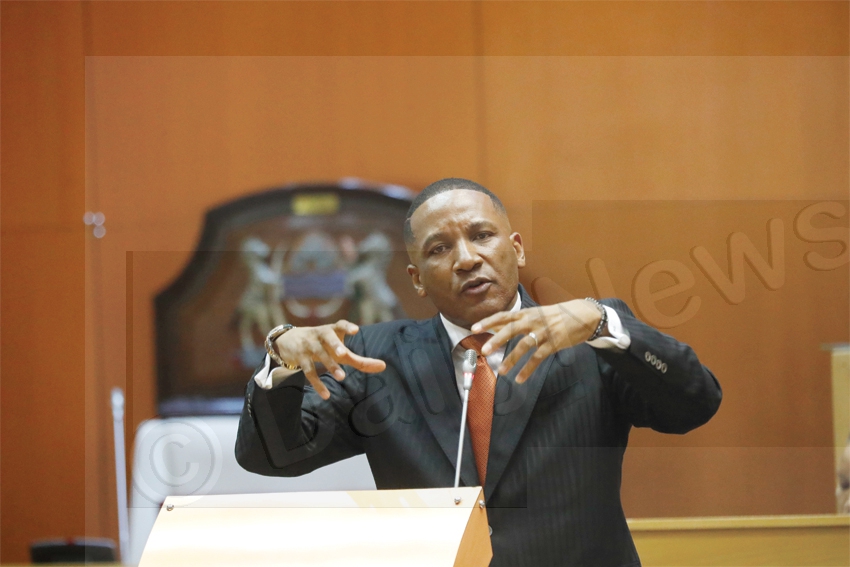
Constitutional Court A Must – Boko
The establishment of a Constitutional Court is an important step in developing Botswana’s constitutional democratic system, and in strengthening the judicial process, President Advocate Duma Boko has said.
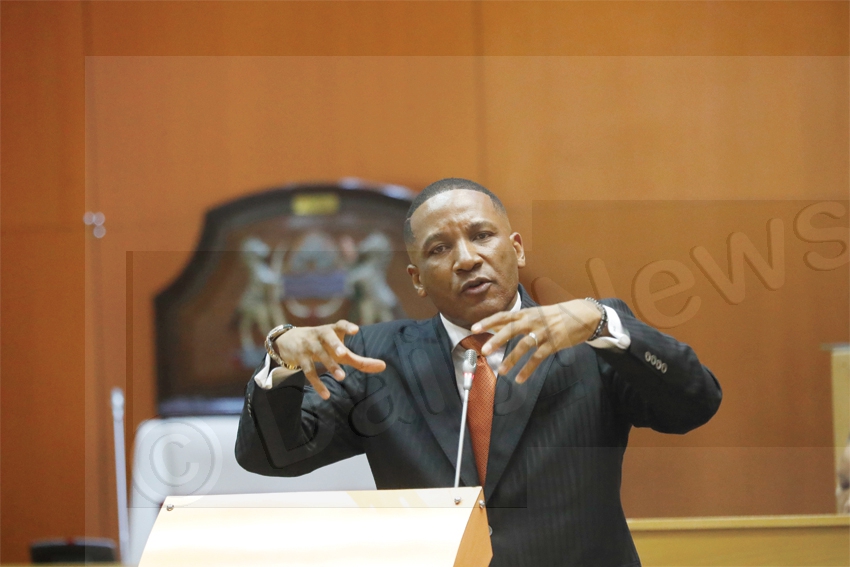
Contribution to the Constitutional Amendment Bill that has been tabled before Parliament on Monday, President Boko ventilated the argument that the Constitutional Court would be an important instrument in developing the nation’s legal process.
The President said the court was essential to the protection of the rights and providing an avenue for recourse of everyone resident in Botswana.
It would clearly delineate a legal route and platform where constitutional matters were handled with urgency, consistency, and authority, the President Boko said.
He added that by ensuring that institutions operated within the confines of the constitution, such an institution would uphold the rule of law and further provide strong protection for vulnerable groups, promote fairness in governance and ensure accountability.
In countering the argument that not sufficient consultation had been done with the public and societal stakeholders, President Boko pointed out that among the findings of the 2022 report presented by the Presidential Commission into the Review of the
Constitution, the Dibotelo Commission, was that public opinion was in favour of establishing a Constitutional Court.
Outlining the historical path Botswana undertook towards its constitution, President Boko said the Order in Council of May 9, 1891 declared Bechuanaland a British Protectorate, and over the following century, the British Parliament proclaimed in August 1966 to grant Bechuanaland independence as the Republic of Botswana.
This was after the 1963, Lobatse Conference and the Malborough House Conference held in London in February 1966 agreed to the terms of Botswana’s independence and basic tenets of her constitution.
But, minority ethnic groups and vulnerable groups including women were not represented at Lobatse and Malborough House, President Boko argued and the country thus needed a broader, inclusive constitutional review process that would involve the views of a diverse sector of society.
He said the Constitutional Court would be the first step in creating an avenue where any party felt aggrieved by the constitutional review process could find a fair arbitrary process. President Boko noted that the Botswana constitution had a Bill of Rights, Section 3 to 16, which protects the fundamental rights and freedoms of the individual, including the rights to life, personal liberty, protection from inhuman treatment and the freedoms of conscience, expression, movement, association and assembly.
This, the President pronounced was international best practice flowing from the Universal Declaration of Human Rights and other international instruments that provided for life, liberty and equal protection before the law.
Such are sacrosanct clauses that needed to be protected as the constitution is amended, President Boko said, in order to ensure that as the country became more inclusive, basic rights remained protected.
He saod Section 18 of the Constitution already provided for the enforcement of protective provisions.
“Furthermore, the past precedent of the judgment flowing from Attorney General of Botswana versus Unity Dow case is that the Section 3 provision that ‘every person in Botswana is entitled to fundamental rights and freedoms’ is legally binding and not a mere preamble.
Nonetheless, Botswana still requires a Constitutional Court,” the President argued, pointing out that the Aguda Commission led by Justice Akinola Aguda (1923-2001), a Nigerian jurist and former Chief Justice of Botswana had also recommended that there should be a Supreme Court established in the country; with the Dibotelo Commission later pointing to public opinion being in favour of a Constitutional Court
-
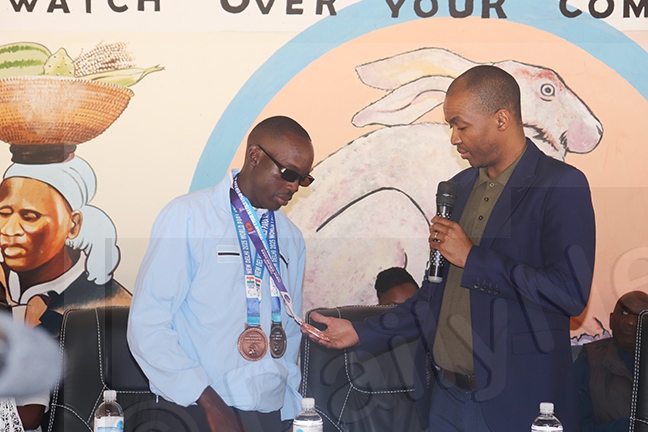
Masunga Celebrates Mokgwathi
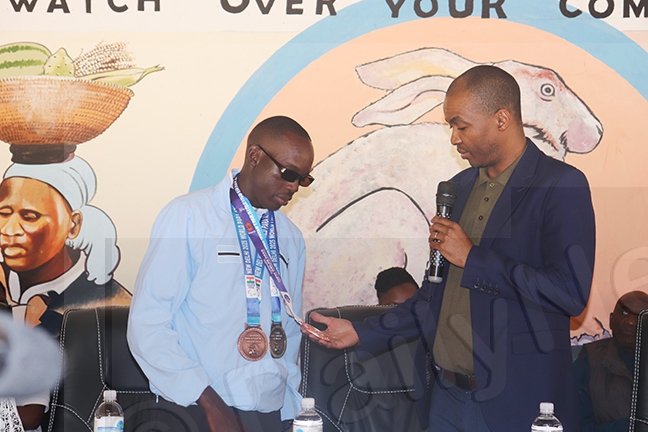
Residents of Masunga thronged the local kgotla recently to welcome home Paralympic sprint runner, Bose Mokgwathi.
Mokgwathi recently won a bronze medal in the 400 metres T13 event at the 2025 World Para Athletics Championships in New Delhi, India, clocking a time of 49.66 seconds.
Welcoming the gathering recently, Kgosi Thabo Maruje III said everyone was there to celebrate the achievement of a young man who defied the odds stacked against him.
Kgosi Maruje III said Mokgwathi was proof that one can come from a rural setting like Masunga and ultimately reach the pinnacle and draw world attention.
He commended government for its long-standing support of sport, noting that sport in Botswana was now evolving.
He highlighted that the event was an opportunity for the community to open doors for young people to excel through sport.
He thus urged parents to raise their children properly and not deny them the opportunity to engage in sporting activities, saying that many dreams were broken by parents.
“As we celebrate you here today, we want to show you that we are the community that raises the best of the best,” he said.
Addressing the youth, Kgosi Maruje III spoke about the changing economic landscape, saying “You were born in a country where the diamonds that used to make the country take everything for granted have now run their race and lost value.”
For his part, the star, Mokgwathi recounted his journey, which included competing at the Region 5 Youth Games held in Gaborone in December 2028, where he won the gold medal in the 200m T12 and 4x100m relay events and a silver medal in the 100m T12 event.
In 2019, he made his international debut at the World Para Athletics Championships held in Dubai, where he was eliminated in the first round of the men’s 400m T13 event.
In March of this year, Mokgwathi competed at the World Para Athletics Grand Prix in New Delhi and won the gold medal in the 100m race.
Several months later, he represented his country at the 2025 World Para Athletics Championships and won a bronze medal in the 400 metres T13 event with a time of 49.66, making him the only athlete from his country to win a medal at the championships.
Aron Mokgwathi, Bose’s father, shared his son’s background, saying he was born in July 2002 and has three siblings. He said Bose’s sight problems were first realised while he was in primary school, after attending pre-school.
He said Bose was taken to the Francistown eye clinic, where the specialist regretfully informed them that nothing could be done in Botswana and recommended seeing specialists in Zimbabwe. Due to financial constraints, the family could not afford the trip.
Mokgwathi said Bose’s serious athletics journey began in 2018 when he joined the National Team and won two gold medals and a silver.
He noted that in 2019, Bose was again selected for the National Team, marking his first international participation in France before qualifying for the World Championship in Dubai, where he did not perform well as it was his debut.
He recalled that in 2023, after a two-year break due to injury, Bose returned to the track, qualified for the World Championship held in France, but again did not perform well as he was still recovering.
For his part, Bose said last year, he qualified for the World Championship held in Japan, where he advanced to the finals and secured seventh place out of eight athletes.
“Things started changing that day. I told my parents that I had been training in Masunga and participating internationally, but now I want to relocate to Gaborone, where there are better facilities and good coaches,” he said. He added that since his parents had continually supported him, he told himself that he needed to reward them by winning.
-
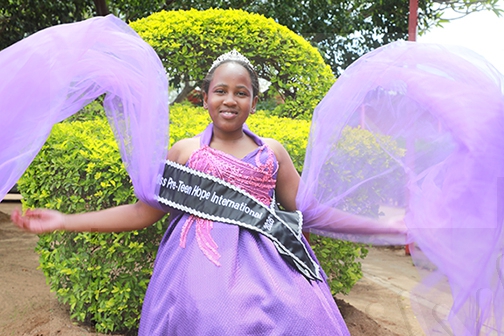
Vivian Wins Miss Hope pageant
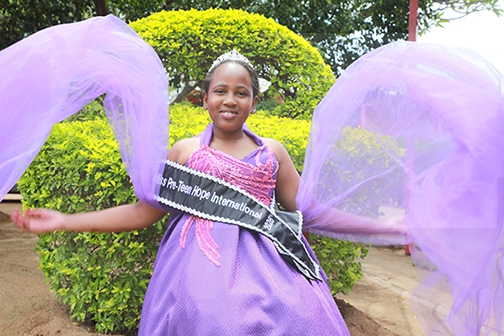
Vivian Keatlholetswe, a 13-year-old Form 1 student at Kgalemang Motsete Junior Secondary School in Serowe, has made Botswana proud by winning the Miss Preteen Hope International 2025/26 title at the Miss Hope Pageants International Competition in Cape Town, South Africa.
This prestigious competition, which took place from November 25 to 29, saw Vivian outshining contestants from 11 participating countries to take home the coveted crown.
Vivian’s victory is a testament to her hard work and dedication, and she expressed her gratitude in an interview with BOPA, saying the crown would allow her to continue her project : A CHILD A FLOWER.
Her mother, Lydia Keatlholetswe, a Serowe District Officer, was present to witness her daughter’s triumph. She shared that the project: A CHILD A FLOWER, was about donating stationery supplies to less privileged children to promote education for all despite their social backgrounds.
Furthermore, the newly crowned queen relayed that Hope International Pageants was a platform to empower young girls and women to use their talents to fulfill their purpose lives.
She said it also encouraged participants to serve in their communities and give hope to the hopeless through community engagements.
Narrating her journey to victory, she said from July 2025 to the finale, she attended Zoom trainings, which covered the following: identifying talents, developing projects and managing them, and interview and presentation tips.
While in South Africa on November 27 and 28, Vivian attended a full training course on discovering purpose, optimally using her talents, and building a business in relation to the mentorship.
She is happy that she has been awarded a certificate for the course, pointing out she also took part in a community outreach programme at a farm where she had a platform to share some gifts with children at the farm.
All these happened prior to her being crowned with the coveted prize of Miss Preteen Hope International 2025/26 at the grand finale held on November 29.
To add cherry on top, she also walked away with the Miss Congeniality Award, a feat she stated would accord her an opportunity to continue with her philanthropy work.
The young star is of the view that winning the pageant has created her a platform for personal growth.
She attributed her victory to all Batswana who supported her all the way, more especially her parents, Kgalemang Motsete Junior Secondary School Head Ms Botho Supang and school management; Serowe District Council Social Worker, Mr Tshepiso Molefe, Botswana Hope International Director Ms Tlhatlogo Madiba and the Department of Information Services for providing media coverage throughout her journey.
-
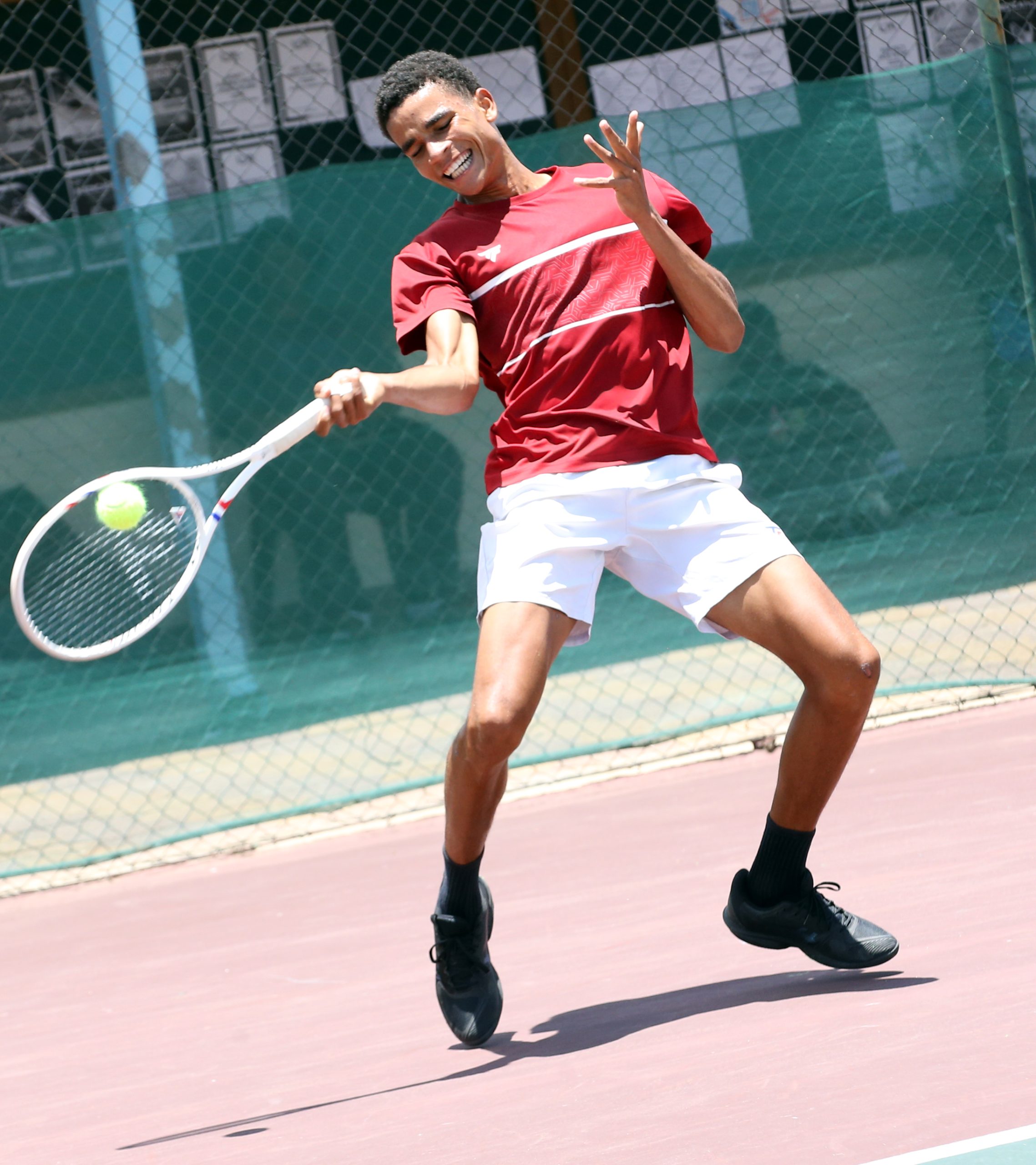
Raguin Delivers Back-to-back Victories
GABORONE – Fresh from winning the International Tennis Federation (ITF) World Tennis Tour Juniors J100 boys’ singles tournament in Kenya three weeks ago, Ntungamili Raguin returned home brimming with confidence, ready to compete in the ITF J60 and J100 tournaments staged in Gaborone from November 17 to 29 respectively.
The young Motswana endured a grueling two weeks of back-to-back competitions at the National Tennis Centre, to ensure he reached the finals of both tournaments.
First was the ITF J60 where he reached both finals of the boys’ singles and doubles where he delivered two gold medals.
In the boys singles final, Raguin defeated Alex Lap Hang Hui of Hong Kong 6-4, 6-2 securing Botswana’s third title in the tournament’s history after previous victories by Denzel Seetso and Mark Nawa.
In the doubles’ final, Raguin, affectionately known as Ntunga, and his partner, Yanael Béranger of France claimed the ITF J60 doubles crown defeating Seabo Saleshando and Mengezi Sibanda of Zimbabwe 6-0, 6-3.
Following his J60 success, Raguin delivered yet another victory in the J100 as he won gold in the boys singles and silver in doubles.
Although visibly fatigued after three consecutive weeks of high-intensity matches, Raguin remained mentally locked in and refused to lose focus despite the physical toll.
The energy from lifting the J60 title in front of his home supporters rejuvenates the teenager and fueled his ambition to clinch the J100 trophy. Once again, he delivered.
In the J100 doubles, Raguin and his partner, Béranger settled for silver.
However, on November 29, the partners briefly became ‘enemies’ when they faced each other in the singles championships match.
Ragiun won 6-2,6-3 becoming the first Motswana to win titles on three consecutive weeks of the World Tennis Tour Juniors circuit.
His ability to read opponents and capitalise on their weaknesses has distinguished him from his peers. His aggressive style of play and mastery of net points have become hallmarks of his game.
Raguin had earlier signalled his intent on the global stage when he won the ITF J100 boys’ singles final in Kenya, defeating Italian Mattia Baroni 3-6, 7-5, 6-3 in a fierce contest that lasted two hours and 15 minutes.
His recent victories at home now mark a defining milestone in Botswana’s junior tennis history In a post match interview, Raguin said he was happy with the victory.
-
Young People at Risk of HIV Infection
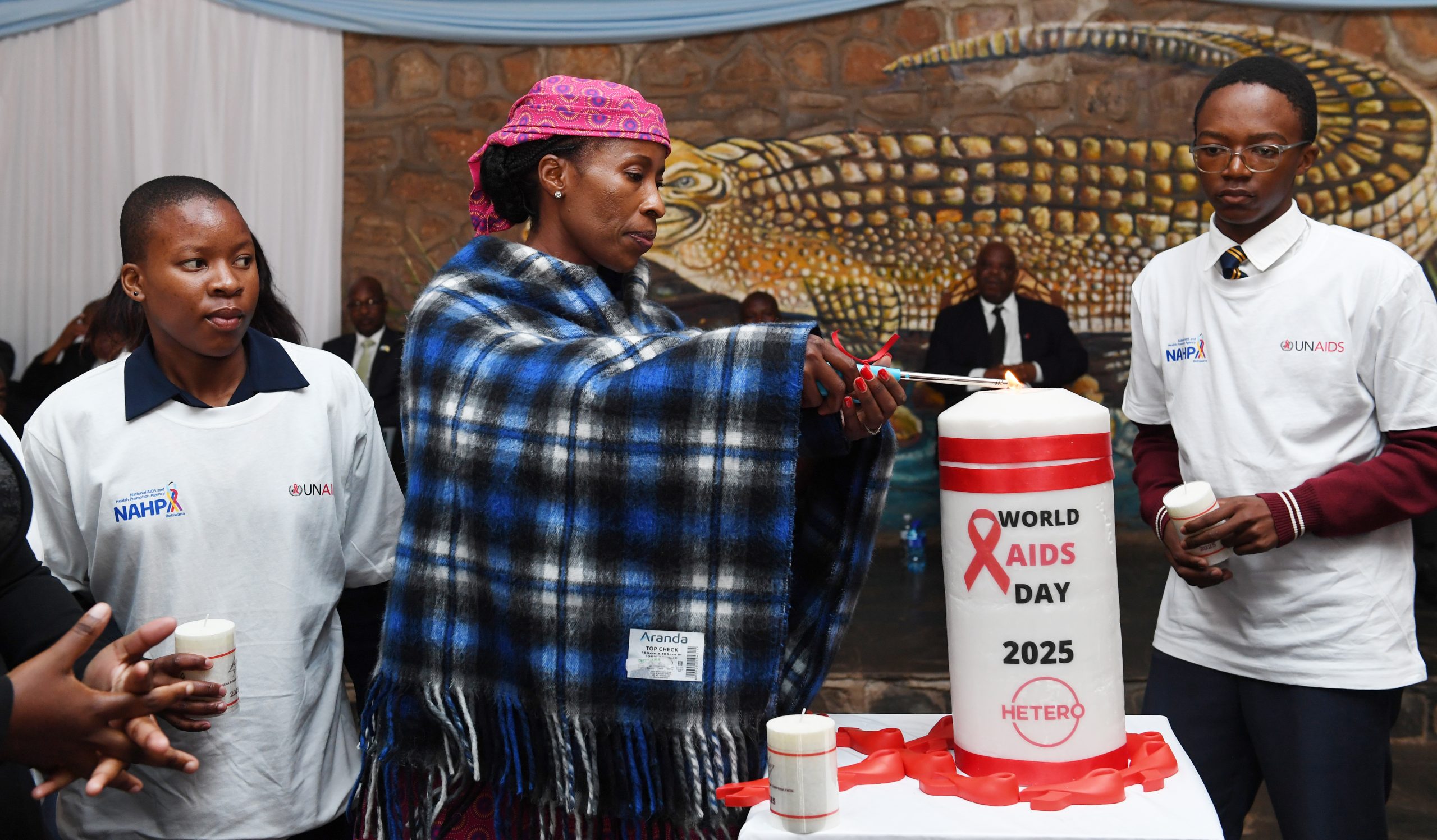
KANYE – Alcohol and substance abuse have been identified as major drivers of new HIV infections in Botswana, particularly among young people, the Minister of Health Dr Stephen Modise warned during the national World AIDS Day commemoration held in Kanye yesterday.
In 2024, an estimated 4 120 people contracted HIV in Botswana. Of these 1 118 cases representing 27 per cent occurred among adolescent girls and young women aged 15–24.
Minister Modise highlighted a worrying decline in condom use among the youth. “Young people face challenges in negotiating safer sex due to power imbalances, limited access to HIV prevention information, and scarce resources especially in remote areas,” he said.
Dr Modise announced that the Ministry of Health would intensify targeted prevention programmes for adolescent girls and young women, as well as key populations and young men, to close the remaining gaps in achieving the UNAIDS 95-95-95 targets.
Botswana has already reached approximately 95-95-95 status seven years ahead of the 2030 deadline with 95 per cent of people living with HIV knowing their status, 95 per cent of those diagnosed on treatment, and 95 per cent of treated individuals virally suppressed.
This year’s World AIDS Day theme: Overcoming disruption, transforming the AIDS response, reflects recent global funding uncertainties that have disrupted Botswana’s HIV prevention and treatment services. Dr Modise urged all stakeholders including government, civil society, faith-based organisations, the private sector and development partners to innovate new resource-mobilisation strategies and eliminate wastage in health service delivery.
He stressed the need to protect hard-won gains and prevent any regression in the national HIV response.
The minister also drew attention to the growing threat of non-communicable diseases (NCDs). Conditions such as diabetes, cancer, cardiovascular diseases and chronic respiratory illnesses now account for over 70 per cent of global deaths (41 million annually).
Lifestyle changes linked to urbanisation, including tobacco use, excessive alcohol consumption, unhealthy diets and physical inactivity, were driving a similar rise in NCD risk factors in Botswana, said Dr Modise.
In a separate announcement, the minister assured Kanye community that the long-awaited district hospital was envisaged to be delivered through a public-private partnership model despite current economic challenges.
United Nations Acting Resident Coordinator, Mr Malviya Alankar, commended Botswana’s leadership in the regional and global HIV response but warned that the country could not afford complacency.
With around 4 000 new infections annually and one in five adults living with HIV, he described the current infection rate as “unacceptable” for an upper-middle-income country.
Mr Alankar emphasised that ending AIDS by 2030 required more than health services alone; it demands education, sustainable livelihoods, human rights, gender equality, community engagement and strong multi-sectoral partnerships. World AIDS Day 2025 served as both a remembrance of lives lost to HIV/AIDS and a renewed global pledge to end the epidemic once and for all.