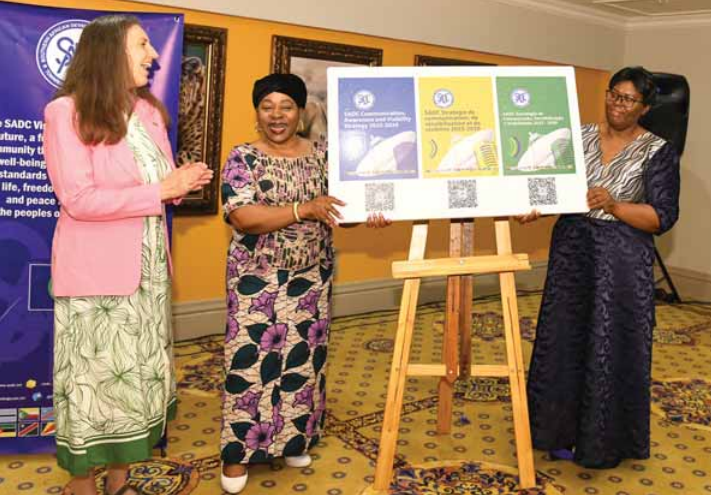
The Southern African Development Community (SADC) continues to serve as a platform for harmonising regional policies, pooling resources and addressing shared development challenges in areas such as trade, infrastructure, security and governance. Speaking at the launch of the SADC Communication, Awareness and Visibility Strategy 2025–2030 in Gaborone, SADC Deputy Executive Secretary for Regional Integration, Ms Angele Makombo N’tumba, said the organisation empowered member states to collectively achieve goals that would be difficult to realise individually.
Ms N’tumba said one of SADC’s objectives was to build a regional community where citizens were able to connect, collaborate and benefit from a shared vision of a better future. Since its establishment in 1980, she noted, SADC had developed robust policies and instruments that continued to deliver transformative outcomes across the region, enhancing trade, streamlining systems, facilitating mobility and uplifting communities.
She emphasised that SADC’s regional instruments were powerful engines of transformation with tangible impact on citizens’ lives. She highlighted the SADC Mobile Money Guidelines, introduced in 2024, which are helping member states harmonise regulation and expand access to financial services. The initiative, she said, was especially transformative for women, youth and informal traders who have historically been excluded from formal banking.
“By supporting mobile money, SADC is modernising finance and ensuring that opportunity reaches every corner of the region,” she said. However, Ms N’tumba cautioned that SADC’s achievements risked going unnoticed without effective communication. She said the new Communication, Awareness and Visibility Strategy for 2025–2030 was crafted to deepen public understanding of SADC’s origins, mandate and impact, ensuring its messages reach diverse audiences across member states.
“This strategy embraces our region’s rich linguistic, cultural and social diversity, and ensures visibility of women, youth, persons with disabilities and marginalised communities,” she added.
SADC partner and Head of Economic and Development Cooperation at the German Embassy in Botswana, Ms Simone Goertz, said clear communication of goals, policies and achievements enables regional organisations to build trust, enhance transparency and strengthen engagement with citizens, stakeholders and international partners. She said communication acted as a bridge between institutional frameworks and the lived realities of the people they serve.
“In a globalised world where narratives shape perceptions, strategic communication is vital to counter misinformation, promote inclusivity and reinforce regional solidarity,” she noted.
Leave a Reply