Author: blastosnr

  • Spectators in for thrill at lefika international relays

    Spectators in for thrill at lefika international relays

    Spectators should brace themselves to see top athletes from Poland, Nigeria, Zimbabwe, Zambia, South Africa, Lesotho and Botswana in action at the Lefika International Relays slated for March 28 at the National Stadium.

    Botswana, Zambia, Nigeria and South Africa are expected to field athletes in the 4x100m (women) while Botswana, Zambia and Nigeria will take part in the 4x100m (men) category. So far, the 4x100m mixed relay line up is made up of Botswana, Zambia, Nigeria, South Africa and Poland. 

    Botswana will line up in the 4x400m for women and men categories with Zambia and Nigeria, while Lesotho will field a team in the 4×400 mixed together with Botswana, Zimbabwe, Zambia, and Nigeria.

    In an interview, Lefika Athletics Club secretary, Dineo Basitang said this year’s event would be big as more countries were yet to confirm.  In the last edition, she said they only featured two countries. 

    The event, she said would be used a qualifier for World Athletics Relays, adding that countries also hoped to use the event to gauge their readiness for the May 2-3 event in Gaborone. She further said the Lefika relays would be used a dry run for the World Athletics Relays. 

     “We are expecting the World Athletics Relays to assess referees, volunteers and all their logistics to identify as to which areas need more attention,” she said. 

    While preparations were going well, she said they faced challenges of lack of sponsors.  She said tickets were already on sale online and the VVIP stand is P500, premium P200 and P50 other stands.

  • Top swimmers set to make waves in ghana

    Top swimmers set to make waves in ghana

    Botswana will send both the senior and junior swimmers to the 2026 Africa Aquatics Swimming Championships in Borteyman Sports Complex in Accra, Ghana from May 5 to 10.

    In the senior girls’ team, Botswana will be represented by Jieun Chang and Sally Ingwe, while the senior boys’ team has Mmusi Matthews, Khalil Sethi, Gaamangwe Keitsile and Thabang Seetso.

    The junior girls’ team is made up of Melodi Saleshando, Yun-Suh Chang, Muela Mutie and Phoebe Oagile-Motso, while the junior boys’ side has Tetelo Magang, Tema Modirelabangwe, Larona Matenge and Thero Montshiwa.

    According to Africa Aquatics, this year’s edition, has for the first time, adopted a modified format, to feature seniors, juniors, masters, as well as Inter-Zonal Championships.

    Botswana Swimming Sport Association spokesperson, Bokang Mokobi said the association was confident that it had selected a formidable team that would bring positive results and glory to the country.

    He said the swimmers had prepared well as they competed in different galas, adding that they would also feature in three high profile galas in South Africa.

    The team is expected to feature in the levels championships from March 28 to April 3, followed by South African Youth Nationals and Junior Youth Nations competitions. 

    Also, Mokobi said the team had previously competed at the CANA Zone IV Championships in eSwatini and managed to win medals for the country.

    He was therefore hopeful that the athletes would drop incredible times and record-breaking performances.

  • Dikoloti hails bobirwa regiment in fmd fight

    Dikoloti hails bobirwa regiment in fmd fight

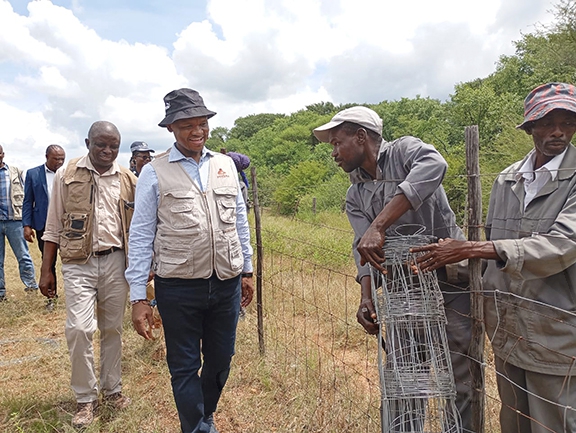
    The Bobirwa regiment’s vigilance and teamwork will contribute to government’s goal of effectively fighting Foot and Mouth Disease (FMD) and combating cross-border stock theft.

    This was said by Acting Minister of Lands and Agriculture, Dr Edwin Dikoloti during the handover of Mmadikgaka Veterinary Camp to the Bobirwa regiment, which has been  maintaining the cordon fence along the Shashe River to control movement of animals between Botswana and Zimbabwe.

    The camp will be used by the regiments who have been maintaining the veterinary cordon fences in the Bobirwa District. Dr Dikoloti was optimistic that regular maintenance of the cordon fence by the regiment would make a difference.

    “You have shown extraordinary commitment and quick action in the face of adversity. This swift response will not only protect your livestock but also ensure the well-being of the entire agricultural sector,” he said.

    He stated that community-based approaches, such as mephato, complement existing sustainable land management initiatives, including those backed by the Green Climate Fund, Ecosystem-Based Adaptation and the Migration Plan implemented in Bobirwa and other areas.

    He further commended farmers and the community in Zone 7 area for the swift response in combating the spread of FMD. Dr Dikoloti said the recurrence of FMD outbreaks remained high, primarily driven by persistent challenges such as illegal cross-border movement of livestock and people, and crucially, poor livestock management practices.

    Dr Dikoloti further shared that government considered the current FMD threat as an emergency that had the potential to become a national disaster, considering the rapid spread of the disease across Southern Africa. He said FMD had the potential to devastate the national economy and livelihoods emanating from the high costs of control measures.

    Dr Dikoloti said it was for that reason that the National FMD Command Centre was established to ensure inter-ministerial coordination. He added that the FMD response plan had been approved with a budget of P97 million for immediate implementation of short-term measures such as vaccines, repair of the cordon fence and other related activities.

    For his part, Kgosi Phillip Tamocha of Robelela, expressed gratitude for government’s commitment in efforts to fight the spread of FMD. He said Robelela and Tshokwe communities had long felt the impact of the disease. Therefore, he was hopeful that the camp would help in the FMD fight.

    For his part, Minister of Local Government and Traditional Affairs, Mr Ketlhalefile Motshegwa, who is also a Member of Parliament for Mmadinare appreciated the role traditional leaders in Robelela and Tshokwe played in combating the spread of FMD.

    He said it was commendable that these communities were actively collaborating and making significant efforts to augment the initiatives put forth by government, thereby ensuring both economic stability and the continued growth of agricultural practices

    He said livestock rearing had historically been the foundation of the economies in the communities of Tshokwe and Robelela, and the tradition not only sustained local livelihoods but also played a crucial role in preserving cultural heritage.

  • Boko takes up indigenous peoples cause

    Boko takes up indigenous peoples cause

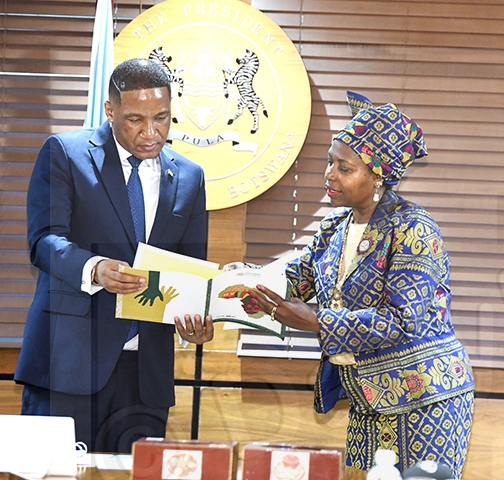
    President Advocate Duma Boko has accepted a mandate to champion the rights of Africa’s indigenous peoples, saying this was informed by a personal commitment to addressing historical injustices and cultural erasure. 

    A passionate human rights lawyer, President Boko accepted the new assignment, presented by commissioner, Dr Litha Musyimi-Ogana of the African Commission on Human and Peoples’ Rights (ACHPR) on Tuesday. 

    Accepting the role, President Boko pledged to advocate for the rights and dignity of marginalised communities who have long faced discrimination and cultural suppression in Botswana and across the region 

    “I am honoured and humbled to be asked to be the champion. It is one that I accept with humility,” said President Boko, pointing out that the assignment was by nature, what he was accustomed to. 

    He pledged to raise their voice, protect, preserve and develop solidarity among the indigenous people on the continent. 

    President Boko pointed out that indigenous people in Botswana, South Africa, Angola, Zimbabwe and Zambia, faced challenges, some perpetuated by dominant tribes who labelled them by the main tribes as the San. 

    “What do they call themselves? Why do we call them the San?” President Boko questioned, pointing out that labelling them and characterising them as hunters and gatherers owing to their culture was the beginning of the problem. 

    The word San, he said, was derogatory, but had been convenient for the dominant tribes to refer to them as such. 

    Also, he said indigenous people had dominant tribes imposing their culture upon them, such as requiring them to have chiefs, herdmen and their deputies. 

    Such imposition is meant to defy and trample upon the indigenous people’s culture, President Boko said. 

    He appreciated Dr Musyimi-Ogana’s visit since it prompted looking into the injustices meted out to the indigenous people and also stressed the need to have the plight of the indigenous people addressed with their input, as they  deserved respect. 

    He said there would be a series of actions and interventions, to address indigenous people’s challenges. 

    Dr Musyimi-Ogana, said that since President Boko had been championing the rights of the indigenous people, they appointed him to be the champion in Africa. 

    She presented President Boko with the letter as well as the African Charter on Human and Peoples’ Rights. 

    The commission is working on developing the indigenous people’s map in Africa, to understand what they call themselves, Dr Musyimi-Ogana explained that there was a need to have data that identified indigenous people across Africa. 

    She said their knowledge had been misplaced, and in many cases, were misinformed.

  • Women teams start world relays preparations

    Women teams start world relays preparations

    otswana women relay teams have reported for camp on Monday to prepare for the World Athletics Relays slated for Gaborone on May 2-3.

    The team is expected to compete in the 4x100m, 4x100m mixed, 4x400m mixed and 4x400m relays.

    According to the Botswana Athletics Association acting president, Oabona Theetso, the team would be based in Francistown, before moving to Gaborone on March 15, to participate in the Lefika International Relays 2026 at the National Stadium on March 28.

    He said the women’s team would be joined by the men’s team at the Gaborone camp and fully prepare for World Relays as a unit. He said foreign-based athletes amongst them Sethunya Majama, Motlatsi Ranti and Tlhompang Basele were yet to report for camp.

    Theetso said they were in contact with their respective coaches to organise a camp for the said athletes. However, he said they were happy with some of the relay team members, who competed at the Botswana Tertiary Student Sport Association Track and Field event, which was held in Francistown on Sunday.

  • Rising food prices leave many struggling

    Rising food prices leave many struggling

    Nearly one in two citizens struggles to access enough safe and nutritious food to live active, healthy and productive lives, says University of Botswana, human nutrition Professor Maria Nnyepi.

    Professor Nnyepi said that  for the 2022/23 period, 49.4 per cent of the population experienced moderate or severe food insecurity, a figure that starkly illustrated how widespread and deeply rooted the problem had become.

    “Food insecurity is not simply about the 20.2 per cent of Batswana who often sleep hungry due to lack of food, it also includes the 29.2 per cent who often worry and are uncertain of where their next meal will come from, or find themselves eating food of lower nutritional quality or quantity than they would like simply because they do not have a choice,” she said.

    For many households, the reality translates into smaller portions, skipped meals and diets dominated by low-cost staples, high fat and sugary foods with limited nutritional value. Over time, Professor Nnyepi explained, this undermined health, learning outcomes for children and overall productivity, perpetuating cycles of poverty and vulnerability.

    “As Botswana navigates the complex realities of undernutrition, over nutrition and food insecurity, it must be remembered that nutrition is not just a health issue, it is a foundation for national development. Investing in better nutrition today is an investment in healthier and a more productive generations tomorrow,” she said.

    Highlighting Botswana’s nutrition landscape, Professor Nnyepi noted that it reflected stark contrasts.

    “On one hand, 28.9 per cent of children under five are stunted, indicating chronic nutritional deprivation with irreversible effects on physical and cognitive development. Wasting affects 7.3 per cent of children, a rate higher than the Southern African regional average and a marker of acute vulnerability,” said Professor Nnyepi.

    On the other hand, she stated that obesity had risen sharply, particularly among adults.

    “More than one in three women (32.1 per cent) are obese, compared to 9.7 per cent of men. Diet-related non-communicable diseases now account for 46 per cent of all deaths in Botswana, with diabetes affecting 10.6 per cent of adult women and 8.8 per cent of adult men,” said Professor Nnyepi.

    She attributed those trends to urbanisation, changing lifestyles and unhealthy food environments that have transformed eating habits, often at the expense of nutritional quality. These trends she said, were not simply matters of personal choice, ‘they are shaped by food systems, urban design, economic pressures and policy environments that allow unhealthy options to be cheaper and more accessible than nutritious ones.’

    One of the most significant drivers of food insecurity in Botswana, Professor Nnyepi added, had been persistent food price inflation. As the cost of basic food items continues to rise, household purchasing power has steadily eroded.

    Even families with some form of income, find themselves unable to keep up with escalating prices, particularly in urban and peri-urban areas, where people depend almost entirely on purchased food rather than subsistence production. Persuaded by price per volume over quality, many households live from month to month on starchy food packages commonly known as Combo.

    Sharing similar sentiments, vegetable vendor, Mr Keemenao Nkgware, said Botswana’s heavy reliance on food imports had compounded the challenge of food insecurity. He explained that a large proportion of staple foods consumed in the country were sourced from outside the borders, making local prices highly sensitive to global market fluctuations, exchange rate movements and supply chain disruptions.

    “When international prices rise or transport costs increase, the impact is quickly felt on supermarket shelves and ultimately on household dinner tables,” he said.

    Consequences are especially severe for low-income households, who spend a disproportionately large share of their income on food.

    “When prices rise, these families have little room to adjust, food becomes the first and most painful compromise, often at the expense of nutrition and health care related expenses,” he said.

    “Bagolo ba ja di bonzi, di ice pop, just to keep energy, while the reality is that those do not provide any quality nutrients,” he added.

    While Botswana’s situation is acute, it reflects a broader regional trend. Across Africa, hunger is rising in most sub-regions, even as global hunger levels show signs of improvement.

    Climate shocks, economic pressures, conflict and structural weaknesses in food systems continue to undermine food security across the continent. This contrast underscores a critical reality: global progress does not automatically translate into local resilience.

    A nutritionist in the Ministry of Lands and Agriculture, Mr Baeng Ntime, argued that addressing food insecurity in Botswana required local and regional solutions that went beyond short-term relief.

    “Strengthening domestic food production, investing in climate-resilient agriculture and supporting smallholder farmers are essential steps toward reducing dependence on imports,” he said.

    Equally important, he added, were social protection measures that shielded vulnerable households from price shocks, ensuring that access to food was treated not as a privilege, but as a basic right. Mr Ntime also pointed out that nutrition education and dietary diversification played a key role.

    “Access to food must be matched with access to nutritious food, particularly for children, pregnant women and the elderly. Without this, the country risks facing a dual burden of under nutrition and diet-related non-communicable diseases, an outcome that strains both households and the health system,” he said.

    Ultimately, food insecurity is not just an agricultural or economic issue; it is a human development challenge. It affects how children learn, how adults work and how communities thrive. These have a direct bearing on our aspirations of becoming a first income country by 2036.

    As Professor Nnyepi noted, the persistence of hunger amid available resources highlights the urgency of rethinking how food systems are designed and who they serve. 

    “Without decisive and coordinated action, food insecurity will remain the underlying crisis shaping Botswana’s nutrition landscape quietly, but relentlessly,” she said.


  • Illegal sand mining on the rise in Ntlhantlhe

    Illegal sand mining on the rise in Ntlhantlhe

    Kgosi Malepa Orekeng of Ntlhantlhe has warned community members about the serious dangers posed by illegal sand miners in the village, many of whom carry arms and operate aggressively.

    Speaking in an interview during a recent taking services to the people event hosted by Moshupa District Council in Ntlhantlhe, Kgosi Orekeng advised residents to never confront these operators directly. He stressed that anyone encountering illegal sand mining activities should report them immediately to the police for safe handling.

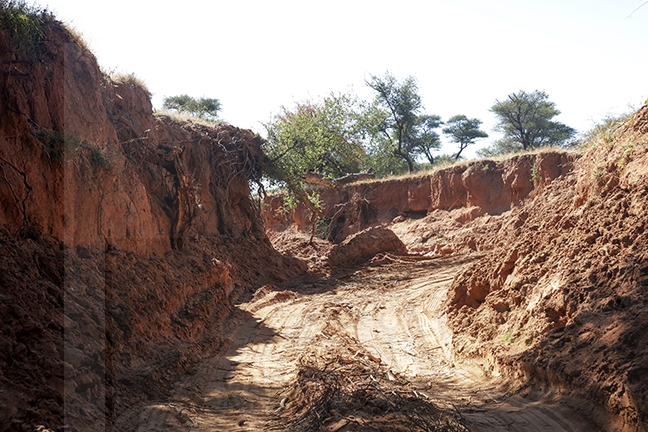
    Kgosi Orekeng identified illegal sand mining as one of the persistent criminal issues affecting the village. He explained that Ntlhantlhe was historically rich in sand resources, which played a key role in retaining water for the community. 

    In the late 1990s, the village imposed strict regulations to preserve this resource, allowing only residents to collect sand manually using wheelbarrows for personal building purposes while banning larger-scale operations involving tipper trucks or other heavy vehicles.

    Despite these longstanding rules, Kgosi Orekeng reported a sharp rise in illegal sand loading operations involving trucks, particularly across the Molopye River, reaching unprecedented levels in recent times.

    To address the ongoing problem, the village depends on patrols by the Badisa-Kgomo cluster. However, the local police station remains under-resourced, lacking sufficient vehicles and facing other operational challenges that hinder effective monitoring and patrols along the Molopye River, the main hotspot for these activities.

    Kgosi Orekeng appealed to the government to undertake thorough surveillance in the village to properly assess the scale of illegal sand mining and identify effective, targeted interventions to stop its expansion across the settlement.

    He noted that the Botswana Defence Force (BDF) previously deployed troops from the Glen Valley Garrison for patrols, but this approach proved ineffective. Perpetrators would simply resume operations once the soldiers returned to their camp, highlighting the need for a more permanent presence.

    Kgosi Orekeng advocated for the establishment of a continuous, dedicated special operation by the government to ensure round-the-clock patrolling and sustained deterrence against illegal mining.

    Chairperson of Badisa-Kgomo, Mr Thapelo Radimo, echoed concerns about the issue, describing the illegal sand mining in the region as deeply disheartening. He pointed out that if managed properly through the Village Development Committee (VDC), the village could turn this resource into a legitimate economic opportunity by strategically investing in controlled sand sales, generating greater returns for the community.

    Illegal sand extraction continues to pose significant environmental risks, including reduced water retention in rivers, ecosystem damage, and threats to community safety across parts of Botswana. Authorities and local leaders are calling for stronger, sustained action to protect these vital natural assets while exploring sustainable development alternatives.

  • Evacuation from middle east commences

    Evacuation from middle east commences

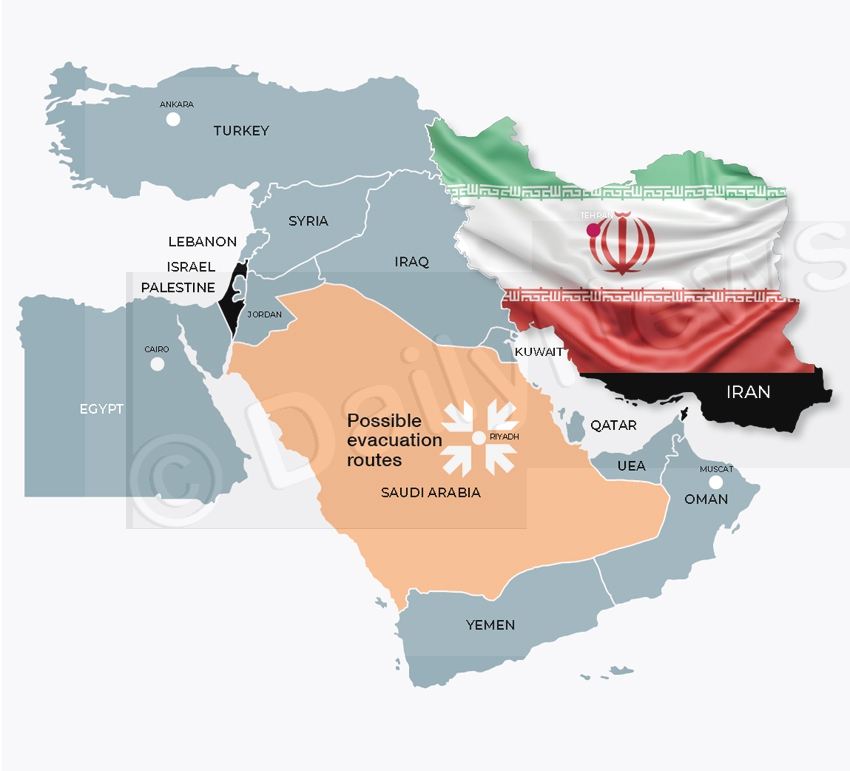
    The evacuation of Batswana from the Middle East has begun, with the first group having departed on Monday.

    The group mainly comprises those who were caught in transit but were fortunately able to secure flights. It also includes a few Batswana who are residents of Dubai and the United Arab Emirates.

    In an interview, Acting Ambassador of Botswana to Kuwait, with accreditations to Qatar, the United Arab Emirates, Bahrain and Saudi Arabia, Mr Amangwe Madisakwana, said the situation in the region remained volatile prompting many Batswana to return home.

    “However, there are those who have chosen to observe the situation with the hope of an immediate cessation of hostilities soon,” he said.

    Mr Madisakwana said the embassy had been working round the clock to assist citizens in securing flights, particularly from areas where travel was still considered safe.
    “In some areas people have had to drive to neighbouring countries in order to catch flights back home. We had to explore other avenues and some had to travel to Oman to catch flights there as fighting intensifies and security conditions continue to be unpredictable,” he said.

    However, he said some Batswana remained stranded, particularly those in Qatar and the United Arab Emirates, where persistent airspace closures have resulted in grounded flights.

    “There are those who currently have no way out as the airspace remains closed. The embassy is working on plans to move them out, possibly through Saudi Arabia, he said.

    Mr Madisakwana added that contingency planning was ongoing, including coordinating evacuations through neighbouring countries as direct departures from some locations had become impossible.

    He also noted that some embassy staff members based in Kuwait and other Batswana nationals working there had already departed and were expected to arrive back home on Tuesday.

    Additionally, he said some Batswana who had been stranded while in transit had managed to secure flights and had already returned home. Despite the difficult circumstances, Mr Madisakwana said some citizens had chosen to remain in the region for various reasons.

    “Some have indicated that they recently secured employment and feel they cannot leave immediately, while others are classified as essential service providers and unfortunately could not be granted permission to leave, such as firefighters, medical personnel and those working in the hospitality sector. Others are students who said they do not want to fall behind in their studies,” he said.

    Meanwhile, he urged Batswana who were still in the Middle East to remain calm and vigilant.

    “They should remain positive and avoid falling into traps that could lead to human trafficking or abduction out of desperation,” he cautioned. The conflict currently affecting parts of the Middle East has entered its ninth day and involves the US, Israel and Iran.

    Mr Madisakwana assured Batswana that the embassy was monitoring developments and assessing safe evacuation options. 

  • Raliyway expansion to unlock economic opportunities

    Raliyway expansion to unlock economic opportunities

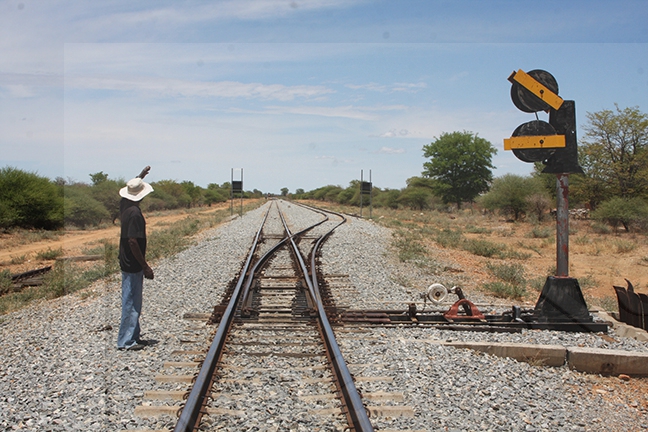
    Botswana’s substantial investment and expansion in its railway network will help unlock economic opportunities by connecting landlocked resources to regional, international and coastal markets.

    Addressing a kgotla meeting in Rakops on Thursday, Assistant Minister of Transport and Infrastructure, Mr Keoagile Atamelang said such a move would accord the country an opportunity to transform into a regional logistics hub.

    Furthermore, Mr Atamelang who is also Member of Parliament for Boteti East said the move would boost mining, agricultural, and commercial trade. To this end, he said major rail infrastructure projects that would be done under the National Development Plan (NDP)12 would be focusing on regional connectivity, coal exports and diversifying trade routes.

    Such projects include, among others, a link between Mmamabula and Lephalale in South Africa, Mosetse via Kazungula en route to Livingstone in Zambia; the Trans-Kalahari Railway from Gobabis in Namibia and the Zimbabwe-Mozambique corridor.

    Elaborating on the rail projects, which offer a lifeline for Botswana’s economy by creating a vital artery to both domestic and export markets, Mr Atamelang stated that the Mmamabula-Lephalale rail line would link Botswana’s coal-rich Mmamabula to South Africa’s Lephalale area, unlock coal reserves, and facilitate trade.

    As for Mosetse-Kazungula rail project, he said the initiative aimed to connect markets to the North-South corridor, significantly reducing transit times for goods and providing a boost to agricultural hubs such as the Pandamatenga farms.

    Furthermore, he underscored that the Trans-Kalahari Rail Project, which was a massive initiative, aimed to create a shorter and more efficient route for international trade.

    “The Zimbabwe-Beira-Machipanda line connection would link Botswana to a new deepwater port in Techobanine in Mozambique mainly for transporting. The same would also link Zimbabwe to Beira,” he said.

    He thus urged constituents to tap into opportunities that would be presented by projects and better their lives. Also, Mr Atamelang spoke of the need to build roads in production zones, citing industrial parks, manufacturing hubs, special economic zones, cattle-posts and ploughing fields, emphatically pointing out that such was critical for the creation of efficient supply chains and resultant growth of the economy.

    Furthermore, he relayed that the ministry was also pondering on the use of soil stabilisation technology and technique that elongated the life-span of a road from five to 16 years without routine maintenance.

    “Tarmac road is very expensive with only a kilometre road stretch costing P9 million while a gravel road done through soil stabilisation technology only cost P300 000,” he said

  • Ragontse conquers adversities

    Ragontse conquers adversities

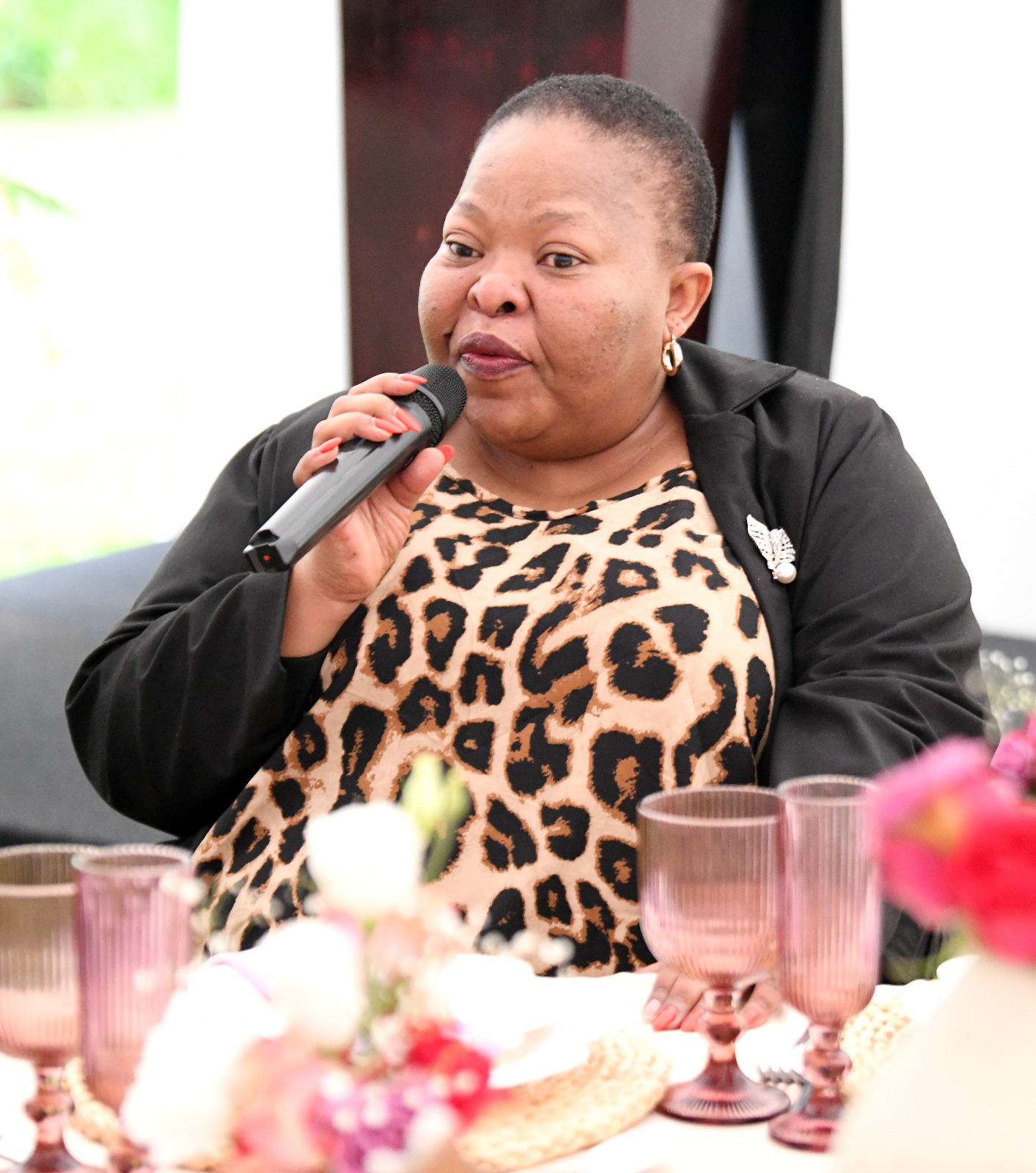
    Former RB2 presenter, Tebogo ‘Lady of Soul’ Ragontse has emphasised the power of belief and resilience in overcoming life’s challenges.

    Now, visually impaired, Ragontse highlighted the need to carry others along in one’s success and to ride on difficult situati ons, rather than succumbing to pressure.

    Ragontse said this during the International Women’s Day, hosted by Avani Gaborone Resort and Casino in partnership with Mosha Spa on March 6.

    Sharing her story of loss, losing sight and personal growth, Ragontse, who got married in 2013, thought she had life figured out, only for her envisaged future to get shuttered overnight, as her husband passed on the same year, leaving her with a child to raise alone.

    “I questioned God why was this happening to me, how am I going to live and what am I going to do alone, but God had his plans,” Ragontse said.

     Three years later, while still healing and finding her strength, Lady of Soul lost her sight. By then, she did not know why she lost her sight.

     “I got blind because I was stressed. I was depressed because I could not handle everything and it was eating me from the inside. I thought I was tough, because women we say we are tough, but we are not,” she said. Despite her condition, she said she soldiered on and managed to raise her child alone.

    She said after losing her sight, she stopped working at RB2 and later decided to go return to radio.

    However, she did not stay long, as she decided to go for further studies.

    She went on to study for a Bachelor’s Degree in Broadcasti ng and Journalism at the Limkokwing University of Creative Technology.

    She said she knew it was not going to be easy, but with the good systems at Limkokwing University of Creative Technology, she managed and completed her four-year studies before securing a job at Debswana

    While at the university she became the Student Representative Council president for students living with disabilities.

    Ragontse therefore encouraged other women to cry if they had to, ask for help and share with other people they trusted, if they were not happy.

    “Keeping quite will kill one slowly from the inside. I thought I was strong, you could not see it on the outside, but it was damaging me inside. Damaging me to a point where it took my sight, because that was the easiest thing to take. Imagine if it took my life,” she said.

    She also cautioned women about competing with one another, saying everyone had a purpose in life.

    She implored women to always pray and put God first in everything they did, saying it carried her through during challenges she faced.

    Meanwhile, a Form Three learner at Maoka Junior Secondary School, Gayle Ngoni, who was one of the attendees, said while the day celebrated progress, she acknowledged challenges faced by the girl-child and recognised the collective benefit of supporting and empowering women and girls.

    She advocated continuous support of women and girls as that could lead to stronger families, communities and societal advancement.

    “Events like these are not only about celebrating women, but also about investing in the women of tomorrow,” said Avani Gaborone Resort and Casino public relations and marketing executive, Samantha Bogopa.

    She said the day was about connection, inspiration and celebrating the strength that existed when women supported one another.

    Held under the theme: Give to Gain, the International Women’s Day saw women and girls gathered in conversation, sharing life experiences and opening meaningful connections with the aim to uplift, inspire and support one another.