Author: blastosnr

  • Keorapetse Envisions Environment Conscious Parliament

    Keorapetse Envisions Environment Conscious Parliament

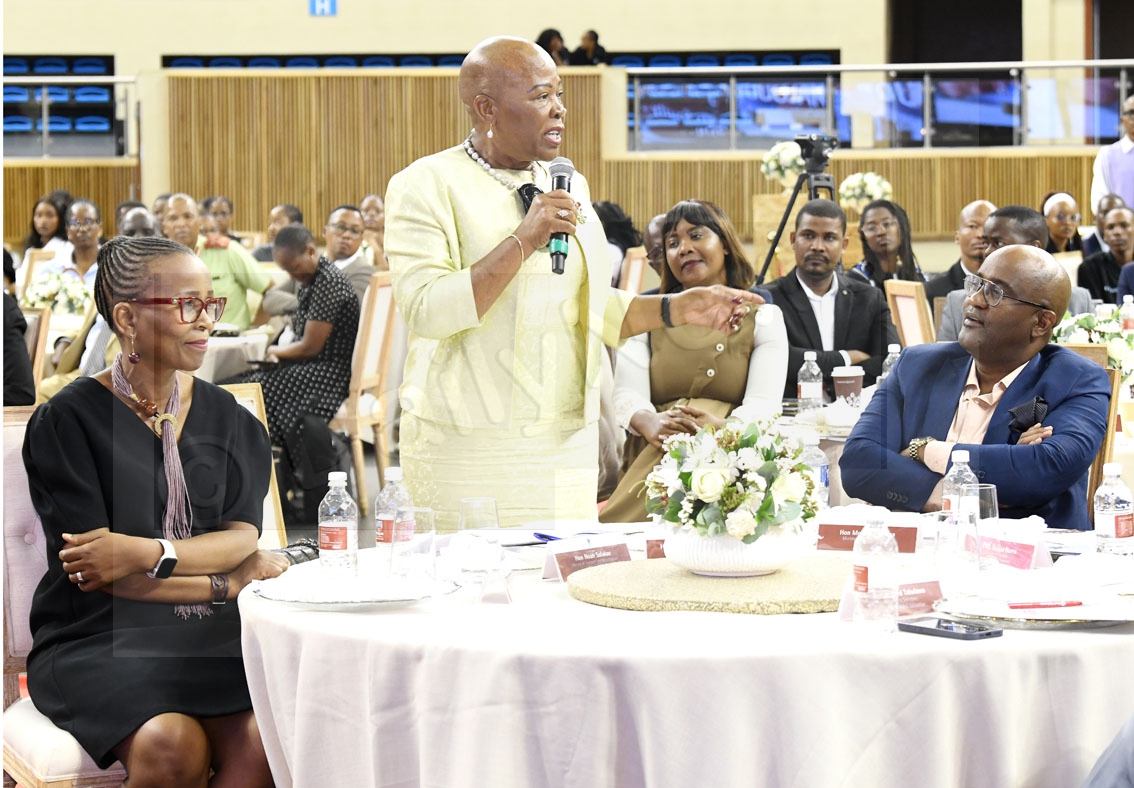
    Speaker of the National Assembly, Mr Dithapelo Keorapetse, has conveyed his vision of an environmentally conscious Parliament that embraces sustainable practices and supports Botswana’s green transition.

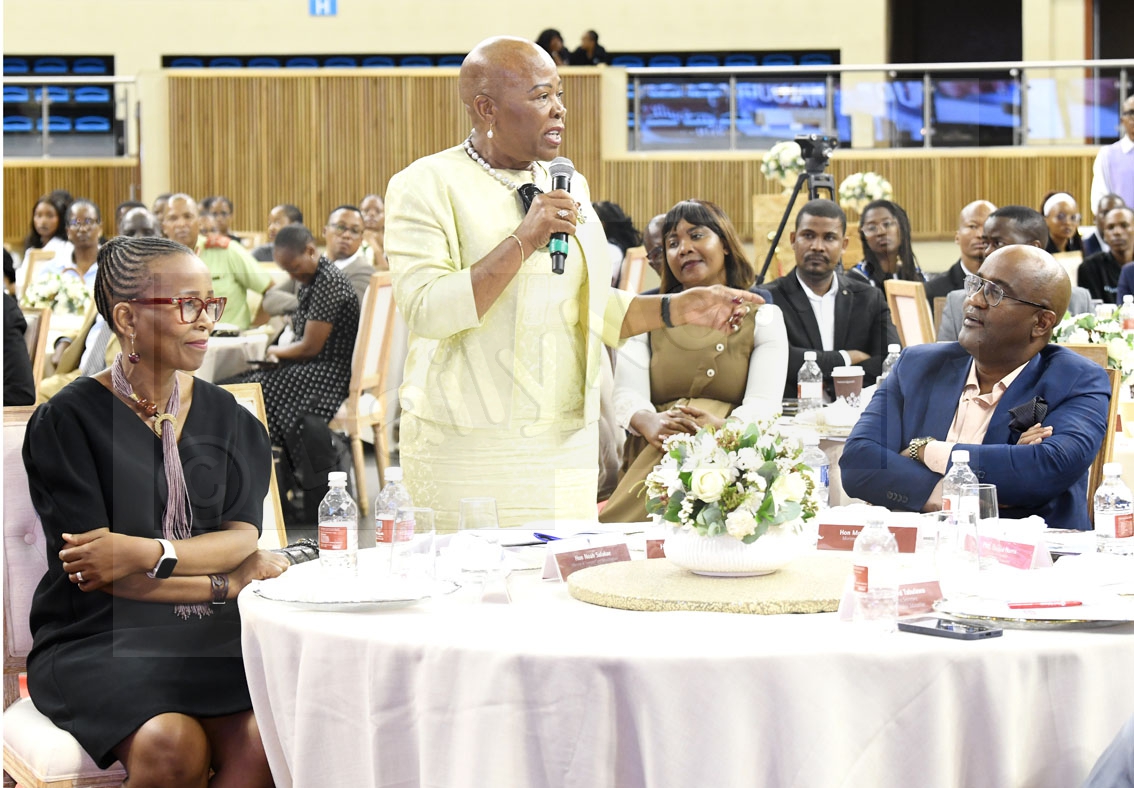
    Speaking during a courtesy call by the Executive Director of the 2050 Pathways Platform, an European Climate Foundation, Ms Marcela Jaramillo, Mr Keorapetse said achieving this goal began with the development of an Environmental, Social and Governance (ESG) strategy, which Parliament currently lacked.

    He said Parliament must decarbonise and go green, adding that achieving such transformation required strong political will.

    “The past Parliament’s contribution to green energy was just one per cent, despite a target of 30 per cent,” he said.

    Mr Keorapetse said that Parliament pledged to elect supportive legislation, scrutinise statutory instruments, and ensure effective budget oversight to shape National Energy Policies.

    He further said that Botswana often missed out on green funding and partnerships due to the absence of clear standards, policies, and proper management frameworks.

    The Speaker therefore said Botswana  needed to move swiftly to put the right structures in place.

    The 2050 Pathways Platform, an initiative of the European Climate Foundation in partnership with the African Development Bank, is to support Botswana in developing its Long-Term Emission Strategy (LTS).

    Recently, the organisation held a stakeholder engagement workshop to deepen stakeholder participation in shaping Botswana’s LTS by reviewing, validating and refining the preliminary outputs and scenario pathways towards achieving net zero emissions by 2050, while maintaining economic diversification and growth.

    Ms Jaramillo said the 2050 Pathways Platform, launched in 2016, initially focused on  32 major economies but has since expanded its support to other  countries.

    She said the LTS strategies were seen initially as how big economies started decarbonising  and how they started supporting the objectives  of the Paris Agreement.

     “Then they started to expand across all countries, because everybody started to realise that there is no economic planning, socio-planning, or development planning that can be done robustly if there is no considerations of climate impacts,” she said adding that many developing countries also came on board and developed the strategies. 

    Ms Jaramillo said there was a range of options on the table for Botswana to make strong and robust decisions on key activities that would support the country’s sustainable development.

    “One important thing, and this has happened in several countries that we have supported, but it is specific now in Botswana, is developing the national development plan,” Ms Jaramillo said adding that Botswana needed to have a clear plan behind, a clear governance and institutional leadership to be at the forefront of international finance. BOPA

  • Botswana’s President Calls for Economic, Social Transformation to Address Unemployment, Inequality

    Botswana’s President Calls for Economic, Social Transformation to Address Unemployment, Inequality

    Botswana’s president criticized outdated institutions, practices, and behaviors that no longer serve a useful purpose but are clung to due to “institutional fetishism” and urged reimagining society and the economy in the modern age, advocating for creativity and bold thinking, going beyond formulaic or modular solutions.

    Botswana’s President Duma Boko called on the nation for economic and social transformation to address unemployment and wealth inequality, speaking at a high-level Business Engagement Forum in Gaborone on Tuesday.

    “We are wrestling with massive unemployment across the breadth and dimensions of our country, particularly youth unemployment. We are talking about the unemployment of young people,” Duma Boko stated.

    Despite some economic growth, Botswana has experienced “jobless growth,” leaving many citizens marginalized and living in poverty, Boko stated, emphasizing the need to “democratize wealth” and create “decent jobs.”

    “We must take full responsibility. We are guilty as charged. And we’re here to openly acknowledge these faults, these foibles, these shortcomings. So that we begin to identify those creatures of flesh and blood that are languishing at the margins of the economy. They are crying out for jobs, for a decent job. Not just a job, a decent job,” he explained.

    While describing poverty as a violation of human rights, the president also noted that Botswana faces extreme levels of income inequality.

    “We have a huge responsibility. We are wrestling with the reality of an economy that is unequal, presenting astounding levels of income and wealth inequality. We rank among the most unequal in the whole world,” he pointed out, adding that there is “painfully little justification” for such a situation.

    Examining Nontraditional Threats and Responses

    Ethical considerations play a crucial role in this delicate balance. The nations grapple with ethical implications of their actions, recognizing that the pursuit of power must align with principles that uphold human rights.

    Ongoing threat of terrorism underscores need for effective counterterrorism strategies. Balancing power involves collaborative efforts to combat extremism while promoting inclusive and tolerant societies.

    If you want to make peace with your enemy, you have to work with your enemy. Then he becomes your partner.

    Nelson Mandela

    A commitment to arms control agreements is crucial in the quest for balance. Nations engage in negotiations to limit the proliferation of weapons, fostering an environment where peace is not compromised by the threat of escalating conflicts.

    Exploring the Psychology of Soldiers in Combat

    From virtual reality tours to language learning apps, discover how travelers can connect with local cultures in innovative ways.

    Counterterrorism Strategies

    • Digital nomad hotspots offer the flexibility to work from anywhere.
    • Connecting with like-minded individuals from around the world.
    • Enhancing personal growth and fostering a global perspective.
    • Living as a digital nomad allows for frequent exploration.
    • The diverse and stimulating environments in digital nomad hotspots.

    The world is a grand stage, and travel is our passage to becoming the actors in a play where the script is unwritten, the set ever-changing, and the applause echoes in the memories we create.

    Blurring the Lines Between Conventional and Irregular Tactics

    In design, rhythm is created by simply repeating elements in predictable patterns. This repetition is a natural thing that occurs everywhere in our world. As people, we are driven everyday by predictable, timed events.

    One of the best ways to use repetition and rhythm in web design is in the site’s navigation menu. A consistent, easy-to-follow pattern—in color, layout, etc. Gives users an intuitive roadmap to everything you want to share on your site.

    Adapting Military Strategies to the Digital Age

    Beyond military might, soft power strategies such as cultural exchange, education, and global cooperation in addressing shared challenges contribute significantly to the delicate balance.

    Bad navigation is an especially common problem. We’ve all struggled to find things on disorganized websites without any logical structure. It feels hopeless.

    • Transcending cultural and societal divisions.
    • It is the foundation for global cooperation and understanding.
    • Creativity and innovation thrive effortlessly.
    • Individuals find solace and personal growth within peaceful settings.
    • Ommunities prosper in the embrace of peace.
    • Human rights are safeguarded, ensuring dignity.

    The world is a grand stage, and travel is our passage to becoming the actors in a play where the script is unwritten, the set ever-changing, and the applause echoes in the memories we create.

    The Role of Military Forces in Crisis Response

    Nobody enjoys looking at an ugly web page. Garish colors, cluttered and distracting animation can all turn customers “off” and send them shopping “somewhere else”. Basic composition rules to create more effective:

    • Empowering minds to envision a brighter future.
    • Societies cultivate tolerance, celebrating diversity and inclusivity.
    • People experience a profound sense of security and stability.
    • It encourages the pursuit of justice and fairness for all.
    • Reflecting the beauty of a tranquil existence.

    Nobody enjoys looking at an ugly web page. Garish colors, cluttered and distracting animation can all turn customers “off” and send them shopping “somewhere else”. Basic composition rules to create more effective:

    Examining the Intersection of Military and Political Agendas

    Beyond military might, soft power strategies such as cultural exchange, education, and global cooperation in addressing shared challenges contribute significantly to the delicate balance.

    Online multiplayer shooters, like CS:GO, Fortnite, and PUBG, are currently dominating the gaming world, thanks to professional gamers, esports tournaments, Twitch streamers, and YouTube gaming channels. Others have spawned sequels that out play and out perform their original games. Some games that have been released years ago are still popular today.

  • Botswana Signs Agreement to Transform SADC Parliamentary Forum Into Regional Parliament

    Botswana Signs Agreement to Transform SADC Parliamentary Forum Into Regional Parliament

    The treaty amendment aims to transform the SADC Parliamentary Forum (PF), established in 1997, into a regional parliament with enhanced legislative powers. This change requires a majority, if not all, of the SADC member states to sign the agreement for it to be implemented. Botswana thus joined the countries who have already signed the treaty.

    Botswanan President Duma Boko signed an agreement to amend the Southern African Development Community (SADC) Treaty on Wednesday, aiming to establish the SADC Parliament as one of the organization’s key institutions.

    During the signing ceremony, Boko described the initiative as “a political decision” and urged SADC member countries to align their laws in order to tackle regional challenges effectively.

    Dithapelo Keorapetse, the speaker of the Botswanan National Assembly, commended the SADC Parliamentary Forum for its efforts in promoting good governance and regional integration.

  • WHO supports Botswana’s preparedness and response efforts for coronavirus

    WHO supports Botswana’s preparedness and response efforts for coronavirus

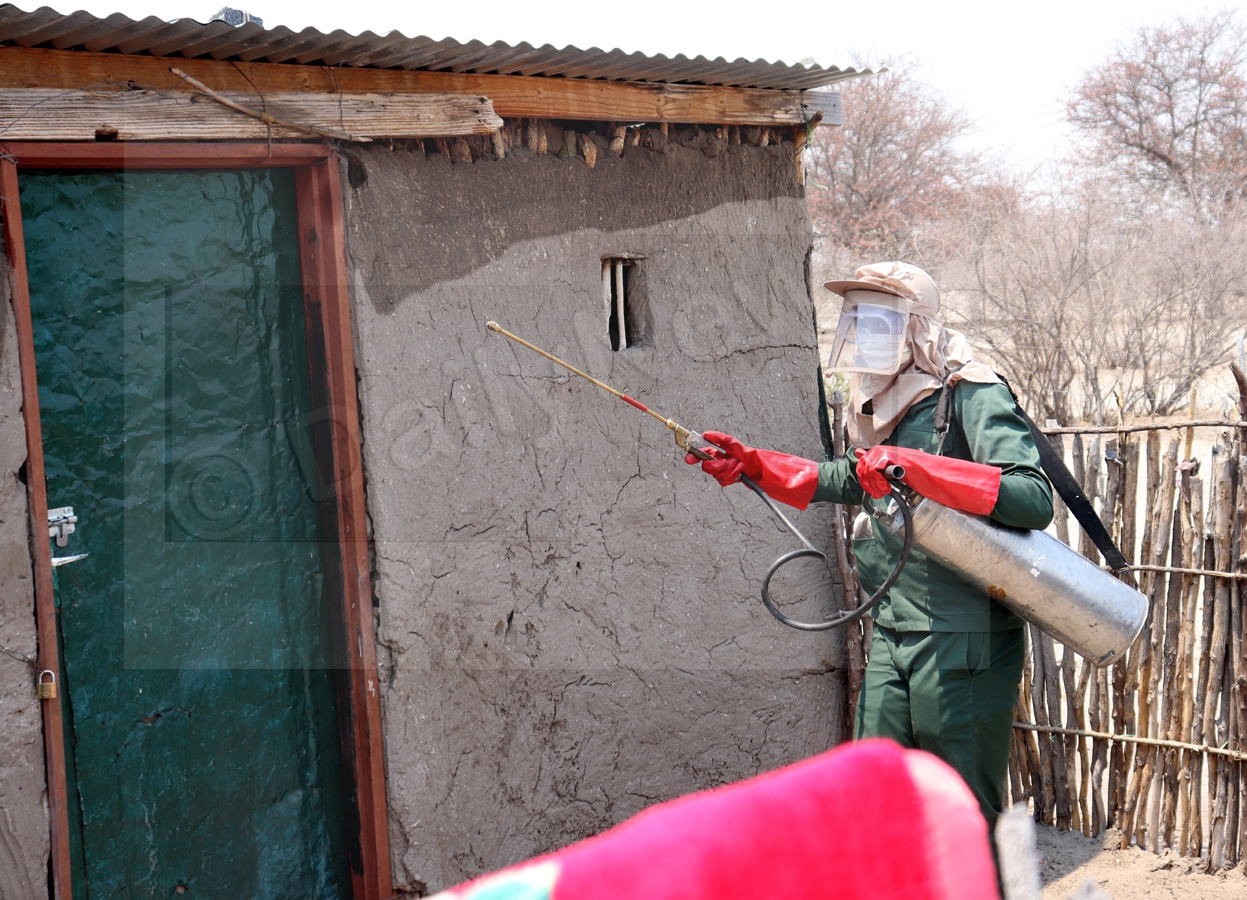
    Gaborone, Botswana – 04 February 2020: WHO has provided PPE kits and has ordered digital thermometers and other essentials to support key preparedness and response activities such as screening and case management. WHO Representative, Dr Josephine Namboze and technical staff continue to provide technical guidance, training and support on a daily basis in all areas of preparedness and response. All staff including cleaners, security, immigration, revenue services, restaurant workers and others at ports of entry have been trained in hygiene and infection control while health staff have received comprehensive training from surveillance, infection control to case management.

    In the last one week, the WHO Representative attended a meeting of the multi-sectoral national Public Health Emergency Coordinating Committee (PHECC) and addressed a Joint media conference with senior management from the Ministry to update the public on the coronavirus outbreak and what the world, WHO and the country are doing. She also joined the Minister of Health and Wellness Dr Lemogang Kwape to tour key facilities including the Sir Seretse Khama International Airport in the capital Gaborone, the isolation facility in Block 8 and a designated bigger isolation facility Sir Ketumile Masire Teaching Hospital in case of increasing numbers of people needing isolation and management. Dr Namboze and Minister Kwape also visited the busiest land border post between Botswana and South Africa to monitor Port Health Services and motivate staff. The country currently has 5 suspected cases and has not recorded a confirmed case yet. Test results from the Regional Laboratory in South Africa will shed further light on this.

    Day to day, the Minister is constantly engaging the community including Batswana in Wuhan, China through various forms of media such as telephone, broadcast and social media. He has also engaged with the Chinese Embassy in Botswana. The Embassy is helping with translation of key documents into Chinese as large numbers of Chinese nationals coming into Botswana have difficulties understanding English.
     
    WHO co-chairs the Risk Communication and Community Engagement committee of the PHECC which advises the Minister and coordinates communication, awareness creation, social mobilization and community engagement. WHO has also briefed UN staff and partners and will continue to do so.

    Yesterday (3rd February 2020), the Minister of Health and Wellness addressed cabinet on the status of 2019-nCoV and the specific actions that have been taken as part of preparedness.

  • President Duma Boko of Botswana Joins Global Center on Adaptation Board

    President Duma Boko of Botswana Joins Global Center on Adaptation Board

    Gaborone / Rotterdam, 7 August 2025 – The Global Center on Adaptation (GCA) is pleased to welcome Advocate Duma Boko, President of the Republic of Botswana to its Board, bringing to the table a renewed focus on climate justice, sustainable development and homegrown solutions for a continent on the frontline of the climate crisis.

    Botswana is already experiencing the sharp edge of climate change. Rising temperatures—above the global average—combined with recurring droughts, declining water tables, and land degradation threaten the country’s key sectors, from agriculture to tourism. In recent years, severe dry spells have triggered food insecurity, stressed water supplies in cities like Gaborone, and intensified the risk of desertification in already arid regions. These impacts, while local in manifestation, reflect a global emergency that demands coordinated, cross-border responses.

    President Boko’s leadership is rooted in a strong belief that climate adaptation is not merely a technical challenge—it is a political and economic imperative. His appointment signals Botswana’s growing ambition to contribute to the global adaptation agenda while securing a resilient future for its people.

    Advocate Duma Boko, President of the Republic of Botswana said: “Climate change threatens to roll back decades of progress across Africa, disrupting livelihoods, deepening inequality, and undermining the foundations of sustainable development. In Botswana, we have seen firsthand how drought, shifting weather patterns, and water scarcity affect our people, our ecosystems, and our economy. That is why I am honoured to join the Board of the Global Center on Adaptation. The Africa Adaptation Acceleration Program is a critical platform to mobilize resources, partnerships, and political will needed to scale adaptation solutions that work for Africa. As a country deeply committed to climate resilience and sustainable growth, Botswana stands ready to contribute to this collective effort, to ensure that adaptation is not an afterthought, but a cornerstone of our continent’s development future.”

    The GCA Board unites global leaders who share a common mission: to integrate adaptation into core economic and development strategies. As Chair of the GCA Board, H.E. Macky Sall, Fourth President of Senegal, emphasized the critical timing of President Boko’s appointment: “Africa cannot afford to treat adaptation as an option—it is a necessity for survival and prosperity. President Boko brings a principled voice, grounded in experience, that will strengthen the Africa Adaptation Acceleration Program as it scales across the continent. Botswana’s proactive stance on resilience, governance, and regional stability makes it an important partner in this collective mission.”

    Through the Africa Adaptation Acceleration Program (AAAP)—a joint initiative with the African Development Bank—the GCA is working to integrate adaptation into every facet of development, from resilient agriculture to youth entrepreneurship. Having already shaped over $17 billion in adaptation-aligned investments, the AAAP is shifting the narrative from vulnerability to opportunity.

    “President Boko’s appointment reflects a broader movement among African leaders who are championing adaptation not only as a protective measure, but as a driver of transformation,” said Professor Patrick V. Verkooijen, President and CEO of the Global Center on Adaptation. “His leadership will help sharpen the focus on national ownership, inclusivity, and investment as we work to close the adaptation finance gap and accelerate progress where it is needed most.”

    President Boko joins a diverse and high-level Board of former and current heads of state, ministers, and global leaders from the public sector.

  • Former Botswanan president returns from self-imposed exile, appears in court

    Former Botswanan president returns from self-imposed exile, appears in court

    Gaborone, Botswana — 

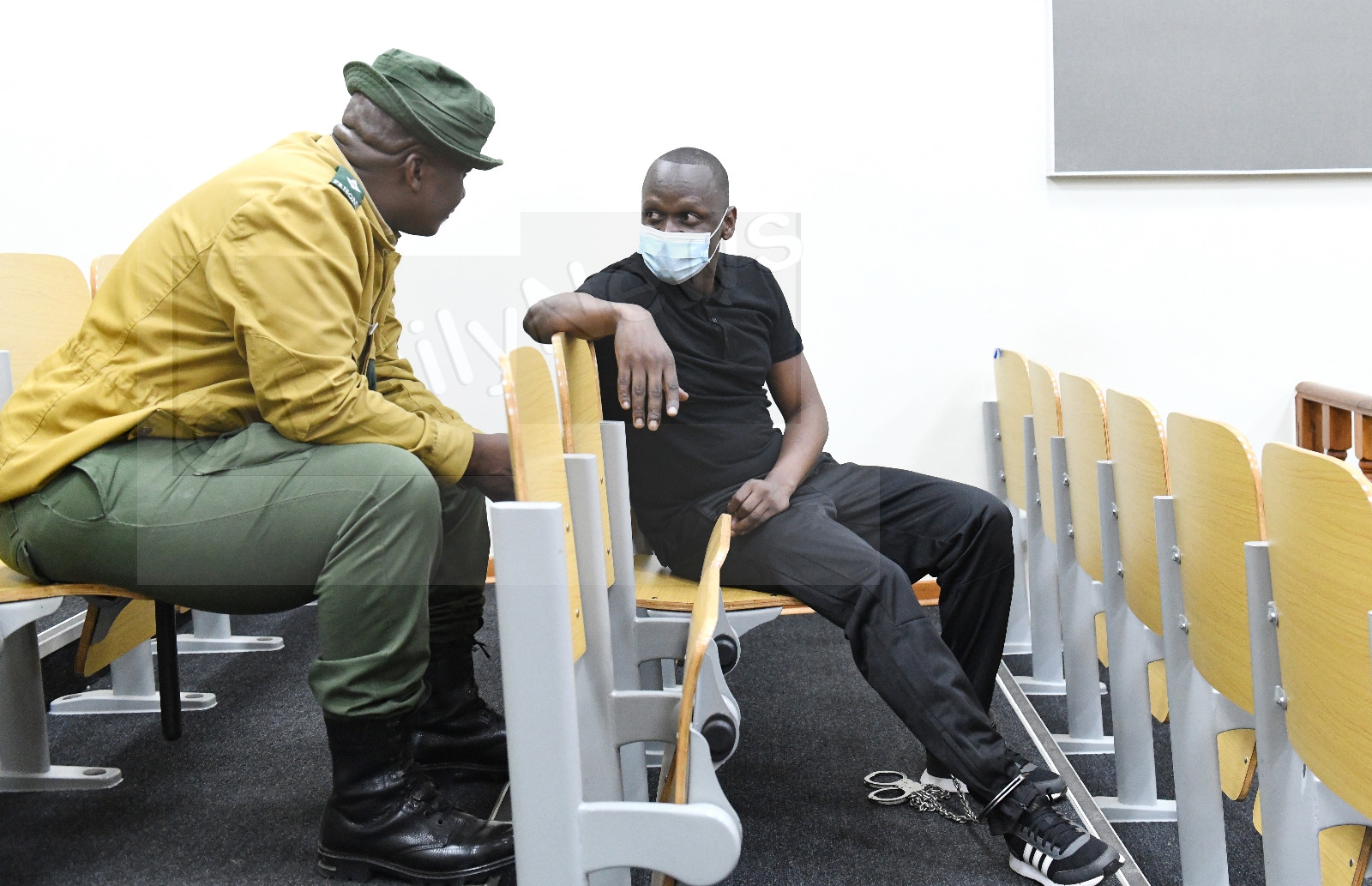
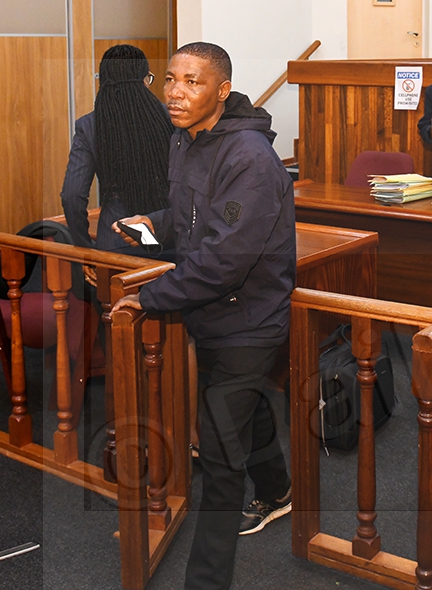
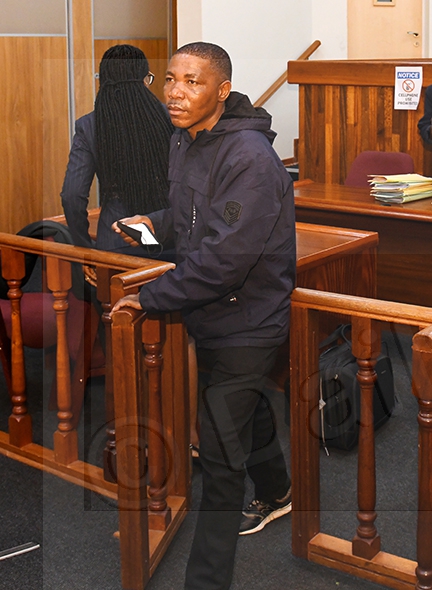
    Botswana’s former president, Ian Khama, has made a surprise return to the country after a nearly three-year self-imposed exile. Khama, who faces criminal charges, fled the southern African country in 2021, saying his life was in danger after a fallout with President Mokgweetsi Masisi.

    Khama appeared Friday in a Gaborone court, where his lawyers asked that a warrant of arrest against him be dropped. He faces 14 charges, which include illegal possession of firearms and money laundering.

    His lawyer, Unoda Mack, told reporters outside court that the warrant of arrest has been set aside.

    “They wanted him, we brought him. The warrant has been set aside. He will appear in court, he will be coming. He brought himself,” Mack said.

    Khama, who leads a splinter opposition party, the Botswana Patriotic Front (BPF), has denied the criminal charges and says they are part of persecution by Masisi.

    Khama handpicked Masisi to succeed him in 2018.

    BPF Secretary General Lawrence Ookeditse said Khama, who led Botswana between 2008 and 2018, is back to fight the “bogus” charges.

    “He went to the magistrate court to try to get the bogus warrant of arrest that was brought on him quashed,” Ookeditse said.

    Khama’s return comes just weeks before Botswana holds its general election on October 30.

    Ookeditse said the former president will participate in campaigns for his party.

    “We have been very consistent and General Khama has also been very consistent to the effect that we are going to cause an upset in these elections and he is going to be on the ground campaigning for the BPF, as we are going to do all we can to effect regime change in a democratic way in Botswana,” Ookeditse said.

    Masisi has previously said Khama must return to face the law, and denied accusations of persecuting his predecessor. Khama will be back in court on September 23.

  • Africa must strengthen accountability and governance to prosper — Botswana President Duma Boko

    Africa must strengthen accountability and governance to prosper — Botswana President Duma Boko

    Africa’s economic success and sustainability are intrinsically linked to accountable governance, Botswana’s new President, Duma Boko, stressed at the opening of the 2024 African Economic Conference in Gaborone.

    “Peace and stability in Africa must be anchored on accountable and responsive governance,” the president said, adding, “This is a fundamental human right for every African citizen. It sets the requisite bedrock for any measure for our economic development and its sustainability.” He also called on African countries to strengthen democracy and uphold the rule of law.

    The three-day conference, with the theme, “Securing Africa’s Economic Future Amidst Rising Uncertainty,” has brought together leaders, policymakers, and experts to address the continent’s economic challenges and opportunities. Organised by the Government of Botswana, the African Development Bank, the United Nations Economic Commission for Africa (ECA), and the United Nations Development Programme (UNDP), the event seeks actionable solutions for Africa’s economic growth.

    President Boko underscored that transparency, accountability, and respect for the rule of law are critical in attracting foreign investment and fostering sustainable growth. “Africa is at a crossroads,”  he said. “We must confront the obstacles facing our citizens and leverage our collective strengths to secure a prosperous future amidst a volatile global economic environment characterized by rising inflation, supply chain disruptions, and tightening monetary policies.”

    Innovative Financial Solutions for Growth

    “Global uncertainties challenge us to rise above prevailing circumstances and invest in the Africa we want – which is the Africa the world needs: a continent characterized by shared prosperity, productive regional integration, vibrant and entrepreneurial youth, and freedom from fear, disease and deprivation,” underscored UN Assistant-Secretary General and UNDP Africa Director Ahunna Eziakonwa.

    Eziakonwa also called for innovative and sustainable financial solutions to reduce borrowing costs and address credit rating biases, which cost the continent $76 billion annually. “We must stem illegal flows where $90 billion is lost. Tens of billions of pension funds, sovereign wealth funds, and insurance funds must work for the continent rather than elsewhere. This Conference must go beyond diagnosing challenges and should lead to actionable solutions. We must take steps to ensure that Africa’s abundant resources finance its growth.”

    The African Economic Conference also underscored Africa’s unique endowments, including its abundant natural resources and youthful population, which could drive transformative growth if governments prioritise education, skills development, and value addition for raw materials.

    Addressing Africa’s Economic and Social Challenges

    The United Nations Under-Secretary-General and Executive Secretary of ECA, Claver Gatete, said Africa faced several pressing issues, including climate change, unsustainable debt, and systemic global inequalities. The global financial system is failing to serve Africa adequately and needs to be urgently reformed, he said.

    Gatete highlighted that the continent’s annual losses from climate disasters alone are as high as $440 billion, while the financing gap to achieve the Sustainable Development Goals in Africa has surged to $1.3 trillion annually. At the same time, Africa’s external debt surpassed $1 trillion in 2023, with unsustainable interest payments restricting development financing.

    “The human cost is equally staggering. Nearly 476 million Africans live in poverty today, with 149 million falling into this bracket recently due to cascading climate and economic shocks,”  Gatete said.

    Regional reforms and integration are critical

    President Boko encouraged African nations to leverage the African Continental Free Trade Area to transform the continent’s economic landscape through increased investment, job creation, and industrialisation.

    “We must not allow the uncertainties of today to deter us from tomorrow’s opportunities,” he told participants.

    Chief Economist and Vice-President of the African Development Bank, Prof. Kevin Urama, urged African countries to adopt innovative, homegrown solutions tailored to their unique challenges. He advocated for strengthened fiscal policies and more resilient resource mobilization to address debt challenges.

    Urama said: “Africa can build and strengthen its fiscal buffers and address the ongoing challenges posed by global debt markets, which have entrenched debt sustainability challenges in African countries. Experience has shown that countries can make their domestic and regional financial systems more resilient by increasing domestic resource mobilization and strengthening macroeconomic policy frameworks.”

  • Global Critical Resources Corporation Reopens Tataki Mine with President Duma Boko

    Global Critical Resources Corporation Reopens Tataki Mine with President Duma Boko

    Tataki Mine contains one of Botswana’s largest reserves of nickel, copper, cobalt, and platinum group metals. After reopening under GCR, Tataki will produce a variety of metals and hydroxide salts that are widely traded internationally. Products will include nickel and cobalt hydroxide precipitates, copper cathodes, metal bars for platinoids (platinum, palladium, rhodium), and precious metals, including gold. Under GCR’s leadership, Tataki Mine will manufacture value-added products on-site, with a focus on introducing new skills and advanced technologies to Botswana’s workforce.

    President Boko and his government’s delegation joined GCR leadership and Members of Parliament, government ministers, local dignitaries, and journalists for the reopening ceremony.

    “Investing in the green energy transition is not only an environmental decision but an economic imperative,” stated President Boko in his remarks to attendees. “The green economy will offer significant opportunities for both domestic and international investors. These sectors are wide open to young people, who will become the job creators of tomorrow.”

    GCR plans to invest USD 200m into Tataki Mine over the coming decade, including USD 50m in the first 18 months to ramp up steady-state production levels. Over the next decade, Tataki Mine is expected to generate over USD 4.2bn in revenue and contribute a 1.5% increase in annual GDP to Botswana.

    Purpose-driven and innovation-led, GCR is dedicated to creating impact in both local communities and global supply chains. The company plans to invest significant resources in local development initiatives in education, infrastructure, and healthcare, while maintaining the highest standards on site for safety, environmental compliance, and stakeholder engagement.

    “We are building a dynamic company that will grow in tandem with Francistown and the entire region,” noted Executive Chairman Cevdet Caner in his speech. “Positive social impact and participatory engagement that aligns mining operations with local needs is a key priority for us.”

    Following a plaque unveiling, Executive Chairman Caner, President Boko, and others took a tour of Tataki Mine’s new facilities. President Boko noted that Botswana is “committed to a program of sustainable job creation, diversification, and transition to a green economy. The new Tataki Mine represents the best of these three goals. Today, we are planting the seeds of change.”

    Global Critical Resources Corporation (GCR) is a U.S.-registered producer of the critical metals that power modern life with assets in Africa and South America. GCR’s Executive Chairman, Austrian entrepreneur Cevdet Caner, has over two decades experience investing in the mining and property sectors and is the founder of several multi-billion-dollar real estate and natural resource companies.

  • Economists See Few Monetary Policy Changes With Powell Leading Fed

    Economists See Few Monetary Policy Changes With Powell Leading Fed

    Struggling to sell one multi-million dollar home currently on the market won’t stop actress and singer Jennifer Lopez from expanding her property collection. Lopez has reportedly added to her real estate holdings an eight-plus acre estate in Bel-Air anchored by a multi-level mansion.

    The property, complete with a 30-seat screening room, a 100-seat amphitheater and a swimming pond with sandy beach and outdoor shower, was asking about $40 million, but J. Lo managed to make it hers for $28 million. As the Bronx native acquires a new home in California, she is trying to sell a gated compound.

    Black farmers in the US’s South— faced with continued failure their efforts to run successful farms their launched a lawsuit claiming that “white racism” is to blame for their inability to the produce crop yields and on equivalent to that switched seeds.

    What Will Be The Next Step to Complete?

    The “new ’20s” idea might not work—there were a lot more young people in the United States then than now; a reprise of the world-changing inventions and discoveries of the 1920s would be a big surprise to those economists who believe that we have been in an invention dry spell since the 1970s. In his Businessweek piece, Peter Coy largely agrees, writing, “In all probability … the U.S. will continue to wrestle with ‘secular

    These experts make strong cases, and they satisfy my natural instinct not to go there. But I remain very interested in the reasons the ’20s appeal to our imagination right now. Of course, it’s the booze, the sex, and the parties. But it’s also a decade with a very strong identity—and I think that helps. Writing in the journal American Speech in 1951, Mamie J. Meredith argued that the ’20s boasted.

    I’d argue that Meredith’s point about the decade’s exceptionality still holds: How many other 20th century decades have a nice little permanent descriptor like Roaring? It helps that most of these are good adjectives, evoking a time you’d probably like to live through again—but even the slightly dangerous-sounding ones conjure up something specific. That definiteness offers an appealing sense

    Anyway, let’s get to that fun. A very joyful book to read about the decade is Frederick Lewis Allen’s Only Yesterday: An Informal History of the 1920s, which Allen—a blueblood journalist and editor at Harper’s—published in 1931. The book chronicles all of the movement and motion that makes the decade sexy, and doesn’t seem to miss a fad.

    The property, complete with a 30-seat screening room, a 100-seat amphitheater and a swimming pond with sandy beach and outdoor shower, was asking about $40 million, but J. Lo managed to make it hers for $28 million. As the Bronx native acquires a new home in California, she is trying to sell a gated compound.

    A designer knows he has achieved perfection not when there is nothing left to add, but when there is nothing left to take away.

    Allen is also really good at describing parties—or, at least, the ones the middle class and upper class attended. The historian wrote about how women taking up smoking had “strewed the dinner table with their ashes, snatched a puff between the acts, invaded the masculine sanctity of the club car.

    Popular In Human Interest:

    • Parents Are Fed Up With Their Kids’ Expensive Berry Habits
    • 15 Mother’s Day Gifts for the Burned-Out Mom in Your Life
    • Really Though, What Jeans Are in Style Now?
    • Don’t Fall for Fertility Fearmongering About Trans Men

    Perhaps by remembering the twenties merely as an enchanting series of novelties or the crude afterthought of a simpler past, we preserve the illusion of our own simple innocence,” mused historian Paula Fass in the introduction to her book The Damned and the Beautiful: American Youth in the 1920s.

  • Botswana: Back to square one on fiscal discipline

    Botswana: Back to square one on fiscal discipline

    The 159-year-old debating chamber of the Cambridge Union Society has played host to some of history’s most consequential leaders. From British Prime Ministers Winston Churchill and Margaret Thatcher to US Presidents Theodore Roosevelt and Ronald Reagan, the wood-panelled theatre has resounded to orators of world renown. 

    A year ago, Botswana’s Vice-President and Finance Minister Ndaba Gaolathe might not have expected to find himself addressing the famous venue at the annual conference of the African Society of Cambridge University. But since then, there have been major changes in Botswana’s governing structure.

    Until November, the ruling Botswana Democratic Party had reigned supreme since the dawn of independence in 1966. But following President Duma Boko’s stunning victory – propelled by his pledge to create 500,000 new jobs in five years – his deputy Gaolathe found himself launched into two senior offices, and onto the world stage. 

    Gaolathe looks at home during our conversation sitting on the Society’s famous scarlet benches, under the watchful eyes of portraits of past Society presidents. But taking in the historic surroundings and basking in electoral success is far from his priority. 

    The honeymoon period which attended the election of Boko’s Umbrella for Democratic Change is quickly drawing to a close. Just days after Boko’s shock election win in November, President Donald Trump swept back into power in the United States – and set the world economy on a path of trade war, tariffs and turmoil. 

    Botswana, the world’s second-largest producer of diamonds by volume, finds itself exposed to an underperforming global market for the stones, Trump’s caprice, and the very real threat of 37% tariffs on its exports to the US. 

    The IMF expects the economy to shrink by 0.4% this year – hardly encouraging grounds for the promised employment revival. Given such a discouraging start, can Gaolathe build the economy that Boko promised his voters? 

    While cognisant of the worsening global economy, the Finance Minister insists that his plans to impose fiscal discipline, diversify the economy, reinforce policymaking credibility and invest in transformative infrastructure remain unchanged. 

    “We have to be optimistic because, as I continue to say, we’ve been blessed with all the ingredients we need to build our country. The first of our priorities is to halt the haemorrhaging of our fiscus [treasury], because even though Botswana over the last few decades has outperformed everyone else on the African continent, we need to accept that there has been a period of lapse which has taken place, arguably, over the last 12 years or so. 

    “The fiscal discipline we used to have has broken down. In the past it was accepted that we don’t allow politics to interfere with the work of the professionals that manage the economy, particularly the Finance Ministry; we contaminated that culture; we allowed politics to make the economic decisions.

    “We threw away priorities and the emphasis on investing for the future – such as in infrastructure – in favour of immediate consumption. We allowed corruption to set in. So our first priority is to halt all this, and I believe that given that we have been there [in office] a few months, we’ve already done well on that front. 

    “You find we’re allowing politics to a large extent not to decide what makes sense in economics. We are galvanising ourselves around priorities, managing properly again, building capacity and our capabilities around properly managing infrastructure, doing things on time.”

    The unemployment challenge 

    It’s a vision of fiscal conservatism that does not often find favour with voters in Southern Africa, but Gaolathe believes it will chime with investors and help to achieve the hugely ambitious jobs goal that Botswana’s citizens demand the new administration meet. 

    While the country has long been a standout economic performer in Africa, largely due to its judicious management of diamond revenues – it was ranked sixth on the continent in 2024 with a GDP per capita at purchasing power parity of $19,039, according to the IMF – its people have long suffered from elevated unemployment. 

    It was an unemployment rate of over 23% – perhaps 11% higher among the country’s youth – that provoked the unprecedented electoral revolt against the BDP. In many voters’ eyes the ruling party had grown complacent after six decades in office.

    The softly-spoken son of Baledzi Gaolathe, the former Finance Minister under Presidents Festus Mogae and Ian Khama, pulls few punches in assessing the past. He argues that the governing elite and civil service have proven themselves unequal to the challenges of running a modern economy: training has lagged; knowledge of cutting-edge sectors is weak; and the country has produced too few engineers, ICT experts and tradespeople, he says. 

    “We don’t have the capabilities and capacity to do what the modern world requires. We don’t have the capacity to structure the public-private partnerships that we need to build mega-
    infrastructure projects. We don’t have the capabilities to leverage and bring  the best out of AI and tech. 

    “We need to build it. We need to retrain and revitalise the government civil service. We’ve never experienced the type of unemployment levels we have now, particularly among young people and educated young people. The education system has been purely geared to creating social sciences graduates. The unemployed are highly educated. This means we have a real opportunity to upskill rapidly to AI, tech, and indeed there are steps we’re taking and partnerships we’re putting in place.”

    Keeping the state out of business

    Gaolathe argues that the dead hand of the state has stifled Botswana’s economic potential, including through an extensive network of state-owned enterprises (SOEs).

    “The second priority is that we need to modernise, revitalise and restructure our state-owned enterprises. In a small economy like that of Botswana, that has maybe 50 SOEs across every sector, from water and power to telecoms and financial services, they are an important part of the economy. 

    “If it’s not efficient, if its sub-
    optimised, if governance is not strong, if you don’t have enough competent CEOs, that affects the economy in a big way,” he says. 

    The VP says the government is looking to proceed with plans to unbundle power generation and transmission while allowing the private sector to enter the market. 

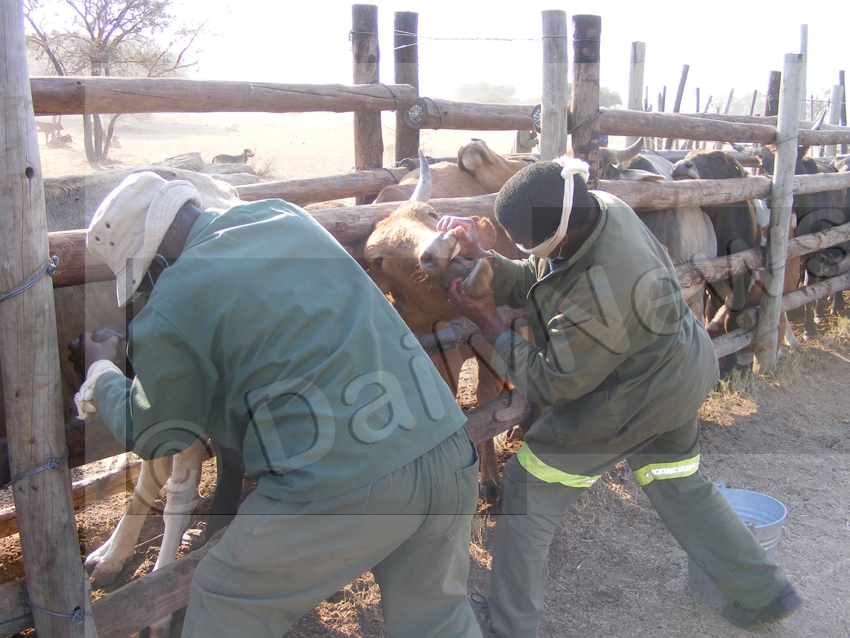
    In agriculture, Gaolathe says the country’s huge ranching economy – it boasts up to 2.8m head of cattle – is to be freed from the strictures of the state-run Botswana Meat Commission and its monopoly role in beef exports. That process began under the last government and will be completed. “We’re allowing different players into different parts of the food value chain. In financial services we are much more open to partnerships to bring in technical expertise and capital. 

    “All of these SOEs are very much scalable, they can become continental players… We have not really had a forecast on sectors that have the highest prospects of success – it’s time we did. In the past, government poured money into SMEs [small and medium enterprises] because it was popular. Now we need to support commercialised, high-productivity agriculture.” 

    The idea of this diversification drive, he says, is not that diamonds will play a smaller role in the economy – but that “everything else will play a bigger role than it used to”.

    In a straitened fiscal climate, one of Gaolathe’s major premises is that much can be achieved with self-funding public-private partnerships. 

    In particular, he wants to push forward with a string of what he refers to as “mega-infrastructure” projects – including massively boosting road and railway connectivity to the major urban centres in neighbouring Southern African countries – that will one day pay for themselves. Still, he adds ruefully, “we will always need borrowing” to optimise investments. 

    On 16 May the African Development Bank confirmed it would loan $304m to “cushion Botswana from the financial shock caused by declining diamond revenues”.