Author: Daily News

  • Gasita Voices Support for Constitutional Court

    Gasita Voices Support for Constitutional Court

    Residents of Gasita have expressed support for the establishment of a dedicated Constitutional Court in Botswana, viewing it as a vital step towards protecting citizens’ rights and addressing long-standing grievances.

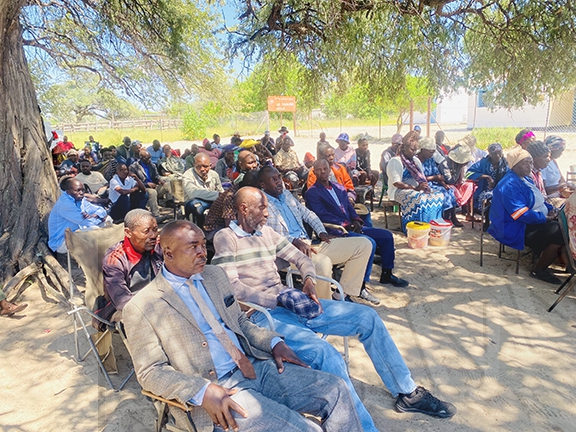
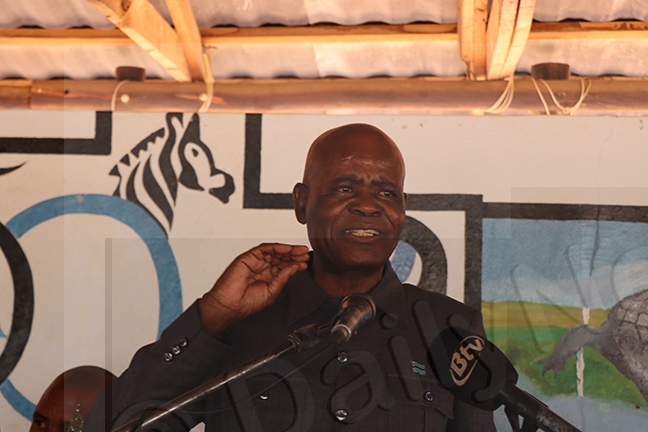
    This emerged during a consultative meeting held recently, where the Minister of Labour and Home Affairs, Major General Pius Mokgware engaged the community on the proposed constitutional court’s creation.

    The discussions formed part of ongoing nationwide consultations aimed at gathering public input on introducing the court to strengthen constitutional interpretation and rights enforcement.

    One resident, Mr Kelebileone Puoeng emphasised the need for the court to fulfill its intended mandate. He shared personal experiences of rights violations and expressed confidence that such a specialised court would provide timely and effective resolutions in the future.

    Mr Ntshekisang Tekanyo echoed this view, stressing that the court must serve the interests of all Batswana without deviation from its proposed purpose.

    Participants highlighted the constitutional court’s potential to make justice more accessible, particularly for those marginalised by high legal fees. They noted that land disputes, a common issue in rural areas, could be resolved more fairly and affordably through the new judicial body.

    Minister Mokgware reinforced these points with real-world examples. He referenced the case of Mr Pitseng Gaoberekwe, whose body remained in a mortuary for three years amid a dispute over burial rights on ancestral land, a matter he described as a clear human rights violation that a constitutional court could have addressed swiftly.

    The minister also pointed to the liquidation of the BCL mining group, suggesting that former employees might have used the court to contest their rights and entitlements more effectively. Additionally, he highlighted inheritance disputes as another area where the court would provide much-needed intervention.

    Maj. Gen Mokgware further noted that restoring powers to traditional leaders through the court’s framework would aid in resolving inheritance matters and uphold customary governance.

    Meanwhile residents raised concerns about local infrastructure. They urged the government to prioritise tarring the Selokolela-Gasita-Lorolwane Road, which is currently in poor condition and hinders movement between villages.

    The consultative meeting reflects broader national dialogue on constitutional reforms, with communities across Botswana weighing the benefits of a specialised court against other priorities. Residents in Gasita appeared optimistic about its potential to enhance justice and rights protection for ordinary citizens.

  • Kebogane Carves Niche in Art World

    Kebogane Carves Niche in Art World

    Born 42 years ago in Masilwana ward, Molepolole, Tshepo Kebogane’s path to the creative industry has been anything but ordinary.

    What began as a passion for fine art in his youth later intertwined with a spiritual journey as a prophet, before ultimately evolving into a unique artistic pursuit, rock art.

    “I have taken the wisdom I used as a prophet and put it into images, which is why my art feels miraculous,” Kebogane explained.

    His early years were shaped by watching his elder brother, Ronnie, sketch with devotion. That influence, coupled with encouragement from teachers, cemented his love for art, even as he struggled academically.

    During the COVID-19 lockdowns, Kebogane rediscovered his creative skill. Inspired by Chinese relief sculptures, he began experimenting with cement-based rock art, a medium he has since mastered.

    His dedication paid off when a church prophet rewarded his extraordinary work with a Mercedes-Benz, a gesture that affirmed the value of his craft.

    Trading under McRay Royal Arts (Pty) Ltd, Kebogane’s creations now grace hotels, lodges, guest houses, and parks across Botswana. His innovative use of cement mixed with recycled paper not only reduces costs but also contributes to sustainability.

     “Rock art is marketable when you have established a market. I believe it belongs in every yard, every space where nature can be celebrated,” he said.

    Beyond sculpture, Kebogane has ventured into fashion design, contributing ideas for Crown Badubi’s winning dress at the Mini Miss Icon International pageant in the USA. His versatility underscores his belief that art is both healing and transformative.

    Looking ahead, Kebogane envisions opening an art academy in Molepolole to nurture young talent. He urges government to support creatives, emphasising that not all gifts lie in academics, some are born in the hands of artists.

    “Patience pays. Let your art heal you first, then let it heal the world,” he said. 

  • Ministry Plans to Close and Rehabilitate Landfill

    Ministry Plans to Close and Rehabilitate Landfill

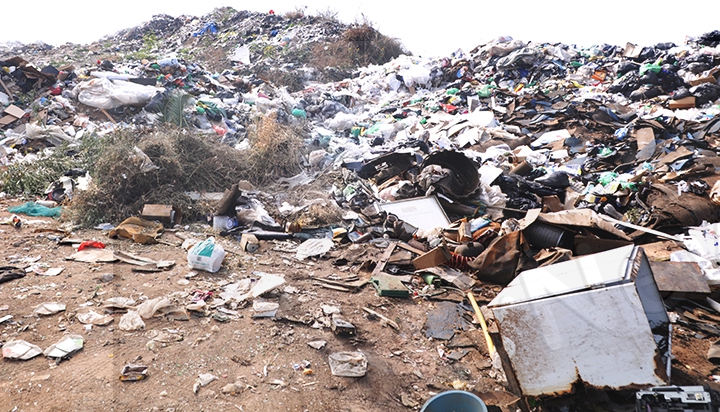
    The Ministry of Local Government and Traditional Affairs is planning to close the Pilane Landfill. 

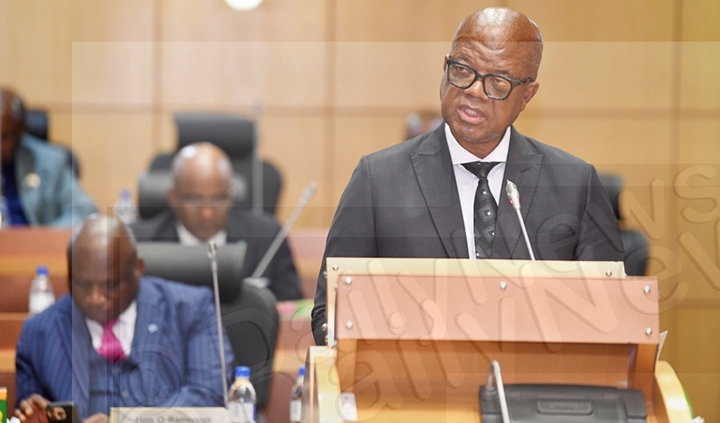
    Answering a question in Parliament on Tuesday, Minister Ketlhalefile Motshegwa noted that the move was linked to the development of an envisaged waste management facility at Dikwididi. 

    Mr Motshegwa stated that the ministry, through the Kgatleng District Council, was considering appropriate interventions to address ongoing challenges at the site. He further explained that, given the current financial climate, government was considering to engage a private company to assist. 

    The minister emphasised that rehabilitation of a waste management facility, such as the one in Pilane, was both a regulatory and policy requirement once it reached the end of its operational life. 

    Member of Parliament for Kgatleng West, Dr Unity Dow, had asked the minister whether there were plans to close and rehabilitate the landfill. 

     Additionally, Dr Dow sought an investigation into the adverse health consequences of the smoke that regularly spewed from the site and affected nearby residents.

  • BDF Gets P5Bn to Settle Pension Matters

    BDF Gets P5Bn to Settle Pension Matters

    Government has allocated P5 billion for the next financial year to settle outstanding BDF pension transfer values. 

    This follows a major decision to adjust the pension denominator for nearly 10,000 personnel.  Answering a question in Parliament on Tuesday, Minister for State President, Defence and Security, Mr Moeti Mohwasa revealed that 9,972 military personnel were eligible for such enhancements, comprising 5,560 separated members and 4,412 serving members. 

    Minister Mohwasa said processing began in July 2024 and as of February this year, 3,599 separated members have been paid and 161 were currently in the process of being paid, leaving 1,800 separated members awaiting their calculated values. 

    Regarding active-duty personnel, he said all 4,412 serving members were still waiting to have their records credited with the recalculated transfer values. 

    The minister noted that the primary limiting factor on the rate of disbursement had been a shortage of funds. To date, he said government had disbursed P1.4 billion to the fund administrators (NMG), which will cover 3,760 of the received claims. For the upcoming financial year, he indicated that government had allocated P5 billion for pensions and gratuities. 

    “This will go towards payment of outstanding claims as well as updating the active and deferred member records with recalculated transfer values,” Mr Mohwasa stated. 

    He emphasised that government was prioritising payments and continued to disburse funds to NMG as revenue became available. Currently, he said claimants owed less than P300 000 had been settled and those owed between P300,000 and P500,000 were now being processed. 

    Regarding the structure of the payouts, the minister explained that transfer value enhancements were governed by pension legislation, including the Retirement Funds Act, Income Tax Superannuation rules and BPOPF Fund Rules. 

    “Under these regulations, a member is only permitted to commute their entire retirement benefit if the remaining 50 per cent, after the initial lump sum, results in an annuity of less than P20,000 per annum,” he said. 

    Minister Mohwasa explained that such provisions were mandatory, stating that the law did not allow for discretionary waivers regardless of a beneficiary’s age. 

    He was responding to questions from Member of Parliament for Chobe, Mr Goretetse Kekgonegile, who asked the minister to brief on the progress of outstanding BDF dues. 

    Mr Kekgonegile requested clarity on the number of personnel paid versus those outstanding, the reasons for delays and the specific timeline for final payments. 

    He also questioned why members were required to purchase pension schemes with 50 per cent of their dues and whether flexibility could be exercised for older beneficiaries. 

  • Find Alternative Transport for Learners

    Find Alternative Transport for Learners

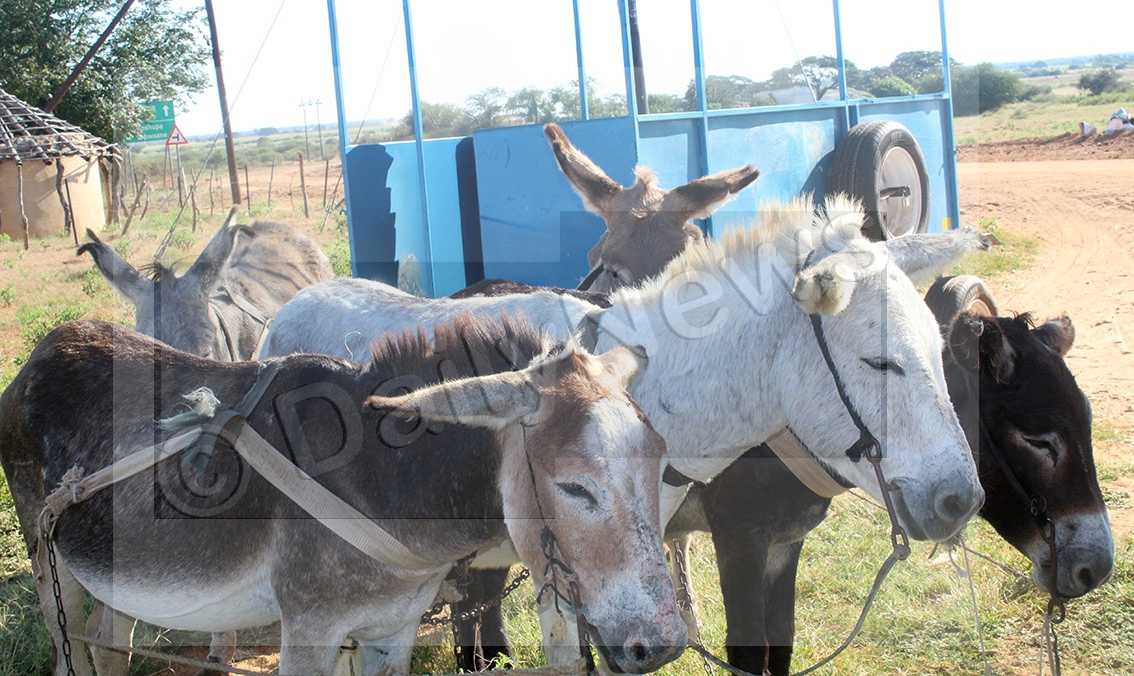
    Local authorities have been instructed to find alternative modes of transport following government’s resolve that donkey carts are unsuitable for ferrying learners. 

    The decision stemmed from concerns that donkey carts exposed learners to safety risks, including road accidents and harsh weather conditions. 

    Minister of Local Government and Traditional Affairs, Mr Ketlhalefile Motshegwa, said this answering a question from Member of Parliament for Mmopane-Metsimotlhabe, Ms Helen Manyeneng in Parliament on Tuesday. 

    Minister Motshegwa stated that the use of donkeys for learner transportation was being abolished and therefore councils were now required to implement alternative arrangements that met acceptable safety standards, specifically citing the need for roadworthy and properly covered vehicles. 

    Ms Manyeneng had asked the minister if he was aware that learners from Dintoroko, Gamononyane and Mmamhiko were being transported to Metsimotlhabe via donkey carts. 

    She highlighted the serious safety risks involved and wanted to know whether the ministry would commit to providing safer and sheltered vehicles to ensure the protection and well-being of the children.

  • BVI Sets up Lab to Scale up Production

    BVI Sets up Lab to Scale up Production

     In an effort to address ageing infrastructure and unlock additional capacity, a new Blending and Filling Laboratory is currently under development at the Botswana Vaccine Institute (BVI).

    The 2026 budget speech highlights that the investment will significantly increase production capacity, ensure full compliance with Good Manufacturing Practices and enable the diversification of vaccine products, thereby positioning BVI to strengthen regional supply chains and contribute meaningfully to export-led growth.

    The facility is expected to be completed in the 2026/2027 financial year. 

  • Govt Launches Strategic Policy Instrument

    Govt Launches Strategic Policy Instrument

    Government will launch the Botswana Mercantile Exchange (BMX) as a strategic policy instrument to support economic diversification.

    Minister of Finance, Mr Ndaba Gaolathe outlined in the 2026 budget speech on Monday that the BMX would introduce an organised, market-driven pricing mechanism for commodities such as sorghum and beef, aligning domestic prices with international benchmarks.

    This is expected to reduce income volatility for local producers and to improve price discovery, he said.

    Minister Gaolathe added that the BMX would contribute to reducing Botswana’s over-reliance on diamonds by creating new value chains, positioning the country as a regional trading hub, and strengthening integration into global trade networks.

  • Mohwasa Sets the Record Straight on Concourt

    Mohwasa Sets the Record Straight on Concourt

    Establishing the constitutional court is not about addressing same-sex marriages or abolishing the death penalty as some allege.

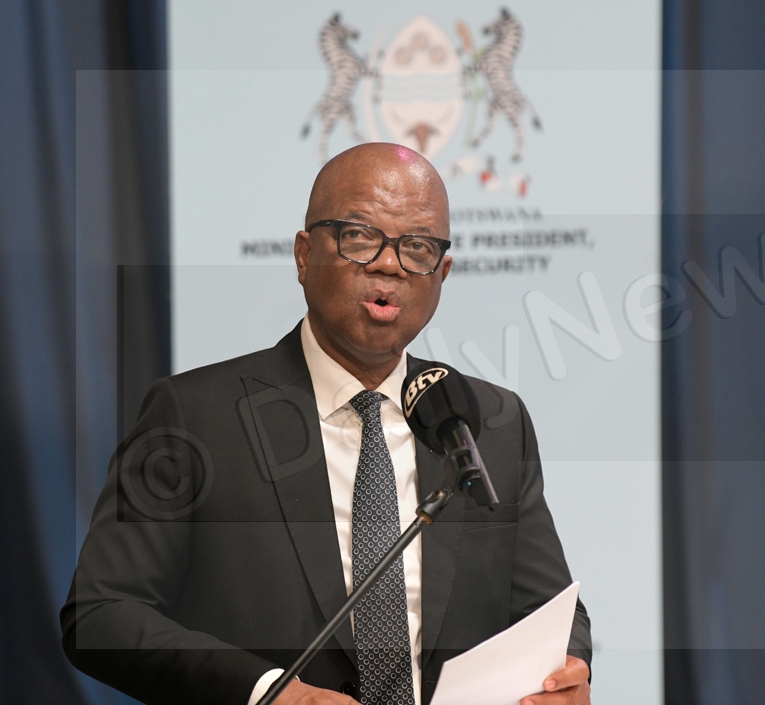
    The court would instead be all-encompassing in addressing constitutional and human rights violations, Minister for State President, Defence and Security, Mr Moeti Mohwasa, explained on Monday when addressing Civil Society and Non-Governmental Organisations.

    He cautioned against public misinformation by those with agendas, adding that there were civil society members who were meeting with politicians to solidify positions against the constitutional court. The court would serve to protect the rights of all people, as the government is a human rights-based government, it would be a body to oversee the review of the constitution, Mr Mohwasa said.

    The minister clarified that the creation of the constitutional court was not anyhow kick-starting the processes of the envisaged constitutional review.

    Minister Mohwasa said after passing a two-thirds majority vote by Members of Parliament, there would be a referendum for Batswana to have an input on the creation of the constitutional court.
    Civil society and non-governmental organisations’ members varied on the establishment of thec court.

    Mr Keabetse Sesenao opined that the country desperately needed the court to safeguard the rights and wellbeing of its people, while Ms Tumisang Seabo called for people-driven and transparent consultations, since Batswana were never consulted on whether they wanted a constitutional court to oversee the constitutional review.

    Although Batswana in the Dibotelo Commission indicated they wanted a constitutional court, the reasons they advanced differed from those advanced by the government, she said.
    In the Dibotelo Commission, Batswana wanted a concourt to help in the speedy delivery of justice and to relieve the High Court.

    She further noted that under the current laws, the ConCourt would operate under the same laws which limit the High Court and the Court of Appeal, thus not having any significant impact.

    Another contributor, Ms Lorato Mphusu, said the country faced significant morality and lifestyle detention issues, and wondered how the ConCourt would help to uphold or erode those.

    Thus, she called for the protection of the moral fabric of society.

    Mr Mohwasa noted that the problem of morality was not a legal issue but a societal problem.

    Generally, the minister said Batswana were an angry society, which bred intolerance leading to violence.

    “The anger also manifests in falsehood and, at times, vulgarity, which borders on criminality directed at the leadership.”

    Minister Mohwasa promised further consultations with civil and non-governmental organisations, adding that the government remained open to dialogue and consultations.

    BOCONGO board chairperson, Ms Cindy Kememi, stated that the civil society appreciated the opportunity to engage on the constitutional reform, noting that the process must be founded on meaningful, structured, and inclusive public participation.

    She said the dialogue reaffirmed the importance of engagement between civil society and government in strengthening constitutionalism and democratic governance.

    Ms Kememi noted that the concerns of civil society reflected the expectations and aspirations of society, adding that consultations must go beyond mere formality.

    She called for the publication of clear and accessible information on the constitutional court, including its mandate, jurisdiction, composition, and implications for existing judicial structures.

    She also urged for broader public consultations and sufficient time to be allowed for consultations and engagement, among other things. 

  • Inclusive Growth Central to Addressing Social Challenges

    Inclusive Growth Central to Addressing Social Challenges

    Achieving inclusive economic growth requires a multi-faceted approach, and when attained, it can bring about solutions to many of the country’s problems.

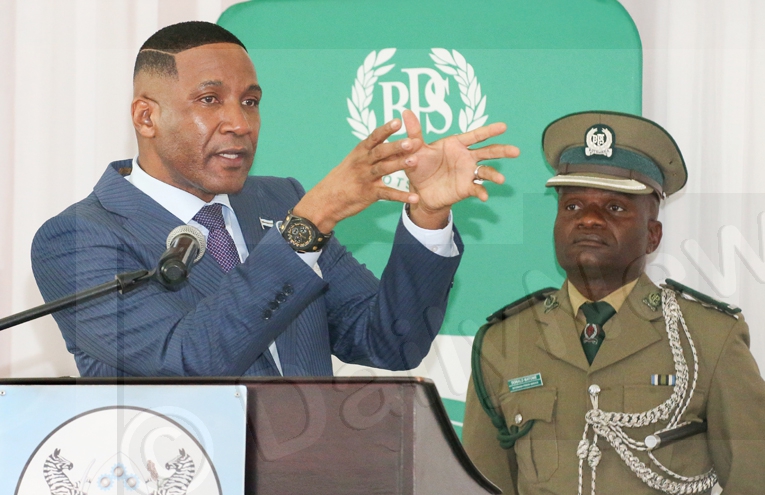
    Speaking during the official opening of Botswana Prison Service senior officers conference themed: Strengthening Leadership, Operational Discipline and Offender Rehabilitation in a Secure Humane Environment yesterday, President Advocate Duma Boko said it was government’s vision and priority to attain an inclusive economic growth.

    He said such a move would make Botswana Prisons Service’s job easier given that some offenders committed crimes because of economic hardships.
    To this end, he said the attainment of an inclusive economic growth would mean providing opportunities for people to make a decent living so as to keep them busy or engaged in order to frustrate crime.

    However, the President said that realising an inclusive economic growth remained elusive and had been always challenging to attain.

    He said the reality of the country was that Botswana ranked among countries with glaring disparities in economic inclusion, alongside countries such as Namibia, noting that the disparity translated into an exclusion of a large proportion of the people from meaningful economic activity.

    In addition, President Boko said the economically marginalised were condemned, side-lined and exist on the margins of the mainstream economy, which led to an interconnected web of daily challenges for societies.

    Therefore, President Boko said some of them reacted to such a status quo by drifting into crime, while others try to shield themselves from the harsh reality by drifting into drugs and substance abuse, which in turn created a lot of social ills such as violence of all forms and disregard for the wellbeing of others.

    He said society had collectively failed to mould such individuals, resulting in the Botswana Prison Service having to carry the burden of rehabilitating them into responsible citizens of the country – free from re-offending.

    For his part, acting Minister of Justice and Correctional Services, Mr Augustine Nyatanga urged the nation to understand that the work of the prison service was restorative in nature as it sought to rehabilitate offenders and re-shape their character.

    Mr Nyatanga, who is also MP for Mahalapye East, commended President Boko for his message on leadership, saying it was timely and relevant to the work and responsibilities carried by senior officers at the Botswana Prison Service.

    He said leading effectively was a collective responsibility of all team members and that possession of great leadership skills would drive the prison service’s aspiration to realise and even exceed its objectives.

    He called on the senior officers to take to heart President Boko’s message and use it as guiding light for the organisation’s operations going forward.

    Mr Nyatanga also spoke of the need to attain more from little resources, explaining that with that in mind, the Botswana Prison Service would accomplish its objective of effectively transforming offenders placed under its care. 

  • Land Issues Dominate Habu Consultations

    Land Issues Dominate Habu Consultations

    Some residents of Habu have expressed support for the proposed Constitutional Court, hoping it will address what they describe as longstanding injustices related to land ownership.

    Their comments came during consultations conducted by Assistant Minister of Trade and Entrepreneurship, Mr Tiroeaone Ntsima recently.

    One resident, Mr Uauanaro Kandjou highlighted escalating land conflicts in the village, pointing to instances where the Land Board had allocated the same plots to multiple individuals particularly farmland.

    Mr Kandjou argued that inheritance laws contributed to such disputes as some beneficiaries claimed plots as inherited property to the benefit of certain groups. He suggested that inheritance laws be reviewed or phased out to resolve such anomalies.

    Speaking on behalf of the Basarwa community, Ms Keikanetse Letshabamang said they were relocated from their ancestral land decades ago to make way for tourism concessions. She said they were yet to receive formal allocations given that the land board had suspended allocations in Habu for 17 years.

    Mr Lasaro Reakae emphasised the need for Botswana laws to reflect the cultures and traditions of all tribes to ensure that the rights of indigenous groups such as the Basarwa were protected.

    Meanwhile, Mr Uatjia Nguvauva raised concerns about Human-Wildlife conflict, noting that current compensation laws failed to cover losses, injuries or fatalities, leaving affected families without support.

    Some residents, including Mr Eric Alin, welcomed the establishment of Constitutional Court, noting that it should hold superior powers over the President to safeguard human rights effectively.

    In response, Assistant Minister Ntsima explained that the Constitutional Court would serve as a supreme court focused on protection of human rights.

    He said matters related to land administration, tourism management, socio-economic traditions, agriculture and natural disasters must align with the Constitution because they impacted citizens’ rights.

    He added that the ConCourt would also strengthen Botswana’s integrity to make the country more attractive to international investors. He assured residents that the Constitutional Court would operate independently from the President and be led by appointed judges.