Category: Arts & Culture

  • Retrospective on Creative Industry

    Retrospective on Creative Industry

    As the sun sets on 2025, the dust is far from settling on Botswana’s cultural landscape.

    This year, the Blue, Black and White did not just participate in the global creative economy, but demanded its seat at the table.

    From the high-fashion runways of Paris, France to the digital corridors of Silicon Valley, Batswana creatives transformed 2025 into a year of unprecedented visibility and structural revolution.

    However, amidst the glitz of international awards and the rhythm of chart-topping hits, a multi-million Pula question lingers: Can this momentum be converted into a sustainable future?

    The defining moment for the industry came from the highest office in the land. During the 2025 State-of-the-Nation Address (SONA), President Advocate Duma Boko announced a staggering P200 million allocation for the creative sector.

    This historic injection of capital, coupled with the introduction of the Creative Industry Bill, signals a shift from treating the arts as a hobby to recognising it as a professional economic pillar.

    Furthermore, the Ministry of Sport and Arts struck landmark deals with Google, Meta and TikTok to ensure that local content creators can finally monetise their craft effectively.

    “The question remains,” industry observers note, ‘will creatives use this funding to build sustainable businesses, or will the opportunity slip through our fingers?’

    In the music scene, 2025 was the year of the power play and strategic move. We witnessed high-profile cross-border collaborations, most notably Han C teaming up with Lesotho’s Wave Ryder for the Pepetletsa remix.

    Some local legends also expanded their brands south. DJ LebGee and Charma Gal headlined South Africa’s Shandesh show, while DJ Latty’s relocation to South Africa paid dividends with a feature in Black Motion’s Monateng music video.

    Meanwhile, Oliver Gaolaolwe proved Botswana’s vocal prowess by winning Season 1 of the Africa Music Challenge, a Pan-African victory that resonated across the continent.

    The visual and sartorial arts reached heights previously unimagined. Under the Creation Botswana initiative, supported by Absa Bank and Lucara Botswana, eight local designers showcased their collections at Paris Fashion Week in France. Brands like Botocy, Glotto and Dihdah represented the pinnacle of Motswana craftsmanship on the world’s most prestigious runway.

    In the world of fine art, Naledi Maifala clinched the prestigious ANNA Award for women artists, while Pako Lesejane and Totang Motoloki showcased their work at the G20 Art Exhibition, to ensure that Botswana’s perspective was represented in global diplomatic circles.

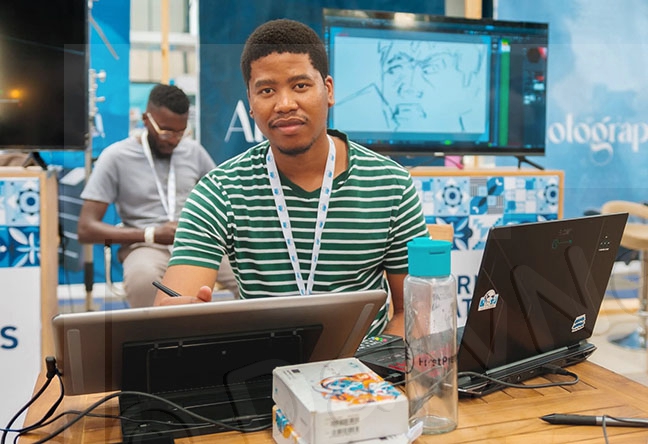
    In the Film, Animation and the Digital Frontier, the ‘orange light’ of DStv’s Mzansi Magic (Channel 161) glowed brightly for local filmmakers. Three films, Route 2, Moporofeta and Abashwe, made their regional debut this November, following the success of the film Morwaake, which won Best African Film at the Ekurhuleni International Film Festival. Perhaps the most futuristic win came from Theo Silitshena, who secured deals with Disney and Titmouse. His work as a co-writer on the US film To the Moon marks a giant leap for Botswana’s budding animation industry.

    The literary and media world also saw its stars rise. Bakang Wren, of BOPA, ended the year on a high note by winning the Best Media Writer award at the annual Botswana Literature Awards. Wren noted that the award is “recognition for creative writers that fuels our energy as we work to make our creatives shine.”

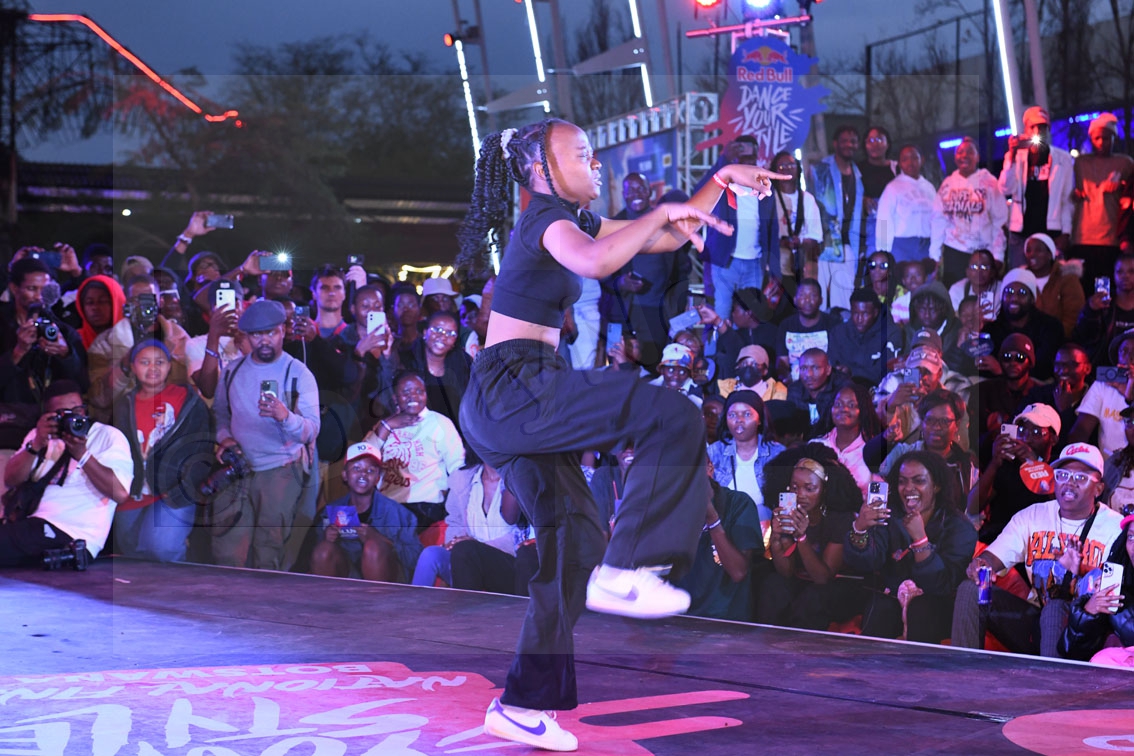
    On the global stage of movement, Lebogang Mabifhi flew the flag high at the L.A. Redbull Dance Your Style world competition. Although she did not bring the top prize home, she left indelible footprints on the global dance stage.

    Regrettably, the year’s achievements were shadowed by profound loss. The industry stood still in August to mourn the passing of A.T.I (Lekhete). An icon whose influence transcended music to become a cultural phenomenon, his demise left a void in the heart of the nation. Earlier in the year, the industry also bid a painful farewell to former My Star winner Sharon Sibonge. These losses serve as a sombre reminder of the vibrant spirit and resilience the industry must maintain to honor those who paved the way.

    As 2025 draws to a close, the foundation has been laid. With new legislation, global digital partnerships and a P200m financial boost, the ‘starving artist’ trope is finally being challenged. The creative industry in Botswana is no longer just about entertainment, but about enterprise. 

  • Vee Expands Empire With Veetro’s

    Vee Expands Empire With Veetro’s

    In one of his many hit songs, No Suffer, featuring King David, Odirile Sento, popularly known as Vee Mampeezy, cuts through the rhythm with a defiant vow in Nigerian Pidgin English: ‘I no go suffer, I no go beg for bread-o!’, meaning, ‘I will not suffer, I will not beg for bread!’
    It is a line that sounds almost prophetic, as though the artiste was speaking prosperity over his own life.
    The lyric is derived from the popular Nigerian gospel-inspired prosperity song, Me I No Go Suffer by Lara George, a track that has, over the years, been reinterpreted by various artistes.
    It has since become a prayer-like mantra within Christian communities, symbolising faith in God’s promises and a resolute pursuit of success.
    Perhaps for Vee Mampeezy, the words rang true. More than a decade after the song’s release, he has steadily risen to the top of his craft, delivering chart-topping hits such as Dumalana, securing collaborations with leading African artistes including Makhadzi, and winning numerous awards along the way.  Beyond music, the singer-songwriter has expanded his portfolio, earning a Law certificate and launching several business ventures, from Africa’s Soft Bread to beverages such as Vee Power energy drink, Maveeta water and aloe vera drink. There is little doubt that the artiste has been on a winning streak.
    However, the release of his latest single, Shut Up And Dance, which was slammed by critics as a musical downgrade, briefly threatened to derail that momentum.
    It appeared, for a moment, that the decorated star might be heading toward a disappointing end to the year. The tide quickly turned, though, when he announced the launch of his own Gaborone-based fast-food restaurant franchise, VEETRO’S. The announcement sparked widespread excitement on social media, effectively shifting attention away from the criticism of his single and onto his latest business venture.
    The franchise adds to his growing list of successful enterprises and stands as a living testament to the words he sang over a decade ago, that he would not suffer, nor beg for bread.
    The launch was graced by dignitaries including the Member of Parliament for Gamalete, Boniface Mabeo, Gaborone mayor, Oarabile Motlaleng, and Kgosi Mosadi Seboko. Fans also turned up in numbers, crowding Game City Mall in celebration.
    “It took a long time to get here. I had to save money to invest in this project and secure partnerships with people who believed in my dream,” said Vee, in an interview.
    He added that the dominance of foreign-owned franchises in Botswana further motivated him to pursue his vision.
    He revealed that he had secured four outlets around Gaborone, including the flagship store at Game City, as well as branches near the Bus Rank, Bonnington and at Pula Spar in Mogoditshane.
    With sufficient investment, he said, his long-term goal was to expand across Botswana and beyond.
    Through the restaurant, Vee also plans to give back to the community, reiterating his commitment to charitable causes.
    Vee Mampeezy’s continued evolution from musician to entrepreneur places him among global artistes who have leveraged their musical success as a springboard into business.
    Figures such as Shawn Carter, better known as Jay-Z, whose empire spans luxury beverages, fashion, sports management, and technology through Roc Nation and Rihanna, whose Fenty Beauty has grown into a billion dollar brand, reflect a path that Vee now appears poised to follow.
    For the star, VEETRO’S is just one of many projects sustaining his momentum. Without revealing too much, he hinted at plans to launch another product next year, separate from the food business but tailored to his market and fan base.

  • When Music Becomes a Declaration

    When Music Becomes a Declaration

    Most gospel songs arrive as gentle reminders of God’s comfort, but rising gospel artist  Tefo Phiri and his wife, Tshiamo Phiri, have stepped forward with something far more resolute.

    Their new single, Ga Kena Pelaelo, is not a soft hymn but a bold declaration of trust in God’s might and grace—released at a time when doubt often speaks louder than faith.

    Co-written as a couple, the song mirrors their shared spiritual journey, capturing the victories they celebrate, the trials they confront, and the steadfast belief that God remains constant through every season. Their partnership lends the single its emotional weight, transforming it from a simple melody into a lived testimony anchored in resilience and unity.

    Phiri said the message behind the song is timely, especially in a world where sadness, anxiety and emotional strain have become daily realities for many. He believes gospel music still carries a rare power to steady the mind, lift the spirit and remind listeners that life’s storms are never faced alone.

    Ga Kena Pelaelo marks another step in a musical journey that began in 2010 when Phiri released his debut album Tsela e le Thata after years of serving in his church’s praise and worship ministry. His work quickly earned recognition, securing nominations at major gospel platforms including the BOMU Awards, BOGMA and the Annual Gospel Awards (AGA).

    In 2016, he followed with his second album, Morena wa Barena, which further cemented his reputation as a sincere and consistent voice in Botswana’s gospel music scene.

    Reflecting on the challenges faced by local musicians, Phiri said the journey was not always easy in a country where the industry itself continued to grow. “Challenges are always there, but resilience is what keeps me going, and my uniqueness will one day get me to greater places,” he said.

    That resilience pulses through Ga Kena Pelaelo—a song shaped by real experiences and the quiet courage of choosing trust when the road is steep, the resources limited and the vision still unfolding.

    As he enters this new chapter, Phiri said he hoped the song encouraged listeners to stand firm, speak boldly and hold onto the grace that continued to carry them through uncertain times.

    With his wife beside him and a renewed message to share, Phiri steps forward not only as an artist, but as a vessel confident that the God he sings about is still writing his story. 

  • Arts Expo Signals Festival Rebirth

    Arts Expo Signals Festival Rebirth

    Maun, recently, witnessed the birth of a refreshed cultural celebration at Cresta Riley’s Hotel: the Poetavango Music and Arts Expo. The event is a spirited spin-off of the long-running Maun International Arts Festival (MIAF), which has served as a cultural anchor for the region for years.

    For Poetavango chairperson,  Legodile Seganabeng, the day was more than just another event; it marked a quiet revival of an artistic tradition that had been on the brink of fading.

    “Last year we did not have the main festival because of financial challenges,” he said, explaining how a once well-funded cultural pillar found itself struggling to stay afloat without consistent government support.

    Determined to preserve the festival, Poetavango turned to partnerships, finding critical support from the Orange Botswana Foundation. The collaboration made this year’s music-focused edition possible.

    Orange Botswana Foundation Social Impact Coordinator, Dineo Mpule, said the partnership aligned with the organisation’s mission to uplift cultural and artistic initiatives.

    “We are proud to be the main sponsor of the Music and Arts Expo happening today,” she said. She noted that Orange Botswana contributed P150,000 to the festival, adding that the foundation supported projects that advance culture and expand access for communities.

    “Culture brings together a wide range of audiences across all social groups, establishing dialogue between countries and communities which is why it is important to support such initiatives,” she added.

    According to  Mpule, supporting Poetavango was not merely an act of charity but an investment in creative potential, particularly in bold and innovative projects that nurtured young artists, musicians, and authors who would shape the future economy.

    Poetavango has long been synonymous with poetry, powerful verses that fill rooms and captivate audiences. However,  Seganabeng acknowledged that this strong identity had unintended consequences, as other art forms such as comedy, visual arts, and music often remained overshadowed.

    “Poetry became so big that people never fully saw our capacity in music,” he said.

    The Music and Arts Expo was crafted to shift that narrative. For the first time, music claimed centre stage, providing young performers with opportunities they had long awaited, while showcasing the breadth of Poetavango’s artistic reach.

    “We needed something that would turn the corner so that when we bring music back to the main festival, people will know what we are talking about,” he explained.

    One of the most distinctive features of the event was its intentional inclusion of children, an often overlooked demographic in arts festival planning. Face painting, water slides, swings, and a lively play area transformed the venue into a family-friendly space, ensuring that entertainment extended to the youngest festival-goers.

    “People forget about children, yet they also need entertainment, and it is important that they also explore and experience fun,” said Seganabeng.

    The expo also sought to uplift music in a region where the art form continues to struggle for visibility and where opportunities for young musicians remain limited. Poetavango hopes this renewed focus will help shift that dynamic.

    Judging by the enthusiasm of the crowd, the organisation had succeeded. Families lingered long after performances ended, musicians mingled with supporters, and a renewed sense of cultural pride rippled through the venue. 

  • Book Tackles Hidden Traumas

    Book Tackles Hidden Traumas

    Behind every woman who appears unshaken, there is often a story she has never told.

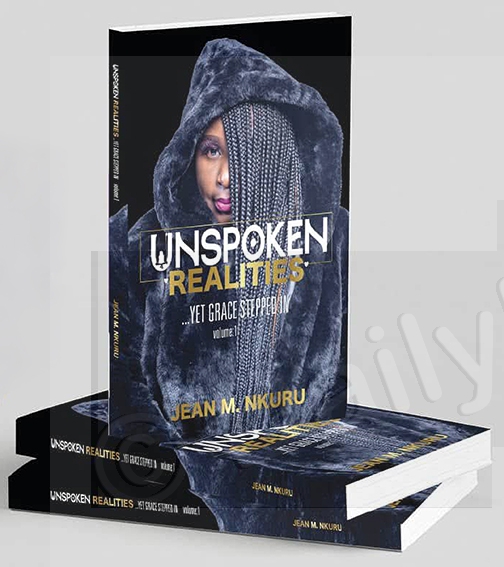
    In her new book Unspoken Realities, author Jean Nkuru opens a window into the hidden experiences of women living with gender-based violence, along with a way out to freedom.

    The faith-based guide, rooted in personal experience and spiritual reflection, draws inspiration from the unwavering faith of Nkuru’s mother, who silently endured her own share of life’s challenges, including domestic violence. Despite the hardships, she emerged resilient, strengthened by her deep trust in God.

    For Nkuru, the book stands as a powerful reminder of faith’s ability to sustain, uplift and ultimately set one free, spiritually and physically.

    “With the heavy weight of my mother’s struggles, there were moments I expected her to stumble. But somehow, she always emerged stronger. Later, I understood it was because she held firmly to her faith in God to see her through,” Nkuru said in an interview.

    Though Unspoken Realities is written for a broad audience, the 126-page book speaks especially to mothers and women, those who often share only fragments of their struggles while keeping the rest hidden, hence the title Unspoken.

    Chapters such as A Deceiving Mother explore the polished façades many women maintain while suffering quietly in relationships in an effort to protect their children. 

    The chapter urges mothers to rise from deception to authenticity and to seek healthier and balanced ways to safeguard their children while preserving their own well-being.

    Other chapters, like Warfare Mother, emphasise the importance of prayer and spiritual warfare, reflecting Nkuru’s belief that many of life’s troubles extend beyond what the eye can see, influenced by unseen forces that can only be challenged through prayer.

    In total, the book features 27 chapters, each crafted to speak to women across the many areas where they may need support.

    At its core, Unspoken Realities encourages women to draw strength from faith, not to endure silently, but to speak out for their own healing and to protect the well-being of their children. 

  • SOLO Wins Big at Eight Months Pregnant

    SOLO Wins Big at Eight Months Pregnant

    Who says a mom-to-be cannot be a champion? Naledi Diketso, better known as Solo, defied all odds when she was crowned the winner of the music business show Lyric Leap’s first season at eight months pregnant this past Friday.
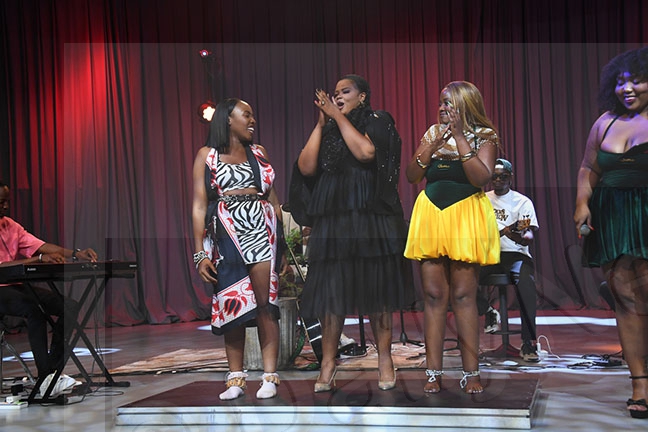
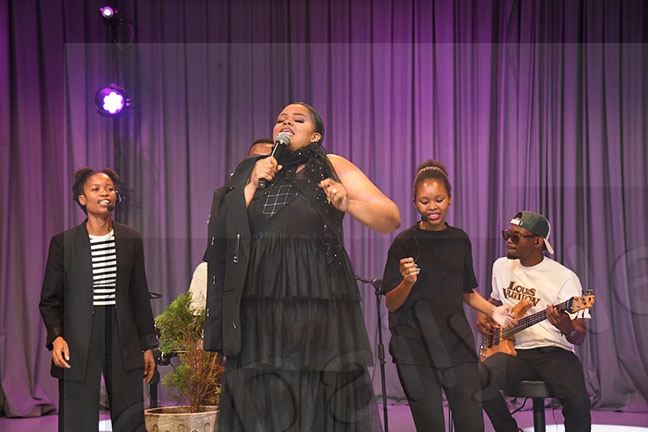
    Solo stepped onto the Lyric Leap stage as the second act of the night, following Blair Wa Seopedi and preceding Hazel, both of whom had delivered performances that made their ambitions unmistakable. With three backup singers behind her, Solo belted into the microphone, delivering a jazz-infused track enriched with a distinctly gospel undertone as she sang, motho ga a fele!,  a bold declaration that she, too, was there to win.
    A P30 000 cash prize and a recording deal  both designed to help launch a sustainable music career hung in the balance.
    Only one of the three finalists could take the title, based on strong vocals and the best original song.
    Solo took the audience to church, singing as though her life depended on it. And in many ways, it did, for the little life growing inside her depended on nothing less than her very best.
    Solo joins a long line of inspirational female performers who refused to press pause on their dreams due to societal expectations around motherhood, especially in the public eye. One striking example is the 2025 America’s Got Talent winner Jessica Sanchez, who won the competition at nine months pregnant. Her victory became a historic moment for AGT and a powerful testament to women balancing ambition and motherhood.
    Also notable is comedian Ali Wong, who filmed her 2016 Netflix special Baby Cobra while seven months pregnant. In an interview with ELLE Magazine, Wong said she wanted to use her pregnancy as a source of power, a weapon, not a weakness.
    In her opening monologue, she joked that many female comedians disappear once they fell pregnant, for reasons known only to them.
    Yet her point cut deeper: decades ago, a baby bump was something to be concealed, restricted by strict rules and social prohibitions. What should have been a joyful experience often became a “stumbling block” for women in the workplace,  a question of whether they could keep up and remain productive.
    For women in the limelight, pregnancy was often perceived as a threat to their attractiveness, and by extension, their opportunities.
    But the tide has turned. Women like Solo are boldly and publicly chasing their dreams, even while expecting.
    Those old rules and social prohibitions have steadily lost their hold as women redefine motherhood and dismantle long-standing stigmas.
    Perhaps it is the very life growing inside them that fuels their determination, a powerful motherly instinct that makes them, against all odds, a force to reckon with.
    When she entered Lyric Leap, Solo, a wife and mother-to-be had recently lost her job. For Sanchez, also a wife and expectant mother, the road had been long, marked by years of auditions and earlier setbacks. Yet something about carrying new life seemed to push them both to fight harder than ever before.
    A testament that motherhood is the ultimate dream-catcher, not a dream killer.

  • Mahogany Restaurant Diners Spoilt for Choice

    Mahogany Restaurant Diners Spoilt for Choice

    This festive season, diners can look forward to a fresh burst of flavours and elevated culinary experiences as Avani Gaborone Resort and Casino unveils a refined new menu devoted to indulgence and innovation.

    The Mahogany Restaurant introduced its vibrant, stylish, and flavour-packed main menu on Friday, promising a pampering culinary journey for food enthusiasts.

     Curated under the leadership of Chef Bernard Phuti, the bespoke menu features premium ingredients, including corn, pickled vegetables, morula, Tswana chicken, Kapenta fish and beef complemented by carefully selected wines from Fine Brands (Pty) Ltd.

    “We put together something a little bit different. This evening’s menu is a journey through various districts of Botswana. We took what is grown in different parts of the country and infused those elements into each dish,” said Avani Gaborone General Manager, Williem van Heerden.

    Designed to elevate the dining experience, the comprehensive new menu offers sophisticated banqueting crafted to appeal to both hotel guests and local patrons, setting a new standard for the revamped Mahogany Restaurant.

    On the plate…

    Guests were welcomed with an Amuse Bouche with venison carpaccio thinly sliced and marinated in olive oil, lemon juice, and micro herbs offering delicate flavours that set the tone for the feast ahead.

    A beef biltong starter, featuring shredded dried beef, followed, while an alternative goat cheese bruschetta offered a creamy blend of goat cheese seasoned with salt, pepper, and herbs, topped with a drizzle of honey.

    The Clemen Gold sorbet, served in elegant glassware with fresh mint, lime, and a hint of honey, offered a refreshing, smooth texture and effectively reset the palate for the main course.

    The main dishes harmoniously blend local flavours with international culinary techniques.

    A standout is the Tswana chicken roulade, chicken breast stuffed with crushed fillet, paired with bogobe jwa lerotse and morogo wa dinawa. Another culturally inspired but globally appealing dish is the wildebeest seswaa steak, crusted with avocado, coriander, and chilli, and served with traditional zengwe (lebelebele) and morogo.

    The inclusion of bogobe jwa lerotse and zengwe as starch options brings a rich traditional touch to the menu, while the accompanying morogo wa dinawa offers a homely, comforting appeal.

    For beef lovers, the beef fillet was the undisputed highlight a tender slice sautéed and finished in mustard, Worcestershire sauce, mushrooms, herbs, and cream. Paired with corn and morogo, the melt-in-your-mouth fillet is likely to become a customer favourite.

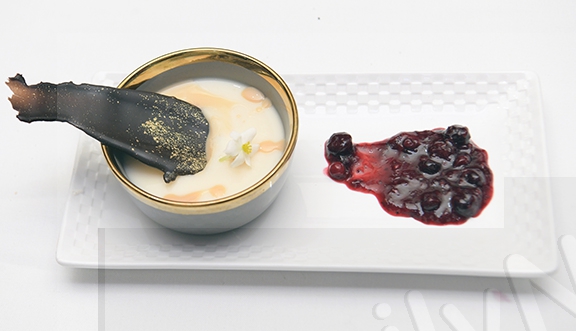
    The morula chilled yoghurt mousse stole the show ,a light, creamy dessert made from strained yoghurt infused with morula juice and topped with chocolate shavings. Its refreshing taste and velvety texture left a memorable finish.

  • SOLO Impresses in Lyric Leap Competition

    SOLO Impresses in Lyric Leap Competition

    Thoti Diketso, known her by stage name Solo, was crowned Lyric Leap grand finale winner Gaborone on December 4.

    Solo, who was contesting against Hazel and Blair Wa Seopedi, walked away with a record deal and artist management as part of the winner’s package. 

    Lyric Leap is a music competition show empowering 12 talented women over 11 weeks to grow their music and business skills. 

    Solo thanked Lyric Leap for recognising her talent and creativity. 

  • Botswana Animator Co-Writes US Film

    Botswana Animator Co-Writes US Film

    Local animator and Learn Animation School founder, Theo Silitshena, is breaking new ground as co-writer of an animation film project with American animation company, Studio Moyo.

    The sci-fi fantasy short film, To The Moon, is set for release mid-to-late 2026, on a date yet to be announced. However, the trailer is already out and momentum around the project is beginning to build.

    Set in a vibrant Afro-futuristic village powered by invention and imagination, the story follows two inseparable friends, Aisha and Neumy, who embark on one last daring adventure before life pulls them in different directions.

    When a sudden power outage threatens to derail their cosmic plans, Aisha’s determination sparks a bold idea that tests the limits of friendship, courage, and creation itself.

    “The synopsis of the story is about two girls who do their best to spend one last day together before one of them moves. It’s based on that concept of longing, the desire to belong and going to great lengths to preserve a friendship,” Silitshena explained.

    In an interview, Studio Moyo co-founder, Sam Shuggart, further explained that the story was about the trials of friendship as best friends Aisha and Neumy race to build a portal to the moon before a big move separates them. “But the question is, can their bond survive the journey?”

    Shuggart added that the film was created in a stylistic approach rooted in Botswana culture, with backgrounds and environments that complement a 2D traditional animation style reminiscent of the recent television show Scavengers Reign, which inspired the design of the characters and creatures featured in the film.

    Silitshena, who recently returned to Botswana with international deals that could transform local animation education, including partnerships with Disney and Titmouse, said achieving such a milestone showed Botswana’s potential to be outsourced to and to produce quality work collaboratively.

    “This is like a blueprint of what I’ve been trying to establish, where we can collaborate with other studios abroad and create successful projects,” he said. He said his upcoming film camo would be from December 9 to 22 as well as an anime camp from December 15 to 22, where he would train children to access the same opportunities that he had been able to secure. 

  • Beauty Queen Gifts of Hope

    Beauty Queen Gifts of Hope

    Christmas season , a time traditionally known for thanksgiving and marked by exchanging gifts and celebrating with loved ones, former beauty queen, Lebopo Bulayani chose a different path.

    Instead of dedicating her birthday, November 24, to personal treats, Bulayani transformed it into a profound day of service.

    For Bulayani, giving remains the most meaningful way to honour life, echoing the biblical moment when the wise men brought gifts to baby Jesus.

    In a recent conversation, Bulayani shared that the holiday atmosphere inspired her to make her birthday purposeful.

    “People expect gifts this time of year. I decided to use my birthday to give something meaningful to those who need it most,” she said.

    On November 24, her birthday began with a vital outreach, where she partnered with the Directorate of Public Service Management (DPSM), through which she donated 120 sanitary pads to girls at Ramotlabaki Primary School in Kgatleng, the community where she grew up.

    This act carried a deeply personal memory.

    “I have gone to school without a sanitary towel. I know what it means to save a girl’s dignity with just one pack,” she said.

    Later that afternoon, the celebrations shifted to children living with autism at Neo Children’s Consults in Mochudi.

    She not only celebrated with the children but also addressed parents and guardians, stressing the vital importance of acceptance and support for children with special needs.

    “My birthdays have always been about reaching out. I love being around children, especially those living with disabilities or in centres that need more support,” she explained.

    She said the children needed love, not isolation and parents also needed encouragement and safe spaces to share and learn. A tender moment stood out, one child quietly held her hand and whispered, ‘thank you.’ Moments like that, she said, reaffirmed her purpose.

    Those who had worked closely with Bulayani attest that her influence stretched far beyond annual birthday gestures.

    Daphney Phama, an educator and long-time collaborator, described Bulayani as a force of hope and transformation.

    “Lebopo is called to make an impact on children. She is a change-maker and if we had a thousand Lebopos, Botswana and the world would be better,” Phama said.

    She highlighted that Bulayani had unique ability to motivate students.

    “She speaks from experience, showing young people that you can fall and rise again, and that your past does not define your future,” she said.

    She noted Bulayani’s unwavering commitment since 2016, covering many spheres, including mentoring and teaching life skills, supporting schools, orphanages and local communities as well as working extensively with children with disabilities.

    Phama also praised Bulayani’s impact as an author.

    “Her book Orphaned has inspired so many. I wish it were in every school library and part of the curriculum. It is truly impactful,” she said.

    Agatha Madikwe, who had worked with Bulayani through school and pageantry programmes, echoed similar praise.

    “Lebopo is a true inspiration. She has supported our school for years, grooming the girl child through pageantry, offering her judging expertise and giving her time willingly,” Madikwe said.

    Madikwe added that Bulayani did more than just show up as she built bridges in youth development.

    “She runs cultural boot camps, speaks in the kgotla and wards about social ills, and gives the youth her time. Not many leaders do that,” she said.

    Madikwe further said Bulayani’s work was not just service but a deep-seated purpose, which she walked in with humility, strength and heart.

    Through every act, big or small, Bulayani continued to embody the true spirit of the season to give, heal, lift and inspire. As her community attests, her impact transforms not just days, but futures.