Category: Breaking News

  • Constitutional Court A Must – Boko

    Constitutional Court A Must – Boko

    The establishment of a Constitutional Court is an important step in developing Botswana’s constitutional democratic system, and in strengthening the judicial process, President Advocate Duma Boko has said.

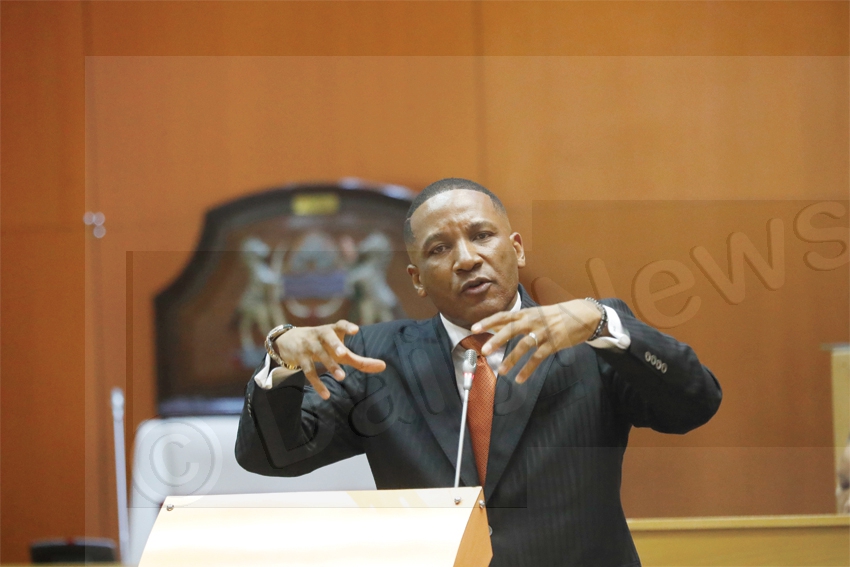
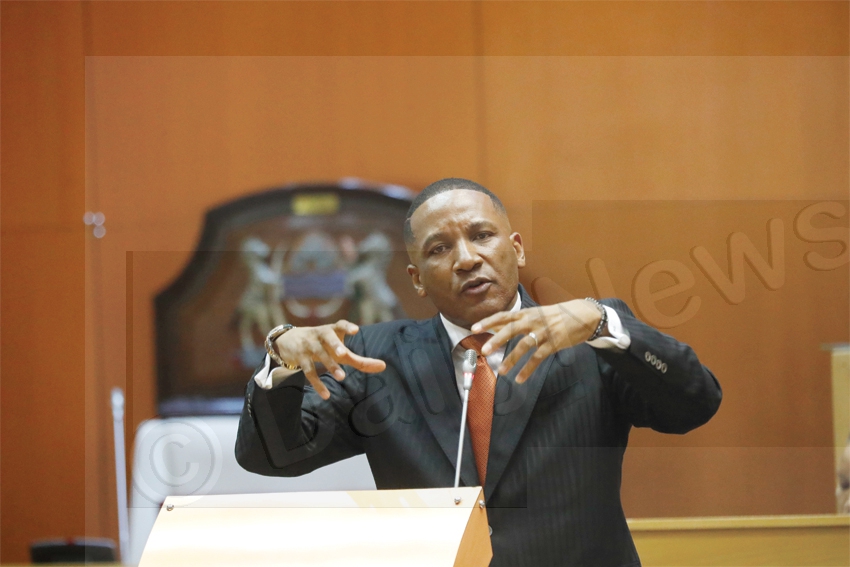
    Contribution to the Constitutional Amendment Bill that has been tabled before Parliament on Monday, President Boko ventilated the argument that the Constitutional Court would be an important instrument in developing the nation’s legal process.

    The President said the court was essential to the protection of the rights and providing an avenue for recourse of everyone resident in Botswana.

    It would clearly delineate a legal route and platform where constitutional matters were handled with urgency, consistency, and authority, the President Boko said.

    He added that by ensuring that institutions operated within the confines of the constitution, such an institution would uphold the rule of law and further provide strong protection for vulnerable groups, promote fairness in governance and ensure accountability.

    In countering the argument that not sufficient consultation had been done with the public and societal stakeholders, President Boko pointed out that among the findings of the 2022 report presented by the Presidential Commission into the Review of the

    Constitution, the Dibotelo Commission, was that public opinion was in favour of establishing a Constitutional Court.

    Outlining the historical path Botswana undertook towards its constitution, President Boko said the Order in Council of May 9, 1891 declared Bechuanaland a British Protectorate, and over the following century, the British Parliament proclaimed in August 1966 to grant Bechuanaland independence as the Republic of Botswana.

    This was after the 1963, Lobatse Conference and the Malborough House Conference held in London in February 1966 agreed to the terms of Botswana’s independence and basic tenets of her constitution.

    But, minority ethnic groups and vulnerable groups including women were not represented at Lobatse and Malborough House, President Boko argued and the country thus needed a broader, inclusive constitutional review process that would involve the views of a diverse sector of society.

    He said the Constitutional Court would be the first step in creating an avenue where any party felt aggrieved by the constitutional review process could find a fair arbitrary process. President Boko noted that the Botswana constitution had a Bill of Rights, Section 3 to 16, which protects the fundamental rights and freedoms of the individual, including the rights to life, personal liberty, protection from inhuman treatment and the freedoms of conscience, expression, movement, association and assembly.

    This, the President pronounced was international best practice flowing from the Universal Declaration of Human Rights and other international instruments that provided for life, liberty and equal protection before the law.

    Such are sacrosanct clauses that needed to be protected as the constitution is amended, President Boko said, in order to ensure that as the country became more inclusive, basic rights remained protected.

    He saod Section 18 of the Constitution already provided for the enforcement of protective provisions.

    “Furthermore, the past precedent of the judgment flowing from Attorney General of Botswana versus Unity Dow case is that the Section 3 provision that ‘every person in Botswana is entitled to fundamental rights and freedoms’ is legally binding and not a mere preamble.

    Nonetheless, Botswana still requires a Constitutional Court,” the President argued, pointing out that the Aguda Commission led by Justice Akinola Aguda (1923-2001), a Nigerian jurist and former Chief Justice of Botswana had also recommended that there should be a Supreme Court established in the country; with the Dibotelo Commission later pointing to public opinion being in favour of a Constitutional Court
  • Africa must strengthen accountability and governance to prosper — Botswana President Duma Boko

    Africa must strengthen accountability and governance to prosper — Botswana President Duma Boko

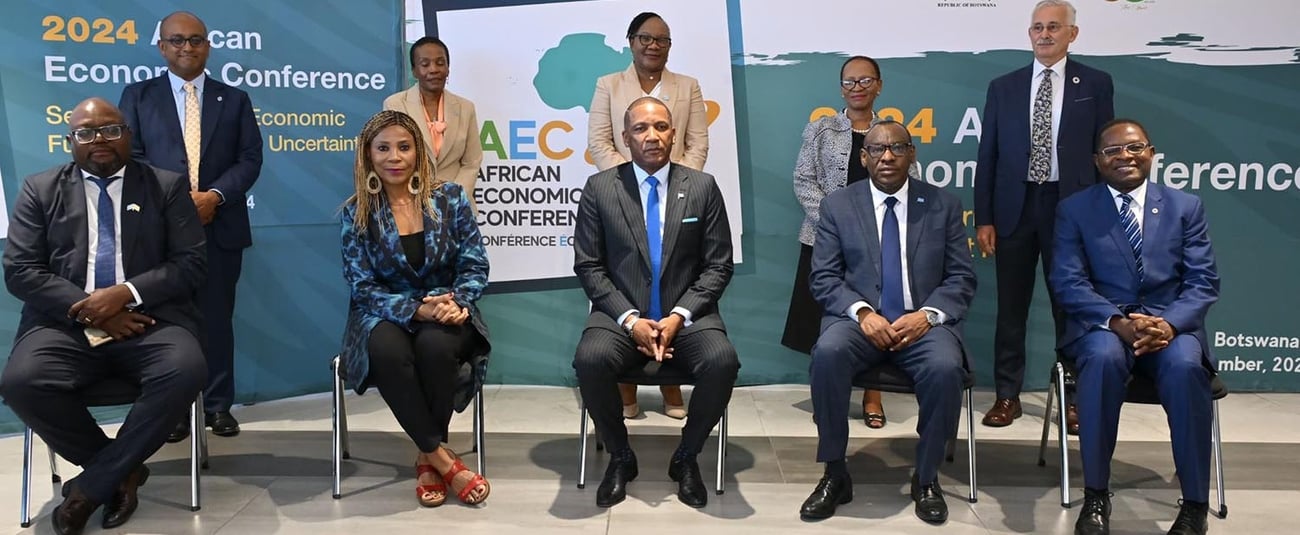
    Africa’s economic success and sustainability are intrinsically linked to accountable governance, Botswana’s new President, Duma Boko, stressed at the opening of the 2024 African Economic Conference in Gaborone.

    “Peace and stability in Africa must be anchored on accountable and responsive governance,” the president said, adding, “This is a fundamental human right for every African citizen. It sets the requisite bedrock for any measure for our economic development and its sustainability.” He also called on African countries to strengthen democracy and uphold the rule of law.

    The three-day conference, with the theme, “Securing Africa’s Economic Future Amidst Rising Uncertainty,” has brought together leaders, policymakers, and experts to address the continent’s economic challenges and opportunities. Organised by the Government of Botswana, the African Development Bank, the United Nations Economic Commission for Africa (ECA), and the United Nations Development Programme (UNDP), the event seeks actionable solutions for Africa’s economic growth.

    President Boko underscored that transparency, accountability, and respect for the rule of law are critical in attracting foreign investment and fostering sustainable growth. “Africa is at a crossroads,”  he said. “We must confront the obstacles facing our citizens and leverage our collective strengths to secure a prosperous future amidst a volatile global economic environment characterized by rising inflation, supply chain disruptions, and tightening monetary policies.”

    Innovative Financial Solutions for Growth

    “Global uncertainties challenge us to rise above prevailing circumstances and invest in the Africa we want – which is the Africa the world needs: a continent characterized by shared prosperity, productive regional integration, vibrant and entrepreneurial youth, and freedom from fear, disease and deprivation,” underscored UN Assistant-Secretary General and UNDP Africa Director Ahunna Eziakonwa.

    Eziakonwa also called for innovative and sustainable financial solutions to reduce borrowing costs and address credit rating biases, which cost the continent $76 billion annually. “We must stem illegal flows where $90 billion is lost. Tens of billions of pension funds, sovereign wealth funds, and insurance funds must work for the continent rather than elsewhere. This Conference must go beyond diagnosing challenges and should lead to actionable solutions. We must take steps to ensure that Africa’s abundant resources finance its growth.”

    The African Economic Conference also underscored Africa’s unique endowments, including its abundant natural resources and youthful population, which could drive transformative growth if governments prioritise education, skills development, and value addition for raw materials.

    Addressing Africa’s Economic and Social Challenges

    The United Nations Under-Secretary-General and Executive Secretary of ECA, Claver Gatete, said Africa faced several pressing issues, including climate change, unsustainable debt, and systemic global inequalities. The global financial system is failing to serve Africa adequately and needs to be urgently reformed, he said.

    Gatete highlighted that the continent’s annual losses from climate disasters alone are as high as $440 billion, while the financing gap to achieve the Sustainable Development Goals in Africa has surged to $1.3 trillion annually. At the same time, Africa’s external debt surpassed $1 trillion in 2023, with unsustainable interest payments restricting development financing.

    “The human cost is equally staggering. Nearly 476 million Africans live in poverty today, with 149 million falling into this bracket recently due to cascading climate and economic shocks,”  Gatete said.

    Regional reforms and integration are critical

    President Boko encouraged African nations to leverage the African Continental Free Trade Area to transform the continent’s economic landscape through increased investment, job creation, and industrialisation.

    “We must not allow the uncertainties of today to deter us from tomorrow’s opportunities,” he told participants.

    Chief Economist and Vice-President of the African Development Bank, Prof. Kevin Urama, urged African countries to adopt innovative, homegrown solutions tailored to their unique challenges. He advocated for strengthened fiscal policies and more resilient resource mobilization to address debt challenges.

    Urama said: “Africa can build and strengthen its fiscal buffers and address the ongoing challenges posed by global debt markets, which have entrenched debt sustainability challenges in African countries. Experience has shown that countries can make their domestic and regional financial systems more resilient by increasing domestic resource mobilization and strengthening macroeconomic policy frameworks.”

  • Global Critical Resources Corporation Reopens Tataki Mine with President Duma Boko

    Global Critical Resources Corporation Reopens Tataki Mine with President Duma Boko

    Tataki Mine contains one of Botswana’s largest reserves of nickel, copper, cobalt, and platinum group metals. After reopening under GCR, Tataki will produce a variety of metals and hydroxide salts that are widely traded internationally. Products will include nickel and cobalt hydroxide precipitates, copper cathodes, metal bars for platinoids (platinum, palladium, rhodium), and precious metals, including gold. Under GCR’s leadership, Tataki Mine will manufacture value-added products on-site, with a focus on introducing new skills and advanced technologies to Botswana’s workforce.

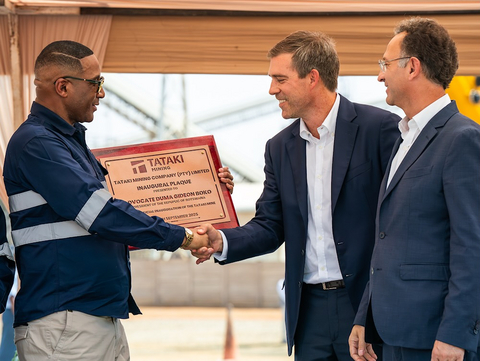
    President Boko and his government’s delegation joined GCR leadership and Members of Parliament, government ministers, local dignitaries, and journalists for the reopening ceremony.

    “Investing in the green energy transition is not only an environmental decision but an economic imperative,” stated President Boko in his remarks to attendees. “The green economy will offer significant opportunities for both domestic and international investors. These sectors are wide open to young people, who will become the job creators of tomorrow.”

    GCR plans to invest USD 200m into Tataki Mine over the coming decade, including USD 50m in the first 18 months to ramp up steady-state production levels. Over the next decade, Tataki Mine is expected to generate over USD 4.2bn in revenue and contribute a 1.5% increase in annual GDP to Botswana.

    Purpose-driven and innovation-led, GCR is dedicated to creating impact in both local communities and global supply chains. The company plans to invest significant resources in local development initiatives in education, infrastructure, and healthcare, while maintaining the highest standards on site for safety, environmental compliance, and stakeholder engagement.

    “We are building a dynamic company that will grow in tandem with Francistown and the entire region,” noted Executive Chairman Cevdet Caner in his speech. “Positive social impact and participatory engagement that aligns mining operations with local needs is a key priority for us.”

    Following a plaque unveiling, Executive Chairman Caner, President Boko, and others took a tour of Tataki Mine’s new facilities. President Boko noted that Botswana is “committed to a program of sustainable job creation, diversification, and transition to a green economy. The new Tataki Mine represents the best of these three goals. Today, we are planting the seeds of change.”

    Global Critical Resources Corporation (GCR) is a U.S.-registered producer of the critical metals that power modern life with assets in Africa and South America. GCR’s Executive Chairman, Austrian entrepreneur Cevdet Caner, has over two decades experience investing in the mining and property sectors and is the founder of several multi-billion-dollar real estate and natural resource companies.

  • President Duma Boko Outlines Botswana’s Vision for a Diversified and Investor-Friendly Economy

    President Duma Boko Outlines Botswana’s Vision for a Diversified and Investor-Friendly Economy

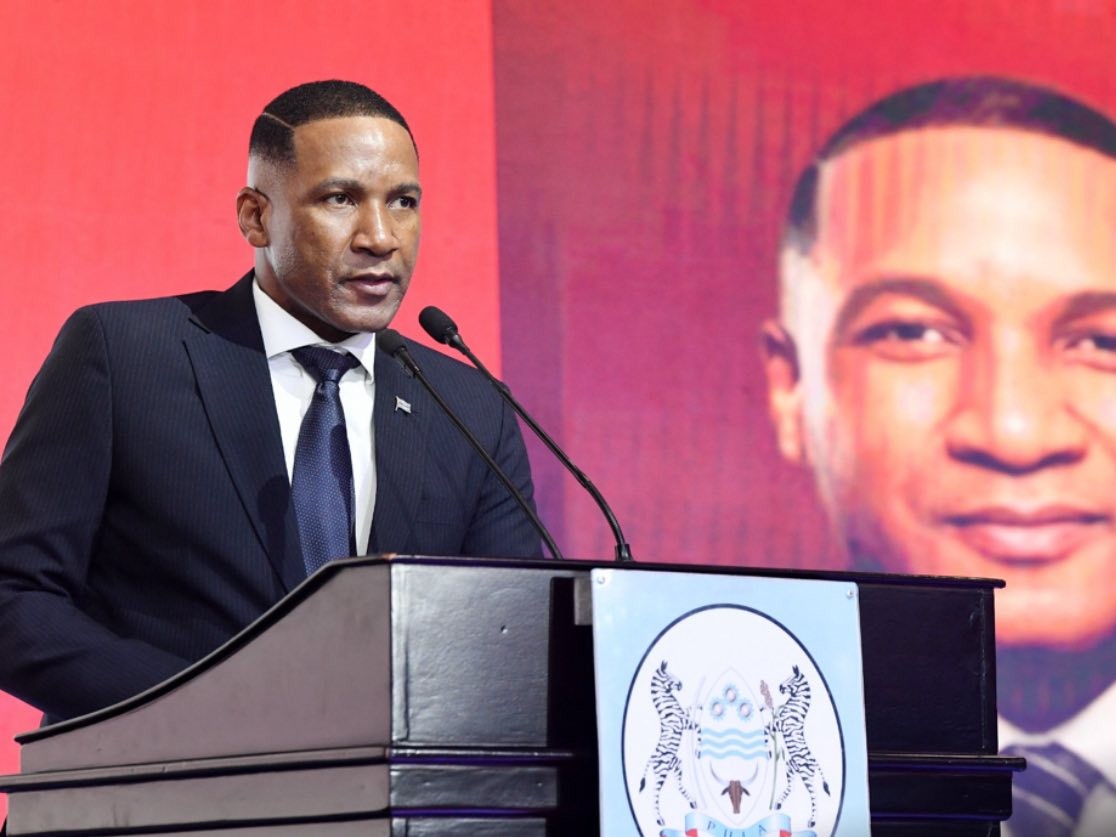
    President Advocate Duma Gideon Boko has reaffirmed Botswana’s commitment to creating a competitive, inclusive, and investor-friendly economy during his keynote address at the Pula Investment Conference. The event, held alongside the North Ground Bullard Investment Conference, brought together investors, policymakers, and business leaders to explore high-potential opportunities and strengthen Botswana’s position as a preferred destination for global investment.

    “Our vision is clear,” President Boko stated. “We aim to become a high-income, digitally-enabled, export-driven, people-centered, and diversified nation. But to achieve this, we must transform, urgently and decisively.”

    The President’s address focused on Botswana’s long-term development vision and the structural reforms needed to achieve it. He acknowledged the country’s over-reliance on diamonds, describing it as both a strength and a vulnerability. To ensure future stability and growth, he called for innovation, digital transformation, and economic diversification across emerging industries.

    “The global economy is changing,” he said. “We must not only adapt to it but also shape our path within it. Disruptive thinking and technological innovation will drive Botswana’s next phase of growth.”

    As part of the conference, President Boko unveiled Botswana’s Investment Deal Book, a comprehensive portfolio of 66 transformative projects. The publication includes 52 private-sector ventures and 14 public-sector initiatives spanning key industries such as agriculture, mining, manufacturing, information and communication technology, and healthcare.

    He highlighted the Investment Deal Book as a roadmap for investors seeking credible, high-impact projects in Botswana. “This collection represents the best of what Botswana has to offer — opportunities that are ready for investment, backed by strong governance, and designed for long-term sustainability,” he said.

    President Boko also commended the Botswana Investment and Trade Centre (BITC) for its ongoing role in promoting investment and expanding the country’s global presence. He confirmed that Botswana will participate in the upcoming Africa Financial Services Investment Conference in London, where 14 flagship projects from the Deal Book will be presented to international investors.

    He used the platform to address governance and institutional efficiency, stressing that reforming public institutions is key to building investor confidence. “Good governance is the foundation of economic transformation,” he said. “We are committed to creating a transparent, efficient, and accountable public sector that supports rather than hinders growth.”

    Concluding his address, President Boko emphasized that the Pula Investment Conference marked more than just an exchange of ideas — it signaled a collective commitment to action. “This conference is not merely a forum,” he said. “It is a call to action. Together, let us invest, build, and transform Botswana into a resilient, sustainable, and globally competitive economy.”

    The conference ended with renewed optimism from both domestic and international investors, reinforcing Botswana’s ambition to redefine its economic future through innovation, diversification, and strong leadership.

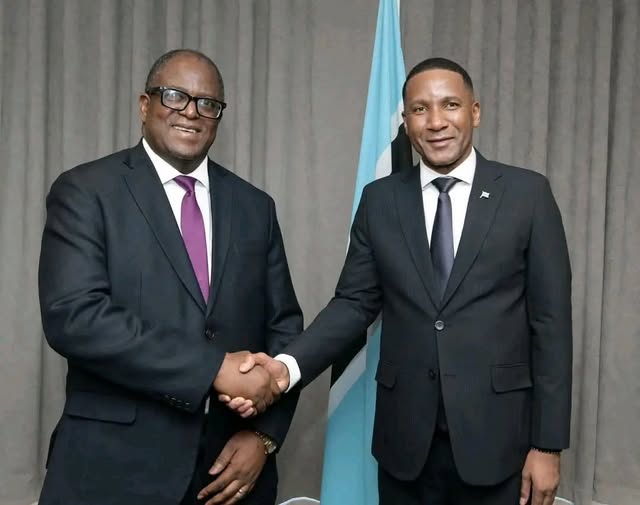
  • Chief Justice Mumba Malila with Botswana President Duma Boko in Gaborone, Botswana.

    Chief Justice Mumba Malila with Botswana President Duma Boko in Gaborone, Botswana.

    Chief Justice Mumba Malila with Botswana President Duma Boko in Gaborone, Botswana.

    Dr Malila is leading Zambia’s delegation at the Southern and Eastern Africa Chief Justices’ Forum.

    The forum, which was officially opened by President Boko on Wednesday, has drawn participation from 16 countries in the region.