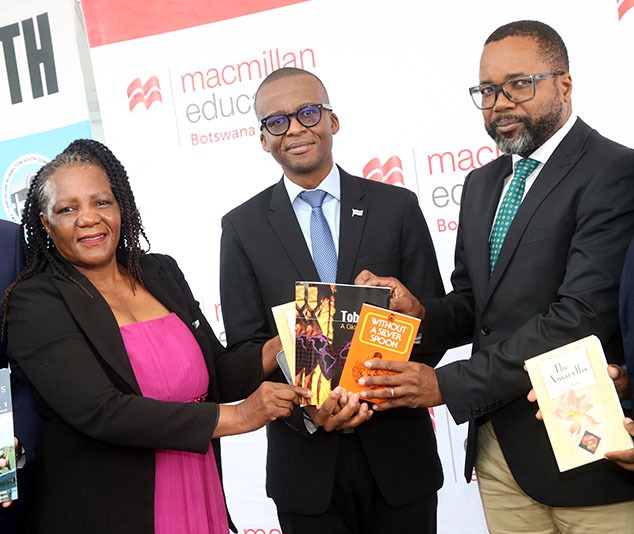
In a quest to transform learning, Gaborone Bonnington South Tutorial Services has received a donation of books worth a million from Macmillan Education Botswana.
During the handover ceremony in Gaborone yesterday, Acting President Ndaba Gaolathe underscored the vital role of education as a great equaliser, inspiring hope and opportunity across communities.
Beyond education, he said there was little that could unite and elevate society.
Therefore, he commended Macmillan for the unwavering support in empowering pupils to chase their dreams.
He added that the books would be instrumental in fostering critical thinking, broadening perspectives, and encouraging learning from different angles.
Mr Gaolathe, who was appointed in March as the Global Champion for Education by the Global Partnership for Education, further lauded teachers who, beyond their daily duties, dedicated their time voluntarily to support the centre’s mission.
Macmillan Botswana general manager Mr Kopano Sechele, traced the company’s history back to 1843 in London, noting that it had operated locally for 45 years.
He expressed the company’s mission to extend education nationwide, asserting that education was the ultimate tool for bridging societal gaps.
“When one is educated, they can go far in life,” he said, “as learning knows no boundaries or background.”
The donated collection includes works on poetry, mental health issues, and literature, catering from grassroots learners to secondary school pupils. He proposed involvement in celebratory events to motivate excellence through awards.
Macmillan has also partnered with Mosha Wellness Spa on a library project in Khwai, and has so far contributed books valued at P350,000 and the company has allocated books worth P3.6m to Botswana Prison Service, with the aim to provide inmates with educational opportunities, rekindling their humanity and offering a fresh start.In his welcoming remarks, Kgosi Arnold Somolekae Phase IV Customary Court expressed gratitude for the donation, noting its significant impact on the centre’s growth, with increasing enrolment prompting him to appeal for additional support in furniture and infrastructure.
He also hinted on the need for a larger facility to accommodate the expanding number of learners.
Category: Education
-
Macmillan Boosts Education
-
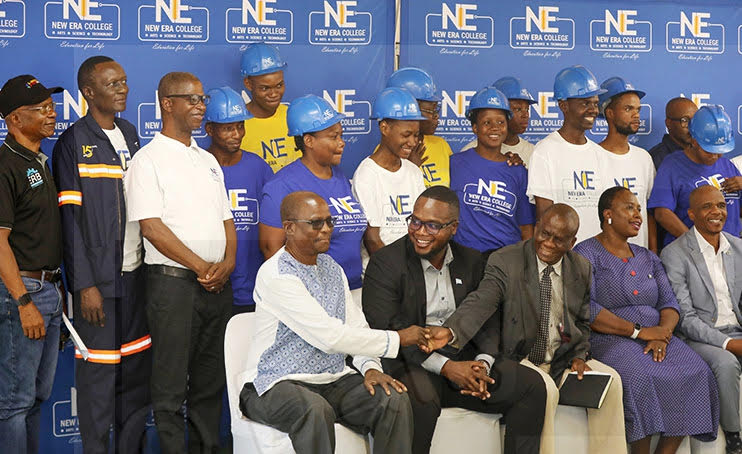
Ten Benefit from KAGO Scholarship
New Era College has sponsored 10 beneficiaries through the KAGO Scholarship, a new initiative aimed at equipping young people with practical, industry-relevant training. Speaking at the launch event in Gaborone recently, the college’s public relations and partnerships manager, Mr Kgosi Moremong said the beneficiaries were selected through a transparent and merit-based process.
He said the KAGO Scholarship targeted members of the Gaborone community and aimed to bridge the skills gap by providing hands-on training in construction-related fields.
The programme offered training in key areas including bricklaying, plastering, painting, ceiling installation and design.
Also, he pointed out that beyond technical instruction, the programme also incorporated industry attachment and job placement support to enhance employability.
“This initiative is very close to our hearts, it allows us to give back to the community we serve, not only by offering education but by ensuring that participants gain meaningful opportunities in the workforce,” Mr Moremong said.
In addition to community beneficiaries, he noted that the college had extended the scholarship opportunity to two members of its own grounds and maintenance staff, enabling them to upgrade their skills while continuing their employment.
The course instructor in the Construction Department, Mr Edmore Dupwa expressed optimism that the KAGO Scholarship would contribute to building a more skilled workforce while strengthening ties between the institution and the community.
He said they would strengthen practical skills within the construction sector and introduced a hands-on short course focused on equipping participants with essential building techniques and safety knowledge.
Mr Dupwa said the six months course was designed to ensure that learners acquired critical competencies that directly impacted the quality and safety of construction projects, adding that learners must first understand tools, their uses and maintenance before engaging in fieldwork.
“We do not just take you into the field immediately. You must first understand the tools, their uses and their maintenance. Safety in the construction industry is very important,” Mr Dupwa noted.
He said the course followed a structured progression from classroom-based theory to real-world practice, ensuring that students not only learned concepts, but also applied them effectively.
“From tool handling to setting out and executing construction tasks, every aspect is reinforced through hands-on experience,” he said.
By combining theory with fieldwork, Mr Dupwa said the training initiative aimed to produce skilled, safety-conscious builders capable of meeting modern construction standards.
He said as Botswana continued to develop its infrastructure, such programmes were expected to play a vital role in shaping a competent and reliable workforce in the building industry.
Also speaking at the event, Kgosi Kenneth Thari expressed gratitude to the selected cohort and encouraged them to remain disciplined and committed to their studies.
He reminded beneficiaries that the opportunity came at no cost and urged them to adhere to school rules and avoid absenteeism.
Kgosi Thari said as Botswana continued to expand its infrastructure, initiatives such as the KAGO Scholarship were expected to play a critical role in addressing youth unemployment and developing a competent, safety-conscious workforce within the construction sector.
The KAGO Scholarship Programme, valued at over P250 000, provided full tuition for the Building and Construction Programme.
It is a flagship Corporate Social Responsibility initiative developed in partnership with the Office of the Member of Parliament for Gaborone Bonnington North and the Block 8 Kgosi’s Office.
-
UNICEF Donation Brings Joy to Kgatleng Schools
The United Nations’ Children’s Fund (UNICEF)’s School In a Box kit holds much more than just school supplies.
It represents hope and the right to education for children in rural communities and the low-income families. For early childhood learning, the school in a box kit apart from learning continuity, also provides healing to children who have lived through times of trauma.
The School In a Box kit initiative according to UNICEF country representative to Botswana, Dr Komanzi Mothengi also brought about joy to the children as some develop new found excitement for school. Speaking during the handing over of a donation to primary schools in Kgatleng District, in Oodi on Monday, Dr Muthengi said following the flood that affected schools across the country last year, UNICEF found it fit to donate some school supplies to stimulate learning.
He said UNICEF learnt that thousands of families and 1 800 children were affected by the flood, preventing some children from going to school since many communities in Kgatleng and other districts were affected.
The donation that included 78 boxes of early childhood leaning material, 50 boxes of stationery, 2 006 school bags and 46 boxes of recreational material targeted 20 000 learners across the country, and is part of UNICEF’s mandate:No Child is left Behind.
Since government prioritises Science, Technology, Engineering and Mathematics (STEM), Dr Muthengi said UNICEF had partnered with government to attain the education transformational process.
“We are committed to strengthening Botswana’s education by working with other partners to supplement these efforts,” he said.
Minister of Child Welfare and Basic Education, Ms Nono Kgafela-Mokoka, acknowledged UNICEF’s impactful support in foundational learning, and that the donation would complement government’s interventions underway to strengthen STEM.
She commended the organisation for playing a part in education, stating that government’s partnership with UNICEF was critical in providing support to vulnerable children and bridging the education gaps.
Ms Kgafela- Mokoka assured partners that donation would be used transparently and in line with its intended purpose.
The ministry’s permanent secretary, Ms Mmamiki Kamanakao, said the timing was appropriate, when STEM driven education should be strengthened in accordance with the ambitions of the new administration.
She said the ministry had been tasked with ensuring that the learning environment was child friendly as the enrolment of foundational learning was increased.
“It is worth mentioning that these materials are offered in live with government’s STEM curriculum for early childhood development,” he said. Meanwhile Kgatleng East MP, Mr Mabuse Pule, noted that the collaboration between UNICEF and government had yielded positive results in early childhood learning.
“UNICEF has always been a strategic partner in providing expertise to education and improving learning outcomes. This donation will complement government interventions in hard-to-reach areas,” he said.
Mr Pule appealed to government to prioritise fixing dilapidated school infrastructure and learning resources.
-
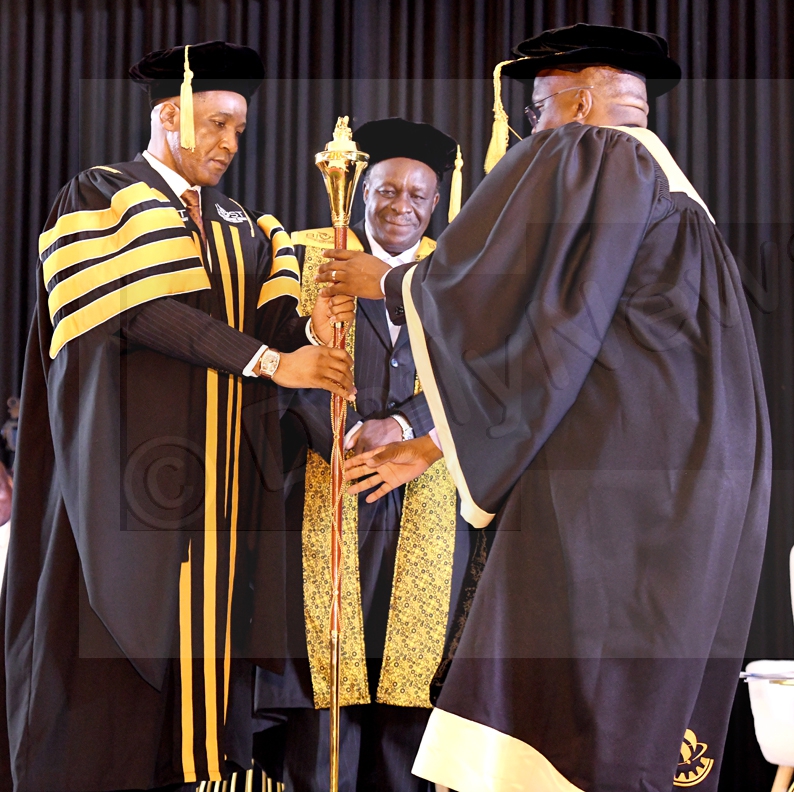
Boko Commits to Advance BIUST Mission
President Advocate Duma Boko has promised to champion Botswana International University of Science and Technology (BIUST)’s mission, advocate its interests and promote its achievements within Botswana and beyond. President Boko, who was inaugurated as BIUST’s chancellor in Palapye on March 27, said he accepted the responsibility with humility, gratitude, enthusiasm and resolve, pledging to provide strategic and external leadership in support of the governing authority of the university. “I recognise that I assume this role at a time when universities across the world face complex challenges that include finance, competition for talent, and rapidly evolving technological demands,” he said, adding that with unity of purpose and clarity of vision, such hurdles could be turned into opportunities.“I commit myself to working closely with the BIUST council, the vice chancellor, the leadership of the university and the entire academic community in strengthening governance, expanding partnerships and advancing research excellence,” he said. He said the creation of BIUST was not a happenstance but was established to spearhead Botswana’s transition from a resource-based economy to a knowledge-driven economy that thrived on innovation.“It is, therefore, fitting that BIUST was conceived as a specialised, research-intensive institution dedicated to the advancement of Science, Technology, Engineering and Mathematics (STEM). Its mission is clear; to cultivate innovators, to train problem-solvers to generate knowledge capable of transforming industries, economies, and societies,’’ he said.He said through the Botswana Economic Transformation Programme (BETP), the government would transform education into a key pillar for a knowledge-based economy, focusing on STEAM, digital literacy, research, and curriculum modernisation to match graduate skills with labor market needs as well as create high-value employment.President Boko said Botswana was blessed with the gift of a youth demographic dividend: a youthful and vibrant population whose energy needed to be channeled to make them architects of the country’s next chapter.Also, President Boko commended BIUST for having produced more than three thousand graduates, young men and women equipped with market-relevant skills and global ambition.‘’Some are entrepreneurs building enterprises, others innovators solving complex challenges, while yet others are pioneers extending Botswana’s intellectual footprint beyond the borders,” he said.He said a few days preceding the historic launch of Botswana’s first satellite, BOTSAT-1 in March last year, he had the distinct privilege of touring the facilities of SpaceX – the American technological outfit that helped BIUST launch BOTSAT-1 into space and he gained valuable insight into cutting-edge space technologies.President Advocate Boko said therefore, the lauch of BOTSAT-1 reaffirmed the Southern African nation’s commitment to digital transformation, scientific progress, and technological innovation. BIUST achievements also aligned closely with Botswana’s broader national vision to diversify the economy beyond diamonds, he stated further.He said government had embarked upon several forward-looking initiatives, including the establishment of a National Research and Development Fund accessible to accredited institutions to stimulate innovation and technological discovery.Meanwhile, President Boko paid homage to former president, Dr Festus Mogae, who became BIUST’s first chancellor. He said Dr Mogae’s exemplary leadership and unwavering commitment to national development had played a key role in establishing and nurturing BIUST during its formative years.“Your legacy resonates far beyond this campus. It speaks to the nation, the region and the global community of science and learning. You set a standard of leadership that is both inspiring and formidable,” he said.As BIUST second chancellor, President Boko pledged to honour Dr Mogae’s legacy by safeguarding his achievements and advancing the mission the former statesman championed.
-
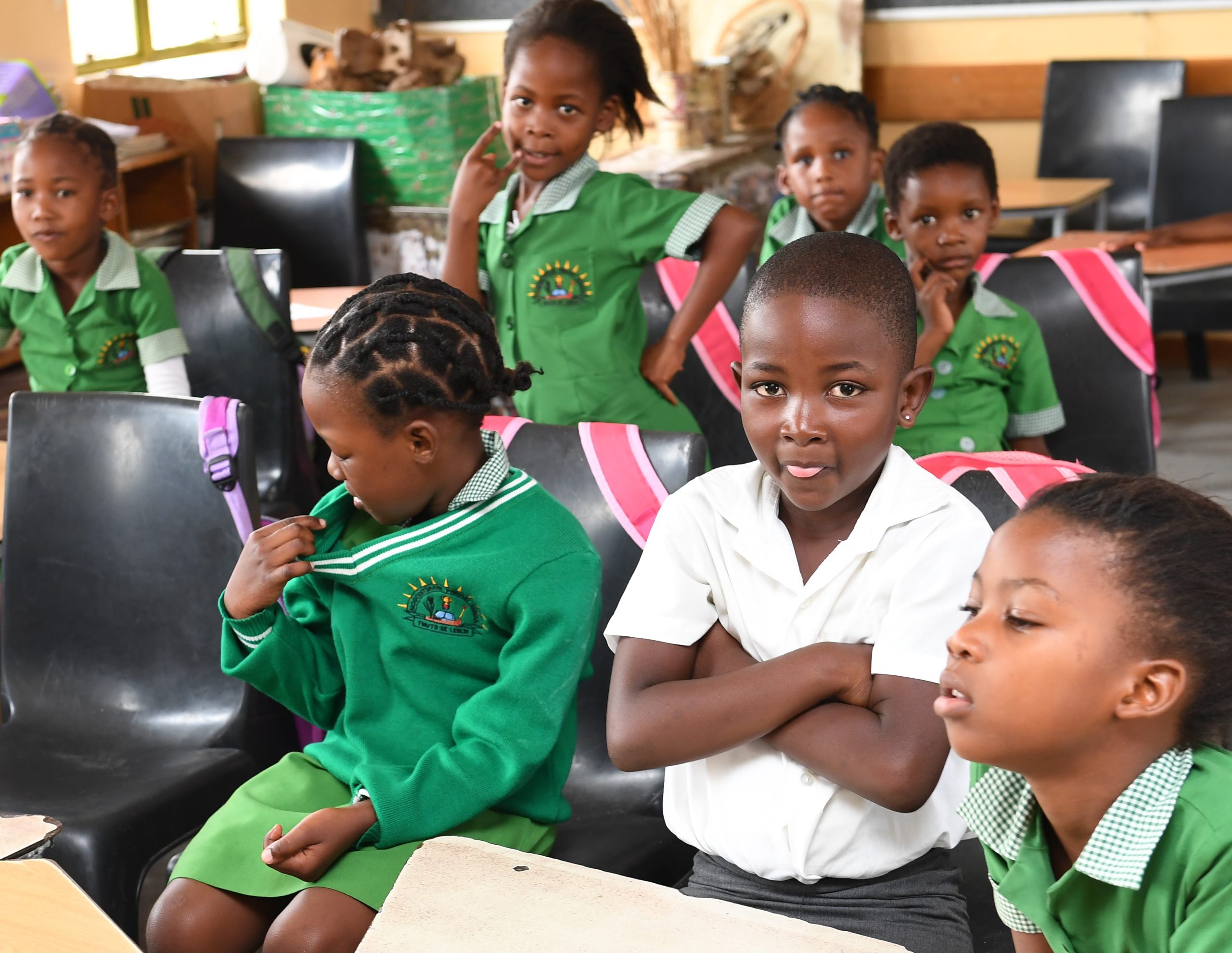
Mogoditshane Primary Welcomes 120 Learners Despite Capacity Strain
As Standard One learners across the country reported for their first day of school on January 13, Mogoditshane Primary School experienced a familiar first-day rush, welcoming 120 new learners and their parents.
Of the new intake, 60 learners were enrolled in reception, while another 60 began Standard One, joining an existing learner population of 1,026.
The school atmosphere was marked by excitement and nervous anticipation among both returning and first-time learners, while some parents lingered anxiously, hoping their children would secure placement at the school.
With only five primary schools serving Mogoditshane amid the urban village’s rapidly growing population, estimated at about 88,000 people according to the 2022 Population and Housing Census access to school placements remains a persistent challenge.
“There are still many children on the waiting list dating back to 2024,” said Mogoditshane Primary School head, Mr Samuel Setuke.
He explained that although the school was originally designed to accommodate 801 pupils, enrolment rose to 1,126 last year, including 100 Standard 7 learners who completed their studies.
This year, the learner population has further increased to 1,146.
Mr Setuke outlined several challenges facing the school, including dilapidated classroom furniture, a situation worsened by the shift system, which resulted in furniture being used throughout the day.
He also cited a high learner-teacher ratio, limited resources such as stationery, occasional food shortages and financial constraints affecting the procurement of teaching materials, including Breakthrough, a teaching strategy used to help Standard One learners develop Setswana word recognition skills.
Despite these challenges, Mr Setuke expressed optimism, noting that teachers were ready to deliver quality education.
He added that the school had strengthened partnerships with parents, who had agreed to contribute P20 toward stationery to help ease resource shortages.
-
BEC to Issue New BGCSE Certificate
The Botswana Examinations Council (BEC) is in the process of developing a new Botswana General Certificate of Secondary Education (BGCSE) certificate, as the education parastatal will no longer be offering joint certification with Cambridge University Press and Assessment (CUPA).
This was revealed by the Minister of Child Welfare and Basic Education, Ms Nono Kgafela-Mokoka while delivering a statement in Parliament on December 4.
Ms Kgafela-Mokoka said subsequent to a BEC board resolution of August 2024 to approve a strategy to gradually withdraw from the CUPA Accreditation with Certification contract, a decision, which was endorsed by cabinet in October, BEC entered into a new contract with the British institution.
“BEC entered a three-year Accreditation without Certification contract. This was done to ensure that BEC continues to receive independent quality assurance of the assessment operations for the delivery of credible qualifications. This is a scaled down contract, which will cost about £562 000 (P10 million) annually compared to the previous contract, which cost P27 million annually,” Ms Kgafela-Mokoka said.
She clarified that the amendment of the contract meant that from the 2025 examination series, BEC and Cambridge would no longer issue a joint certificate to BGCSE candidates and that BEC would independently design and issue a new certificate under their own authority.
Ms Kgafela-Mokoka said the BEC board had approved the new design of the 2025 BGCSE certificate at their sitting in August, and that the current Accreditation without Certification CUPA contract would run until the 2027 examination cycle.
“While the down scaled quality assurance contract is running, BEC has begun the process of identifying a local partner with capacity to assume the role of external quality assurance to the BEC qualifications starting 2028 examination cycle,” Ms Kgafela-Mokoka said.
She said external quality assurance of assessment processes was critical as it ensured that standards for both the assessment and its associated curriculum did not drift overtime as well as instilling confidence stakeholders had in the qualification.
Ms Kgafela-Mokoka said BEC, a parastatal under the ministry, was mandated to manage and conduct examinations and assessments in general education, technical vocational education and training and to award certificates in respect of the said examinations and assessments.
She further said the BEC and CUPA partnership dated back to the time BEC functions were operated by the Examinations, Research and Testing Division division of the then Ministry of Education.
Over the years CUPA assisted government to replace the then Cambridge Overseas School Certificate (COSC) by developing a localised qualification that was recognised internationally and also equivalent to International General Certificate of Secondary Education (IGCSE) as recommended in the Revised National Policy on Education of 1994.
This led to the establishment of the (BGCSE).
Further to developing BGCSE, CUPA was to monitor the application of assessment standards across all examination processes on a yearly basis to ensure that the BGCSE qualification maintains international recognition and global competitiveness.
From 1999 to 2011 the ERTD and later BEC, worked in collaboration with CUPA across all examination processes.
“Since inception of the relationship, BEC pays an annual fee that is currently around £1,400 000, about P27 million, subject to exchange rate at the point of payment. The main cost driver in this agreement is certifying at individual candidate level. The cost has escalated to a level that is unsustainable to BEC. Further to that, BEC has matured overtime and now has the capacity to conduct some of the examination processes without support from CUPA. It is on the basis of the forgoing that the council found it prudent to scale down further and gradually withdraw from the accreditation agreement,” Ms Kgafela-Mokoka said.
She stressed that other than the engagement of local external quality assurance, BEC would participate in the regional quality assurance processes of the Southern Africa Association for Educational Assessment (SAAEA), a network of Southern African examination bodies.
Ms Kgafela-Mokoka said the ministry and BEC would engage in stakeholder engagement.
Commenting on the update, Molepolole North MP, Mr Shima Monageng was concerned that learners should be paying less examination fees since BEC would be paying less to CUPA.
Kanye North legislator, Mr Prince Mosasana raised a further concern of BEC being a parastatal engaging teachers to assist with the invigilation and marking of examinations but their payments occasionally being processed late.