For people born with variations in sex characteristics, commonly referred to as intersex, life in Botswana is often marked by an everyday fight for recognition, dignity and equality.
As the nation debates the establishment of a Constitutional Court, the stakes for intersex persons are especially high. For them, this is not just a legal reform discussion, but a matter of validation, protection and the fundamental right to exist without fear of discrimination.
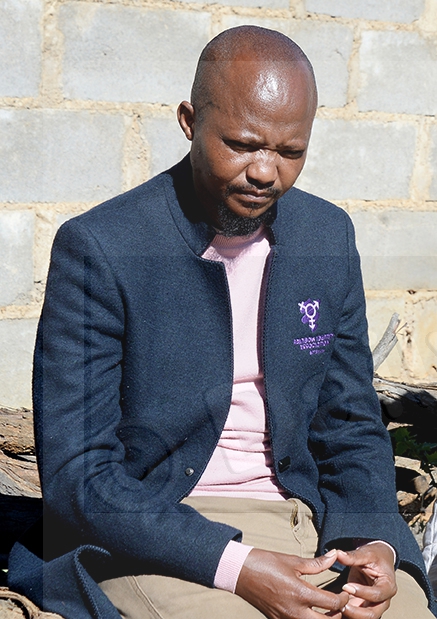
Meet Kagiso Bannye, 42, whose life reflects the challenges faced by those living between rigid gender classifications. Born with ambiguous sex characteristics, Bannye’s journey has been shaped by early medical interventions, including genital surgery, bureaucratic barriers and persistent social exclusion.
The genesis of Bannye’s troubles traces back to birth, where he could not ordinarily be identified as a boy or a girl. Bannye is among members of the Rainbow Identity Association, an organisation advocating for the rights and recognition of intersex persons. Their experiences point to a broader systemic problem, one that demands urgent attention.
“The challenge in Botswana is that when a child is born, they are assigned either male or female. We are saying that we are intersex individuals belonging to neither category; we should be assigned zero or three,” Bannye said.
This lack of legal recognition often results in confusion and humiliation when accessing basic services at hospitals, police stations and immigration offices. Growing up, Bannye’s birth certificate identified him as female, despite his masculine appearance.
“Sometimes you are forced to undress to prove who you are,” he said. “In some offices, they even call others to come and look at your nakedness.”
Bannye believes constitutional reform could offer protection by formally recognising intersex persons and allowing appropriate gender markers. When the then Minister for State President, Mr Kabo Morwaeng, tabled the Constitutional (Amendment) Bill No. 4 of 2024, which sought to prohibit discrimination against intersex persons and people with disabilities, Bannye and others felt hopeful. That hope was short-lived.
The Bill was rejected after strong opposition, particularly from a coalition of churches. Some Members of Parliament even called for the word ‘intersex’ to be removed from the proposed amendments. Bannye said much of the resistance stems from confusion.
“People think intersex means same-sex,” he said.
Thus, Bannye believed clearing the confusion and misunderstanding could somehow tip the scale in their favour hence acceptance. The misunderstanding and confusion are captured by the Centre For Human Rights study on the human rights situation of intersex persons in Africa, which notes that people confuse intersex persons with lesbians, gays, bisexuals, and transgender persons.
The centre said intersex related to biological sex characteristics, while lesbian, gay, bisexual and transgender identities concern sexual orientation and gender identity.
Although the initial constitutional amendment bill’s rejection left Bannye and the intersex community feeling disenfranchised and vulnerable to discrimination, the currently debated Constitutional Amendment Bill of 2025, tabled last year by Minister for State President, Defence and Security Mr Moeti Mohwasa aimed at establishing a Constitutional Court, could be their hope for inclusivity and asserting their rights.
He believed the court could become a critical platform for intersex persons to assert their rights.
“The starting point is legal gender recognition. That would allow intersex people to change their gender marker and live with dignity.”
Weighing into the debate, an attorney, Mr Mboki Chilisa, Managing Partner at Collins Chilisa Consultants, noted that a Constitutional Court dealt with human rights and constitutional issues, thus promoting constitutionalism, strengthening institutions and democracy, and helping realise aspirations as set up by the Constitution.
Mr Chilisa further noted that specialised jurists would be better equipped to address complex human-rights cases involving marginalised groups. As consultations on the Constitutional (Amendment) Bill of 2025 continue across the country, intersex persons like Bannye are watching closely, hopeful that this time, the law will finally see them.
A paediatric surgeon based at Life Gaborone Private Hospital, Dr Kutlo Motlhobogwa, said the condition commonly referred to as intersex was medically known as Disorders of Sexual Differentiation (DSD). He explained that children born with DSD had chromosomes, gonads or genitals that did not fit the typical binary definition of male or female.
Dr Motlhobogwa noted that DSD was a complex medical condition that required careful attention and affected many children and families across the country.
“It is important to understand that it is sexual differentiation,” he said, explaining that all humans initially developed similarly in the womb, but biological processes later differentiate them into male or female.
However, disruptions in this process can result in intersex conditions. Dr Motlhobogwa, who runs Bana Kerona Pediatric Surgeon, further said many children experienced this condition, adding that it was often easier to manage in girls than in boys.
He said surgical interventions could help achieve normal appearance and function, while stressing the importance of a multidisciplinary approach involving medical professionals, psychologists, families and society in supporting affected children.