Category: Lifestyle

  • Botswana’s ODC sets first contract diamond sales for November

    Botswana’s ODC sets first contract diamond sales for November

    Diamonds are displayed during a visit to the De Beers Global Sightholder Sales (GSS) in the capital Gaborone in Botswana November 24, 2015. REUTERS/Siphiwe Sibeko/File Photo Purchase Licensing Rights, opens new tab

    GABORONE, Oct 15 (Reuters) – Botswana’s state-owned Okavango Diamond Company will start selling diamonds to contracted buyers next month, as it diversifies its sales channels under the government’s new deal with De Beers, managing director Mmetla Masire said on Wednesday.

    ODC’s allocation in the production of Debswana – the government’s 50-50 joint venture with De Beers – was increased to 30% from 25% in the new ten-year deal signed in February, with its share to reach 40% at the end of the agreement.

    The Reuters Daily Briefing newsletter provides all the news you need to start your day. Sign up here.

    A clause in the previous deal, which prevented ODC from directly competing with De Beers on contract sales, has fallen away.

    “We are targeting our first sales through this channel in November, with our first two being pilot sales before we go full scale on the third,” Masire told a mining conference.

    STRUGGLING DIAMOND MARKET A PROBLEM FOR BOTSWANA

    Masire told Reuters in May that ODC aimed to sell about 40% of its supply through contract sales, with the balance to be sold through auctions, strategic partners and Botswana-based companies.

    The global diamond market is in a protracted downturn, with demand declining amid a supply glut and the rising popularity of lab-grown diamonds weighing on rough diamond prices.

    ODC in 2023 temporarily halted its rough stone sales as part of an industry-wide drive to reduce the glut. The company held an auction on September 25 but decided to hold on to its gems, citing “conditions that could have resulted in a significant negative impact on the market”.

    ODC’s revenues in 2024 were about 60% of the previous year due to the downturn, according to Masire, but the company was seeing some stability in the market. Its last three auctions delivered small positive margins, up from the double-digit losses at the same time last year.

    Botswana gets 30% of its revenues and 75% of its foreign exchange revenues from diamonds and the current market downturn saw the economy contract by 3% in 2024, with the IMF forecasting a further 1% contraction this year.

    Reporting by Brian Benza. Editing by Nelson Banya and Mark Potter
  • Namibia and Botswana to review all bilateral agreements

    Namibia and Botswana to review all bilateral agreements

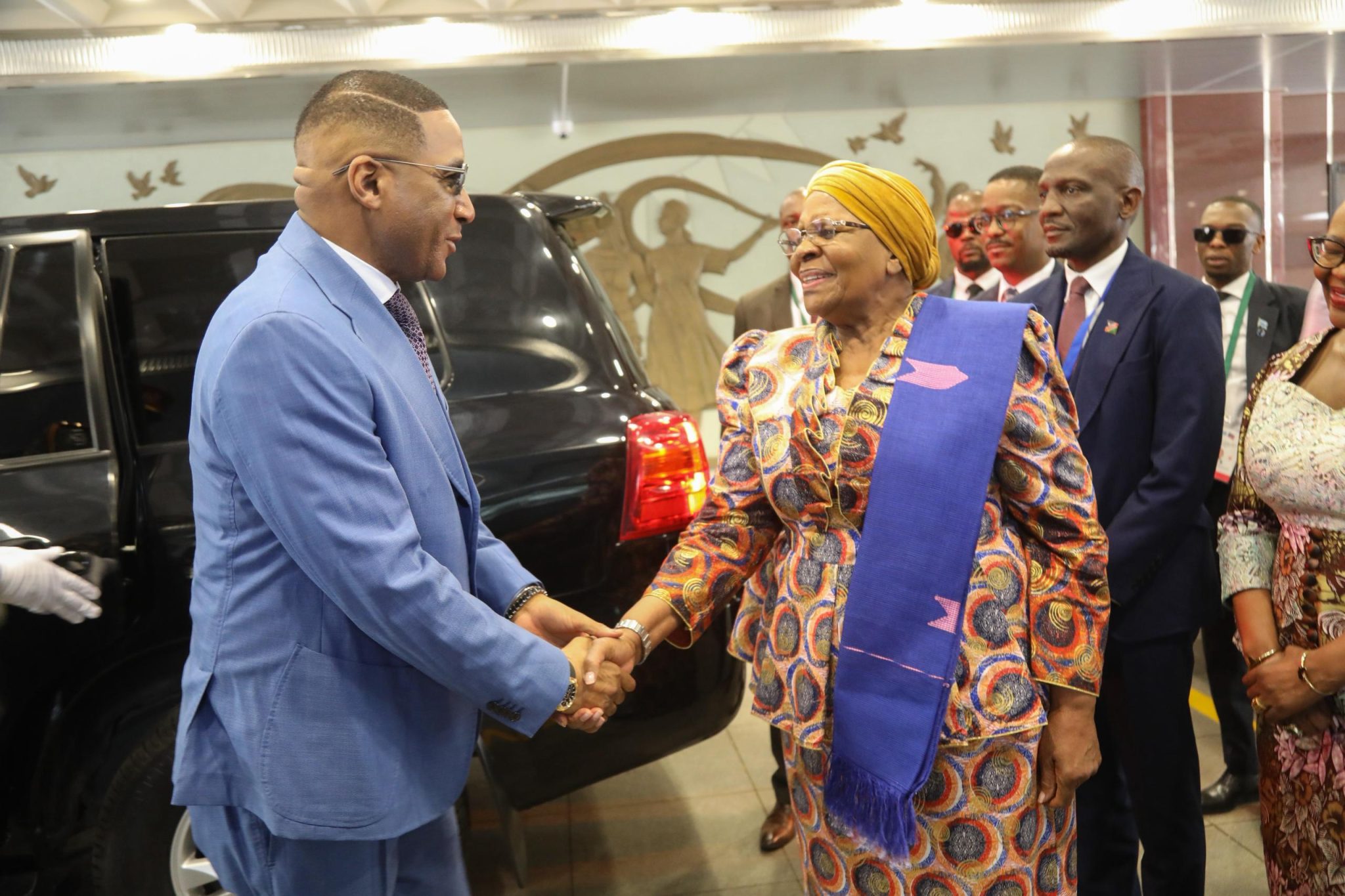
    resident Netumbo Nandi-Ndaitwah has announced that Namibia and Botswana will review all bilateral agreements.

    She said this during the second session of the Namibia-Botswana Bi-National Commission (BNC) at State House on Friday.

    This vision, she said, aims for peace and stability, not only for the two countries but across Africa.

    “I am encouraged particularly, as we are going to thoroughly review all our bilateral cooperation and agreements. Agreements which we are going to sign today will serve as a clear example of our shared vision to turn this into tangible growth,” she said.

    “We must create jobs and empower our women with skills to drive our economic growth,” she said.

    The one-stop border implementation between Walvis Bay Port and Gaborone, the 24-hour border operations and acceptance of identity documents, she said, has made transportation more accessible.

    She said collaboration extends beyond just bilateral issues, adding that the world now lives in the age where multilateralism is being challenged.

    She called for peace in the region and the world, referring to Palestine, and the end of illegal sanctions on Zimbabwe and Venezuela and economic embargoes on Cuba.

    Botswana president Duma Boko says the two countries must use a business-as-usual approach and embrace the circumstances that both countries face to create change in people’s lives.

    He says the reviews will cast out outdated strategies and realign them with renewed strategies.

    He adds that the two countries should not seek to outcompete each other, highlighting the need for collaboration on common goals and outcomes.

    “We need each other desperately, and despite the fact that we need each other, we also pose immense danger to each other,” he adds.

    Boko says Namibia and Botswana must be doers, not doubters, despite challenges.

    “The people are hungry, unfed, unhosed, they want to eat and work, they want to make meaningful living within their borders. The expectations are enormous,” he says.

    Boko says the two countries must compliment each other with work and deeds, not just words.

  • UB graduates step into the digital era

    UB graduates step into the digital era

    Civil society organisations have a duty to work toward assisting African nations combat the growing scourge of money laundering,terrorism financing and illicit financial flows.

    These were the sentiments echoed by the President Advocate Duma Boko during a keynote address to the High Level Africa Civil Society Conference on Anti-Money Laundering and Countering Financing Terrorism held in Gaborone on October 16 .

    The President urged delegates from civil society institutions across Africa to use their three-day deliberations to engage and introspect on how to best combat money laundering and financing terrorism.

    President Boko said countering the financing of terrorism and illicit financial flows should entail an honest discourse down to the grassroots.

    “Why do we have this big challenge of money laundering? What money is this that is being laundered? Where does it come from? Because we are trying to establish the channels through which it moves and flows. What is its source and origin? Where does it come from? President Boko said.

    He said civil society organisations, which were drawn from the community and work closely with the people at grassroots level, needed to consistently probe those in public office who may partake in the misuse of public funds.

    “When those who hold public office turn the public purse entrusted to them into their own private chest, this is the real problem. These funds, these resources, this wealth is illegally obtained, stolen, obtained corruptly, then channeled and concealed, beyond the reach of crime intelligence organisations. This is what we are wrestling with,” he said.

    Acknowledging that civil society formations in Botswana were weak, owing to a lack of sufficient financing, apart from labour organisations, which relied on the monthly member subscriptions, President  Boko called on trade unions to utilise their resources to be the anchor of national civil society.

    He  called on civil society to also self-introspect how they could be used to partake in or aid and abet illicit financial flows, ‘so that when civil society probes leaders, politicians, they themselves must have already submitted to self-examination.’

    President Boko said Botswana would continue to submit as a country to the evaluations that take place periodically, including an upcoming evaluation in 2027 that would determine whether Botswana was fully compliant with Financial Action Taskforce (FATF) global regulations.

    “We have made impressive strides. But we are not there yet. And sometimes when we celebrate the little successes that we have attained, we might become complacent. Let me remind  government that we are not there yet,” President Boko said.

    The Minister of Labour and Home Affairs, Major General Pius Mokgware buttressed the argument that civil society organisations were key in combating money laundering and terrorism financing.

    He said as largely community based institutions, civil society formations should collaborate into a network that offered strategic direction and accountability to combat the human suffering that is brought about by illicit financial flows.

    For his part, Executive Director of Civic Advisory Hub, Mr Yona Wanjala said Africa lost about US$88 billion (over P1 trillion) annually to illicit financial flows, which throve on the erosion of good governance and human rights, the suppression of oversight and accountability, and thus required an active role by civic organisation in offering a solution