“And when great souls die, after a period, peace blooms. Our senses, restored, never to be the same, whisper to us… ‘They existed. They existed. We can be. Be and be better. For they existed.”
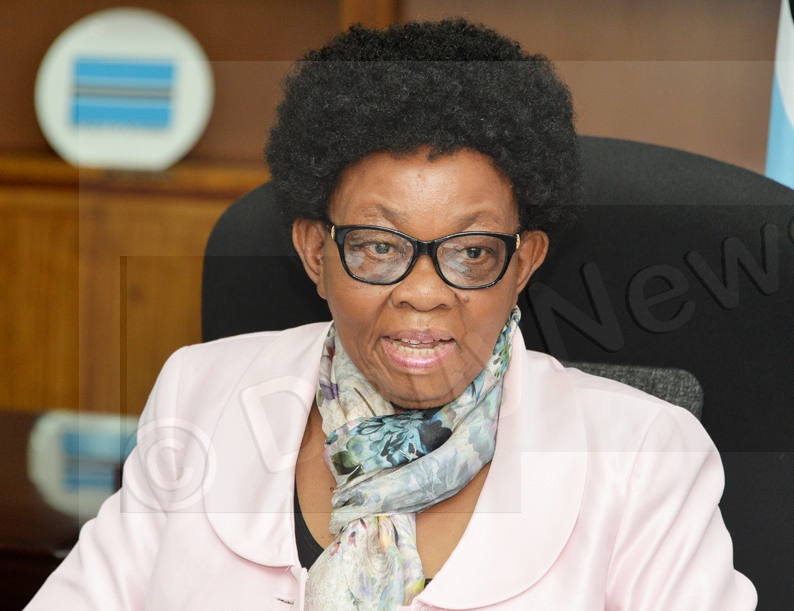
Those words from “When Great Trees Fall,” a poem by African-American poet, writer and civil rights activist, the late Maya Angelou, offer a poignant lament as the nation learned of the death of Ambassador Gladys Kokorwe, former
Speaker of the National Assembly, who died in hospital on Wednesday night at the age of 78.
Trailing in the footsteps of Dr Gaositwe Chiepe, Ms Kebatshabile Disele and Ms Clara Olsen, the first generation that pioneered female representation in the National Assembly in the 1970s and 1980s, Ambassador Kokorwe served political office and the diplomatic service for a quarter of a century between 1994 and 2019, as a Member of Parliament (MP), cabinet minister, diplomat and in the parliamentary speakership.
In an interview, former cabinet minister Daniel Kwelagobe, whose 45 years in the National Assembly between 1969 and 2014 make him the country’s longest-serving MP, recalled Ambassador Kokorwe as a hardworking servant of the people.
“Even before she joined politics I knew her personally from her home village Thamaga, as well as my own home Molepolole where she was married into the Kokorwe family. In official duty, I recall working with her in Parliament and in the cabinet, where she was a hardworking representative and an outstanding Speaker of the National Assembly,” Mr Kwelagobe said.
Born Gladys Keitumetse Theresa Botlhoko on November 20, 1947 in Cape Town, South Africa, where her Motswana father was working, she returned home to the then Bechuanaland Protectorate at the age of 10. She attended primary school in Thamaga and later secondary school at Moeng College.
After completing her formal education, she joined the civil service in the newly independent Botswana, working as a typist and clerical officer. Over time, she rose through the ranks in local government, serving at Lobatse Town Council, later becoming town clerk at Sowa Town and Gaborone, before serving as secretary of the Kgatleng District Council.
Ahead of the 1994 general elections, Ambassador Kokorwe contested the Botswana Democratic Party (BDP) primary elections for the Thamaga constituency. Youth leader Kabo Morwaeng insisted he had won the contest, but the party’s Committee of 18 Electoral College confirmed Kokorwe as the BDP candidate.
“When the BDP was established in the 1960s we initially had a sub-committee that included the likes of Messrs Amos Dambe and Englishman Kgabo that identified suitable candidates for the party countrywide. Then we had the
Committee of 18 forming our electoral college. Pursuant to their decision over Thamaga in 1994, the tension between the candidates Kokorwe and Morwaeng developed. We later had to introduce Bulela Ditswe to further democratise the process,” Mr Kwelagobe said.
She was elected MP for Thamaga in 1994 and re-elected in the 1999 and 2004 general elections. Over the years, she served as Assistant Minister of Local Government, Minister of Youth, Sport and Culture, Ambassador to Zimbabwe, Deputy Speaker of the National Assembly and later Speaker of Parliament during her 25 years in active politics.
During her second term in office (1999-2004), she was part of a wave of female representatives who made up close to 20 percent of the National Assembly, at the time made up of 40 elected constituency MPs, and four Specially Elected
MPs. Ambassador Kokorwe, Dr Margaret Nasha, Ms Joy Phumaphi, Ms Tebelelo Seretse, Ms Pelonomi Venson-Moitoi, Ms Lesego Motsumi, Ms Daisy Pholo and Ms Shirley Segokgo were all a part of that eighth Parliament during the presidency of Dr Festus Mogae.
Mr Kwelagobe, a former BDP chairperson and secretary general, said Ambassador Kokorwe was known for effectively articulating the needs of her constituents and demonstrating principled leadership throughout her career.
After her many years of dedicated service to the public service and politics, she retired in 2019, and nigh on seven years later, departs to the hereafter her footprints and that of her generation well marked, a path for posterity. For current and future female political representatives to step on and echo Angelou’s poesy narration, “We can be better…for they existed.”