Category: Regional News

  • MAELE Urges African Universities to Lead Development

    MAELE Urges African Universities to Lead Development

    African higher education leaders have been urged to strengthen university leadership, deepen collaboration and accelerate innovation to help drive the continent’s socio-economic transformation.

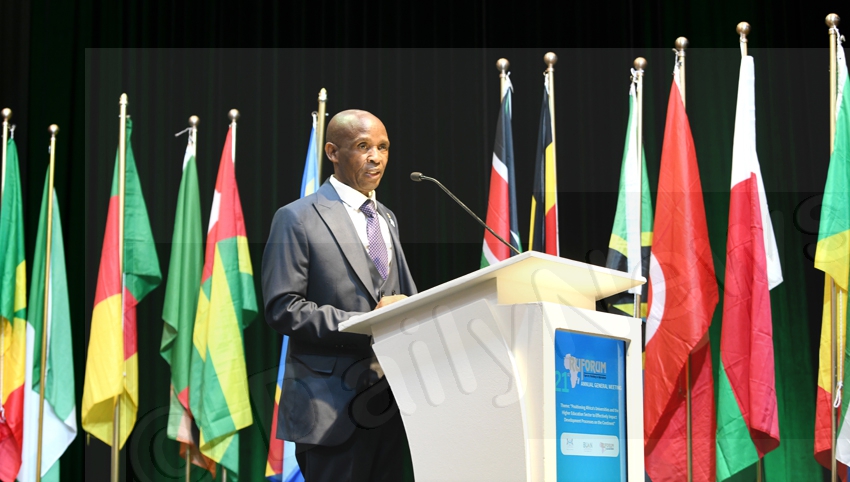
    Speaking at the 21st Regional Universities Forum for Capacity Building in Agriculture (RUFORUM) Annual General Meeting (AGM) in Gaborone on Monday, Minister of Higher Education Mr Prince Maele said Africa’s development challenges demanded a new model of university engagement, one that moved beyond traditional roles and prioritises real-world impact.

    He identified youth unemployment, climate change, food insecurity, low value addition, sluggish economic growth and rising insecurity as persistent barriers undermining Africa’s progress.

    “Our science output must receive a catalytic boost. Universities must evolve from centres of teaching and research into mission-driven institutions that generate solutions, technologies, products and services aligned with national and regional priorities,” he said.

    Minister Maele described the conference theme: Positioning Africa’s universities and the higher education sector to effectively impact development processes on the continent as timely and forward-looking, reflecting growing recognition that African universities must be more proactive in shaping national and regional development.

    “The theme clearly recognises that it is through innovation that higher education can build resilient societies and advance economic development,” he added.

    Mr  Maele challenged institutions to lead Africa’s transition to a green and climate-resilient economy, noting that the continent currently secured only 3.6 per cent of global climate finance, far below what was needed.

    He urged universities and the private sector to critically assess the bottlenecks limiting Africa’s participation in global climate financing and to scale efforts to attract investment into clean energy, climate-smart agriculture and green job creation.

    The minister also commended long-standing development partners, including the Mastercard Foundation, Bill & Melinda Gates Foundation, the African Development Bank and the World Bank, for sustained investment in Africa’s higher education sector, and appealed for continued support to help build work-ready graduates and resilient economies.

    Botswana University of Agriculture and Natural Resources (BUAN) Vice Chancellor Professor Ketlhatlogile Mosepele echoed the call for cohesion and purposeful partnerships, describing the conference as “a historic convergence of knowledge, action and purpose.”

    Prof. Mosepele stressed that Africa’s agricultural and higher education transformation depended on stronger collaboration between universities, governments, communities and industry.

    He urged public universities to demonstrate measurable impact and ensure society received a meaningful return on investment.

    He further said universities must redesign curricula, embed entrepreneurship, strengthen inclusion for women and youth, and ground research in real community challenges.

    Prof. Mosepele also highlighted digital transformation and leadership development as critical levers for building globally competitive African institutions.

    The five-day meeting has attracted delegates from 175 universities across more than 40 African countries, with discussions focusing on higher education reform, climate-responsive agriculture, innovation ecosystems and strategies to strengthen Africa’s human capital for sustainable development.

    As the conference progresses, leaders have reiterated that Africa’s universities were not just academic institutions as they were vital engines for innovation, resilience and economic growth. 
  • Botswana Ready to Learn from Lesotho

    Botswana Ready to Learn from Lesotho

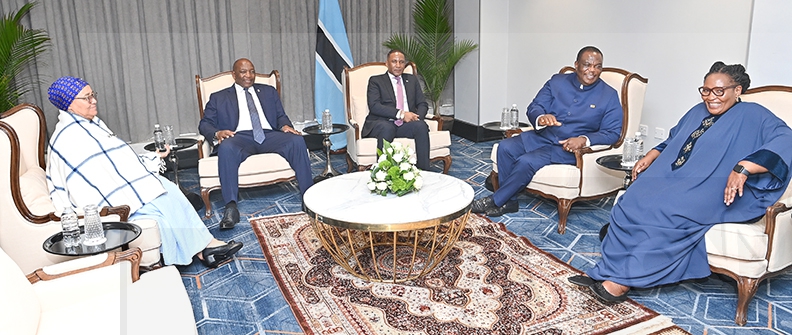
    President Advocate Duma Boko says as Botswana ventures into cannabis production, a leaf can be taken out of Lesotho experience as it is advanced in the area of cannabis production and its export routes.

    “Lesotho is effectively a leader and pioneer in that field with full value chain beneficiation of the product and positioning for exports while Botswana cannabis production is still at an infant stage. We are therefore, looking forward to collaborate and learn from Lesotho,” said President Boko during a courtesy call by Lesotho Prime Minister, Mr Samuel Matekane at the Office of the President on  Friday.

    President Boko said it was pleasing to note that the bilateral relations between the two countries dated back to the colonial era and were rooted in strong historical ties hence it was not surprising for the two countries to be working on a water project which was on the final feasibility study stage.

    Upon completion, the project would benefit the country’s water supply particularly the Southern part as well as enable construction of the proposed five megawatt hydropower station which would be a great addition to the country’s power generation.

    President Boko said Botswana looked forward with keen interest toward the implementation of the project, thus expressed optimism that Lesotho would be a good partner for its success. 

    “ I strongly believe that we have a good partner in Lesotho, as it has pulled off one of the biggest engineering projects in the design of its dams and we are grateful to have them on board in this water project,” he said.

    He stated that both countries would explore other future areas of cooperation owing to the many affinities and opportunities of collaboration. Additionally, President Boko commended Lesotho for the success in the fight against drugs and substance abuse.

    “One of the areas that Lesotho has been successful on, is the ability to retrieve young people from the streets who were victims of drug addiction. The boot camp has rescued many and gave them a new lease of life therefore, we also look forward to collaborate on such projects,” he said.

    In reference to bilateral relations, President Boko stated that Botswana and Lesotho long established diplomatic relations, way before the so called definition of the nation’s states post-independence. He highlighted that the relations between the two nations were deeply rooted in the cultural similarities.

     Prime Minister Matekane, on the other hand said the existing bilateral relations between Lesotho and Botswana provided an enabling environment for investors from across both countries to widen their business ventures and further enhance economic relations.

    “There is no doubt that the private sector is the engine of growth for both countries respective economies to prosper and it is on the backdrop of such that the relations between the two have created an enabling environment for private sector led cross border investments to thrive,” he said.

    Mr Matekane said there were various sectors the business communities between the countries could collaborate on, such as the Lesotho citrus fruits industry. He reaffirmed Lesotho’s commitment to continue engaging with Botswana on developmental issues that affected economic cooperation between the two countries.

    “We sincerely appreciate the opportunity granted to us to explore the beef industry and how to master it,” he said.

    Mr Matekane highlighted the need to increase economic cooperation through promotion of trade relations that could benefit both nation’s citizenries.

    “Lesotho already produces quality car leather seats for various models while Botswana on the other hand have plenty of cow leather, therefore the leather can be exported to Lesotho for mutual economic benefit,” he said.

    Equally, he said Botswana possessed plenty of beef while Lesotho had mutton which presented trade opportunity in that aspect. Mr Matekane therefore, asked for the establishment of regular cultural exchange forum and food exhibitions between the two nations. 

  • Children Day Symbolizes Renewed Commitment

    Children Day Symbolizes Renewed Commitment

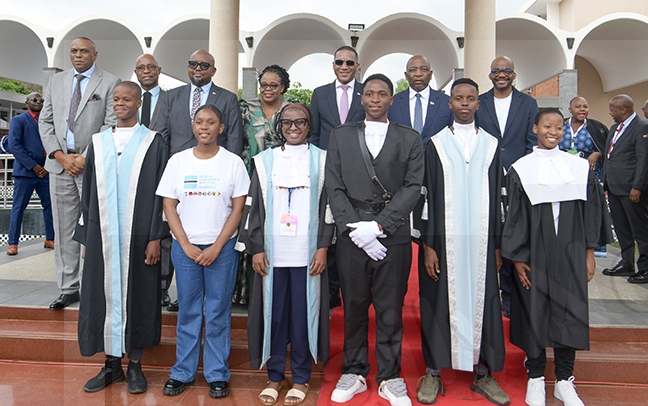
    President Advocate Duma Boko on Saturday, hosted a special luncheon bringing together children from across the Southern African Development Community (SADC), marking a significant moment in the region’s ongoing commitment to child rights, participation and empowerment.

    The event followed a morning of youth-focused activities and dialogues centred on strengthening regional cooperation to uplift and protect children. Ministry for International Relations head of consular services, Ms Tebatso Baleseng said that the gathering served as a reminder to regional leaders to place children at the centre of all decision-making processes.

    Ms Baleseng underscored the centrality of the United Nations Convention on the Rights of the Child (UNCRC) in guiding policy across the region, adding that children must be promoted, protected and respected within each of the Southern African countries and collectively across the region.

    She said that the luncheon was not simply a ceremonial gathering but a reaffirmation of the region’s responsibility to view children not just as beneficiaries of protection, but as rights holders with the agency to influence future development.

    The presence of children and youth at the event symbolises a renewed commitment to creating platforms where young people could articulate their aspirations and concerns. Ms Baleseng therefore, urged leaders across the region to open avenues for meaningful dialogue with children, ensuring that youth perspectives guided the policies and decisions that affected them.

    The luncheon formed part of ongoing regional efforts to strengthen child-centric governance, promote youth engagement and build a future where young voices were recognised as essential to shaping Southern Africa’s development agenda.

    In attendance to the lunch were regional leaders across SADC, senior government officials and members of the diplomatic community, underscoring the spirit of cooperation and shared development priorities across Southern Africa.

  • Angola and Botswana Forge Relations Within SADC and AU

    Angola and Botswana Forge Relations Within SADC and AU

    Botswana and Angola have forged partnership in African solidarity and strengthened through many years of cooperation within the frameworks of SADC and the African Union, says Permanent Secretary in the Ministry of International Relations Mr Thuso Ramodimoosi.

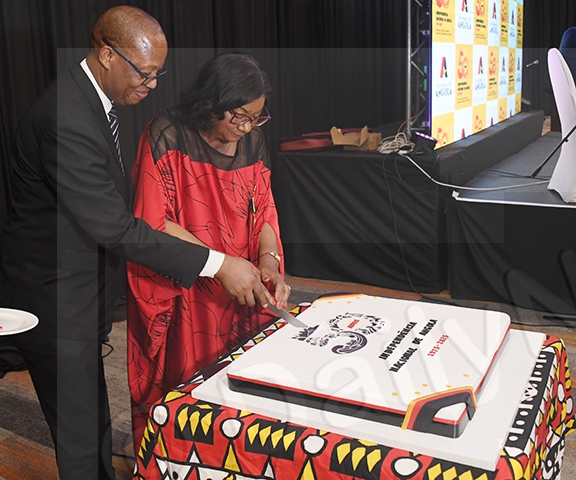
    Mr Ramodimoosi said this at the commemoration of Angola’s 50th anniversary of independence. He said the partnership is sustained by a shared commitment to the development and advancement of each other’s peoples.

    Botswana and Angola collaborate across a wide range of sectors, including water resources, conservation, agriculture, transport, mining, and energy, as well as in the promotion of peace and security in the region.

    Mr Ramodimoosi reaffirmed the commitment of the government of Botswana to strengthening the bonds of friendship and bilateral cooperation with Angola. He said the two countries are leading diamond-producing countries, and they were deepening their partnership and collaboration in the diamond mining sector.

    Additionally, he said the two countries, together with the Democratic Republic of Congo, Namibia, and South Africa, signed the Luanda Accord, which is a landmark agreement in the promotion of natural diamonds.

    Meanwhile, Ambassador of Angola to Botswana Ms Beatriz Morais said Angola has prioritised strengthening cooperation in areas of politics and diplomacy, oil and petroleum products, energy and water, agriculture and livestock, as well as telecommunications, diamonds and other minerals, tourism, and the environment, particularly biodiversity conservation.

    “In addition to bilateral issues, Angola and Botswana have multilateral relations at the SADC level, including the Kavango-Zambezi Transfrontier Conservation Area (KAZA TFCA), the Zambezi River Basin Commission (ZAMCOM) and the Permanent Okavango River Basin Water Commission (OKACOM), with the aim of strengthening regional integration,” said Ms. Morais.

    She acknowledged and recognized the role and contribution played by other African governments for the national liberation struggle of Angola, for the country’s peace to be a reality, and for reconstruction and development to take place to this day. 

    “This is a gesture of recognition and acknowledgment to these peoples and countries, including Botswana, for their invaluable support for the Angolan people at different times in our history,” she said.

    Ms Morais further said the 50-year milestone of Angola’s independence urges them as a country to look back at the road they travelled toward building a developed and prosperous Angola: from resistance to colonial oppression and the emergence of Angolan nationalism, from the national liberation struggle to the conquest of national independence, from armed conflict among children of the same land to the embrace of reconciliation, and from the destruction wrought by war to national reconstruction. 

    She said the milestone is also a sublime moment to reflect on the future they are building with the contribution of all Angolans.

  • SADC Launches Regional Communication, Awareness & Visibility Strategy 2025–2030

    SADC Launches Regional Communication, Awareness & Visibility Strategy 2025–2030

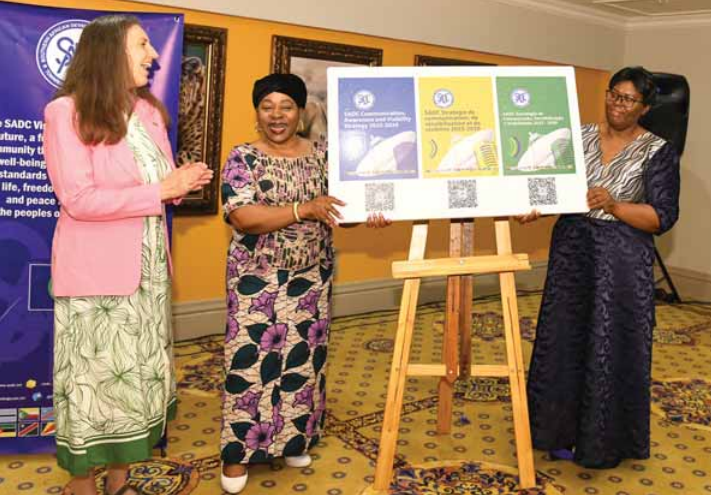
    The Southern African Development Community (SADC) continues to serve as a platform for harmonising regional policies, pooling resources and addressing shared development challenges in areas such as trade, infrastructure, security and governance. Speaking at the launch of the SADC Communication, Awareness and Visibility Strategy 2025–2030 in Gaborone, SADC Deputy Executive Secretary for Regional Integration, Ms Angele Makombo N’tumba, said the organisation empowered member states to collectively achieve goals that would be difficult to realise individually.

    Ms N’tumba said one of SADC’s objectives was to build a regional community where citizens were able to connect, collaborate and benefit from a shared vision of a better future. Since its establishment in 1980, she noted, SADC had developed robust policies and instruments that continued to deliver transformative outcomes across the region, enhancing trade, streamlining systems, facilitating mobility and uplifting communities.

    She emphasised that SADC’s regional instruments were powerful engines of transformation with tangible impact on citizens’ lives. She highlighted the SADC Mobile Money Guidelines, introduced in 2024, which are helping member states harmonise regulation and expand access to financial services. The initiative, she said, was especially transformative for women, youth and informal traders who have historically been excluded from formal banking.

    “By supporting mobile money, SADC is modernising finance and ensuring that opportunity reaches every corner of the region,” she said. However, Ms N’tumba cautioned that SADC’s achievements risked going unnoticed without effective communication. She said the new Communication, Awareness and Visibility Strategy for 2025–2030 was crafted to deepen public understanding of SADC’s origins, mandate and impact, ensuring its messages reach diverse audiences across member states.

    “This strategy embraces our region’s rich linguistic, cultural and social diversity, and ensures visibility of women, youth, persons with disabilities and marginalised communities,” she added.

    SADC partner and Head of Economic and Development Cooperation at the German Embassy in Botswana, Ms Simone Goertz, said clear communication of goals, policies and achievements enables regional organisations to build trust, enhance transparency and strengthen engagement with citizens, stakeholders and international partners. She said communication acted as a bridge between institutional frameworks and the lived realities of the people they serve.

    “In a globalised world where narratives shape perceptions, strategic communication is vital to counter misinformation, promote inclusivity and reinforce regional solidarity,” she noted.