Category: Sports

  • Raguin Delivers Back-to-back Victories

    Raguin Delivers Back-to-back Victories

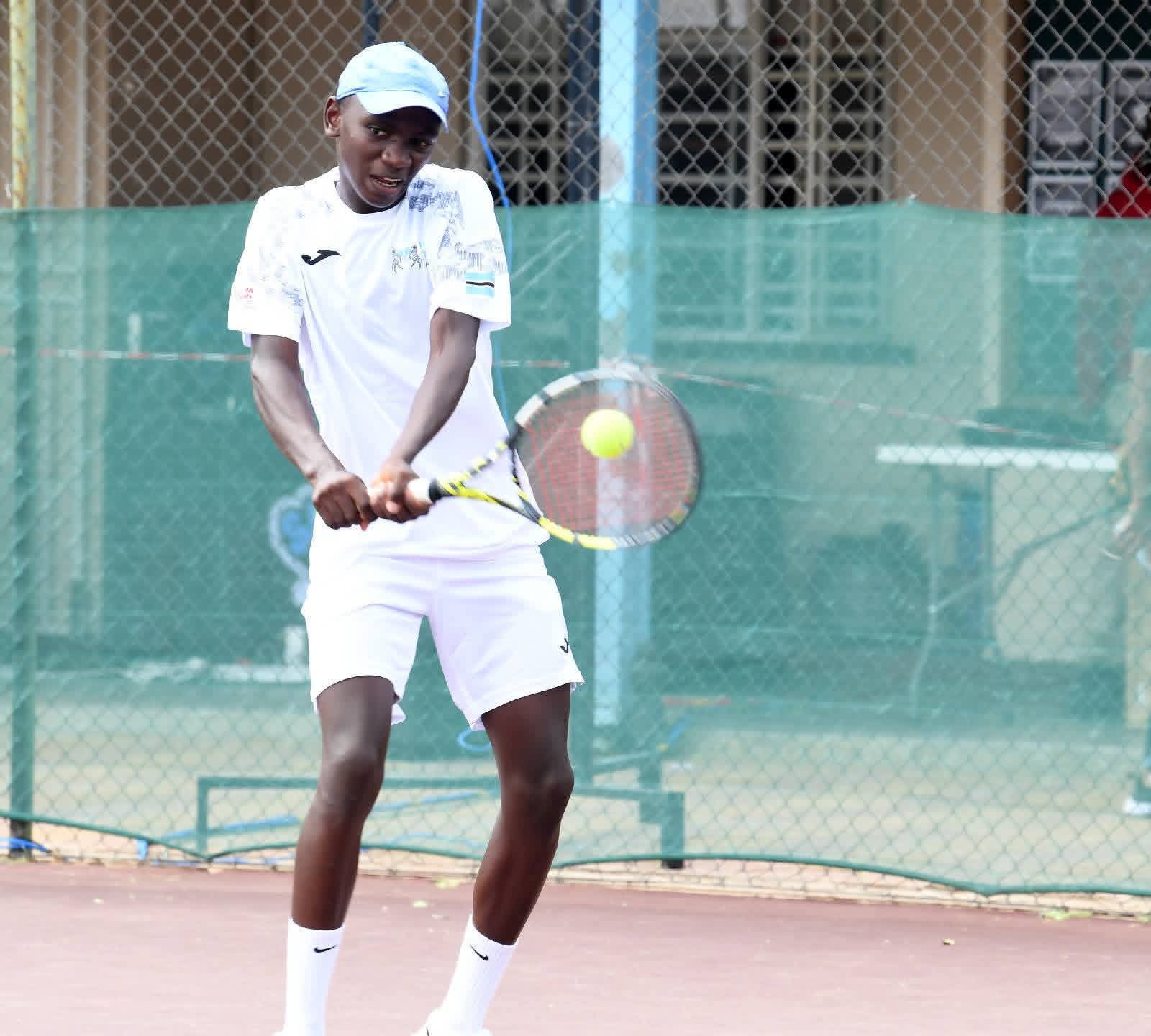
    GABORONE – Fresh from winning the International Tennis Federation (ITF) World Tennis Tour Juniors J100 boys’ singles tournament in Kenya three weeks ago, Ntungamili Raguin returned home brimming with confidence, ready to compete in the ITF J60 and J100 tournaments staged in Gaborone from November 17 to 29 respectively.

    The young Motswana endured a grueling two weeks of back-to-back competitions at the National Tennis Centre, to ensure he reached the finals of both tournaments.

    First was the ITF J60 where he reached both finals of the boys’ singles and doubles where he delivered two gold medals.

    In the boys singles final, Raguin defeated Alex Lap Hang Hui of Hong Kong 6-4, 6-2 securing Botswana’s third title in the tournament’s history after previous victories by Denzel Seetso and Mark Nawa.

    In the doubles’ final, Raguin, affectionately known as Ntunga, and his partner, Yanael Béranger of France claimed the ITF J60 doubles crown defeating Seabo Saleshando and Mengezi Sibanda of Zimbabwe 6-0, 6-3.

    Following his J60 success, Raguin delivered yet another victory in the J100 as he won gold in the boys singles and silver in doubles.

    Although visibly fatigued after three consecutive weeks of high-intensity matches, Raguin remained mentally locked in and refused to lose focus despite the physical toll.

    The energy from lifting the J60 title in front of his home supporters rejuvenates the teenager and fueled his ambition to clinch the J100 trophy. Once again, he delivered.

    In the J100 doubles, Raguin and his partner, Béranger settled for silver.

    However, on November 29, the partners briefly became ‘enemies’ when they faced each other in the singles championships match.

    Ragiun won 6-2,6-3 becoming the first Motswana to win titles on three consecutive weeks of the World Tennis Tour Juniors circuit.

    His ability to read opponents and capitalise on their weaknesses has distinguished him from his peers. His aggressive style of play and mastery of net points have become hallmarks of his game.

    Raguin had earlier signalled his intent on the global stage when he won the ITF J100 boys’ singles final in Kenya, defeating Italian Mattia Baroni 3-6, 7-5, 6-3 in a fierce contest that lasted two hours and 15 minutes.

    His recent victories at home now mark a defining milestone in Botswana’s junior tennis history In a post match interview, Raguin said he was happy with the victory.

  • Raguin roars on home soil

    Raguin roars on home soil

    Botswana’s rising tennis star, Ntungamili Raguin will roar on home soil on November 19 when he takes on Nithin Padmanabhan of India at the ITF J60 tournament.

    Living every athlete’s dream of playing on home soil, Raguin will be spurred on by the cheers of his supporters and is determined to give them a game like no other that he has so far played.

    Encouraged by his November 15 win at the J100 tournament in Kenya, Raguin a seed two of the tournament, is confident that he will put up a good show against Nithin in a game that will be played on hard court.

    At the J100 tournament, he won 3-6, 7-5, and 6-3 against Italy’s Mattia Baroni, claiming his ITF World Tennis Tour Junior sixth title. He revealed in an interview that his goal was to win both the J60 and J100 tournaments at home, hence he would fight bitterly to win his every match. 

    He said he would ride on the good performance that he displayed in his last tournament in Kenya, adding that he trusts his muscle memory to carry him through.

    Furthermore, he said his ultimate goal is to qualify for the Australian Open billed for next year, a goal that he said he could achieve through accumulating more points in tournaments such as the one he was playing in today.

    He said despite playing at home, he was not under any pressure but would use the home support as a morale booster.

    “Pressuring myself can actually turn into bad energy that will result in me not playing well, but I have been preparing very well. I have been playing on clay court and now I have to adapt to playing on hard court,” he said.

    Talking about the difference between the two types of courts, he said the clay was slippery and when balls bounced, they slowed down, whereas they move faster on the hard court.

    His coach, Killian Sinclair said they had prepared to win His coach, Killian Sinclair said they have prepared to win the tournament both in singles and doubles. Sinclair praised both his player’s mental resilience and competitive spirit, saying it was this combination that had propelled him to win his last tournament.

    “In Kenya he was down, but he made a great comeback and went on to win the tournament. That alone demonstrates that his mental strength is sharp,” he said.

  • WHO supports Botswana’s preparedness and response efforts for coronavirus

    WHO supports Botswana’s preparedness and response efforts for coronavirus

    Gaborone, Botswana – 04 February 2020: WHO has provided PPE kits and has ordered digital thermometers and other essentials to support key preparedness and response activities such as screening and case management. WHO Representative, Dr Josephine Namboze and technical staff continue to provide technical guidance, training and support on a daily basis in all areas of preparedness and response. All staff including cleaners, security, immigration, revenue services, restaurant workers and others at ports of entry have been trained in hygiene and infection control while health staff have received comprehensive training from surveillance, infection control to case management.

    In the last one week, the WHO Representative attended a meeting of the multi-sectoral national Public Health Emergency Coordinating Committee (PHECC) and addressed a Joint media conference with senior management from the Ministry to update the public on the coronavirus outbreak and what the world, WHO and the country are doing. She also joined the Minister of Health and Wellness Dr Lemogang Kwape to tour key facilities including the Sir Seretse Khama International Airport in the capital Gaborone, the isolation facility in Block 8 and a designated bigger isolation facility Sir Ketumile Masire Teaching Hospital in case of increasing numbers of people needing isolation and management. Dr Namboze and Minister Kwape also visited the busiest land border post between Botswana and South Africa to monitor Port Health Services and motivate staff. The country currently has 5 suspected cases and has not recorded a confirmed case yet. Test results from the Regional Laboratory in South Africa will shed further light on this.

    Day to day, the Minister is constantly engaging the community including Batswana in Wuhan, China through various forms of media such as telephone, broadcast and social media. He has also engaged with the Chinese Embassy in Botswana. The Embassy is helping with translation of key documents into Chinese as large numbers of Chinese nationals coming into Botswana have difficulties understanding English.
     
    WHO co-chairs the Risk Communication and Community Engagement committee of the PHECC which advises the Minister and coordinates communication, awareness creation, social mobilization and community engagement. WHO has also briefed UN staff and partners and will continue to do so.

    Yesterday (3rd February 2020), the Minister of Health and Wellness addressed cabinet on the status of 2019-nCoV and the specific actions that have been taken as part of preparedness.

  • Former Botswanan president returns from self-imposed exile, appears in court

    Former Botswanan president returns from self-imposed exile, appears in court

    Gaborone, Botswana — 

    Botswana’s former president, Ian Khama, has made a surprise return to the country after a nearly three-year self-imposed exile. Khama, who faces criminal charges, fled the southern African country in 2021, saying his life was in danger after a fallout with President Mokgweetsi Masisi.

    Khama appeared Friday in a Gaborone court, where his lawyers asked that a warrant of arrest against him be dropped. He faces 14 charges, which include illegal possession of firearms and money laundering.

    His lawyer, Unoda Mack, told reporters outside court that the warrant of arrest has been set aside.

    “They wanted him, we brought him. The warrant has been set aside. He will appear in court, he will be coming. He brought himself,” Mack said.

    Khama, who leads a splinter opposition party, the Botswana Patriotic Front (BPF), has denied the criminal charges and says they are part of persecution by Masisi.

    Khama handpicked Masisi to succeed him in 2018.

    BPF Secretary General Lawrence Ookeditse said Khama, who led Botswana between 2008 and 2018, is back to fight the “bogus” charges.

    “He went to the magistrate court to try to get the bogus warrant of arrest that was brought on him quashed,” Ookeditse said.

    Khama’s return comes just weeks before Botswana holds its general election on October 30.

    Ookeditse said the former president will participate in campaigns for his party.

    “We have been very consistent and General Khama has also been very consistent to the effect that we are going to cause an upset in these elections and he is going to be on the ground campaigning for the BPF, as we are going to do all we can to effect regime change in a democratic way in Botswana,” Ookeditse said.

    Masisi has previously said Khama must return to face the law, and denied accusations of persecuting his predecessor. Khama will be back in court on September 23.

  • Africa must strengthen accountability and governance to prosper — Botswana President Duma Boko

    Africa must strengthen accountability and governance to prosper — Botswana President Duma Boko

    Africa’s economic success and sustainability are intrinsically linked to accountable governance, Botswana’s new President, Duma Boko, stressed at the opening of the 2024 African Economic Conference in Gaborone.

    “Peace and stability in Africa must be anchored on accountable and responsive governance,” the president said, adding, “This is a fundamental human right for every African citizen. It sets the requisite bedrock for any measure for our economic development and its sustainability.” He also called on African countries to strengthen democracy and uphold the rule of law.

    The three-day conference, with the theme, “Securing Africa’s Economic Future Amidst Rising Uncertainty,” has brought together leaders, policymakers, and experts to address the continent’s economic challenges and opportunities. Organised by the Government of Botswana, the African Development Bank, the United Nations Economic Commission for Africa (ECA), and the United Nations Development Programme (UNDP), the event seeks actionable solutions for Africa’s economic growth.

    President Boko underscored that transparency, accountability, and respect for the rule of law are critical in attracting foreign investment and fostering sustainable growth. “Africa is at a crossroads,”  he said. “We must confront the obstacles facing our citizens and leverage our collective strengths to secure a prosperous future amidst a volatile global economic environment characterized by rising inflation, supply chain disruptions, and tightening monetary policies.”

    Innovative Financial Solutions for Growth

    “Global uncertainties challenge us to rise above prevailing circumstances and invest in the Africa we want – which is the Africa the world needs: a continent characterized by shared prosperity, productive regional integration, vibrant and entrepreneurial youth, and freedom from fear, disease and deprivation,” underscored UN Assistant-Secretary General and UNDP Africa Director Ahunna Eziakonwa.

    Eziakonwa also called for innovative and sustainable financial solutions to reduce borrowing costs and address credit rating biases, which cost the continent $76 billion annually. “We must stem illegal flows where $90 billion is lost. Tens of billions of pension funds, sovereign wealth funds, and insurance funds must work for the continent rather than elsewhere. This Conference must go beyond diagnosing challenges and should lead to actionable solutions. We must take steps to ensure that Africa’s abundant resources finance its growth.”

    The African Economic Conference also underscored Africa’s unique endowments, including its abundant natural resources and youthful population, which could drive transformative growth if governments prioritise education, skills development, and value addition for raw materials.

    Addressing Africa’s Economic and Social Challenges

    The United Nations Under-Secretary-General and Executive Secretary of ECA, Claver Gatete, said Africa faced several pressing issues, including climate change, unsustainable debt, and systemic global inequalities. The global financial system is failing to serve Africa adequately and needs to be urgently reformed, he said.

    Gatete highlighted that the continent’s annual losses from climate disasters alone are as high as $440 billion, while the financing gap to achieve the Sustainable Development Goals in Africa has surged to $1.3 trillion annually. At the same time, Africa’s external debt surpassed $1 trillion in 2023, with unsustainable interest payments restricting development financing.

    “The human cost is equally staggering. Nearly 476 million Africans live in poverty today, with 149 million falling into this bracket recently due to cascading climate and economic shocks,”  Gatete said.

    Regional reforms and integration are critical

    President Boko encouraged African nations to leverage the African Continental Free Trade Area to transform the continent’s economic landscape through increased investment, job creation, and industrialisation.

    “We must not allow the uncertainties of today to deter us from tomorrow’s opportunities,” he told participants.

    Chief Economist and Vice-President of the African Development Bank, Prof. Kevin Urama, urged African countries to adopt innovative, homegrown solutions tailored to their unique challenges. He advocated for strengthened fiscal policies and more resilient resource mobilization to address debt challenges.

    Urama said: “Africa can build and strengthen its fiscal buffers and address the ongoing challenges posed by global debt markets, which have entrenched debt sustainability challenges in African countries. Experience has shown that countries can make their domestic and regional financial systems more resilient by increasing domestic resource mobilization and strengthening macroeconomic policy frameworks.”

  • Global Critical Resources Corporation Reopens Tataki Mine with President Duma Boko

    Global Critical Resources Corporation Reopens Tataki Mine with President Duma Boko

    Tataki Mine contains one of Botswana’s largest reserves of nickel, copper, cobalt, and platinum group metals. After reopening under GCR, Tataki will produce a variety of metals and hydroxide salts that are widely traded internationally. Products will include nickel and cobalt hydroxide precipitates, copper cathodes, metal bars for platinoids (platinum, palladium, rhodium), and precious metals, including gold. Under GCR’s leadership, Tataki Mine will manufacture value-added products on-site, with a focus on introducing new skills and advanced technologies to Botswana’s workforce.

    President Boko and his government’s delegation joined GCR leadership and Members of Parliament, government ministers, local dignitaries, and journalists for the reopening ceremony.

    “Investing in the green energy transition is not only an environmental decision but an economic imperative,” stated President Boko in his remarks to attendees. “The green economy will offer significant opportunities for both domestic and international investors. These sectors are wide open to young people, who will become the job creators of tomorrow.”

    GCR plans to invest USD 200m into Tataki Mine over the coming decade, including USD 50m in the first 18 months to ramp up steady-state production levels. Over the next decade, Tataki Mine is expected to generate over USD 4.2bn in revenue and contribute a 1.5% increase in annual GDP to Botswana.

    Purpose-driven and innovation-led, GCR is dedicated to creating impact in both local communities and global supply chains. The company plans to invest significant resources in local development initiatives in education, infrastructure, and healthcare, while maintaining the highest standards on site for safety, environmental compliance, and stakeholder engagement.

    “We are building a dynamic company that will grow in tandem with Francistown and the entire region,” noted Executive Chairman Cevdet Caner in his speech. “Positive social impact and participatory engagement that aligns mining operations with local needs is a key priority for us.”

    Following a plaque unveiling, Executive Chairman Caner, President Boko, and others took a tour of Tataki Mine’s new facilities. President Boko noted that Botswana is “committed to a program of sustainable job creation, diversification, and transition to a green economy. The new Tataki Mine represents the best of these three goals. Today, we are planting the seeds of change.”

    Global Critical Resources Corporation (GCR) is a U.S.-registered producer of the critical metals that power modern life with assets in Africa and South America. GCR’s Executive Chairman, Austrian entrepreneur Cevdet Caner, has over two decades experience investing in the mining and property sectors and is the founder of several multi-billion-dollar real estate and natural resource companies.

  • Botswana declares public holiday after ‘historic’ athletics gold medal

    Botswana declares public holiday after ‘historic’ athletics gold medal

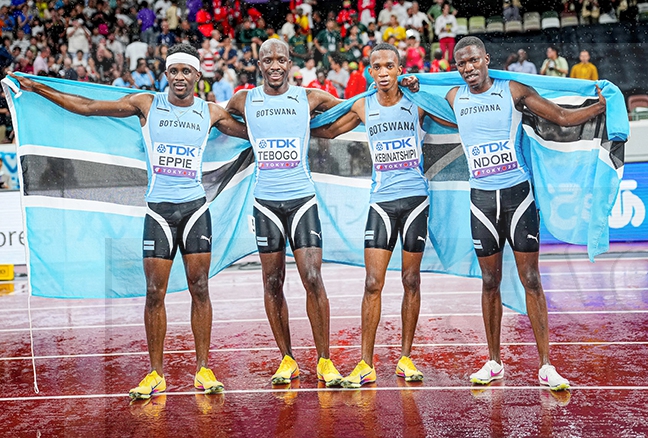
    Botswana has declared a public holiday to celebrate the country’s victory in the men’s 4×400 metres at the World Athletics Championships in Tokyo, the first African nation to win the event.

    President Duma Boko hailed the gold medal as a “historic African win”, in an online address praising the team for their performance.

    He announced Monday, 29 September, as a holiday to celebrate the achievement – a day ahead of the country’s independence day.

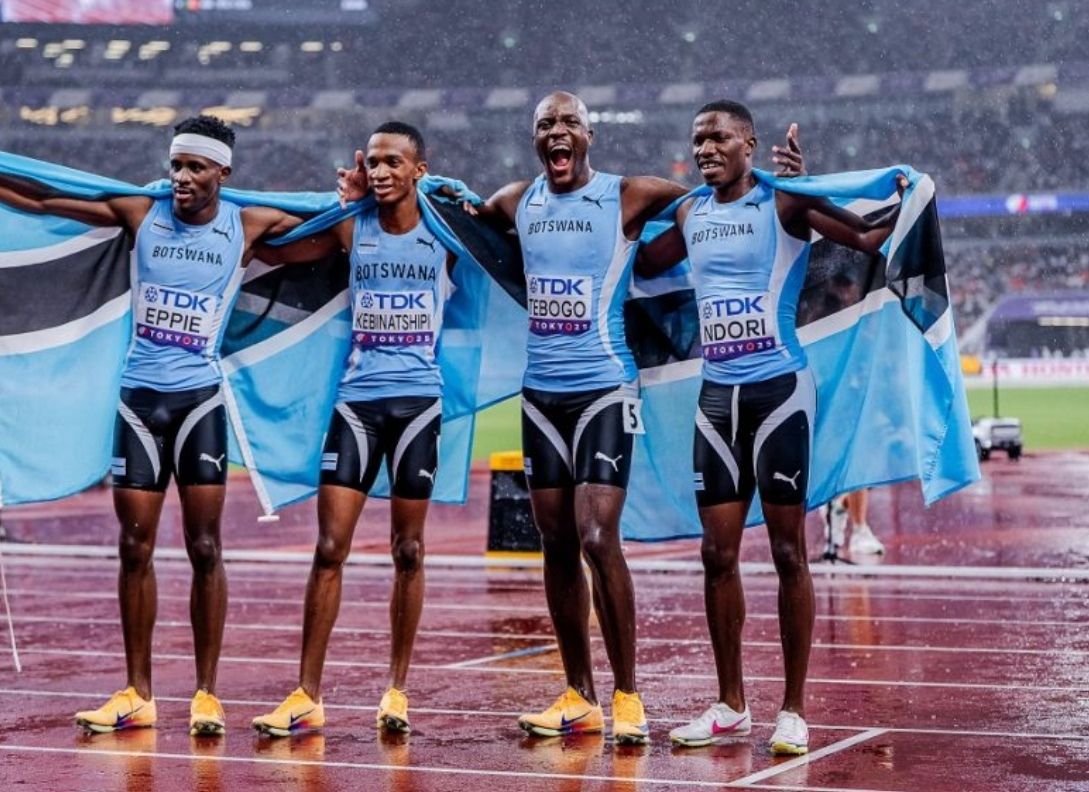
    On Sunday, Botswana’s team of Lee Bhekempilo Eppie, Letsile Tebogo, Bayapo Ndori and Busang Collen Kebinatshipi edged out the US, the winners of the last 10 world titles, in a rain-drenched race. South Africa took third position.

    “I’ll be sure to tell everyone, Botswana’s natural diamonds are not just in the ground, they are our World Champion athletes,” the president said, speaking from New York where he is attending the UN General Assembly.

    He described the moment as “electric”, adding that Botswana’s performance spoke to its rising stature on the global stage.

    The southern African nation finished fifth overall in the championship’s medal standings – behind the US, Kenya, the Netherlands and Canada – their best ever return after taking two golds, one silver and a bronze.

    Last year, Botswana celebrated another historic milestone as Tebogo won the nation’s first Olympic gold medal with his victory in the men’s 200m in Paris.

    His triumph, which also marked the first time an African athlete had won the event, became a national sensation, with tens of thousands of people celebrating him at the National Stadium in the capital, Gaborone, after he returned to the country.

    The government declared a half-day holiday allowing citizens to “pause and celebrate him” – in what then-President Mokgweetsi Masisi described as a “most unique… manner that will be etched in the annals of the history of the Republic”.