Blog

  • ConCourt to provide avenue for recourse

    ConCourt to provide avenue for recourse

    While some residents  of Mochudi agreed with its establishment, some were of the view that the Constitutional Court was being prioritised over the more urgent constitutional review process.

    Others argued that it was an important step toward developing Botswana’s constitutional democratic system, where Batswana would have the opportunity to hold government accountable for safeguarding fundamental human rights.

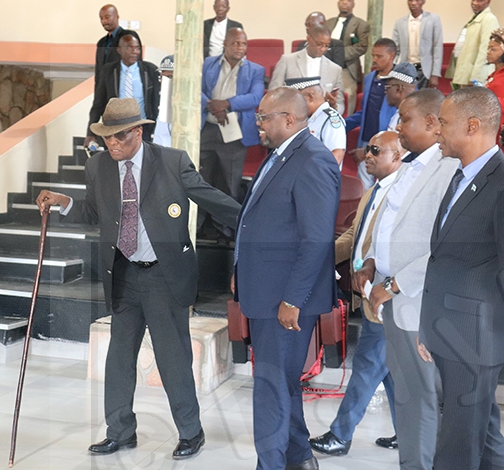
    During a packed kgotla meeting that was addressed by Minister of International Relations, Dr Phenyo Butale in Mochudi, the debate centred on some key questions such as whether a Constitutional Court was necessary; the legal processes required to establish one; and its relationship with existing courts and whether it would replace the Constitution.

    Residents submitted that there was no urgency in consulting about the establishment of the Constitutional Court when there were more pressing matters to deal with such as the health crisis and bad roads, to mention, but a few. Some viewed it as a court that would provide the leeway for murderers to do as they pleased, alleging that the court would provide room for them to escape death the penalty.

    Most residents were of the idea that there was need for an immediate comprehensive review of the Constitution instead of channelling funds towards setting up a Constitutional Court. Others, on one hand, argued that there has not been sufficient consultation regarding the urgency of establishing the court.

    First to take the podium was Bakgatla Deputy Chief, Kgosi Bana Sekai, who rallied behind the Constitutional Court’s establishment, reasoning that it was meant to provide an avenue for recourse. He alleged that there had been insinuations in the past that certain cases would have been resolved effectively had they been heard by a Constitutional Court. 

    Mr Botlhe Kgetse questioned the rationale for the court’s establishment, and further insinuated that it was likely that it was going to serve some political interests. He argued that many issues had been resolved without a Constitutional Court in place hence it was unjustifiable to argue that not having it affected the dispensation of justice.

    “The Unity Dow case law is the example in place that has showed that issues can be resolved without a Constitutional Court,” he opined.

    Ms Kutlwano Odirile, a lawyer by profession, supported its establishment reasoning that it was an important step towards developing Botswana’s constitutional democratic system, where Batswana would have the opportunity to hold government accountable for safeguarding fundamental human rights.

    For his part, Minister Butale explained that the Constitutional Court would not replace the Constitution.

    “These are two different things; the Constitutional Court is meant to provide an avenue for fair arbitrary process,” he said.

    In countering the argument that not sufficient consultation had been done with the public and other critical stakeholders, he said consultations were continuing countrywide and that there would be a referendum once the consultation process was completed.

    Dr Butale acknowledged residents’ concerns about the health crisis and assured them that government was working hard to improve the public health system through among others things, providing sufficient medicines.

    “I appreciate your reservations, but this is the state we find ourselves in as a government and we are working hard to bring about normalcy,” he said, adding that the State of Public Health Emergency that President Advocate Duma Boko had enforced was one of the ways of restoring the optimal functionality of the public health system.

  • Drugs availability stands at 50 per cent in Moshupa District

    Drugs availability stands at 50 per cent in Moshupa District

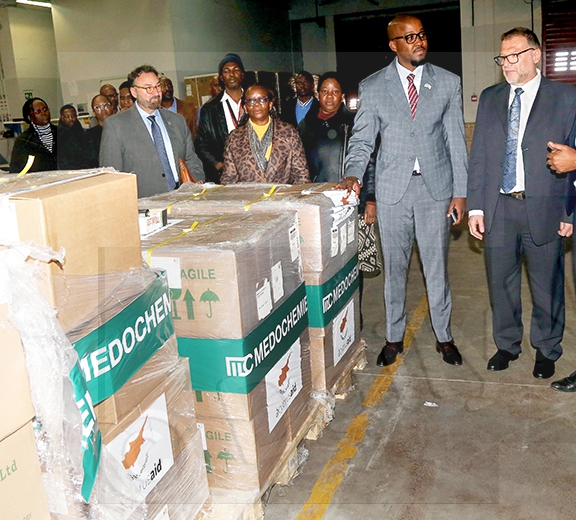
    Overall drug availability at Moshupa District Pharmacy Warehouse stands at 50 per cent.

    This was revealed by Principal Pharmacist at Moshupa District Pharmacy Warehouse, Ms Thato Aliu during Assistant Minister of Local Government and Traditional Affairs, Mr Ignatius Moswaane tour of the facility and Moshupa Clinic Council on Tuesday.

    Breaking down the availability by category, she noted that essential medications were accessible at 52 per cent, vital medications at 62 per cent, and non-essential medications at 36 per cent.

    In his address, Assistant Minister Moswaane encouraged healthcare workers in Moshupa District to evaluate surplus stock at various facilities, so that if possible, any excess supplies could be redistributed to other areas facing drugs shortages.

    He stressed efficient resource management as a practical step toward improving access. Mr Moswaane further assured staff and the community that government continued to prioritise the health sector. 

    In addition, Mr Moswaane appealed to the public to avoid spreading negative or unverified information about drug shortages on social media platforms, noting that such reports could create unnecessary alarm and undermine confidence in the health sector. 

    Moshupa District deputy Council Secretary for Primary Health Services, Mr Mphapi Mbulawa highlighted the critical need to equip nurses and doctors with accurate, real-time information of drug stock levels.

    This transparency, he said was essential for effective patient care and timely decision-making at clinics and health posts

    The tour and discussions come at a time when Botswana’s health system is addressing supply chain challenges, including efforts to implement digital tools for better tracking of medicines from central warehouses to remote areas.

    Stakeholders continue to focus on collaboration, stock redistribution, and public communication to maintain service delivery in districts like Moshupa. 

  • BTA Hails Malak Move to Tunisia

    BTA Hails Malak Move to Tunisia

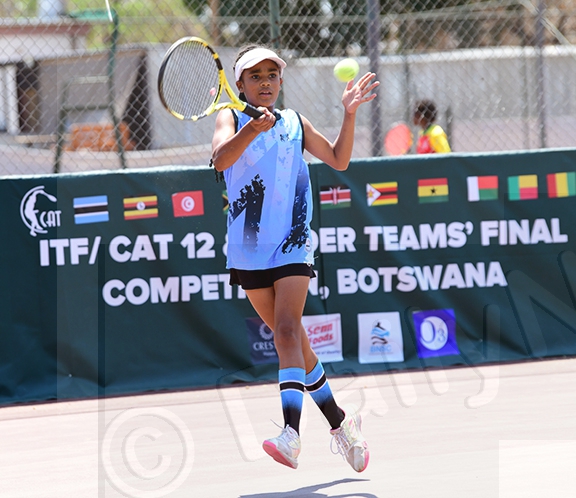
    Botswana Tennis Association (BTA) vice president has lauded Malak Macheng’s move to Tunisia to join the African Regional Training Centre (ARTC) as a milestone achievement for the young athlete.
    “This is obviously a great opportunity for Malak,” said the BTA vice president, Nonofo Othusitse in an interview.
    Othusitse noted that the scholarship was part of a prestigious International Tennis Federation (ITF) initiative.
    “We understand that the centre can only take 16 players, eight boys and eight girls, so to make the cut was not easy, as admission was based on both ITF and CAT rankings,” he added.
    Again, he said the one-year scholarship placed Malak in a high-performance environment designed to bridge the gap between continental talent and international standards. At the Sousse-based facility, Malak will benefit from integrated sport science which entailed all-around access to Sports Medicine services and professional expertise. She will also benefit from Comprehensive Development, which is a curriculum that balanced elite training and high-level competition with off-court personal growth.
    She will further have academic rigor, which is a mandatory requirement to maintain an acceptable level of academic performance alongside her athletic commitments.
    Malak’s mother, Bonnie Macheng, accompanied her daughter for the transition and confirmed in an interview their arrival in Sousse on Tuesday.
    After an initial tour of the grounds, she noted that the facilities were user-friendly and well-equipped for elite athletes.
    By Wednesday, Malak had already begun her integration, meeting with her new fitness and conditioning coach to outline her training schedule for the year.
    The exclusivity of Malak’s opportunity has highlighted a gap the BTA is eager to close. Othusitse explained that the limited spots at the ARTC had spurred the association to seek a local solution.
    “The BTA is currently in the process of setting up a National Training Centre (NTC) and we have made the necessary applications to the ITF,” he said.
    He noted that a domestic NTC would allow Botswana to provide a larger number of athletes with the same high-performance training, sports science and medical expertise that Malak was currently accessing in Tunisia.

  • Government Acts to Decongest Princess Marina

    Government Acts to Decongest Princess Marina

    Government has launched an urgent reset of Botswana’s public health system, moving to take over Sir Ketumile Masire Teaching Hospital (SKMTH), decongest Princess Marina Hospital and clear long-standing surgical backlogs, as pressure mounts across major referral facilities.

    Addressing the nation on Thursday, Minister of Health Dr Stephen Modise said the reforms signalled a shift from crisis containment to structural recovery, guided by President Advocate Duma Gideon Boko and aligned with National Development Plan 12 and the Botswana Economic Transformation Programme.

    At the centre of the intervention is the rapid conversion of SKMTH from a private facility into a fully public hospital by April 1, 2026. The phased takeover begins immediately and is intended to relieve congestion at Princess Marina Hospital, where limited bed space, theatre capacity and diagnostic constraints have delayed surgeries and increased patient safety risks.
    From early February, government will relocate key services to SKMTH, including accident and emergency care, radiology, dialysis, audiology and selected surgical services. Pharmacy and laboratory support services will operate from both hospitals from February 2 to ease bottlenecks. More than 20 specialist outpatient clinics — including cardiology, nephrology, neurology, infectious diseases and paediatric subspecialties — will also be transferred in the first phase.

    Government is prioritising the clearance of surgical backlogs, starting with orthopaedics. At Princess Marina Hospital, 70 orthopaedic patients are awaiting surgery, including 54 fracture cases. The ministry expects to clear the backlog between February 2 and February 20 by using theatres and specialist staff at both PMH and SKMTH.

    Orthopaedic bed capacity will increase from 66 to 106, enabling up to 10 operations per day, double current output. Similar measures will be applied to other pressured specialties, including gynaecology, where about 800 patients are awaiting surgery.

    To stabilise diagnostics, government will temporarily outsource laboratory tests that public hospitals cannot perform due to obsolete or malfunctioning equipment, while long-term solutions under NDP12 and BETP are pursued. Three mobile X-ray machines have been deployed to Bobonong, Pandamatenga and Gumare.

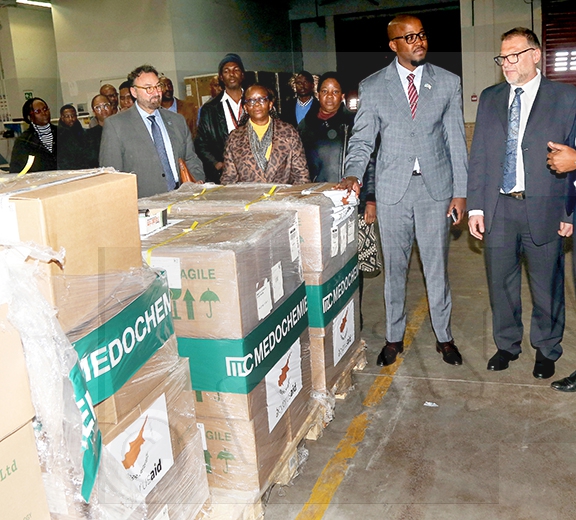
    On medicines, Dr Modise said Botswana had secured more than 338 essential drugs from the United Arab Emirates, with deliveries beginning February 6 and expected to last up to 7.5 months. Additional supplies are arriving from Zambia, while HIV, TB and cancer medicines are secured for at least 12 months.

    Acknowledging public concern, Dr Modise said government’s response was now time-bound and action-driven.
    “We are on top of these issues,” he said.

    Government said medicine stocks are now expected to remain stable well into 2026.

  • Power, Profits and Prescriptions : Inside The Elite Capture of Botswana’s Health System

    Power, Profits and Prescriptions : Inside The Elite Capture of Botswana’s Health System

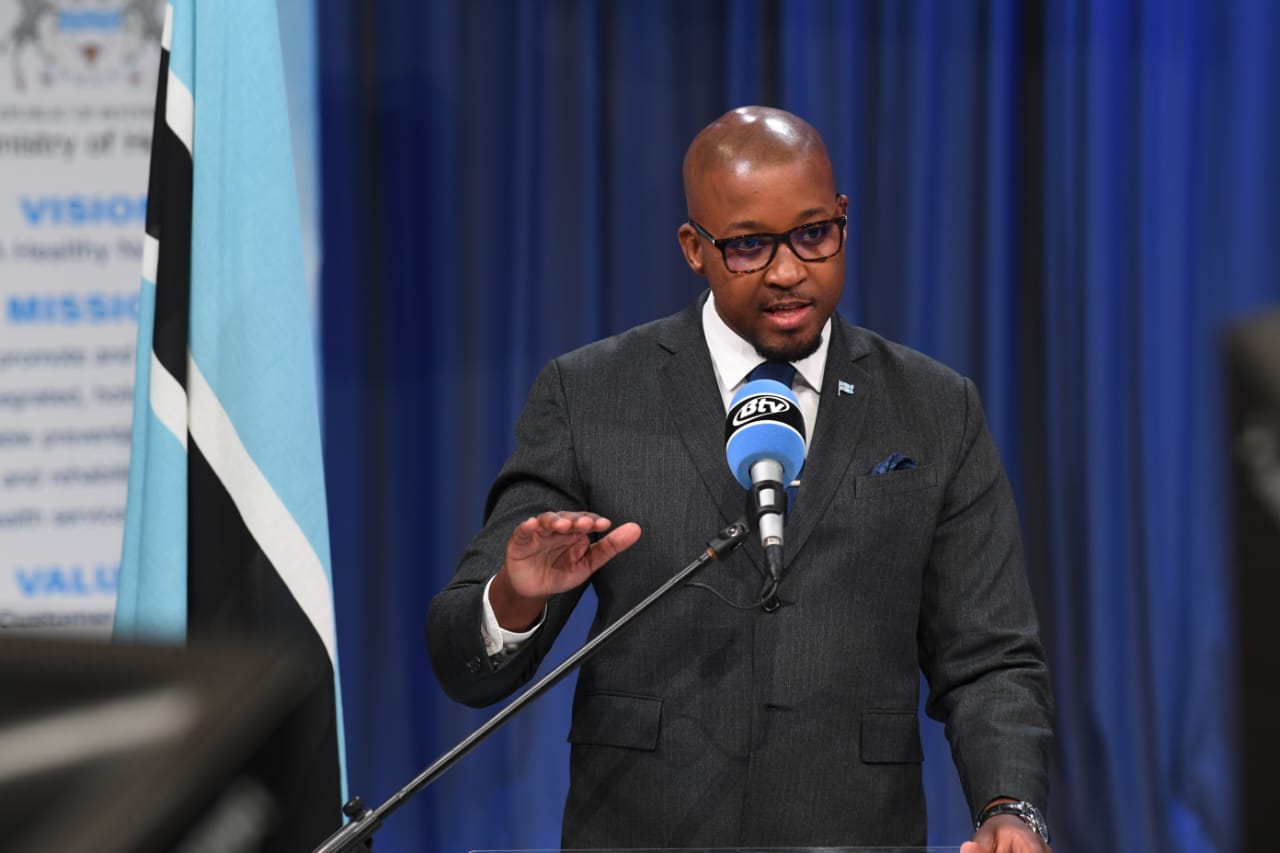
    On a Thursday evening, Minister of Health Dr Stephen Modise walked into the Btv studio to address the nation.
    He appeared composed, almost Zen-like. T is was striking for a man widely known within political circles as The Hurricane: restless, kinetic, always in motion.
    On this night, however, the storm had slowed. The posture was calm. The language measured. The reassurance deliberate.
    But the 30-something-year-old minister is burdened with a crisis that did not begin with him, nor with his administration. It did not even begin with the political moment that brought him to office.
    It is a crisis decades in the making, shaped under a political order that governed Botswana continuously for 58 years, the era of the Botswana Democratic Party.
    This matters, because much of the anger now directed at a new generation of leadership is historically misdirected.
    The collapse now visible in hospitals and clinics was designed, normalised, and defended long before this minister was born, through policies, procurement choices, and administrative cultures entrenched over successive administrations.
    For a long time, Botswana’s health system survived on trust. Trust that the clinic would be there. Trust that the referral hospital would function. Trust that illness, though frightening, would not automatically become punishment. That trust did not disappear suddenly. It was worn down through repeated exposure to institutional harm, one missing drug at a time, one broken machine left unrepaired, one referral that felt less like care and more like abandonment.
    What citizens experienced was not a single failure, but a pattern of injury, repeated, predictable, and largely uncorrected.
    A Crisis with a Political Lineage
    From the late 1990s through to the end of BDP rule, Botswana’s health system was shaped under successive presidencies, those of Festus Mogae, Ian Khama and Mokgweetsi Masisi.
    These administrations differed in style, rhetoric, and political temperament. What they shared was institutional continuity : the same ruling party , overlapping political elites, entrenched procurement systems, and a bureaucratic culture shaped by long incumbency. It was during this period that key features of the current crisis hardened:

    • Procurement systems that tolerated fragmentation and opacity,
    • Maintenance regimes that allowed public infraastructure to decay,
    • Referral pathways that quietly redirected patients into private care,
    • Policy choices that insulated commercial intermediaries from competition and consequence.
      These were not momentary lapses. They were governance choices sustained overtime.
      What the Record Shows
      Over successive years, Botswana’s own oversight institutions raised alarms. The Auditor General repeatedly documented weaknesses in health-sector procurement and contract management, delays, irregularities, poor value for money, and the normalisation of emergency purchasing that bypassed safeguards. Findings reappeared across audit cycles, recommendations acknowledged but not implemented, weaknesses identified but left structurally intact.
      The Office of the Ombudsman investigated cases of maladministration in public hospitals, identifying equipment failures, dysfunctional referral systems, and administrative neglect that directly harmed patients.
      These reports were produced, tabled, and debated during the BDP’s long tenure in government. The evidence was available. The patterns were visible. Th e corrective action was partial at best. Individually, these findings read like technical shortcomings. Taken together, they reveal something more serious: a system that absorbed damage without resisting it, because the damage did not threaten those with the power to change it.
      From Failure to Capture
      It is tempting, convenient even, to explain Botswana’s health crisis as incompetence, capacity strain, or fiscal pressure. But such explanations collapse under scrutiny. Botswana was not uniquely poor during this period. It did not lack trained professionals. It did not lack rules, audits, or warnings. What it lacked was the political will, across administrations, to dismantle a system that increasingly rewarded private gain from public failure.
      This is where the language of elite capture becomes unavoidable. Elite capture describes a condition in which public institutions are bent toward the interests of a narrow, powerful group, even as they continue to operate in the name of the public. It does not require overt illegality. It requires self-seeking behaviour protected by proximity to power. Under prolonged one-party dominance, that proximity became stable, predictable, and difficult to challenge.
      Collaborative Destruction under Long Rule
      There was no dramatic dismantling of public healthcare under BDP rule. What occurred was more dangerous: collaborative destruction. Political elites controlled policy direction and appointments. Commercial actors positioned themselves to profit from shortages, breakdowns, and the steady outsourcing of care.
      Bureaucratic discretion expanded where enforcement weakened. Each group benefited differently, but all benefited from the same harm. When medicine was unavailable, patients suffered. When equipment remained broken, treatment was delayed. When referrals became routi ne, families absorbed the cost. Th is harm was not accidental. It was reproduced through tolerance.
      The Eco system That Endured
      By the time BDP rule ended, the health sector had become an ecosystem of extracti on. Public hospitals failed reliably. Private providers expanded predictably. Public money followed pati ents out of the system. This did not require conspiracy. It required time, continuity and greed disciplined by access to power.
      Why This Series Matters Now
      This article marks the beginning of a six-part investigati e series that will examine Botswana’s collapsed health system as a product of historical governance, not recent surprise.
      Over the coming weeks, the series will trace:
    • how political power under long BDP rule converged with commercial interests,
    • how procurement became a site of extraction,
    • how public hospitals were allowed to decay,
    • how professionals and insurers navigated, and benefited from, the harm,
    • how key policy decisions protected profiteers, • and ultimately, who did what, when, and how. This is not an exercise in partisan score-settling. It is an effort to restore historical accuracy. The crisis confronting the current minister was not inherited from the election cycle. It was inherited from 58 years of accumulated decisions. The evidence is not hidden. The timeline is clear. The responsibility is structural and traceable. What has been missing is the courage to say so plainly.

  • Hope Remains for Pandamatenga Farmers Recovery

    Hope Remains for Pandamatenga Farmers Recovery

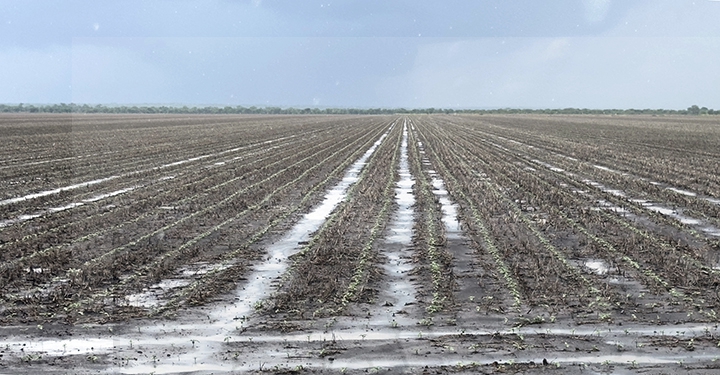
    Following the recent heavy downpours in Pandamatenga that left farms submerged in water, the path to recovery for Botswana’s food basket hinges on water to recede and soil moisture to reach a workable consistency.
    The one-in-200- years’ storm on January 21 which dropped over 150mm of rain submerged over 8,000 hectares of crops from sorghum, sunflower, maize, onion, tomatoes, beans.
    Pandamatenga remains critical to national food security contributing 47 per cent to Botswana’s national crop production mostly sorghum, millet, beans, wheat, chickpeas supported by the 90,000 metric tonnes grain storage silos hosted in Pandamatenga.
    Department of Crop Production- agronomist for Pandamatenga Commercial Farmers, Ms Emeliah Magosi told BOPA that there was hope for Botswana’s food basket, as the window for replanting remained open to February and March for Pandamatenga.
    However she said replanting would be enabled by a shift from heavy rains to scattered showers and warmer temperatures for the cotton soils to hold just adequate moisture.
    Farmers might be compelled to change cropping plans, to suit the high soil moisture and ideally plant wheat, chickpeas, sunflower and mung- beans, Ms Magosi said.
    She explained that it was premature to analyse the damages suffered by the 8,000 hectares planted crops as mostly were still submerged in water. This translates to a variation of risks from nutrients loss, stunted growth, and rotting.
    Hope remains for farmers to return to full operations and optimise on their equipment because they have sufficient farming implements to accelerate production.
    With Pandamatenga being a floods prone area, Ms Magosi said government installed drainage and roads infrastructure within the commercial farms to address such occurrences.
    “The purpose of the drainage system in the farming area was to address unfavourable conditions such as floods and its only that the recent rains were a rare occurrence and without the trenches it could have been a calamity,” she said.
    Consequent to heavy rains, Ms Magosi said risked to be expected include pests outbreak, mostly quelea birds and army worms. High humidity also poses a risk of fungus which demands a lot of output from farmers to spray their crops.
    Recapping on last season’s performance, Ms Magosi remarked that a total of 27,247 hectares of sorghum was planted by commercial farmers producing 81,369 tonnes.
    She said a total of 5 568 hectares of cowpeas was planted producing 4,338 tonnes while 2,032 hectares of beans was planted and 1,902 tonnes harvested.

  • Raguin Impressive Australian Open Juniors Run Ends

    Raguin Impressive Australian Open Juniors Run Ends

    Ntungamili Raguin’s impressive run at the Australian Open Junior Championships 2026 has come to an end after suffering a 6-4, 6-3 defeat against world number three, Luis Augusto Queiroz Miguel of Brazil in the last 16 on Thursday.
    The 17-year-old has made the country proud as the first Motswana to compete at a junior Grand Slam, delivering strong performances from the qualification stage through to the main draw and into the last 16.
    His achievement is commendable, considering that he was still battling to secure a place in the Australian Open qualifying draw just a month ago.
    Throughout the tournament, Raguin demonstrated maturity, composure and the ability to perform under pressure, qualities that have set him apart from many of his peers.
    However, Queiroz Miguel, who recently won the J300 tournament in Traralgon and was seeded second at the Australian Open juniors competition, proved a tough nut for Raguin to crack.
    Despite the loss, Ntungamili will take some positives from his exploits at the Australian Open juniors having made it all the way to the last 16. In the first round, he edged out Bulgaria’s Dimitar Kisimov 7-5, 1-6, 6-4.
    In the second round, he continued his good form, reaching the last 16 after beating tournament 15th seed Gavin Goode of the United States. He won the first set 6-2, lost the second 3-6, and came back strongly to claim the deciding set 6-4.
    With the Australian Open juniors behind him now, Raguin will next compete in the J300 tournament in Ecuador on clay courts, followed by preparations for the French Open Junior Championships 2026.
    Botswana Tennis Association president Oaitse Thipe has expressed delight at the player’s performance, especially the positive results he achieved against stronger opponents.
    Thipe said they were expecting Raguin to learn from the experience and apply the lessons in his upcoming competitions.
    “He should hold his head high and now focus on preparing for the French Junior Open. He fought hard and his Australian Open run was good,” he said.
    Raguin is currently ranked 75th, and his performance is expected to improve his ranking, as reaching the round of 16 earned him 180 points.

  • I Too Thought I Was Out Advocates for Mental Health

    I Too Thought I Was Out Advocates for Mental Health

    In an effort to advocate for mental health awareness, Tumo Sehube, a native of Nata, has made a significant mark as a French teacher, mother, entrepreneur, and self-made mental health advocate with her new book titled : I Too Thought I Was Out. 

    “Writing this book was a way of speaking for those who cannot, for myself, and mostly for my father who has been mentally challenged since I was three years old,” she shared. 

    The process of writing was challenging, as she faced her past experiences while striving to present a narrative that would honour her journey without casting blame on those she has encountered in life.

    Despite these hurdles, Sehube successfully wrote a book that resonates with a wide audience, offering relatability, healing and guidance for readers navigating their own struggles. 

    In addition to her writing, Sehube runs an online boutique and works as a real estate agent. She reflected on the impact of her father’s mental health status, which once brought her feelings of hopelessness.

    “I thought it was the end of a sane me. But somehow I made it, and that is why I have shared my story to save others out there,” she said.

    Sehube emphasizes that no one is immune to mental health challenges, explaining that the brain, like any other part of the body, can sustain injury or malfunction. This makes awareness and understanding of mental health issues crucial.

    Her inspiration to write I Too Thought I Was Out stemmed from attending Ndiko Muzila’s book launch, where a speaker highlighted the profound impact literature can have in reaching unseen audiences.

    “I have always had this impression that God has sent me to the people, and then I knew writing a book would be perfect because I am naturally not good in regular interactions,” Sehube stated.

    Drawing influence from the writings of Maya Angelou, Sehube hopes her book will continue to inspire and empower others in their mental health journey. 

  • Malak Move Great Opportunity

    Malak Move Great Opportunity

    The recent move by Malak Macheng to the African Regional Training Centre (ARTC) in Tunisia has been hailed as a milestone achievement by the Botswana Tennis Association (BTA).

    The 13-year-old ace, who won back-to-back International Tennis Federation (ITF)/ Confederation of African Tennis (CAT) Under 14 girls singles titles in 2024 in Gaborone, has joined the ARTC on a prestigious scholarship initiative under the ITF.

    “This is obviously a great opportunity for Malak,” BTA vice president, Nonofo Othusitse said in an interview.

    “We understand that the centre can only take 16 players, eight boys and eight girls, so to make the cut was not easy as admission was based on both ITF and CAT rankings.”

    He said during the duration of the one-year scholarship, Malak would be placed in a high-performance environment designed to bridge the gap between continental talent and international standards. 

    During her stint at the Sousse-based facility, Malak would benefit from integrated sport science entailing all-around access to sports medicine services and professional expertise. 

    She will also benefit from Comprehensive Development, which is a curriculum that balances elite training and high-level competition with off-court personal growth.

    Furthermore, she will have academic rigour, which is a mandatory requirement to maintain an acceptable level of academic performance alongside her athletic commitments.

    Othusitse explained that BTA was looking to establish a centre in Botswana similar to the ARTC.

    “The BTA is currently in the process of setting up a National Training Centre (NTC) and we have made the necessary applications to the ITF,” he said.

    He noted that a local NTC would allow Botswana to provide a larger number of athletes with the same high-performance training, sports science and medical expertise that Malak would access in Tunisia.

    Malak’s mother, Bonnie Macheng who has accompanied her daughter for the transition, noted in an interview on Tuesday that the facilities were user-friendly and well-equipped for elite athletes.

    By Wednesday, Malak had already begun her integration, meeting with her new fitness and conditioning coach to outline her training schedule for the year.

  • Sankoyo Battle Administrative Blows

    Sankoyo Battle Administrative Blows

    In the rugged landscape of the First Division North (FND), football is often described as a battlefield. But for Maun’s favourite Sankoyo Bush Bucks, alias Ngurungu Boys, the most damaging strike of the season did not come from a rival’s counter-attack or a last-minute goal. Instead, it came from a lapse in paperwork that has left the Ngurungu Boys fighting an uphill battle for redemption. 

    The club, legendary for its resilient spirit, recently found itself on the losing end of a league management ruling that saw them stripped of vital points, not for their performance on the pitch, but for a stadium that remained empty when it should have been roaring. 

    The controversy dates back to November 22 last year, a date that was marked on the calendar for a high-stakes clash against Chobe’s Ferry Wonderous FC. The Maun Sports Complex was supposed to be the stage, but when match day arrived, the gates were locked to the teams. 

    While the club alleged a ‘double booking’ orchestrated from as far away as Gaborone, the First Division North (FDN) committee was unmoved by verbal explanations. Without solid evidence of booking receipts or cancellation letters, the committee invoked the strict mandate of Article 9 of the BFA Play Rules, which culminated into a walkover victory for the visitors and a heavy blow to Sankoyo’s league standing. 

    For many clubs, a mid-season points’ deduction would be a death knell for morale. However, the club’s interim chairperson, Anderson Thiya said in an interview that they had accepted the penalty because they viewed football as a military battlefield where players were seen as warriors. 

    “We are hopeful that we will rise up in the log standings despite suffering a deduction of points,” Thiya said. 

    The ‘warrior’ philosophy is currently being put to the test. Sitting ninth with 13 points, the Ngurungu Boys are a team characterised by beautiful, fluid football that, until now, has lacked a clinical finish. They are a side that traces their roots to the elite Premier League, playing with grace that often opposes their mid-table position. 

    To turn Thiya’s military metaphors into reality, the club has used the recent period to beef up the squad and the chairperson remains optimistic that the infusion of new talent will bridge the gap between creating chances and converting goals. 

    The strategy will see them focus on the future and Thiya insists that players are not demoralised, but fully aware of the administrative error and are reportedly more committed than ever to clawing back the lost ground. The high morale in the camp suggests a team that is not just playing for points anymore, but playing for pride. 

    However, the ruling serves as a blatant reminder of the professionalism that is required to survive in the upper echelons of the local football.  For his part, FDN chairperson, Gosaitse Diboko said while the league understands the challenges of venue management, the rules were indifferent to circumstance without documentation. 

    “Sankoyo management communicated their challenge with us a day before the match that there is a double booking and we advised them to look for an alternative venue but promised that they will handle the situation at hand and that was not the case. Procedurally, they should do things in writing. There was no proof, hence our ruling,” Diboko said. 

    Meanwhile, as the Ngurungu Boys prepare for their upcoming fixtures, their mission is to find the goals that had eluded them on field and also ensure that off field, their administrative defense is as tight as their backline.