Blog

  • Forensic Land Audit to Cover Land Allocations

    Forensic Land Audit to Cover Land Allocations

    The National Assembly on Friday voted in favour of a motion by Mogoditshane East MP, Mr Letlhogonolo Barongwang for a forensic land audit to cover land allocations in across the country over the past 15 years.

    Legislators from across the parliamentary isle were unanimous in approving Mr Barongwang’s motion, ‘that this honourable House requests government to consider instituting a forensic land audit in Botswana covering all land allocation in the past 15 years covering land board officials and employees; councilors, MPs and tribal administration senior staff.’

    Mr Barongwang had initially intended the land audit to focus on Mogoditshane, but fellow legislators, including Maun West MP, Mr Caterpillar Hikuama and the Minister of Labour and Home Affairs, Major General Pius Mokgware called for it to broadly cover land boards across the country.

    Voicing his support for the motion, Assistant Minister of Trade and Entrepreneurship, Mr Baratiwa Mathoothe, speaking on behalf of the absent Minister of Lands and Agriculture, Dr Edwin Dikoloti confirmed that the historical problem of land in Mogodishane had not been addressed over the past few decades.

    He pointed to the Kgabo Commission of 1991 which reviewed the extent of unauthorised allocation of land in Mogodishane and other peri-urban villages, culminating in the government white paper number one of 1992.
    He further alluded to the 2021 dismissal of 38 Mogoditshane sub-land board employees on account of fraudulent land dealings and insider trading.

    “Following the Kgabo Commission, efforts were made to address the maladministration and related corruption, in part resulting in the formation of the Directorate on Corruption and Economic Crime (DCEC). The Land Tribunal is among those institutions seized with fighting this malaise and providing a platform for recourse,” said Mr Mathoothe.

    He added that the Kweneng Land Board had two posts of deputy land board secretary and a programme on the construction of record centres, intended to assist with dealing with the land administration and governance challenges.

    “The Ministry of Lands and Agriculture has received representation from individuals and groups registering complaints against the land board. Internal audits have revealed issues of plots with no evidence of allocation, double allocations, abandoned plots, those that remained undeveloped for years as well as encroachments,” said Mr Mathoothe.

    He thus said the ministry responsible for lands supported the motion as efforts to solve the land challenges of Mogoditshane and other peri-urban areas could not be more appropriate as they had lingered on for decades.

    The Minister of Water and Human Settlements, Mr Onnetse Ramogapi said land transfers were a major challenge in Mogoditshane. He recalled at the turn of the century, then President Mr Festus Mogae and former Cabinet minister, Mr Jacob Nkate had to attend to frustrated Mogoditshane residents who had resorted to squatting in areas such as Nkoyaphiri and Tsolamosese.
    Mr Ramogapi said some people spent decades awaiting for their plot allocations to be approved, while others got theirs processed quicker due to favoritism and maladministration.

    Gabane-Mmankgodi MP, Mr Kagiso Mmusi said there were many complaints that reached his constituency office regarding land allocation challenges. Among these, as greater Gaborone grows, he said people in the periphery of the capital were encouraged to handover their farming lands to convert them to residential plots, which reduces their food security.

    Mr Mmusi said many plots allocated by land boards ended up in the hands of foreigners, whereas tribal land was generally intended for emancipating citizens.

    The mover of the motion, Mr Barongwang proposed that after being passed, action should be promptly taken to follow up the implementation of the land audit in order to resolve the land allocation challenges that had plagued the country.

  • Ministry Drills Employees on Sign Language

    Ministry Drills Employees on Sign Language

    The Ministry of Child Welfare and Basic Education in Francistown held a five-day training on basic sign language for its officers in different sections for the purpose of inclusivity.

    Speaking at the end of the workshop, Chief Education Officer, Ms Kedisaletse Tshukudu said the initiative came about after the realisation that a substantial number of customers and clients who visited the ministry were deaf.

    Also, Ms Tshukudu relayed that the Francistown region had two schools that have learners with deafness as well as staff members who were suffering the same. 

    She said the initiative was aimed at embracing people with deafness so that they too could benefit from the services provided by the ministry without any difficulty. 

    The region’s Chief Public Relations Officer, Mr Keane Tebele, said the training attracted 15 officers from different departments within the ministry.

    He said as one of the ministries with a huge number of people with disabilities, especially the deaf, who throng to seek services, it was important to hold the training.

    Mr Tebele explained that the training was interactive initiative, which the officers enjoyed.

    He explained that the expectation was for the graduates to take the newly acquired skills to the community, shops, and schools to make communication with the deaf effectual.

    One of the participants, Ms Mishingo Botsoma, who is a switchboard operator, said the training would help her communicate effectively and easily, as a frontline officer, with her customers.

    She explained that she received many such customers on a daily basis and that the training was a welcome development in her work. The rigorous training was held in partnership with the Botswana Society for the Deaf as well as  the Centre for the Deaf Education Schools. 

  • Tlamelong Equips Learners with Disabilities

    Tlamelong Equips Learners with Disabilities

    Tlamelong Rehabilitation Centre has conferred certificates to its Class of 2025, celebrating 36 dedicated learners living with disabilities who completed two years of intensive training in textiles and horticulture.

    Speaking at the graduation ceremony recently, Botswana Red Cross Society (BRCS) chief executive officer, Dr Kutlwano Mukokomane, said the organisation’s mandate, which entailed to complement national laws and government efforts in health, social welfare and disaster management, with a focus on vulnerable and marginalised communities, aligned strongly with the purpose of the celebration.

    Dr Mukokomane said BRCS was committed to ensuring that all people, especially those living with disabilities, had the opportunity to reach their full potential and lead dignified lives.

    He commended Tlamelong Rehabilitation Centre for its 51 years of service, offering life skills, physiotherapy and other support to individuals with special needs, while equipping learners with practical skills in textile production and horticulture.

    “This training goes beyond technical skills, it instils confidence, independence and opens doors to new opportunities,” he said.

    He commended graduates for their patience and resilience in reaching such milestone, saying their hard work was both an achievement and a contribution to a more inclusive future, one that proved that inclusion was not merely an aspiration, but a reality that can be built through collective effort.

    “You have shown that when people with disabilities are given equal opportunities, they can thrive, create value and inspire others. Disability does not define ability,” he said, adding that the skills the graduates acquired were tools for a brighter future if put into use.

    For his part, textile graduate, Mr Simon Kelebogile, who lives with a disability and relied on a crutch, expressed gratitude to his trainers for equipping them with skills he never had before. “I learnt to cook, farm, paint and develop other sustainable skills during my time here,” said Mr Kelebogile, adding that his time at Tlamelong was an opportunity he did not take for granted.

  • Withdrawal of Cases Fuel Stock Theft

    Withdrawal of Cases Fuel Stock Theft

    Lack of compensation to farmers who have lost their livestock to criminals is reportedly mounting frustration among farmers in Sehithwa policing area.

    The situation is driving many farmers to withdraw cases, a trend worrying police and likely worsening stock theft in the area.

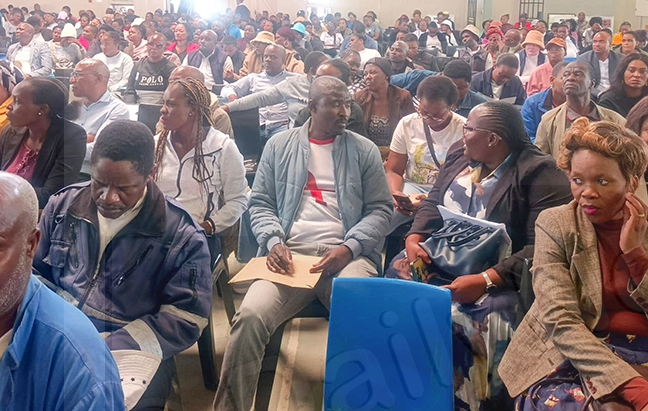
    Speaking during a crime-prevention workshop on Thursday, Toteng resident, Mr Keaitsiwe Bonang said some farmers no longer see value in pursuing stock theft cases as their loss was not compensated.

    “Victims do not benefit when culprits are jailed because they serve time in prison and come back to steal again, while we remain with nothing. That is why many now prefer settling matters directly with thieves so they can recover at least some financial value,” he said.

    However, the police have warned that withdrawing cases emboldens criminals and undermines efforts to curb the growing scourge. Anti-stock theft team member, Constable Keabetswe Mogale expressed concern that this year alone, 10 cases have already been withdrawn.

    “When cases are withdrawn, perpetrators feel untouchable and it becomes difficult for us to stop repeat offenders because they know they will be forgiven,” he said.

    He also noted that late branding and poor livestock identification made livestock vulnerable to theft.

    “Branding and ear tags are crucial because they are your animals’ identity and without them, tracking stolen stock becomes nearly impossible,” he said.

    Constable Mogale further advised farmers that the law does allow them to make a formal claim for compensation in stock theft cases. He explained that such demands could be placed before the court and depending on the circumstances of the case, the court may grant such a claim.

    Constable Mogale urged farmers not to lose confidence in the legal system, emphasising that withdrawing cases strengthened offenders and weakened the community’s fight against stock theft.

    Sehithwa Station Commander, Superintendent Molly Lebala-Moduke  said  that stock-theft cases had surged from 23 in 2024 to 34 so far in 2025. She emphasised the need to revive crime-prevention committees for tighter community-police collaboration.

    Attendees also raised alarm over escalating child sexual abuse, which Supt. Lebala-Moduke described as a growing and deeply worrying trend. She condemned parents who leave young children unattended while tending to livestock, running errands, or engaged in alcohol drinking spree.

    “Most perpetrators are people close to the child so parents must be vigilant and take full responsibility for their children’s safety,” she said.

    She further highlighted rising drug-abuse cases, which have increased from four in 2024 to seven this year, calling for more community involvement.

    Chairperson of District 5 Crime Prevention Committee and also Kgosi of Phuduhudu village, Mr Johane Ngwengare urged collective action in fighting social ills.

    “Crime prevention is not the job of the police alone, it needs all of us to be actively involved if we want to win this fight,” he said.

    He also condemned adults who prey on minors, insisting that no child deserved to be robbed of their innocence.

    Community member, Ms Keoleboge Garebamono raised concern about growing negligence of children under five, noting that some parents leave toddlers alone or take them to drinking spots.

    She also pleaded with parents to guide teenagers engaging in transactional relationships with older men, warning that such lifestyles often derail young lives.

  • NCDS Threatens Workplace Performance

    NCDS Threatens Workplace Performance

    Employers across Ngamiland have been urged to introduce routine blood glucose screening and health education in the workplace as the region battles a growing burden of diabetes.

    Family Medicine Specialist, Dr Phenyoyaone Moloko of Matshwane Clinic said non-communicable diseases such as diabetes were now affecting thousands of residents and threatening productivity. Dr Moloko shared the advice during the World Diabetes Day commemoration in Shorobe on Thursday.

    He warned that diabetes was no longer a distant, slow-moving condition, but a growing public health emergency that was already straining families, clinics and workplaces.

    According to Dr Moloko, Ngamiland currently recorded 2 756 diabetes patients, 89 of whom were new diagnosed cases, while 434 patients were already battling severe complications such as chronic wounds, kidney failure, loss of sight and nerve damage.

    “These numbers show us that diabetes is not just a health issue but rather a workplace issue, an economic issue and a family issue,” he said.

    He highlighted the need for workplace screening and awareness campaigns that will help enable people to be at the forefront of their health

    “We need workplaces to contribute actively by offering screening, education and creating environments that support healthier choices,” he said.

    Dr Moloko emphasised that early detection remained the most effective tool in preventing lifelong complications.

    “When diabetes is caught early, it can be controlled easily but the challenge is that many of our people seek help only when the disease has progressed and by then, treatment becomes costly and difficult,” he said.

    Dr Moloko further encouraged companies and institutions to organise awareness campaigns, adding that the workplace was one of the most strategic channels to reach the population.

    For his part, Kgosi Boingotlo Nonyane of Shorobe, expressed gratitude that such vital services had reached the village, noting that many residents delayed seeking help because of the long distance between Shorobe and Maun.

    Councillor for Matlapana–Shorobe ward, Mr Kobamelo Baikgodisi, echoed similar sentiments, urging residents to prioritise routine screening even when they feel healthy.

    “Most of our young people think diseases like diabetes are for older adults, but illness knows no age hence screening is vital for everyone,” he said.

    He encouraged youth to take responsibility for their wellbeing, warning that lifestyle diseases were increasingly affecting younger populations due to poor diet and inactivity.

  • BPS and BDF Aim for Safer Festive Season

    BPS and BDF Aim for Safer Festive Season

    The second phase of Operation Pabalesego, a joint security initiative led by the Botswana Police Service (BPS) and the Botswana Defence Force (BDF), aimed at strengthening public safety and combating rising crime in communities was launched on Friday.

    The operation, rolled out in Mogoditshane, follows the inaugural phase held last year in Gaborone West. It brings together multiple law enforcement agencies in coordinated patrols, intelligence operations and community engagement activities to enhance national security.

    Launching the operation, President Advocate Duma Boko commended members of the security services for their continued dedication under increasingly demanding conditions. “Your commitment is central to maintaining safety and order across Botswana,” he said.

    He urged Batswana to support law enforcement efforts and take responsibility for the safety of their families and neighbourhoods. President Boko also condemned the growing cases of gender-based violence (GBV), describing the scourge as a serious threat to families and community cohesion.

    “I appeal to the public to promote respect, empathy and non-violence in all relationships, particularly romantic ones,” he said.

    Police Commissioner, Ms Dinah Marathe said Operation Pabalesego II sought to reduce serious and violent crime by increasing police visibility, intensifying intelligence-led patrols and improving collaboration between security agencies. She explained that the operation focused on hotspots known for robberies, break-ins, domestic violence reports, drug abuse and traffic violations.

    Commissioner Marathe noted that the first phase of the operation yielded positive results, with a 17 per cent reduction in armed robberies and a 12 per cent decline in burglary cases in Gaborone West over a three-month period. She said the police were confident that similar or better outcomes could be achieved in Mogoditshane and the surrounding areas, particularly as the festive season approached.

    She said Operation Pabalesego II also aimed to dismantle criminal networks and strengthen community-police partnerships, by engaging residents, neighbourhood watch groups and local leadership.

     “Our goal is not only to arrest offenders but to restore public confidence and create safer spaces where people can live, work and move freely,” she said.

    Commissioner Marathe further highlighted GBV, drug trafficking and youth delinquency as areas of concern. She revealed that BPS recorded over 6,500 GBV-related cases nationwide between January and September this year, with emotional abuse, assault and defilement ranking among the most reported.

     “These numbers are alarming and we are intensifying our efforts to ensure protection for victims while holding perpetrators accountable,” she said.

    Minister for State President, Mr Moeti Mhwasa thanked President Boko for prioritising public safety, noting that the operation reinforced government’s commitment to preserving peace and order.

    Also addressing the event, Youth of Hope Safe Haven founding chairperson, Mr Boyson Mokone cautioned young people against drug abuse, warning that substance dependency continued to tear families apart. He urged men to take responsibility for nurturing the boy child saying neglect often drove young boys into destructive behaviour.

    “Men should know they either destroy or build the boy child,” he said, adding that recovery from drug addiction was possible with support and commitment.

    Operation Pabalesego II is expected to run throughout the festive season, a period historically associated with spikes in crime and social disorder.  The operation will combine high-visibility patrols, stop-and-search exercises and intelligence-led interventions to ensure safer communities countrywide.

  • Botswana Ready to Learn from Lesotho

    Botswana Ready to Learn from Lesotho

    President Advocate Duma Boko says as Botswana ventures into cannabis production, a leaf can be taken out of Lesotho experience as it is advanced in the area of cannabis production and its export routes.

    “Lesotho is effectively a leader and pioneer in that field with full value chain beneficiation of the product and positioning for exports while Botswana cannabis production is still at an infant stage. We are therefore, looking forward to collaborate and learn from Lesotho,” said President Boko during a courtesy call by Lesotho Prime Minister, Mr Samuel Matekane at the Office of the President on  Friday.

    President Boko said it was pleasing to note that the bilateral relations between the two countries dated back to the colonial era and were rooted in strong historical ties hence it was not surprising for the two countries to be working on a water project which was on the final feasibility study stage.

    Upon completion, the project would benefit the country’s water supply particularly the Southern part as well as enable construction of the proposed five megawatt hydropower station which would be a great addition to the country’s power generation.

    President Boko said Botswana looked forward with keen interest toward the implementation of the project, thus expressed optimism that Lesotho would be a good partner for its success. 

    “ I strongly believe that we have a good partner in Lesotho, as it has pulled off one of the biggest engineering projects in the design of its dams and we are grateful to have them on board in this water project,” he said.

    He stated that both countries would explore other future areas of cooperation owing to the many affinities and opportunities of collaboration. Additionally, President Boko commended Lesotho for the success in the fight against drugs and substance abuse.

    “One of the areas that Lesotho has been successful on, is the ability to retrieve young people from the streets who were victims of drug addiction. The boot camp has rescued many and gave them a new lease of life therefore, we also look forward to collaborate on such projects,” he said.

    In reference to bilateral relations, President Boko stated that Botswana and Lesotho long established diplomatic relations, way before the so called definition of the nation’s states post-independence. He highlighted that the relations between the two nations were deeply rooted in the cultural similarities.

     Prime Minister Matekane, on the other hand said the existing bilateral relations between Lesotho and Botswana provided an enabling environment for investors from across both countries to widen their business ventures and further enhance economic relations.

    “There is no doubt that the private sector is the engine of growth for both countries respective economies to prosper and it is on the backdrop of such that the relations between the two have created an enabling environment for private sector led cross border investments to thrive,” he said.

    Mr Matekane said there were various sectors the business communities between the countries could collaborate on, such as the Lesotho citrus fruits industry. He reaffirmed Lesotho’s commitment to continue engaging with Botswana on developmental issues that affected economic cooperation between the two countries.

    “We sincerely appreciate the opportunity granted to us to explore the beef industry and how to master it,” he said.

    Mr Matekane highlighted the need to increase economic cooperation through promotion of trade relations that could benefit both nation’s citizenries.

    “Lesotho already produces quality car leather seats for various models while Botswana on the other hand have plenty of cow leather, therefore the leather can be exported to Lesotho for mutual economic benefit,” he said.

    Equally, he said Botswana possessed plenty of beef while Lesotho had mutton which presented trade opportunity in that aspect. Mr Matekane therefore, asked for the establishment of regular cultural exchange forum and food exhibitions between the two nations. 

  • Children Day Symbolizes Renewed Commitment

    Children Day Symbolizes Renewed Commitment

    President Advocate Duma Boko on Saturday, hosted a special luncheon bringing together children from across the Southern African Development Community (SADC), marking a significant moment in the region’s ongoing commitment to child rights, participation and empowerment.

    The event followed a morning of youth-focused activities and dialogues centred on strengthening regional cooperation to uplift and protect children. Ministry for International Relations head of consular services, Ms Tebatso Baleseng said that the gathering served as a reminder to regional leaders to place children at the centre of all decision-making processes.

    Ms Baleseng underscored the centrality of the United Nations Convention on the Rights of the Child (UNCRC) in guiding policy across the region, adding that children must be promoted, protected and respected within each of the Southern African countries and collectively across the region.

    She said that the luncheon was not simply a ceremonial gathering but a reaffirmation of the region’s responsibility to view children not just as beneficiaries of protection, but as rights holders with the agency to influence future development.

    The presence of children and youth at the event symbolises a renewed commitment to creating platforms where young people could articulate their aspirations and concerns. Ms Baleseng therefore, urged leaders across the region to open avenues for meaningful dialogue with children, ensuring that youth perspectives guided the policies and decisions that affected them.

    The luncheon formed part of ongoing regional efforts to strengthen child-centric governance, promote youth engagement and build a future where young voices were recognised as essential to shaping Southern Africa’s development agenda.

    In attendance to the lunch were regional leaders across SADC, senior government officials and members of the diplomatic community, underscoring the spirit of cooperation and shared development priorities across Southern Africa.

  • First Lady Calls For Policy Implementation

    First Lady Calls For Policy Implementation

    Children have a right to information concerning developments and should be listened to, so that they can enjoy all their rights without fear.

    When things are not done right, they should hold the government accountable so that it delivers on its promises. First Lady Ms Kaone Boko said during the Regional World Children’s Day dinner on Friday in Gaborone. She said government was committed to providing timely reports on the progress made.

    Ms Boko called on ministries responsible for children’s welfare to turn promises into actions, stressing the need for implementation and policy changes to align with this year’s World Children’s Day theme: My Day, My Rights. From Promise to Action. Restructuring of the Ministry of Education to include child welfare was a positive development, and now it is time for it to deliver on its promises, Ms Boko said. 

    Ms Boko highlighted the significance of unity, noting that children learnt from harmonious relationships., making reference to her good rapport with the two former first ladies, Ms Barbra Mogae and Ms Neo Masisi, as well as the Leader of the Opposition’s wife, Ms Dineo Saleshando, who were all present to support a common cause despite belonging to different political parties.

    Upon assuming the role of First Lady, Ms Boko said she introduced herself to Ms Mogae, who welcomed her warmly and shared words of wisdom, while Ms Masisi offered valuable pointers. She also mentioned that Ms Saleshando had always been her pillar of strength.

    Minister of Child Welfare and Basic Education, Ms Nono Kgafela-Mokoka acknowledged that a lot still needed to be done, and called for strengthened collective efforts among stakeholders, to foster a conducive environment for children. Caring for, protecting, and empowering children is a shared responsibility worldwide, Ms Kgafela- Mokoka said.

    The Private Sector Forum for Child Rights’ Ms Joy Buno, for her part highlighted the importance of introducing financial literacy into the school curriculum, a development that required no additional funds but policy amendments.

    This she said could be made possible with help from businesses, to uplift and empower children. The event was attended by children from Botswana, Lesotho, South Africa, Zimbabwe, Mozambique, Malawi, eSwatini, Zambia, and Namibia, in celebration of World Children’s Day. 

  • KGK Commit to Youth Development

    KGK Commit to Youth Development

    KGK Academy, the training arm of KGK Diamonds Group Botswana, one of the country’s largest cutting and polishing operations has produced its 2025 cohort of 88 graduates, marking another milestone in Botswana’s drive to build local capacity in the diamond value chain.

    The graduates completed a 12-month programme comprising six months of theory and six months of practical assessments, including an attachment within the organisation. Their completion has paved the way for 40 new trainees who are continuing with the Academy.

    Delivering the keynote address, Minister of Minerals and Energy, Ms Bogolo Kenewendo, praised KGK Diamonds for its commitment to youth skills development and for integrating trained graduates into the labour market. She further commended the company for its sustained contribution to Botswana’s diamond cutting industry, where it employs over 25 percent of the national workforce in the subsector.

    “KGK has given beyond diamonds. It is the only company in the industry that has opened a day-care centre within its premises, enabling young mothers to bring their children to work,” Ms Kenewendo said, describing the initiative as a powerful example of inclusivity.

    She also highlighted the company’s solar-powered factory, noting that it sets a strong foundation for the growth of a local jewellery manufacturing industry and contributes significantly to socioeconomic development. She affirmed her ministry’s support for initiatives that further local beneficiation.