Blog

  • Mexican Nationals Sentenced to One-Year Imprisonment

    Mexican Nationals Sentenced to One-Year Imprisonment

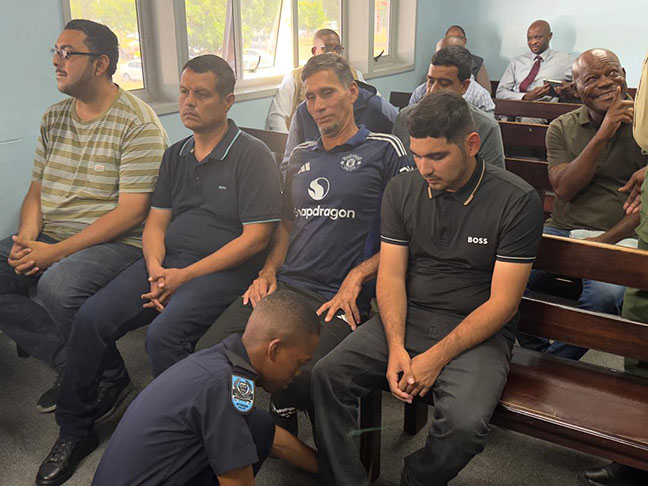
    Six Mexican nationals convicted of entering the country through an ungazetted entry point have been sentenced to 12 months imprisonment and a fine of P5,000 each.

    In passing the sentence, Chief Magistrate Kamogelo Mmesi of Extension II Magistrate Court noted that the court should send a strong message to those of like mind, and further noted that if they fail to pay the fine, they would each receive 5 years imprisonment.

    The sentence was backdated to December 5, 2025 when they were incarcerated.

  • Turkiye–Botswana Exhibition Marks 45 Years of Diplomatic Ties

    Turkiye–Botswana Exhibition Marks 45 Years of Diplomatic Ties

    Forty-five years ago, Botswana and Türkiye established diplomatic relations., which among other things focused on trade, investment, education and technical assistance, among other things.

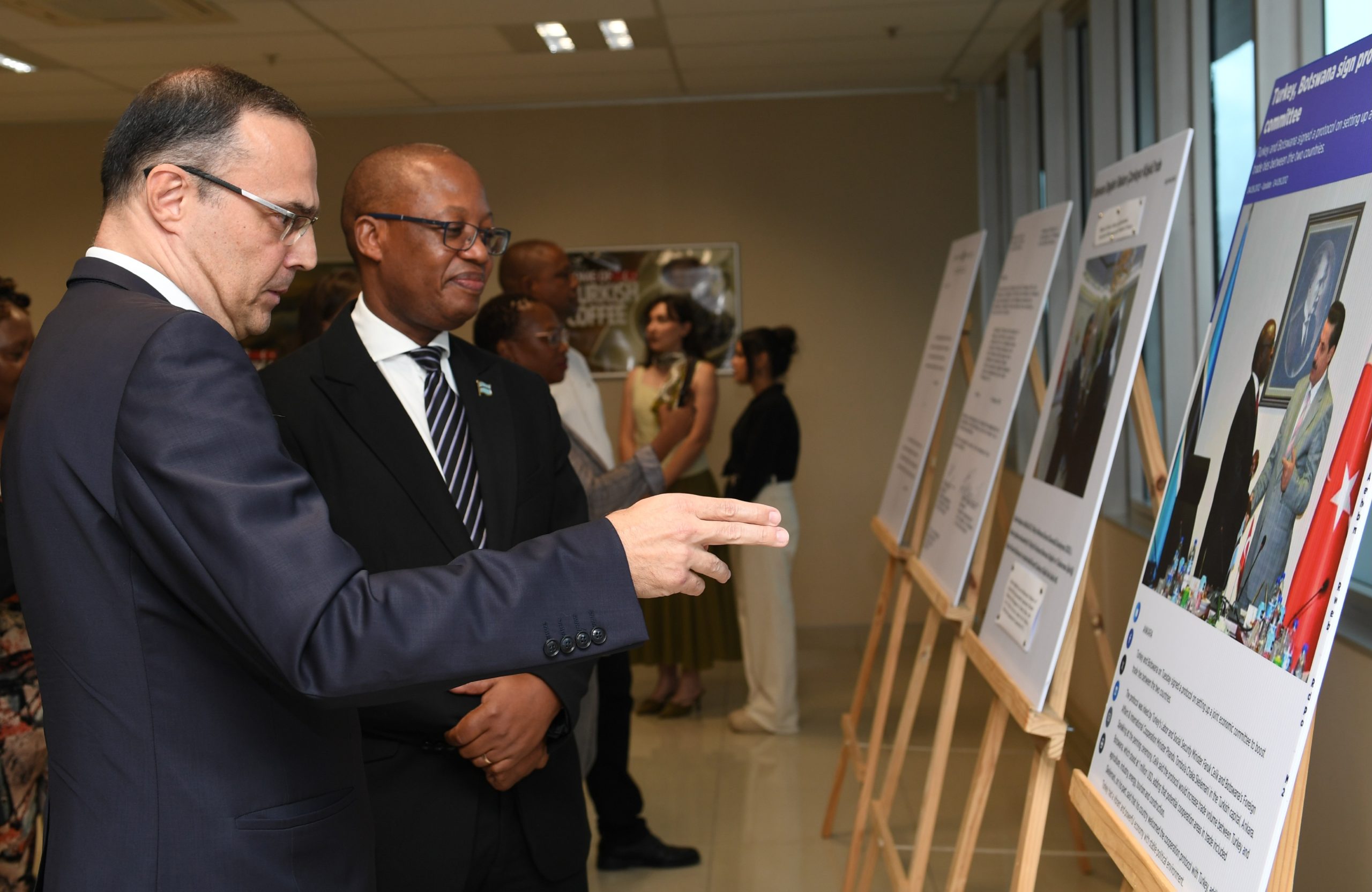
    To commemorate the 45th anniversary, on Tuesday, Türkiye held a photo exhibition, which summarised key bilateral developments since 1981.

    The exhibition showcased historic documents and photographs highlighting key milestones in the bilateral relationship.

    Among the exhibits were a document signed by Botswana’s former Permanent Representative to the United Nations, the late Joseph Legwaila, concerning the establishment of diplomatic relations between the two countries.

    Also on display was a congratulatory message to Botswana’s third president, Dr Festus Mogae on his re-election; a message commemorating Botswana’s 30th independence anniversary as well as a letter of compliments to the late former minister of foreign affairs, Mompati Merafhe, on his assumption of office.

    The exhibition also featured historic photographs of former minister of foreign affairs, Phandu Skelemani, images of the current Minister of International Relations, Phenyo Butale, during his visit to Türkiye.

    Türkiye Ambassador to Botswana, Ahmet Akay said relations between the two countries had developed significantly since 1981, particularly following the opening of the Turkish Embassy in Gaborone in 2014.

    Prior to that, the Turkish Embassy in Pretoria was accredited to Botswana.

    Ambassador Akay said Botswana would soon open an embassy in Ankara, Turkiye, a move he said would further strengthen relations between the two nations.

    He expressed confidence that by the time the two countries celebrate 50 years of diplomatic relations, cooperation would have reached even higher levels.

    “Potential areas for bilateral cooperation include mining and energy, construction, infrastructure development, education, health, agriculture and tourism,” he said.

    Permanent Secretary in the Ministry of International Relations, Thuso Ramodimoosi said the two nations had achieved much over the years and that continued dedication and commitment would further promote sustainable development and improve the living standards of their people.

    He said Türkiye had played a notable role in advancing Botswana’s development through human resource development and cultural exchanges.

    “This partnership is continually broadening and strengthening Botswana-Turkiye relations, ensuring that the exchanges we build today will grow more robust and benefit future generations,” Ramodimoosi said.

    He further reaffirmed government’s commitment to fostering a strategic and comprehensive partnership founded on mutual respect and cooperation.

    “We reaffirm our long-standing partnership and dedication to fostering a democratic and prosperous world where everyone can freely pursue their goals and dreams,” he said.

  • Farmers Call for Government Assistance

    Farmers Call for Government Assistance

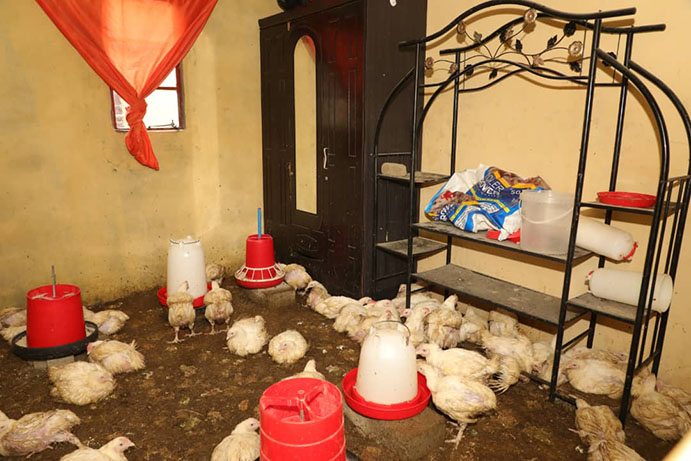
    Farmers call for government assistanceTwo farmers in Monarch area, Francistown have called for government assistance following the loss of their broiler chickens and feeds during heavy downpours.The farmers said they had not received any help for restocking despite undergoing assessments every time disaster hits.Last year in February, Ms Masego Pule said she lost 2 500 broilers and 40 bags of feeds while she lost 170 broilers and seven bags of feeds in December, while her co-farmer, Ms Nthabiseng Motswetla lost 198 broilers and eight bags of due to downpours.Ms Pule however, attributed the recurrence of flooding in the area to how the internal roads were constructed, which blocked the flow of water.Ms Pule suggested relocation saying most of them had to seek shelter from relatives during heavy rains. For his part, Francistown Deputy District Commissioner, Mr Patrick Tlotleng said whenever disaster hits, priority of the district response team was to ensure that lives were spared.He also said they had to ensure that some were relocated and provided with shelter and necessities such as food and clothes.Thereafter, he said a comprehensive assessment ensued, which covered destroyed goods and properties.Mr Tlotleng appreciated the support from Business Botswana through the Private Sector Disaster Response Fund (PSDRF), an initiative which supported businesses affected by the flood.He said the Fund supported continuity of business operations and recovery from the crisis. Last year after the February heavy downpours, he said PSDRF assisted victims in North East, Tonota and Francistown districts with food hampers and household items.

  • Moagi Granted Bail and Back in Court March 31

    Moagi Granted Bail and Back in Court March 31

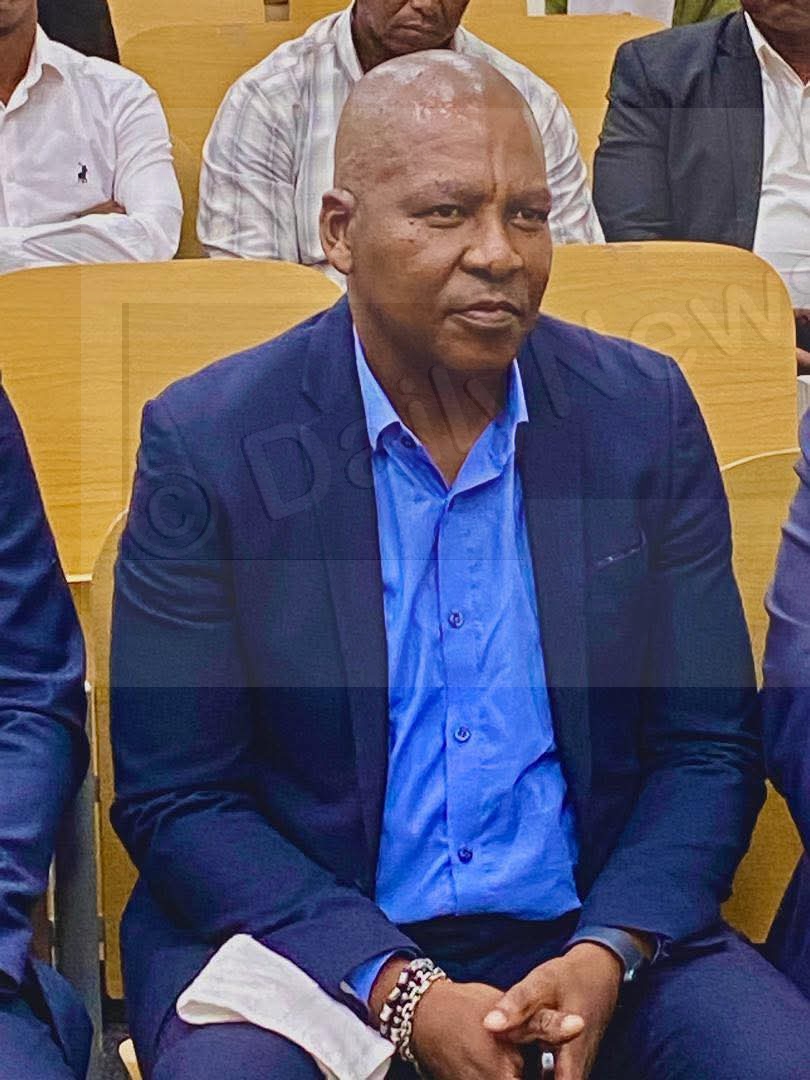
    Lefoko Moagi, the former Minister of Minerals and Energy, is scheduled to appear in court again on March 31 for status hearing in respect to the charge of corruption for which he was arraigned on January 20.

    With the prosecution not in opposition to him being granted bail, Regional Magistrate – South, Mr Mareledi Dipate admitted him to a P5 000 bail and ordered him to provide two Batswana sureties who will bind themselves with the same amount.

    Conditions attached to the bail include that Moagi must notify investigating officers before any international travel and must attend all court sessions.

    Earlier, the state requested that plea taking be deferred as investigations into the case were still ongoing.

    Once investigations are finalised, additional accused individuals may be brought before court.

    The charges relate to an incident that occurred on or around April 17, 2024, where it is alleged that Moagi, in his capacity as a government minister, received P4.7m from New Energy Company (Pty) Ltd through Wisecreatives Investments (Pty) Ltd.

    It is alleged that Moagi was provided with a bank card to access the funds from the company and its associated entity, Riders (Pty) Ltd.

    The funds are alleged to be a reward for issuing prospecting licenses for base metals in the Ghanzi, Tsabong, and Tutume districts to New Energy (Pty) Ltd. 

  • Pabalinga Outlines New Era for Popa

    Pabalinga Outlines New Era for Popa

    Newly appointed Township Rollers chairperson, Fish Pabalinga, has outlined an ambitious roadmap to restore the club’s prestige with focus on three core pillars which include stability, competitiveness and modernisation.

    Addressing a press conference on January 19, Pabalinga committed his executive committee and management to returning Township Rollers, alias Popa, to its rightful place at the summit of Botswana football.

    To signal a new era of professionalism, Pabalinga announced several key operational upgrades, including securing a technical partner in Umbro with the new kit expected to arrive in the country within four weeks.

    On one hand, DC Tours will provide team transportation, while on the other hand, Emergency Assist has been brought on board to manage the club’s medical requirements.

    In effort to increase efficiency, the club is in talks with a professional ticketing company.

    “The era of selling tickets from car boots must come to an end,” Pabalinga said, emphasising the need for transparency and easy access for supporters.

    To prevent a repeat of past issues, Pabalinga announced the opening of a new bank account to ensure traceable financial management.

    The club has also partnered with an external accounting and audit firm to instil discipline and produce audited statements in strict accordance with the Township Rollers Constitution.

    Earlier, Pabalinga apologised to stakeholders for the club’s failure to honour a fixture last year, saying the incident was an eyesore to the club’s reputation.

    “The disruption was regrettable and we assure all stakeholders that such an occurrence will never happen again,” he said.

    He further apologised to the players, technical staff and their families regarding delayed payments, noting that such financial struggles did not reflect the values of the institution.

    Meanwhile, known for trophies and a huge and passionate following, the recent past has been uncharacteristically sombre for Popa.

    From missed fixtures to internal financial struggles, the decorated club found itself veering away from the very ideals that built its legend.

    While he acknowledged that the club has recently veered away from its founding ideals, Pabalinga paid tribute to past investors, committees and sponsors who built the most decorated club in the country.

    “Township Rollers may not currently be at its best, but it would be unjust to define the club by moments of difficulty alone. All is not lost,” Pabalinga said.

  • Constitutional Court Establishment Elicits Mixed Reactions 

    Constitutional Court Establishment Elicits Mixed Reactions 

    The existence of a Constitutional Court will not only help develop Botswana’s constitutional democratic system but will also strengthen or enhance the judicial process.
    Presenting a strong case for the establishment of a Constitutional Court before a full council session in Serowe on Monday, Assistant Minister of Justice and Correctional Services Mr Augustine Nyatanga described the court as a specialised institution that interpret the nation’s constitution, ensuring laws and government actions align with fundamental principles, protecting human rights and upholding the rule of law.
    Furthermore, he said the ongoing nationwide consultations spoke volumes on government’s commitment to embrace the ‘voice of the people’ and that the collective opinion of the majority held authority for issues pertaining to national interests.
    To this end, Minister Nyatanga said there would be a referendum in the near future for the public to vote for or against the establishment of the Constitutional Court – an exercise that would determine whether Batswana want it or not.
    He reiterated that government wanted the establishment of the Constitutional Court to deal with human rights issues, pointing everybody within the territory of Botswana should be free.
    In addition, he said everybody in the country should be entitled to the fundamental rights and freedoms of the individual, including life, liberty, security, protection of the law and freedom of conscience, expression and assembly, regardless of race, place of origin, political opinions, colour, creed, or sex, hence the need to establish such a court.
    “If we are not cognisant of people’s rights as the leadership, that might incite violence thus disturbing peace and threatening national security.”
    He said the hierarchy of courts in Botswana was structured from the highest appellate authority, the Court of Appeal down to customary courts, adding the Court of Appeal was currently the highest in the country and is the final arbiter of all legal matters.
    Therefore, he said there was a huge backlog of cases at the High Court, exceeding a thousand cases, thus necessitating the move to establish a Constitutional Court that would expedite the disposal of cases revolving around human rights.
    He said the High Court had unlimited jurisdiction and therefore establishing a Constitutional Court would accord the country the opportunity to adequately deal with burning issues within a short space of time.
    However, commenting on the Constitutional Court establishment, some councillors expressed divergent views, with most councillors giving its proposed introduction a thumbs up.
    Councillor Kebakgale Kutuso of Kgosing ward wondered where government would get the money to fund the establishment of the court in an ailing economy.
    Mr Kutuso said challenges in the health and education sectors were more pressing hence government should instead be channelling money towards the procurement of medicines and the renovation of dilapidated school infrastructure.
    He was of the view that paying judges was expensive and thus implored government to prioritise needs, arguing there were more pressing issues than the Constitutional Court.
    Councillor Nametso Senku of Mabeleapodi said the Constitutional Court was a good initiative but that its timing was off as there were more pressing issues at the moment that required attention.
    He said considering the budgetary constraints, this was not the appropriate time to establish the Constitutional Court.

  • National Arts Council Botswana Appoints New Board Members

    National Arts Council Botswana Appoints New Board Members

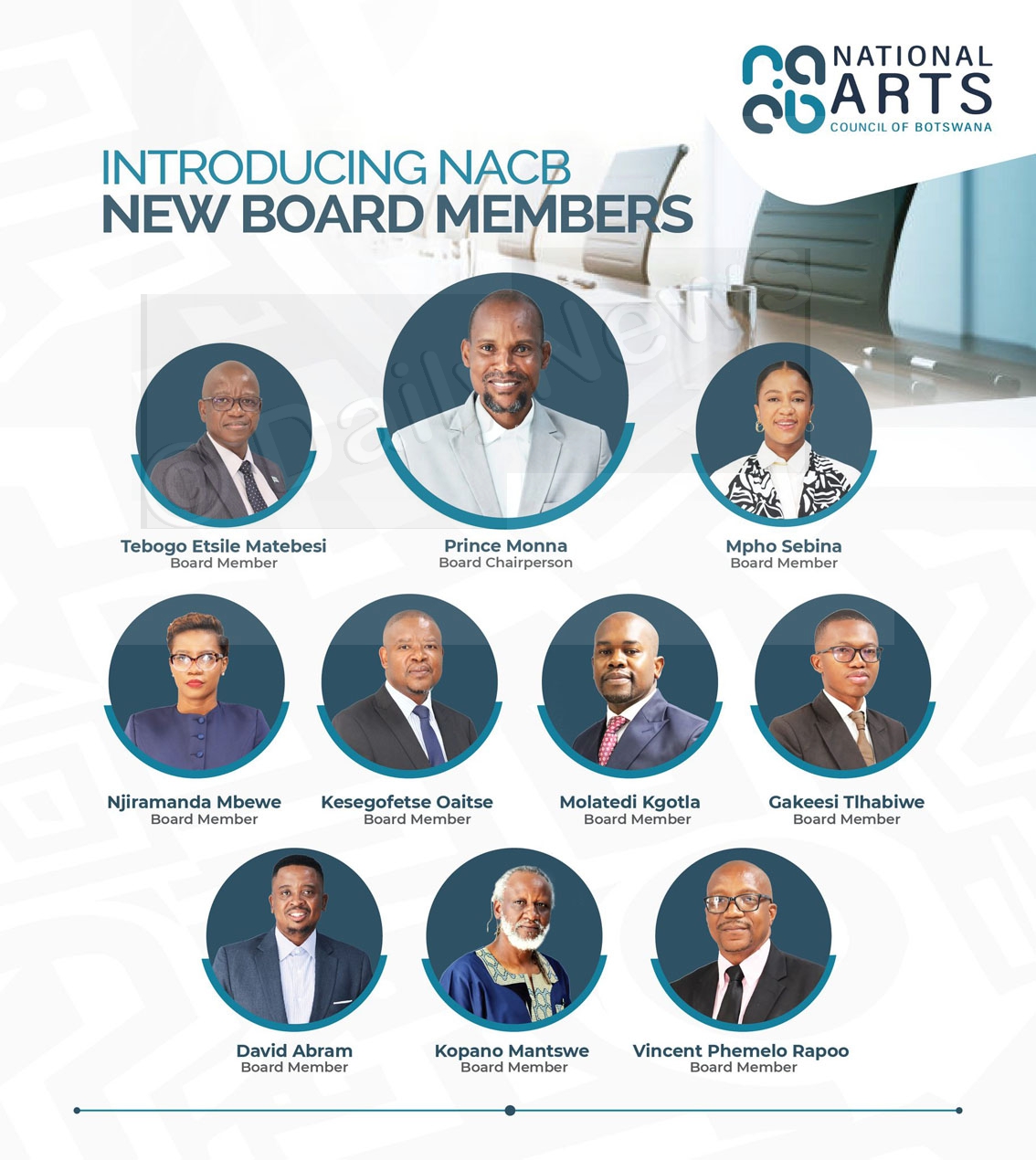
    To strengthen strategic direction and oversight capacity, the National Arts Council of Botswana (NACB) has announced the appointment of its new council board members.
    The board will be chaired by Prince Monna, with members;Tebogo Matebesi, Mpho Sebina, Gakeesi Tlhabiwe, Molatedi Kgotla, Vincent Rapoo, Kopano Mantswe, David Abram, Kesegofetse Oaitse and Njiramanda Mbewe. The members bring a wealth of expertise in arts and culture, creative industries, policy, governance and strategic development.
    Commending the Council on the development and congratulating the newly appointed Board, creative industry advocate and brand manager Zenzele Hirschfeld said the sector was hopeful that the new Board would bring a wealth of knowledge and experience.
    “As a sector, we have always emphasised the need for industry experts to lead the Council, as many challenges stem from a lack of governing policies and structures,” Hirschfeld said.
    However, she raised concern over the gender composition of the Board. With two women and eight men, she noted that the sector needed to be more intentional about gender equality and balance in leadership positions.”
    Meanwhile, creative industries consultant Seabelo Modibe challenged the new board to prioritise development and implementation of the Arts Council Regulations by December. He further urged the board to ensure the registration of the council’s affiliates by the same period and to convene inaugural annual general meeting by early to mid-2027.
    “For me, your performance will be measured by these,” Modibe stated on his Facebook handle.
    In a statement, NACB said the appointments reflected the council’s commitment to promoting excellence in the arts and culture sector, supporting creative development and advancing Botswana’s cultural agenda. Recently, the Council also appointed Gaokgakala Lemmenyane as its Chief Executive Officer. Lemmenyane is a seasoned arts administrator, cultural policy specialist and resource mobilisation strategist with over 15 years of leadership experience across the creative sector, academia, government and international institutions.

  • Vendors to Form Bus Rank Association

    Vendors to Form Bus Rank Association

    Small businesses have joined efforts to turn Molepolole Bus Rank into a business and service hub. After lying ideal for almost a decade, the Molepolole Bus Rank was reopened for use in December 2025.
    However, small businesses and the local transport operators are still in doubt that the infrastructure will boost their businesses due to a number of shortcomings, primarily shortage of customers.
    Their fear is that the bus rank was located in isolation, far from the village centre where people flock to source household amenities and other services from government departments.
    In an effort to push for government to establish offices at the bus rank offering daily services, some hawkers are on the verge of registering an association; the Molepolole Bus Rank Association, primarily to advocate for the bus rank to be turned into a business and essential services hub.
    The chairperson of the proposed association, Mr Godfrey Ramokhaneng, a cobbler operating from one of the stalls, is among the few small business owner who, despite challenges, have remained at the bus rank since its establishment.
    “Eight days after the bus rank was reopened we met as bus rank vendors to form an association that will serve as a mouthpiece for all vendors around the bus rank,” said Mr Ramokhaneng.
    He said the association would serve as a mouth piece for the small businesses, public transport operators and all others including government offices doing business at the bus rank.
    Mr Ramokhaneng said the aim of forming an association was to revive commercial activity at the bus rank, which had previously been forced to shut down after businesses and public transport operators abandoned it due to low patronage linked to its isolation location.
     He said apart from a small number of commuters to nearby areas, there were no businesses or services  in its surrounding  to attract movement of people that could ultimately turn into customers for their  businesses.
    Mr Ramokhaneng said the only way to inject life at the bus rank was to associate, join hands as businesses, collaborate with all other private, government and council stakeholders.
    He said businesses that were currently operational at the bus rank, included street vendors and public transport operators.
    He said the association would also be a burden reliever to the council in terms of cost sharing especially on matters that included the maintenance of the premises and other billings.
    Mr Ramokhaneng said the association would encourage businesses at the bus rank to play a part in its maintenance adding that the Public Private Partnership model must be engaged to establish businesses such as a shopping mall to boost life at the bus rank.
    He said through an association it would be easy to convince and lure service providers to establish offices or hold public activities at the bus rank.
    He added that working together would also assist businesses in sharing ideas and business experiences that would help them sustain and grow. One of the vendors at the bus rank, Ms Tinge Kgosiesele was equally convinced that the bus rank in its current status was not conducive to sustain small businesses.
    “For a small business to thrive it must be strategically located along side major businesses such as a shopping complex, where it would  easily be located by customers.”
     Kgosiesele said her stall had been operating at the bus rank since 2018, but at one point was forced to relocate to where the makeshift bus rank was located in pursuit of customers.
    However, she was hopeful that the association would bring life to the bus rank. Ms Agnes Seroojane said the initial opening of the bus rank had brought hope to their businesses as some government department such as bye-law and transport had relocated some of the their services to the bus rank.
    However, Ms Seroojane said their stay was short lived as they abandoned the bus rank, derailing efforts of turning the bus rank into a business and service hub. Mr Eric Sefanyetso, one of the long distance public transporters in the Takatokwane-Molepolole road said the Molepolole bus rank was in isolate location and mostly used by long distances buses.
    “We cannot refuse to utilise the facility. We are appealing  to government to provide services and other social amenities that will attract the local people to take public transport to the rank. The only transport currently utilising bus rank are long distance transporters,” he said.
    Mr Sefanyetso said local taxis were limited at the bus rank as they only target the few passengers who were arriving at the bus rank.
    He said the movement at the bus rank was only of the few that were travelling to various destinations, while the locals had no business of going to the bus rank as all the services and other businesses of their daily interest were located far from the bus rank.
    Meanwhile, Kweneng District Council Chairman, Mr Ontefetse Rankhibidu said efforts were ongoing to resuscitate life a the bus rank. Mr Rankhibidu said negotiations with some council and government departments and other service providers were ongoing and  they promised that they would provide service points at the bus rank.
    He added that the idea was for other offices to permanently establish at the bus rank, a move that would sustain small businesses and other activities.

  • Police Ramp up Fight Against Crime

    Police Ramp up Fight Against Crime

    In a region where rivers flood roads, wildlife blocks access routes and some communities located hours away from the nearest police station, responding to crime on time becomes a challenge.

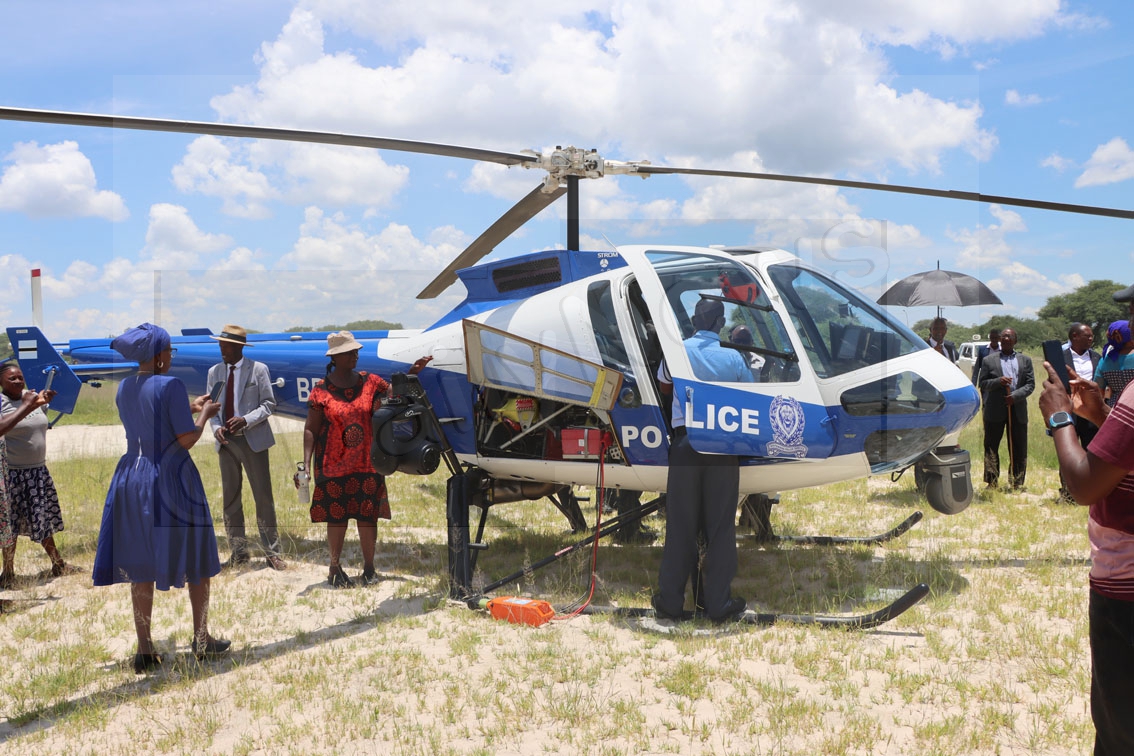
    This is the reality that prompted government to launch the Botswana Police Service Air Unit in Maun, to serve the vast and complex North West region.

    The air unit launched during a ceremony officiated by the Minister for State President, Defence and Security in Maun on Thursday, marks a strategic shift in how law enforcement will operate across Ngamiland and Chobe defined not only by distance, but by water channels, dense vegetation and protected wildlife zones that often make ground patrols slow or impossible.

    Rather than being a symbolic unveiling of aircraft and equipment, the initiative is a deliberate response to long-standing operational gaps that have limited police reach, delayed emergency responses and constrained border and wildlife-related policing in the region.

    Public security remains central to national development, peace and stability form the foundation upon which tourism, trade and community livelihoods depend, Minister for State President, Defence and Security, Mr Moeti Mohwasa said during the launch.

    He said the North West region, as a major contributor to Botswana’s economy through tourism and conservation, required policing solutions that matched its unique terrain.

    While acknowledging the current economic pressures, he said the air unit would begin operations with one aircraft, with plans to expand the fleet when fiscal conditions improved.

    The long-term vision includes the integration of drone technology and decentralisation of air policing services to other strategic parts of the country.

    Mr Mohwasa further stressed that the introduction of air-based policing was part of a broader government commitment to bringing services closer to communities, improving emergency response times, strengthening border security and enhancing crime prevention efforts in areas previously constrained by geography.

    For the Botswana Police Service, the Maun air unit is not new ground, but an expansion of a journey that began in Gaborone in 2008 with limited resources and nationwide responsibility.

    Commissioner of Police, Ms Dinah Marathe explained that centralising air operations in the capital had placed immense strain on personnel, equipment and response times, particularly for northern districts.

    She noted that the opening of a Francistown-based air office in 2012 helped ease some pressure but still left the North West underserved due to distance and terrain.

    The Maun unit, she said, directly addressed that gap by positioning aerial resources closer to areas where they were most needed.

    Ms Marathe highlighted that crime trends in the North West had generally declined in recent years, particularly property-related offences.

    However, she cautioned that stock theft, cross-border crime, illegal immigration, missing persons in forests and drowning incidents in major rivers continued to pose serious challenges that required faster detection and response capabilities.

    “The ability to respond swiftly can make the difference between prevention and loss,” she said, adding that air mobility would significantly strengthen surveillance, search-and-rescue operations and rapid deployment during emergencies.

    Ms Marathe also underscored the importance of community involvement, reiterating that policing could not succeed in isolation.

    She stressed the importance of partnerships with local communities, crime prevention committees and other security agencies, even with the improvement of technology and resources.

    For his part, Member of Parliament for Maun East, Mr Goretetse Kekgonegile, welcomed the development, describing it as a practical solution to the realities of policing in the Okavango and surrounding areas.

    He said aerial transport would allow the police to reach places that were otherwise inaccessible, ensuring cases were handled promptly and reducing delays that often compromised investigations.

    Mr Kegonegile said the unit would not only strengthen law enforcement but also reassure communities that government was actively responding to their security concerns.

    Beyond crime prevention, the launch of the air unit also comes amid renewed calls for collective action against persistent social challenges, including Gender-Based Violence, drug abuse and fraud targeting the elderly, particularly pensioners.

    Communities have been urged to support law enforcement efforts while also addressing these issues at household and community level.

    As Botswana continues to explore technology and innovation to diversify its economy and improve service delivery, the Maun air unit represents a broader shift in thinking, one that recognises that geography should not determine access to safety.
  • BoMRA Warns Against Use of Unregistered Herbal Medicines

    BoMRA Warns Against Use of Unregistered Herbal Medicines

    Botswana Medicines Regulatory Authority (BoMRA) has issued a warning against the unregulated sale and use of herbal medicines, particularly those sold on the streets and through social media platforms.

    In an interview with the authority’s public relations officer, Mr Israel Kgosidiile, said BoMRA acknowledged that some members of the public might resort to herbal or traditional remedies when conventional medicines were unavailable.

    He stressed that such products must always meet standards of safety, quality and efficacy before being used.

    “BoMRA recognises that limited access to conventional medicines may lead some patients to seek alternative options, including herbal remedies, however, reliance on unregulated products poses significant health risks and should not be viewed as a safe substitute for regulated medical treatment,” said Mr Kgosidiile.

    He noted that herbal medicines, while often regarded as natural, were not automatically safe, adding that products imported into Botswana must be registered or authorised by BoMRA before they could be distributed or sold.

    Mr Kgosidiile confirmed that BoMRA regulated herbal medicines under the Medicines and Related Substances Act of 2013 and its accompanying regulations of 2019.

    He pointed out that the authority oversaw registration, licensing, product evaluation, labeling and post-market surveillance, adding that herbal products sold without authorisation were considered illegal.

    “The sale of herbal medicines on the streets or through social media platforms without BoMRA authorisation is unlawful, medicines can only be sold through licensed and approved premises and by authorised persons,” he said.

    Mr Kgosidiile therefore, said BoMRA expressed concern over the proliferation of herbal products advertised on platforms such as Facebook, WhatsApp and Instagram, adding that many of those products, the authority warned, were of unknown origin, lacked proper labeling, and made unverified therapeutic claims.

    “We strongly warn the public against purchasing medicines through social media, such products are often unsafe, counterfeit or contaminated. Members of the public should only obtain medicines from licensed pharmacies and authorised outlets,” Mr Kgosidiile warned.

    He confirmed that the authority had put in place various enforcement measures to protect the public, including market surveillance, product sampling and the seizure of illegal items while sellers found in violation of the law might face closure of their premises, prosecution or other penalties.

    While BoMRA’s main mandate is regulation, it works closely with the Ministry of Health and other partners to support medicine availability within the national health supply chain, reaffirming that patient safety remains a top priority.

    “Natural does not mean safe, the public should only use medicines, whether herbal or conventional, that have been approved by BoMRA and obtained through legal channels,” said Mr Kgosidiile.

    He therefore, encouraged the public to report any suspected illegal sales of medicines and to always seek professional medical advice before using any herbal or traditional remedies.