Blog

  • FIRST DIVISION NORTH WRAPS UP LEAGUE THIS WEEKEND

    FIRST DIVISION NORTH WRAPS UP LEAGUE THIS WEEKEND

    The First Division North league will wrap up the year this weekend with exhilarating matches planned for Saturday.

    As six games are set to unfold before the Christmas and New Year break, the competition for promotion to the elite league is intensifying.

    The Week 13 fixtures promise to be thrilling, with teams vying for both promotion and survival. Current standings indicate that every point is crucial for teams looking to improve their ranks and a defeat could complicate matters and ensure that the matches will be competitive and closely contested.

    While Tonota FC have already signalled their ambition to ascend to the elite league next season, other teams such as Tsabotlhe FC, Enesia FC and BR Highlanders are eager to challenge for promotion as well.

    The Week 13 fixtures will feature a major clash at the BR Stadium in Mahalapye, where BR Highlanders FC will be up against the current log leaders, Tonota FC.

    Tonota FC have accumulated 32 points from 12 matches without a loss to date. The home side, BR Highlanders, currently sit fourth with 18 points from 12 games.

    The matchup is likely to draw attention as fans wonder if BR Highlanders can hand Tonota FC their first defeat using home ground to their advantage.

    In Francistown, Enesia FC will welcome Mbalakalungu SC from Shakawe at the Francistown City Council Stadium.

    Positioned third and ninth in the league table respectively, Enesia FC have accumulated 21 points from 12 matches, while Mbalakalungu SC are at 11 points from the same number of games.

    In Serowe at the Newtown Primary Grounds, Tsabotlhe FC will face Sankoyo Bush Bucks. Tsabotlhe FC are currently second in the standings with 22 points from 12 matches played. On the other hand, Sankoyo Bush Bucks hold seventh place with 13 points from 11 matches.

    Ferry Wanderers SC, who find themselves in the relegation zone, will host Eleven Angels FC at Kasane Prison Grounds in Kasane. After their recent loss to Tonota FC, Ferry Wanderers SC are positioned 11th with nine points from 11 games played. Eleven Angels FC, despite losing their last match against Enesia FC, are sixth with 16 points from 12 matches.

    At Sefhare Primary Ground in Sefhare, JJ United FC will welcome Motlakase Power FC from Palapye. JJ United FC occupy eighth place with 13 points from 12 games played, while Motlakase Power FC are in tenth place with 10 points.

    Another fixture will see Ndundu Young Fighters FC going up against Tshikinyega Yigers FC. Ndundu Young Fighters have secured 17 points from 12 matches so far, whereas Tshikinyega FC are currently in the relegation zone with eight points from their 12 games played.

    All matches are scheduled to commence at 3:30pm.

  • Motorsport Returns With the Shutdown Drag Race Thrill

    Motorsport Returns With the Shutdown Drag Race Thrill

    The high-speed world of motorsport returns to Lobatse on December 13 as Botswana Racewars stages an action-packed drag racing showdown dubbed The 2025 Shutdown on the Okavango Road near the Lobatse Sports Complex.

    The event follows the successful annual BotsRacewars drag race held in August, hosted by Maverick Motorsport Botswana in collaboration with Rhyno’s Torque Show of South Africa and Skygate Motors. 

    Maverick Motorsports event organiser, Tebogo Moori, said the much-anticipated motorsport spectacle would feature a broad lineup of modified cars and top-tier drivers competing over a 500-metre stretch. 

    Vehicles expected on the track include high-performance models such as the Mercedes-AMG, Audi RS3/RS5, BMW M5 and Porsche 911.

    He noted that the 2024 defending champion, BMW Dracular 2.2, a Motswana driver, who did not race in August, is set to return to the strip this weekend.

    According to Moori, participation had been overwhelming, with 15 local drivers, 10 from South Africa, four from Lesotho, two from Zimbabwe, and one from Namibia confirming attendance. 

    Motorsport enthusiasts will also enjoy quad bike demonstrations and other entertainment segments.

    Although the reigning champion Audi TT RS, renowned for its legendary 5-cylinder engine will not compete, South African driver Bongani Ntila is expected to participate in a different vehicle model.

    In a move to support local talent, organisers have introduced Sejana sa Toropo, an award aimed at honouring the fastest Lobatse drivers as part of efforts to nurture grassroots motorsport skills.

    The race will run from 10am  until 7pm , followed by an after-party at Thema Motswedi Park.

    Among dignitaries expected to attend are Vice President Ndaba Gaolathe, Kgosi Khama IV of Bangwato, world-leading athletics sensation, Collen Kebinatshipi, Lobatse mayor Aron Ganakgomo, Lobatse MP Kamal Jacobs, Lobatse Town Clerk, Lenamile Taolo and Lobatse district commissioner, Mpho Mathe.

    “This time around we have managed to increase parking space to ensure better crowd control,”  Moori said.

  • World Athletics Relays Gaborone 2026 Receive Boost

    World Athletics Relays Gaborone 2026 Receive Boost

    The journey toward hosting one of the most prestigious events on the global sporting calendar, the World Athletics Relays in May 2026, has received a monumental boost this week with the unveiling of three key corporate partners.Botswana Telecommunications Corporation Limited, Halfway Toyota and the Diamond College of Botswana have stepped forward as official sponsors, securing the necessary support to make the highly anticipated event to be held in Gaborone a reality.

    Speaking at the unveiling ceremony, Minister of Sport and Arts, Jacob Kelebeng, hailed the upcoming relays as a historic moment for Botswana and Africa.

    “World Athletics Relay Gaborone 2026, has to be one of the events that will never be erased from the global history books, Minister Kelebeng said.He thanked the new partners, saying that their shared vision was crucial for making the monumental event a possibility.Again, he said the sponsorships would resonate far beyond the stadium and shape the country’s narrative and drive economic transformation, through the revitalisation of the hospitality sector and growth for small businesses by attracting athletes, officials, fans and media from around the globe.“Sports stand out as a key engine for tourism, business, and global reputation and through your partnerships, Botswana can continue to stand tall as a formidable competitor among nations,” he said.

    Gaborone City mayor, Oarabile Motlaleng, celebrated the hosting of the event as a powerful catalyst for urban development.

    “Hosting the event is a catalyst for transformation across urban development, enhancing infrastructure and igniting a renewed sense of civic pride in every neighbourhood,” Motlaleng said. He emphasised that the influx of global visitors presented an opportunity to stimulate the local economy and create lasting legacies in tourism and urban amenities.

    He thus called upon sponsors to further partner with the Gaborone City Council to enhance the host city’s aesthetics, adding that the council was fully mobilised to ensure world-class standards of cleanliness, smooth traffic flow and public safety throughout the event.

    “We are engaging our communities, vendors, transport operators and youth to ensure that the entire city is aligned, informed and enthusiastic,” he said.

    Meanwhile, the Botswana Telecommunications Corporation Limited pledged a sponsorship worth over P3 million.

    Halfway Toyota would provide logistical support with a sponsorship valued at P15 million, supplying 30 vehicles to support the transportation needs of the Local Organising Committee (and other officials.

    Diamond College of Botswana committed to providing the official hardware, pledging 120 gold, silver and bronze medals, each engraved with a diamond. 

  • BTA Coach Education System Impressive

    BTA Coach Education System Impressive

    The International Tennis Federation (ITF) has renewed its recognition of Botswana Tennis coaches education system to white level for the period 2025–2029.

    Botswana Tennis Association (BTA) president, Oaitse Thipe, said in an interview that the renewal meant that BTA was now self-sufficient in training coaches up to the Play and Stay coaching level.

    He said this means the country has an adequate number of qualified tutors who can conduct coaching courses and issue certifications locally.

    “This really means a lot to the Botswana Tennis Association. It shows that the world tennis governing body trusts us to ensure that coaching standards across the country are being met,” he said.

    Thipe noted that the renewed recognition would enable the association to host advanced-level coaching courses next year with a well-prepared pool of local coaches.

    He said it was therefore crucial for the national tennis federation’s coaching education system to remain standardised. This includes having a consistent training plan for all coaches, a licensing system, and an operational coaches commission to ensure that only licensed coaches are utilised.

    Botswana earned the renewed recognition after the ITF, together with its Coaches Commission, established criteria and minimum standards for coach education systems, which were later adopted by the ITF Board of Directors.

    According to a letter from the ITF, these criteria and coaching competencies for various levels were developed to ensure quality standards in coaching education globally and to allow the evaluation of member nations’ systems.

  • Traditional Affairs Tribunal to Resovle Bogosi Disputes

    Traditional Affairs Tribunal to Resovle Bogosi Disputes

    Government is planning to establish a traditional affairs tribunal via the reviewed Bogosi Act to bring greater clarity and stability to the Bogosi institution.

    The traditional affairs tribunal is expected to resolve chieftainship disputes and other relevant traditional matters.

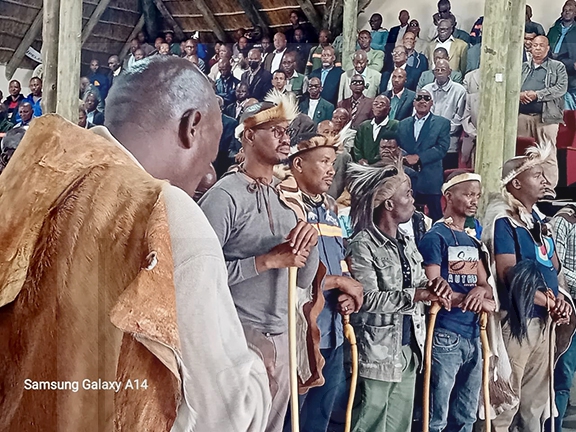
    Speaking at a kgotla meeting in Mochudi on December 11, Minister of Local Government and Traditional Affairs, Mr Ketlhalefile Motshegwa said the legislative review was necessary because the Bogosi institution had been marred by disputes, often stemming from lack of proper consultation between communities and royal houses.

    Mr Motshegwa said the review of the Bogosi and Customary Law Acts followed countrywide consultations, with most amendments based on the recommendations received.

    He indicated that the review aimed to profile the roles of Dikgosi and grade them to ensure that the structures were clearly defined and formally incorporated and defined the role of the royal house within the Bogosi Act as well as establish a defined structure for Dikgosi, complete with official titles

    He added that government’s goal was to create well-defined structures that minimised ambiguity and friction within the traditional leadership framework.

    Furthermore, the Minister commended the Bakgatla community for continuing to uphold their culture and encouraged them to keep instilling discipline through traditional institutions like initiation schools.

    On the other hand, Minister Motshegwa informed the Bakgatla community that government had officially dropped all charges previously levelled against their paramount chief, Kgosi Kgafela II.

    The landmark decision, he explained, followed key engagements between the ministry and the Bakgatla Deputy Chief, Kgosi Bana Sekai, regarding the circumstances surrounding Kgosi Kgafela II’s prolonged absence from the country.

    Mr Motshegwa also shared that during a recent meeting with Kgosi Kgafela II, he informed him that a Constitutional Review was underway and extended an invitation for him to participate in the national process.

    For his part, Minister of Justice and Correctional Services, Mr Nelson Ramaotwana, assured Bakgatla that government was committed to peaceful relations with the tribe.

    Mr Ramaotwana said their Kgosi was free to come back home following the engagements and consultations that ultimately led to his flight

    “This has been a long journey, but it has finally been resolved,” he said.

    Members of the community expressed their delight over the news and welcomed the decision. However, they stressed that they still required assurance that their Kgosi would not be troubled upon his arrival back home, which they deemed a significant step toward healing historical rifts. 

  • Govt Advances Anti-GBV Legislation

    Govt Advances Anti-GBV Legislation

    The process of enacting the legal framework focused on combating gender-based violence (GBV) is ongoing, the Minister of Youth and Gender, Ms Lesego Chombo, has told the National Assembly.

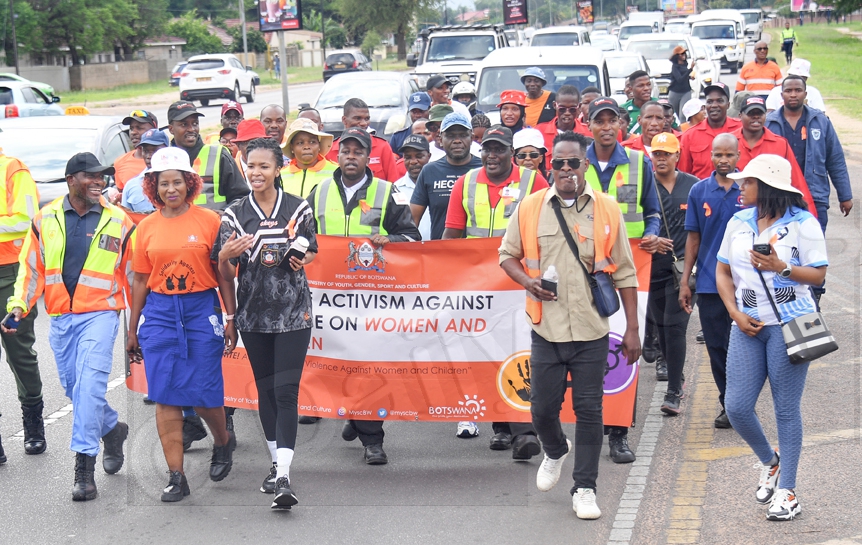
    In a statement to mark the closure of this year’s 16 Days of Activism Against GBV on Wednesday, Ms Chombo said broad consultations were ongoing to inform the piece of legislation the ministry was developing to combat GBV, which they planned to present to Parliament by July 2026.

    “A major pillar of our national response is the development of dedicated GBV legislation. I am pleased to report that the process is advancing steadily. The ministry has concluded its preliminary stakeholder analysis and is now drafting the Drafting Instructions that will be submitted to the Attorney General’s Chambers,” said Ms Chombo.

    The consultations with various stakeholders including civil society organisations, ex-offenders, media practitioners, women’s leagues of political parties, legal experts and frontline responders among others, is to ensure the legislation is evidence-based, survivor-centred, and nationally owned, Ms Chombo said.

    “These engagements have deepened our understanding of lived realities of violence in Botswana and the breadth of issues the law must address. Survivors underscored the urgent need for; accessible legal aid, trauma informed psychosocial support and assistance extended to their family members,” she said.

    Ms Chombo added that persons with disabilities highlighted communication barriers at police stations, health facilities, and courts, calling for stronger inclusion frameworks and for Special Education to be fully integrated into the mainstream education system.

    She further revealed that the comprehensive review of the policy of the National Policy on Gender and Development was currently in its inception stage.

    The development of a Gender Strategy with World Bank Support, and the review of the National Strategy Towards Ending GBV are also ongoing, the minister said.

    Beyond legislation and policy framework, Ms Chombo said government was working to strengthen systems, communities and services, and extend early prevention efforts.

    She also outlined other measures including public education and community engagement, strengthening frontline responders, women economic empowerment, closing the digital gender divide and supporting shelters through subventions.

    Additionally, Ms Chombo said her ministry understood men and boys remain central to transforming harmful norms and preventing violence and as such were being engaged in the battle to combat GBV.

    Members of Parliament largely spoke in favour of these efforts.

    Chobe MP, Mr Simasiku Mapulanga, spoke of the need for psychosocial support and mental health training for women and children as a means to combat GBV.

    Mr Mapulanga said government should scale down on exuberant commemorations which at times had too much fanfare that derails from the massaging.

    Maun West legislator, Mr Caterpillar Hikuama, said the state should pay greater attention to cyber crime and GBV that occurred through digital platforms particularly with the use of social media pseudo accounts by perpetrators.

  • Digital Violense Needs Shared Responsibility

    Digital Violense Needs Shared Responsibility

    The Parliamentary Caucus on Women has been informed that many people are unknowingly committing cyber offences by sharing harmful online content.

    Director of the Gender and Child Protection Branch in the Botswana Police Service, Senior Assistant Commissioner Goitseone Ngono, told a caucus panel discussion in Gaborone on Monday that some users ‘innocently share content, unaware that so doing is a criminal offence.’

    The shared content, she said called for stronger prevention and public education on digital gender-based violence (GBV).

    “There is a need to educate and create awareness for all members of the community to be well informed,” Ms Ngono said.

    While noting that the police appreciated the opportunities offered by the digital space, she said some users “glorify and validate its negativity,” and urged that online platforms be used constructively “to mediate or create awareness that builds peace.”

    Ms Ngono said offences registered by the police included child pornography, cyberstalking and defamation of character. Most victims of cybercrime were women and children, though men were also affected.

    In 2024, Ms Ngono said that six per cent of GBV victims were males, indicating that men were also coming forward to report GBV. She noted that the police were finding ways to channel and prioritise resources to combat GBV and officers were trained to identify and address GBV, with documented standard operating procedures in place. 

    Ms Ngono highlighted that over 2 000 digitally facilitated GBV reports had been processed, most resulting from ignorance. She mentioned that many GBV cases were assault-related, like unlawful wounding. Out of 2 248 reported GBV offences in 2024, only 575 were confirmed to be GBV-related. Additionally, of the 337 murder cases registered that year, 172 were GBV-related.

    The Chairperson of the Parliamentary Caucus for Women, Ms Helen Manyeneng, stated that digital violence against women and girls was destructive. She described digital violence as invisible, occurring in the digital space, and emphasised the need for collaborative efforts to combat it, as many lives and opportunities were lost due to such violence.

    Ms Manyeneng pointed out that while digital spaces offered educational opportunities, perpetrators of GBV often exploit women seeking these opportunities. She warned that digital violence could affect individuals, even leading to suicide.

    Therefore, she urged parents to monitor their children’s activities in the digital realm to mitigate potential harm. 

    Mr Arnold Somolekae, President of the Gaborone West Customary Court, attributed digital violence to unemployment and an unstable economy, noting that many young girls were lured into prostitution through digital platforms with false promises of employment. He called for interventions to hold these perpetrators accountable.

    Renowned lawyer Mr Uyapo Ndadi stressed the need for the government to establish women’s shelters across the country for the safety of GBV victims. 

    While Ms Lydia Mafhoko-Ditsa of UN Women Botswana reported that a UN study indicated that 67 per cent of women experienced digital violence through miscommunication, while 73 per cent of journalists were also victims. She revealed that 300 million children had been affected by online exploitation in the past two years, noting that while these statistics were alarming, many cases go unreported.

    Ms Mafhoko-Ditsa advocated for learning from the HIV/AIDS epidemic, where community capacity enhancement helped eliminate harmful cultural practices. 

    She also emphasised the importance of assessing the economic impact of GBV, pointing out that the European Union spends €329 billion annually to address it, raising the question of what this means for Botswana’s national economic situation. 

    “We need to analyse the cost implications of GBV,” she said.

  • Government Embrace Inclusive Agricultural Systems

    Government Embrace Inclusive Agricultural Systems

    The Government is steadfast in creating inclusive agricultural systems that ensure equal access to opportunities and resources for all citizens, particularly women and young people. 

    This commitment was highlighted during the official opening of the 6th Steering Committee meeting for the Improving Agricultural Resilience to Salinity through Development and Promotion of Pro-Poor Technologies (RESADE) at the Gaborone International Convention Centre (GICC) on Tuesday.

    Acting Minister of Lands and Agriculture, Dr Edwin Dikoloti, emphasised that President Advocate Duma Boko had unequivocally stated the need for modernisation in the agricultural sector to ensure the nation produced sufficient food. “Our agricultural vision aims to foster a climate-resilient, technology-driven and inclusive agricultural sector that empowers our farmers and secures our nation’s food future,” Dr Dikoloti said.

    He expressed gratitude to development partners, including the International Fund for Agricultural Development (IFAD) and the Arab Bank for Economic Development in Africa (BADEA), for the support and investments that bolster Botswana’s commitment to a sustainable agricultural economy. 

    The primary objective of the RESADE initiative is to enhance food security and alleviate poverty among smallholder farmers, with a focus on women and youth. Dr Dikoloti highlighted that the project, implemented by the National Agricultural Research and Development Institute (NARDI) in collaboration with the International Centre for Biosaline Agriculture (ICBA), leverages science, innovation, and community collaboration to achieve its goals.

    The RESADE initiative aligns with the Botswana Economic Transformation Programme (BETP), which emphasises productive agriculture, value chains and rural industrialisation. Dr Dikoloti said collaboration between RESADE teams and NARDI was vital for enhancing Botswana’s competitiveness and positioning the nation as a leader in climate-smart agriculture.

    He reaffirmed government’s commitment to skill development, technological advancement, innovation, and research aimed at increasing productivity and fostering sustainable livelihoods.

    Dr Viviane Filippe, a representative of IFAD, discussed key interventions of the RESADE project in Botswana and other participating countries, highlighting efforts to manage and adapt to salinity. 

    “The project aims to improve food security, agricultural productivity, and the incomes of smallholder farmers affected by salinity,” she stated, adding that the introduction of salt-tolerant crops and improved water management practices is part of IFAD’s broader strategy to enhance climate resilience.

  • Bobirwa Farmers Brace for Lemang Dijo Rollout

    Bobirwa Farmers Brace for Lemang Dijo Rollout

    Across Bobirwa District, a mix of anxious hope and quiet fear hangs in the air. Subsistence farmers – young and old – are watching the skies and their phones with equal intensity, waiting for two lifelines: the long-awaited rains and the text message alerting them that their Lemang Dijo subsidised packages have arrived.

    For many, the anticipation is sharpened by uncertainty. They hope the rains will continue long enough for successful planting, yet dread that heavy downpours could render their clay-rich fields inaccessible to tractors and animal draught power.

    As of December 8, 6 733 subsistence farmers had registered for the Lemang Dijo programme in Bobirwa, with 168 already receiving e-vouchers. But those issued with vouchers report a common frustration: the absence of seeds at designated agro-dealers, a delay they fear could undermine government’s intention of ensuring timely planting.

    While most farmers are clear on the crop production element, many remain unsure about the programme’s integrated beekeeping requirement. Only a handful of those interviewed understood the role of bees in pollination, while others admitted to fear or confusion -particularly about handling the insects.

    The programme guidelines explain that bees pollinate about 90 crops, increasing yields by up to 30 percent per hectare, with the beehive e-voucher capped at P1 500.Yet 72-year-old Ms Tshokolo Baruti of Mmasenana lands in Semolale is skeptical.

    “Jaanong dinotshi tsone ke le mosadi?” she asked rhetorically, wondering how a woman her age could cope with bees. Still, she remains committed to planting as soon as she receives her seeds, fertiliser and other inputs — and hopes the forecasted rains will find her field already ploughed.

    The programme has also drawn interest from young farmers, including those familiar with earlier schemes such as ISPAAD and Temo-Letlotlo. Mr Letso Oleteng, 20, of Magaleng lands in Sefophe, is still waiting to redeem his 100 percent subsidy for tillage, seeds, pesticides, shelling and threshing – all covered under a P2 900 per hectare e-voucher. Currently in Gaborone, he says one phone call will put him on the next bus home. Unlike some, he accessed the guidelines on social media and believes the beekeeping component makes economic sense.

    Other farmers, such as Mr Kebalepile Mzila of Mahibitswane lands in Tobane, were unable to source seeds after being turned away from BAMB in Selebi-Phikwe. Mzila, who previously learned beekeeping through ISPAAD, has already planted four hectares and awaits inputs for his Lemang Dijo plot.

    At Phokoje lands in Mmadinare, 71-year-old Mr Boikaego Kangangwana is energised by the new programme, although he depends on tractor owners and worries about delayed assistance. He notes that when he plants on time, his fields typically produce a bumper harvest.

    Not all farmers are enthusiastic about the compulsory beekeeping element. Ms Maretha Mokgathane of Keisane lands, Bobonong, said farmers were advised to “go home and reconsider” their stance. She admits she did not fully understand the requirement and will be planting maize instead of her usual beans. Similarly, 39-year-old Ms Refilwe Madema of Mabolwe rushed to register after learning she had missed a kgotla meeting. She has since been approved for the programme and, like others, is waiting for seeds but remains uncertain about the bee component.

    District agronomist Ms Keakabetse Phalaagae acknowledged both the knowledge gaps and logistical setbacks. She assured farmers that no one will receive beehives without proper training, noting that issuance will only begin next season after compulsory introductory courses. She also confirmed delays in seed and fertiliser supply, explaining that designated suppliers had not completed registration at ministry headquarters during the first week of December.

    To ease the backlog, the crop production office began collecting fertilisers from Francistown on December 10 using its only functioning truck. The department currently has just two working vehicles, even though officers must verify fields before payments to service providers can be authorised.

    The district office has requested funds from programme headquarters to hire casual labourers and repair additional vehicles borrowed from the district commissioner’s office.

    Lemang Dijo is an output-based agro-ecological programme designed to strengthen household food security and correct structural weaknesses that limited earlier initiatives. For now, the farmers of Bobirwa wait – for the rains, for the seeds, and for the message that will signal their turn.

  • Maphucheka Champion of Charity

    Maphucheka Champion of Charity

    At just 37 years old, Ms Kelly Maphucheka is passionately working to reshape the concept of purpose.

    Approaching the age of 40, a time often said to mark the beginning of a new chapter in life, this dedicated philanthropist and human rights advocate from Tatisiding is already making a remarkable impact in the lives of those in need.

    As a mother of three lively boys, two twins and their younger sibling, Ms Maphucheka’s journey reflects her steadfast commitment to service and community upliftment.

    With a robust record of charitable efforts in Francistown, Ms Maphucheka serves as an inspiring figure in her community.

    She has successfully collaborated with various local businesses, including My Spar, Fours, Sefalana, Coca-Cola, Global Lubricants and Debonairs, to make a tangible difference.

    Through these partnerships, she has been able to provide vital support to children at the Lephoi Centre, delivering necessities such as school uniforms, bags, shoes and sanitary products thanks to contributions from African Child at Work, a South African charity.

    Her philanthropic activities go even further, she has organised festive Christmas parties, distributed meals, including soup and bread, to vulnerable children and played a crucial role in a fundraising dinner for the Francistown SOS Children’s Village during a time of dwindling international support.

    Her passion for compassion towards the less privileged was born out of her own experiences growing up in the Mmoroso ward of Tatisiding.

    Ms Maphucheka recalls being deeply touched by families in her neighbourhoods who went to bed without a single meal and she began to ponder the plight of children in those families.

    “My family was not that poor and we lived a good life like anybody else as my father was working, but what touched me a lot were those that did not have anything,” she said.

    This early empathy for the struggles of others has driven her to address food insecurity and empower children in need.

    “I started all of this as an individual, fuelled by a deep sense of passion,” Ms Maphucheka noted, underscoring her personal dedication.

    However, she quickly recognised that her vision required more than individual efforts.

    In 2023, she founded the Feed a Child Movement, a structured platform to facilitate her charitable initiatives.

    “It all began during the SOS fundraising dinner, I realised I needed an organised entity to help advance my mission,” she explained.

    With a background in journalism and a deep awareness of the struggles faced by  families, Ms Maphucheka has channelled her passion into addressing food insecurity and empowering children in need.

    Her approach goes beyond immediate aid, she is nurturing skills and talents to help children not just survive, but also thrive.

    Through Feed A Child, which she established in 2023, Ms Maphucheka is providing food assistance while also focusing on holistic

    Although still in the registration process, the movement has expanded its focus to include skill development and talent nurturing across various sectors, especially agriculture, which plays a crucial role in Botswana’s rural economy.

    “Feed a Child is about far more than just providing meals, it is about fostering skills and talents to bring about sustainable change,” Ms Maphucheka said.

    Her vision is to cultivate world changers and critical thinkers who will emerge as agents of transformation in their communities.

    Despite some misconceptions surrounding her work, she remains committed to sharing credible stories that resonate with the mission.

    With the assistance of business consultants and a global agricultural network, Ms Maphucheka is developing proposals and innovative outreach ideas, inviting others to join her impactful journey.

    “What is in it for you is the very same network,” she said, encouraging collaboration.

    As she pushes towards the official registration of the Feed a Child Movement, Ms Maphucheka’s aspirations are set to elevate.

    With ambitions to extend her work throughout Botswana, her vision is both simple and profound.

    “We are training world changers and critical thinkers, and this is just the beginning. Through Feed a Child, we aim to nurture talents, empower communities and cultivate a legacy of hope and resilience for generations to come,” she said.

    Her efforts are a testament to the power of community-driven solutions and those familiar with her work say she was creating a more holistic approach to aid, empowering children to become agents of change in their own right.

    With plans to register Feed A Child and expand its reach across Botswana, Ms Maphucheka is eager to involve more community members and organisations in her mission.

    Her work highlights the importance of collaborative efforts in tackling challenges that government support alone cannot address.

    Ms Maphucheka invited individuals and businesses to join her cause. She urged people to volunteer their time to help with programmes that feed, nurture and develop the talents of children in the community, believing that every hour counted is making a difference.

    She said donations of food supplies, educational materials, or other resources were also welcomed, as every contribution directly impacted the lives of vulnerable children.

    She encouraged the use of social media and community platforms to raise awareness about the challenges faced by these children and the work that Feed A Child was doing, noting that amplifying the message could drive more support to the cause.