North West District is developing a five year (2026-20230) Local Economic Development (LED) strategy to give the local economy a clear vision and direction.
The LED approach guide government, businesses and the community to work together to boost local economy, reduce poverty, create responsible employment opportunities and improve livelihoods by leveraging local resources and skills through strategic planning, infrastructure investment and support small, medium entrepreneurs.
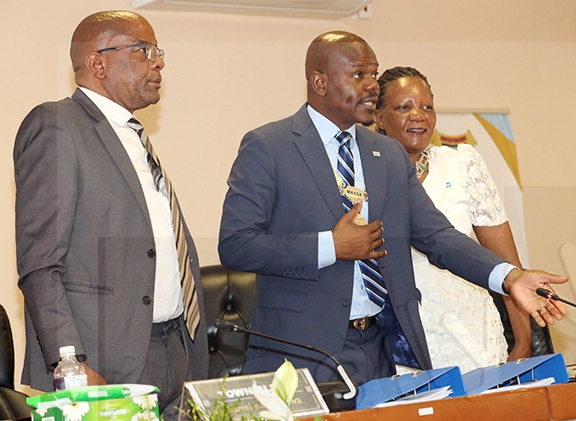
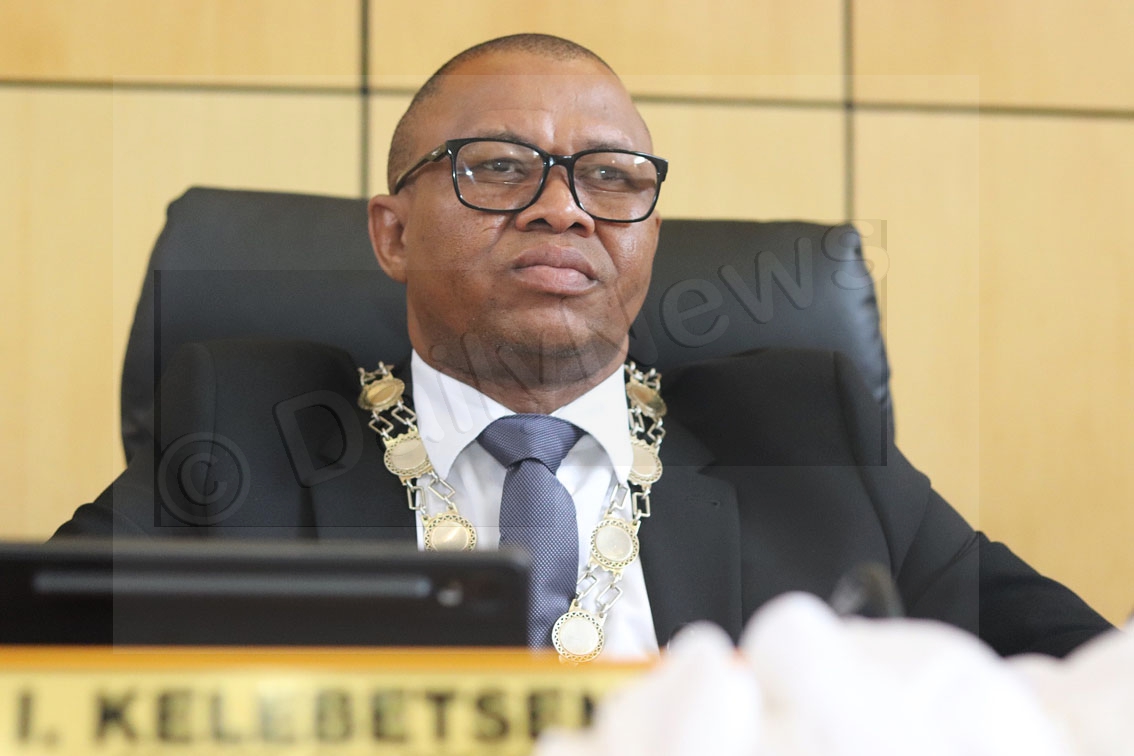
Addressing a full council meeting, Council Chairman, Mr Itumeleng Kelebetseng said LED would not solely be driven by government, urging full participation of all other stakeholders. He said investment and leadership were at the pinnacle of a successful LED strategy.
Mr Kelebetseng said the economic development of the district was dependent on a strong partnership between government, private enterprises and the community.
“Our district is a region of diverse economic potentials, tourism, agriculture, fisheries, crafts, small scale trade among others and through strong collaboration, consistent participation, open dialogue and joint action, we will drive innovation and competitiveness. We will create an attractive destination for investment to mention but a few,” he added.
He called on fellow political leaders and other stakeholders to share the journey which was focused on improving the overall wellbeing of the community through better services and a more vibrant local economy.
Mr Kelebetseng also highlighted that efforts to establish meaningful international relations were progressing well citing that recently, he hosted the Deputy Chief of Mission from the Embassy of the People’s Republic of China in Botswana, who expressed commitment to deepening cooperation in tourism and cultural exchange.
“After my return visit to the Embassy, I am pleased to report that there are promising prospects for the council to benefit from training seminars that will support our human capital development,” he said.
He said the recent launch of the use of drones in delivering medicines to health facilities was a transformative step in the health-care delivery system by ensuring that essential medical supplies reach communities swiftly and efficiently.
On other issues, Mr Kelebetseng noted that community consultations on the proposal of upgrading Maun into a Green City have been completed in November.
He said the task team was currently working on the compilation of the district position paper covering comments and ideas from different stakeholders.
Mr Kelebetseng also reported that the district was currently experiencing illegal developments particularly in larger villages such as Maun and Sehithwa.
He added that the situation was also common within in the Okavango Delta area, entailing commercial developments especially tourism related accommodation facilities.
“Our communities should be aware that the entire district is a planning area and therefore the process of development has to be followed to the latter. As the council we continue to strengthen our enforcement processes to safeguard the community against these illegal developments,” added Mr Kelebetseng.
Blog
-
LED Strategy to Boost Local Economy
-
BMWU Calls for Industry Realignment
Botswana Mine Workers Union (BMWU) president, Mr Joseph Tsimako has called for the mining industry to realign its goals and practices with industrial relations standards.
Mr Tsimako was speaking during the BMWU General Council and Business Insights seminar held in Selebi-Phikwe recently.
He said there was a need for the mining industry to realign its goals and practices to navigate towards the ‘True North’ strategic vision.
Furthermore, he expressed the need for a collaborative, cordial, and transparent relationship between mining stakeholders, aiming for a sustainable and equitable future for the sector.
“The idea of the summit was born from the realisation that the mining industry in the context of industrial relations was yet to find its ‘True North’. This follows a month of engagements between the union, business partners, and other relevant stakeholders,” said Mr Tsimako.
He spoke of the need for solidarity among mining stakeholders in pursuit of common objectives of navigating towards the ‘True North’.
In addition, he encouraged open dialogue and sustainable partnerships, and an environment where every voice was heard and valued.
Touching on mining industry challenges, Mr Tsimako said such includes a wide gap between employers and employees characterised by trade disputes, non-recognition of the union along the mining supply chain, poor mining operational standards, as well as marginalisation of the union in key policy and mineral development processes, hence the need for collaborative measures.
Moreover, he mentioned the evolving mining landscape, which he said called for the advent of technology in the workplace, innovative ways to conduct activities, citing the shift from a fossil fuel-driven economy to a green one.
The purpose of the BMWU General Council and Business Insights seminar, Mr Tsimako noted was to discuss the future of mining in Botswana, the future of employment in the mining sector, as well as emerging challenges in the evolving mining landscape.
The seminar was also set to encourage transition towards digitalised and technology-driven operations, dialogue about labour-employee cooperation for a sustainable and equitable mining industry.
Senior Employees Relations Manager at Debswana, Mr Tebatso Hule, emphasised the need for the mining industry to embrace cutting-edge technology to drive innovation and enhance operational efficiency.
He explained that integrating advanced technologies could significantly improve productivity and safety standards within the sector.
Furthermore, Mr Hule emphasised the critical role of trade unions, asserting that they must prioritise transparency and accountability in their operations.
He said such a move would accord unions an opportunity to effectively represent and advocate for the interests of their members, ensuring that workers’ voices were heard and their needs met. -
BTEP Projects Success Hinge on Systems Overhaul
There is need to transform government systems to circumvent bureaucracies and ensure the swift and seamless implementation of Botswana Economic Transformation Programme (BETP) projects, Lobatse Botoka ward Councillor, Mr Onneetse Kagiso, has said.
In an interview on sidelines of the Lobatse Full Council sitting on December 1, Mr Kagiso noted that Lobatse had benefited from four key BETP projects envisioned to stimulate economic growth.He highlighted the need for local authorities to ensure decisive and apt facilitation of investors, especially during the construction of the Lobatse Meat and Leather City Special Economic Zone (SEZ), designated by the Special Economic Zones Authority (SEZA).
Mr Kagiso added that to revitalise the local economy, there was a need to do away with long processes and too much paperwork to be able to attract and retain more investors.
“Let us automate our systems. Let us have a one-stop shop. We need to revise our pieces of legislation, relax them a bit. We need to be intentional in our undertaking and have more action,” he said.
He added that the priority projects, which included the Lobatse Meat and Leather City SEZ, the Milk Valley Farm expansion, the establishment of a primary slaughter facility and the leather and footwear tannery and manufacturing initiative, would create much-needed mass employment opportunities. He called for the alignment of the vocational education system to provide market-ready skills.
Mr Kagiso urged the realignment of the Technical and Vocational Education and Training system, saying “Lobatse has been declared a meat and leather industry area; therefore, we must align our vocational education to this. Let us introduce courses that deal with leather processing and production of quality leather products, for we need these fine skills locally to be able to compete globally.”
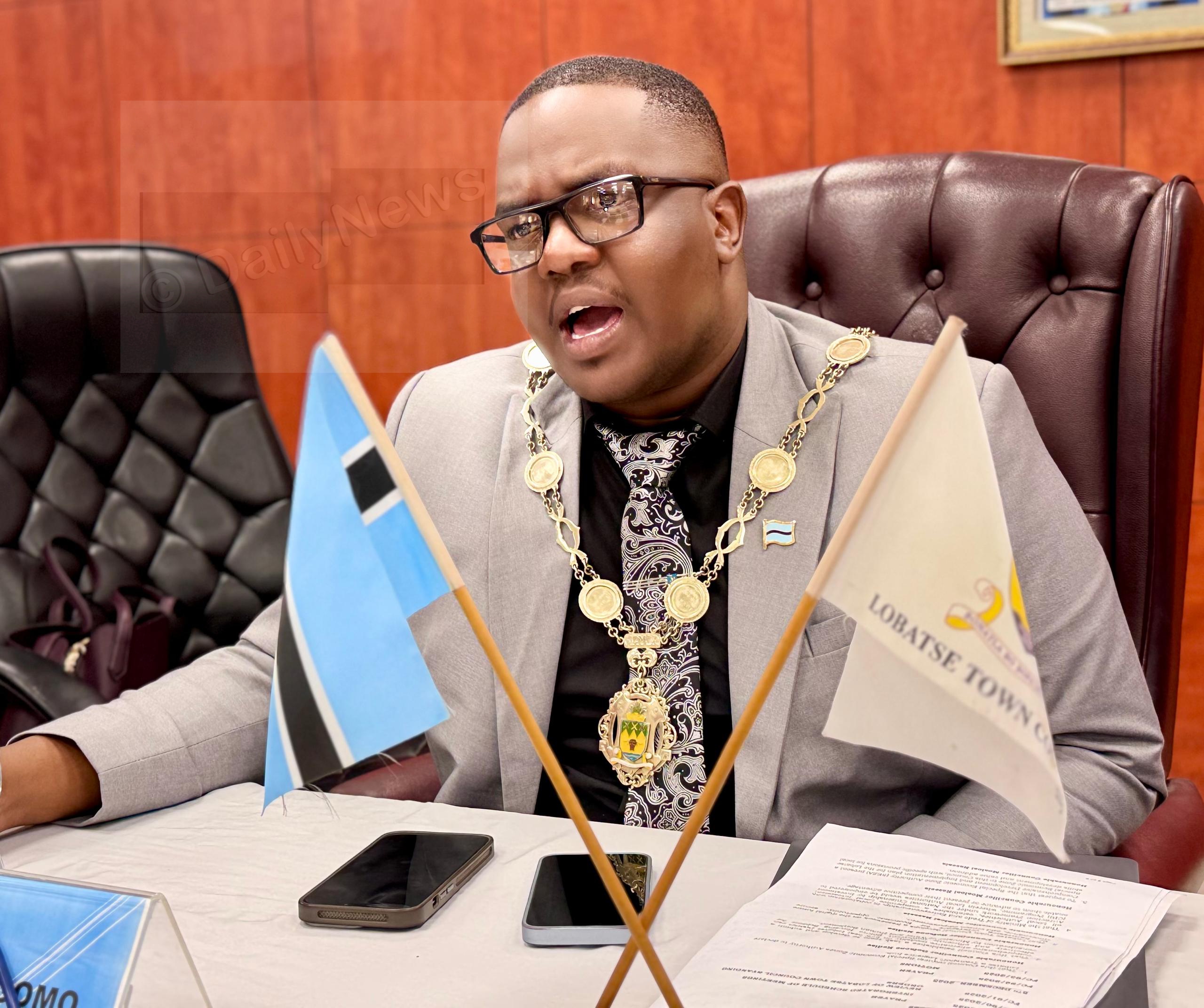
Earlier in his speech, Lobatse Town Mayor Mr Aron Ganakgomo told the council meeting that the Meat and Leather City SEZ project, driven by SEZA in collaboration with local authorities, had already courted investors.
“SEZA has reported that they have already received interest from several investors. However, the current delay in moving forward has been due to funding for any development that would attract investors to the zone,” Mr Ganakgomo said.
Councillors heard that negotiations were underway between SEZA and an International SEZ developer who had studied Lobatse to determine the feasibility of partnering with SEZA to develop the SEZ.
They also heard that the developer had submitted a report which SEZA was currently analysing with different stakeholders to close identified gaps.
Mr Ganakgomo also told councillors that SEZA worked with potential developers who had shown interest in partnering to develop the city by bringing their own funding and network of investors.
Additionally, he said SEZA was in negotiations with the Botswana Meat Commission (BMC) to ascertain if Phase 1 of the zone could start on the land already serviced next to the BMC tannery, currently undergoing revitalisation.
This, the meayor said, would enable investors who wish to process wet blue leather from the BMC tannery into finished leather goods to immediately set up in close proximity to their main input to allow them to manufacture effectively for the export market.
Regarding other projects, Mr Ganakgomo indicated that the Milk Valley Farm would procure 1 000 pregnant heifers from Brazil. Ahead of the delivery, he said the farm would undertake critical preparatory works, including the construction of additional cow housing and supporting infrastructure, as well as land development to expand fodder production.
Lobatse Thema/Motswedi ward councillor, Mr Velem Heii, said the BETP projects approved for Lobatse were critical for job creation and revitalising the local economy, which was primarily sustained by the BMC. Cllr Heii added that the informal sector also stood to benefit.
Again, he said the ongoing revitalisation of the BMC tannery plant and the construction of the BMC Meat value-addition and secondary processing plant to replace the old ECCO Cannery (built in 1978) would enhance BMC’s business model.
“This will help the state-owned enterprise achieve vertical integration and draw a return-on-investment, thus turning BMC into a sustainable entity,” he said.
Nominated councillor, Mr Gofaone Kedise was of the view that there was sluggish implementation of the SEZ which needed to be fast-tracked.
Cllr Kedise said the land for the Meat and Leather City SEZ was identified about 10 years ago and therefore it was time to act. “We have since been declared an SEZ. We need to be agile in our implementation,” he said.
Cllr Kedise further indicated that it was pertinent to draw up an aggressive marketing strategy to sell the SEZ. He argued that the time was nigh to begin to brand Lobatse as a Meat and Leather City and sell it to investors, fully packaged, at exhibitions on the world stage. “Let us spread our wings even beyond borders to market our SEZ,” he said. -
Council Targets Illegal Vendors
Gaborone City Council has intensified its crackdown on illegal operations as city leadership reiterates growing frustration over non-compliance with municipal and national laws.
The Mayor, Mr Oarabile Motlaleng, told the full council meeting on Monday that illegal trading, unlicensed manufacturing, and breaches of public health and child-care regulations were among the most persistent challenges facing the city.
He reported that 13 non-citizens were charged for violating the council’s hawking and street-vending bye-laws, saying these demonstrated the municipality’s firm stance on regulating informal trade within its jurisdiction.
In a separate enforcement action, seven individuals were charged for operating manufacturing businesses without an industrial licence, in violation of Section 6 of the Industrial Development Act.
Food safety inspections also revealed 19 cases involving unhygienic preparation and handling of food, which he described as a serious public health concern.
Mr Motlaleng stressed that traders and food handlers must prioritise cleanliness and strict adherence to hygiene principles, adding that council teams would continue to educate both vendors and consumers on safety standards.
He said they would continue to sensitise the public and build a culture of vigilance and compliance, adding that responsible trading protected the community and strengthened the environment.
Child-care services were not spared from scrutiny, as eight day-care centres were charged for operating contrary to Section 97 (1) of the Children’s Act, which governs registration and conduct of child-care facilities. The Mayor emphasised that adherence to the Act was non-negotiable to safeguard children’s welfare.
Speaking broadly to the business sector, Mr Motlaleng urged continued legal compliance, warning that failure to meet regulatory obligations compromised public well-being.
“We urge the business community to consistently adhere to the provisions of the law to ensure compliance and contribute positively to the environment in which we operate. Upholding these regulations not only promotes responsible business practices but also safeguards the health and well-being of our community,” he said.
The council also registered eight cases of urinating in public, an offence under the Sanitation and Public Health Bye-laws.
These incidents, he noted, pointed to declining public hygiene discipline and the need for renewed awareness campaigns.
-
CIPA Advances IP to Drive Economic Transformation
Botswana, through the Companies and Intellectual Property Authority (CIPA), continues to intensify efforts to position Intellectual Property (IP) at the centre of its economic transformation.
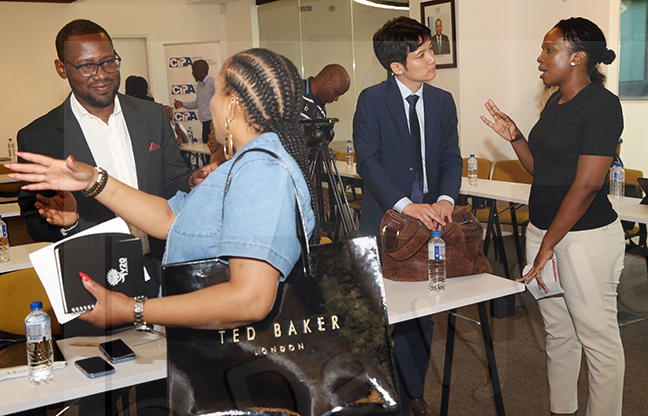
This was underscored by a high-level delegation visit from the World Intellectual Property Organisation (WIPO) to engage with young professionals and members of the Botswana Intellectual Property (IP) Careers Project.
The WIPO delegation, comprising WIPO’s head of employee experience, Mr Yamfwa Chinyanta and talent acquisition and development manager, Mr Naoto Sugiura, met with youth in Gaborone recently to explore career opportunities within the burgeoning IP sector.
The engagement session was part of a joint pilot initiative between WIPO and CIPA and it aimed to build awareness and strengthen local skills essential for the country’s emerging knowledge economy.
Speaking at the Careers in IP-Awareness Raising Event for Mid-Career Professionals, CIPA caretaker registrar general, Mr Godfrey Molefe, said Botswana had entered a pivotal moment in its national transformation, guided by the 2025 State-of-the-Nation Address, Botswana Economic Transformation Programme (BTEP) and the 12th National Development Plan (NDP 12).
Mr Molefe emphasised that central to such reforms was the creation of a digitally enabled, export-driven and innovation-led economy, with IP serving as the foundation for protecting creativity, technology and enterprise competitiveness.
He added that Botswana’s adoption of its first National Intellectual Property Policy (BIPP 2022) marked a crucial shift from mere awareness to active implementation.
“The policy sets out six pillars, including; IP governance, financing, education, entrepreneurship and institutional strengthening, backed by a National Vision that Botswana would be an IP-driven economy by 2036,” he said.
He highlighted that achieving Vision 2036 required significant investment in human capital.
Since joining WIPO in 1998, he said Botswana had benefited from extensive support in policy development, legislative reform, technical assistance and training, including scholarships for IP-focused Master’s Degree programmes.
Mr Molefe urged youth to consider IP as a career option, arguing that as start-ups and SMEs expanded, IP would be central to protecting their innovations and unlocking access to export markets. He expressed hope that the engagement would serve as a defining moment for some attendees.
On one hand, WIPO representatives confirmed that such initiatives were designed to make global IP systems more accessible to local professionals. They encouraged participants to explore career opportunities not only locally, but also within regional bodies such as the African Regional Intellectual Property Organisation (ARIPO) and the Southern African Development Community as well as international institutions, including WIPO itself.
The one-day workshop highlighted a range of in-demand IP-related career paths, including patent and trademark examiners, IP lawyers, licensing and commercialisation officers, copyright and royalties administrators, enforcement specialists as well as creative-industry entrepreneurs.
-

SOLO Wins Big at Eight Months Pregnant
Who says a mom-to-be cannot be a champion? Naledi Diketso, better known as Solo, defied all odds when she was crowned the winner of the music business show Lyric Leap’s first season at eight months pregnant this past Friday.
Solo stepped onto the Lyric Leap stage as the second act of the night, following Blair Wa Seopedi and preceding Hazel, both of whom had delivered performances that made their ambitions unmistakable. With three backup singers behind her, Solo belted into the microphone, delivering a jazz-infused track enriched with a distinctly gospel undertone as she sang, motho ga a fele!, a bold declaration that she, too, was there to win.
A P30 000 cash prize and a recording deal both designed to help launch a sustainable music career hung in the balance.
Only one of the three finalists could take the title, based on strong vocals and the best original song.
Solo took the audience to church, singing as though her life depended on it. And in many ways, it did, for the little life growing inside her depended on nothing less than her very best.
Solo joins a long line of inspirational female performers who refused to press pause on their dreams due to societal expectations around motherhood, especially in the public eye. One striking example is the 2025 America’s Got Talent winner Jessica Sanchez, who won the competition at nine months pregnant. Her victory became a historic moment for AGT and a powerful testament to women balancing ambition and motherhood.
Also notable is comedian Ali Wong, who filmed her 2016 Netflix special Baby Cobra while seven months pregnant. In an interview with ELLE Magazine, Wong said she wanted to use her pregnancy as a source of power, a weapon, not a weakness.
In her opening monologue, she joked that many female comedians disappear once they fell pregnant, for reasons known only to them.
Yet her point cut deeper: decades ago, a baby bump was something to be concealed, restricted by strict rules and social prohibitions. What should have been a joyful experience often became a “stumbling block” for women in the workplace, a question of whether they could keep up and remain productive.
For women in the limelight, pregnancy was often perceived as a threat to their attractiveness, and by extension, their opportunities.
But the tide has turned. Women like Solo are boldly and publicly chasing their dreams, even while expecting.
Those old rules and social prohibitions have steadily lost their hold as women redefine motherhood and dismantle long-standing stigmas.
Perhaps it is the very life growing inside them that fuels their determination, a powerful motherly instinct that makes them, against all odds, a force to reckon with.
When she entered Lyric Leap, Solo, a wife and mother-to-be had recently lost her job. For Sanchez, also a wife and expectant mother, the road had been long, marked by years of auditions and earlier setbacks. Yet something about carrying new life seemed to push them both to fight harder than ever before.
A testament that motherhood is the ultimate dream-catcher, not a dream killer. -
Mahogany Restaurant Diners Spoilt for Choice
This festive season, diners can look forward to a fresh burst of flavours and elevated culinary experiences as Avani Gaborone Resort and Casino unveils a refined new menu devoted to indulgence and innovation.
The Mahogany Restaurant introduced its vibrant, stylish, and flavour-packed main menu on Friday, promising a pampering culinary journey for food enthusiasts.
Curated under the leadership of Chef Bernard Phuti, the bespoke menu features premium ingredients, including corn, pickled vegetables, morula, Tswana chicken, Kapenta fish and beef complemented by carefully selected wines from Fine Brands (Pty) Ltd.
“We put together something a little bit different. This evening’s menu is a journey through various districts of Botswana. We took what is grown in different parts of the country and infused those elements into each dish,” said Avani Gaborone General Manager, Williem van Heerden.
Designed to elevate the dining experience, the comprehensive new menu offers sophisticated banqueting crafted to appeal to both hotel guests and local patrons, setting a new standard for the revamped Mahogany Restaurant.
On the plate…
Guests were welcomed with an Amuse Bouche with venison carpaccio thinly sliced and marinated in olive oil, lemon juice, and micro herbs offering delicate flavours that set the tone for the feast ahead.
A beef biltong starter, featuring shredded dried beef, followed, while an alternative goat cheese bruschetta offered a creamy blend of goat cheese seasoned with salt, pepper, and herbs, topped with a drizzle of honey.
The Clemen Gold sorbet, served in elegant glassware with fresh mint, lime, and a hint of honey, offered a refreshing, smooth texture and effectively reset the palate for the main course.
The main dishes harmoniously blend local flavours with international culinary techniques.
A standout is the Tswana chicken roulade, chicken breast stuffed with crushed fillet, paired with bogobe jwa lerotse and morogo wa dinawa. Another culturally inspired but globally appealing dish is the wildebeest seswaa steak, crusted with avocado, coriander, and chilli, and served with traditional zengwe (lebelebele) and morogo.
The inclusion of bogobe jwa lerotse and zengwe as starch options brings a rich traditional touch to the menu, while the accompanying morogo wa dinawa offers a homely, comforting appeal.
For beef lovers, the beef fillet was the undisputed highlight a tender slice sautéed and finished in mustard, Worcestershire sauce, mushrooms, herbs, and cream. Paired with corn and morogo, the melt-in-your-mouth fillet is likely to become a customer favourite.
The morula chilled yoghurt mousse stole the show ,a light, creamy dessert made from strained yoghurt infused with morula juice and topped with chocolate shavings. Its refreshing taste and velvety texture left a memorable finish.
-
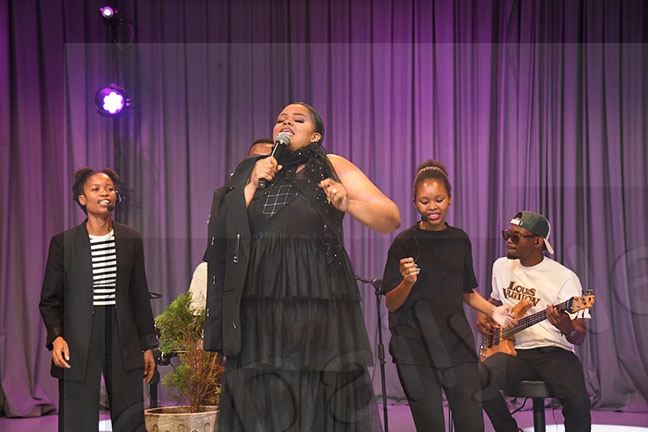
SOLO Impresses in Lyric Leap Competition
Thoti Diketso, known her by stage name Solo, was crowned Lyric Leap grand finale winner Gaborone on December 4.
Solo, who was contesting against Hazel and Blair Wa Seopedi, walked away with a record deal and artist management as part of the winner’s package.
Lyric Leap is a music competition show empowering 12 talented women over 11 weeks to grow their music and business skills.
Solo thanked Lyric Leap for recognising her talent and creativity.
-
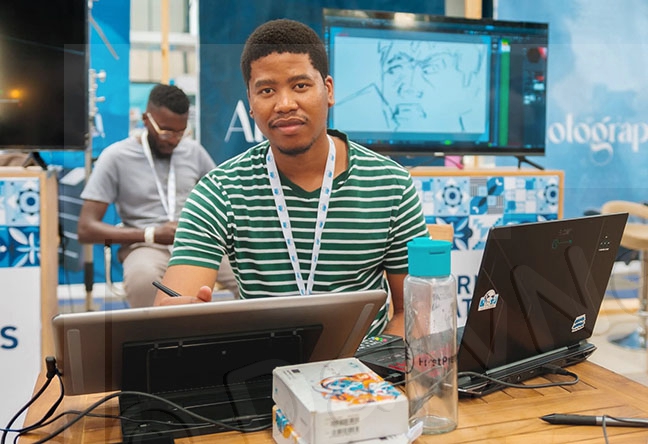
Botswana Animator Co-Writes US Film
Local animator and Learn Animation School founder, Theo Silitshena, is breaking new ground as co-writer of an animation film project with American animation company, Studio Moyo.
The sci-fi fantasy short film, To The Moon, is set for release mid-to-late 2026, on a date yet to be announced. However, the trailer is already out and momentum around the project is beginning to build.
Set in a vibrant Afro-futuristic village powered by invention and imagination, the story follows two inseparable friends, Aisha and Neumy, who embark on one last daring adventure before life pulls them in different directions.
When a sudden power outage threatens to derail their cosmic plans, Aisha’s determination sparks a bold idea that tests the limits of friendship, courage, and creation itself.
“The synopsis of the story is about two girls who do their best to spend one last day together before one of them moves. It’s based on that concept of longing, the desire to belong and going to great lengths to preserve a friendship,” Silitshena explained.
In an interview, Studio Moyo co-founder, Sam Shuggart, further explained that the story was about the trials of friendship as best friends Aisha and Neumy race to build a portal to the moon before a big move separates them. “But the question is, can their bond survive the journey?”
Shuggart added that the film was created in a stylistic approach rooted in Botswana culture, with backgrounds and environments that complement a 2D traditional animation style reminiscent of the recent television show Scavengers Reign, which inspired the design of the characters and creatures featured in the film.
Silitshena, who recently returned to Botswana with international deals that could transform local animation education, including partnerships with Disney and Titmouse, said achieving such a milestone showed Botswana’s potential to be outsourced to and to produce quality work collaboratively.
“This is like a blueprint of what I’ve been trying to establish, where we can collaborate with other studios abroad and create successful projects,” he said. He said his upcoming film camo would be from December 9 to 22 as well as an anime camp from December 15 to 22, where he would train children to access the same opportunities that he had been able to secure.
-

Beauty Queen Gifts of Hope
Christmas season , a time traditionally known for thanksgiving and marked by exchanging gifts and celebrating with loved ones, former beauty queen, Lebopo Bulayani chose a different path.
Instead of dedicating her birthday, November 24, to personal treats, Bulayani transformed it into a profound day of service.
For Bulayani, giving remains the most meaningful way to honour life, echoing the biblical moment when the wise men brought gifts to baby Jesus.
In a recent conversation, Bulayani shared that the holiday atmosphere inspired her to make her birthday purposeful.
“People expect gifts this time of year. I decided to use my birthday to give something meaningful to those who need it most,” she said.
On November 24, her birthday began with a vital outreach, where she partnered with the Directorate of Public Service Management (DPSM), through which she donated 120 sanitary pads to girls at Ramotlabaki Primary School in Kgatleng, the community where she grew up.
This act carried a deeply personal memory.
“I have gone to school without a sanitary towel. I know what it means to save a girl’s dignity with just one pack,” she said.
Later that afternoon, the celebrations shifted to children living with autism at Neo Children’s Consults in Mochudi.
She not only celebrated with the children but also addressed parents and guardians, stressing the vital importance of acceptance and support for children with special needs.
“My birthdays have always been about reaching out. I love being around children, especially those living with disabilities or in centres that need more support,” she explained.
She said the children needed love, not isolation and parents also needed encouragement and safe spaces to share and learn. A tender moment stood out, one child quietly held her hand and whispered, ‘thank you.’ Moments like that, she said, reaffirmed her purpose.
Those who had worked closely with Bulayani attest that her influence stretched far beyond annual birthday gestures.
Daphney Phama, an educator and long-time collaborator, described Bulayani as a force of hope and transformation.
“Lebopo is called to make an impact on children. She is a change-maker and if we had a thousand Lebopos, Botswana and the world would be better,” Phama said.
She highlighted that Bulayani had unique ability to motivate students.
“She speaks from experience, showing young people that you can fall and rise again, and that your past does not define your future,” she said.
She noted Bulayani’s unwavering commitment since 2016, covering many spheres, including mentoring and teaching life skills, supporting schools, orphanages and local communities as well as working extensively with children with disabilities.
Phama also praised Bulayani’s impact as an author.
“Her book Orphaned has inspired so many. I wish it were in every school library and part of the curriculum. It is truly impactful,” she said.
Agatha Madikwe, who had worked with Bulayani through school and pageantry programmes, echoed similar praise.
“Lebopo is a true inspiration. She has supported our school for years, grooming the girl child through pageantry, offering her judging expertise and giving her time willingly,” Madikwe said.
Madikwe added that Bulayani did more than just show up as she built bridges in youth development.
“She runs cultural boot camps, speaks in the kgotla and wards about social ills, and gives the youth her time. Not many leaders do that,” she said.
Madikwe further said Bulayani’s work was not just service but a deep-seated purpose, which she walked in with humility, strength and heart.
Through every act, big or small, Bulayani continued to embody the true spirit of the season to give, heal, lift and inspire. As her community attests, her impact transforms not just days, but futures.