Blog

  • Hike to Reawaken Pharing Untold Story

    Hike to Reawaken Pharing Untold Story

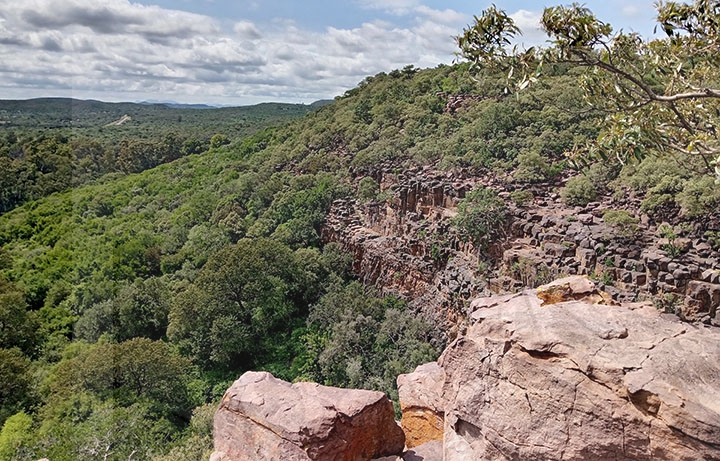
    Pharing Gorge, a site of immense historical and cultural significance, served as a refuge for Bangwaketse during the 1830 invasion by Mzilikasi’s Amandebele.

    The story remains untold and through Pharing Chronicles: The 1830 Escape Trail Heritage Hike initiative, national awareness on the heritage site would be reawakened through story-telling, guided hikes, youth engagement and traditional performances.

    The hike will take place tomorrow.

    Pharing Gorge, a natural landmark, beautiful and significant part of the Kanye landscape, served as a refuge for women and children during invasion by Amandebele.

    According to Kgosi Bathoen II Museum Manager, Ms Neo Maphosa the objective of the hike is to promote and preserve the cultural and historical legacy of Bangwaketse.

    It also aims to educate the nation about Bangwaketse history and heritage, and supporting sustainability of Kgosi Bathoen museum. The goal is to raise funds to procure artefacts for the museum.

    The 15 kilometers debut hike, is expected to start with registration at 0530 early morning followed by the hike from 0545 am. Registration tickets would be sold at P100 per person.

    The hike commences at Wena Tented Camp with the former Vice President Mr Slumber Tsogwane being the guest walker. 

  • Vivian Wins Miss Hope Pageant

    Vivian Wins Miss Hope Pageant

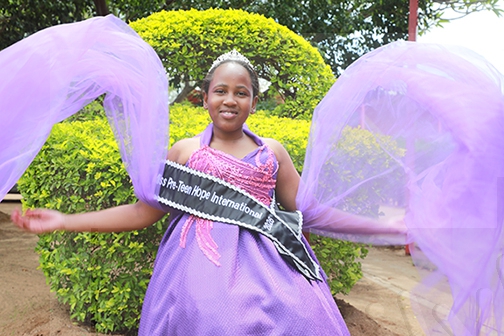
    Vivian Keatlholetswe, a 13-year-old Form 1 student at Kgalemang Motsete Junior Secondary School in Serowe, has made Botswana proud by winning the Miss Preteen Hope International 2025/26 title at the Miss Hope Pageants International Competition in Cape Town, South Africa. 

    This prestigious competition, which took place from November 25 to 29, saw Vivian outshining contestants from 11 participating countries to take home the coveted crown. 

    Vivian’s victory is a testament to her hard work and dedication, and she expressed her gratitude in an interview with BOPA, saying the crown  would allow her to continue her project : A CHILD A FLOWER. 

    Her mother, Lydia Keatlholetswe, a Serowe District Officer, was present to witness her daughter’s triumph. She shared that the project: A CHILD A FLOWER, was about donating stationery supplies to less privileged children to promote education for all despite their social backgrounds. 

    Furthermore, the newly crowned queen relayed that Hope International Pageants was a platform to empower young girls and women to use their talents to fulfill their purpose lives. 

    She said it also encouraged participants to serve in their communities and give hope to the hopeless through community engagements.  

    Narrating her journey to victory, she said from July 2025 to the finale, she attended Zoom trainings, which covered the following: identifying talents, developing projects and managing them, and interview and presentation tips. 

    While in South Africa on November 27 and 28, Vivian attended a full training course on discovering purpose, optimally using her talents, and building a business in relation to the mentorship. 

    She is happy that she has been awarded a certificate for the course, pointing out she also took part in a community outreach programme at a farm where she had a platform to share some gifts with children at the farm.  

    All these happened prior to her being crowned with the coveted prize of Miss Preteen Hope International 2025/26 at the grand finale held on November 29.

    To add cherry on top,  she also walked away with the Miss Congeniality Award, a feat she stated would accord her an opportunity to continue with her philanthropy work.

    The young star is of the view that winning the pageant has created her a platform for personal growth. 

    She attributed her victory to all Batswana who supported her all the way, more especially her parents, Kgalemang Motsete Junior Secondary School Head Ms Botho Supang and school management; Serowe District Council Social Worker, Mr Tshepiso Molefe, Botswana Hope International Director Ms Tlhatlogo Madiba and the Department of Information Services for providing media coverage throughout her journey. 

  • Experts Scrutinise Patriarchy

    Experts Scrutinise Patriarchy

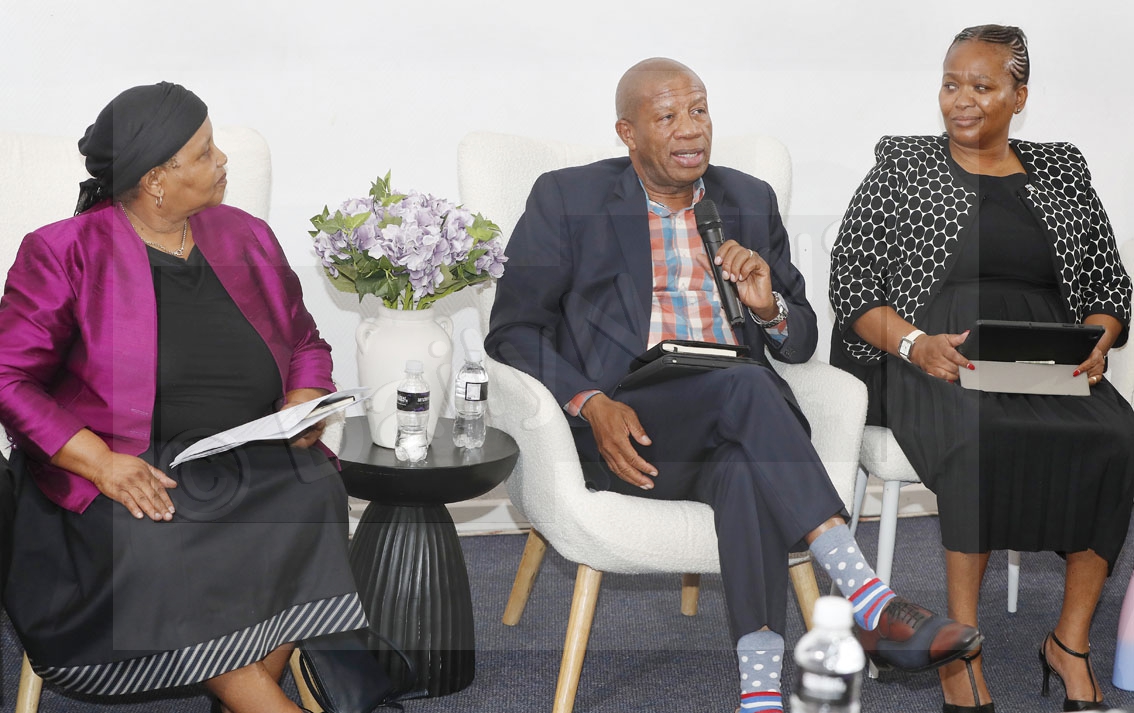
    A diverse group of experts convened in Gaborone on Saturday at the call of host, Ms Njiramanda Mbewe-Boatey, to examine the influence of patriarchy on gender-based violence (GBV).
    Held under the theme, From Blame to Accountability, The Great Debate, the patriarchy and GBV edition 2025, brought together individuals from law, religion and other fields, igniting a critical dialogue on systemic gender inequalities.
    In her welcoming remarks, Ms Mbewe-Boatey emphasised that the time to address GBV was now. She urged participants to interrogate patriarchy amid soaring statistics of suicides and passion killings.
    She lamented that progress had been slow and systems remained stagnant, but was hopeful that the debate would enable attendees to trace where failures occurred and explore remedies to restore peace, which was currently under threat.
    Court of Appeal Judge, Lot Moroka explained that while patriarchy contributed to GBV, it cannot be solely blamed.
    Judge Moroka noted that patriarchy underpinned many societal foundations, including law, particularly common law such as marital law.
    However, he highlighted that the legislative progress was gradually dismantling patriarchal structures, with statutory law progressing in that regard. On GBV, he urged people to resist conditioning to abuse, warning that tolerance had led to lives lost, describing GBV as a crime in all its forms.
    Media personnel, Mr Kealeboga Dihutso attributed the breakdown of family structures to a vacuum left by changing societal dynamics.
    Mr Dihutso observed that children today were often raised by single mothers, whereas in the past, raising children was a community effort involving extended family members like uncles.
    Botswana Council of Churches (BCC) vice president, and a human rights activist, Reverend Thabo Mampane, said patriarchy existed within the church, citing biblical origins where man was created first and woman from man’s rib.
    He acknowledged that church leadership had historically been male-dominated but emphasised the need for growth and inclusion, clarifying that the church was the hospital of the soul. Speakers including Dr Morena Rankopo, a social educator at the University of Botswana, Kgosi Mosadi Seboko, Paramount Chief of Balete and psychologist, Mr Leshomo Sebati stressed that much work remained to break inequality barriers.
    They called for early interventions to change perpetrators’ mindsets and urged research to address trauma responses that continued to haunt men.

  • Government Commits to Modernise BDF

    Government Commits to Modernise BDF

    Government’s commitment to maintaining a robust, modern and professional Botswana Defence Force (BDF) while simultaneously prioritising national development goals was the central theme at the recent BDF Senior Commander and Staff Programme, Class 17 of 2025, graduation ceremony in Gaborone.

    Minister for State President, Mr Moeti Mohwasa, said the BDF must evolve its defence capabilities in line with emerging threats, critically maintaining a balance with other vital national priorities, including health, education, infrastructure and social welfare.

    Minister Mohwasa emphasised the need for foundational role of a strong security apparatus in achieving national aspirations.

    He added that the strength of security institutions was fundamental to the success of the national Vision 2036, Sustainable Development Goals (SDGs) and the Botswana Economic Transformation Programme (BTEP.

    He commended the Commander-in-Chief of the Armed Forces for his unwavering support of professional military education, owing to the exceptional quality of officers being produced.

    He also highlighted that a modern and responsible defence force necessitated a significant investment in human capital to position it as a cornerstone of military leadership.

    Thus, he urged the graduating officers to embody the qualities demanded by their profession, including integrity, accountability, courage, humility, empathy and resilience.

    He further stated that their strategic thinking, innovation and problem-solving skills would be essential in environments where prudence and efficiency were not optional, but imperative.

    On the graduation, he said the ceremony was a testament to the continent’s shared commitment to collective security, with participants from across the region.

    Minister Mohwasa highlighted the importance of the continental participation, stating that it demonstrated the strength of continental bonds and played a crucial role of military diplomacy.

    For his part, Commandant of the BDF Defence Command and Staff College, Colonel Dumisani Ndzinge, expressed gratitude to the staff for their commitment to excellence and for creating a conducive learning environment.

    Col. Ndzinge said the curriculum ensured that graduates were prepared for the complex modern threat landscape.

    He said the Strategic Studies curriculum, delivered by the University of Botswana’s Department of Political and Administrative Studies, alongside the core Military Curriculum, was key to such effort.

    He explained that such collaboration ensured that they produced robust war fighters who were also academically skilled with deep understanding of the geopolitical and strategic environment within which the military operated.

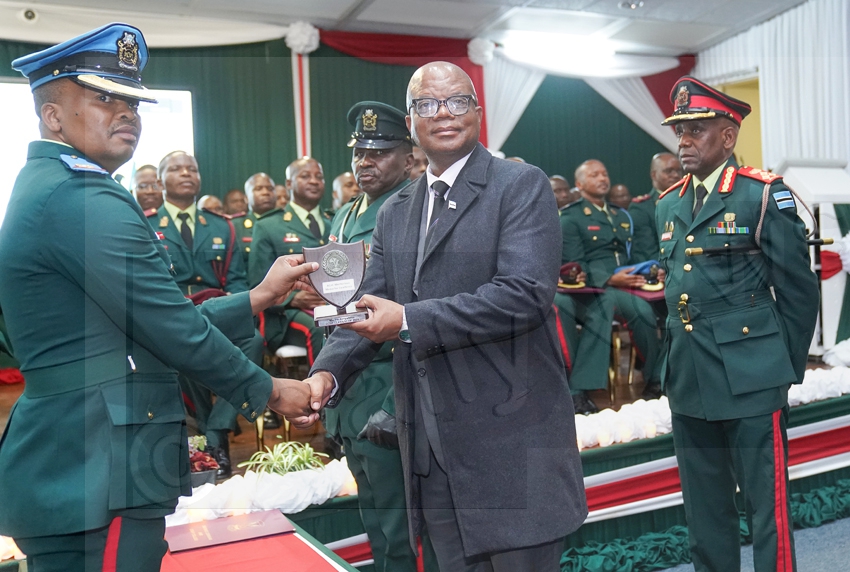
    A key highlight of the event was the presentation of the best research paper award to Major Kehumile Modimoosi, whose work focused on the assessment of psychological stress on officers returning from war zones.

    Inspired by her role as a mother, Major Modimoosi’s research shed light on how post-deployment challenges can significantly affect an officer’s cognitive mentality and prevent them from executing their duties effectively.

    She emphasised that there was critical need  for the organisation to formally address traumas, noting her focus on the issue of extended separation from families and the subsequent difficulty of reintegration due to changed family dynamics.

    Major Modimoosi acknowledged the BDF’s proactive measures, including established programmes to assist remaining families and conducting orientations prior to deployment.

    Meanwhile, the graduating cohort comprised 60 officers, a group that included civil servants from local institutions like the Ministry of International Relations, Botswana Police Service and the Directorate on Corruption and Economic Crime.

    The cohort included military officers from Lesotho, Kenya, Malawi, Nigeria, Rwanda, Zambia and Zimbabwe.
  • Francistown-Nata Road Key Transit Node for SADC

    Francistown-Nata Road Key Transit Node for SADC

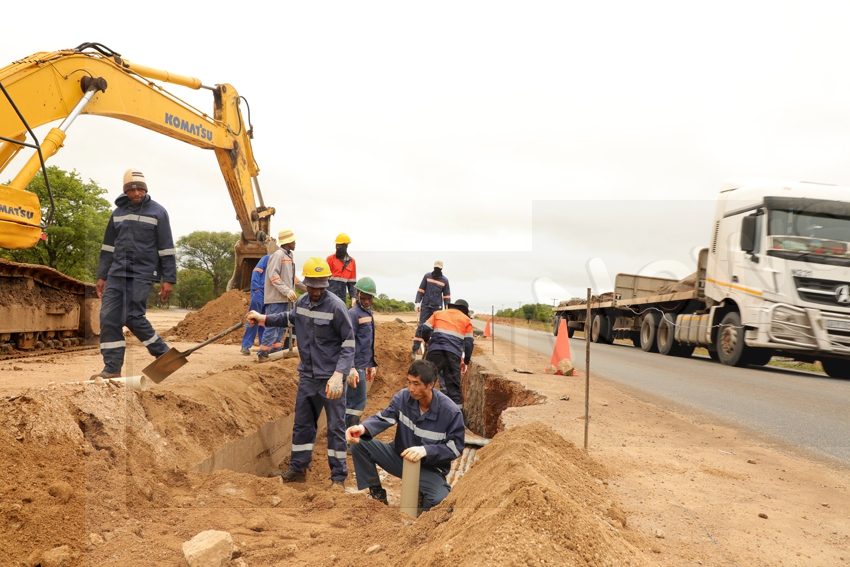
    UNIK Construction employees work on the reconstruction of the 200km Francistown–Nata Road near Francistown.

    According to Okavango Africa Consortium development manager and team leader, Mr Moemedi Gabana, the project, which started in November 2024 and is scheduled for completion by the end of 2027, is 34 per cent complete, with progress slowed by heavy rains affecting the construction of new bridges across the Tati and Shashe rivers.

    SADC head of communications and public relations, Ms Barbara Lopi, said the road upgrade underscores Botswana’s commitment to strengthening regional trade connectivity. Once completed, the A3 Francistown–Nata Road will reinforce Botswana’s position as a key transit hub for goods moving across Southern Africa, linking South Africa, Namibia, Zambia and Zimbabwe.

    The project not only supports domestic economic growth, but also facilitates seamless cross-border trade, directly advancing SADC’s objectives of promoting intra-regional commerce, deeper integration and sustainable development. 

  • BOB Maintains 3.5 Per Cent Monetary Policy Rate

    BOB Maintains 3.5 Per Cent Monetary Policy Rate

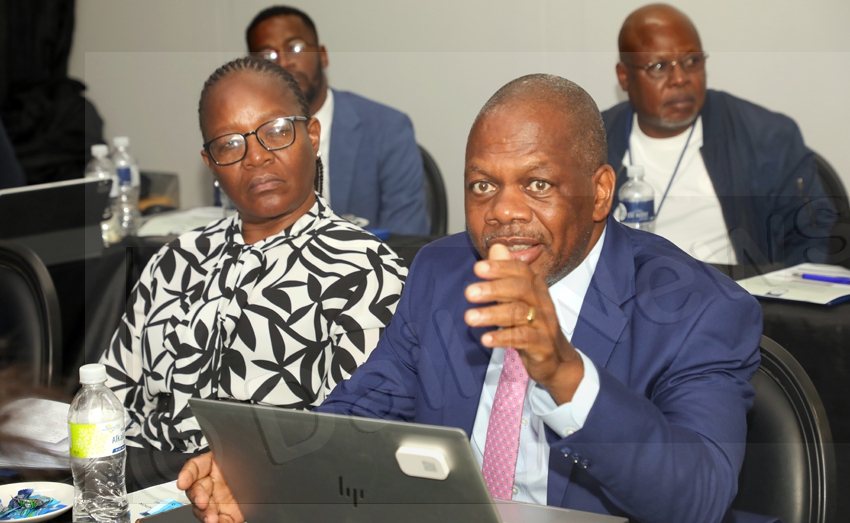
    The  Bank of Botswana (BOB) has maintained the Monetary Policy Rate at 3.5 per cent, citing the need to manage inflation and support economic stability. Speaking during a Monetary Policy Committee (MPC) media briefing Governor Moseki said the MPC met at a time when the global economy continued to face shifting trading patterns and heightened geopolitical tensions.

    Despite these challenges, he noted that the global economy had shown stronger-than-expected resilience in 2025.

    “Domestically, increased uncertainty and continued weakness in the diamond market have put pressure on Botswana’s fiscal and external buffers,” he said.

    Looking ahead, Mr Moseki stressed that accelerating growth-enhancing initiatives and economic diversification efforts, as outlined in the Botswana Economic Transformation Programme (BTEP) and National Development Plan 12, was essential for supporting a sustainable recovery in 2026.

    He added that Botswana’s strong institutions and sound macroeconomic policy framework provided an opportunity to attract investments capable of driving economic transformation.

    The Governor also revealed that Botswana’s real Gross Domestic Product (GDP) contracted by three per cent in the 12 months to June 2025,a sharper decline compared to the 0.6 per cent contraction reported at the end of 2024.

    “The weak performance was mainly due to the continued contraction in mining output and subdued non-mining sector activity,” he explained.

    On inflation, Mr Moseki said headline inflation rose slightly from 3.7 per cent in September to 3.9 per cent in October 2025, remaining within the medium-term objective range of three to six percent.

    “The marginal increase in inflation was attributable to higher price increases for alcoholic beverages, tobacco and transport, mainly due to price pressures stemming from the July 2025 adjustment of exchange rate parameters,” he noted.

    The MPC forecasts inflation to increase into medium term averaging 2.7 per cent in 2025 and 5.3 per cent in 2026. However, Mr Moseki cautioned that the overall risk of inflation exceeding current projections remains elevated.

    He added that the economy is expected to continue operating below full capacity in the short to medium term, which should limit demand-driven inflationary pressures.  The Governor announced that the MPC has also directed that the seven-day Bank of Botswana Certificates, repos and reverse repos will be conducted at the policy rate of 3.5 per cent.

    The standing deposit facility (SDF) rate will remain at 2.5 percent with 100 basis points below the policy rate. Commercial banks have been instructed not to increase their prime lending rates.

  • Collective Action Crucial to Peace Restoration

    Collective Action Crucial to Peace Restoration

    University of Botswana Vice Chancellor, Professor David Norris, has called for collective action to restore the country’s cherished peace amid growing social challenges.

    Delivering welcome remarks at a two-day Peace Conference and Festival , Professor Norris noted that Botswana is grappling with rising gender-based violence, increasing divorce rates, and the proliferation of illicit drugs, issues that are deeply affecting families, communities, and the nation at large.

    He said the troubling realities of child-headed households, high unemployment, and the rising incidence of white-collar crime, corruption, and organised criminal activity serve as reminders that peace is more than the absence of conflict; it is the presence of justice, compassion, and shared responsibility.

    Emphasising the conference theme: Let Us Heal; We Owe It to Ourselves, Professor Norris described it as a rallying call for self-reflection and unified effort.

    He said the gathering offers an invaluable platform for learning, dialogue, and reflection on fostering peace within relationships, institutions, and the broader national fabric.

    Expressing concern, he noted that Botswana’s long-held pride as a peaceful and vibrant nation appears to be fading, citing recent incidents of violence and social unrest as troubling signs of a society in need of moral renewal.

    He urged participants to serve as catalysts for change, stressing that ordinary citizens hold the power to help rebuild trust and social cohesion.

    He condemned recent divisions and violent acts, saying they are uncharacteristic of Batswana and contrary to the country’s core values. Moral renewal, social justice, and collective responsibility, he said, are essential ingredients for lasting peace and stability.

    Little Eden’s Justice and Peace Centre board chairperson, Rev Dr Enole Ditsheko, shared how a 2013 encounter between his family and five boys commonly referred to as bo bashi (street children)led to the establishment of the centre. He recounted how the boys spoke of dropping out of school, illness, and substance addiction.

    While some dismissed them as delinquents, Rev. Dr Ditsheko said they were children in need of love, care, and guidance. He urged society to reflect on where things went wrong, noting that the breakdown of modern family support systems had worsened vulnerabilities among young people. 

  • BEC to Issue New BGCSE Certificate

    BEC to Issue New BGCSE Certificate

    The Botswana Examinations Council (BEC) is in the process of developing a new Botswana General Certificate of Secondary Education (BGCSE) certificate, as the education parastatal will no longer be offering joint certification with Cambridge University Press and Assessment (CUPA).

    This was revealed by the Minister of Child Welfare and Basic Education, Ms Nono Kgafela-Mokoka while delivering a statement in Parliament on December 4.

    Ms Kgafela-Mokoka said subsequent to a BEC board resolution of August 2024 to approve a strategy to gradually withdraw from the CUPA Accreditation with Certification contract, a decision, which was endorsed by cabinet in October, BEC entered into a new contract with the British institution.

    “BEC entered a three-year Accreditation without Certification contract. This was done to ensure that BEC continues to receive independent quality assurance of the assessment operations for the delivery of credible qualifications. This is a scaled down contract, which will cost about £562 000 (P10 million) annually compared to the previous contract, which cost P27 million annually,” Ms Kgafela-Mokoka said.

    She clarified that the amendment of the contract meant that from the 2025 examination series, BEC and Cambridge would no longer issue a joint certificate to BGCSE candidates and that BEC would independently design and issue a new certificate under their own authority.

    Ms Kgafela-Mokoka said the BEC board had approved the new design of the 2025 BGCSE certificate at their sitting in August, and that the current Accreditation without Certification CUPA contract would run until the 2027 examination cycle.

    “While the down scaled quality assurance contract is running, BEC has begun the process of identifying a local partner with capacity to assume the role of external quality assurance to the BEC qualifications starting 2028 examination cycle,” Ms Kgafela-Mokoka said.

    She said external quality assurance of assessment processes was critical as it ensured that standards for both the assessment and its associated curriculum did not drift overtime as well as instilling confidence stakeholders had in the qualification.

    Ms Kgafela-Mokoka said BEC, a parastatal under the ministry, was mandated to manage and conduct examinations and assessments in general education, technical vocational education and training and to award certificates in respect of the said examinations and assessments.

    She further said the BEC and CUPA partnership dated back to the time BEC functions were operated by the Examinations, Research and Testing Division division of the then Ministry of Education.

    Over the years CUPA assisted government to replace the then Cambridge Overseas School Certificate (COSC) by developing a localised qualification that was recognised internationally and also equivalent to International General Certificate of Secondary Education (IGCSE) as recommended in the Revised National Policy on Education of 1994.

    This led to the establishment of the (BGCSE).

    Further to developing BGCSE, CUPA was to monitor the application of assessment standards across all examination processes on a yearly basis to ensure that the BGCSE qualification maintains international recognition and global competitiveness.

    From 1999 to 2011 the ERTD and later BEC, worked in collaboration with CUPA across all examination processes.

    “Since inception of the relationship, BEC pays an annual fee that is currently around £1,400 000, about P27 million, subject to exchange rate at the point of payment. The main cost driver in this agreement is certifying at individual candidate level. The cost has escalated to a level that is unsustainable to BEC. Further to that, BEC has matured overtime and now has the capacity to conduct some of the examination processes without support from CUPA. It is on the basis of the forgoing that the council found it prudent to scale down further and gradually withdraw from the accreditation agreement,” Ms Kgafela-Mokoka said.

    She stressed that other than the engagement of local external quality assurance, BEC would participate in the regional quality assurance processes of the Southern Africa Association for Educational Assessment (SAAEA), a network of Southern African examination bodies.

    Ms Kgafela-Mokoka said the ministry and BEC would engage in stakeholder engagement.

    Commenting on the update, Molepolole North MP, Mr Shima Monageng was concerned that learners should be paying less examination fees since BEC would be paying less to CUPA.

    Kanye North legislator, Mr Prince Mosasana raised a further concern of BEC being a parastatal engaging teachers to assist with the invigilation and marking of examinations but their payments occasionally being processed late.

  • Refreshed DailyNews Receives Thumbs Up

    Refreshed DailyNews Receives Thumbs Up

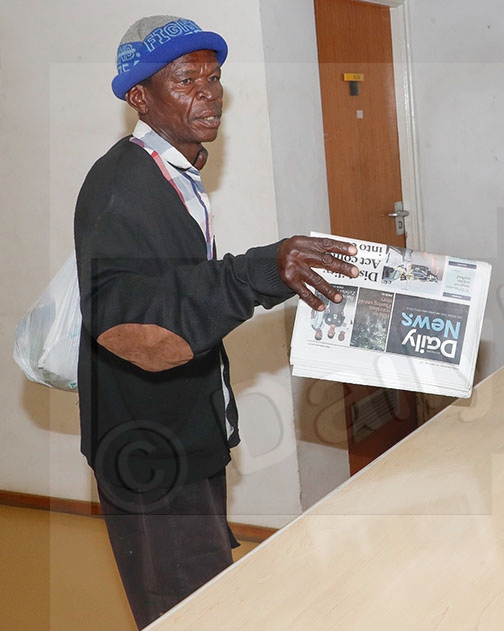
    Readers warmly embraced the revamped DailyNews newspaper, with many celebrating it as a modern and more engaging evolution of a paper that has long shaped Botswana’s public conversation.Among those impressed were Mr Duncan Balothanyi and Mr Benson Goatweng, who both applauded the cleaner layout, richer visuals and expanded editorial depth, noting that the refreshed design felt more contemporary while still honouring the publication’s heritage. Their reactions echoed a broader public sentiment that the new look not only revitalised the reading experience, but also reinforced the DailyNews’ enduring role as a unifying national voice and a platform for storytelling across the country. 

  • Disability Act Comes to Effect

    Disability Act Comes to Effect

    The Minister for State President, Mr Moeti Mohwasa has declared the official commencement of Persons with Disability Act of 2024, which aims to advance the rights of persons with disabilities and promote inclusion and equal opportunities.

    He said in addition to aligning with the United Nations Convention on the Rights of Persons with Disabilities, which Botswana was party to, the legislation also resonated with the government’s commitment to being human rights-based.

    “This historic moment signifies that the rights of persons with disabilities are now fully recognised and enforceable under the law,” said the minister at the UN International Day of Persons with Disabilities Commemoration held in Jwaneng yesterday.

    Consequently, Mr Mohwasa noted that the official commencement of the Act implied that the Disability Coordination Office and the National Disability Council were fully operational, while the regulations defining a person with disability had been finalised. He noted that this development paved way for the effective implementation of the statute, urging all institutions to immediately align their operations with the Act.

    The Minister underscored the need to adopt inclusive programmes through providing accessibility in all public buildings and transport to cater for persons with disabilities, as well as getting rid of all barriers that were against the new framework.

    “With the Act now in force, we call on all institutions, communities and citizens to take immediate action. Public buildings, businesses and transport must meet accessibility standards. All forms of communication must be inclusive and the attitudinal barriers that hinder full participation must be dismantled,” he said.

    Furthermore, Mr Mohwasa implored persons with disabilities to unapologetically stand by their rights as espoused by the law and utilise all opportunities availed to them. He also appreciated the role played by care givers of persons with disabilities.

    However, while he appreciated that Botswana had made strides in advancing the rights of all citizens, he said there was need for further action to close all gaps to ensure no one was left behind.

    “We are committed to creating systems that respond to the need of every citizen, particularly those who are historically faced with barriers to opportunities,” he said.

    For her part, the Disability Coordination Officer Director, Ms Peggy Garebaitse noted that creating an inclusive society called for celebrating diversity and promoting full participation of persons with disabilities.

    She noted that this also extended to ensuring equal access to health services, education and social protection, among other essentials for the benefit of the larger society.

    “Inclusive societies amplify the voices of the marginalised groups, empowering them to contribute to sustainable development and advancement of human rights,” she noted.

    Ms Garebaitse said Botswana had a significant number of persons with disabilities, and therefore excluding them from full participation was tantamount to hindering the collective growth of the country. The commemoration was held under the theme: Fostering Disability-Inclusive Societies for Advancing Social Progress.