Blog

  • Africa must strengthen accountability and governance to prosper — Botswana President Duma Boko

    Africa must strengthen accountability and governance to prosper — Botswana President Duma Boko

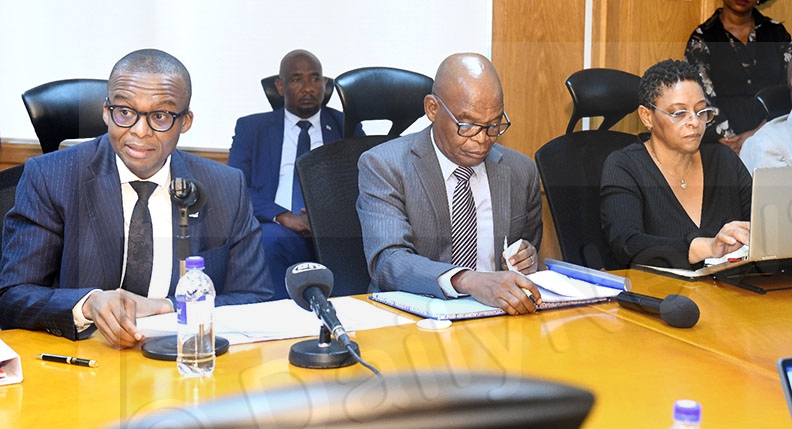
    Africa’s economic success and sustainability are intrinsically linked to accountable governance, Botswana’s new President, Duma Boko, stressed at the opening of the 2024 African Economic Conference in Gaborone.

    “Peace and stability in Africa must be anchored on accountable and responsive governance,” the president said, adding, “This is a fundamental human right for every African citizen. It sets the requisite bedrock for any measure for our economic development and its sustainability.” He also called on African countries to strengthen democracy and uphold the rule of law.

    The three-day conference, with the theme, “Securing Africa’s Economic Future Amidst Rising Uncertainty,” has brought together leaders, policymakers, and experts to address the continent’s economic challenges and opportunities. Organised by the Government of Botswana, the African Development Bank, the United Nations Economic Commission for Africa (ECA), and the United Nations Development Programme (UNDP), the event seeks actionable solutions for Africa’s economic growth.

    President Boko underscored that transparency, accountability, and respect for the rule of law are critical in attracting foreign investment and fostering sustainable growth. “Africa is at a crossroads,”  he said. “We must confront the obstacles facing our citizens and leverage our collective strengths to secure a prosperous future amidst a volatile global economic environment characterized by rising inflation, supply chain disruptions, and tightening monetary policies.”

    Innovative Financial Solutions for Growth

    “Global uncertainties challenge us to rise above prevailing circumstances and invest in the Africa we want – which is the Africa the world needs: a continent characterized by shared prosperity, productive regional integration, vibrant and entrepreneurial youth, and freedom from fear, disease and deprivation,” underscored UN Assistant-Secretary General and UNDP Africa Director Ahunna Eziakonwa.

    Eziakonwa also called for innovative and sustainable financial solutions to reduce borrowing costs and address credit rating biases, which cost the continent $76 billion annually. “We must stem illegal flows where $90 billion is lost. Tens of billions of pension funds, sovereign wealth funds, and insurance funds must work for the continent rather than elsewhere. This Conference must go beyond diagnosing challenges and should lead to actionable solutions. We must take steps to ensure that Africa’s abundant resources finance its growth.”

    The African Economic Conference also underscored Africa’s unique endowments, including its abundant natural resources and youthful population, which could drive transformative growth if governments prioritise education, skills development, and value addition for raw materials.

    Addressing Africa’s Economic and Social Challenges

    The United Nations Under-Secretary-General and Executive Secretary of ECA, Claver Gatete, said Africa faced several pressing issues, including climate change, unsustainable debt, and systemic global inequalities. The global financial system is failing to serve Africa adequately and needs to be urgently reformed, he said.

    Gatete highlighted that the continent’s annual losses from climate disasters alone are as high as $440 billion, while the financing gap to achieve the Sustainable Development Goals in Africa has surged to $1.3 trillion annually. At the same time, Africa’s external debt surpassed $1 trillion in 2023, with unsustainable interest payments restricting development financing.

    “The human cost is equally staggering. Nearly 476 million Africans live in poverty today, with 149 million falling into this bracket recently due to cascading climate and economic shocks,”  Gatete said.

    Regional reforms and integration are critical

    President Boko encouraged African nations to leverage the African Continental Free Trade Area to transform the continent’s economic landscape through increased investment, job creation, and industrialisation.

    “We must not allow the uncertainties of today to deter us from tomorrow’s opportunities,” he told participants.

    Chief Economist and Vice-President of the African Development Bank, Prof. Kevin Urama, urged African countries to adopt innovative, homegrown solutions tailored to their unique challenges. He advocated for strengthened fiscal policies and more resilient resource mobilization to address debt challenges.

    Urama said: “Africa can build and strengthen its fiscal buffers and address the ongoing challenges posed by global debt markets, which have entrenched debt sustainability challenges in African countries. Experience has shown that countries can make their domestic and regional financial systems more resilient by increasing domestic resource mobilization and strengthening macroeconomic policy frameworks.”

  • Global Critical Resources Corporation Reopens Tataki Mine with President Duma Boko

    Global Critical Resources Corporation Reopens Tataki Mine with President Duma Boko

    Tataki Mine contains one of Botswana’s largest reserves of nickel, copper, cobalt, and platinum group metals. After reopening under GCR, Tataki will produce a variety of metals and hydroxide salts that are widely traded internationally. Products will include nickel and cobalt hydroxide precipitates, copper cathodes, metal bars for platinoids (platinum, palladium, rhodium), and precious metals, including gold. Under GCR’s leadership, Tataki Mine will manufacture value-added products on-site, with a focus on introducing new skills and advanced technologies to Botswana’s workforce.

    President Boko and his government’s delegation joined GCR leadership and Members of Parliament, government ministers, local dignitaries, and journalists for the reopening ceremony.

    “Investing in the green energy transition is not only an environmental decision but an economic imperative,” stated President Boko in his remarks to attendees. “The green economy will offer significant opportunities for both domestic and international investors. These sectors are wide open to young people, who will become the job creators of tomorrow.”

    GCR plans to invest USD 200m into Tataki Mine over the coming decade, including USD 50m in the first 18 months to ramp up steady-state production levels. Over the next decade, Tataki Mine is expected to generate over USD 4.2bn in revenue and contribute a 1.5% increase in annual GDP to Botswana.

    Purpose-driven and innovation-led, GCR is dedicated to creating impact in both local communities and global supply chains. The company plans to invest significant resources in local development initiatives in education, infrastructure, and healthcare, while maintaining the highest standards on site for safety, environmental compliance, and stakeholder engagement.

    “We are building a dynamic company that will grow in tandem with Francistown and the entire region,” noted Executive Chairman Cevdet Caner in his speech. “Positive social impact and participatory engagement that aligns mining operations with local needs is a key priority for us.”

    Following a plaque unveiling, Executive Chairman Caner, President Boko, and others took a tour of Tataki Mine’s new facilities. President Boko noted that Botswana is “committed to a program of sustainable job creation, diversification, and transition to a green economy. The new Tataki Mine represents the best of these three goals. Today, we are planting the seeds of change.”

    Global Critical Resources Corporation (GCR) is a U.S.-registered producer of the critical metals that power modern life with assets in Africa and South America. GCR’s Executive Chairman, Austrian entrepreneur Cevdet Caner, has over two decades experience investing in the mining and property sectors and is the founder of several multi-billion-dollar real estate and natural resource companies.

  • Economists See Few Monetary Policy Changes With Powell Leading Fed

    Economists See Few Monetary Policy Changes With Powell Leading Fed

    Struggling to sell one multi-million dollar home currently on the market won’t stop actress and singer Jennifer Lopez from expanding her property collection. Lopez has reportedly added to her real estate holdings an eight-plus acre estate in Bel-Air anchored by a multi-level mansion.

    The property, complete with a 30-seat screening room, a 100-seat amphitheater and a swimming pond with sandy beach and outdoor shower, was asking about $40 million, but J. Lo managed to make it hers for $28 million. As the Bronx native acquires a new home in California, she is trying to sell a gated compound.

    Black farmers in the US’s South— faced with continued failure their efforts to run successful farms their launched a lawsuit claiming that “white racism” is to blame for their inability to the produce crop yields and on equivalent to that switched seeds.

    What Will Be The Next Step to Complete?

    The “new ’20s” idea might not work—there were a lot more young people in the United States then than now; a reprise of the world-changing inventions and discoveries of the 1920s would be a big surprise to those economists who believe that we have been in an invention dry spell since the 1970s. In his Businessweek piece, Peter Coy largely agrees, writing, “In all probability … the U.S. will continue to wrestle with ‘secular

    These experts make strong cases, and they satisfy my natural instinct not to go there. But I remain very interested in the reasons the ’20s appeal to our imagination right now. Of course, it’s the booze, the sex, and the parties. But it’s also a decade with a very strong identity—and I think that helps. Writing in the journal American Speech in 1951, Mamie J. Meredith argued that the ’20s boasted.

    I’d argue that Meredith’s point about the decade’s exceptionality still holds: How many other 20th century decades have a nice little permanent descriptor like Roaring? It helps that most of these are good adjectives, evoking a time you’d probably like to live through again—but even the slightly dangerous-sounding ones conjure up something specific. That definiteness offers an appealing sense

    Anyway, let’s get to that fun. A very joyful book to read about the decade is Frederick Lewis Allen’s Only Yesterday: An Informal History of the 1920s, which Allen—a blueblood journalist and editor at Harper’s—published in 1931. The book chronicles all of the movement and motion that makes the decade sexy, and doesn’t seem to miss a fad.

    The property, complete with a 30-seat screening room, a 100-seat amphitheater and a swimming pond with sandy beach and outdoor shower, was asking about $40 million, but J. Lo managed to make it hers for $28 million. As the Bronx native acquires a new home in California, she is trying to sell a gated compound.

    A designer knows he has achieved perfection not when there is nothing left to add, but when there is nothing left to take away.

    Allen is also really good at describing parties—or, at least, the ones the middle class and upper class attended. The historian wrote about how women taking up smoking had “strewed the dinner table with their ashes, snatched a puff between the acts, invaded the masculine sanctity of the club car.

    Popular In Human Interest:

    • Parents Are Fed Up With Their Kids’ Expensive Berry Habits
    • 15 Mother’s Day Gifts for the Burned-Out Mom in Your Life
    • Really Though, What Jeans Are in Style Now?
    • Don’t Fall for Fertility Fearmongering About Trans Men

    Perhaps by remembering the twenties merely as an enchanting series of novelties or the crude afterthought of a simpler past, we preserve the illusion of our own simple innocence,” mused historian Paula Fass in the introduction to her book The Damned and the Beautiful: American Youth in the 1920s.

  • Botswana: Back to square one on fiscal discipline

    Botswana: Back to square one on fiscal discipline

    The 159-year-old debating chamber of the Cambridge Union Society has played host to some of history’s most consequential leaders. From British Prime Ministers Winston Churchill and Margaret Thatcher to US Presidents Theodore Roosevelt and Ronald Reagan, the wood-panelled theatre has resounded to orators of world renown. 

    A year ago, Botswana’s Vice-President and Finance Minister Ndaba Gaolathe might not have expected to find himself addressing the famous venue at the annual conference of the African Society of Cambridge University. But since then, there have been major changes in Botswana’s governing structure.

    Until November, the ruling Botswana Democratic Party had reigned supreme since the dawn of independence in 1966. But following President Duma Boko’s stunning victory – propelled by his pledge to create 500,000 new jobs in five years – his deputy Gaolathe found himself launched into two senior offices, and onto the world stage. 

    Gaolathe looks at home during our conversation sitting on the Society’s famous scarlet benches, under the watchful eyes of portraits of past Society presidents. But taking in the historic surroundings and basking in electoral success is far from his priority. 

    The honeymoon period which attended the election of Boko’s Umbrella for Democratic Change is quickly drawing to a close. Just days after Boko’s shock election win in November, President Donald Trump swept back into power in the United States – and set the world economy on a path of trade war, tariffs and turmoil. 

    Botswana, the world’s second-largest producer of diamonds by volume, finds itself exposed to an underperforming global market for the stones, Trump’s caprice, and the very real threat of 37% tariffs on its exports to the US. 

    The IMF expects the economy to shrink by 0.4% this year – hardly encouraging grounds for the promised employment revival. Given such a discouraging start, can Gaolathe build the economy that Boko promised his voters? 

    While cognisant of the worsening global economy, the Finance Minister insists that his plans to impose fiscal discipline, diversify the economy, reinforce policymaking credibility and invest in transformative infrastructure remain unchanged. 

    “We have to be optimistic because, as I continue to say, we’ve been blessed with all the ingredients we need to build our country. The first of our priorities is to halt the haemorrhaging of our fiscus [treasury], because even though Botswana over the last few decades has outperformed everyone else on the African continent, we need to accept that there has been a period of lapse which has taken place, arguably, over the last 12 years or so. 

    “The fiscal discipline we used to have has broken down. In the past it was accepted that we don’t allow politics to interfere with the work of the professionals that manage the economy, particularly the Finance Ministry; we contaminated that culture; we allowed politics to make the economic decisions.

    “We threw away priorities and the emphasis on investing for the future – such as in infrastructure – in favour of immediate consumption. We allowed corruption to set in. So our first priority is to halt all this, and I believe that given that we have been there [in office] a few months, we’ve already done well on that front. 

    “You find we’re allowing politics to a large extent not to decide what makes sense in economics. We are galvanising ourselves around priorities, managing properly again, building capacity and our capabilities around properly managing infrastructure, doing things on time.”

    The unemployment challenge 

    It’s a vision of fiscal conservatism that does not often find favour with voters in Southern Africa, but Gaolathe believes it will chime with investors and help to achieve the hugely ambitious jobs goal that Botswana’s citizens demand the new administration meet. 

    While the country has long been a standout economic performer in Africa, largely due to its judicious management of diamond revenues – it was ranked sixth on the continent in 2024 with a GDP per capita at purchasing power parity of $19,039, according to the IMF – its people have long suffered from elevated unemployment. 

    It was an unemployment rate of over 23% – perhaps 11% higher among the country’s youth – that provoked the unprecedented electoral revolt against the BDP. In many voters’ eyes the ruling party had grown complacent after six decades in office.

    The softly-spoken son of Baledzi Gaolathe, the former Finance Minister under Presidents Festus Mogae and Ian Khama, pulls few punches in assessing the past. He argues that the governing elite and civil service have proven themselves unequal to the challenges of running a modern economy: training has lagged; knowledge of cutting-edge sectors is weak; and the country has produced too few engineers, ICT experts and tradespeople, he says. 

    “We don’t have the capabilities and capacity to do what the modern world requires. We don’t have the capacity to structure the public-private partnerships that we need to build mega-
    infrastructure projects. We don’t have the capabilities to leverage and bring  the best out of AI and tech. 

    “We need to build it. We need to retrain and revitalise the government civil service. We’ve never experienced the type of unemployment levels we have now, particularly among young people and educated young people. The education system has been purely geared to creating social sciences graduates. The unemployed are highly educated. This means we have a real opportunity to upskill rapidly to AI, tech, and indeed there are steps we’re taking and partnerships we’re putting in place.”

    Keeping the state out of business

    Gaolathe argues that the dead hand of the state has stifled Botswana’s economic potential, including through an extensive network of state-owned enterprises (SOEs).

    “The second priority is that we need to modernise, revitalise and restructure our state-owned enterprises. In a small economy like that of Botswana, that has maybe 50 SOEs across every sector, from water and power to telecoms and financial services, they are an important part of the economy. 

    “If it’s not efficient, if its sub-
    optimised, if governance is not strong, if you don’t have enough competent CEOs, that affects the economy in a big way,” he says. 

    The VP says the government is looking to proceed with plans to unbundle power generation and transmission while allowing the private sector to enter the market. 

    In agriculture, Gaolathe says the country’s huge ranching economy – it boasts up to 2.8m head of cattle – is to be freed from the strictures of the state-run Botswana Meat Commission and its monopoly role in beef exports. That process began under the last government and will be completed. “We’re allowing different players into different parts of the food value chain. In financial services we are much more open to partnerships to bring in technical expertise and capital. 

    “All of these SOEs are very much scalable, they can become continental players… We have not really had a forecast on sectors that have the highest prospects of success – it’s time we did. In the past, government poured money into SMEs [small and medium enterprises] because it was popular. Now we need to support commercialised, high-productivity agriculture.” 

    The idea of this diversification drive, he says, is not that diamonds will play a smaller role in the economy – but that “everything else will play a bigger role than it used to”.

    In a straitened fiscal climate, one of Gaolathe’s major premises is that much can be achieved with self-funding public-private partnerships. 

    In particular, he wants to push forward with a string of what he refers to as “mega-infrastructure” projects – including massively boosting road and railway connectivity to the major urban centres in neighbouring Southern African countries – that will one day pay for themselves. Still, he adds ruefully, “we will always need borrowing” to optimise investments. 

    On 16 May the African Development Bank confirmed it would loan $304m to “cushion Botswana from the financial shock caused by declining diamond revenues”.

  • Okavango Sub-District brings the Multidimensional Poverty index to life

    Okavango Sub-District brings the Multidimensional Poverty index to life

    The Poverty Eradication Coordination Unit (PECU) of the Office of the President together with the Department of Community Development of the Ministry of Local Government and Rural Development met with key stakeholders in Gumare and Maun 8th and 10th June to share the results of the recent poverty profiling exercise in the sub-district. The presentation and discussion of the results of the profiling exercise will inform the the completion of the profiling report, which will be the first of its kind in Botswana. The key stakeholders were drawn from government, private sector, non-governmental and civil society organisations.

    In his welcome remarks and stating of the objectives of the meetings, the National Coordinator of the Poverty Eradication Programme Mr. Montshiwa Montshiwa said that the profiling of poverty in the Okavango sub-district is the first in a series of districts and sub-districts to be covered in the months to come. He commended the participants for their contributions to the profiling exercise, which he said went smoothly despite the challenges of the tough terrain of the sub-district and limited resources. He said that as the first sub-district to be profiled, their lessons will be used in other districts as the profiling exercise is rolled out countrywide. Okavango was chosen as the first sub-district in the exercise due to the high levels of poverty and need for urgent and comprehensive attention as noted by His Excellency the President of Botswana.

    The profiling of the Okavango sub-district and the ones that will follow adopted the multi-dimensional approach to measuring poverty as opposed to the monetary based approach that is commonly used in national statistics. This is borne out of Botswana’s recent decision to adopt a multi-dimensional approach to poverty. The multidimensional poverty index (MPI) is an international measure of acute multidimensional poverty covering over 100 countries across the globe, capturing not only monetary poverty measures, but deprivations in health, education and living standards that a person faces simultaneously.  Since 2019, UNDP Botswana has collaborated with the Oxford Poverty and Human Development Initiative (OPHI) to provide technical support throughout the steps to ensure the effective realisation of the adoption of the global multidimensional approach to poverty. In 2020, Botswana was included in the global MPI measure for the first time.

    Alongside the global measure, Botswana has developed a national Multidimensional Poverty Index (MPI), which is the basis on which the profiling of poverty was done. The policy shift from the monetary based approach to poverty was borne out of the desire to be comprehensive and targeted as well as leave no one behind in addressing poverty in all its dimensions and manifestations. The MPI provides the means to understand poverty in all the dimensions that define one’s life, enabling policy makers to allocate resources and design policies and programmes more effectively.

    The key findings from the profiling exercise show that the Okavango sub-district is disproportionately poverty-stricken, with monetary poverty level of 37.7% and multidimensional poverty level of 34.6% against the national levels of 16.3% and 17.2% respectively. At 68%, the sub-district has a significantly high number of households that are headed by females. The unemployment level is also very high, with 8,142 households heads unemployed out of a total of 10,373 captured in the sub-district’s data system. Further, the level of education attainment is extremely low with only 10.5% of the households heads having attained at least a General Certificate of Secondary Education (BGCSE). Access to sanitation services and the level of use of electricity were also very low, with 66% of the households having no toilet facilities and only 27% of the households using electricity as a source of lighting. On average, the households own very few assets, hence, coupled with the high level of unemployment, the sub-district’s sources of livelihood are highly limited. For instance, the average number of domestic animals owned by households are 8 for cattle and goats, 4 for donkeys and pigs, 10 for chickens and 2 for horses.  These figures of ownership of domestic animals are far below the thresholds for a household to be considered not poor.

    The profiling has identified prominent types of poverty in the sub-district, being, societal, income, shelter and sanitation, and food poverty. The key poverty drivers have been found to be lack of employment opportunities; non-availability of basic infrastructure and limited market access which make it challenging for households to pursue profitable economic activities; uncoordinated policies and programmes and their ineffective targeting; as well as human/wildlife conflicts given that the sub-district is in the geographical area where there are large numbers of wildlife species. These very specific findings provide the opportunity to formulate relevant policy responses to address poverty in the sub-district, which underscores the usefulness of the multidimensional approach to measuring and understanding poverty.

    Beyond the profiling exercise, the profiling report recommends targeted and sustainable policy and programme interventions to address the factors that drive poverty in the sub-district. For example, the report recommends policy interventions that, alongside the improvement of the physical infrastructure should be geared towards improving the level of education, which in the medium to long term should be expected to improve the level of uptake of profitable economic opportunities, including the poverty eradication and economic empowerment programmes and projects that are rolled out by different government departments. The recommendation to improve the employment opportunities proposes the optimisation of sustainable natural resource management that are in the sub-district such as tourism-oriented income generating activities and the development of the value chains within the tourism and natural resource sectors.

    Indeed, the meetings provided a great opportunity to bring together the key stakeholders to discuss the poverty issues in the sub-district. The stakeholders reflected on the necessity to adopt coordinated approaches and partnerships in policy formulation and implementation of interventions to address poverty. The government departments and community leadership highlighted the need to work closely together in policy and programme formulation and implementation to ensure optimal use of the scarce public resources that are at their exposal.

    The private sector, NGOs and CBOs representing different sectors ranging from women and youth empowerment, education, natural resources conservation, and fight against gender-based violence, among others. They were very appreciative of the poverty profiling report and its recommendations. They expressed that the findings of the report will assist them tremendously in the development of their strategies and programmes to effectively support the communities to address poverty. There was particular emphasis on the importance of partnerships between these entities and the government and the communities to enable targeted and effective response to poverty in the sub-district.

    Overall, the profiling report and its presentation brought about useful lessons about the implementation of the national MPI. These lessons will be of great value as the government embarks on rolling out the other pilot profiling exercises in other districts and sub-districts. For UNDP, the experiences and lessons are extremely informative to the design of programmes in other areas of the country across an array of issues, including for environment and climate change and women and youth empowerment. As UNDP continues its support to the government in the roll-out of the national MPI, it will important to bring the lessons learned from Botswana to the  global Multidimensional Poverty Peer Network (MPPN) to continuously improve the approach and ways in which governments can bring these statistics to life as they work to improve the lives of their citizens.

  • Botswana declares public holiday after ‘historic’ athletics gold medal

    Botswana declares public holiday after ‘historic’ athletics gold medal

    Botswana has declared a public holiday to celebrate the country’s victory in the men’s 4×400 metres at the World Athletics Championships in Tokyo, the first African nation to win the event.

    President Duma Boko hailed the gold medal as a “historic African win”, in an online address praising the team for their performance.

    He announced Monday, 29 September, as a holiday to celebrate the achievement – a day ahead of the country’s independence day.

    On Sunday, Botswana’s team of Lee Bhekempilo Eppie, Letsile Tebogo, Bayapo Ndori and Busang Collen Kebinatshipi edged out the US, the winners of the last 10 world titles, in a rain-drenched race. South Africa took third position.

    “I’ll be sure to tell everyone, Botswana’s natural diamonds are not just in the ground, they are our World Champion athletes,” the president said, speaking from New York where he is attending the UN General Assembly.

    He described the moment as “electric”, adding that Botswana’s performance spoke to its rising stature on the global stage.

    The southern African nation finished fifth overall in the championship’s medal standings – behind the US, Kenya, the Netherlands and Canada – their best ever return after taking two golds, one silver and a bronze.

    Last year, Botswana celebrated another historic milestone as Tebogo won the nation’s first Olympic gold medal with his victory in the men’s 200m in Paris.

    His triumph, which also marked the first time an African athlete had won the event, became a national sensation, with tens of thousands of people celebrating him at the National Stadium in the capital, Gaborone, after he returned to the country.

    The government declared a half-day holiday allowing citizens to “pause and celebrate him” – in what then-President Mokgweetsi Masisi described as a “most unique… manner that will be etched in the annals of the history of the Republic”.

  • Air Botswana to Sell Three Aircraft

    Air Botswana to Sell Three Aircraft

    Botswana’s national carrier, Air Botswana, will sell off three aircraft from its current fleet.

    The sale includes two Embraer ERJ-145s and an E175.

    This is a significant move since the airline only has six aircraft, and when the sale is completed, Air Botswana will lose half its fleet.

    The aircraft have been grounded for some time and are now a drain on state resources, government officials said.

    Air Botswana currently operates its flight schedule with just an Embraer E-70 and two ATR 72-600s.

    From its hub in Gaborone, the carrier flies to Francistown, Maun, and Kasane in Botswana; Johannesburg, Durban, and Cape Town in South Africa; Windhoek, Namibia; Harare, Zimbabwe; and Lusaka, Zambia.

    Burden on State Resources

    Botswana’s President, Duma Boko, said in a televised interview that buyers for the aircraft have already been found. In the future, Air Botswana will wet-lease aircraft instead of buying them, he added.

    “Instead of going out and doing wet-leases for aircraft, you go and buy aircraft, many of which are now grounded, so you’ve parked financial resources that we could otherwise have used in the industry,” he said, describing the airline’s past approach. “So these are some of the decisions that served to delay and or impede progress.”

    Lack of ‘Industry Experience’

    Boko put the situation down to inadequate aviation experience among previous members of Air Botswana’s management team.

    “Many of them did not have industry experience, and so decisions that were taken tended to be decisions that were not informed by any real experience and/or outcomes that would help the industry,” he said.

    The two ERJ-145s, received in the second half of 2024, had been operated on behalf of Air Botswana by Namibia’s charter/ACMI operator, Westair Aviation. This was because of regulatory obstacles to registering the aircraft in Botswana.

    Ch-Aviation reported that Air Botswana’s pilots and engineers were also not familiar with the ERJ-145 aircraft.

    The E175, received in August last year, had been grounded for over eight months. This is due to regulatory delays by Botswana’s Civil Aviation Authority regarding the approval of the E175’s manuals.

  • Historic Gem Discovery – 2,488-Carat Diamond Unearthed in Botswana, The Second Largest Ever Found May Be Destined for a Museum or Royal Palace

    Historic Gem Discovery – 2,488-Carat Diamond Unearthed in Botswana, The Second Largest Ever Found May Be Destined for a Museum or Royal Palace

    Botswana has once again made headlines in the world of precious stones with the discovery of a breathtaking diamond that may change gem history. Unearthed at the Karowe mine, the massive stone, named Motswedi—meaning “spring of water” in Setswana—weighs an astonishing 2,488 carats and more than a pound. This find now ranks as the second largest diamond ever discovered, trailing only the legendary Cullinan diamond from 1905.

    Currently being analyzed in Antwerp, Belgium, this rough diamond is still under study to determine its full value. But early estimates suggest it could be worth close to $100 million, depending on how much of it can be cut and polished.

    Also See- Mark Your Calendar — $1,702 Stimulus Payment Arrives Just in Time for Halloween for Eligible Recipients

    Motswedi

    Motswedi isn’t just a gem—it’s a symbol of nature’s rarest marvels. Found deep in the Karowe mine, which has become synonymous with world-class diamond finds, this extraordinary stone stands as a geological miracle. The name Motswedi, meaning a spring or underground water flow, is fitting for a diamond that has surfaced from the Earth’s hidden depths.

    Read Also-

    It joins an elite group of colossal diamonds and draws attention not only from investors and collectors but also from historians and gemologists around the world.

    Themine

    The Karowe mine, located in northeastern Botswana, is already famous for producing some of the largest diamonds ever seen. Owned by Canada-based Lucara Diamond in partnership with Belgium’s HB Antwerp, this mine is proving to be one of the most significant diamond-producing sites on the planet.

    It’s also where the third-largest diamond, Sewelo (1,758 carats), was found in 2019. And now, with Motswedi, the mine continues to build its legacy as the ground where history is literally dug up.

    Antwerp

    As with all major finds, the next steps are crucial. The Motswedi diamond is currently in Antwerp, a global hub for diamond processing and trading. Experts there are carefully analyzing the stone’s interior structure to understand what kind of polished diamonds can be extracted.

    According to HB Antwerp spokesperson Margot Doquier, “It’s too early to assign a market price. The true value depends on what can be cut from the rough stone.” These early stages are critical, as the stone’s internal flaws or purity will determine whether it ends up as a single gem or is split into multiple stones.

    The Value

    While its final valuation remains undetermined, experts believe the Motswedi could be worth around $100 million. But beyond its price tag, the diamond carries cultural and historic weight, with the potential to become a centerpiece in a crown, necklace, or even a museum exhibit.

    That said, its future could also lie in private hands. As Doquier noted, “It’s possible that a stone like this could end up in a private collection, maybe even with a royal family or a wealthy sheikh.”

    Legacy

    Botswana has played a central role in the diamond industry for decades, and it shows no sign of slowing down. With every major find, it continues to prove its place as a global gem leader. The country’s responsible mining practices and strong partnerships with international firms ensure that its diamond discoveries gain the attention they deserve.

    Let’s not forget the Cullinan diamond—the largest diamond ever found at 3,106 carats—which was discovered in South Africa in 1905. It was later cut into several stones, the most famous of which is the “Star of Africa,” now part of the British Crown Jewels and housed in the Tower of London.

    Whether Motswedi follows a similar path or ends up in private hands, it will undoubtedly become part of gemological lore.

    What’s Next

    So, what happens now? The diamond will continue to be studied in Antwerp, after which decisions will be made about how to cut and sell it—or whether it should be displayed in its natural form. It could be sold at auction, turned into smaller cut stones, or preserved as a once-in-a-century museum exhibit.

    For now, its future is still undecided. But it has already made history.

    FAQs

    Where was the Motswedi diamond found?

    At the Karowe mine in northeastern Botswana.

    How heavy is the Motswedi diamond?

    It weighs 2,488 carats, over one pound.

    What does ‘Motswedi’ mean?

    It means ‘spring of water’ in Setswana.

    How much is Motswedi worth?

    It’s estimated at around $100 million, pending analysis.

    Who owns the Karowe mine?

    Lucara Diamond and HB Antwerp jointly own the mine

  • Botswana VP takes investment drive to Europe after US visit

    Botswana VP takes investment drive to Europe after US visit

    Botswana Vice President and Finance Minister Ndaba Gaolathe has concluded a two-week working visit to the US where he attended the 2025 IMF and World Bank Spring Meetings and immediately shifted his diplomatic efforts to Switzerland and the United Kingdom.

    During his US mission, Gaolathe held high-level discussions with global financial institutions and addressed audiences at MIT and George Washington University, reinforcing Botswana’s economic reform agenda and investment potential.

    “These platforms provided the Vice President with a unique opportunity to present Botswana’s reform agenda and to reinforce the country’s position as a reliable and forward-thinking development partner,” the Botswana government statement said in a statement on Tuesday.

    A key milestone of the visit was the signing of a memorandum of understanding with Luxembourg aimed at positioning Botswana as an emerging financial services hub in Africa.

    Following engagements with IMF, World Bank, OPEC Fund and Japanese development agencies, Gaolathe is now set to extend his diplomatic push to Europe where he will participate in major economic fora and investor discussions.

    In Switzerland, he will deliver a keynote speech at the St. Gallen Symposium where he will outline Botswana’s vision for resilience in a shifting global economy.

    In London, he will speak at the Cambridge Africa Together Conference 2025 and lead investment roundtables focusing on financial services, renewable energy, critical minerals and eco-tourism.

    Gaolathe is expected to return to Botswana on May 15, with Assistant Minister of Communications and Innovation Shawn Nthaile acting as finance minister in his absence.

  • Botswana’s ODC sets first contract diamond sales for November

    Botswana’s ODC sets first contract diamond sales for November

    Diamonds are displayed during a visit to the De Beers Global Sightholder Sales (GSS) in the capital Gaborone in Botswana November 24, 2015. REUTERS/Siphiwe Sibeko/File Photo Purchase Licensing Rights, opens new tab

    GABORONE, Oct 15 (Reuters) – Botswana’s state-owned Okavango Diamond Company will start selling diamonds to contracted buyers next month, as it diversifies its sales channels under the government’s new deal with De Beers, managing director Mmetla Masire said on Wednesday.

    ODC’s allocation in the production of Debswana – the government’s 50-50 joint venture with De Beers – was increased to 30% from 25% in the new ten-year deal signed in February, with its share to reach 40% at the end of the agreement.

    The Reuters Daily Briefing newsletter provides all the news you need to start your day. Sign up here.

    A clause in the previous deal, which prevented ODC from directly competing with De Beers on contract sales, has fallen away.

    “We are targeting our first sales through this channel in November, with our first two being pilot sales before we go full scale on the third,” Masire told a mining conference.

    STRUGGLING DIAMOND MARKET A PROBLEM FOR BOTSWANA

    Masire told Reuters in May that ODC aimed to sell about 40% of its supply through contract sales, with the balance to be sold through auctions, strategic partners and Botswana-based companies.

    The global diamond market is in a protracted downturn, with demand declining amid a supply glut and the rising popularity of lab-grown diamonds weighing on rough diamond prices.

    ODC in 2023 temporarily halted its rough stone sales as part of an industry-wide drive to reduce the glut. The company held an auction on September 25 but decided to hold on to its gems, citing “conditions that could have resulted in a significant negative impact on the market”.

    ODC’s revenues in 2024 were about 60% of the previous year due to the downturn, according to Masire, but the company was seeing some stability in the market. Its last three auctions delivered small positive margins, up from the double-digit losses at the same time last year.

    Botswana gets 30% of its revenues and 75% of its foreign exchange revenues from diamonds and the current market downturn saw the economy contract by 3% in 2024, with the IMF forecasting a further 1% contraction this year.

    Reporting by Brian Benza. Editing by Nelson Banya and Mark Potter