Author: Daily News

  • Ministry Unveils 10 Bonno Project Investors in Kgatleng

    Ministry Unveils 10 Bonno Project Investors in Kgatleng

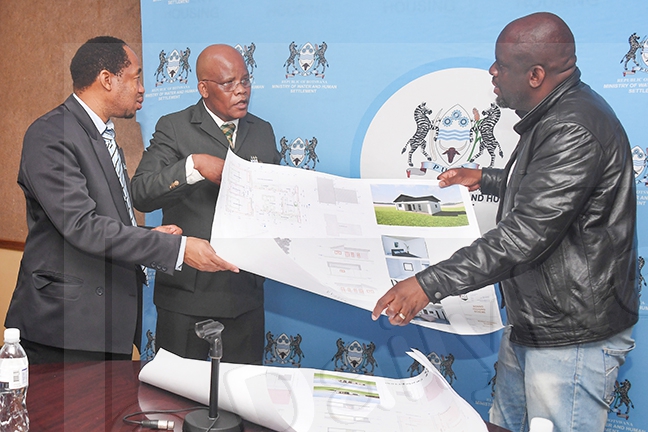
    Ministry of Water and Human Settlement on Friday unveiled 10 investors who will partner with government for the Bonno National Housing programme in Kgatleng District.

    The programme is aimed at providing accessible and affordable housing for citizens across various income brackets.

    Unveiling the investors in Mochudi recently, Assistant Minister of Water and Human Settlement, Mr Motsamai Motsamai said government, through the national transformation agenda, prioritised private sector led investments.

    He said such partnerships contributed to economic growth and well-being of the society. Conversely, he also said the initiative would further empower artisans by improving their skills in construction.

    He commended investors for their trust and commitment to the vision, adding that building 100 000 housing units was such an ambitious initiative that needed the support of all.

    Furthermore, Mr Motsamai commended Kgatleng District for responding swiftly to the programme by availing land and further implored district authorities to support the investors.

    He said the housing units would provide decent and affordable housing for low income residents, adding that owning a home restored one’s dignity and offered some form of security especially for people who had always longed to own decent homes.

    Meanwhile, Kgatleng Land Board acting deputy secretary, Mr Neo Rakodu said the 10 investors would construct housing units in all the three constituencies of Kgatleng Central, Kgatleng West and Kgatleng East covering 73 hectares of land for constructing a total of 1 162 plots.

    He said Kgatleng District was ready for such developments and that the district had set up a team that would facilitate the investors.

    Mr Rakodu said there were some negligible challenges in some parts of the district, but noted that overall, the programme was progressing well, with some plans approved, while some would be approved by November 20.

    Bakgatla Deputy Chief Kgosi Bana Sekai commended government for ensuring that Kgatleng was not left out while specially elected councillor, Ms Kentse Mollentze said Bakgatla were ready for the housing units that would give the district a facelift.

    She assured the investors of unwavering support from the district authorities and that they would ensure that hired artisans provided good workmanship. 

  • Remains of Crocodile Attack Confirmed

    Remains of Crocodile Attack Confirmed

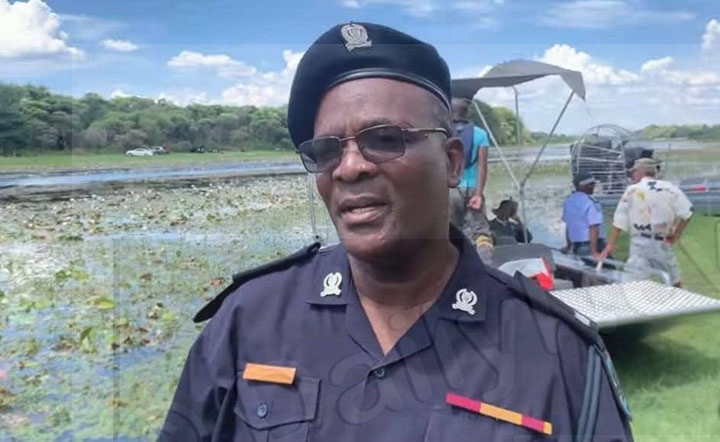
    Police have confirmed that the human remains recovered along the Thamalakane River belong to the 12-year-old boy who was attacked and dragged into the water by a crocodile last week.

    Maun Police Station Commander Superintendent Joseph Lepodise said the bones found on Saturday during the search operation were sent for DNA testing and a post-mortem on Monday. The results, he said conclusively matched the missing child.

    The remains were discovered by search teams and were immediately secured for forensic examination to determine whether they belonged to the boy who disappeared during the crocodile attack.

    According to initial reports, the child had been at the river with peers when a crocodile suddenly emerged, seized him and disappeared into the water before anyone could intervene.

    Over the past several days, officers from the Botswana Police Service, the Department of Wildlife and National Parks and Botswana Defense Force conducted a coordinated search along the Thamalakane River in hopes of finding the boy or evidence pointing to his fate.

    The community has been urged to exercise heightened caution around rivers and water bodies known to harbor crocodiles, especially during periods when the reptiles are active and human activity along the riverbanks increases.

  • New CEDA Branch to Spur Local Growth

    New CEDA Branch to Spur Local Growth

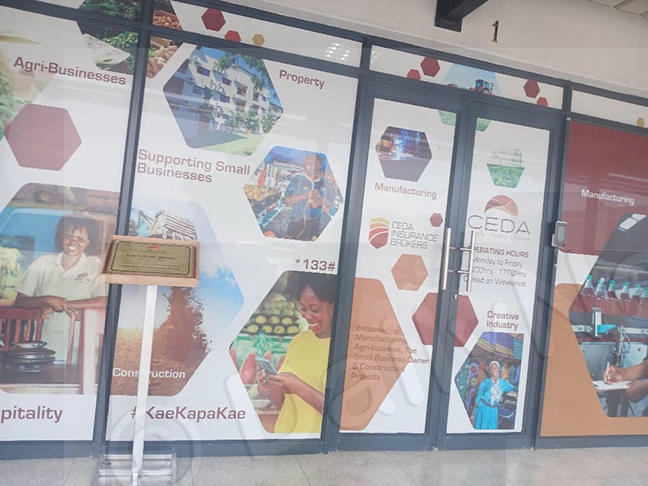
    The establishment of a Citizen Entrepreneurial Development Agency (CEDA) branch in Tutume has been warmly welcomed by clients and the broader business community, as it brings renewed hope and opportunities especially for young people who previously struggled to access services offered in Francistown.

    Tutume and its surrounding villages have long been home to hardworking, innovative and ambitious people across sectors such as agriculture, retail and tourism. With the region’s vast economic potential, the opening of the new CEDA office is viewed as a major boost for both Tutume and parts of the North East District. The Nswazwi–Kalakamati bypass road is expected to reduce travel distances for residents seeking CEDA services, eliminating the need to travel to Francistown for essential support.

    Speaking during the official opening, Minister of Trade and Entrepreneurship, Mr Tiroeaone Ntsima, said CEDA believed in people’s ideas and was committed to nurturing them into viable businesses. Doing so, he said, would create employment opportunities and strengthen local economic empowerment , key priorities under government’s job-creation agenda.

    Mr Ntsima highlighted that since its establishment in 2001, CEDA had remained one of the country’s strongest instruments for citizen economic empowerment, funding thousands of citizen-owned businesses, supporting start-ups, reviving struggling enterprises and creating opportunities for youth and women nationwide.

    In the region alone, he revealed that the agency had invested over P150 million in 943 businesses across various sectors, a clear demonstration of its commitment to entrepreneurship and economic development.

    He further noted that the opening of the new branch marked a significant milestone in CEDA’s growth, aligning with government’s broader economic diversification drive under the Botswana Economic Transformation Programme (BETP), which aimed to reduce reliance on diamonds.

    CEDA beneficiary and businessma, Mr Power Monyamane welcomed the development, describing the new office as a breakthrough that would close long-standing gaps caused by limited access to information and services due to distance. He encouraged fellow entrepreneurs to visit the office for accurate, first-hand information rather than relying on hearsay, noting that some aspiring businesspeople hesitated to seek guidance directly.

    He advised that passion was key to business success, cautioning against copying others’ projects without genuine interest. Mr Monyamane, who has invested in property development through CEDA support, said he had built office spaces currently housing the Ministry of Finance revenue office. He indicated plans to seek further funding for upcoming projects.

    He urged young people to take advantage of the new CEDA office, apply for funding while they were still young, and use the opportunity to build sustainable businesses and long-term careers. 

  • Arts Expo Signals Festival Rebirth

    Arts Expo Signals Festival Rebirth

    Maun, recently, witnessed the birth of a refreshed cultural celebration at Cresta Riley’s Hotel: the Poetavango Music and Arts Expo. The event is a spirited spin-off of the long-running Maun International Arts Festival (MIAF), which has served as a cultural anchor for the region for years.

    For Poetavango chairperson,  Legodile Seganabeng, the day was more than just another event; it marked a quiet revival of an artistic tradition that had been on the brink of fading.

    “Last year we did not have the main festival because of financial challenges,” he said, explaining how a once well-funded cultural pillar found itself struggling to stay afloat without consistent government support.

    Determined to preserve the festival, Poetavango turned to partnerships, finding critical support from the Orange Botswana Foundation. The collaboration made this year’s music-focused edition possible.

    Orange Botswana Foundation Social Impact Coordinator, Dineo Mpule, said the partnership aligned with the organisation’s mission to uplift cultural and artistic initiatives.

    “We are proud to be the main sponsor of the Music and Arts Expo happening today,” she said. She noted that Orange Botswana contributed P150,000 to the festival, adding that the foundation supported projects that advance culture and expand access for communities.

    “Culture brings together a wide range of audiences across all social groups, establishing dialogue between countries and communities which is why it is important to support such initiatives,” she added.

    According to  Mpule, supporting Poetavango was not merely an act of charity but an investment in creative potential, particularly in bold and innovative projects that nurtured young artists, musicians, and authors who would shape the future economy.

    Poetavango has long been synonymous with poetry, powerful verses that fill rooms and captivate audiences. However,  Seganabeng acknowledged that this strong identity had unintended consequences, as other art forms such as comedy, visual arts, and music often remained overshadowed.

    “Poetry became so big that people never fully saw our capacity in music,” he said.

    The Music and Arts Expo was crafted to shift that narrative. For the first time, music claimed centre stage, providing young performers with opportunities they had long awaited, while showcasing the breadth of Poetavango’s artistic reach.

    “We needed something that would turn the corner so that when we bring music back to the main festival, people will know what we are talking about,” he explained.

    One of the most distinctive features of the event was its intentional inclusion of children, an often overlooked demographic in arts festival planning. Face painting, water slides, swings, and a lively play area transformed the venue into a family-friendly space, ensuring that entertainment extended to the youngest festival-goers.

    “People forget about children, yet they also need entertainment, and it is important that they also explore and experience fun,” said Seganabeng.

    The expo also sought to uplift music in a region where the art form continues to struggle for visibility and where opportunities for young musicians remain limited. Poetavango hopes this renewed focus will help shift that dynamic.

    Judging by the enthusiasm of the crowd, the organisation had succeeded. Families lingered long after performances ended, musicians mingled with supporters, and a renewed sense of cultural pride rippled through the venue. 

  • Book Tackles Hidden Traumas

    Book Tackles Hidden Traumas

    Behind every woman who appears unshaken, there is often a story she has never told.

    In her new book Unspoken Realities, author Jean Nkuru opens a window into the hidden experiences of women living with gender-based violence, along with a way out to freedom.

    The faith-based guide, rooted in personal experience and spiritual reflection, draws inspiration from the unwavering faith of Nkuru’s mother, who silently endured her own share of life’s challenges, including domestic violence. Despite the hardships, she emerged resilient, strengthened by her deep trust in God.

    For Nkuru, the book stands as a powerful reminder of faith’s ability to sustain, uplift and ultimately set one free, spiritually and physically.

    “With the heavy weight of my mother’s struggles, there were moments I expected her to stumble. But somehow, she always emerged stronger. Later, I understood it was because she held firmly to her faith in God to see her through,” Nkuru said in an interview.

    Though Unspoken Realities is written for a broad audience, the 126-page book speaks especially to mothers and women, those who often share only fragments of their struggles while keeping the rest hidden, hence the title Unspoken.

    Chapters such as A Deceiving Mother explore the polished façades many women maintain while suffering quietly in relationships in an effort to protect their children. 

    The chapter urges mothers to rise from deception to authenticity and to seek healthier and balanced ways to safeguard their children while preserving their own well-being.

    Other chapters, like Warfare Mother, emphasise the importance of prayer and spiritual warfare, reflecting Nkuru’s belief that many of life’s troubles extend beyond what the eye can see, influenced by unseen forces that can only be challenged through prayer.

    In total, the book features 27 chapters, each crafted to speak to women across the many areas where they may need support.

    At its core, Unspoken Realities encourages women to draw strength from faith, not to endure silently, but to speak out for their own healing and to protect the well-being of their children. 

  • Mompe Elevates to International Cycling Body

    Mompe Elevates to International Cycling Body

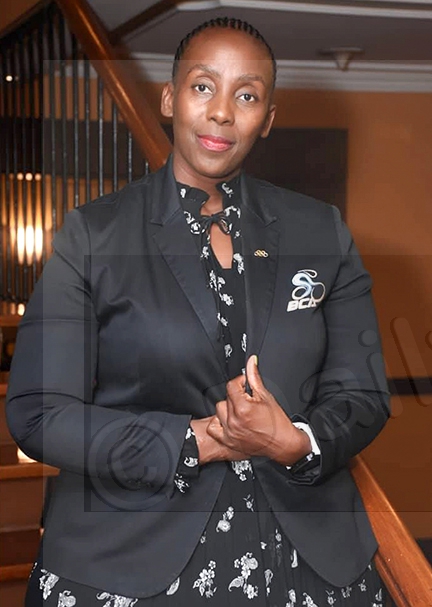
    Game Mompe is pedalling her way to the pinnacle of international cycling governance.

    This follows an announcement that the Union Cycliste Internationale (UCI) has officially appointed her as a member of the UCI BMX Freestyle Commission for the prestigious 2025–2029 term, a move that significantly elevates her growing influence within the global cycling community.The appointment, confirmed via a press release from the Botswana Cycling Association (BCA), places Mompe within the specialist bodies established by the UCI Management Committee.These bodies are crucial to the UCI’s mission and governed and advanced cycling worldwide by developing strategic and regulatory recommendations that shaped the evolution of their respective disciplines.Mompe is now part of an elite, diverse group of experts and athlete representatives hailing from cycling powerhouses like Denmark, New Zealand, Germany and Japan.Her presence marks a significant moment, ensuring a fresh, African perspective is brought to the table for the strategic development of BMX Freestyle on the global stage.UCI president, David Lappartient, confirmed Mompe’s appointment, expressing strong confidence in her future contributions. He anticipates that her input will be positive and constructive for the continued development of cycling worldwide.Mompe’s UCI role is the crowning achievement in what has been a truly remarkable year of success in sport governance. Her appointment is the culmination of a series of achievements that have rapidly accelerated her trajectory, including her election as Botswana National Olympic Committee (BNOC) vice president earlier this year.She has also made history by becoming the first Motswana to be appointed to the Confederation of African Cycling (CAC), establishing a significant milestone for Botswana’s presence and voice within continental sport governance.For the Botswana Cycling Association (BCA), Mompe’s appointment holds immense national significance as the association anticipates that her new role will deliver several key benefits to the country as well increase Botswana’s exposure to the BMX discipline, which is a fast-growing Olympic sport.The role further provides direct access to international expertise and development pathways and this comes at a crucial time, as the BCA is currently undergoing internal discussions regarding the introduction of BMX in Botswana.Leveraging Mompe’s new international platform, the BCA aims to create new opportunities for youth participation, talent identification and the diversification of the nation’s cycling portfolio.

  • Domestic Beef Consumption Surges

    Domestic Beef Consumption Surges

    Botswana is a net exporter of beef and produces more than is required for domestic consumption

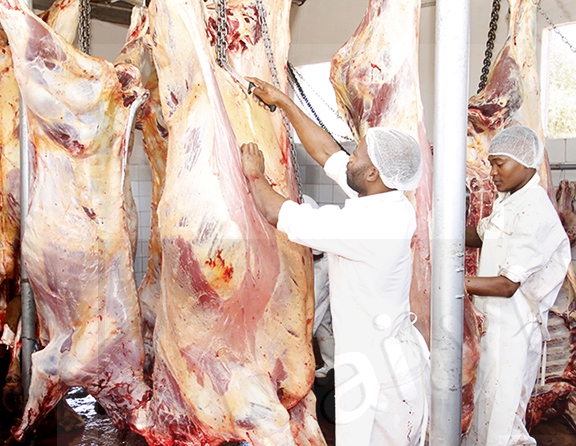
    The Acting Minister of Lands and Agriculture, Dr Edwin Dikoloti told Parliament on Tuesday that domestic beef consumption over the past three years amounted to 27 156.4 tonnes (135 773 cattle) in 2022, 32 258.6 tonnes (161 293 cattle) in 2023 and 39 577 tonnes (197 885 cattle) in 2024.

    He said the value of domestically consumed beef was P768.9 million in 2022, P806.5 million in 2023 and P989.4 million in 2024 valued at P5 000 per animal.

    Dr Dikoloti said the figures provided were for beef from cattle slaughtered in established abattoirs, which were certified for human consumption.

    He said cattle theft was a huge problem and that a lot of cattle were killed illegally in the bush and the meat was sold through informal market.

    Such meat is not for for human consumption as it is not inspected and not processed under hygienic conditions, Dr Dikoloti said.

    He was responding to a question from Kanye West MP, Mr Victor Phologolo who asked the minister to brief the House on the estimated demand for beef in Botswana market in terms of the number of cattle, quantity of meat and value in the last three years.

    Mr Phologolo also wanted to know whether all meat sold in the domestic market came from established abattoirs and had been certified fit for human consumption. 

  • Boago Finds Purpose to Live

    Boago Finds Purpose to Live

    Twenty-eight-year-old Mr Boago Tsietsi was raised by his loving grandmother, Ms Obabaletse Malema in Ramokgonami after the demise of his mother. 

    He was one-year-old at the time. Fast forward, Mr Tsietsi is currently a guidance and counseling teacher and lives openly about his HIV-positive status. He recently took to social media platforms to disclose his health status. 

    This comes at the backdrop of a prolonged battle with emotions, self-rejection, and sometimes suicidal thoughts that made it difficult to accept his HIV status. Mr Tsietsi relays that ever since going public and posting about his HIV status on Instagram, many people, especially those within the age bracket of 20 to 35 year have started reaching out to him about their HIV status. 

    “The fact that some people did not believe what I narrated concerning my HIV status led me to ask my Mama to make a full reference video to cater for the doubtful,” he said. 

    The video is a testimony of how Mr Tsietsi ’s life has evolved over the years. It is a rare journey that many caregivers and few individuals born with HIV have not embarked on yet, to acknowledge and live openly with their positive status for fear of victimisation. “I started my antiretroviral (ART) medication at standard six,” he said adding that he only started learning about HIV/AIDS years later during school lessons. 

    According to him, the lessons were delivered in a manner that instilled fear. “Obviously when taught about something as deadly and scary as it was purported, it sticks to your mind as a kid,” he said. 

    Mr Tsietsi  recalls one time he and his ‘Mama’ visited the doctor in one of the regular checkups and was asked by the latter if he knew why he was taking HIV treatment. 

    HIV was news to him, let alone his HIV status. His ‘Mama’ had never mentioned anything about this condition to him. “I told the doctor that I was not aware why I took the medication. “Ke ne ke itse gore, Olady ga a ise a mpolelele le fa e le sepe”, he said, literally translating, I knew that my mother had never mentioned anything to me. 

    After the disclosure, the young Mr Tsietsi started looking at himself differently from the rest of his fellow classmates and friends. 

    He wanted to quit taking the medication so that he could die quickly and save himself from the shame of the condition. 

    In fact, while doing Form One, he fell sick to a point he could not even walk because he defaulted on the medication, a secret he kept to himself. 

    “I took my ART tablets from the container and threw them away,” he said. He said his health situation cost him the opportunity to undergo circumcision. 

    Although the officers could not properly communicate to him the reasons he could not undergo the operation at the time, he deciphered his status to be a blockage, a situation he said worsened his condition as his stress level hit an all-time high. 

    He, however, persevered with his educational journey and managed to write his Form Five examinations. 

    Although he appeared weak most of the time,he says did not like being pitied. h

    is loving grandmother, Ms Obabaletse Malema in Ramokgonami after the demise of his mother. 

    He was one-year-old at the time. Fast forward, Mr Tsietsi is currently a guidance and counseling teacher and lives openly about his HIV-positive status. He recently took to social media platforms to disclose his health status. 

    This comes at the backdrop of a prolonged battle with emotions, self-rejection, and sometimes suicidal thoughts that made it difficult to accept his HIV status. Mr Tsietsi relays that ever since going public and posting about his HIV status on Instagram, many people, especially those within the age bracket of 20 to 35 year have started reaching out to him about their HIV status. 

    “The fact that some people did not believe what I narrated concerning my HIV status led me to ask my Mama to make a full reference video to cater for the doubtful,” he said. 

    The video is a testimony of how Mr Tsietsi ’s life has evolved over the years. It is a rare journey that many caregivers and few individuals born with HIV have not embarked on yet, to acknowledge and live openly with their positive status for fear of victimisation. “I started my antiretroviral (ART) medication at standard six,” he said adding that he only started learning about HIV/AIDS years later during school lessons. 

    According to him, the lessons were delivered in a manner that instilled fear. “Obviously when taught about something as deadly and scary as it was purported, it sticks to your mind as a kid,” he said. 

    Mr Tsietsi  recalls one time he and his ‘Mama’ visited the doctor in one of the regular checkups and was asked by the latter if he knew why he was taking HIV treatment. 

    HIV was news to him, let alone his HIV status. His ‘Mama’ had never mentioned anything about this condition to him. “I told the doctor that I was not aware why I took the medication. “Ke ne ke itse gore, Olady ga a ise a mpolelele le fa e le sepe”, he said, literally translating, I knew that my mother had never mentioned anything to me. 

    After the disclosure, the young Mr Tsietsi started looking at himself differently from the rest of his fellow classmates and friends. 

    He wanted to quit taking the medication so that he could die quickly and save himself from the shame of the condition. 

    In fact, while doing Form One, he fell sick to a point he could not even walk because he defaulted on the medication, a secret he kept to himself. 

    “I took my ART tablets from the container and threw them away,” he said. He said his health situation cost him the opportunity to undergo circumcision. 

    Although the officers could not properly communicate to him the reasons he could not undergo the operation at the time, he deciphered his status to be a blockage, a situation he said worsened his condition as his stress level hit an all-time high. 

    He, however, persevered with his educational journey and managed to write his Form Five examinations. 

    Although he appeared weak most of the time,he says did not like being pitied. Mr Tsietsi  feels strongly that children born with HIV should be told and taught about their health status from an early age and that secrecy has to be done away with for progress’s sake. 

    Ms Malema is now breathing a sigh of relief to learn that her grandson has turned over a new leaf and is now an HIV/AIDS activist, giving others hope where there was despair. 

    His message to those facing similar predicament like him is simple and crisp: take the medication prescribed by the doctors religiously and with passion to lead healthy and robust lives. 
  • Genesis of the Country’s Busiest Road

    Genesis of the Country’s Busiest Road

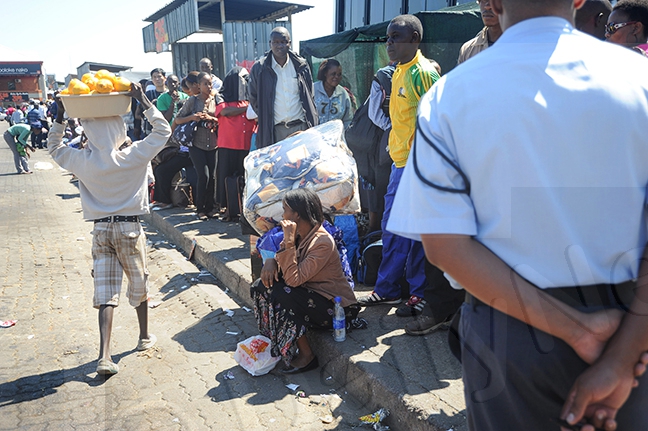
    ‘Dijo batsadi!‘ A vendor’s voice cuts through the heat at Mahalapye Bus Rank, lifting a fast-food packet toward a waiting passenger as other hawkers climb aboard, singing out their pies and snacks with the easy poetry of survival.

    Scenes like this greet countless travellers every December, marking the halfway heartbeat of the famed A1 Road. As the festive season settles over the country, the A1, beginning at Ramatlabama on the South African border and stretching 640 kilometres through Lobatse, Gaborone, Mahalapye, Palapye, Tonota and Francistown before reaching Ramokgwebana, becomes a living river of movement. Buses, trucks, taxis and family sedans pour into it, turning the road into a beehive of expectation. 

    Confucius once observed that “roads were made for journeys, not destinations.” For Batswana, the A1 journey, whether by bus, combi or private car, has become inseparable from the national holiday ritual. Alongside its twin, the railway, the A1 has shaped not only mobility, but the growth of the villages, towns and small economies strung along its path. 

    How It Began

    The story of this route begins in the ambition of Cecil John Rhodes’ British South Africa Company (BSAC), founded in 1888 with its grand “Cape to Cairo” dream of linking British territories by road and rail. 

    “The Three Dikgosi, Khama III, Sebele I and Bathoen I, were initially opposed,” historian Dr Jeff Ramsay recalls. “But in 1895, once they secured assurance from Queen Victoria and Colonial Secretary Joseph Chamberlain that Bechuanaland would not be handed over to Rhodes, they conceded to the building of the railway line.” 

    A swathe of land along the eastern border, including Lobatse Block, Gaberones Block (today’s Gaborone) and the Tuli Block — was ceded to BSAC. Construction of the railway began at Mafikeng in December 1895, reaching Mochudi, then Palapye, before finally arriving in Bulawayo in 1897.

     “Before the rail and telegraph,” Dr Ramsay explains, “the road north from Mafikeng ran through Kanye, Moshupa and Molepolole to Shoshong. 

    But with the arrival of the new infrastructure, the route from Lobatse to Francistown was improved and became the preferred path — first for ox wagons, and later for motor vehicles.” 

    After independence, Botswana adopted the name A1 for this arterial road, echoing the British A1, the “Great North Road” from London to Edinburgh.

     At 660 kilometres, the British road is almost the same length as its Botswana counterpart. “Tarring was done in phases,” Dr Ramsay notes. 

    “But even as gravel, the A1 was vital, a lifeline for commerce, for transporting goods, for linking markets and connecting communities.” 

    A Road That Shaped Settlements

    From the late 1890s, as the railway pushed northward, new sidings and settlements emerged: Pitsane, Pilane, Artesia, Mahalapye, Palapye Road (later modern Palapye), Serule, Foley Siding and Tati Siding. 

    The A1 grew alongside the railway, binding these communities to the developing urban centres of Lobatse, Gaborone and Francistown, and linking Botswana to South Africa’s N18 and the broader Trans-Africa Highway, the modern, cooperative successor to Rhodes’ colonial dream. 

    Villages like Mahalapye, Palapye and Tonota bear visible proof of how the A1 corridor fuels growth. Their rapid expansion and rising commercial profiles reflect the economic gravity of Botswana’s busiest road. And the A1 is not only a conduit for vehicles.It is a marketplace.

    From Dibete traders selling herbal remedies, to Makoro vendors hawking groundnuts, watermelons and traditional broomsticks, to phane sellers in the North East, the A1 sustains a chain of small rural entrepreneurs who rely on its constant motion. 

    A Road for the Future Today, the government plans to usher the A1 into a new era. The Ministry of Transport and Infrastructure has announced a public-private partnership to upgrade the road to a dual carriageway. “A nine-month feasibility study began in August 2025, with completion expected by April 2026,” Minister Noah Salakae recently told Parliament. 

    “Procuring a private partner should be completed by September 2026. Construction,  including toll plazas, is planned to begin before the end of the 2026/27 financial year, over an estimated 36 months.” 

    A bright future awaits the country’s busiest corridor, a road that has carried commerce, memory, joy and, tragically, its share of loss. 

    This December, as holiday travellers pack buses and pile into private cars, a trip along the A1 will once again be part of countless homecomings. For more than a century, this road has been the country’s spine. In its noise and nostalgia, its vendors and villages, its movement and meaning, the A1 remains a story of Botswana itself.

  • CEDA Invests Over P11 Million into Kanye Businesses

    CEDA Invests Over P11 Million into Kanye Businesses

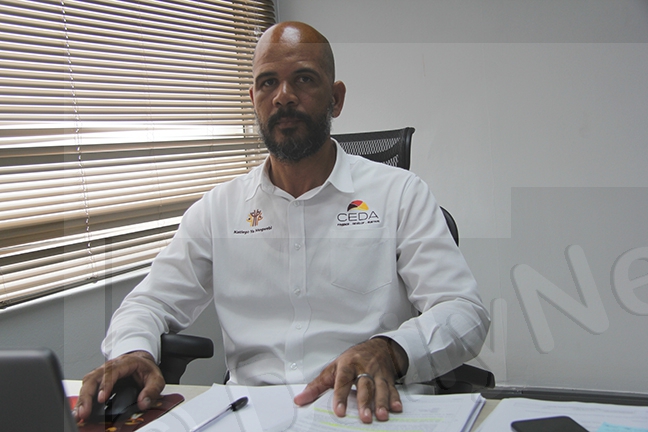
    In a major boost for the Kanye District economy, the Citizen Entrepreneurial Development Agency (CEDA) has approved funding for 20 local businesses in 2025, injecting a total of P11, 126, 249. 00 and creating 148 jobs. One standout project, a large-scale property development worth P10.5 million single-handedly delivered 123 permanent jobs, dwarfing the employment impact of the other 19

    ventures combined.The remaining 19 projects shared just P601,305; agribusiness (10 projects) received P388,507 and generated 15 jobs, services (7 projects) got P189,798 for 8 jobs, and manufacturing (2 projects) secured the smallest slice at P22,000, yielding only 2 jobs. Speaking to BOPA in an interview on Friday, Kanye CEDA Branch Manager Mr Tuelo Rabaloi revealed that while dryland farming dominated applications in the district, the agency was deliberately shifting focus toward manufacturing, a sector that can slash Botswana’s import bill and create far more sustainable employment.

    “We want more manufacturing projects,” Mr Rabaloi stressed. “They deliver bigger national benefits. That is why we are rolling out new funding lines specifically designed to make these businesses bankable.”

    Among the new products now available are A di tsale, Thuo Letlotlo, and a dedicated Artificial Insemination (A.I) programme for livestock farmers all aimed at accelerating job creation and building businesses that added real value to Botswana’s GDP, said Rabaloi.

    In the property space, Mr Rabaloi said CEDA was also steering developers away from multi-residential blocks and toward job-rich commercial developments such as shopping malls and retail centres.

    “Support doesn’t stop at handing over the cheque,” he said, emphasizsng that the CEDA assigns trained mentors to every funded business, offering ongoing guidance to ensure long-

    term survival and growth. “When specialist expertise is needed, the agency foots 90 per cent of the cost for external business consultants, with clients paying only 10 percent.” Rabaloi said strategic partnerships were another key ingredient. Through ties with the Local Enterprise Authority (LEA) and other government bodies, CEDA clients gain access to advanced training, market linkages, and additional support services.

    “These collaborations are critical,” Mr Rabaloi said. “We are not just giving money, we are building an ecosystem where citizen-owned businesses can truly thrive.” With new funding windows opening and a clear push toward high-impact sectors, he said. Kanye entrepreneurs now had more tools than ever to turn ideas into jobs and growth.