Author: Daily News

  • BTA Reflects on J60 and J100 Tournaments

    BTA Reflects on J60 and J100 Tournaments

    Tennis in Botswana is currently gaining significant momentum and traction, thanks to the foundational work of the older generation who paved the way for the young players.

    Not only is the young generation making strides and making tennis attractive, but they have also placed the country in a better position to be granted rights to host high-profile tournaments.

    The past two weeks saw Botswana hosting two international junior tennis tournaments that attracted participants from Canada, Hong Kong (China), France, Great Britain, Serbia, Greece, Portugal, Czech Republic, India, Thailand, Egypt, Namibia, South Africa and, of course, Botswana.

    The two events were a great success, given the global reach and diversity of the participants attracted, the high level of tennis displayed, the number of local players in the main draw as well as the performances of some of local players. A total of 17 Botswana players made it into the main draw of the J60, consisting of eight girls and nine boys.

    The Botswana Tennis Association (BTA) leadership is surely happy, given that this is a substantial number of players who ordinarily would not have contested in an international event, had the BTA not hosted the tournament, as tennis is inherently expensive.

    In an interview, BTA vice president, Nonofo Othusitse, said this substantiated their position that hosting such events was critical for providing an opportunity and platform for their players.

    Othusitse said it also provided players with the much-required exposure to international-level play, which resulted in an improved level of play and, consequently, improved international rankings.

    Talking about rankings, he highlighted a huge jump in the rankings from a number of players, such as Ntungamili Raguin, who broke into the world’s top 200 with a current ranking of 167.

    Othusitse also applauded Angel Chakanyuka, who won her first J100 match and earned 10 points, placing her at 2 906 in the world at just 13-years-old.

    “We also have 13-year-old Malak Macheng at 2 036, while Nina Sekonopo rose to 1 412. A special mention should also go to the Re Ba Bona Ha Serowe Centre product, Kgosi Tometso, who also received his maiden ranking at 4 245. I think his story will inspire a great number of kids from that centre,” he said.

    The greatest success of the two events will obviously have to be the back-to-back singles title wins by Ntungamili, as well as the boys’ doubles J30 title win and the silver medal in the J100.

    In that regard, Othusitse said such were amazing performances and achievements by Ntungamili and the BTA awaited the entries for the 2026 Australia Open Junior Championships with bated breath.

    He also noted that a number of Under 14 players who were part of the two tournaments generated a lot of interest.

    “This includes the likes of Rerotlhe Kgannyeng, Tinashe Phatshwane, Malak, Angel and Kgotso Kejakang. Next year, more Under 14s are expected to start competing in the World Tennis Tour Juniors, so one might confidently conclude that we will have an even more competitive number of players by this time next year,” he said.

    Consequently, Othusitse highlighted the need for resources in order to effectively provide the required support towards junior talents.

    “We therefore make a call to corporate Botswana to join other corporates such as Choppies, Senn Foods, Spar and Gaborone Electronics to become Botswana tennis development partners,” he said. 
  • Selebi Phikwe Citrus Project to Train Pickers

    Selebi Phikwe Citrus Project to Train Pickers

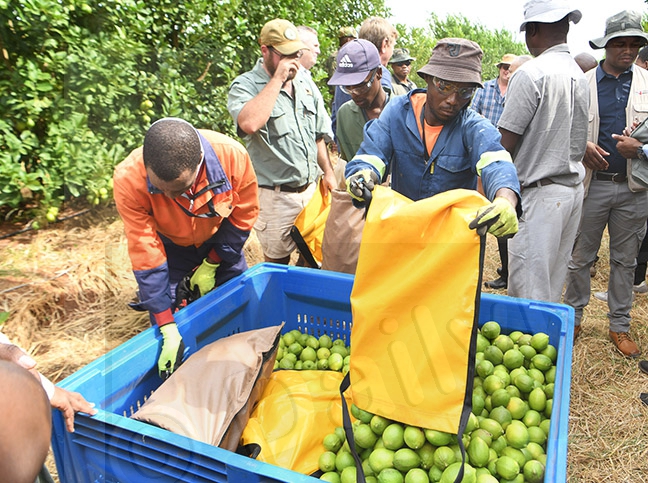
    Out of the 696 farm workers currently employed by the Selebi Phikwe Citrus Project, 320 are Batswana employed on permanent basis while 110 are Batswana temporary workers.

    In addition to that, 200 are seasonal temporary Batswana workers engaged for picking and packing while 66 are seasonal temporary foreign national farm workers engaged for the same purpose. There were no permanent foreign nationals farm workers at the moment.

    Minister of Labour and Home Affairs, Major General Pius Mokgware shared with Parliament recently, also stating that there were 14 Batswana workers who occupied managerial positions and one Motswana at directorship position while eight foreign nationals also occupied the same positions.

    Maj. Gen. Mokgware cited lack of professional picking and packing skills, which were not available in Botswana as one of the reason for importing labour from other countries.

    This is a job or skill that is learned overtime and needs a lot of practice and muscle memory for one to be able to do fast and without damaging the fruit, Maj. Gen. Mokgware said, adding that the company was in the process of conducting on the job training, to impart skills to the locals so as to allow them to learn from the experienced foreign pickers.

    Minister Mokgware said that Selebi Phikwe Citrus was anticipating to further employ at a rate of two Batswana per foreign national as pickers and packers in the coming season.

    The project anticipates that it will need around 450 pickers and packers in total for the coming season hence would need 150 more farm workers.

    Selebi Phikwe Citrus Project started five years ago in collaboration with various stakeholders who continue to work closely together, produces valencia oranges, seedless lemon and grapefruit mainly for export.

    It has harvested 22 000 tonnes of produce in the current season with an intention of producing 40 000 tonnes in the next planting season.

    Selebi Phikwe West MP, Mr Reuben Kaizer had requested the minister to share the number of foreigners versus Batswana currently employed as farm workers, the number of Batswana who occupy managerial and directorship positions respectively and the reasons for importing abour from neighbouring countries.

  • BPC Stabilises Operations

    BPC Stabilises Operations

    The Botswana Power Corporation (BPC) has recently experienced delays in settling payments to some of its suppliers. This was said by the Minister of Minerals and Energy, Ms Bogolo Kenewendo in response to Tati East Member of Parliament on Monday, who wanted clarification on the number of Botswana contractors who were owed by the corporation since 2019, the total amount owed and what was being done to normalise its operations and pay contractors on time. 

    Minister Kenewendo explained that the delays were largely driven by significant financial pressures arising from elevated power import costs over the past several years. 

    “It is important to highlight that for the 2022/23, 2023/24 and 2024/25 financial years, there were no corresponding electricity tariff adjustments despite sustained increases in the cost of generation and supply,” said Minister Kenewendo. 

    She stated that the structural misalignment between revenue and operating costs had placed considerable strain on BPC’s liquidity position, thereby affecting its ability to consistently meet supplier obligations within the prescribed timeframes. 

    Notwithstanding these challenges, she said BPC remained committed to restoring financial stability, strengthening internal controls, and improving payment turnaround times. 

    The Minister said as at October 31, BPC confirmed that there were no outstanding invoices dating back to 2019, and that should any supplier provide evidence or invoices from that period, BPC was ready to investigate and resolve the matter promptly. 

    Minister Kenewendo further stated that the corporation acknowledged outstanding invoices relating to the 2020 to 2023, valued at P3.72 million, owed to five small works contractors. 

    The delays in concluding these payments primarily stemmed from unresolved technical issues encountered during project commissioning, which prolonged the verification and final acceptance processes required prior to payment, Minister Kenewendo said. 

    She said the corporation had among others, instituted a suite of interventions aimed at improving its financial position and normalising payment performance. 

    Minister Kenewendo assured the House of BPC commitment to further stabilising its operations and ensuring that contractors were paid timeously in line with contractual requirements or obligations. 

  • Mojadigo Conspiracy to Defeat Ends of Justice Case Continues

    Mojadigo Conspiracy to Defeat Ends of Justice Case Continues

    Rape and defilement accused pastor, Goitsekgosi Mojadigo, who is also the leader of Divine Anointing Church International, failed to appear before Broadhurst Magistrate court on Thursday for a status hearing on the matter in which he and others are accused of interfering with witnesses.

    Mojadigo, his sister, Serwalo, the mother of one of the victims and Tshepo Kgosiemang, who is said to be the victim’s boyfriend, are charged with conspiracy to defeat the ends of justice in in a case linked to rape and defilement charges against the accused.

    While Kgosiemang is out on bail, Serwalo and the mother of one of the victims, had been in custody. However, court ordered that their bail application would take place on December 18.

    According to the charge sheet, between January and September 2025, the four allegedly acted together to persuade the victims to sign affidavits aimed at preventing them from testifying against Mojadigo.

    It is further alleged that Mojadigo deceitfully persuaded the mother of one of the victims to convince her minor child not to testify, an act prosecutors said was a deliberate attempt to derail the judicial process. 

  • Accident Claims Two Lives Along A3 Road

    Accident Claims Two Lives Along A3 Road

    Two people lost their lives in a road accident on Friday when a minibus they were traveling in overturned along A3 road just 20km away from Francistown.

    Superintendent Boipuso Baatweng of Tatitown Police said the minibus, which was from Nkange to Francistown, had 14 passengers who sustained injuries, while two lost their lives.

    The injured, he said were treated at Nyangabgwe Referral Hospital, while others had been admitted to Riverside Private Hospital, where they were still receiving medical attention.

    Superintendent Baatweng explained that the driver was among those hospitalised with serious injuries.

    Though investigations were still at preliminary stage, he said the information they gathered from some passengers was that the driver lost control of the minibus after overtaking another vehicle.

    He appealed to A3 road users to drive cautiously more so that the road was still in bad condition and under construction.

    Names of the deceased are withheld until their next of kin are notified.

  • Search for Missing Maun Boy Continues

    Search for Missing Maun Boy Continues

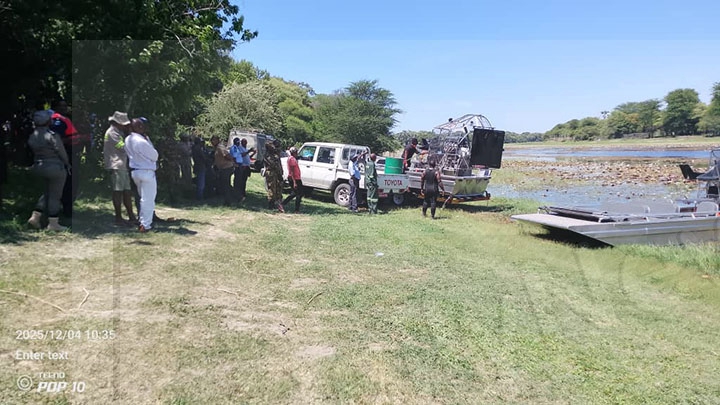
    A search operation for a 12-year-old boy from Old Disaneng ward in Maun, who went missing after a suspected crocodile attack in the Thamalakane River, continues.  

    The search for the missing boy started on December 3.

    So far, Maun Police Station commander Superintendent Joseph Lepodise said the search team had not been able to locate the missing boy since the day he disappeared on December 3.

  • LED Strategy to Boost Local Economy

    LED Strategy to Boost Local Economy

    North West District is developing a five year (2026-20230) Local Economic Development (LED) strategy to give the local economy a clear vision and direction.
    The LED approach guide government, businesses and the community to work together to boost local economy, reduce poverty, create responsible employment opportunities and improve livelihoods by leveraging local resources and skills through strategic planning, infrastructure investment and support small, medium entrepreneurs.
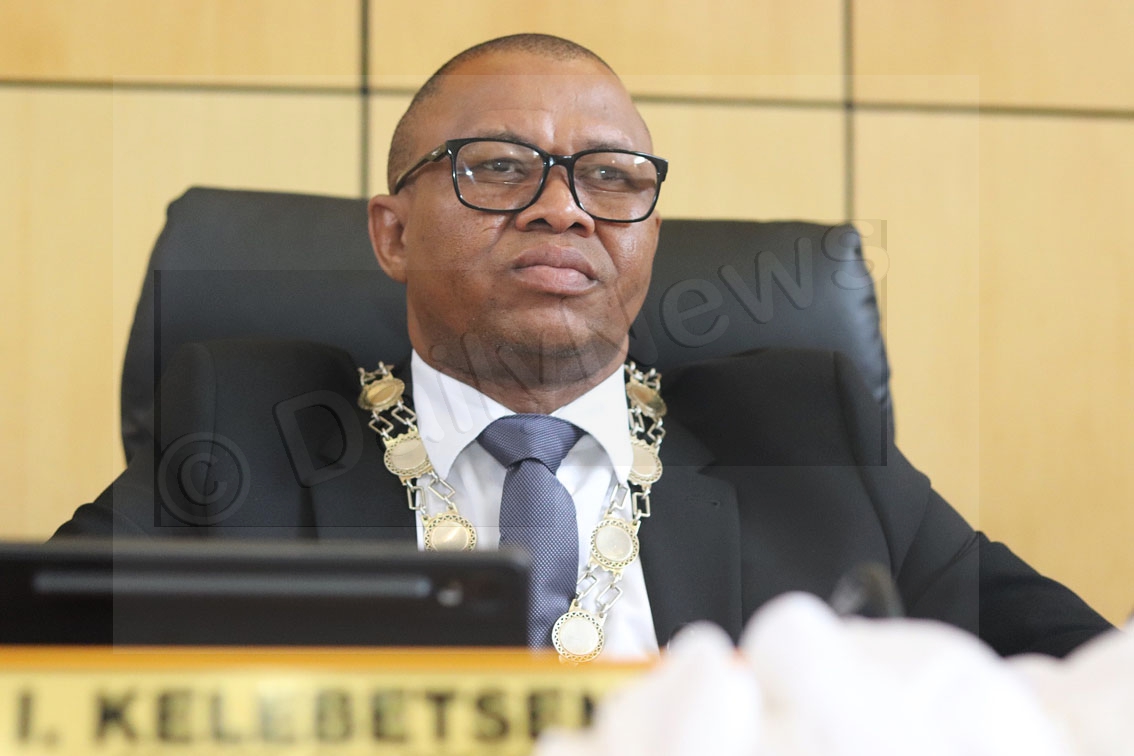
    Addressing a full council meeting, Council Chairman, Mr Itumeleng Kelebetseng said LED would not solely be driven by government, urging full participation of all other stakeholders. He said investment and leadership were at the pinnacle of a successful LED strategy.
    Mr Kelebetseng said the economic development of the district was dependent on a strong partnership between government, private enterprises and the community.
    “Our district is a region of diverse economic potentials, tourism, agriculture, fisheries, crafts, small scale trade among others and through strong collaboration, consistent participation, open dialogue and joint action, we will drive innovation and competitiveness. We will create an attractive destination for investment to mention but a few,” he added.
    He called on fellow political leaders and other stakeholders to share the journey which was focused on improving the overall wellbeing of the community through better services and a more vibrant local economy.
    Mr Kelebetseng also highlighted that efforts to establish meaningful international relations were progressing well citing that recently, he hosted the Deputy Chief of Mission from the Embassy of the People’s Republic of China in Botswana, who expressed commitment to deepening cooperation in tourism and cultural exchange.
    “After my return visit to the Embassy, I am pleased to report that there are promising prospects for the council to benefit from training seminars that will support our human capital development,” he said.
    He said the recent launch of the use of drones in delivering medicines to health facilities was a transformative step in the health-care delivery system by ensuring that essential medical supplies reach communities swiftly and efficiently.
    On other issues, Mr Kelebetseng noted that community consultations on the proposal of upgrading Maun into a Green City have been completed in November.
    He said the task team was currently working on the compilation of the district position paper covering comments and ideas from different stakeholders.
    Mr Kelebetseng also reported that the district was currently experiencing illegal developments particularly in larger villages such as Maun and Sehithwa.
    He added that the situation was also common within in the Okavango Delta area, entailing commercial developments especially tourism related accommodation facilities.
    “Our communities should be aware that the entire district is a planning area and therefore the process of development has to be followed to the latter. As the council we continue to strengthen our enforcement processes to safeguard the community against these illegal developments,” added Mr Kelebetseng. 

  • BMWU Calls for Industry Realignment

    BMWU Calls for Industry Realignment

    Botswana Mine Workers Union (BMWU) president, Mr Joseph Tsimako has called for the mining industry to realign its goals and practices with industrial relations standards.
    Mr Tsimako was speaking during the BMWU General Council and Business Insights seminar held in Selebi-Phikwe recently.
    He said there was  a need for the mining industry to realign its goals and practices to navigate towards the ‘True North’ strategic vision.
    Furthermore, he expressed the need for a collaborative, cordial, and transparent relationship between mining stakeholders, aiming for a sustainable and equitable future for the sector.
    “The idea of the summit was born from the realisation that the mining industry in the context of industrial relations was yet to find its ‘True North’. This follows a month of engagements between the union, business partners, and other relevant stakeholders,” said Mr Tsimako.
    He spoke of the need for solidarity among mining stakeholders in pursuit of common objectives of navigating towards the ‘True North’.
    In addition, he encouraged open dialogue and sustainable partnerships, and an environment where every voice was heard and valued.
    Touching on mining industry challenges, Mr Tsimako said such includes a wide gap between employers and employees characterised by trade disputes, non-recognition of the union along the mining supply chain, poor mining operational standards, as well as marginalisation of the union in key policy and mineral development processes, hence the need for collaborative measures.
    Moreover, he mentioned the evolving mining landscape, which he said called for the advent of technology in the workplace, innovative ways to conduct activities, citing the shift from a fossil fuel-driven economy to a green one.
    The purpose of the BMWU General Council and Business Insights seminar, Mr Tsimako noted was to discuss the future of mining in Botswana, the future of employment in the mining sector, as well as emerging challenges in the evolving mining landscape.
    The seminar was also set to encourage transition towards digitalised and technology-driven operations, dialogue about labour-employee cooperation for a sustainable and equitable mining industry.
    Senior Employees Relations Manager at Debswana, Mr Tebatso Hule, emphasised the need for the mining industry to embrace cutting-edge technology to drive innovation and enhance operational efficiency.
    He explained that integrating advanced technologies could significantly improve productivity and safety standards within the sector.
    Furthermore, Mr Hule emphasised the critical role of trade unions, asserting that they must prioritise transparency and accountability in their operations.
    He said such a move would accord unions an opportunity to effectively represent and advocate for the interests of their members, ensuring that workers’ voices  were heard and their needs met. 

  • BTEP Projects Success Hinge on Systems Overhaul

    BTEP Projects Success Hinge on Systems Overhaul

    There is need to transform government systems to circumvent bureaucracies and ensure the swift and seamless implementation of Botswana Economic Transformation Programme (BETP) projects, Lobatse Botoka ward Councillor, Mr Onneetse Kagiso, has said.


    In an interview on sidelines of the Lobatse Full Council sitting on December 1, Mr Kagiso noted that Lobatse had benefited from four key BETP projects envisioned to stimulate economic growth.

    He highlighted the need for local authorities to ensure decisive and apt facilitation of investors, especially during the construction of the Lobatse Meat and Leather City Special Economic Zone (SEZ), designated by the Special Economic Zones Authority (SEZA).


    Mr Kagiso added that to revitalise the local economy, there was a need to do away with long processes and too much paperwork to be able to attract and retain more investors.
    “Let us automate our systems. Let us have a one-stop shop. We need to revise our pieces of legislation, relax them a bit. We need to be intentional in our undertaking and have more action,” he said.


    He added that the priority projects, which included the Lobatse Meat and Leather City SEZ, the Milk Valley Farm expansion, the establishment of a primary slaughter facility and the leather and footwear tannery and manufacturing initiative, would create much-needed mass employment opportunities. He called for the alignment of the vocational education system to provide market-ready skills.


    Mr Kagiso urged the realignment of the Technical and Vocational Education and Training system, saying “Lobatse has been declared a meat and leather industry area; therefore, we must align our vocational education to this. Let us introduce courses that deal with leather processing and production of quality leather products, for we need these fine skills locally to be able to compete globally.”


    Earlier in his speech, Lobatse Town Mayor Mr Aron Ganakgomo told the council meeting that the Meat and Leather City SEZ project, driven by SEZA in collaboration with local authorities, had already courted investors.


    “SEZA has reported that they have already received interest from several investors. However, the current delay in moving forward has been due to funding for any development that would attract investors to the zone,” Mr Ganakgomo said.


    Councillors heard that negotiations were underway between SEZA and an International SEZ developer who had studied Lobatse to determine the feasibility of partnering with SEZA to develop the SEZ.


    They also heard that the developer had submitted a report which SEZA was currently analysing with different stakeholders to close identified gaps.


    Mr Ganakgomo also told councillors that SEZA worked with potential developers who had shown interest in partnering to develop the city by bringing their own funding and network of investors.
    Additionally, he said SEZA was in negotiations with the Botswana Meat Commission (BMC) to ascertain if Phase 1 of the zone could start on the land already serviced next to the BMC tannery, currently undergoing revitalisation.


    This, the meayor said, would enable investors who wish to process wet blue leather from the BMC tannery into finished leather goods to immediately set up in close proximity to their main input to allow them to manufacture effectively for the export market.


    Regarding other projects, Mr Ganakgomo indicated that the Milk Valley Farm would procure 1 000 pregnant heifers from Brazil. Ahead of the delivery, he said the farm would undertake critical preparatory works, including the construction of additional cow housing and supporting infrastructure, as well as land development to expand fodder production.


    Lobatse Thema/Motswedi ward councillor, Mr Velem Heii, said the BETP projects approved for Lobatse were critical for job creation and revitalising the local economy, which was primarily sustained by the BMC. Cllr Heii added that the informal sector also stood to benefit.


    Again, he said the ongoing revitalisation of the BMC tannery plant and the construction of the BMC Meat value-addition and secondary processing plant to replace the old ECCO Cannery (built in 1978) would enhance BMC’s business model.


    “This will help the state-owned enterprise achieve vertical integration and draw a return-on-investment, thus turning BMC into a sustainable entity,” he said.
    Nominated councillor, Mr Gofaone Kedise was of the view that there was sluggish implementation of the SEZ which needed to be fast-tracked.


    Cllr Kedise said the land for the Meat and Leather City SEZ was identified about 10 years ago and therefore it was time to act. “We have since been declared an SEZ. We need to be agile in our implementation,” he said.


    Cllr Kedise further indicated that it was pertinent to draw up an aggressive marketing strategy to sell the SEZ. He argued that the time was nigh to begin to brand Lobatse as a Meat and Leather City and sell it to investors, fully packaged, at exhibitions on the world stage. “Let us spread our wings even beyond borders to market our SEZ,” he said.

  • Council Targets Illegal Vendors

    Council Targets Illegal Vendors

    Gaborone City Council has intensified its crackdown on illegal operations as city leadership reiterates growing frustration over non-compliance with municipal and national laws.

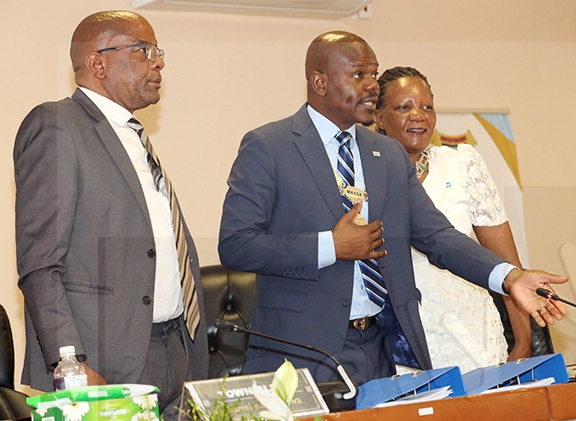
    The Mayor, Mr Oarabile Motlaleng, told the full council meeting on Monday that illegal trading, unlicensed manufacturing, and breaches of public health and child-care regulations were among the most persistent challenges facing the city.

    He reported that 13 non-citizens were charged for violating the council’s hawking and street-vending bye-laws, saying these demonstrated the municipality’s firm stance on regulating informal trade within its jurisdiction.

    In a separate enforcement action, seven individuals were charged for operating manufacturing businesses without an industrial licence, in violation of Section 6 of the Industrial Development Act.

    Food safety inspections also revealed 19 cases involving unhygienic preparation and handling of food, which he described as a serious public health concern. 

    Mr Motlaleng stressed that traders and food handlers must prioritise cleanliness and strict adherence to hygiene principles, adding that council teams would continue to educate both vendors and consumers on safety standards.

    He said they would continue to sensitise the public and build a culture of vigilance and compliance, adding that responsible trading protected the community and strengthened the environment.

    Child-care services were not spared from scrutiny, as eight day-care centres were charged for operating contrary to Section 97 (1) of the Children’s Act, which governs registration and conduct of child-care facilities. The Mayor emphasised that adherence to the Act was non-negotiable to safeguard children’s welfare.

    Speaking broadly to the business sector, Mr Motlaleng urged continued legal compliance, warning that failure to meet regulatory obligations compromised public well-being.

    “We urge the business community to consistently adhere to the provisions of the law to ensure compliance and contribute positively to the environment in which we operate. Upholding these regulations not only promotes responsible business practices but also safeguards the health and well-being of our community,” he said.

    The council also registered eight cases of urinating in public, an offence under the Sanitation and Public Health Bye-laws. 

    These incidents, he noted, pointed to declining public hygiene discipline and the need for renewed awareness campaigns.