Category: Local

  • Helper Accused of Toddler Abuse

    Helper Accused of Toddler Abuse

    A 30-year-old house helper, Boitumelo Nchimako, appeared in Broadhurst Magistrate Court on Thursday for allegedly ill-treating a one-year-old child under her care.

    Nchimako, a Motswana national, is accused of physically abusing the toddler, leaving the child with bruises and abrasions all over her body.

    The incident occurred on January 29 at Lekgwarapana ward in Oodi, where Nchimako worked.

    She has been charged under Section 61 of the Children’s Act and remains in custody, with her next court appearance scheduled for February 17

  • Beneath the surface The dangerous world of Scuba diving

    Beneath the surface The dangerous world of Scuba diving

    For a Botswana Defence Force (BDF) scuba diver, Warrant Officer Class 1 Thuto Nyame, scuba diving is not just a job, it is a calling that demands bravery, skill and the guts to handle tough situations.
    Mr Nyame’s work and that of others in the same field, is a source of pride as it gives them the opportunity to positively impact lives.
    “We brave the unknown, often putting our own lives on the line, but because it is something that we love, we do it with so much dedication,” he said.
    Whenever called for a mission, the first thing that comes to Mr Nyame’s mind is the end goal, that being the successful completion of a mission.
    For instance, upon receiving a report of a drowning incident, preparation starts right away, entailing getting all the equipment necessary for undertaking the rescue.
    Scuba diving missions require several items of equipment including a Scuba tank for breathing, a mask and snorkel, fins, a weight belt and safety accessories such as cutting tool, among many others.
    Mr Nyame however notes that issues of visibility underwater can also determine which items to use or not to use.
    “Mo Botswana re segofaditswe ka metsi a mantsho, re a bo re le mo lefifing la ntshwarela ngwana” he stated, explaining that the dark waters in the country’s rivers usually present a unique challenge.
    Once they go into the water, they apply their skills and techniques, adopting different search patterns as per the varying circumstances of each search mission.
    According to Mr Nyame they usually use a strategy they term a movement box where they mark a stretch that they will focus on within a body of water and once they have cleared it, they mark the next one and move on to it.
    This, however, depends on the type of the river they are conducting a search in.
    For instance, the presence of rocks in a river can make a search mission difficult, but a properly skilled scuba diver would ordinarily be able to navigate through.
    According to Mr Nyame differentiating human bodies from other objects is at times tricky because of algae, which when covering an object, identifying it becomes less straight-forward.
    “While searching, whatever you come across, you feel it by hand to check if it is indeed what you are looking for,” he said.
    “A human body is unique; you can easily tell if it is what you’re touching. As for underwater animals, you cannot confuse their bodies with that of a human because animals don’t allow us to get closer, they just escape,” he said.
    The scuba diver recounts operations involving crocodile attacks as particularly difficult and often unsuccessful because the reptiles kill their prey as soon as they snatch it.
    Though a crocodile that has killed a human being can be identified, there is usually no certainty in the identification and choosing to kill a suspected crocodile could result in many being erroneously eliminated.
    Mr Nyame’s work has seen him participate in many rescue missions, but memories of one operation have stuck with him.
    He recalls an operation, which he was part of in 2021 in Tonota, where two men fainted out of poor air circulation inside a well they were trying to desludge.
    With the well narrow and quite deep, air circulation as good as non-existent, the oxygen in his tank got depleted while he was still in the well; and when he came out after hours of them trying to extricate the victims, the effects of the lack of oxygen began to hit him.
    But despite the risks and challenges associated with scuba diving, Mr Nyame cannot trade the satisfaction that follows a successful rescue mission for anything.
    It is the fuel that keeps him going.

  • A giant leap Mannathoko JSS defies odds and scores big

    A giant leap Mannathoko JSS defies odds and scores big

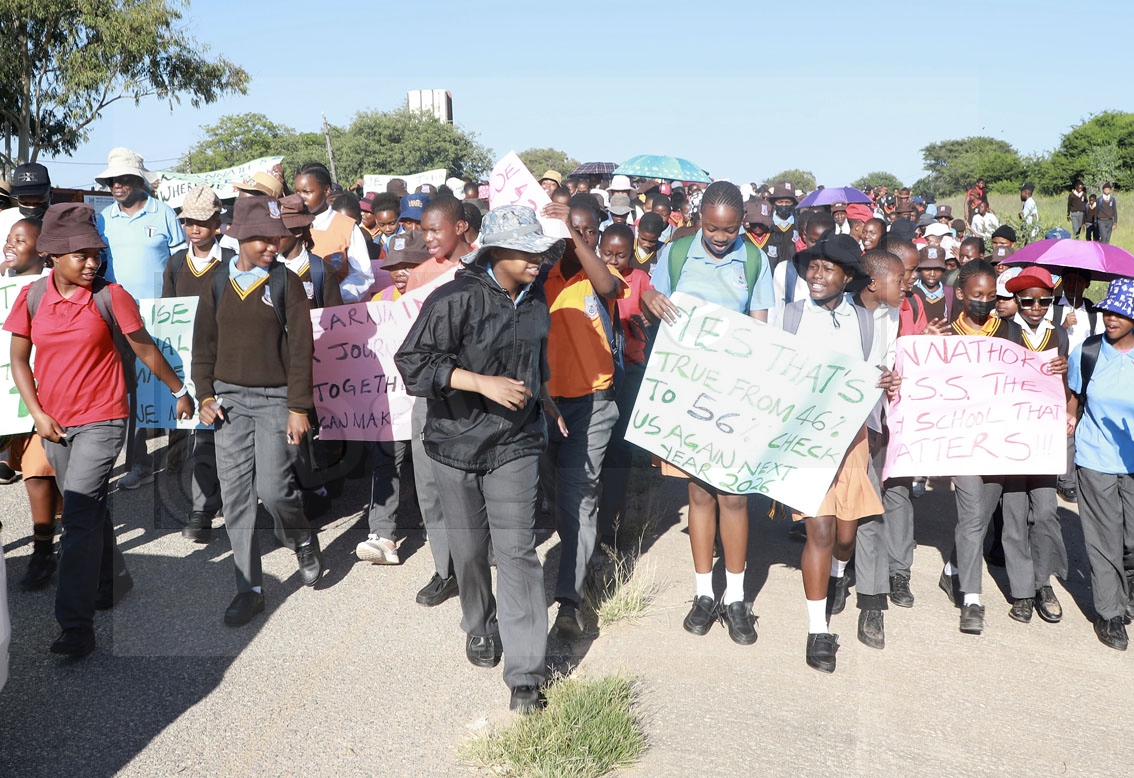
    Mannathoko Junior Secondary School learners marched in unison from their classrooms to the kgotla, their voices carrying the weight of a hard-won triumph to celebrate a remarkable turnaround in the 2025 Junior Certificate Examinations that has seen the school leapfrog from the middle of the pack to the very top of the Serowe District.
    Just a year ago, the mood at Mannathoko JSS was sombre, with a pass rate of 46 per cent. However, in the 2025 junior certificate examinations, the school defied expectations by soaring to a 56 per cent pass rate.
    This leap did not just make them the best in the district, but placed them eighth in the Central Region and 25th out of 220 schools nationwide.
    For a school facing uphill battles, these numbers are more than just statistics, they represent a reclaimed future for the 107 learners now eligible for senior secondary education.
    Addressing a triumphant crowd at the packed Mannathoko kgotla, the deputy school head, Mr Gagosepe Olebile credited the community, speaking of the ‘three-legged pot’, a delicate balance between teachers, parents and learners.
    “Despite the obstacles, our teachers remained committed,” Mr Olebile said, but also thanked parents for their consistent presence at PTA meetings.
    He school head, Mr Ontiretse Lekoba echoed the same sentiment, saying the results were a measurable improvement born from disciplined learners and engaged stakeholders.
    What makes Mannathoko JSS’s rise truly remarkable is the backdrop against which it occurred. While the results are shining, the school’s infrastructure is not. Mr Lekoba decried the dilapidated state of the school, citing lack of resources, crumbling buildings and persistent plague of vandalism.
    Beyond the physical walls, the school has also had to battle social ills. Bullying and substance abuse have cast shadows over the hallways.
    Furthermore, Mr Lekoba highlighted a growing crisis in teacher morale. Many educators have remained in the same positions for years without promotion, a stagnation that threatens to dampen the very dedication that produced these results.
    Mr Lekoba also noted that the shift away from corporal punishment had placed a burden on teachers to find new ways to maintain discipline.
    The story of Mannathoko JSS is one of a ‘diamond in the rough.’ As the victory songs faded at the kgotla, teachers, parents, learners and the community remained hopeful that if Mannathoko JSS can achieve these results under the current conditions, one can only imagine what they might achieve with the support and infrastructure they truly deserve.

  • Maun steps up for cleaner town

    Maun steps up for cleaner town

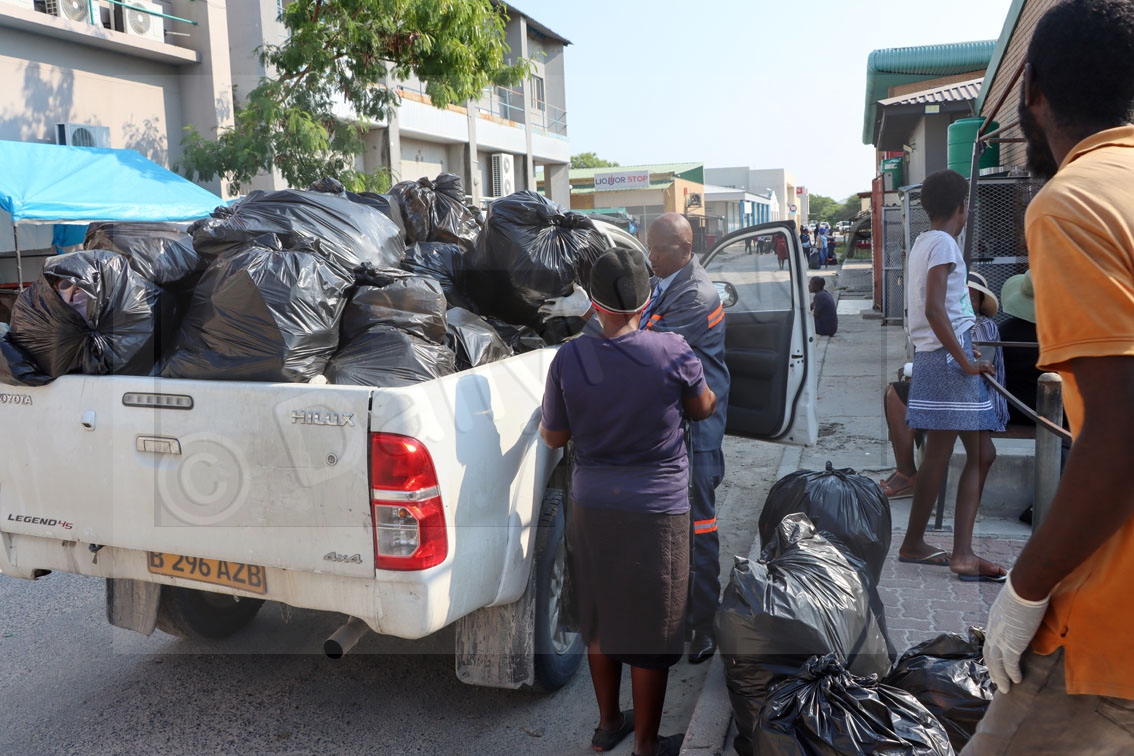
    The push for a cleaner Maun gained momentum on Friday as North West District Council (NWDC) launched the #KeepMaunClean campaign, linking environmental responsibility to tourism growth, business appeal and community pride.
    Community members, local leaders and volunteers fanned out across selected areas of Maun to clear litter and restore public spaces, reinforcing the idea that environmental responsibility begins at the community level before it becomes national policy.
    The campaign aligns with a directive introduced by the President of Botswana, which designates the second Saturday of every month as a national clean-up day aimed at fostering a culture of shared responsibility across the country.
    Kgosi Oleyo Ledimo, who delivered welcoming remarks during the launch, urged residents to fully embrace the initiative, describing cleanliness as both a civic duty and an economic asset that enhances Maun’s appeal as a tourism destination while attracting customers to local businesses.
    For his part, Deputy District Commissioner, Mr Ramogapi Gaborekwe described the campaign as a practical step towards building disciplined and responsible communities, stressing that cleanliness should be embedded in everyday behavior rather than treated as a once-off event.
    “Cleaning our environment should not come as a directive from leaders or council, rather it should start from an individual,” he said.
    North West District Council chairperson, Mr Itumeleng Kelebetseng echoed the call for collective ownership, noting that lasting change begins at the household level and naturally extends to workplaces and ultimately public spaces.
    “If we take care of our immediate surroundings, Maun as a whole will reflect that effort,” he said.
    Maun resident, Ms Gaone Bontsinyane expressed optimism that sustained participation by all will see Maun set an example for other towns, demonstrating that consistent community action can deliver visible and lasting results.
    Beyond litter collection, the #KeepMaunClean campaign positions cleanliness as a long-term mindset, linking environmental stewardship to public health, tourism growth, and community pride.

  • New Choppies store brings hope for Youth

    New Choppies store brings hope for Youth

    Botswana has long struggled with a high unemployment rate, particularly affecting the youth, especially graduates who had high hopes after obtaining their qualifications. Although various youth programmes and self-empowerment initiatives were launched, the sounds of unemployment still echoed throughout the nation.

    As survival skills became essential, the concept of hustling increased on the streets, with many engaging in selling items like ice cream, popcorn, and snacks at roadside stalls, as well as perfumes and other goods around offices.

    In some areas, traditional practices like ‘go tshwarwa ga phane,’ once solely performed by the elderly, saw an influx of young people participating.

    The number of young Batswana working as house helpers or maids roles commonly done by foreigners also rose significantly. These changes emerged from rising living costs and the burdens placed on parents, leading many to adopt hustling as a necessary means of survival.

    In response to the government’s call for collaboration from the private sector to tackle this pressing issue, Choppies, a major retail chain with about 107 stores nationwide and over 13 000 employees mostly youth, women, and individuals with disabilities stepped up significantly.

    The recent opening of a store in Francistown at Gerald Estates brought hope to individuals like Ms Bomo Reetsang, who was offered a cashier position, which felt like a beacon of hope during difficult times.

    Ms Reetsang, a 34-year-old mother of four, had endured 15 years of struggle filled with side jobs and waiting for her chance to break through. Balancing multiple jobs like doing laundry for cash and selling phane made life challenging. However, her new role at Choppies promises to ease her burdens and ensure her family’s needs will be met consistently.

    With this job opportunity Ms Reetsang will now have a steady income, which will enable her to provide for her kids, and now has a place of work which has put an end to her wandering about everyday in search of odd jobs. It is a chance to breathe easier while building a better future.

    Ms Reetsang aims to enhance her financial skills and make wise use of her salary while avoiding unnecessary expenditures.

    “I plan to utilise metshelo wisely. It will help me manage my responsibilities. I intend to save so that I won’t face difficulties during tough times,” she shared.

    To maintain her job security, she prioritises excellent customer service. She is committed to ensuring that customers leave Choppies satisfied and eager to return.
    “It’s crucial to keep our customers happy. As an employee, I must treat them well and ensure they receive appropriate assistance during their shopping experience,” she expressed joyfully.

    Grateful for her opportunity, Ms Reetsang encourages her colleagues to uphold high customer service standards. “Given the high unemployment rate, I believe that anyone granted such an opportunity must take their job seriously and fulfil their responsibilities diligently,” she emphasised.

    For those still seeking employment, Ms Reetsang believes that delays do not equate to denial.

    “Keep pushing forward, continue with side jobs instead of sitting idle. God has a good plan for all of us; it may take time but eventually your opportunity will come. I am currently celebrating my chance with Choppies after so many years,” she advised kindly.

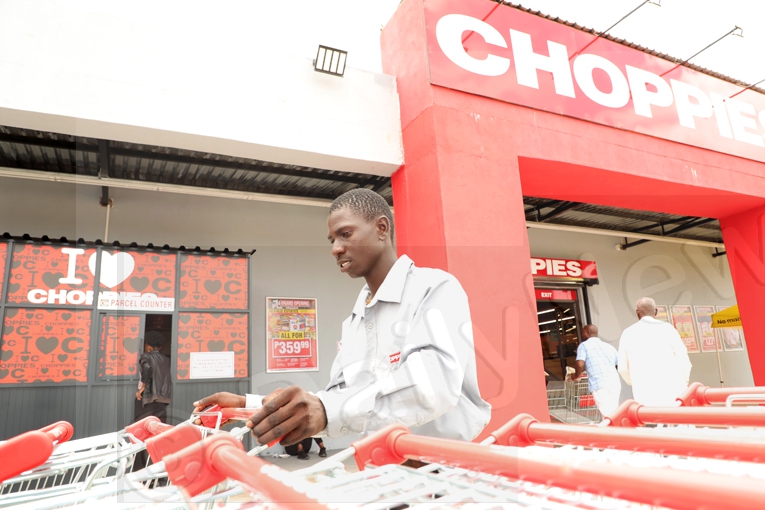
    For 21-year-old Mr Nchidzi Motswaiso, receiving a position as a trolley marshal is an incredible development in his life.

    Having depended on his mother and siblings until now, Mr Motswaiso is excited about being able to buy things for himself, which brings him immense pride.

    “My mother and siblings have been very supportive. I am truly grateful to Choppies for this opportunity; it’s my time to become independent,” he said with a smile.

    Despite his youth, Mr Motswaiso has ambitious plans for the future. “With the salary I will earn, my goal is to continue my studies. This job is very important for me and will be incredibly beneficial,” he explained.

    Choppies Gerald Estates was officially inaugurated by Francistown West Member of Parliament Mr Ignitius Moswaane on January 30.

    The store has created 70 job opportunities primarily for residents of Francistown. The establishment is expected to provide community benefits by enhancing convenience and accessibility for local residents’ daily needs.


  • Relief for farmer as authorities chooses vaccination over depopulation

    Relief for farmer as authorities chooses vaccination over depopulation

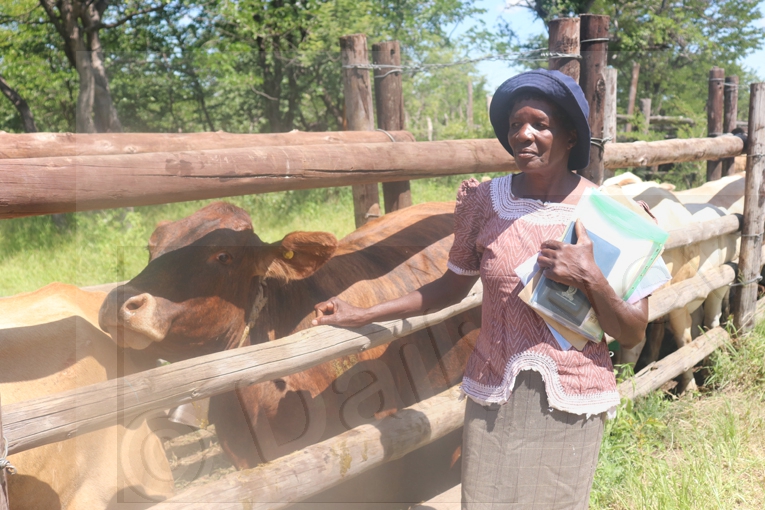
    Two previous Foot and Mouth Disease (FMD) outbreaks, one in 2013 and another in 2022, left Ms Rebecca Dube of Jackalas No. 1 devastated and almost pushed her back into poverty.

    She had started to record some steady growth in her cattle farming venture, but the depopulation of Zone 6b that followed both outbreaks set her back many steps.

    The confirmation of the current wave of FMD in the area brought to the surface unpleasant memories, dimming a light in her soul that had begun to shine ever-so-brightly. The 63-year-old Ms Dube did not want to yet again relive her two previous experiences. Fear and despondency set in, and the light in her threatened to flicker out.

    The announcement that followed that this time around the area would not be depopulated jolted her back to life, instantly taking off her shoulders the heavy load that was weighing her down just moments earlier.

    “I am elated because this time around I am not going to lose my cattle,” Ms Dube said in an interview, explaining that losing the high quality breed of cattle that she had received during the 2022 re-stocking exercise would send her to an early grave.

    The fact that her cows will be calving for the first time since she received them would have made losing them a truly heart-wrenching experience.

    But she is happy that a decision has been taken to vaccinate cattle in Zone 6b and not to depopulate the area like it has been done before.

    This decision has encouraged Ms Dube to hold on to cattle farming; an undertaking that has already started paying off handsomely, in the process allowing her to improve her life.

    Ms Dube, whose love for cattle rearing starting at childhood, has so far used proceeds from cattle sales to buy a vehicle and to adequately provide for her family.

    The journey of keeping cattle commenced in earnest in 2008 when she started raising funds through selling firewood and through weeding ploughing fields at a fee. She would save part of the income and buy one cow at a time.

    Ms Dube was now on course to realise her dream of using cattle rearing as a ladder to sustainable wealth creation.

    “I love cattle because to the ordinary Motswana they represent a bank. The Setswana proverb that says Ka e tlhoka ka tlhoka boroko, ka e rua le gone ka bo tlhoka signififies how valuable cattle are to a person like myself,” she said.

    The drive to raise money for buying cattle continued and along the way it paid dividend as she managed to collect P3 500 to purchase her first cow.

    Ms Dube looks back with pride to the time she bought her first cow.

    “After buying that cow, which then gave me a calf, I continued selling firewood and soon managed to buy another cow.”

    “It was a dream come true for me,” she stated.

    The two cows became a huge motivation for Ms Dube to keep going and she has not looked back since in spite of the re-occurrence of FMD in Zone 6b.

    Principal technical officer at the Department of Veterinary Services Mr Millan James confirmed in an interview that Zone 6b will not be depopulated but cattle will instead be vaccinated to avoid subjecting farmers to the distress they had gone through with the previous outbreaks.

    Surveillance and vaccination will continue for some time, and could result in the area being declared a Red Zone, similar to Okavango and Chobe regions.

    The move has given farmers the much-needed reprieve and Ms Dube could not be happier.

  • Africa coming to Botswana

    Africa coming to Botswana

    Botswana is set to take centre stage as the host of the All-Africa Senior Championships, marking the country’s triumphant return to the continental stage.
    The six-day tournament begins on February 9 and runs through February 14 to end the long period of absence for the local squad.
    The last time the Botswana badminton team competed in the event was in 2013, when it was hosted in South Africa. Since then, financial constraints have forced players to remain on the sidelines as spectators.
    Now, by serving as the host nation, Botswana has paved the way for a major competitive comeback.
    To ensure that they make a statement on home soil, the national team recently completed an intensive training camp in India and returned home yesterday.
    Meanwhile, the tournament is a cornerstone of the badminton calendar, drawing entries from 21 countries, including powerhouses like Egypt, Nigeria and South Africa.
    Other participating countries include Algeria, Botswana (host), Burundi, Cameroon, Ivory Coast, Democratic Republic of Congo, Equatorial Guinea, Ghana, Lesotho, Madagascar, Morocco, Mauritius, Kenya, Rwanda, Seychelles, Uganda, Zambia and Zimbabwe.
    The championship will feature the continent’s elite talent competing in both individual and team categories.
    Under the tutelage of coaches Oreeditse Thela and Keita Fukuda, athletes who will represent the nation include Tefo Kabomo, Godknows Ketlhabanetswe, Tshepo Perekisi, Tumelo Moilwa and Tsamorena Kgosidialwa in the men’s team.
    The women’s squad comprises Keletso Ntebela, Tsholofelo Willie, Tebogo Ndzinge and Tessa Kabelo.
    In an interview, Botswana Badminton Association (BBA) president, Modisaotsile Badubi confirmed that the tournament was sanctioned by both the Badminton World Federation (BWF) and the Badminton Confederation of Africa (BCA).
    Badubi said he was happy to have been given the opportunity to host, noting that the event allowed Botswana to showcase its infrastructure, hospitality and sporting passion.

  • Jackalas No. 1 enters red zone protocol following FMD outbreak

    Jackalas No. 1 enters red zone protocol following FMD outbreak

    Long-term surveillance remains critical priority for the Department of Veterinary Services as it grapples with a recent outbreak of Foot and Mouth Disease (FMD) in Jackalas No. 1.

    Following the detection of the disease two weeks ago, the village has been declared a Red Zone, triggering rigorous monitoring and vaccination campaign.

    In an interview, Principal Technical Officer, Mr Millan James, emphasised that the battle against FMD did not end with a single injection.

    “Aft er vaccinations, surveillance exercises will continue to check for possible signs of FMD,” Mr James stated.

    The department’s strategy hinges on a multi-year commitment, including continued monitoring, which would see surveillance extended to goats and other cloven-hoofed wildlife, such as kudu and impala, to ensure the virus was not circulating in other species.

    The path to Green Status would succeed only if surveillance results eventually showed that FMD prevalence had ceased and the Ministry of Lands and Agriculture will apply to the World Organisati on for Animal Health (WOAH/OIE) for Green Status.

    Achieving this status is the only way to lift current slaughter embargoes and return the zone to its original market standing.

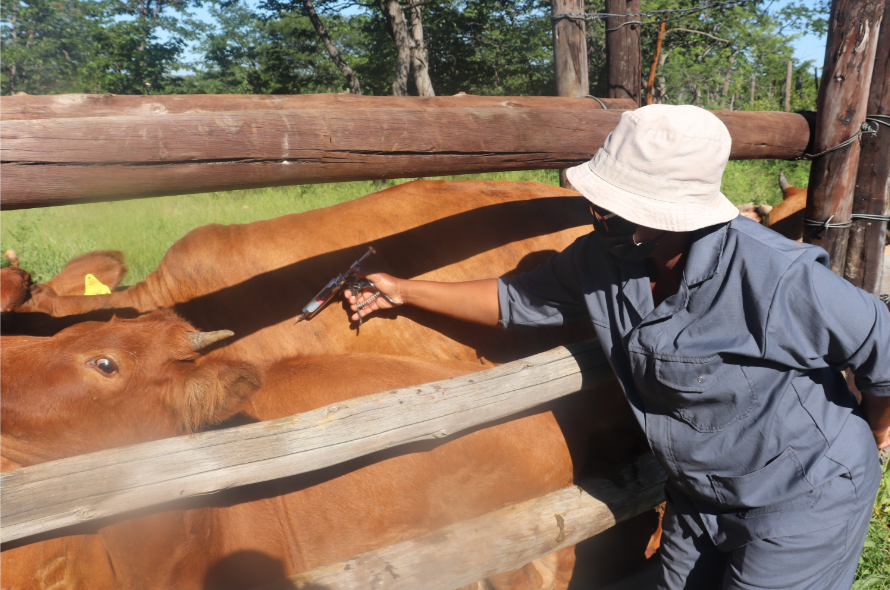
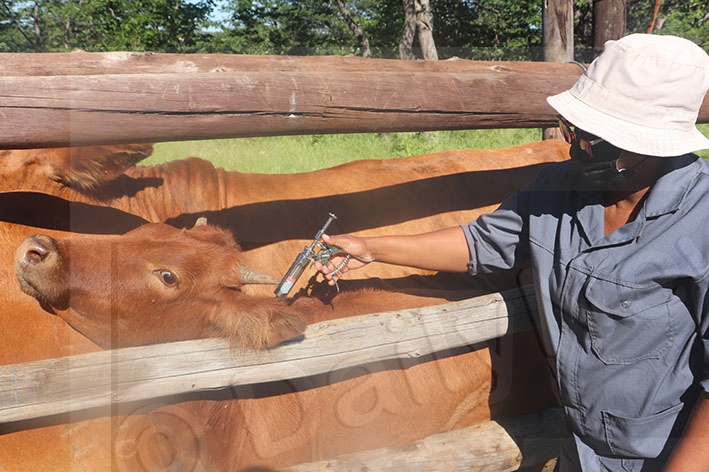
    Approximately 700 cattle were expected to be vaccinated in the initial phase.

    Mr James explained that the 2-in-1 vaccine was designed to prevent infection and reduce the efficacy of the disease.

    Mr James said vaccinated livestock would be marked with an ‘H’ brand on the right leg.

    He added that a booster jab was scheduled for February 17 (14 days aft er the initial dose), with another booster expected toward the end of the year.

    Furthermore, he said vaccination and surveillance may continue for up to three years, adding, if the virus persisted, the area may be classified as a permanent Red Zone, similar to the Okavango and Chobe regions.

    He indicated that the recurrence of FMD had caused significant distress for Zone 6b farmers, many of whom were still recovering from the 2022 outbreak and subsequent restocking efforts in 2023/2024.

    Farmers Committee chairperson, Mr Dignity Mtombeni, said he suspected that previous restocking may have occurred before the area was fully cleared.

    Thus, he urged government to engage in bilateral talks with Zimbabwe to find a trans-border solution, suggesting a repeat of the 2008 exercise where Botswana vaccinated cattle within a 40km radius inside Zimbabwe.

    Regarding the dilapidated border fence, Mr Mtombeni said they had volunteered to assist government, saying ‘Mophato or community regiments were ready to cut poles and maintain the fence if government provided the materials.”

    Councillor for Jackalas No. 1/ Ramokgwebana, Mr Morapedi Mafohla, commended farmers for their cooperation during recent kgotla meetings.

    While the situation was diffi cult, he noted that farmers were grateful that government opted for vaccination over depopulation and preserving their high-quality breeds.

    Mr Mafohla urged all farmers to herd and kraal their cattle strictly to prevent mingling with potentially infected animals, stressing that community discipline was the first line of defense in the surveillance eff orts.

  • UNICEF donation brings joy to Kgatleng schools

    UNICEF donation brings joy to Kgatleng schools

    The United Nations’ Children’s Fund (UNICEF)’s School In a Box kit holds much more than just school supplies.

    It represents hope and the right to education for children in rural communities and the low-income families. For early childhood learning, the school in a box kit apart from learning continuity, also provides healing to children who have lived through times of trauma.

    The School In a Box kit initiative according to UNICEF country representative to Botswana, Dr Komanzi Mothengi also brought about joy to the children as some develop new found excitement for school. Speaking during the handing over of a donation to primary schools in Kgatleng District, in Oodi on Monday, Dr Muthengi said following the flood that affected schools across the country last year, UNICEF found it fit to donate some school supplies to stimulate learning.

    He said UNICEF learnt that thousands of families and 1 800 children were affected by the flood, preventing some children from going to school since many communities in Kgatleng and other districts were affected.

    The donation that included 78 boxes of early childhood leaning material, 50 boxes of stationery, 2 006 school bags and 46 boxes of recreational material targeted 20 000 learners across the country, and is part of UNICEF’s mandate:No Child is left Behind.

    Since government prioritises Science, Technology, Engineering and Mathematics (STEM), Dr Muthengi said UNICEF had partnered with government to attain the education transformational process.

    “We are committed to strengthening Botswana’s education by working with other partners to supplement these efforts,” he said.

    Minister of Child Welfare and Basic Education, Ms Nono Kgafela-Mokoka, acknowledged UNICEF’s impactful support in foundational learning, and that the donation would complement government’s interventions underway to strengthen STEM.

    She commended the organisation for playing a part in education, stating that government’s partnership with UNICEF was critical in providing support to vulnerable children and bridging the education gaps.

    Ms Kgafela- Mokoka assured partners that donation would be used transparently and in line with its intended purpose.

    The ministry’s permanent secretary, Ms Mmamiki Kamanakao, said the timing was appropriate, when STEM driven education should be strengthened in accordance with the ambitions of the new administration.

    She said the ministry had been tasked with ensuring that the learning environment was child friendly as the enrolment of foundational learning was increased.

    “It is worth mentioning that these materials are offered in live with government’s STEM curriculum for early childhood development,” he said. Meanwhile Kgatleng East MP, Mr Mabuse Pule, noted that the collaboration between UNICEF and government had yielded positive results in early childhood learning.

    “UNICEF has always been a strategic partner in providing expertise to education and improving learning outcomes. This donation will complement government interventions in hard-to-reach areas,” he said.

    Mr Pule appealed to government to prioritise fixing dilapidated school infrastructure and learning resources.

  • Mass vaccination targets 700 cattle

    Mass vaccination targets 700 cattle

    Approximately 700 cattle in Jackalas No.1 in the North East District are expected to be vaccinated for Foot and Mouth Disease (FMD) through the two-day mass vaccination exercise, as government moves to contain the outbreak in the area.

    According to Principal Technical Officer in the Department of Veterinary Services, Mr Millan James, booster jabs would follow after 14 days, with continued surveillance for clinical signs set to be carried out on the livestock.

    Zone 6B will remain a Red Zone, while another booster vaccination will be done towards the end of the year, he added.

    Meanwhile, government has set aside P97 million for vaccination, maintenance of cordon fences and manpower deployment to fight FMD.

    Additionally, the government has put in place measures to control the spread of the disease, including strict quarantine protocols, restrictions on livestock movement, and awareness campaigns for farmers.

    Meanwhile, transportation, movement or slaughter of cloven-hoofed animals, including for personal consumption or social events (such as weddings, funerals and megoga) is prohibited countrywide except in Zones 1 (Chobe) and 2 (Ngamiland).