Category: Parliament

  • BVI Sets up Lab to Scale up Production

    BVI Sets up Lab to Scale up Production

     In an effort to address ageing infrastructure and unlock additional capacity, a new Blending and Filling Laboratory is currently under development at the Botswana Vaccine Institute (BVI).

    The 2026 budget speech highlights that the investment will significantly increase production capacity, ensure full compliance with Good Manufacturing Practices and enable the diversification of vaccine products, thereby positioning BVI to strengthen regional supply chains and contribute meaningfully to export-led growth.

    The facility is expected to be completed in the 2026/2027 financial year. 

  • Govt Launches Strategic Policy Instrument

    Govt Launches Strategic Policy Instrument

    Government will launch the Botswana Mercantile Exchange (BMX) as a strategic policy instrument to support economic diversification.

    Minister of Finance, Mr Ndaba Gaolathe outlined in the 2026 budget speech on Monday that the BMX would introduce an organised, market-driven pricing mechanism for commodities such as sorghum and beef, aligning domestic prices with international benchmarks.

    This is expected to reduce income volatility for local producers and to improve price discovery, he said.

    Minister Gaolathe added that the BMX would contribute to reducing Botswana’s over-reliance on diamonds by creating new value chains, positioning the country as a regional trading hub, and strengthening integration into global trade networks.

  • Parliament Approves Citizenship Amendment Bill

    Parliament Approves Citizenship Amendment Bill

    Parliament on December 17 voted in favour of the Citizenship Amendment Bill of 2025, tabled by the Minister of Labour and Home Affairs, Major General Pius Mokgware.

    The amendments to the current Citizenship Act brought about by the bill would permit multiple citizenship, where a person is legally permitted to be a citizen of Botswana and other countries simultaneously, in particular targeting high end investors.

    Maj. Gen. Mokgware said Botswana was part of a globally competitive economic environment and thus sought to lure investors to be domiciled in the country, in order to create jobs, increase the country’s revenue streams and help finance its economic transformation efforts.

    The minister said there were many considerations that investors made before choosing where to locate their business, and the citizenship programme would make Botswana a more conducive climate for luring capital into the country.

    He allayed MPs’ concerns that the new piece of legislation could engender economic crime, stating that Botswana had the capacity to vet out any criminal elements, and only target genuine investors, and there would be requisite checks and balances.

    The Minister of Child Welfare and Basic Education, Ms Nono Kgafela-Mokoka said her experience of visiting the Emirate of Dubai in the United Arab Emirates (UAE) was that their city developed rapidly, turning a desert to world class status, owing to the UAE freely permitting high value individuals to gain citizenship while holding their original nationality.

    She said the bill clearly stipulated in section 4 that it specifically targeted people who would be involved in manufacturing, mining and energy, agriculture, infrastructure, financial services, tourism, technology and digitalisation, sport and creatives, health, green energy and renewable energy, as well as other sectors as prescribed.

    Francistown South MP and Minister of Environment and Tourism, Mr Wynter Mmolotsi said permitting multiple citizenship would help Botswana to curb the brain drain of citizen doctors and other professionals trained at a great cost to the country renouncing Botswana citizenship upon getting job offers elsewhere.

    He said the country needed to be industrialised and through the bill, Botswana was seeking to lure investors to create jobs and generate wealth in areas such as the manufacturing sector.

    Mr Mmolotsi said those who gained citizenship under the system would be denied full rights such as the right to vote, in recognition of the fact that they would also have allegiance to their other countries of citizenship, but in this country, their citizenship would principally facilitate their investment.

    To the contrary, Selebi Phikwe East MP, Mr Kgoberego Nkawana said the new bill would pose challenges, particularly since there was no cap on the number of citizenships of other states the Botswana passport holder could have.
    Mr Nkawana said the new legislation could open a route for Botswana to be utilised by unscrupulous businessmen engaged in such corrupt practices.

    Maun East MP, Mr Goretetse Kekgonegile said he had publicly supported the notion of the introduction of dual citizenship, particularly to cater for children who were born to a Motswana parent married to a non-citizen, in order that they would not have to renounce their Botswana citizenship as had been the case before.

    But he said he was against multiple citizenship offered for economic purposes as it could make Botswana susceptible to corruption and economic crime. Mr Kekgonegile said this could lead to the Botswana passport losing its value, whereas it had hitherto been globally recognised as one of the most respected in the African continent with visa free entry to many jurisdictions.

    Kgatleng East MP, Mr Mabuse Pule said a piece of legislation was not necessary, stating that targeted investors could be offered permanent residence instead of citizenship.

    Mr Pule said those offered multiple citizenship might in future legally seek the full rights of citizenship. The majority of MPs voted in favour of the bill, which now passes the second reading and heads to the committee stage for detailed clause by clause scrutiny before it could pass and await to be signed into law. 
  • Gaborone Station Upgrade

    Gaborone Station Upgrade

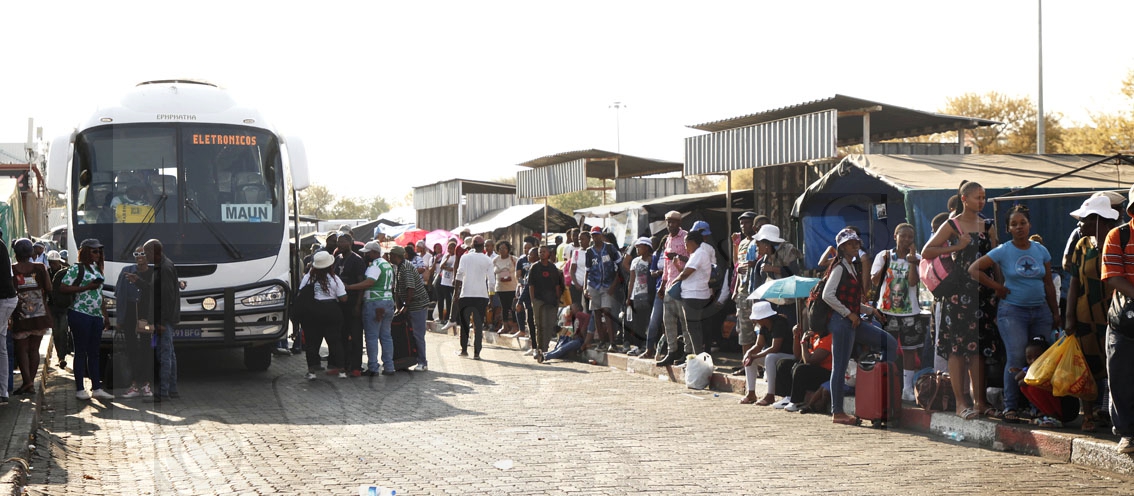
    The upgrade of Gaborone Bus and Taxi terminal is  essential for urban renewal and efficiency to improve safety and security, streamline transport operational efficiency, and contribute to the broader Greater Gaborone development as a modern, vibrant economic hub Motshegwa.

    The development works being undertaken at the Gaborone Bus and Taxi terminal is vital for greater public transport efficiency beneficial to the capital, and the temporary displacement of traders who operate at the station is a short term necessity.
    This was said by the Minister of Local Government and Traditional Affairs, Mr Ketlhalefile Motshegwa, on Friday at the National Assembly in response to a question without notice from Mogoditshane East, Member of Parliament, Mr Letlhogonolo Barongwang.
    Mr Motshegwa said the ongoing development works were necessary to modernise the public transport infrastructure in Gaborone, enhancing safety, efficiency and urban vibrancy saying temporary displacement of informal traders was unavoidable to construct the new, multi-level, and safer terminal.
    He added that the displacement had been necessitated by the need to clear the site for the construction of a new and larger modern facility, which would include new underground services and structured commercial spaces, with a long-term goal of formalising the informal sector into better facilities.
    “Consultation is ongoing and structured through dedicated communication channels to ensure continuous stakeholder engagement. This includes the formation of dedicated committees comprising representatives from traders, the Gaborone City Council (GCC), and the project team to facilitate consistent feedback,” said Mr Motshegwa.
    He added that regular meetings were being held to provide timely updates, address any concerns, and to explain the temporary relocation process and the future stall allocation procedures.
    “A mandatory verification process is also in place to accurately identify and register all legitimate traders, ensuring they receive critical communications and are prioritized for re-allocation within the new terminal,” said Mr Motshegwa.
    He further revealed that as a means of minimising disruption, there were designated areas adjacent to the operational hub prepared with basic amenities, in particular shelter, sanitation and lighting, maintaining proximity to commuters.
    “In addition, there is provision for waiving market or vending fees for the temporary sites to reduce operating costs. Furthermore, collaboration with agencies like Citizen Entrepreneural Development Agency (CEDA) to explore offering temporary, low-interest micro-loans to help traders meet financial obligations during the transition period,” said Mr Motshegwa.
    Also, the upgrade offers substantial long-term benefits across key stakeholder groups, Mr Motshegwa said.
    These would include traders receiving an allocation of formal, modern stalls featuring better security, reliable electricity, and improved sanitation, which is expected to cultivate a more professional business image and significantly increase customer volume, the minister stated.
    Commuters would also enjoy an improved user experience within a safer, cleaner, and covered terminal, benefiting from efficient transport services and clear organisation.
    He further revealed that tender awards were made to two companies, Silverpark and MADCO in September 2024 and July 2025 respectively and that the first phase was expected to be complete by end of 2026.
    Mr Barongwang had asked the minister to clarify to Parliament the rationale behind the ongoing development works at the Gaborone Bus and Taxi Terminal, particularly in relation to the temporary displacement of informal traders, and further outline. 

  • Legislators Approve Health Loan Bill

    Legislators Approve Health Loan Bill

    Parliament has voted in favour of the approximately P584 million loan for the Health Emergency Response and Resilience Project.
    The loan facility, comprising US$40 million from the International Bank for Reconstruction and Development (IBRD) and a grant of US$3 million from the Liveable Planet Fund, was passed by Parliament on Thursday with only one out of 29 present members voting against the bill.
    The Emergency Preparedness Response and Resilience Project, International Bank for Reconstruction and Development (IBRD) Loan Authorisation Bill, 2025 (Bill No. 34 of 2025), authorises the government to raise a loan from IBRD for the Health Emergency Preparedness Response and Resilience (HEPRR) project.
    Before its passing, Vice President and Minister of Finance, Mr Ndaba Gaolathe, thanked Members of Parliament for the overwhelming support of the bill during their deliberations.
    He explained that the loan would aid in laying a solid foundation in closing gaps in the health sector, which had contributed to the current challenges.
    Thus, he said the loan would ensure that future generations enjoyed better healthcare.
    The money would, among other things, help to address supply chain digitalisation, and the impact of the facility would be felt throughout the country, Mr Gaolathe said, further explaining that the grant would go towards establishing the project office, to ensure that expenditure was on the intended purpose.
    Mr Gaolathe said the loan would be used for addressing health emergencies in the health sector, noting that the country was unprepared for emergencies, just as it was during the outbreak of the COVID-19 pandemic.
    As a result, the country cannot afford to traverse the same route of unpreparedness, and fail to protect its people, Mr Gaolathe said, further stating that the loan facility came with better terms of payment, a lower interest rate, and payment terms.
    When Parliament passed the country’s budget earlier this year, Mr Gaolathe said, it did so with a deficit, which the government had to address, and it could only raise the money through its own sources or through borrowing, which he assured that was within set borrowing limit range of less than 40 per cent of its Gross Domestic Products (GDP).
    Maun North MP and Leader of Opposition, Mr Dumelang Saleshando, supported the bill but warned that the country should be cautious as its credit rating had been downgraded, and that affected its creditworthiness.
    He said such came at a time when it was approaching its set legal borrowing limits of 40 per cent of GDP, explaining that such could signal tough times.
    Through the loan, Mr Saleshando said the country could be setting a debt trap for future generations, thus calling for fiscal discipline from the government and pleading that the money be used for the betterment of the health sector.
    Kanye West MP, Mr Victor Phologolo, said the loan should be for shaping the country’s health sector which currently was broken down, by building a resilient health system.
    Human capital is the most valuable resource to build the economy of any country, and therefore, a healthy workforce is important to grow the economy, Mr Phologolo said.
    Mr Phologolo said it was the responsibility of the government to provide healthcare to its citizens, and that such could be done through borrowing since it was one of the modalities used for funding in the world.
    Thamaga-Kumakwane MP, Mr Palelo Motaosane, also supported the bill but said his only worry was bringing it on a certificate of emergency, something that was a trend with the previous administration.
    That he said he did not support.
    However, his reason for supporting the bill he said was because the budget was passed with a deficit, and so, borrowing was a method used for financing the budget.
    He said his constituency’s health facilities improvements were not included in the National Development Plan 12, yet Thamaga Primary Hospital needed attention.
    Also, he said the country should learn from previous misfortune and prepare, giving an example with COVID-19 and how it exposed the health sector’s weaknesses.
    Preparedness should include issues of staffing, he said.
    Mr Motaosane observed that the Ministry of Health had many doctors doing administrative duties, instead of what they were trained for.
    That should be revised and doctors be deployed to their professional duties, Mr Motaosane advised.
    The legislator cautioned the government against direct appointment, saying it bred corruption. 

  • Domestic Beef Consumption Surges

    Domestic Beef Consumption Surges

    Botswana is a net exporter of beef and produces more than is required for domestic consumption

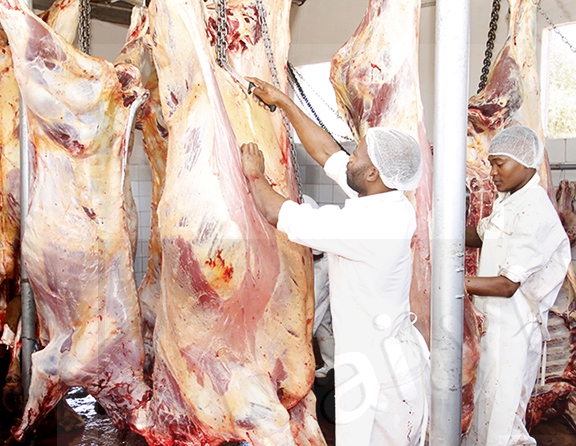
    The Acting Minister of Lands and Agriculture, Dr Edwin Dikoloti told Parliament on Tuesday that domestic beef consumption over the past three years amounted to 27 156.4 tonnes (135 773 cattle) in 2022, 32 258.6 tonnes (161 293 cattle) in 2023 and 39 577 tonnes (197 885 cattle) in 2024.

    He said the value of domestically consumed beef was P768.9 million in 2022, P806.5 million in 2023 and P989.4 million in 2024 valued at P5 000 per animal.

    Dr Dikoloti said the figures provided were for beef from cattle slaughtered in established abattoirs, which were certified for human consumption.

    He said cattle theft was a huge problem and that a lot of cattle were killed illegally in the bush and the meat was sold through informal market.

    Such meat is not for for human consumption as it is not inspected and not processed under hygienic conditions, Dr Dikoloti said.

    He was responding to a question from Kanye West MP, Mr Victor Phologolo who asked the minister to brief the House on the estimated demand for beef in Botswana market in terms of the number of cattle, quantity of meat and value in the last three years.

    Mr Phologolo also wanted to know whether all meat sold in the domestic market came from established abattoirs and had been certified fit for human consumption. 

  • Selebi Phikwe Citrus Project to Train Pickers

    Selebi Phikwe Citrus Project to Train Pickers

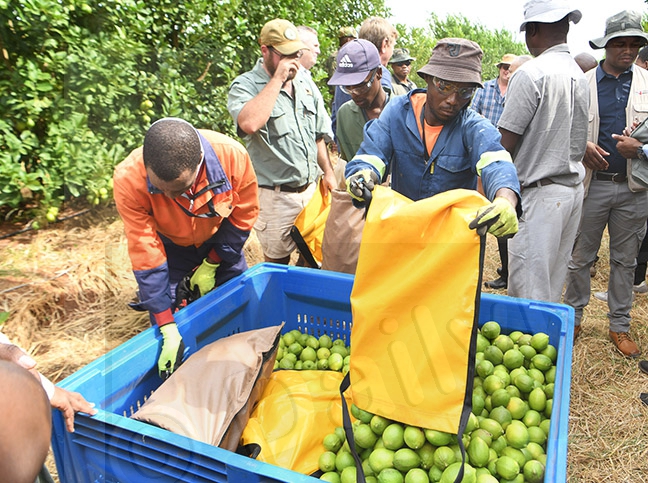
    Out of the 696 farm workers currently employed by the Selebi Phikwe Citrus Project, 320 are Batswana employed on permanent basis while 110 are Batswana temporary workers.

    In addition to that, 200 are seasonal temporary Batswana workers engaged for picking and packing while 66 are seasonal temporary foreign national farm workers engaged for the same purpose. There were no permanent foreign nationals farm workers at the moment.

    Minister of Labour and Home Affairs, Major General Pius Mokgware shared with Parliament recently, also stating that there were 14 Batswana workers who occupied managerial positions and one Motswana at directorship position while eight foreign nationals also occupied the same positions.

    Maj. Gen. Mokgware cited lack of professional picking and packing skills, which were not available in Botswana as one of the reason for importing labour from other countries.

    This is a job or skill that is learned overtime and needs a lot of practice and muscle memory for one to be able to do fast and without damaging the fruit, Maj. Gen. Mokgware said, adding that the company was in the process of conducting on the job training, to impart skills to the locals so as to allow them to learn from the experienced foreign pickers.

    Minister Mokgware said that Selebi Phikwe Citrus was anticipating to further employ at a rate of two Batswana per foreign national as pickers and packers in the coming season.

    The project anticipates that it will need around 450 pickers and packers in total for the coming season hence would need 150 more farm workers.

    Selebi Phikwe Citrus Project started five years ago in collaboration with various stakeholders who continue to work closely together, produces valencia oranges, seedless lemon and grapefruit mainly for export.

    It has harvested 22 000 tonnes of produce in the current season with an intention of producing 40 000 tonnes in the next planting season.

    Selebi Phikwe West MP, Mr Reuben Kaizer had requested the minister to share the number of foreigners versus Batswana currently employed as farm workers, the number of Batswana who occupy managerial and directorship positions respectively and the reasons for importing abour from neighbouring countries.

  • BPC Stabilises Operations

    BPC Stabilises Operations

    The Botswana Power Corporation (BPC) has recently experienced delays in settling payments to some of its suppliers. This was said by the Minister of Minerals and Energy, Ms Bogolo Kenewendo in response to Tati East Member of Parliament on Monday, who wanted clarification on the number of Botswana contractors who were owed by the corporation since 2019, the total amount owed and what was being done to normalise its operations and pay contractors on time. 

    Minister Kenewendo explained that the delays were largely driven by significant financial pressures arising from elevated power import costs over the past several years. 

    “It is important to highlight that for the 2022/23, 2023/24 and 2024/25 financial years, there were no corresponding electricity tariff adjustments despite sustained increases in the cost of generation and supply,” said Minister Kenewendo. 

    She stated that the structural misalignment between revenue and operating costs had placed considerable strain on BPC’s liquidity position, thereby affecting its ability to consistently meet supplier obligations within the prescribed timeframes. 

    Notwithstanding these challenges, she said BPC remained committed to restoring financial stability, strengthening internal controls, and improving payment turnaround times. 

    The Minister said as at October 31, BPC confirmed that there were no outstanding invoices dating back to 2019, and that should any supplier provide evidence or invoices from that period, BPC was ready to investigate and resolve the matter promptly. 

    Minister Kenewendo further stated that the corporation acknowledged outstanding invoices relating to the 2020 to 2023, valued at P3.72 million, owed to five small works contractors. 

    The delays in concluding these payments primarily stemmed from unresolved technical issues encountered during project commissioning, which prolonged the verification and final acceptance processes required prior to payment, Minister Kenewendo said. 

    She said the corporation had among others, instituted a suite of interventions aimed at improving its financial position and normalising payment performance. 

    Minister Kenewendo assured the House of BPC commitment to further stabilising its operations and ensuring that contractors were paid timeously in line with contractual requirements or obligations.