Police officers manning the Greater Gaborone Traffic Signaling System Modernisation, which is scheduled to be launched by President Advocate Duma Boko today. The project forms part of the Botswana Integrated Transport Project and includes the modernisation of traffic signals at key intersections, as well as the installation of 24-hour traffic surveillance cameras, all aimed at improving traffic flow, road safety and transport management. The initiative is financed by government, the World Bank through the International Bank for Reconstruction and Development and the OPEC Fund for International Development.
Author: Daily News
-
Gaolathe Pleads Common Ground on Eviction Talks
A season that brings profit has turned bleak for traders operating at the Gaborone bus rank market stalls, following a recent court order directing them to vacate the area by December 31.
The traders have been ordered to pave way for a private investor contracted to refurbish the market stalls and upgrade infrastructure around the Gaborone bus rank precinct.
The directive, intended to enhance safety, efficiency, public transport vibrancy and address health and safety concerns, has sparked widespread controversy and anxiety among vendors whose livelihoods depend on informal trading.
While authorities say the move will bring order and modernisation to the urban transport hub, vendor organisations have strongly criticised the decision, arguing that it threatens the survival of hundreds of families particularly women, who make up a significant portion of the trader population.
For many vendors, trading at the bus rank is not a matter of choice but necessity, especially in a country grappling with high unemployment and economic hardship.
“The bus rank has been my source of livelihood for all these years. Where will I go after the looming eviction is implemented,” lamented long-time vendor Mr Patrick Moatshe.
Mr Moatshe, who is visually impaired, accused government of reneging on its promises to protect vulnerable groups.
Similarly distressed is Ms Otsile Tsiakokwe, who has traded at the bus rank for over 15 years.
She said the proposed relocation would have a devastating impact on her family, particularly as she prepared for next year’s school expenses.
“My children’s school fees, monthly rent and groceries depend on this,” she said.
Ms Tsiakokwe said the relocation was ill-timed, coming at a period when family and social obligations peak due to the festive season.
She further highlighted that desperation was driving many into informal trading.
“With high unemployment and limited access to formal jobs, vending becomes a vital means of survival for many families,” she said.
Chairperson of the Gaborone bus rank traders’ association, Mr Batsweletse Mogabala, also expressed dissatisfaction, warning of dire consequences if the matter was not urgently addressed.
He appealed to Gaborone City Council to clearly communicate where vendors would be temporarily relocated during the face-lift of the bus rank.
Mr Mogabala said displacing traders without viable income alternatives would not only disrupt livelihoods but also worsen poverty levels.
“While the local authority raises legitimate concerns about the renovation, it is crucial to consider the broader socio-economic context,” he said.
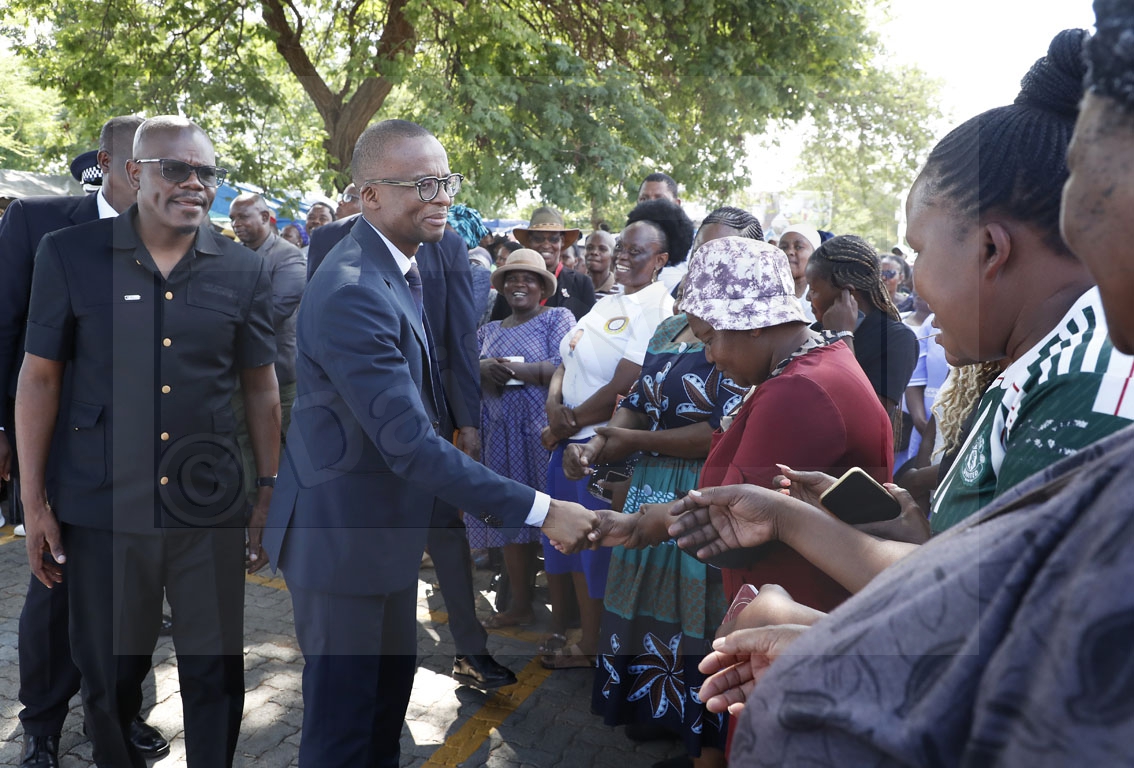
Responding to the vendors’ concerns during his recent interaction with them, Vice President and Minister of Finance, Mr Ndaba Gaolathe urged both local authorities and traders to find common ground and reach an amicable solution.
He acknowledged the significant contribution of the informal sector to the economy and reaffirmed government’s commitment to its growth.
The vice president, who is also Member of Parliament for Gaborone Bonnington South, encouraged vendors to unite and form cooperatives to strengthen their bargaining power.
Meanwhile, Gaborone City Council Mayor, Mr Oarabile Motlaleng acknowledged the difficult situation facing the vendors but said the council was bound to implement the court order.
He explained that the renovation tender was awarded through a lawful expression-of-interest process. The mayor added that temporary displacement of traders was unavoidable to allow construction of a new, modern multi-level terminal, which would be implemented in three phases, with the first phase expected to be completed by the end of 2026. -

Finance and Investment Competition Grows in Leaps and Bounds
Any vision, no matter how small, requires a dedicated partner to become a reality.
This sentiment was shared by Botswana Stock Exchange (BSE) Head of Market Development, Ms Thapelo Moribame, while welcoming guests at the 2025 BSE–Stanbic Bank Botswana Senior Secondary Schools Finance and Investment Competition National Awards Ceremony, held recently at the BSE Training Room in Gaborone.
Ms Moribane said the competition, launched in 2013 as a physical initiative, had evolved into a digitally driven programme. She explained that this year’s edition was delivered through a Stock Market Simulator a user-friendly, risk-free virtual trading platform designed to enhance financial literacy and broaden access to stock market education.
“For the 2025 edition, all participating schools began competing at regional level. Each school was allocated virtual funds to build and manage investment portfolios. We then identified the top three schools in each region and awarded them share vouchers,” she said. Regional winners advanced to the national finals, where they competed for the final prize. Ms Moribane noted a substantial increase in participation, with schools rising from 15 in 2024 to 28 in 2025.
She described the growth as evidence of the competition’s relevance among students and a reaffirmation of BSE and Stanbic Bank Botswana’s commitment to widening access to capital markets.
Ms Moribane revealed that a total of P115, 000 in share vouchers had been awarded to 55 participants, alongside P30, 000 in cash prizes to the top three schools.
She applauded Stanbic Bank Botswana for its sponsorship and partnership, describing the collaboration as strategic and anchored in a shared belief that empowering young people was critical to Botswana’s economic growth.
The Deputy Permanent Secretary in the Ministry of Child Welfare and Basic Education, Mr Steve Bothasitse, congratulated the winning schools, Al Nur School, Swaneng Hill School and Pioneer Academy for their outstanding performance.
“You have demonstrated exceptional resilience throughout this competition. The stock market is often viewed as complex, yet you embraced the challenge with determination and confidence,” he said.
Mr Bothasitse told learners that their participation sent a clear message that Botswana’s youth were ready to play an active role in shaping the country’s economy. He also praised the BSE–Stanbic Bank partnership, noting that the initiative reflected a deep commitment to youth empowerment, financial inclusion and national development.
He acknowledged that one of the ministry’s major challenges was that financial literacy was not yet strongly embedded in the mainstream curriculum, leaving many students unprepared for real-life financial decisions. Competitions such as this, he said, helped bridge the gap between education and industry, and between theory and practice.
“Financial literacy is no longer optional; it is an essential life skill,” Mr Bothasitse said, adding that government alone could not deliver every skill learners needed. Partnerships with industry, he noted, were vital in cultivating a culture of shared responsibility and investment in education.
He emphasised that child development was a national project requiring collective effort, and reaffirmed the Ministry’s commitment to nurturing and expanding collaborations for the benefit of every child. -

Enesia Moves to Second Spot With 4-0 Win
Enesia FC surged to second place on the log after a commanding 4–0 win over Mbalakalungu SC in a First Division North encounter played at the Francistown City Council Stadium on Saturday.
From the opening whistle, Enesia FC set the tempo with relentless attacking play, pinning Mbalakalungu SC deep in their half. Although several early chances went begging, the pressure eventually told.
The breakthrough arrived in the 37th minute when Kudzani Sibanda rifled home a superb strike. Momentum swung firmly Enesia’s way as Joseph Nkgoeng doubled the lead just four minutes later, sending the hosts into the break with a deserved 2–0 advantage.
Enesia FC wasted no time after the commencement of the second half . Mothusi Ipotseng struck in the 46th minute to make it 3–0, effectively ending the contest. Nkgoeng then completed his brace with an emphatic finish in the 68th minute to seal a comprehensive 4–0 victory.
In a post-match interview , Enesia FC coach Chris Mawanza praised his players’ cohesion and execution, expressing satisfaction with their progress and the quality of football on display. In contrast, Mbalakalungu SC coach Motlhagodi Baatshwana described the defeat as humiliating, citing travel fatigue after his side arrived shortly before kickoff.
The result lifts Enesia FC into second place behind Tsabotlhe FC, whose fixture against Sankoyo Bush Bucks was postponed.
In other fixtures, Tonota FC and BR Highlanders ended in a 1-1 draw; Ferry Wanderers triumphed over Eleven Angels with 3-0, JJ United secured a narrow victory against Motlakase Power FC with a final score 1-0. The match between Ndundu and Tshinyega Tigers FC was not played. -
BONA Life Catches Them Young
BONA Life has officially launched its partnership with the MAP Loxcion Golf programme, an investment that seeks to develop golf skills of young children aged between five and 13 years.
This is a reflection of BONA’s commitment to community development and a move that seeks to foster discipline and character-building in children through the sport.
The life insurer’s CEO, Phatsimo Keakabetse, expressed gratitude to those who came on board to support the programme, describing their involvement as a demonstration of strong community spirit.
Coach Mpho Kelosiwang, in an interview explained that the programme came into being April last year, to serve children in Maruapula, because of its proximity to the local golf course.
Initially, 76 boys and girls enrolled, but the number dropped to 40.
Kelosiwang said the programme was at some point temporarily interrupted because children had difficulties making it to the golf course, but the matter was resolved last November after a Good Samaritan provided transportation, allowing the children to continue their lessons.
Currently, 25 children attend training sessions twice a week, with three of the most promising performers receiving specialised training schedules.
Although the exact details of BONA Life’s sponsorship have not been disclosed, Kelosiwang mentioned that the company had received a request for support.
The five-year programme, operated by four coaches, is estimated to require around P450 000 annually.
Looking ahead, Kelosiwang spoke about plans to integrate tutoring into the programme next year, with the long-term goal of nurturing players capable of representing the country at national level. -
Transitioning of Special Constables Notable Milestone
The enlistment of special constables into the regular police establishment marks a significant milestone that will enhance police visibility, boost officer morale and build a resilient and reputable police service committed to serving the nation with diligence and enthusiasm.
President Advocate Duma Boko made these remarks at the pass-out parade of 873 graduate recruits of the Botswana Police Service (BPS) held at the Police College near Otse on Friday. Of the graduates, 845 are former special constables.
“Their elevation to the status of full-time police officers is not a mere manpower expansion effort, it is a milestone that is in alignment with government’s pathway to a new Botswana; a Botswana defined by peace, security and stability,” said President Boko.
He explained that the engagement of special constables was introduced in September 2004 as a temporary measure to augment police manpower and enhance visibility as a key crime-prevention strategy.
Over the years, he noted, government prioritised the incremental enlistment of special constables who met standard employment requirements, resulting in the absorption of some into the regular police service.
“It has now become necessary to discontinue the special constable programme altogether, while retaining the accumulated expertise. As such, all serving special constables have now been absorbed into the regular police establishment,” he said.
President Boko noted that the absorption of the graduates came at a pivotal moment in the BPS’s transformative journey, which focused on re-engineering and modernising the service to make it more effective, dynamic, innovative and technology-driven, while strengthening partnerships and collaboration.
He highlighted notable initiatives such as the introduction of air support services, cyber forensics, safer city solutions, drone technology, the gender and child protection branch, the police-public partnership directorate and the human rights desk.
Emphasising that the fight against crime could not be won by police alone, President Boko urged the graduates to embrace community-oriented policing as the cornerstone of effective law enforcement.
He said they should build trust and cultivate the spirit of police-community cooperation with the people they served in order to make crime management effective and impactful.
“Our country is currently wrestling with new and emerging public security threats and mounting social challenges. The scourge of illicit drugs and substance abuse is threatening to tear families and communities apart. It is an existential threat that we must fight and win,” he said.
He also described gender-based violence (GBV) as a dark stain on the nation’s collective conscience and a betrayal of the national ethos of Botho, posing a grave threat to the moral fabric and social stability of society.
“In 2024 alone, the BPS recorded 14 020 GBV cases, including 4 468 cases involving children. As you graduate today, go out not to perpetuate the problem, but to contribute meaningfully to finding solutions. You are not just enforcers of the law; you are the first line of defence for the vulnerable, the hope for every victim and the living embodiment of justice, peace and security,” he said.
-
Partnerships Aims to Empower Young People
The University of Botswana (UB) and the Mafikeng Innovation Hub have signed a Memorandum of Understanding (MoU) aimed at empowering young people to create jobs and drive innovation.
Speaking at the signing ceremony in Gaborone on Tuesday, UniPod Botswana Director, Professor Richie Moalosi, said the shrinking job market called for innovative ways to equip young people with skills to create employment opportunities for themselves and others.
Prof. Moalosi said UniPod was open to both to the public, in line with UB’s founding ‘one-man-one-beast’ principle.
He noted that although many innovators were youth, UniPod also supported older innovators.
“We are not a specialist hub like yours is more digital. We are in all the area because when they opened people from outside would come up with innovative ideas but we cannot say, this is in tech,” he said.
Prof. Moalosi said UniPod was established to nurture innovative ideas within and beyond the university. Half of its innovators come from outside UB, while the remaining 50 per cent are staff and students.
He further highlighted partnerships with institutions such as the Massachusetts Institute of Technology (MIT) in the United States, through the Maasai Innovation Programme, which currently supports 26 start-ups across various sectors.
He said the hub relied heavily on UB staff, volunteers from industry, and community goodwill, as UniPod could not supply all the specialised skills required by innovators.
He added that the United Nations Development Programme (UNDP) had played a key role in building and equipping UniPod’s laboratories.
Prof. Moalosi noted that Information Technology graduates were among the hardest hit by unemployment, saying many of the estimated 70 000 unemployed graduates in Botswana came from the IT field. He stressed the need to integrate entrepreneurship into training to help them develop innovative products and systems.
For his part, Chief Executive Officer of the Mafikeng Innovation Hub, Mr Joseph Ndaba, said the collaboration sought to create meaningful impact by fostering African innovations that addressed African challenges.
He said universities were not only centres of research but also producers of intellectual property which entrepreneurs could turn into marketable products.
In his remarks, UB Vice Chancellor, Professor David Norris, said Africa had missed opportunities during the first three industrial revolutions and must take a leading role in the Fourth Industrial Revolution.
Prof. Norris said Africa had talented and creative young people who must not be left behind, adding that the partnership could serve as a springboard to drive innovation and ensure Africa moved in step with global developments.
He said that although young people were talented and innovative, many lacked business and entrepreneurship skills required to monetise their ideas. -
Modern Structures Reduce Motshelo Disputes
For many motshelo members, the end of the year is a moment of great anticipation, the long-awaited sharing of dividends after months of faithfully contributing to the communal pot.
Traditionally, these year-end gatherings are grand occasions. Members mostly women, arrive dressed to impress, ready for a celebratory lunch where profits or food packages are shared. After a year of disciplined contributions, the payout serves not only as financial relief but as a boost of pride ahead of Christmas festivities and the journey home to the village, where spending power often translates into status.
But there have always been the occasional spoilers: the treasurer who disappears, the member who vanishes with outstanding contributions, the mysteriously switched-off phone and the now famous line, “Buka ya motshelo e jelwe ke dipeba” (the rats have eaten the motshelo accounting book).
Such festive-season tales have circulated on social media for years, recounting members who go missing well into the New Year.
Increasingly, however, those mishaps are becoming rare as motshelo groups tighten their governance.
“The motshelo I am part of is very organised,” says Serowe-born, Gaborone-based multimedia designer Tswelelo Kgakge. “We have a committee with a chairperson, secretary and treasurer, and we use a mobile money group savings account where every withdrawal must be approved by all members.”
She says her team of women runs like a well-oiled machine, with checks and balances that build trust.
“Beginning of the year, we make our contributions. As the year continues, members can borrow from the common pool and repay with interest. At year-end, we share the dividends. One member hosts us for a lunch where everything is distributed — all very orderly.”
Motshelo functions as a voluntary financial cooperative, where members contribute agreed amounts into a shared fund. The money may then be released to individuals on a rotational basis, often generating income through interest before a collective payout at year-end. It also doubles as a rotating savings and credit association (ROSCA) for major expenses — funerals, school fees, groceries or even construction projects.
Modelled closely on South Africa’s communal stokvel system, motshelo has historically relied on trust and solidarity. Over time, however, it has modernised through digital applications, formal banking products and clearer accounting procedures.
Award-winning sports journalist Ms Anastasia Sibanda agrees that modern structures have reduced disputes.
“Commercial banks now offer fixed deposit motshelo accounts, and mobile money providers have group savings solutions. This improves accountability and ensures a clear paper trail,” she says.
Sibanda has belonged to a ten-member motshelo since 2011. The group charges a joining fee, makes regular contributions, allows members to borrow at 20 percent interest, and divides the earnings once members reach their agreed threshold.
“We are well structured — chairperson and treasurer as signatories to the account, a secretary, and a disciplinary coordinator who handles disputes. Everything is transparent. A spreadsheet is published monthly in the WhatsApp group, and members must approve any release of funds,” she explains.
Such measures ensure that members are now far less vulnerable to “the rats” — real or metaphorical — that once threatened to spoil the festive cheer by devouring the money or the accounting book. -
Opportunity for All Enhances Community
About 500 people living with disabilities are said to be registered by Kanye District council and according to the Primary Health Care Services, deputy council secretary, Mr Conrad Ntsuape, the differently able persons were faced with challenges such as high poverty levels among others.
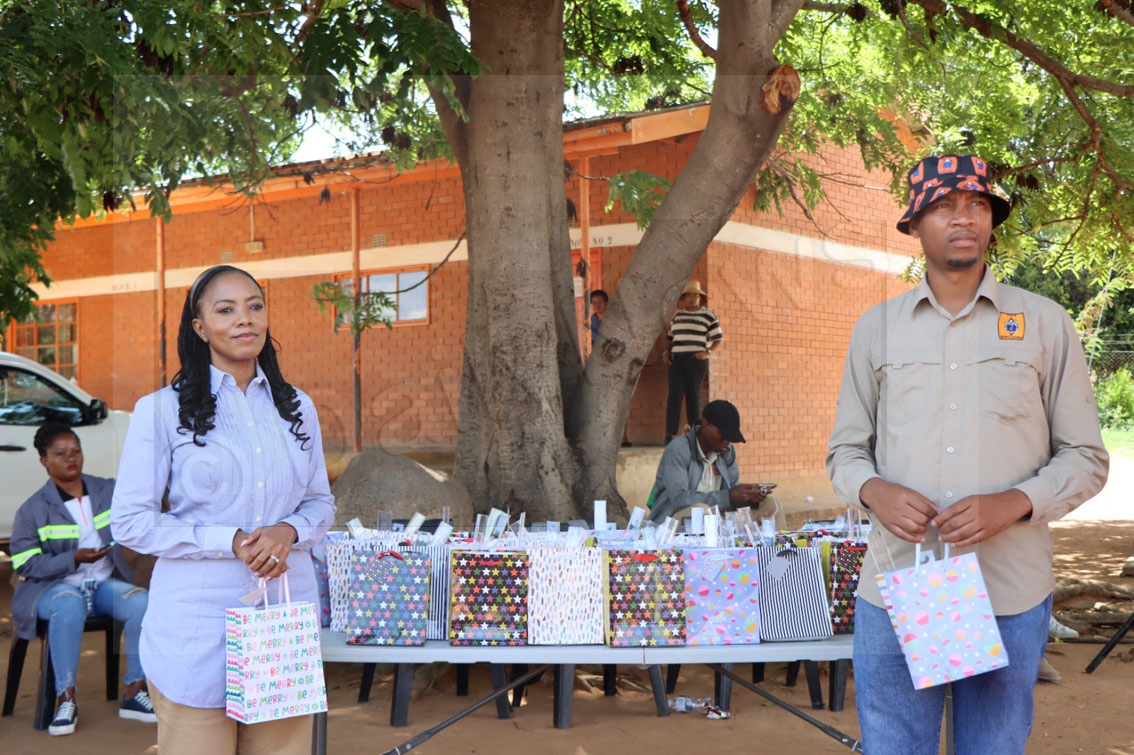
Allowing differently able persons to learn, work and live with dignity strengthens the entire community, says Giyani Metals corporation country manager, Ms Elisa Modikwa.
Speaking during the Kanye District Disability Day on Friday, she hailed Segopotso Primary school’s good performance as a beacon of hope.
“We are proud of our ongoing collaborations with Segopotso Primary school, specifically the special privilege of serving the differently able persons,” said Ms Modikwa.
She regarded persons living with disabilities an important part of Giyani’s engagements and programmes, noting that the company would not like to only support school development but also contribute towards learners’ wellbeing as well.
To encourage that, the school received materials and would be assisted with labour to build a poultry house to improve learner’s diet, as well as skin care products- sunscreen lotions.
Ms Modikwa further said though a small gesture, it was the company’s commitment to working with the school to create opportunities that build confidence and support learning.
About 500 people living with disabilities are said to be registered by Kanye District council and according to the Primary Health Care Services, deputy council secretary, Mr Conrad Ntsuape, the differently able persons were faced with challenges such as high poverty levels among others.
A differently able person in Kanye, Mr Loago Malatelele called for their representation in different planning forums. -
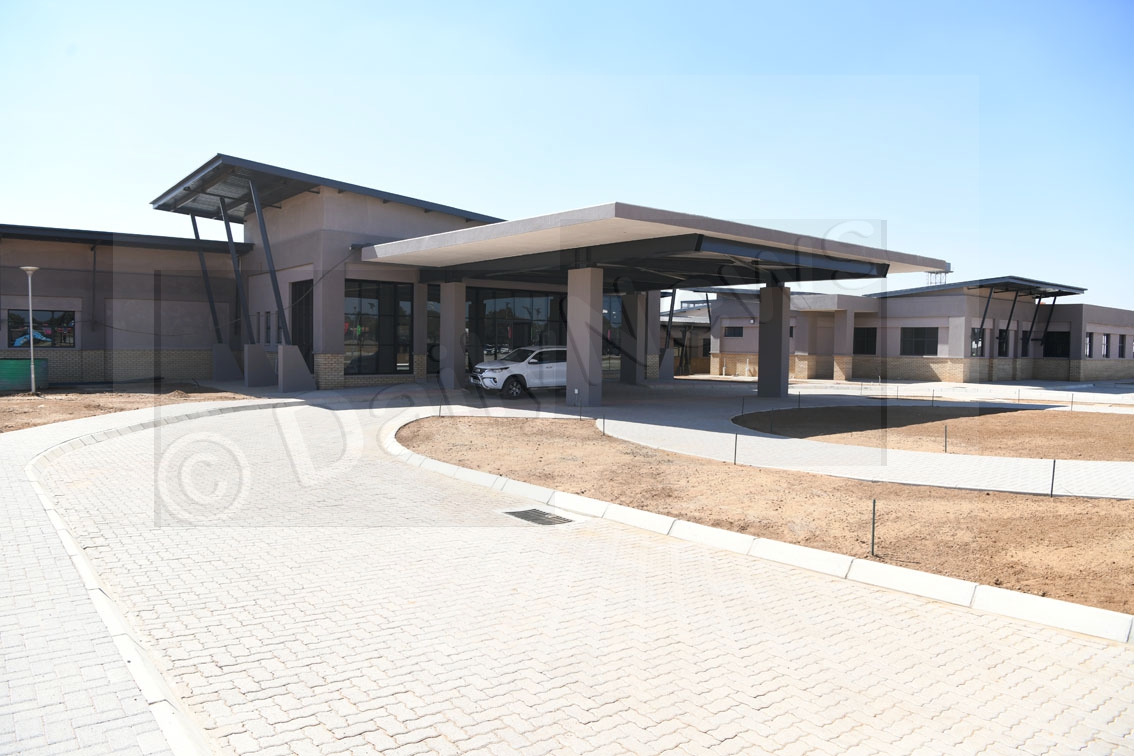
Moshupa Hospital 98 Per Cent Complete
The new Moshupa Primary Hospital is on the verge of full operation, with physical progress now at 98 per cent and key facilities already handed over for use.
Presenting the District Development Committee (DDC) report to Moshupa District full council meeting on Wednesday, Principal District Development Officer, Mr Tebogo Mekwe confirmed substantial progress on the long-awaited health facility since the previous update on August 5.
According to Mr Mekwe, the P494 million hospital and civil works package, awarded to Zhengtai Group Botswana in joint venture with Whitacon (Pty) Ltd, was in its final phase.
Mr Mekwe explained that, to counter delays caused by outstanding payments, a phased hand-over strategy had been implemented.
The administration block, main stores, reception, public toilets, laundry, and kitchen have already been issued occupation permits and are ready for immediate use by the Ministry of Health. Guard houses, the general ward, engineering workshop, and waste-management zone are currently being de-snagged and will be handed over soon.
Only landscaping, external works, the Out-Patient Department (OPD), maternity wing, main theatre, TB ward, and mortuary remain before the revised completion date of December 18.
Expenditure on the hospital package stood at P402.1 million, leaving a balance of P66.4 million. Mr Mekwe reiterated that delayed payments remained the primary risk to meeting the December deadline and disclosed that the Ministry of Health had been formally requested to expedite the release of final funds urgently.
On the associated staff-housing project valued at P77.7 million and executed by Classic Clean (Pty) Ltd, Mr Mekwe reported that the units had been at 100 per cent complete since June 2023. Final closure was pending with only the rectification of minor defects including damaged landscaping equipment and pressure testing of the fire line, which the contractor must complete at its own cost. Only P320,548 remain unspent.
Mr Mekwe further informed councillors that Phase One of the refurbishment of academic facilities at Moshupa Senior Secondary School was now 100 per cent complete across all four packages (Administration Block, Library Block, Old Administration Block, and covered walkways).
“Defects Liability Periods have either concluded or were in the final retention-payment stage, while Phase Two remains shelved due to funding constraints,” he said.
Presenting employment statistics, Mr Mekwe stated that the hospital construction had created 111 jobs, 98 of which were filled by Batswana citizens. The workforce comprised 70 youth (18–35 years), 41 older workers, 86 males and 25 females, with 44 skilled, 30 semi-skilled, and 37 unskilled workers. Regrettably, he noted that no persons living with disabilities were employed on the project.
“Residents of Moshupa and surrounding villages are now poised to access modern primary-hospital services before year-end, marking a major milestone in upgrading healthcare infrastructure in the Southern district,” he said.