Category: Business

  • Energy and Fuel Sectors Receive Boost

    Energy and Fuel Sectors Receive Boost

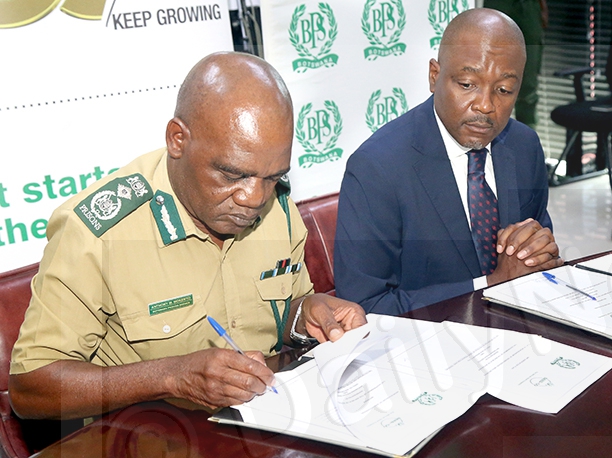
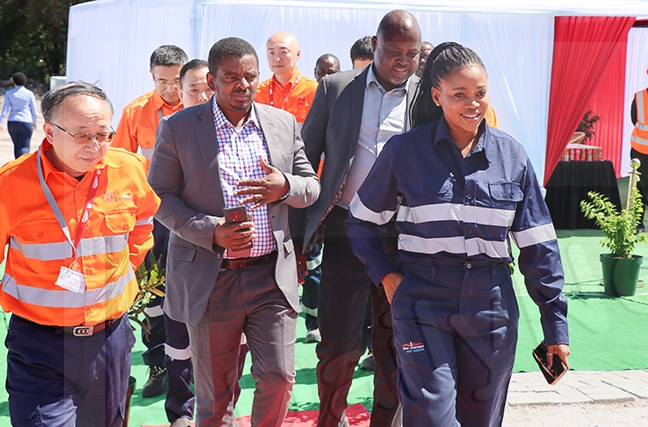
    Government, through the Ministry of Minerals and Energy has signed  Memoranda of Agreement with Oman on strategic cooperation in the Botswana minerals and energy sector.

    The specific areas of collaboration will be on the development of petroleum products bulk coastal storage in Walvis Bay, petroleum products supply and regional trading, development of Tshele Hills inland petroleum products storage, implementation of 500 megawatts solar photovoltaic as well as cooperation in minerals and exploration.

    Speaking at the signing ceremony in Gaborone yesterday, President Advocate Duma Boko said the strategic agreements were critical in strengthening Botswana’s security of supply of energy and strategically positioning Botswana in regional energy trading.

    He said the MoAs were achievement for Botswana to transform from a net electricity importer to an exporter that government aimed to achieve within the next 18 months.

    In relation to fuel security, President Boko indicated that the MoAs would enable Botswana to move from the 14 days grace period fuel security to a higher 6-9 months order of magnitude in fuel security.

    He said there were many other projects in offing and expressed optimism for them to be implemented timely.

    He noted that it was commendable that concrete agreements were signed between the two nations, thus called for  immediate creation of enabling environment for them commence and prosper.

    The agreements, he said marked the beginning of translating words into deeds, as government moved from thinking about the execution of the projects, adding that he was confident that the projects would be delivered timely and to the expected quality standards.

    “It is equally important to devote all the time to implement such projects as they have far-reaching implications for both countries and remove all bottlenecks, red tapes and impediments that could hinder timely implementation,” he said.  

    He stated that Oman was fully committed to the entire value chain and already lined up to commence.

    He said the expectation was to have a lot of skills exchange through attachment of both skilled and semi-skilled personal in Omari companies and refine their skills for the benefit of the country.

    President Boko thus urged the Omari investors to regard Botswana as their other home away from home as their physical presence was of outmost importance for the success of the project proposed.

    “We are most grateful and humbled by the Omari gesture and remain hopeful that it will improve and advance our country hence look forward to cement the partnership between the two countries,” President Boko said.

    For his part, president of the Oman Investment Authority, Mr Abdulsalam Bin Mohammed Al Murshidi expressed gratitude toward the chemistry and cooperation between the two countries.

    He said Oman was committed to completion of the proposed project, which would enhance wellbeing of the local communities.

  • Botswana seeks to partner with China enterprises

    Botswana is committed to building a nation empowered by digital technology, developing an export-driven industrial structure and ensuring that growth remains inclusive and human-centred.

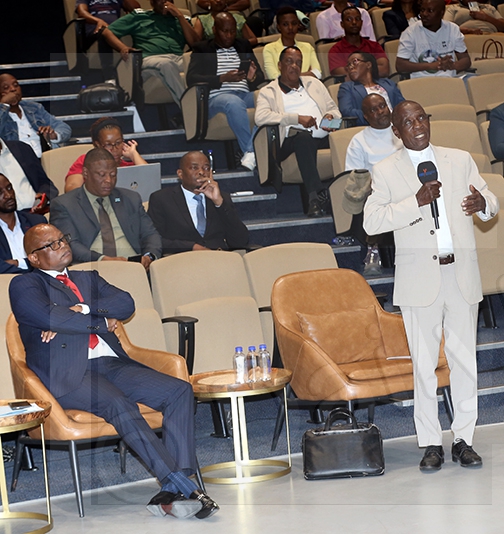
    Speaking at the Entrepreneur’s Forum in celebration of the 50th Anniversary of Diplomatic Relations between Botswana and China recently, Minister of Trade and Entrepreneurship, Mr Tiroeaone Ntsima said that as the economy evolved, Botswana recognised the need for transformation, moving from raw material exports to value-added manufacturing, from quantity to quality and from dependency to self-sustaining growth.

    Mr Ntsima highlighted key areas where Botswana sought to deepen cooperation with Chinese partners; technology, digitalisation and the entrepreneurial ecosystem. He noted that in fast-evolving fields such as artificial intelligence (AI), blockchain and deep tech, global innovation was advancing rapidly.

    “Botswana stands ready to partner with Chinese universities, research institutions and technology firms to build talent-development platforms, joint innovation labs and start-up incubators,” he said.

    Mr Ntsima also extended an invitation to the Chinese government to offer scholarships, training programmes and exchange opportunities for staff of his ministry and related institutions.

    He explained that such initiatives would enable young entrepreneurs to learn the latest technologies, participate in innovation practices in China and return home equipped to drive Botswana’s digital entrepreneurship agenda.

    The minister added that Botswana’s abundant natural resources, stable governance environment and strong regional export potential made it an ideal partner for Chinese manufacturing firms.

    “We welcome collaboration with Chinese companies to introduce advanced manufacturing processes, smart production systems and green industrial technologies into Botswana. Together, we can establish export-oriented manufacturing hubs, transition from raw output to processed and branded goods and strengthen our value chains,” he said.

    Mr Ntsima further called on Chinese investors, mentors and incubators to partner with Botswana’s SMEs, facilitating technology transfer, supply-chain integration and market access.

    Such partnerships he said would allow Botswana’s entrepreneurial ecosystem to access Chinese capital, technology and markets, while Chinese firms gained local insight and regional reach.

    Reflecting on the 50 years of China-Botswana relations, Mr Ntsima said the two nations have built strong foundations of diplomatic trust, economic cooperation, cultural and educational exchange.

    He encouraged Chinese enterprises to invest, partner and co-create with Botswana’s entrepreneurs, establishing joint ventures, sharing technology, localising operations and building value chains together.

    For his part, China’s ambassador to Botswana, Mr Fan Yong, expressed gratitude to Botswana for its long-term dedication and steadfast support of the bilateral relationship. He noted that China and Botswana’s friendship had evolved into a strategic partnership over the past five decades.

    “Over the past 50 years, mutual benefit has been the foundation of our flourishing cooperation, our nations have become good friends who treat each other as equals and reliable partners, our economic collaboration in infrastructure, trade, telecommunications and mineral exploration has grown increasingly close.” he said.

    Ambassador Fan stated that as a major contributor to global economic growth and an anchor of stability, China would continue to expand institutional openness, uphold multilateralism and promote broader international economic flows.

    He said that in the first eight months of this year, China imported approximately US$4 billion worth of agricultural products from Africa, marking a 4.8 per cent increase from last year.

    Ambassador Fan expressed hope that the policy would soon benefit Botswana, by opening a fast channel for its high-quality products to enter the market in China.

    He emphasised that China and Botswana must remain trustworthy partners, develop together and foster mutual understanding, reinforcing political trust, integrating development strategies and delivering shared prosperity.

    Ambassador Fan also reiterated China’s commitment to supporting and encouraging more enterprises from China, both public and private, to actively participate in projects initiated under Botswana’s BETP and NDP12, thereby creating more job opportunities for Batswana.

  • Precision farming challenge to operators

    Precision farming challenge to operators

    Lack of knowledge on the use of precision farming implements such as the technologically advanced planters by self-taught operators has been identified as one of the primary challenges for local farmers.

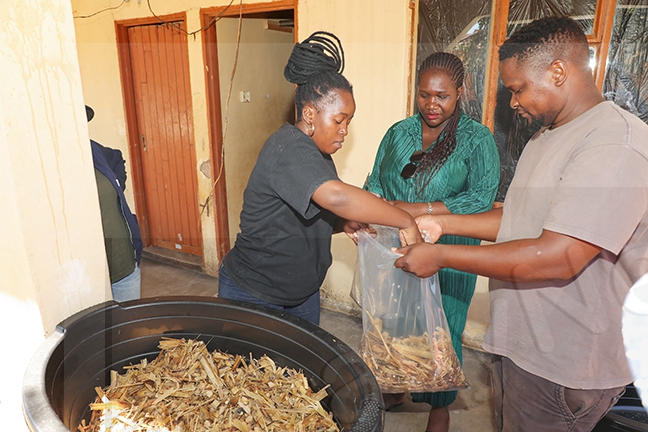
    Mr Philip Keosentse, a farmer at Mmasenyetse fields shared the concern during the precision planter demonstration to farmers held recently at Go-Moeng fields courtesy of John Deere-Agri Equipment.

    Mr Keosentse said many of the local tractor operators were self-trained, riding on their basic vehicle driving experiences, therefore limiting their understanding in operating some pertinent ploughing implements. He said the challenge affected mostly subsistence farmers as some cannot afford to acquire such training.

    “If the tractor dealership could at least partner with farmers in training the owner or the operator within the warranty period it would encourage farmers to welcome the technological developments,” he said.

    Mr Keosentse said proper training was highly recommended as operator demonstrations were not enough.

    Mr Moarabi Itumeleng, a farmer at Maisane, shared the same sentiments that it will take time to venture into precision farming. He said he was still hooked to using the usual traditional planter, as it was manually operated and less complex.

    Meanwhile, the technical marketer at John Deere agric equipment, Mr Zein Mopati has during the precision planter illustration explained to farmers that the planter was designed such that it was able to place seeds in the soil at a specific depth spacing and position as compared to the common traditional planters.

    Mr Mopati said traditional planters were without much control and that precision planters were technologically advanced with software’s and sensors to ensure optimal seed planting and have high chances of increased yield.

    He said the planter could offer adjustable row spacing to suit specific crop types and field conditions. Mr Mopati further highlighted that the planter’s accuracy in dropping seeds or fertilisers was crucial in maximising crop germination and crop potential.

    However, he warned farmers of the use of ungraded seeds and the importance of understanding viable seeds in order to maximise germination

  • President Duma Boko of Botswana Joins Global Center on Adaptation Board

    President Duma Boko of Botswana Joins Global Center on Adaptation Board

    Gaborone / Rotterdam, 7 August 2025 – The Global Center on Adaptation (GCA) is pleased to welcome Advocate Duma Boko, President of the Republic of Botswana to its Board, bringing to the table a renewed focus on climate justice, sustainable development and homegrown solutions for a continent on the frontline of the climate crisis.

    Botswana is already experiencing the sharp edge of climate change. Rising temperatures—above the global average—combined with recurring droughts, declining water tables, and land degradation threaten the country’s key sectors, from agriculture to tourism. In recent years, severe dry spells have triggered food insecurity, stressed water supplies in cities like Gaborone, and intensified the risk of desertification in already arid regions. These impacts, while local in manifestation, reflect a global emergency that demands coordinated, cross-border responses.

    President Boko’s leadership is rooted in a strong belief that climate adaptation is not merely a technical challenge—it is a political and economic imperative. His appointment signals Botswana’s growing ambition to contribute to the global adaptation agenda while securing a resilient future for its people.

    Advocate Duma Boko, President of the Republic of Botswana said: “Climate change threatens to roll back decades of progress across Africa, disrupting livelihoods, deepening inequality, and undermining the foundations of sustainable development. In Botswana, we have seen firsthand how drought, shifting weather patterns, and water scarcity affect our people, our ecosystems, and our economy. That is why I am honoured to join the Board of the Global Center on Adaptation. The Africa Adaptation Acceleration Program is a critical platform to mobilize resources, partnerships, and political will needed to scale adaptation solutions that work for Africa. As a country deeply committed to climate resilience and sustainable growth, Botswana stands ready to contribute to this collective effort, to ensure that adaptation is not an afterthought, but a cornerstone of our continent’s development future.”

    The GCA Board unites global leaders who share a common mission: to integrate adaptation into core economic and development strategies. As Chair of the GCA Board, H.E. Macky Sall, Fourth President of Senegal, emphasized the critical timing of President Boko’s appointment: “Africa cannot afford to treat adaptation as an option—it is a necessity for survival and prosperity. President Boko brings a principled voice, grounded in experience, that will strengthen the Africa Adaptation Acceleration Program as it scales across the continent. Botswana’s proactive stance on resilience, governance, and regional stability makes it an important partner in this collective mission.”

    Through the Africa Adaptation Acceleration Program (AAAP)—a joint initiative with the African Development Bank—the GCA is working to integrate adaptation into every facet of development, from resilient agriculture to youth entrepreneurship. Having already shaped over $17 billion in adaptation-aligned investments, the AAAP is shifting the narrative from vulnerability to opportunity.

    “President Boko’s appointment reflects a broader movement among African leaders who are championing adaptation not only as a protective measure, but as a driver of transformation,” said Professor Patrick V. Verkooijen, President and CEO of the Global Center on Adaptation. “His leadership will help sharpen the focus on national ownership, inclusivity, and investment as we work to close the adaptation finance gap and accelerate progress where it is needed most.”

    President Boko joins a diverse and high-level Board of former and current heads of state, ministers, and global leaders from the public sector.

  • Economists See Few Monetary Policy Changes With Powell Leading Fed

    Economists See Few Monetary Policy Changes With Powell Leading Fed

    Struggling to sell one multi-million dollar home currently on the market won’t stop actress and singer Jennifer Lopez from expanding her property collection. Lopez has reportedly added to her real estate holdings an eight-plus acre estate in Bel-Air anchored by a multi-level mansion.

    The property, complete with a 30-seat screening room, a 100-seat amphitheater and a swimming pond with sandy beach and outdoor shower, was asking about $40 million, but J. Lo managed to make it hers for $28 million. As the Bronx native acquires a new home in California, she is trying to sell a gated compound.

    Black farmers in the US’s South— faced with continued failure their efforts to run successful farms their launched a lawsuit claiming that “white racism” is to blame for their inability to the produce crop yields and on equivalent to that switched seeds.

    What Will Be The Next Step to Complete?

    The “new ’20s” idea might not work—there were a lot more young people in the United States then than now; a reprise of the world-changing inventions and discoveries of the 1920s would be a big surprise to those economists who believe that we have been in an invention dry spell since the 1970s. In his Businessweek piece, Peter Coy largely agrees, writing, “In all probability … the U.S. will continue to wrestle with ‘secular

    These experts make strong cases, and they satisfy my natural instinct not to go there. But I remain very interested in the reasons the ’20s appeal to our imagination right now. Of course, it’s the booze, the sex, and the parties. But it’s also a decade with a very strong identity—and I think that helps. Writing in the journal American Speech in 1951, Mamie J. Meredith argued that the ’20s boasted.

    I’d argue that Meredith’s point about the decade’s exceptionality still holds: How many other 20th century decades have a nice little permanent descriptor like Roaring? It helps that most of these are good adjectives, evoking a time you’d probably like to live through again—but even the slightly dangerous-sounding ones conjure up something specific. That definiteness offers an appealing sense

    Anyway, let’s get to that fun. A very joyful book to read about the decade is Frederick Lewis Allen’s Only Yesterday: An Informal History of the 1920s, which Allen—a blueblood journalist and editor at Harper’s—published in 1931. The book chronicles all of the movement and motion that makes the decade sexy, and doesn’t seem to miss a fad.

    The property, complete with a 30-seat screening room, a 100-seat amphitheater and a swimming pond with sandy beach and outdoor shower, was asking about $40 million, but J. Lo managed to make it hers for $28 million. As the Bronx native acquires a new home in California, she is trying to sell a gated compound.

    A designer knows he has achieved perfection not when there is nothing left to add, but when there is nothing left to take away.

    Allen is also really good at describing parties—or, at least, the ones the middle class and upper class attended. The historian wrote about how women taking up smoking had “strewed the dinner table with their ashes, snatched a puff between the acts, invaded the masculine sanctity of the club car.

    Popular In Human Interest:

    • Parents Are Fed Up With Their Kids’ Expensive Berry Habits
    • 15 Mother’s Day Gifts for the Burned-Out Mom in Your Life
    • Really Though, What Jeans Are in Style Now?
    • Don’t Fall for Fertility Fearmongering About Trans Men

    Perhaps by remembering the twenties merely as an enchanting series of novelties or the crude afterthought of a simpler past, we preserve the illusion of our own simple innocence,” mused historian Paula Fass in the introduction to her book The Damned and the Beautiful: American Youth in the 1920s.

  • Botswana: Back to square one on fiscal discipline

    Botswana: Back to square one on fiscal discipline

    The 159-year-old debating chamber of the Cambridge Union Society has played host to some of history’s most consequential leaders. From British Prime Ministers Winston Churchill and Margaret Thatcher to US Presidents Theodore Roosevelt and Ronald Reagan, the wood-panelled theatre has resounded to orators of world renown. 

    A year ago, Botswana’s Vice-President and Finance Minister Ndaba Gaolathe might not have expected to find himself addressing the famous venue at the annual conference of the African Society of Cambridge University. But since then, there have been major changes in Botswana’s governing structure.

    Until November, the ruling Botswana Democratic Party had reigned supreme since the dawn of independence in 1966. But following President Duma Boko’s stunning victory – propelled by his pledge to create 500,000 new jobs in five years – his deputy Gaolathe found himself launched into two senior offices, and onto the world stage. 

    Gaolathe looks at home during our conversation sitting on the Society’s famous scarlet benches, under the watchful eyes of portraits of past Society presidents. But taking in the historic surroundings and basking in electoral success is far from his priority. 

    The honeymoon period which attended the election of Boko’s Umbrella for Democratic Change is quickly drawing to a close. Just days after Boko’s shock election win in November, President Donald Trump swept back into power in the United States – and set the world economy on a path of trade war, tariffs and turmoil. 

    Botswana, the world’s second-largest producer of diamonds by volume, finds itself exposed to an underperforming global market for the stones, Trump’s caprice, and the very real threat of 37% tariffs on its exports to the US. 

    The IMF expects the economy to shrink by 0.4% this year – hardly encouraging grounds for the promised employment revival. Given such a discouraging start, can Gaolathe build the economy that Boko promised his voters? 

    While cognisant of the worsening global economy, the Finance Minister insists that his plans to impose fiscal discipline, diversify the economy, reinforce policymaking credibility and invest in transformative infrastructure remain unchanged. 

    “We have to be optimistic because, as I continue to say, we’ve been blessed with all the ingredients we need to build our country. The first of our priorities is to halt the haemorrhaging of our fiscus [treasury], because even though Botswana over the last few decades has outperformed everyone else on the African continent, we need to accept that there has been a period of lapse which has taken place, arguably, over the last 12 years or so. 

    “The fiscal discipline we used to have has broken down. In the past it was accepted that we don’t allow politics to interfere with the work of the professionals that manage the economy, particularly the Finance Ministry; we contaminated that culture; we allowed politics to make the economic decisions.

    “We threw away priorities and the emphasis on investing for the future – such as in infrastructure – in favour of immediate consumption. We allowed corruption to set in. So our first priority is to halt all this, and I believe that given that we have been there [in office] a few months, we’ve already done well on that front. 

    “You find we’re allowing politics to a large extent not to decide what makes sense in economics. We are galvanising ourselves around priorities, managing properly again, building capacity and our capabilities around properly managing infrastructure, doing things on time.”

    The unemployment challenge 

    It’s a vision of fiscal conservatism that does not often find favour with voters in Southern Africa, but Gaolathe believes it will chime with investors and help to achieve the hugely ambitious jobs goal that Botswana’s citizens demand the new administration meet. 

    While the country has long been a standout economic performer in Africa, largely due to its judicious management of diamond revenues – it was ranked sixth on the continent in 2024 with a GDP per capita at purchasing power parity of $19,039, according to the IMF – its people have long suffered from elevated unemployment. 

    It was an unemployment rate of over 23% – perhaps 11% higher among the country’s youth – that provoked the unprecedented electoral revolt against the BDP. In many voters’ eyes the ruling party had grown complacent after six decades in office.

    The softly-spoken son of Baledzi Gaolathe, the former Finance Minister under Presidents Festus Mogae and Ian Khama, pulls few punches in assessing the past. He argues that the governing elite and civil service have proven themselves unequal to the challenges of running a modern economy: training has lagged; knowledge of cutting-edge sectors is weak; and the country has produced too few engineers, ICT experts and tradespeople, he says. 

    “We don’t have the capabilities and capacity to do what the modern world requires. We don’t have the capacity to structure the public-private partnerships that we need to build mega-
    infrastructure projects. We don’t have the capabilities to leverage and bring  the best out of AI and tech. 

    “We need to build it. We need to retrain and revitalise the government civil service. We’ve never experienced the type of unemployment levels we have now, particularly among young people and educated young people. The education system has been purely geared to creating social sciences graduates. The unemployed are highly educated. This means we have a real opportunity to upskill rapidly to AI, tech, and indeed there are steps we’re taking and partnerships we’re putting in place.”

    Keeping the state out of business

    Gaolathe argues that the dead hand of the state has stifled Botswana’s economic potential, including through an extensive network of state-owned enterprises (SOEs).

    “The second priority is that we need to modernise, revitalise and restructure our state-owned enterprises. In a small economy like that of Botswana, that has maybe 50 SOEs across every sector, from water and power to telecoms and financial services, they are an important part of the economy. 

    “If it’s not efficient, if its sub-
    optimised, if governance is not strong, if you don’t have enough competent CEOs, that affects the economy in a big way,” he says. 

    The VP says the government is looking to proceed with plans to unbundle power generation and transmission while allowing the private sector to enter the market. 

    In agriculture, Gaolathe says the country’s huge ranching economy – it boasts up to 2.8m head of cattle – is to be freed from the strictures of the state-run Botswana Meat Commission and its monopoly role in beef exports. That process began under the last government and will be completed. “We’re allowing different players into different parts of the food value chain. In financial services we are much more open to partnerships to bring in technical expertise and capital. 

    “All of these SOEs are very much scalable, they can become continental players… We have not really had a forecast on sectors that have the highest prospects of success – it’s time we did. In the past, government poured money into SMEs [small and medium enterprises] because it was popular. Now we need to support commercialised, high-productivity agriculture.” 

    The idea of this diversification drive, he says, is not that diamonds will play a smaller role in the economy – but that “everything else will play a bigger role than it used to”.

    In a straitened fiscal climate, one of Gaolathe’s major premises is that much can be achieved with self-funding public-private partnerships. 

    In particular, he wants to push forward with a string of what he refers to as “mega-infrastructure” projects – including massively boosting road and railway connectivity to the major urban centres in neighbouring Southern African countries – that will one day pay for themselves. Still, he adds ruefully, “we will always need borrowing” to optimise investments. 

    On 16 May the African Development Bank confirmed it would loan $304m to “cushion Botswana from the financial shock caused by declining diamond revenues”.

  • Okavango Sub-District brings the Multidimensional Poverty index to life

    Okavango Sub-District brings the Multidimensional Poverty index to life

    The Poverty Eradication Coordination Unit (PECU) of the Office of the President together with the Department of Community Development of the Ministry of Local Government and Rural Development met with key stakeholders in Gumare and Maun 8th and 10th June to share the results of the recent poverty profiling exercise in the sub-district. The presentation and discussion of the results of the profiling exercise will inform the the completion of the profiling report, which will be the first of its kind in Botswana. The key stakeholders were drawn from government, private sector, non-governmental and civil society organisations.

    In his welcome remarks and stating of the objectives of the meetings, the National Coordinator of the Poverty Eradication Programme Mr. Montshiwa Montshiwa said that the profiling of poverty in the Okavango sub-district is the first in a series of districts and sub-districts to be covered in the months to come. He commended the participants for their contributions to the profiling exercise, which he said went smoothly despite the challenges of the tough terrain of the sub-district and limited resources. He said that as the first sub-district to be profiled, their lessons will be used in other districts as the profiling exercise is rolled out countrywide. Okavango was chosen as the first sub-district in the exercise due to the high levels of poverty and need for urgent and comprehensive attention as noted by His Excellency the President of Botswana.

    The profiling of the Okavango sub-district and the ones that will follow adopted the multi-dimensional approach to measuring poverty as opposed to the monetary based approach that is commonly used in national statistics. This is borne out of Botswana’s recent decision to adopt a multi-dimensional approach to poverty. The multidimensional poverty index (MPI) is an international measure of acute multidimensional poverty covering over 100 countries across the globe, capturing not only monetary poverty measures, but deprivations in health, education and living standards that a person faces simultaneously.  Since 2019, UNDP Botswana has collaborated with the Oxford Poverty and Human Development Initiative (OPHI) to provide technical support throughout the steps to ensure the effective realisation of the adoption of the global multidimensional approach to poverty. In 2020, Botswana was included in the global MPI measure for the first time.

    Alongside the global measure, Botswana has developed a national Multidimensional Poverty Index (MPI), which is the basis on which the profiling of poverty was done. The policy shift from the monetary based approach to poverty was borne out of the desire to be comprehensive and targeted as well as leave no one behind in addressing poverty in all its dimensions and manifestations. The MPI provides the means to understand poverty in all the dimensions that define one’s life, enabling policy makers to allocate resources and design policies and programmes more effectively.

    The key findings from the profiling exercise show that the Okavango sub-district is disproportionately poverty-stricken, with monetary poverty level of 37.7% and multidimensional poverty level of 34.6% against the national levels of 16.3% and 17.2% respectively. At 68%, the sub-district has a significantly high number of households that are headed by females. The unemployment level is also very high, with 8,142 households heads unemployed out of a total of 10,373 captured in the sub-district’s data system. Further, the level of education attainment is extremely low with only 10.5% of the households heads having attained at least a General Certificate of Secondary Education (BGCSE). Access to sanitation services and the level of use of electricity were also very low, with 66% of the households having no toilet facilities and only 27% of the households using electricity as a source of lighting. On average, the households own very few assets, hence, coupled with the high level of unemployment, the sub-district’s sources of livelihood are highly limited. For instance, the average number of domestic animals owned by households are 8 for cattle and goats, 4 for donkeys and pigs, 10 for chickens and 2 for horses.  These figures of ownership of domestic animals are far below the thresholds for a household to be considered not poor.

    The profiling has identified prominent types of poverty in the sub-district, being, societal, income, shelter and sanitation, and food poverty. The key poverty drivers have been found to be lack of employment opportunities; non-availability of basic infrastructure and limited market access which make it challenging for households to pursue profitable economic activities; uncoordinated policies and programmes and their ineffective targeting; as well as human/wildlife conflicts given that the sub-district is in the geographical area where there are large numbers of wildlife species. These very specific findings provide the opportunity to formulate relevant policy responses to address poverty in the sub-district, which underscores the usefulness of the multidimensional approach to measuring and understanding poverty.

    Beyond the profiling exercise, the profiling report recommends targeted and sustainable policy and programme interventions to address the factors that drive poverty in the sub-district. For example, the report recommends policy interventions that, alongside the improvement of the physical infrastructure should be geared towards improving the level of education, which in the medium to long term should be expected to improve the level of uptake of profitable economic opportunities, including the poverty eradication and economic empowerment programmes and projects that are rolled out by different government departments. The recommendation to improve the employment opportunities proposes the optimisation of sustainable natural resource management that are in the sub-district such as tourism-oriented income generating activities and the development of the value chains within the tourism and natural resource sectors.

    Indeed, the meetings provided a great opportunity to bring together the key stakeholders to discuss the poverty issues in the sub-district. The stakeholders reflected on the necessity to adopt coordinated approaches and partnerships in policy formulation and implementation of interventions to address poverty. The government departments and community leadership highlighted the need to work closely together in policy and programme formulation and implementation to ensure optimal use of the scarce public resources that are at their exposal.

    The private sector, NGOs and CBOs representing different sectors ranging from women and youth empowerment, education, natural resources conservation, and fight against gender-based violence, among others. They were very appreciative of the poverty profiling report and its recommendations. They expressed that the findings of the report will assist them tremendously in the development of their strategies and programmes to effectively support the communities to address poverty. There was particular emphasis on the importance of partnerships between these entities and the government and the communities to enable targeted and effective response to poverty in the sub-district.

    Overall, the profiling report and its presentation brought about useful lessons about the implementation of the national MPI. These lessons will be of great value as the government embarks on rolling out the other pilot profiling exercises in other districts and sub-districts. For UNDP, the experiences and lessons are extremely informative to the design of programmes in other areas of the country across an array of issues, including for environment and climate change and women and youth empowerment. As UNDP continues its support to the government in the roll-out of the national MPI, it will important to bring the lessons learned from Botswana to the  global Multidimensional Poverty Peer Network (MPPN) to continuously improve the approach and ways in which governments can bring these statistics to life as they work to improve the lives of their citizens.