A season that brings profit has turned bleak for traders operating at the Gaborone bus rank market stalls, following a recent court order directing them to vacate the area by December 31.
The traders have been ordered to pave way for a private investor contracted to refurbish the market stalls and upgrade infrastructure around the Gaborone bus rank precinct.
The directive, intended to enhance safety, efficiency, public transport vibrancy and address health and safety concerns, has sparked widespread controversy and anxiety among vendors whose livelihoods depend on informal trading.
While authorities say the move will bring order and modernisation to the urban transport hub, vendor organisations have strongly criticised the decision, arguing that it threatens the survival of hundreds of families particularly women, who make up a significant portion of the trader population.
For many vendors, trading at the bus rank is not a matter of choice but necessity, especially in a country grappling with high unemployment and economic hardship.
“The bus rank has been my source of livelihood for all these years. Where will I go after the looming eviction is implemented,” lamented long-time vendor Mr Patrick Moatshe.
Mr Moatshe, who is visually impaired, accused government of reneging on its promises to protect vulnerable groups.
Similarly distressed is Ms Otsile Tsiakokwe, who has traded at the bus rank for over 15 years.
She said the proposed relocation would have a devastating impact on her family, particularly as she prepared for next year’s school expenses.
“My children’s school fees, monthly rent and groceries depend on this,” she said.
Ms Tsiakokwe said the relocation was ill-timed, coming at a period when family and social obligations peak due to the festive season.
She further highlighted that desperation was driving many into informal trading.
“With high unemployment and limited access to formal jobs, vending becomes a vital means of survival for many families,” she said.
Chairperson of the Gaborone bus rank traders’ association, Mr Batsweletse Mogabala, also expressed dissatisfaction, warning of dire consequences if the matter was not urgently addressed.
He appealed to Gaborone City Council to clearly communicate where vendors would be temporarily relocated during the face-lift of the bus rank.
Mr Mogabala said displacing traders without viable income alternatives would not only disrupt livelihoods but also worsen poverty levels.
“While the local authority raises legitimate concerns about the renovation, it is crucial to consider the broader socio-economic context,” he said.
Responding to the vendors’ concerns during his recent interaction with them, Vice President and Minister of Finance, Mr Ndaba Gaolathe urged both local authorities and traders to find common ground and reach an amicable solution.
He acknowledged the significant contribution of the informal sector to the economy and reaffirmed government’s commitment to its growth.
The vice president, who is also Member of Parliament for Gaborone Bonnington South, encouraged vendors to unite and form cooperatives to strengthen their bargaining power.
Meanwhile, Gaborone City Council Mayor, Mr Oarabile Motlaleng acknowledged the difficult situation facing the vendors but said the council was bound to implement the court order.
He explained that the renovation tender was awarded through a lawful expression-of-interest process. The mayor added that temporary displacement of traders was unavoidable to allow construction of a new, modern multi-level terminal, which would be implemented in three phases, with the first phase expected to be completed by the end of 2026.
Category: Business
-

Gaolathe Pleads Common Ground on Eviction Talks
-

Finance and Investment Competition Grows in Leaps and Bounds
Any vision, no matter how small, requires a dedicated partner to become a reality.
This sentiment was shared by Botswana Stock Exchange (BSE) Head of Market Development, Ms Thapelo Moribame, while welcoming guests at the 2025 BSE–Stanbic Bank Botswana Senior Secondary Schools Finance and Investment Competition National Awards Ceremony, held recently at the BSE Training Room in Gaborone.
Ms Moribane said the competition, launched in 2013 as a physical initiative, had evolved into a digitally driven programme. She explained that this year’s edition was delivered through a Stock Market Simulator a user-friendly, risk-free virtual trading platform designed to enhance financial literacy and broaden access to stock market education.
“For the 2025 edition, all participating schools began competing at regional level. Each school was allocated virtual funds to build and manage investment portfolios. We then identified the top three schools in each region and awarded them share vouchers,” she said. Regional winners advanced to the national finals, where they competed for the final prize. Ms Moribane noted a substantial increase in participation, with schools rising from 15 in 2024 to 28 in 2025.
She described the growth as evidence of the competition’s relevance among students and a reaffirmation of BSE and Stanbic Bank Botswana’s commitment to widening access to capital markets.
Ms Moribane revealed that a total of P115, 000 in share vouchers had been awarded to 55 participants, alongside P30, 000 in cash prizes to the top three schools.
She applauded Stanbic Bank Botswana for its sponsorship and partnership, describing the collaboration as strategic and anchored in a shared belief that empowering young people was critical to Botswana’s economic growth.
The Deputy Permanent Secretary in the Ministry of Child Welfare and Basic Education, Mr Steve Bothasitse, congratulated the winning schools, Al Nur School, Swaneng Hill School and Pioneer Academy for their outstanding performance.
“You have demonstrated exceptional resilience throughout this competition. The stock market is often viewed as complex, yet you embraced the challenge with determination and confidence,” he said.
Mr Bothasitse told learners that their participation sent a clear message that Botswana’s youth were ready to play an active role in shaping the country’s economy. He also praised the BSE–Stanbic Bank partnership, noting that the initiative reflected a deep commitment to youth empowerment, financial inclusion and national development.
He acknowledged that one of the ministry’s major challenges was that financial literacy was not yet strongly embedded in the mainstream curriculum, leaving many students unprepared for real-life financial decisions. Competitions such as this, he said, helped bridge the gap between education and industry, and between theory and practice.
“Financial literacy is no longer optional; it is an essential life skill,” Mr Bothasitse said, adding that government alone could not deliver every skill learners needed. Partnerships with industry, he noted, were vital in cultivating a culture of shared responsibility and investment in education.
He emphasised that child development was a national project requiring collective effort, and reaffirmed the Ministry’s commitment to nurturing and expanding collaborations for the benefit of every child. -
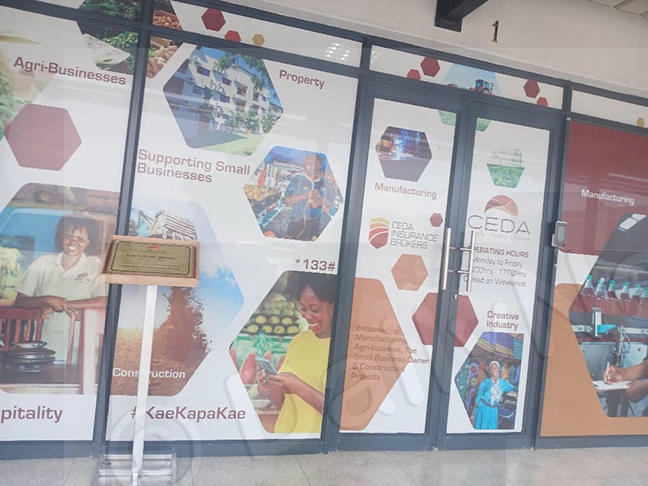
New CEDA Branch to Spur Local Growth
The establishment of a Citizen Entrepreneurial Development Agency (CEDA) branch in Tutume has been warmly welcomed by clients and the broader business community, as it brings renewed hope and opportunities especially for young people who previously struggled to access services offered in Francistown.
Tutume and its surrounding villages have long been home to hardworking, innovative and ambitious people across sectors such as agriculture, retail and tourism. With the region’s vast economic potential, the opening of the new CEDA office is viewed as a major boost for both Tutume and parts of the North East District. The Nswazwi–Kalakamati bypass road is expected to reduce travel distances for residents seeking CEDA services, eliminating the need to travel to Francistown for essential support.
Speaking during the official opening, Minister of Trade and Entrepreneurship, Mr Tiroeaone Ntsima, said CEDA believed in people’s ideas and was committed to nurturing them into viable businesses. Doing so, he said, would create employment opportunities and strengthen local economic empowerment , key priorities under government’s job-creation agenda.
Mr Ntsima highlighted that since its establishment in 2001, CEDA had remained one of the country’s strongest instruments for citizen economic empowerment, funding thousands of citizen-owned businesses, supporting start-ups, reviving struggling enterprises and creating opportunities for youth and women nationwide.
In the region alone, he revealed that the agency had invested over P150 million in 943 businesses across various sectors, a clear demonstration of its commitment to entrepreneurship and economic development.
He further noted that the opening of the new branch marked a significant milestone in CEDA’s growth, aligning with government’s broader economic diversification drive under the Botswana Economic Transformation Programme (BETP), which aimed to reduce reliance on diamonds.
CEDA beneficiary and businessma, Mr Power Monyamane welcomed the development, describing the new office as a breakthrough that would close long-standing gaps caused by limited access to information and services due to distance. He encouraged fellow entrepreneurs to visit the office for accurate, first-hand information rather than relying on hearsay, noting that some aspiring businesspeople hesitated to seek guidance directly.
He advised that passion was key to business success, cautioning against copying others’ projects without genuine interest. Mr Monyamane, who has invested in property development through CEDA support, said he had built office spaces currently housing the Ministry of Finance revenue office. He indicated plans to seek further funding for upcoming projects.
He urged young people to take advantage of the new CEDA office, apply for funding while they were still young, and use the opportunity to build sustainable businesses and long-term careers.
-
CEDA Invests Over P11 Million into Kanye Businesses
In a major boost for the Kanye District economy, the Citizen Entrepreneurial Development Agency (CEDA) has approved funding for 20 local businesses in 2025, injecting a total of P11, 126, 249. 00 and creating 148 jobs. One standout project, a large-scale property development worth P10.5 million single-handedly delivered 123 permanent jobs, dwarfing the employment impact of the other 19
ventures combined.The remaining 19 projects shared just P601,305; agribusiness (10 projects) received P388,507 and generated 15 jobs, services (7 projects) got P189,798 for 8 jobs, and manufacturing (2 projects) secured the smallest slice at P22,000, yielding only 2 jobs. Speaking to BOPA in an interview on Friday, Kanye CEDA Branch Manager Mr Tuelo Rabaloi revealed that while dryland farming dominated applications in the district, the agency was deliberately shifting focus toward manufacturing, a sector that can slash Botswana’s import bill and create far more sustainable employment.
“We want more manufacturing projects,” Mr Rabaloi stressed. “They deliver bigger national benefits. That is why we are rolling out new funding lines specifically designed to make these businesses bankable.”
Among the new products now available are A di tsale, Thuo Letlotlo, and a dedicated Artificial Insemination (A.I) programme for livestock farmers all aimed at accelerating job creation and building businesses that added real value to Botswana’s GDP, said Rabaloi.
In the property space, Mr Rabaloi said CEDA was also steering developers away from multi-residential blocks and toward job-rich commercial developments such as shopping malls and retail centres.
“Support doesn’t stop at handing over the cheque,” he said, emphasizsng that the CEDA assigns trained mentors to every funded business, offering ongoing guidance to ensure long-
term survival and growth. “When specialist expertise is needed, the agency foots 90 per cent of the cost for external business consultants, with clients paying only 10 percent.” Rabaloi said strategic partnerships were another key ingredient. Through ties with the Local Enterprise Authority (LEA) and other government bodies, CEDA clients gain access to advanced training, market linkages, and additional support services.
“These collaborations are critical,” Mr Rabaloi said. “We are not just giving money, we are building an ecosystem where citizen-owned businesses can truly thrive.” With new funding windows opening and a clear push toward high-impact sectors, he said. Kanye entrepreneurs now had more tools than ever to turn ideas into jobs and growth.
-
LED Strategy to Boost Local Economy
North West District is developing a five year (2026-20230) Local Economic Development (LED) strategy to give the local economy a clear vision and direction.
The LED approach guide government, businesses and the community to work together to boost local economy, reduce poverty, create responsible employment opportunities and improve livelihoods by leveraging local resources and skills through strategic planning, infrastructure investment and support small, medium entrepreneurs.
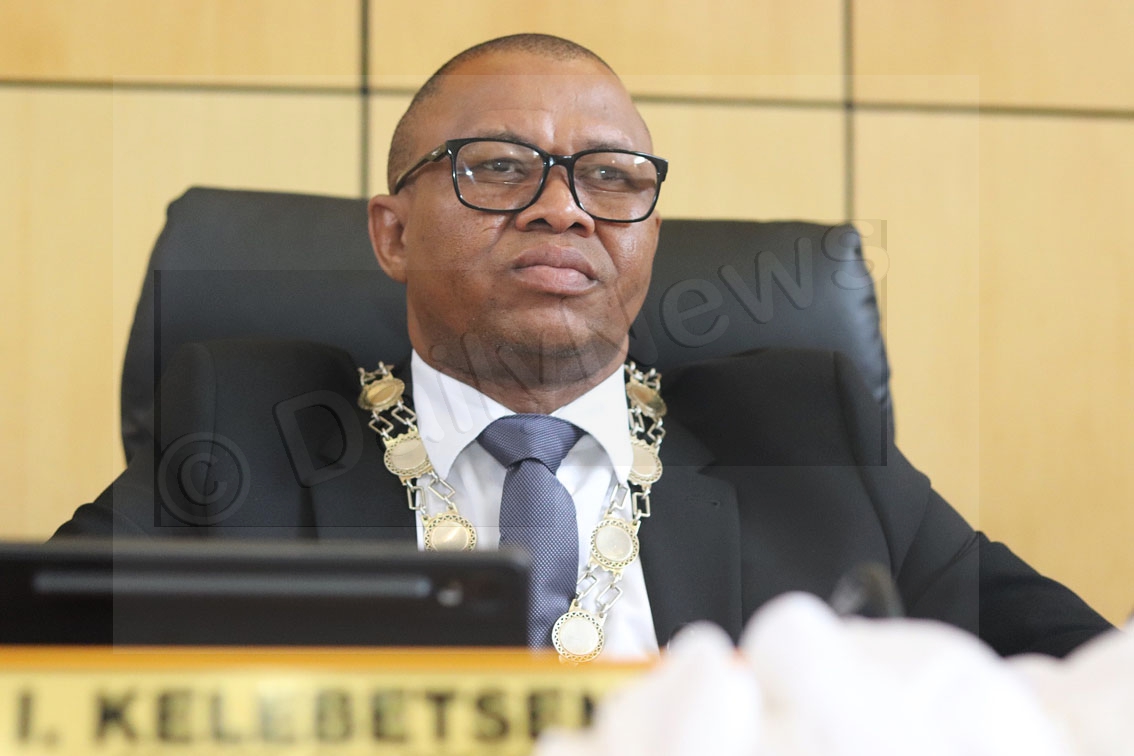
Addressing a full council meeting, Council Chairman, Mr Itumeleng Kelebetseng said LED would not solely be driven by government, urging full participation of all other stakeholders. He said investment and leadership were at the pinnacle of a successful LED strategy.
Mr Kelebetseng said the economic development of the district was dependent on a strong partnership between government, private enterprises and the community.
“Our district is a region of diverse economic potentials, tourism, agriculture, fisheries, crafts, small scale trade among others and through strong collaboration, consistent participation, open dialogue and joint action, we will drive innovation and competitiveness. We will create an attractive destination for investment to mention but a few,” he added.
He called on fellow political leaders and other stakeholders to share the journey which was focused on improving the overall wellbeing of the community through better services and a more vibrant local economy.
Mr Kelebetseng also highlighted that efforts to establish meaningful international relations were progressing well citing that recently, he hosted the Deputy Chief of Mission from the Embassy of the People’s Republic of China in Botswana, who expressed commitment to deepening cooperation in tourism and cultural exchange.
“After my return visit to the Embassy, I am pleased to report that there are promising prospects for the council to benefit from training seminars that will support our human capital development,” he said.
He said the recent launch of the use of drones in delivering medicines to health facilities was a transformative step in the health-care delivery system by ensuring that essential medical supplies reach communities swiftly and efficiently.
On other issues, Mr Kelebetseng noted that community consultations on the proposal of upgrading Maun into a Green City have been completed in November.
He said the task team was currently working on the compilation of the district position paper covering comments and ideas from different stakeholders.
Mr Kelebetseng also reported that the district was currently experiencing illegal developments particularly in larger villages such as Maun and Sehithwa.
He added that the situation was also common within in the Okavango Delta area, entailing commercial developments especially tourism related accommodation facilities.
“Our communities should be aware that the entire district is a planning area and therefore the process of development has to be followed to the latter. As the council we continue to strengthen our enforcement processes to safeguard the community against these illegal developments,” added Mr Kelebetseng. -
BMWU Calls for Industry Realignment
Botswana Mine Workers Union (BMWU) president, Mr Joseph Tsimako has called for the mining industry to realign its goals and practices with industrial relations standards.
Mr Tsimako was speaking during the BMWU General Council and Business Insights seminar held in Selebi-Phikwe recently.
He said there was a need for the mining industry to realign its goals and practices to navigate towards the ‘True North’ strategic vision.
Furthermore, he expressed the need for a collaborative, cordial, and transparent relationship between mining stakeholders, aiming for a sustainable and equitable future for the sector.
“The idea of the summit was born from the realisation that the mining industry in the context of industrial relations was yet to find its ‘True North’. This follows a month of engagements between the union, business partners, and other relevant stakeholders,” said Mr Tsimako.
He spoke of the need for solidarity among mining stakeholders in pursuit of common objectives of navigating towards the ‘True North’.
In addition, he encouraged open dialogue and sustainable partnerships, and an environment where every voice was heard and valued.
Touching on mining industry challenges, Mr Tsimako said such includes a wide gap between employers and employees characterised by trade disputes, non-recognition of the union along the mining supply chain, poor mining operational standards, as well as marginalisation of the union in key policy and mineral development processes, hence the need for collaborative measures.
Moreover, he mentioned the evolving mining landscape, which he said called for the advent of technology in the workplace, innovative ways to conduct activities, citing the shift from a fossil fuel-driven economy to a green one.
The purpose of the BMWU General Council and Business Insights seminar, Mr Tsimako noted was to discuss the future of mining in Botswana, the future of employment in the mining sector, as well as emerging challenges in the evolving mining landscape.
The seminar was also set to encourage transition towards digitalised and technology-driven operations, dialogue about labour-employee cooperation for a sustainable and equitable mining industry.
Senior Employees Relations Manager at Debswana, Mr Tebatso Hule, emphasised the need for the mining industry to embrace cutting-edge technology to drive innovation and enhance operational efficiency.
He explained that integrating advanced technologies could significantly improve productivity and safety standards within the sector.
Furthermore, Mr Hule emphasised the critical role of trade unions, asserting that they must prioritise transparency and accountability in their operations.
He said such a move would accord unions an opportunity to effectively represent and advocate for the interests of their members, ensuring that workers’ voices were heard and their needs met. -

BTEP Projects Success Hinge on Systems Overhaul
There is need to transform government systems to circumvent bureaucracies and ensure the swift and seamless implementation of Botswana Economic Transformation Programme (BETP) projects, Lobatse Botoka ward Councillor, Mr Onneetse Kagiso, has said.
In an interview on sidelines of the Lobatse Full Council sitting on December 1, Mr Kagiso noted that Lobatse had benefited from four key BETP projects envisioned to stimulate economic growth.He highlighted the need for local authorities to ensure decisive and apt facilitation of investors, especially during the construction of the Lobatse Meat and Leather City Special Economic Zone (SEZ), designated by the Special Economic Zones Authority (SEZA).
Mr Kagiso added that to revitalise the local economy, there was a need to do away with long processes and too much paperwork to be able to attract and retain more investors.
“Let us automate our systems. Let us have a one-stop shop. We need to revise our pieces of legislation, relax them a bit. We need to be intentional in our undertaking and have more action,” he said.
He added that the priority projects, which included the Lobatse Meat and Leather City SEZ, the Milk Valley Farm expansion, the establishment of a primary slaughter facility and the leather and footwear tannery and manufacturing initiative, would create much-needed mass employment opportunities. He called for the alignment of the vocational education system to provide market-ready skills.
Mr Kagiso urged the realignment of the Technical and Vocational Education and Training system, saying “Lobatse has been declared a meat and leather industry area; therefore, we must align our vocational education to this. Let us introduce courses that deal with leather processing and production of quality leather products, for we need these fine skills locally to be able to compete globally.”
Earlier in his speech, Lobatse Town Mayor Mr Aron Ganakgomo told the council meeting that the Meat and Leather City SEZ project, driven by SEZA in collaboration with local authorities, had already courted investors.
“SEZA has reported that they have already received interest from several investors. However, the current delay in moving forward has been due to funding for any development that would attract investors to the zone,” Mr Ganakgomo said.
Councillors heard that negotiations were underway between SEZA and an International SEZ developer who had studied Lobatse to determine the feasibility of partnering with SEZA to develop the SEZ.
They also heard that the developer had submitted a report which SEZA was currently analysing with different stakeholders to close identified gaps.
Mr Ganakgomo also told councillors that SEZA worked with potential developers who had shown interest in partnering to develop the city by bringing their own funding and network of investors.
Additionally, he said SEZA was in negotiations with the Botswana Meat Commission (BMC) to ascertain if Phase 1 of the zone could start on the land already serviced next to the BMC tannery, currently undergoing revitalisation.
This, the meayor said, would enable investors who wish to process wet blue leather from the BMC tannery into finished leather goods to immediately set up in close proximity to their main input to allow them to manufacture effectively for the export market.
Regarding other projects, Mr Ganakgomo indicated that the Milk Valley Farm would procure 1 000 pregnant heifers from Brazil. Ahead of the delivery, he said the farm would undertake critical preparatory works, including the construction of additional cow housing and supporting infrastructure, as well as land development to expand fodder production.
Lobatse Thema/Motswedi ward councillor, Mr Velem Heii, said the BETP projects approved for Lobatse were critical for job creation and revitalising the local economy, which was primarily sustained by the BMC. Cllr Heii added that the informal sector also stood to benefit.
Again, he said the ongoing revitalisation of the BMC tannery plant and the construction of the BMC Meat value-addition and secondary processing plant to replace the old ECCO Cannery (built in 1978) would enhance BMC’s business model.
“This will help the state-owned enterprise achieve vertical integration and draw a return-on-investment, thus turning BMC into a sustainable entity,” he said.
Nominated councillor, Mr Gofaone Kedise was of the view that there was sluggish implementation of the SEZ which needed to be fast-tracked.
Cllr Kedise said the land for the Meat and Leather City SEZ was identified about 10 years ago and therefore it was time to act. “We have since been declared an SEZ. We need to be agile in our implementation,” he said.
Cllr Kedise further indicated that it was pertinent to draw up an aggressive marketing strategy to sell the SEZ. He argued that the time was nigh to begin to brand Lobatse as a Meat and Leather City and sell it to investors, fully packaged, at exhibitions on the world stage. “Let us spread our wings even beyond borders to market our SEZ,” he said. -
Council Targets Illegal Vendors
Gaborone City Council has intensified its crackdown on illegal operations as city leadership reiterates growing frustration over non-compliance with municipal and national laws.
The Mayor, Mr Oarabile Motlaleng, told the full council meeting on Monday that illegal trading, unlicensed manufacturing, and breaches of public health and child-care regulations were among the most persistent challenges facing the city.
He reported that 13 non-citizens were charged for violating the council’s hawking and street-vending bye-laws, saying these demonstrated the municipality’s firm stance on regulating informal trade within its jurisdiction.
In a separate enforcement action, seven individuals were charged for operating manufacturing businesses without an industrial licence, in violation of Section 6 of the Industrial Development Act.
Food safety inspections also revealed 19 cases involving unhygienic preparation and handling of food, which he described as a serious public health concern.
Mr Motlaleng stressed that traders and food handlers must prioritise cleanliness and strict adherence to hygiene principles, adding that council teams would continue to educate both vendors and consumers on safety standards.
He said they would continue to sensitise the public and build a culture of vigilance and compliance, adding that responsible trading protected the community and strengthened the environment.
Child-care services were not spared from scrutiny, as eight day-care centres were charged for operating contrary to Section 97 (1) of the Children’s Act, which governs registration and conduct of child-care facilities. The Mayor emphasised that adherence to the Act was non-negotiable to safeguard children’s welfare.
Speaking broadly to the business sector, Mr Motlaleng urged continued legal compliance, warning that failure to meet regulatory obligations compromised public well-being.
“We urge the business community to consistently adhere to the provisions of the law to ensure compliance and contribute positively to the environment in which we operate. Upholding these regulations not only promotes responsible business practices but also safeguards the health and well-being of our community,” he said.
The council also registered eight cases of urinating in public, an offence under the Sanitation and Public Health Bye-laws.
These incidents, he noted, pointed to declining public hygiene discipline and the need for renewed awareness campaigns.
-

CIPA Advances IP to Drive Economic Transformation
Botswana, through the Companies and Intellectual Property Authority (CIPA), continues to intensify efforts to position Intellectual Property (IP) at the centre of its economic transformation.
This was underscored by a high-level delegation visit from the World Intellectual Property Organisation (WIPO) to engage with young professionals and members of the Botswana Intellectual Property (IP) Careers Project.
The WIPO delegation, comprising WIPO’s head of employee experience, Mr Yamfwa Chinyanta and talent acquisition and development manager, Mr Naoto Sugiura, met with youth in Gaborone recently to explore career opportunities within the burgeoning IP sector.
The engagement session was part of a joint pilot initiative between WIPO and CIPA and it aimed to build awareness and strengthen local skills essential for the country’s emerging knowledge economy.
Speaking at the Careers in IP-Awareness Raising Event for Mid-Career Professionals, CIPA caretaker registrar general, Mr Godfrey Molefe, said Botswana had entered a pivotal moment in its national transformation, guided by the 2025 State-of-the-Nation Address, Botswana Economic Transformation Programme (BTEP) and the 12th National Development Plan (NDP 12).
Mr Molefe emphasised that central to such reforms was the creation of a digitally enabled, export-driven and innovation-led economy, with IP serving as the foundation for protecting creativity, technology and enterprise competitiveness.
He added that Botswana’s adoption of its first National Intellectual Property Policy (BIPP 2022) marked a crucial shift from mere awareness to active implementation.
“The policy sets out six pillars, including; IP governance, financing, education, entrepreneurship and institutional strengthening, backed by a National Vision that Botswana would be an IP-driven economy by 2036,” he said.
He highlighted that achieving Vision 2036 required significant investment in human capital.
Since joining WIPO in 1998, he said Botswana had benefited from extensive support in policy development, legislative reform, technical assistance and training, including scholarships for IP-focused Master’s Degree programmes.
Mr Molefe urged youth to consider IP as a career option, arguing that as start-ups and SMEs expanded, IP would be central to protecting their innovations and unlocking access to export markets. He expressed hope that the engagement would serve as a defining moment for some attendees.
On one hand, WIPO representatives confirmed that such initiatives were designed to make global IP systems more accessible to local professionals. They encouraged participants to explore career opportunities not only locally, but also within regional bodies such as the African Regional Intellectual Property Organisation (ARIPO) and the Southern African Development Community as well as international institutions, including WIPO itself.
The one-day workshop highlighted a range of in-demand IP-related career paths, including patent and trademark examiners, IP lawyers, licensing and commercialisation officers, copyright and royalties administrators, enforcement specialists as well as creative-industry entrepreneurs.
-
BOB Maintains 3.5 Per Cent Monetary Policy Rate
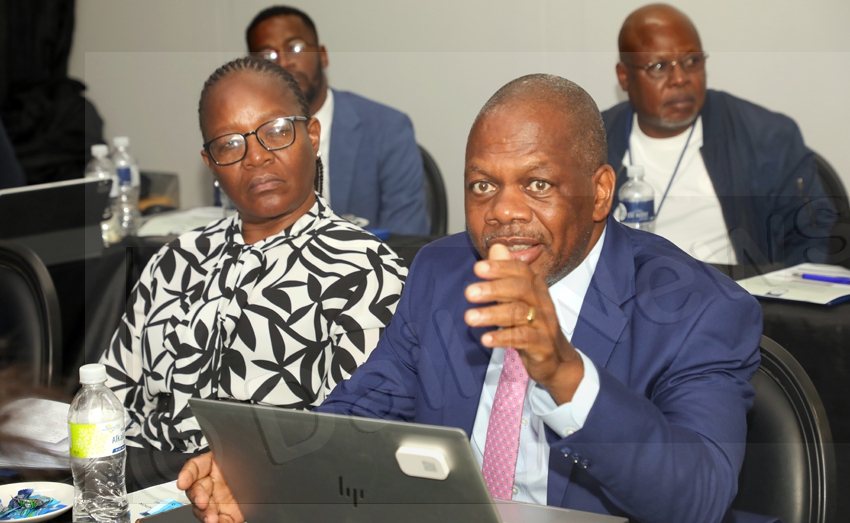
The Bank of Botswana (BOB) has maintained the Monetary Policy Rate at 3.5 per cent, citing the need to manage inflation and support economic stability. Speaking during a Monetary Policy Committee (MPC) media briefing Governor Moseki said the MPC met at a time when the global economy continued to face shifting trading patterns and heightened geopolitical tensions.
Despite these challenges, he noted that the global economy had shown stronger-than-expected resilience in 2025.
“Domestically, increased uncertainty and continued weakness in the diamond market have put pressure on Botswana’s fiscal and external buffers,” he said.
Looking ahead, Mr Moseki stressed that accelerating growth-enhancing initiatives and economic diversification efforts, as outlined in the Botswana Economic Transformation Programme (BTEP) and National Development Plan 12, was essential for supporting a sustainable recovery in 2026.
He added that Botswana’s strong institutions and sound macroeconomic policy framework provided an opportunity to attract investments capable of driving economic transformation.
The Governor also revealed that Botswana’s real Gross Domestic Product (GDP) contracted by three per cent in the 12 months to June 2025,a sharper decline compared to the 0.6 per cent contraction reported at the end of 2024.
“The weak performance was mainly due to the continued contraction in mining output and subdued non-mining sector activity,” he explained.
On inflation, Mr Moseki said headline inflation rose slightly from 3.7 per cent in September to 3.9 per cent in October 2025, remaining within the medium-term objective range of three to six percent.
“The marginal increase in inflation was attributable to higher price increases for alcoholic beverages, tobacco and transport, mainly due to price pressures stemming from the July 2025 adjustment of exchange rate parameters,” he noted.
The MPC forecasts inflation to increase into medium term averaging 2.7 per cent in 2025 and 5.3 per cent in 2026. However, Mr Moseki cautioned that the overall risk of inflation exceeding current projections remains elevated.
He added that the economy is expected to continue operating below full capacity in the short to medium term, which should limit demand-driven inflationary pressures. The Governor announced that the MPC has also directed that the seven-day Bank of Botswana Certificates, repos and reverse repos will be conducted at the policy rate of 3.5 per cent.
The standing deposit facility (SDF) rate will remain at 2.5 percent with 100 basis points below the policy rate. Commercial banks have been instructed not to increase their prime lending rates.