Small businesses have joined efforts to turn Molepolole Bus Rank into a business and service hub. After lying ideal for almost a decade, the Molepolole Bus Rank was reopened for use in December 2025.
However, small businesses and the local transport operators are still in doubt that the infrastructure will boost their businesses due to a number of shortcomings, primarily shortage of customers.
Their fear is that the bus rank was located in isolation, far from the village centre where people flock to source household amenities and other services from government departments.
In an effort to push for government to establish offices at the bus rank offering daily services, some hawkers are on the verge of registering an association; the Molepolole Bus Rank Association, primarily to advocate for the bus rank to be turned into a business and essential services hub.
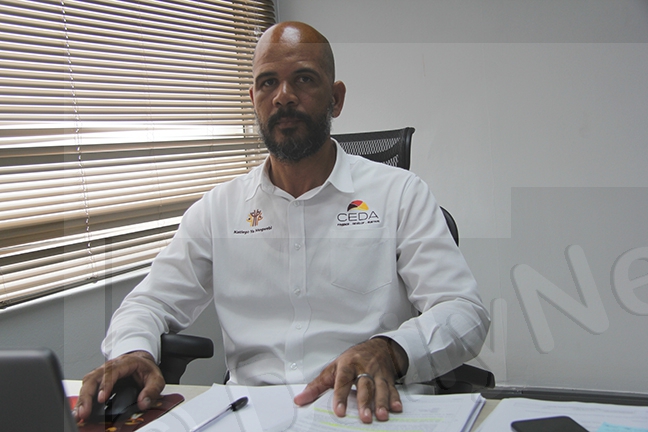
The chairperson of the proposed association, Mr Godfrey Ramokhaneng, a cobbler operating from one of the stalls, is among the few small business owner who, despite challenges, have remained at the bus rank since its establishment.
“Eight days after the bus rank was reopened we met as bus rank vendors to form an association that will serve as a mouthpiece for all vendors around the bus rank,” said Mr Ramokhaneng.
He said the association would serve as a mouth piece for the small businesses, public transport operators and all others including government offices doing business at the bus rank.
Mr Ramokhaneng said the aim of forming an association was to revive commercial activity at the bus rank, which had previously been forced to shut down after businesses and public transport operators abandoned it due to low patronage linked to its isolation location.
He said apart from a small number of commuters to nearby areas, there were no businesses or services in its surrounding to attract movement of people that could ultimately turn into customers for their businesses.
Mr Ramokhaneng said the only way to inject life at the bus rank was to associate, join hands as businesses, collaborate with all other private, government and council stakeholders.
He said businesses that were currently operational at the bus rank, included street vendors and public transport operators.
He said the association would also be a burden reliever to the council in terms of cost sharing especially on matters that included the maintenance of the premises and other billings.
Mr Ramokhaneng said the association would encourage businesses at the bus rank to play a part in its maintenance adding that the Public Private Partnership model must be engaged to establish businesses such as a shopping mall to boost life at the bus rank.
He said through an association it would be easy to convince and lure service providers to establish offices or hold public activities at the bus rank.
He added that working together would also assist businesses in sharing ideas and business experiences that would help them sustain and grow. One of the vendors at the bus rank, Ms Tinge Kgosiesele was equally convinced that the bus rank in its current status was not conducive to sustain small businesses.
“For a small business to thrive it must be strategically located along side major businesses such as a shopping complex, where it would easily be located by customers.”
Kgosiesele said her stall had been operating at the bus rank since 2018, but at one point was forced to relocate to where the makeshift bus rank was located in pursuit of customers.
However, she was hopeful that the association would bring life to the bus rank. Ms Agnes Seroojane said the initial opening of the bus rank had brought hope to their businesses as some government department such as bye-law and transport had relocated some of the their services to the bus rank.
However, Ms Seroojane said their stay was short lived as they abandoned the bus rank, derailing efforts of turning the bus rank into a business and service hub. Mr Eric Sefanyetso, one of the long distance public transporters in the Takatokwane-Molepolole road said the Molepolole bus rank was in isolate location and mostly used by long distances buses.
“We cannot refuse to utilise the facility. We are appealing to government to provide services and other social amenities that will attract the local people to take public transport to the rank. The only transport currently utilising bus rank are long distance transporters,” he said.
Mr Sefanyetso said local taxis were limited at the bus rank as they only target the few passengers who were arriving at the bus rank.
He said the movement at the bus rank was only of the few that were travelling to various destinations, while the locals had no business of going to the bus rank as all the services and other businesses of their daily interest were located far from the bus rank.
Meanwhile, Kweneng District Council Chairman, Mr Ontefetse Rankhibidu said efforts were ongoing to resuscitate life a the bus rank. Mr Rankhibidu said negotiations with some council and government departments and other service providers were ongoing and they promised that they would provide service points at the bus rank.
He added that the idea was for other offices to permanently establish at the bus rank, a move that would sustain small businesses and other activities.
Category: Business
-
Vendors to Form Bus Rank Association
-
Gaolathe engages AfDB on BETP assistance
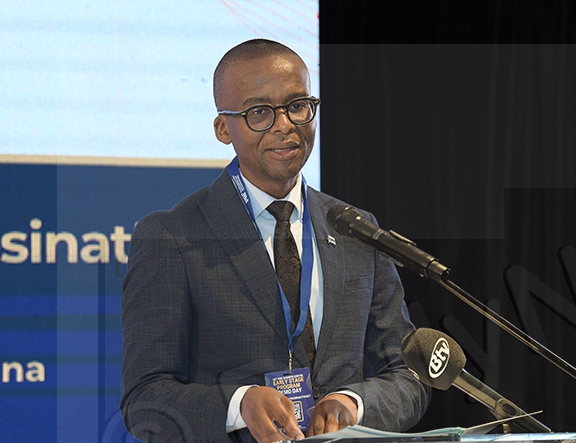
Vice President Ndaba Gaolathe bilateral engagements with African Development Bank (AfDB) president, Dr Sidi Ould Tah will focus on extending the bank’s technical support and capacity building assistance to accelerate the Botswana Economic Transformation Programme.
Mr Ndaba, who is also Minister of Finance is in Abidjan, Côte d’Ivoire where he is attending the inaugural Strategic Dialogues of the African Development Bank Group and later undertake a working visit to Georgia.
According to a press release from Ministry of Finance, the duo’s engagements will also explore innovative financing solutions that can be deployed at scale to support Botswana’s development priorities
Further the release states that the meeting will consider collaboration with the AfDB on the possible establishment of a Southern African Customs Union (SACU) Industrialisation Fund.
The ministers of finance for both Botswana and South Africa have been tasked to engage the bank of the initiative.
Meanwhile, the release states that following his engagements in Abidjan, Vice President Gaolathe will undertake a working visit to Georgia from January 12 to 15.
He is expected to engage with ministers and senior government officials on the design and implementation of Georgia’s funding systems, with a view to informing Botswana’s ongoing efforts to restructure and strengthen its financing architecture in support of private sector growth and job creation
Georgia has been identified as a country with an effective funding architecture, particularly in supporting small and medium-sized enterprises, innovation and productive sectors.
-
New Insurance Company Set to Empower Citizens
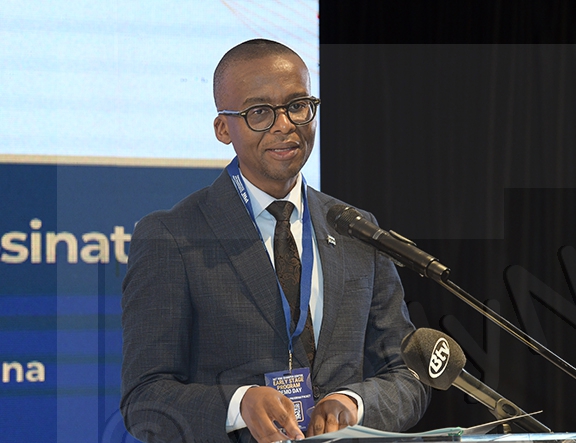
The launch of Babereki Life Insurance Company (BLIC) next year is expected to assist ordinary Batswana build generational wealth.
To demonstrate its objective, BLIC founding chief executive officer, Mr Tshepo Jim said the company was incorporated by Batswana, with ordinary members, through the Maloko Trust, holding the majority stake at 45 per cent.
Another 40 per cent is owned by BLIC, while the remaining 15 per cent is allotted to Botswana Public Employees Union, Babereki Insurance Brokers and Babereki Investments each owning 5 per cent stake. This arrangement, Mr Jim said exemplified a citizen-led business in Botswana.
He said the company’s core philosophy was to safeguard Botswana’s economy by keeping wealth within the country rather than allowing it to flow offshore. Mr Jim therefore invited citizens to form strategic partnerships and join the journey toward a prosperous Botswana.
What sets BLIC apart from other insurance underwriters in the country, according to Mr Jim, was its mass ownership model, with ordinary citizens as major shareholders. He claimed this makes it the first such structure in Africa, drawing historical parallels to similar entities established in London in the early 1800s and in Latin America in the early 1900s.
“The concept stems from like-minded individuals who sought additional income streams beyond salaries. They envisioned a company that will honour workers with dignity during their careers and upon retirement,” he said.
“As we move forward, BLIC will continue to champion inclusive growth, professional integrity, and strategic innovation. We invite like-minded investors to join us not to control, but to grow together. In doing so, we will shape a life insurer that reflects the best of Botswana: people-centric, united, empowered, and future-ready.”
-

Botswana Confronts Diamonds Slump and Eyes Bigger Growth
The year 2025 was marked by continued economic challenges, primarily driven by a prolonged downturn in the global diamond market.
Under President Advocate Duma Boko’s administration, which assumed power following the Umbrella for Democratic Change (UDC)’s landslide victory in the 2024 elections, government has intensified efforts to diversify the economy away from its heavy reliance on diamonds.
President Boko has repeatedly emphasised the need to break the ‘resource curse,’ stating in various addresses that Botswana must foster private sector-led growth and attract sustainable investment. Government’s strategy has focused on structural reforms, infrastructure development and new initiatives to build resilience.
A key milestone was the launch of the Botswana Economic Transformation Program (BETP) in mid-2025, aimed at promoting growth in services, regional finance, manufacturing, tourism, renewable energy and agriculture. The programme received thousands of project submissions from citizens and businesses, with hundreds selected for implementation to drive job creation and innovation.
This was complemented by the tabling of the 12th National Development Plan (NDP 12), a P388 billion framework spanning 2025-2030. NDP 12 prioritises investments in transport, housing, water infrastructure and non-mining sectors, with the goal of fostering inclusive growth and reducing vulnerability to commodity shocks.
In September 2025, government established a new sovereign wealth fund to manage state assets and invest diamond-related revenuesin high-growth areas such as agro-processing, renewables and tourism. Additionally, a new agreement with De Beers extended Debswana mining licenses to 2054 and gradually increased the state’s share of rough diamond sales to 50 per cent.
Despite these initiatives, Botswana’s economy faced headwinds in 2025. Real GDP is estimated to have contracted by around one per cent, according to the International Monetary Fund (IMF), following a slowdown in 2024. This reflects weaker diamond production and trading amid subdued global demand.
Diamonds remain Botswana’s economic cornerstone, contributing significantly to exports (over 70 per cent), government revenue (around a third) and foreign exchange earnings.
Debswana, the joint venture with De Beers, reduced production to approximately 15 million carats in 2025, a sharp cut from previous years due to inventory build-up, economic uncertainty and competition from lab-grown diamonds, which now hold about 20 per cent of the market and are priced 30-40 per cent lower.
The mining sector’s weakness contributed to a sharp quarterly GDP contraction earlier in the year, prompting downward revisions in growth forecasts. Finance Minister Ndaba Gaolathe highlighted the budget deficit for the 2025/26 fiscal year at an estimated 7.56 per cent of GDP, necessitating careful fiscal management amid reduced mineral royalties.
To support competitiveness and preserve foreign exchange reserves (which dipped to around five months of import cover), government approved an accelerated annual depreciation rate for the Pula of 2.76 per cent in July 2025.
The Bank of Botswana (BoB) maintained an accommodative stance for much of the year, holding the Monetary Policy Rate (MoPR) at 1.9 per cent until October, when it was raised by 160 basis points to 3.5 per cent. This ‘recalibration’ aimed to strengthen policy signalling without immediately increasing commercial lending rates, as banks were directed not to pass on higher costs fully.
Inflation remained subdued for most of 2025, often below the 3-6 per cent target range, before rising toward the end of the year due to Pula depreciation and imported price pressures.
Credit rating agencies reflected the strains: S&P downgraded Botswana’s rating with a negative outlook, followed by Moody’s lowering it to Baa1, citing fiscal pressures and slow diversification progress. Unemployment, particularly in mining regions, remained elevated around 25 per cent, with ripple effects on local communities.
The private sector has shown resilience, with organisations like Business Botswana advancing strategies for competitiveness, skills development and regulatory reforms. Eased permitting processes and public-private partnership initiatives have aimed to attract investment in logistics, digital infrastructure and SMEs.
Agricultural programmes have undergone reviews, with shifts toward precision farming and tech-driven initiatives to boost yields and support export-led growth.
As 2025 ends, Botswana’s economy shows signs of strain but also determination for change. While a diamond market recovery could support modest growth in 2026, sustained diversification through BETP, NDP 12 and regional integration via AfCFTA, will be crucial. President Boko’s efforts, including citizenship-by-investment schemes to draw diaspora funds, underscore a vision for sustainable prosperity beyond diamonds.
Botswana’s journey forward requires continued reforms, investment in human capital and green innovation to transform its economic lustre into long-term resilience.
-
PALEKA Trust Unveils New Offices
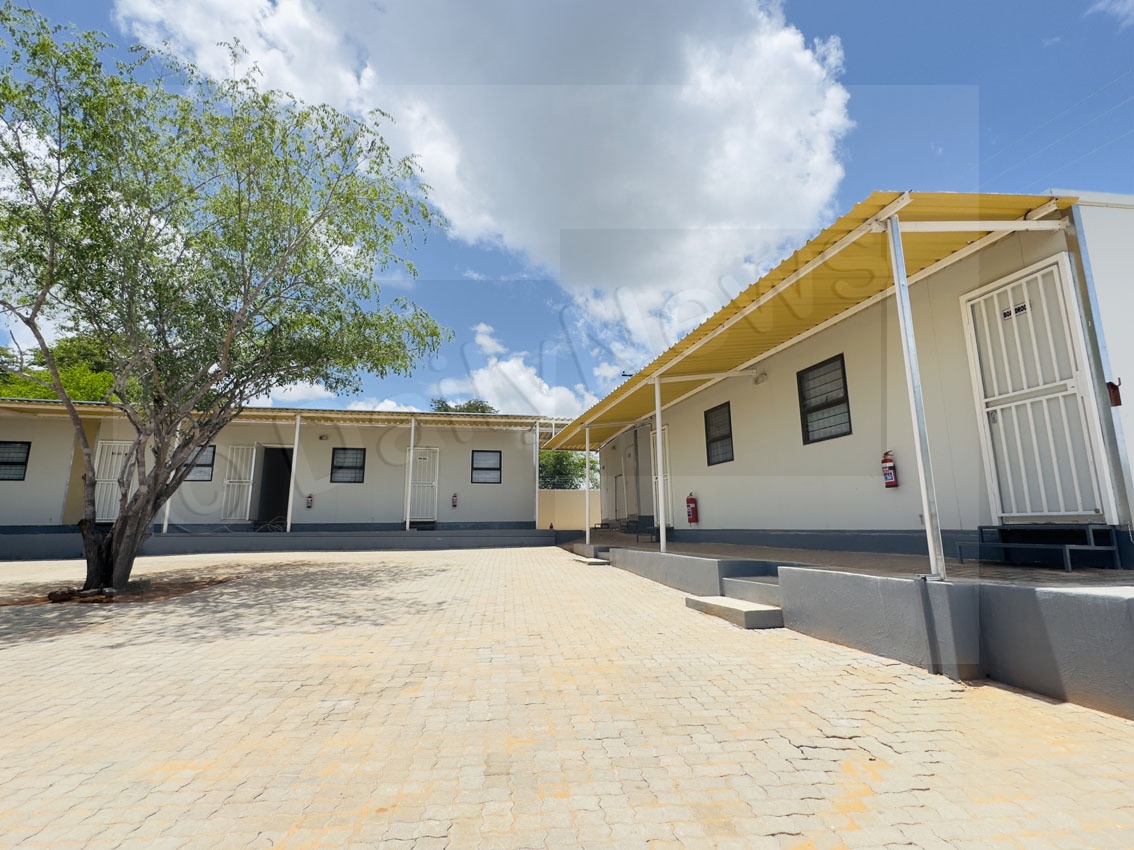
Newly opened Pandamatenga-Lesoma- Kazungula (PALEKA) community offices are crucial to improved qulity service to members.
Officially opening the offices on Monday, Member of Parliament for Chobe, Mr Simasiku Mapulanga appreciated the trust efforts saying the new establishment would serve as an information centre where all services would be centered for the people of the three villages to access.
He said the new administrative centre championed an eco-friendly environment as it was fully powered by solar which resonated well with PALEKA as a custodian of sustainable environment and biodiversity.
Mr Mapulanga further said that the development would promote efficiency by serving a broader community under one roof. Moreover, he stated that the trust would serve funds that were in the past injected into office rentals hence channel them to other projects.
“This office development is aligned to the community Based Natural Resources Management policy which underpins the importance of conservation by communities existing within these resources and in turn generate income through the resources for improvement of livelihoods,” he added.
PALEKA Board chairperson, Mr Kabozu Kabozu said that construction of the offices was a priority, adding that the offices would ensure people were assisted on time on a bigger facility in comparison to the office they rented.
He also stated that they created employment and hired more than 20 personnel in PALEKA villages noting that they were planning to increase the numbers through building of a campsite.
Grand Georick Energy founder, Mr Matengu Matengu stated that Chobe was endowed with ample solar energy which they tapped into and fully powered the new offices.
He said the offices were powered with 24 kilowatt hybrid system which was dependent on the sun adding that the trust could also connect to Botswana Power Corporation (BPC) grid as backup in future.
Mr Matengu remarked that solar energy was the future as espoused in the Vision 2036 that Botswana intended to embrace an eco-friendly practice. -

Gaolathe Pleads Common Ground on Eviction Talks
A season that brings profit has turned bleak for traders operating at the Gaborone bus rank market stalls, following a recent court order directing them to vacate the area by December 31.
The traders have been ordered to pave way for a private investor contracted to refurbish the market stalls and upgrade infrastructure around the Gaborone bus rank precinct.
The directive, intended to enhance safety, efficiency, public transport vibrancy and address health and safety concerns, has sparked widespread controversy and anxiety among vendors whose livelihoods depend on informal trading.
While authorities say the move will bring order and modernisation to the urban transport hub, vendor organisations have strongly criticised the decision, arguing that it threatens the survival of hundreds of families particularly women, who make up a significant portion of the trader population.
For many vendors, trading at the bus rank is not a matter of choice but necessity, especially in a country grappling with high unemployment and economic hardship.
“The bus rank has been my source of livelihood for all these years. Where will I go after the looming eviction is implemented,” lamented long-time vendor Mr Patrick Moatshe.
Mr Moatshe, who is visually impaired, accused government of reneging on its promises to protect vulnerable groups.
Similarly distressed is Ms Otsile Tsiakokwe, who has traded at the bus rank for over 15 years.
She said the proposed relocation would have a devastating impact on her family, particularly as she prepared for next year’s school expenses.
“My children’s school fees, monthly rent and groceries depend on this,” she said.
Ms Tsiakokwe said the relocation was ill-timed, coming at a period when family and social obligations peak due to the festive season.
She further highlighted that desperation was driving many into informal trading.
“With high unemployment and limited access to formal jobs, vending becomes a vital means of survival for many families,” she said.
Chairperson of the Gaborone bus rank traders’ association, Mr Batsweletse Mogabala, also expressed dissatisfaction, warning of dire consequences if the matter was not urgently addressed.
He appealed to Gaborone City Council to clearly communicate where vendors would be temporarily relocated during the face-lift of the bus rank.
Mr Mogabala said displacing traders without viable income alternatives would not only disrupt livelihoods but also worsen poverty levels.
“While the local authority raises legitimate concerns about the renovation, it is crucial to consider the broader socio-economic context,” he said.
Responding to the vendors’ concerns during his recent interaction with them, Vice President and Minister of Finance, Mr Ndaba Gaolathe urged both local authorities and traders to find common ground and reach an amicable solution.
He acknowledged the significant contribution of the informal sector to the economy and reaffirmed government’s commitment to its growth.
The vice president, who is also Member of Parliament for Gaborone Bonnington South, encouraged vendors to unite and form cooperatives to strengthen their bargaining power.
Meanwhile, Gaborone City Council Mayor, Mr Oarabile Motlaleng acknowledged the difficult situation facing the vendors but said the council was bound to implement the court order.
He explained that the renovation tender was awarded through a lawful expression-of-interest process. The mayor added that temporary displacement of traders was unavoidable to allow construction of a new, modern multi-level terminal, which would be implemented in three phases, with the first phase expected to be completed by the end of 2026. -

Finance and Investment Competition Grows in Leaps and Bounds
Any vision, no matter how small, requires a dedicated partner to become a reality.
This sentiment was shared by Botswana Stock Exchange (BSE) Head of Market Development, Ms Thapelo Moribame, while welcoming guests at the 2025 BSE–Stanbic Bank Botswana Senior Secondary Schools Finance and Investment Competition National Awards Ceremony, held recently at the BSE Training Room in Gaborone.
Ms Moribane said the competition, launched in 2013 as a physical initiative, had evolved into a digitally driven programme. She explained that this year’s edition was delivered through a Stock Market Simulator a user-friendly, risk-free virtual trading platform designed to enhance financial literacy and broaden access to stock market education.
“For the 2025 edition, all participating schools began competing at regional level. Each school was allocated virtual funds to build and manage investment portfolios. We then identified the top three schools in each region and awarded them share vouchers,” she said. Regional winners advanced to the national finals, where they competed for the final prize. Ms Moribane noted a substantial increase in participation, with schools rising from 15 in 2024 to 28 in 2025.
She described the growth as evidence of the competition’s relevance among students and a reaffirmation of BSE and Stanbic Bank Botswana’s commitment to widening access to capital markets.
Ms Moribane revealed that a total of P115, 000 in share vouchers had been awarded to 55 participants, alongside P30, 000 in cash prizes to the top three schools.
She applauded Stanbic Bank Botswana for its sponsorship and partnership, describing the collaboration as strategic and anchored in a shared belief that empowering young people was critical to Botswana’s economic growth.
The Deputy Permanent Secretary in the Ministry of Child Welfare and Basic Education, Mr Steve Bothasitse, congratulated the winning schools, Al Nur School, Swaneng Hill School and Pioneer Academy for their outstanding performance.
“You have demonstrated exceptional resilience throughout this competition. The stock market is often viewed as complex, yet you embraced the challenge with determination and confidence,” he said.
Mr Bothasitse told learners that their participation sent a clear message that Botswana’s youth were ready to play an active role in shaping the country’s economy. He also praised the BSE–Stanbic Bank partnership, noting that the initiative reflected a deep commitment to youth empowerment, financial inclusion and national development.
He acknowledged that one of the ministry’s major challenges was that financial literacy was not yet strongly embedded in the mainstream curriculum, leaving many students unprepared for real-life financial decisions. Competitions such as this, he said, helped bridge the gap between education and industry, and between theory and practice.
“Financial literacy is no longer optional; it is an essential life skill,” Mr Bothasitse said, adding that government alone could not deliver every skill learners needed. Partnerships with industry, he noted, were vital in cultivating a culture of shared responsibility and investment in education.
He emphasised that child development was a national project requiring collective effort, and reaffirmed the Ministry’s commitment to nurturing and expanding collaborations for the benefit of every child. -
New CEDA Branch to Spur Local Growth
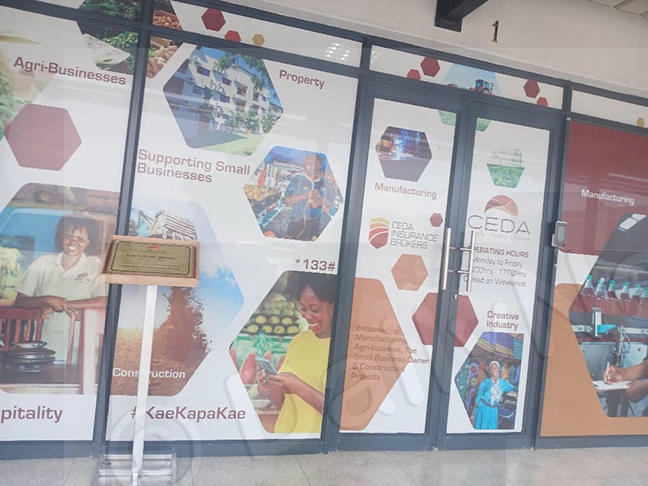
The establishment of a Citizen Entrepreneurial Development Agency (CEDA) branch in Tutume has been warmly welcomed by clients and the broader business community, as it brings renewed hope and opportunities especially for young people who previously struggled to access services offered in Francistown.
Tutume and its surrounding villages have long been home to hardworking, innovative and ambitious people across sectors such as agriculture, retail and tourism. With the region’s vast economic potential, the opening of the new CEDA office is viewed as a major boost for both Tutume and parts of the North East District. The Nswazwi–Kalakamati bypass road is expected to reduce travel distances for residents seeking CEDA services, eliminating the need to travel to Francistown for essential support.
Speaking during the official opening, Minister of Trade and Entrepreneurship, Mr Tiroeaone Ntsima, said CEDA believed in people’s ideas and was committed to nurturing them into viable businesses. Doing so, he said, would create employment opportunities and strengthen local economic empowerment , key priorities under government’s job-creation agenda.
Mr Ntsima highlighted that since its establishment in 2001, CEDA had remained one of the country’s strongest instruments for citizen economic empowerment, funding thousands of citizen-owned businesses, supporting start-ups, reviving struggling enterprises and creating opportunities for youth and women nationwide.
In the region alone, he revealed that the agency had invested over P150 million in 943 businesses across various sectors, a clear demonstration of its commitment to entrepreneurship and economic development.
He further noted that the opening of the new branch marked a significant milestone in CEDA’s growth, aligning with government’s broader economic diversification drive under the Botswana Economic Transformation Programme (BETP), which aimed to reduce reliance on diamonds.
CEDA beneficiary and businessma, Mr Power Monyamane welcomed the development, describing the new office as a breakthrough that would close long-standing gaps caused by limited access to information and services due to distance. He encouraged fellow entrepreneurs to visit the office for accurate, first-hand information rather than relying on hearsay, noting that some aspiring businesspeople hesitated to seek guidance directly.
He advised that passion was key to business success, cautioning against copying others’ projects without genuine interest. Mr Monyamane, who has invested in property development through CEDA support, said he had built office spaces currently housing the Ministry of Finance revenue office. He indicated plans to seek further funding for upcoming projects.
He urged young people to take advantage of the new CEDA office, apply for funding while they were still young, and use the opportunity to build sustainable businesses and long-term careers.
-
CEDA Invests Over P11 Million into Kanye Businesses
In a major boost for the Kanye District economy, the Citizen Entrepreneurial Development Agency (CEDA) has approved funding for 20 local businesses in 2025, injecting a total of P11, 126, 249. 00 and creating 148 jobs. One standout project, a large-scale property development worth P10.5 million single-handedly delivered 123 permanent jobs, dwarfing the employment impact of the other 19
ventures combined.The remaining 19 projects shared just P601,305; agribusiness (10 projects) received P388,507 and generated 15 jobs, services (7 projects) got P189,798 for 8 jobs, and manufacturing (2 projects) secured the smallest slice at P22,000, yielding only 2 jobs. Speaking to BOPA in an interview on Friday, Kanye CEDA Branch Manager Mr Tuelo Rabaloi revealed that while dryland farming dominated applications in the district, the agency was deliberately shifting focus toward manufacturing, a sector that can slash Botswana’s import bill and create far more sustainable employment.
“We want more manufacturing projects,” Mr Rabaloi stressed. “They deliver bigger national benefits. That is why we are rolling out new funding lines specifically designed to make these businesses bankable.”
Among the new products now available are A di tsale, Thuo Letlotlo, and a dedicated Artificial Insemination (A.I) programme for livestock farmers all aimed at accelerating job creation and building businesses that added real value to Botswana’s GDP, said Rabaloi.
In the property space, Mr Rabaloi said CEDA was also steering developers away from multi-residential blocks and toward job-rich commercial developments such as shopping malls and retail centres.
“Support doesn’t stop at handing over the cheque,” he said, emphasizsng that the CEDA assigns trained mentors to every funded business, offering ongoing guidance to ensure long-
term survival and growth. “When specialist expertise is needed, the agency foots 90 per cent of the cost for external business consultants, with clients paying only 10 percent.” Rabaloi said strategic partnerships were another key ingredient. Through ties with the Local Enterprise Authority (LEA) and other government bodies, CEDA clients gain access to advanced training, market linkages, and additional support services.
“These collaborations are critical,” Mr Rabaloi said. “We are not just giving money, we are building an ecosystem where citizen-owned businesses can truly thrive.” With new funding windows opening and a clear push toward high-impact sectors, he said. Kanye entrepreneurs now had more tools than ever to turn ideas into jobs and growth.
-
LED Strategy to Boost Local Economy
North West District is developing a five year (2026-20230) Local Economic Development (LED) strategy to give the local economy a clear vision and direction.
The LED approach guide government, businesses and the community to work together to boost local economy, reduce poverty, create responsible employment opportunities and improve livelihoods by leveraging local resources and skills through strategic planning, infrastructure investment and support small, medium entrepreneurs.
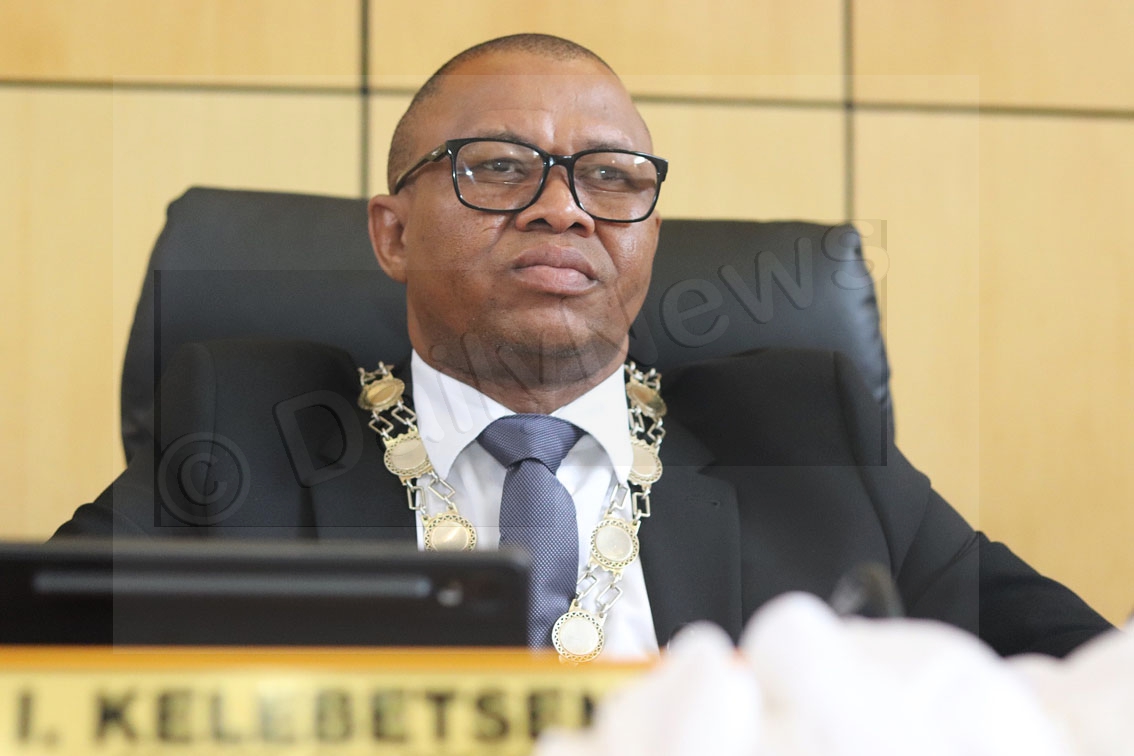
Addressing a full council meeting, Council Chairman, Mr Itumeleng Kelebetseng said LED would not solely be driven by government, urging full participation of all other stakeholders. He said investment and leadership were at the pinnacle of a successful LED strategy.
Mr Kelebetseng said the economic development of the district was dependent on a strong partnership between government, private enterprises and the community.
“Our district is a region of diverse economic potentials, tourism, agriculture, fisheries, crafts, small scale trade among others and through strong collaboration, consistent participation, open dialogue and joint action, we will drive innovation and competitiveness. We will create an attractive destination for investment to mention but a few,” he added.
He called on fellow political leaders and other stakeholders to share the journey which was focused on improving the overall wellbeing of the community through better services and a more vibrant local economy.
Mr Kelebetseng also highlighted that efforts to establish meaningful international relations were progressing well citing that recently, he hosted the Deputy Chief of Mission from the Embassy of the People’s Republic of China in Botswana, who expressed commitment to deepening cooperation in tourism and cultural exchange.
“After my return visit to the Embassy, I am pleased to report that there are promising prospects for the council to benefit from training seminars that will support our human capital development,” he said.
He said the recent launch of the use of drones in delivering medicines to health facilities was a transformative step in the health-care delivery system by ensuring that essential medical supplies reach communities swiftly and efficiently.
On other issues, Mr Kelebetseng noted that community consultations on the proposal of upgrading Maun into a Green City have been completed in November.
He said the task team was currently working on the compilation of the district position paper covering comments and ideas from different stakeholders.
Mr Kelebetseng also reported that the district was currently experiencing illegal developments particularly in larger villages such as Maun and Sehithwa.
He added that the situation was also common within in the Okavango Delta area, entailing commercial developments especially tourism related accommodation facilities.
“Our communities should be aware that the entire district is a planning area and therefore the process of development has to be followed to the latter. As the council we continue to strengthen our enforcement processes to safeguard the community against these illegal developments,” added Mr Kelebetseng.