The Christmas and New Year’s Day festivities have kicked in and across the country, a familiar sound is dominating the airwaves, the booming bass of South African and local hits played on repeat. This year, however, the festive cheer comes with a twist of high-stakes competition. Forget the usual holiday rush, the real battleground is the music scene.
With three massive international festivals, Born and Raised in Serowe, Kanye Festive Xplosion (K.F.X) in Kanye and the newcomer Pacers Live in Thamaga, all scheduled for the same night on December 20, music lovers must now make a difficult choice. Will they follow the headlining acts or stick with brands they have been loyal to?
One Berthold Auerbach says, “Music washes away from the soul the dust of everyday life,” and its universal, emotional depth is often emphasised during this season of festivities.
Some say without music, life would be lifeless, for life comes and goes, but music comes and stays. It is the sound of the heart that stirs when the beat of music is played.
While music is enjoyed all year round, with new songs now blasting the airwaves, it somehow feels different during the Christmas holiday: as if hit songs are only produced in December, or that songs resonate in a particular way this time of year.
This season is synonymous with loud music, with what are perceived as hit songs on repeat. One can hear them playing from loud car radios, shopping malls, and households.
Now, although three shows are held on the same date in different places, which would under normal circumstances mean a good thing for revellers, perhaps reducing travel congestion and crowding at the mentioned events, the question remains – How will the turnout at these events be? Will it be determined by loyalty or by headline acts?
One thing about Batswana is their loyalty to a brand, especially one that has been consistent. Born and Raised has its prints on Batswana’s hearts, and its patrons, especially those from the Central District, have not been shaken; they even buy the merchandise year in, year out. It is the same with K.F.X, it is the patrons from the Southern part of Botswana who flock to Kanye for this event. The event has proved to be a great experience for its patrons over the years, slowly building a brand that is now on everyone’s lips come this season.
However, because of the magnitude of these events, loyal revellers from both sides of the country have always attended both events, especially since they have not always had the same date for their events.
On one hand, Pacers Live comes in as a new baby, bringing luxury and a whole A-List lineup of favourite trending acts from South Africa with hit songs ‘perfect for the festive season.’ But luxury does not come cheap and while patrons welcomed the refreshing aspect of entertainment that Pacers Live is bringing, others have qualms about the ticket price, as well as the risk that almost all of the trending acts from South Africa may not honour the show and perform.
After all, Batswana have experienced on many occasions a no-show from their favourite artistes at music festivals, with reasons ranging from missing flights, double bookings in Botswana and sometimes both in Botswana and elsewhere.
Now, loyalty will be tested this year, especially for K.F.X and Pacers Live, as they are both in the Southern part of Botswana with a proximity of approximately 40km. Herein comes the issue of safety on the roads, as speed, substance use and careless driving come into play, as revellers tend to be over-excited during the festive season.
As much as the two are not so distant apart from each other, perhaps patrons should in this instance make a definite decision on which event they are supporting. After all, some of the artistes are double-booked at both shows and even at Born and Raised. Scott Maphuma and Culture Spears are both booked at Born and Raised and Pacers Live, while Young Stunna has a double booking for Pacers Live and K.F.X and Charma Gal is booked at both K.F.X and Born and Raised.
K.F.X ticketing is simple and affordable for the average patron, to spoil themselves with a VIP ticket. A general ticket is P200 and P250 at the gate, with P600 as VIP, which includes secured parking, private restrooms, security, a cash bar and a food stall.
While the general ticket for Born and Raised is the same as K.F.X at P200, they went a little pricey in their VIP themed packages.
Category: Daily News
-
Music Festivals Clash Test Fans Loyalty
-
Resilient Systems Crucial for National Health Insurance
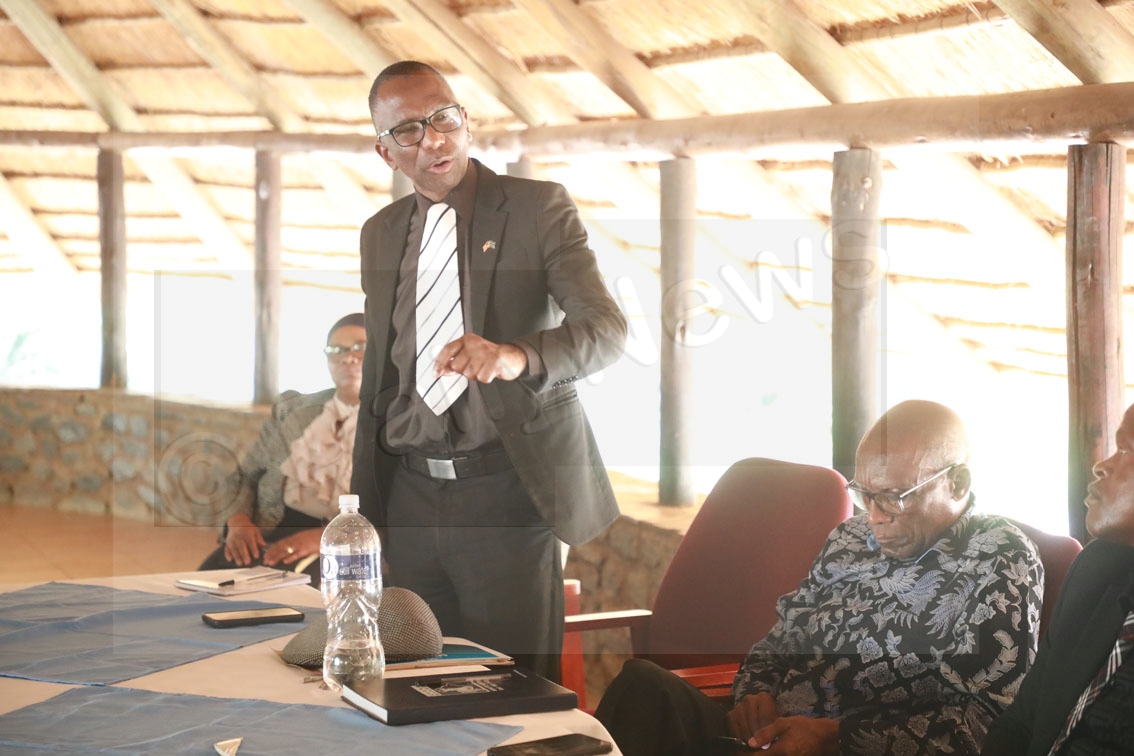
Serowe residents have proposed enactment of National Health Insurance only after the public health sector has been revitalised.
This was brought to the fore during a consultative kgotla meeting on National Health Insurance in Serowe on Tuesday.
A resident, Mr Moses Monthe said public health was at its lowest, plagued by medicine shortages for both prevention and treatment, long delays in booking specialists, and lack of manpower, along with increasing incidents of cancer diagnosis.
Furthermore, Mr Monthe proposed that the health insurance policy should encompass all citizens and not separate individuals by class.
He was worried that classification would lead to the elites gaining more advantages while the disadvantaged received little support.
Mr Monthe suggested that funds from the plastic levy be directed to the National Health Insurance, as it produced significant revenue that could help in supporting citizens.
For his part, Serowe District Council chairperson, Mr Atamelang Thaga recommended that the health insurance policy should allocate specific funds for cancer therapies.
He suggested that to meet the required number of doctors and specialists, government ought to evaluate the return on investment for students they had funded to undertake medical degrees.
Moreover, he proposed that the government should create a watertight formal agreement with those receiving sponsorships to enhance the return on investment.
A resident who preferred anonymity emphasised the importance of resolving all issues bedeviling the ministry prior to starting the implementation of the National Health Insurance policy.
Furthermore, suggestions were made that efforts should focus on research and partnerships related to indigenous knowledge and medicine, potentially resulting in the development of treatments for different ailments.
Earlier on, Dr Keatlaretse Siamisang from the Ministry of Health had challenged residents to express their views on potential improvements in the ministry, their preferences for health insurance development, anticipated benefits, and implementation strategies. -
Public Participation Central to Constitution Review-Dingake
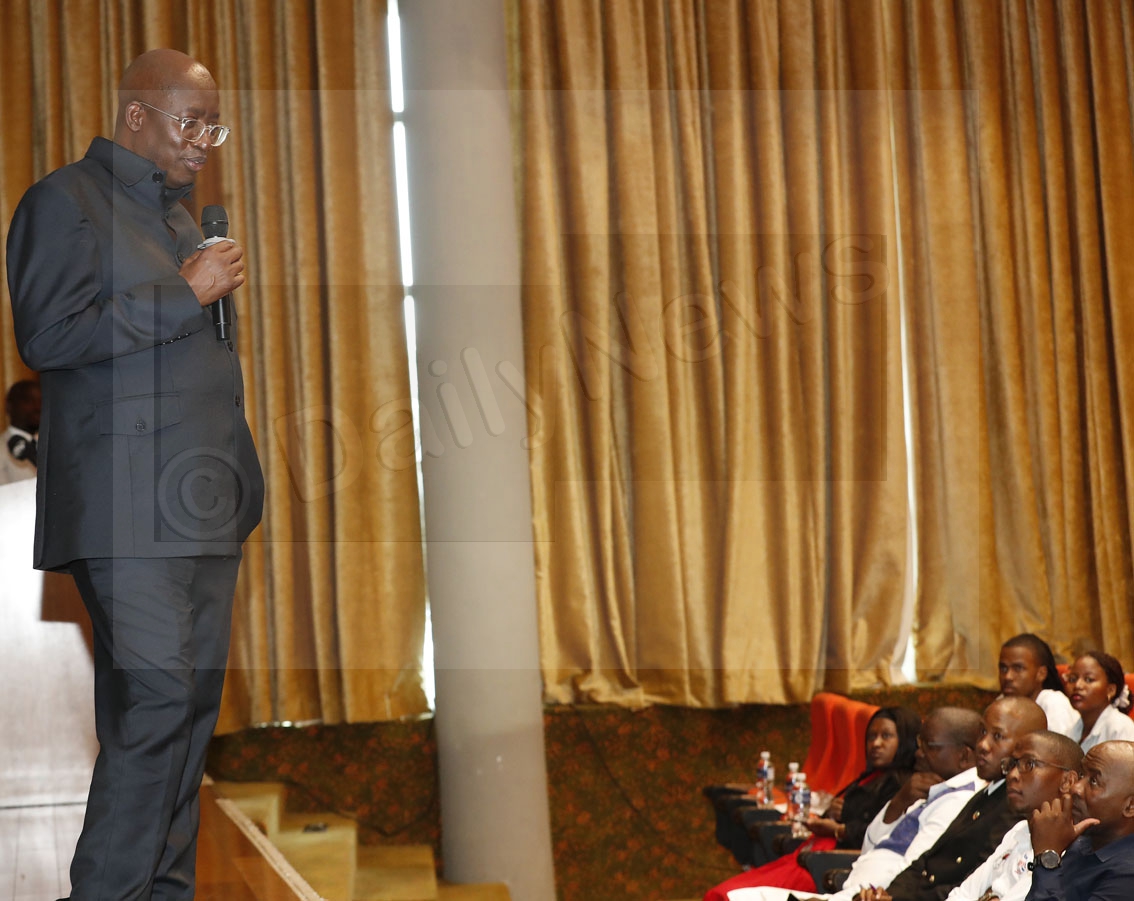
Citizens are entitled to participate in the public affairs, including the process of designing the country’s constitution, says Professor of Constitutional Theory, Justice Key Dingake.
Speaking at a public lecture hosted by the Botswana Council of Non-Governmental Organisations (BOCONGO) in Gaborone on Thursday, Prof Dingake said there was a need to strengthen the country’s democratic culture, embolden rights, evolve power relations, and reform public administration.
He emphasised the importance of dialogue among key stakeholders and citizens, describing what he termed ‘conversational constitutionalism’.
“The process must be inclusive, transparent, participatory and people-driven. In modern constitution-making, the process is as important as the content,” he said.
Prof Dingake added that the design of the constitution must engender national ownership by being participatory, inclusive, transparent and accountable. Such an approach, he said, enhanced legitimacy, educated the public on democratic governance, and built a shared political identity.
He noted that in the past, constitutions were often imposed by departing colonial authorities or political elites, a practice no longer considered appropriate. He pointed to international legal instruments such as the International Covenant on Civil and Political Rights, which affirm citizens’ right to participate in public affairs, including constitution-making.
“Public engagement can take many forms and may occur at different stages of the constitutional process,” he said.
Prof Dingake said Botswana could draw lessons from South Africa’s CODESA process, noting that Botswana’s review would take place many years later and should reflect its own history, values and circumstances.
In his remarks, BOCONGO board member, Mr Fredrick Kololo said the constitutional review process could not be left to any single institution. He said it required the participation, vigilance and wisdom of the nation, adding that BOCONGO and its partners had played a central role throughout the process.
“During the previous review attempt, we consistently advocated for a process grounded in transparency, participation and genuine public consultation,” he said.
Although that process did not yield the desired outcome, Mr Kololo said it strengthened their resolve and highlighted critical gaps that must be addressed. He added that an informed nation was an empowered nation, noting that civil education demystified the process and enabled Batswana to contribute from a place of knowledge.
He also said that a truly people-centred constitutional review must place citizens at the heart of the process, adding that democracy was strongest when citizens were active participants rather than passive observers. -
Traffic Signaling System Modernization Starts Operation
Police officers manning the Greater Gaborone Traffic Signaling System Modernisation, which is scheduled to be launched by President Advocate Duma Boko today. The project forms part of the Botswana Integrated Transport Project and includes the modernisation of traffic signals at key intersections, as well as the installation of 24-hour traffic surveillance cameras, all aimed at improving traffic flow, road safety and transport management. The initiative is financed by government, the World Bank through the International Bank for Reconstruction and Development and the OPEC Fund for International Development.
-
Transitioning of Special Constables Notable Milestone
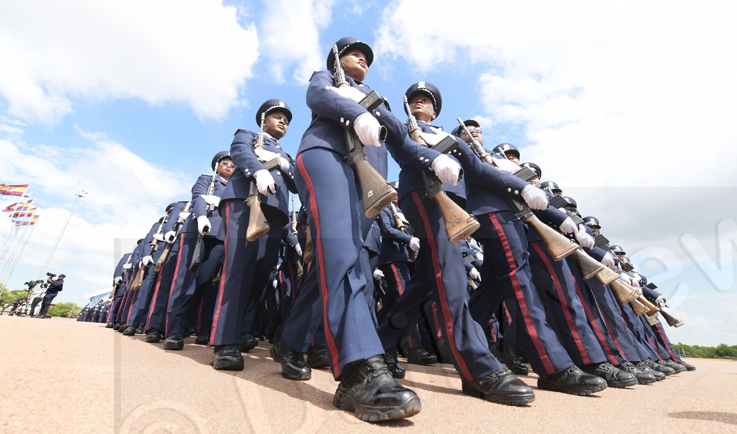
The enlistment of special constables into the regular police establishment marks a significant milestone that will enhance police visibility, boost officer morale and build a resilient and reputable police service committed to serving the nation with diligence and enthusiasm.
President Advocate Duma Boko made these remarks at the pass-out parade of 873 graduate recruits of the Botswana Police Service (BPS) held at the Police College near Otse on Friday. Of the graduates, 845 are former special constables.
“Their elevation to the status of full-time police officers is not a mere manpower expansion effort, it is a milestone that is in alignment with government’s pathway to a new Botswana; a Botswana defined by peace, security and stability,” said President Boko.
He explained that the engagement of special constables was introduced in September 2004 as a temporary measure to augment police manpower and enhance visibility as a key crime-prevention strategy.
Over the years, he noted, government prioritised the incremental enlistment of special constables who met standard employment requirements, resulting in the absorption of some into the regular police service.
“It has now become necessary to discontinue the special constable programme altogether, while retaining the accumulated expertise. As such, all serving special constables have now been absorbed into the regular police establishment,” he said.
President Boko noted that the absorption of the graduates came at a pivotal moment in the BPS’s transformative journey, which focused on re-engineering and modernising the service to make it more effective, dynamic, innovative and technology-driven, while strengthening partnerships and collaboration.
He highlighted notable initiatives such as the introduction of air support services, cyber forensics, safer city solutions, drone technology, the gender and child protection branch, the police-public partnership directorate and the human rights desk.
Emphasising that the fight against crime could not be won by police alone, President Boko urged the graduates to embrace community-oriented policing as the cornerstone of effective law enforcement.
He said they should build trust and cultivate the spirit of police-community cooperation with the people they served in order to make crime management effective and impactful.
“Our country is currently wrestling with new and emerging public security threats and mounting social challenges. The scourge of illicit drugs and substance abuse is threatening to tear families and communities apart. It is an existential threat that we must fight and win,” he said.
He also described gender-based violence (GBV) as a dark stain on the nation’s collective conscience and a betrayal of the national ethos of Botho, posing a grave threat to the moral fabric and social stability of society.
“In 2024 alone, the BPS recorded 14 020 GBV cases, including 4 468 cases involving children. As you graduate today, go out not to perpetuate the problem, but to contribute meaningfully to finding solutions. You are not just enforcers of the law; you are the first line of defence for the vulnerable, the hope for every victim and the living embodiment of justice, peace and security,” he said.
-
Partnerships Aims to Empower Young People
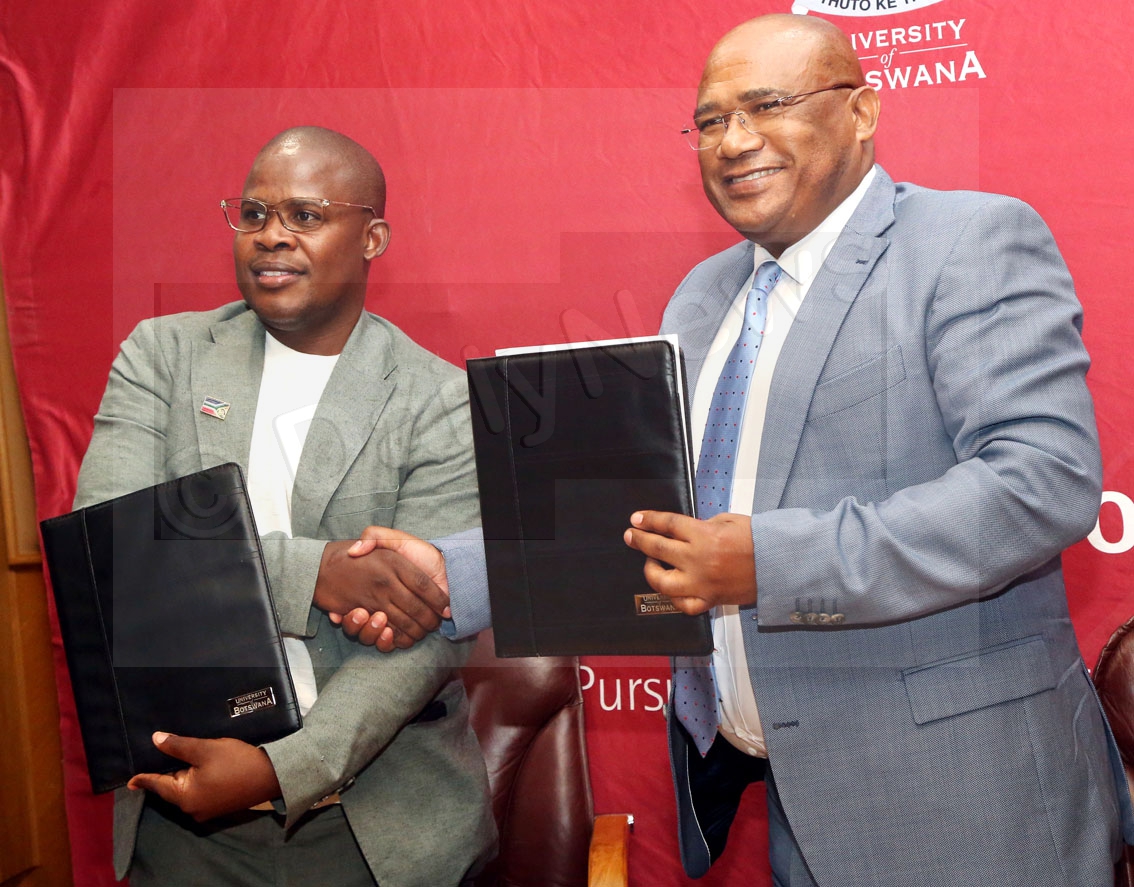
The University of Botswana (UB) and the Mafikeng Innovation Hub have signed a Memorandum of Understanding (MoU) aimed at empowering young people to create jobs and drive innovation.
Speaking at the signing ceremony in Gaborone on Tuesday, UniPod Botswana Director, Professor Richie Moalosi, said the shrinking job market called for innovative ways to equip young people with skills to create employment opportunities for themselves and others.
Prof. Moalosi said UniPod was open to both to the public, in line with UB’s founding ‘one-man-one-beast’ principle.
He noted that although many innovators were youth, UniPod also supported older innovators.
“We are not a specialist hub like yours is more digital. We are in all the area because when they opened people from outside would come up with innovative ideas but we cannot say, this is in tech,” he said.
Prof. Moalosi said UniPod was established to nurture innovative ideas within and beyond the university. Half of its innovators come from outside UB, while the remaining 50 per cent are staff and students.
He further highlighted partnerships with institutions such as the Massachusetts Institute of Technology (MIT) in the United States, through the Maasai Innovation Programme, which currently supports 26 start-ups across various sectors.
He said the hub relied heavily on UB staff, volunteers from industry, and community goodwill, as UniPod could not supply all the specialised skills required by innovators.
He added that the United Nations Development Programme (UNDP) had played a key role in building and equipping UniPod’s laboratories.
Prof. Moalosi noted that Information Technology graduates were among the hardest hit by unemployment, saying many of the estimated 70 000 unemployed graduates in Botswana came from the IT field. He stressed the need to integrate entrepreneurship into training to help them develop innovative products and systems.
For his part, Chief Executive Officer of the Mafikeng Innovation Hub, Mr Joseph Ndaba, said the collaboration sought to create meaningful impact by fostering African innovations that addressed African challenges.
He said universities were not only centres of research but also producers of intellectual property which entrepreneurs could turn into marketable products.
In his remarks, UB Vice Chancellor, Professor David Norris, said Africa had missed opportunities during the first three industrial revolutions and must take a leading role in the Fourth Industrial Revolution.
Prof. Norris said Africa had talented and creative young people who must not be left behind, adding that the partnership could serve as a springboard to drive innovation and ensure Africa moved in step with global developments.
He said that although young people were talented and innovative, many lacked business and entrepreneurship skills required to monetise their ideas. -
Modern Structures Reduce Motshelo Disputes
For many motshelo members, the end of the year is a moment of great anticipation, the long-awaited sharing of dividends after months of faithfully contributing to the communal pot.
Traditionally, these year-end gatherings are grand occasions. Members mostly women, arrive dressed to impress, ready for a celebratory lunch where profits or food packages are shared. After a year of disciplined contributions, the payout serves not only as financial relief but as a boost of pride ahead of Christmas festivities and the journey home to the village, where spending power often translates into status.
But there have always been the occasional spoilers: the treasurer who disappears, the member who vanishes with outstanding contributions, the mysteriously switched-off phone and the now famous line, “Buka ya motshelo e jelwe ke dipeba” (the rats have eaten the motshelo accounting book).
Such festive-season tales have circulated on social media for years, recounting members who go missing well into the New Year.
Increasingly, however, those mishaps are becoming rare as motshelo groups tighten their governance.
“The motshelo I am part of is very organised,” says Serowe-born, Gaborone-based multimedia designer Tswelelo Kgakge. “We have a committee with a chairperson, secretary and treasurer, and we use a mobile money group savings account where every withdrawal must be approved by all members.”
She says her team of women runs like a well-oiled machine, with checks and balances that build trust.
“Beginning of the year, we make our contributions. As the year continues, members can borrow from the common pool and repay with interest. At year-end, we share the dividends. One member hosts us for a lunch where everything is distributed — all very orderly.”
Motshelo functions as a voluntary financial cooperative, where members contribute agreed amounts into a shared fund. The money may then be released to individuals on a rotational basis, often generating income through interest before a collective payout at year-end. It also doubles as a rotating savings and credit association (ROSCA) for major expenses — funerals, school fees, groceries or even construction projects.
Modelled closely on South Africa’s communal stokvel system, motshelo has historically relied on trust and solidarity. Over time, however, it has modernised through digital applications, formal banking products and clearer accounting procedures.
Award-winning sports journalist Ms Anastasia Sibanda agrees that modern structures have reduced disputes.
“Commercial banks now offer fixed deposit motshelo accounts, and mobile money providers have group savings solutions. This improves accountability and ensures a clear paper trail,” she says.
Sibanda has belonged to a ten-member motshelo since 2011. The group charges a joining fee, makes regular contributions, allows members to borrow at 20 percent interest, and divides the earnings once members reach their agreed threshold.
“We are well structured — chairperson and treasurer as signatories to the account, a secretary, and a disciplinary coordinator who handles disputes. Everything is transparent. A spreadsheet is published monthly in the WhatsApp group, and members must approve any release of funds,” she explains.
Such measures ensure that members are now far less vulnerable to “the rats” — real or metaphorical — that once threatened to spoil the festive cheer by devouring the money or the accounting book. -
Opportunity for All Enhances Community
About 500 people living with disabilities are said to be registered by Kanye District council and according to the Primary Health Care Services, deputy council secretary, Mr Conrad Ntsuape, the differently able persons were faced with challenges such as high poverty levels among others.
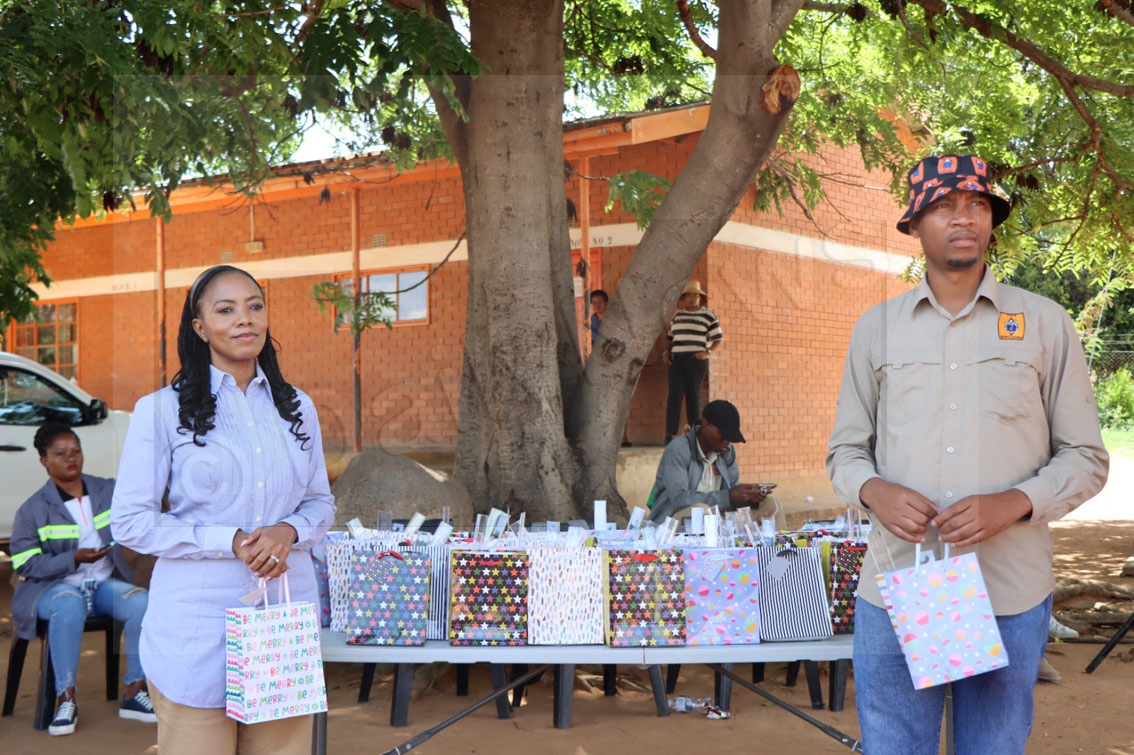
Allowing differently able persons to learn, work and live with dignity strengthens the entire community, says Giyani Metals corporation country manager, Ms Elisa Modikwa.
Speaking during the Kanye District Disability Day on Friday, she hailed Segopotso Primary school’s good performance as a beacon of hope.
“We are proud of our ongoing collaborations with Segopotso Primary school, specifically the special privilege of serving the differently able persons,” said Ms Modikwa.
She regarded persons living with disabilities an important part of Giyani’s engagements and programmes, noting that the company would not like to only support school development but also contribute towards learners’ wellbeing as well.
To encourage that, the school received materials and would be assisted with labour to build a poultry house to improve learner’s diet, as well as skin care products- sunscreen lotions.
Ms Modikwa further said though a small gesture, it was the company’s commitment to working with the school to create opportunities that build confidence and support learning.
About 500 people living with disabilities are said to be registered by Kanye District council and according to the Primary Health Care Services, deputy council secretary, Mr Conrad Ntsuape, the differently able persons were faced with challenges such as high poverty levels among others.
A differently able person in Kanye, Mr Loago Malatelele called for their representation in different planning forums. -
Moshupa Hospital 98 Per Cent Complete
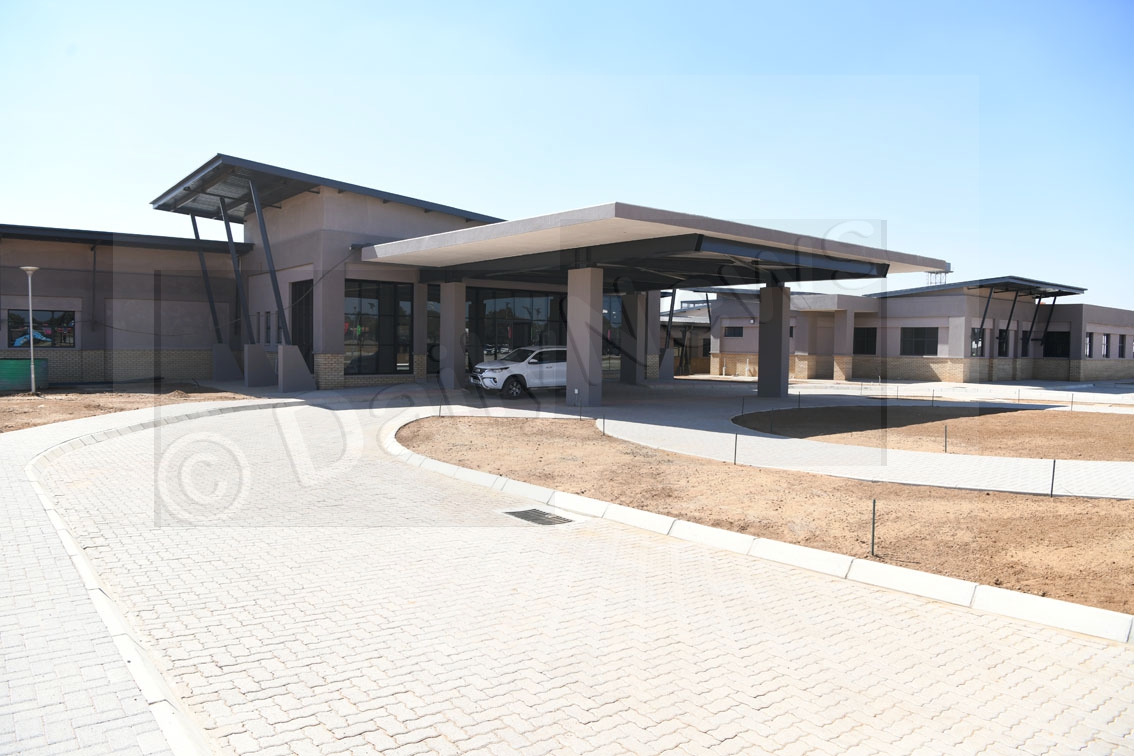
The new Moshupa Primary Hospital is on the verge of full operation, with physical progress now at 98 per cent and key facilities already handed over for use.
Presenting the District Development Committee (DDC) report to Moshupa District full council meeting on Wednesday, Principal District Development Officer, Mr Tebogo Mekwe confirmed substantial progress on the long-awaited health facility since the previous update on August 5.
According to Mr Mekwe, the P494 million hospital and civil works package, awarded to Zhengtai Group Botswana in joint venture with Whitacon (Pty) Ltd, was in its final phase.
Mr Mekwe explained that, to counter delays caused by outstanding payments, a phased hand-over strategy had been implemented.
The administration block, main stores, reception, public toilets, laundry, and kitchen have already been issued occupation permits and are ready for immediate use by the Ministry of Health. Guard houses, the general ward, engineering workshop, and waste-management zone are currently being de-snagged and will be handed over soon.
Only landscaping, external works, the Out-Patient Department (OPD), maternity wing, main theatre, TB ward, and mortuary remain before the revised completion date of December 18.
Expenditure on the hospital package stood at P402.1 million, leaving a balance of P66.4 million. Mr Mekwe reiterated that delayed payments remained the primary risk to meeting the December deadline and disclosed that the Ministry of Health had been formally requested to expedite the release of final funds urgently.
On the associated staff-housing project valued at P77.7 million and executed by Classic Clean (Pty) Ltd, Mr Mekwe reported that the units had been at 100 per cent complete since June 2023. Final closure was pending with only the rectification of minor defects including damaged landscaping equipment and pressure testing of the fire line, which the contractor must complete at its own cost. Only P320,548 remain unspent.
Mr Mekwe further informed councillors that Phase One of the refurbishment of academic facilities at Moshupa Senior Secondary School was now 100 per cent complete across all four packages (Administration Block, Library Block, Old Administration Block, and covered walkways).
“Defects Liability Periods have either concluded or were in the final retention-payment stage, while Phase Two remains shelved due to funding constraints,” he said.
Presenting employment statistics, Mr Mekwe stated that the hospital construction had created 111 jobs, 98 of which were filled by Batswana citizens. The workforce comprised 70 youth (18–35 years), 41 older workers, 86 males and 25 females, with 44 skilled, 30 semi-skilled, and 37 unskilled workers. Regrettably, he noted that no persons living with disabilities were employed on the project.
“Residents of Moshupa and surrounding villages are now poised to access modern primary-hospital services before year-end, marking a major milestone in upgrading healthcare infrastructure in the Southern district,” he said. -
Boko Encourages Nation to Thank God in Anticipation of Abundance
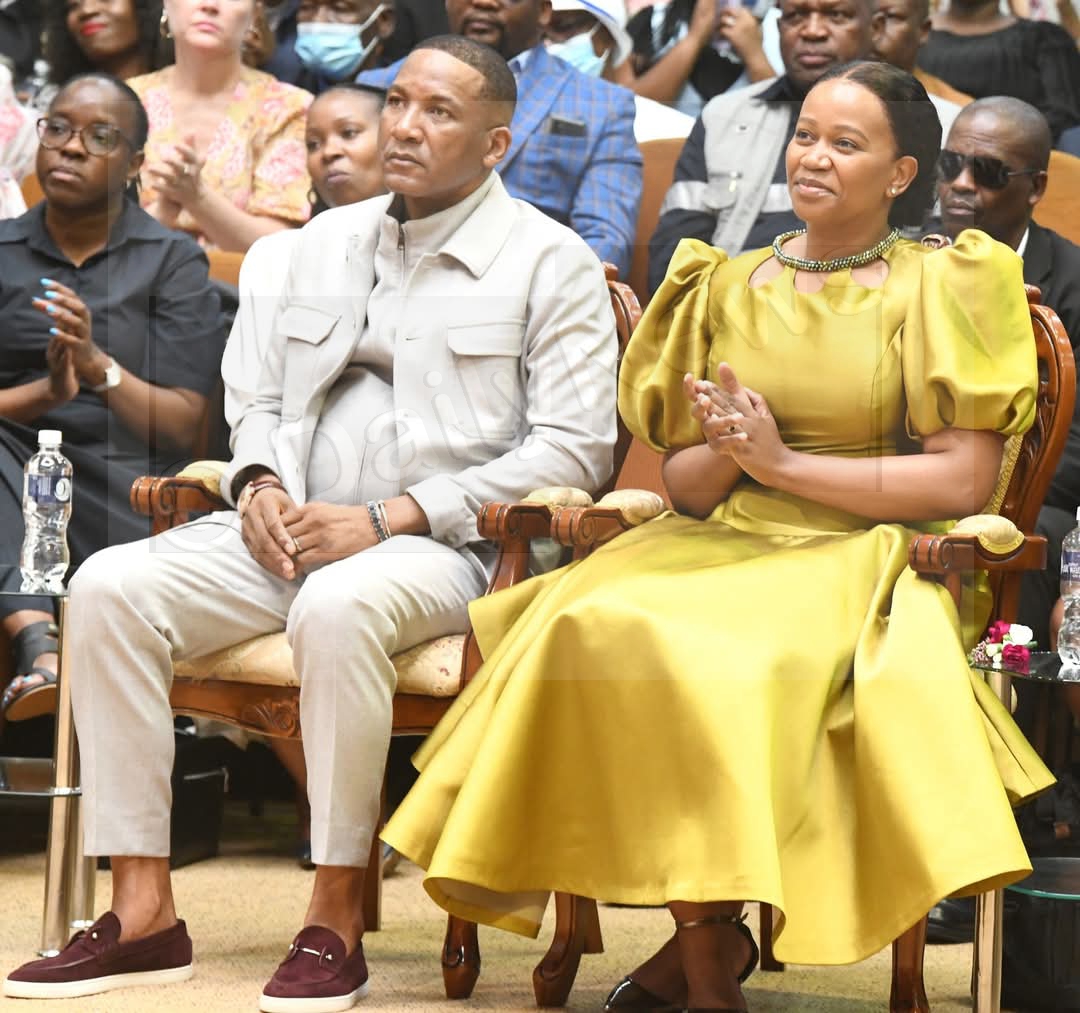
Wrapping up the thanksgiving celebration yesterday, President Advocate Duma Boko said the day was set aside for the nation to express gratitude not based on present circumstances, but in anticipation of promising season ahead.
He said thanksgiving was an act of faith, calling on Batswana to give thanks not only when things were going well but also when they were trusting God for what was yet to come.
President Boko further stated that the thanksgiving service symbolised hope and confidence in a future of prosperity, unity and stability, adding that the nation was declaring abundance before it fully manifested.