Category: Daily News

  • FIRST DIVISION NORTH WRAPS UP LEAGUE THIS WEEKEND

    FIRST DIVISION NORTH WRAPS UP LEAGUE THIS WEEKEND

    The First Division North league will wrap up the year this weekend with exhilarating matches planned for Saturday.

    As six games are set to unfold before the Christmas and New Year break, the competition for promotion to the elite league is intensifying.

    The Week 13 fixtures promise to be thrilling, with teams vying for both promotion and survival. Current standings indicate that every point is crucial for teams looking to improve their ranks and a defeat could complicate matters and ensure that the matches will be competitive and closely contested.

    While Tonota FC have already signalled their ambition to ascend to the elite league next season, other teams such as Tsabotlhe FC, Enesia FC and BR Highlanders are eager to challenge for promotion as well.

    The Week 13 fixtures will feature a major clash at the BR Stadium in Mahalapye, where BR Highlanders FC will be up against the current log leaders, Tonota FC.

    Tonota FC have accumulated 32 points from 12 matches without a loss to date. The home side, BR Highlanders, currently sit fourth with 18 points from 12 games.

    The matchup is likely to draw attention as fans wonder if BR Highlanders can hand Tonota FC their first defeat using home ground to their advantage.

    In Francistown, Enesia FC will welcome Mbalakalungu SC from Shakawe at the Francistown City Council Stadium.

    Positioned third and ninth in the league table respectively, Enesia FC have accumulated 21 points from 12 matches, while Mbalakalungu SC are at 11 points from the same number of games.

    In Serowe at the Newtown Primary Grounds, Tsabotlhe FC will face Sankoyo Bush Bucks. Tsabotlhe FC are currently second in the standings with 22 points from 12 matches played. On the other hand, Sankoyo Bush Bucks hold seventh place with 13 points from 11 matches.

    Ferry Wanderers SC, who find themselves in the relegation zone, will host Eleven Angels FC at Kasane Prison Grounds in Kasane. After their recent loss to Tonota FC, Ferry Wanderers SC are positioned 11th with nine points from 11 games played. Eleven Angels FC, despite losing their last match against Enesia FC, are sixth with 16 points from 12 matches.

    At Sefhare Primary Ground in Sefhare, JJ United FC will welcome Motlakase Power FC from Palapye. JJ United FC occupy eighth place with 13 points from 12 games played, while Motlakase Power FC are in tenth place with 10 points.

    Another fixture will see Ndundu Young Fighters FC going up against Tshikinyega Yigers FC. Ndundu Young Fighters have secured 17 points from 12 matches so far, whereas Tshikinyega FC are currently in the relegation zone with eight points from their 12 games played.

    All matches are scheduled to commence at 3:30pm.
  • Traditional Affairs Tribunal to Resovle Bogosi Disputes

    Traditional Affairs Tribunal to Resovle Bogosi Disputes

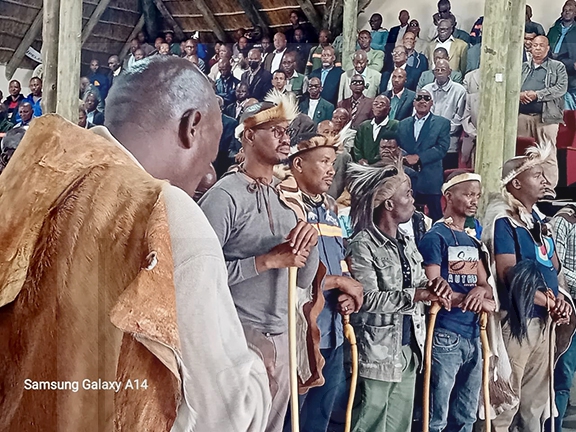
    Government is planning to establish a traditional affairs tribunal via the reviewed Bogosi Act to bring greater clarity and stability to the Bogosi institution.

    The traditional affairs tribunal is expected to resolve chieftainship disputes and other relevant traditional matters.

    Speaking at a kgotla meeting in Mochudi on December 11, Minister of Local Government and Traditional Affairs, Mr Ketlhalefile Motshegwa said the legislative review was necessary because the Bogosi institution had been marred by disputes, often stemming from lack of proper consultation between communities and royal houses.

    Mr Motshegwa said the review of the Bogosi and Customary Law Acts followed countrywide consultations, with most amendments based on the recommendations received.

    He indicated that the review aimed to profile the roles of Dikgosi and grade them to ensure that the structures were clearly defined and formally incorporated and defined the role of the royal house within the Bogosi Act as well as establish a defined structure for Dikgosi, complete with official titles

    He added that government’s goal was to create well-defined structures that minimised ambiguity and friction within the traditional leadership framework.

    Furthermore, the Minister commended the Bakgatla community for continuing to uphold their culture and encouraged them to keep instilling discipline through traditional institutions like initiation schools.

    On the other hand, Minister Motshegwa informed the Bakgatla community that government had officially dropped all charges previously levelled against their paramount chief, Kgosi Kgafela II.

    The landmark decision, he explained, followed key engagements between the ministry and the Bakgatla Deputy Chief, Kgosi Bana Sekai, regarding the circumstances surrounding Kgosi Kgafela II’s prolonged absence from the country.

    Mr Motshegwa also shared that during a recent meeting with Kgosi Kgafela II, he informed him that a Constitutional Review was underway and extended an invitation for him to participate in the national process.

    For his part, Minister of Justice and Correctional Services, Mr Nelson Ramaotwana, assured Bakgatla that government was committed to peaceful relations with the tribe.

    Mr Ramaotwana said their Kgosi was free to come back home following the engagements and consultations that ultimately led to his flight

    “This has been a long journey, but it has finally been resolved,” he said.

    Members of the community expressed their delight over the news and welcomed the decision. However, they stressed that they still required assurance that their Kgosi would not be troubled upon his arrival back home, which they deemed a significant step toward healing historical rifts. 

  • Govt Advances Anti-GBV Legislation

    Govt Advances Anti-GBV Legislation

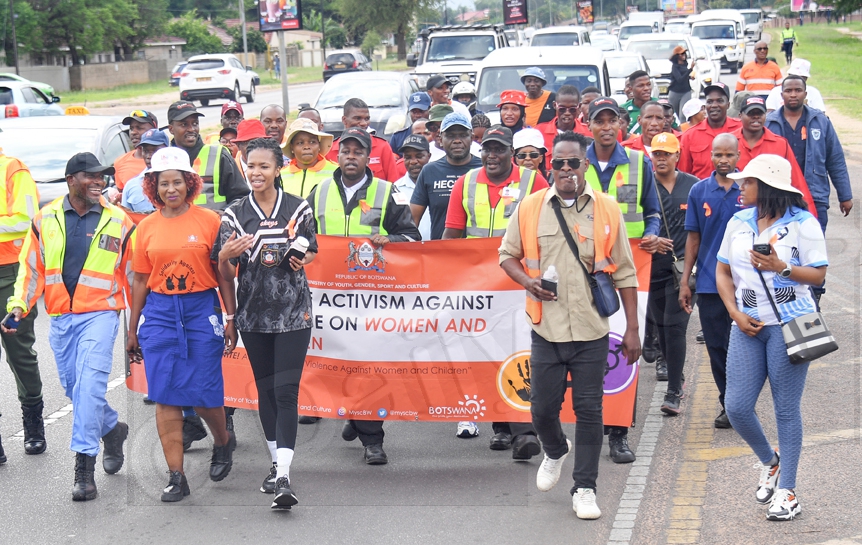
    The process of enacting the legal framework focused on combating gender-based violence (GBV) is ongoing, the Minister of Youth and Gender, Ms Lesego Chombo, has told the National Assembly.

    In a statement to mark the closure of this year’s 16 Days of Activism Against GBV on Wednesday, Ms Chombo said broad consultations were ongoing to inform the piece of legislation the ministry was developing to combat GBV, which they planned to present to Parliament by July 2026.

    “A major pillar of our national response is the development of dedicated GBV legislation. I am pleased to report that the process is advancing steadily. The ministry has concluded its preliminary stakeholder analysis and is now drafting the Drafting Instructions that will be submitted to the Attorney General’s Chambers,” said Ms Chombo.

    The consultations with various stakeholders including civil society organisations, ex-offenders, media practitioners, women’s leagues of political parties, legal experts and frontline responders among others, is to ensure the legislation is evidence-based, survivor-centred, and nationally owned, Ms Chombo said.

    “These engagements have deepened our understanding of lived realities of violence in Botswana and the breadth of issues the law must address. Survivors underscored the urgent need for; accessible legal aid, trauma informed psychosocial support and assistance extended to their family members,” she said.

    Ms Chombo added that persons with disabilities highlighted communication barriers at police stations, health facilities, and courts, calling for stronger inclusion frameworks and for Special Education to be fully integrated into the mainstream education system.

    She further revealed that the comprehensive review of the policy of the National Policy on Gender and Development was currently in its inception stage.

    The development of a Gender Strategy with World Bank Support, and the review of the National Strategy Towards Ending GBV are also ongoing, the minister said.

    Beyond legislation and policy framework, Ms Chombo said government was working to strengthen systems, communities and services, and extend early prevention efforts.

    She also outlined other measures including public education and community engagement, strengthening frontline responders, women economic empowerment, closing the digital gender divide and supporting shelters through subventions.

    Additionally, Ms Chombo said her ministry understood men and boys remain central to transforming harmful norms and preventing violence and as such were being engaged in the battle to combat GBV.

    Members of Parliament largely spoke in favour of these efforts.

    Chobe MP, Mr Simasiku Mapulanga, spoke of the need for psychosocial support and mental health training for women and children as a means to combat GBV.

    Mr Mapulanga said government should scale down on exuberant commemorations which at times had too much fanfare that derails from the massaging.

    Maun West legislator, Mr Caterpillar Hikuama, said the state should pay greater attention to cyber crime and GBV that occurred through digital platforms particularly with the use of social media pseudo accounts by perpetrators.

  • Digital Violense Needs Shared Responsibility

    Digital Violense Needs Shared Responsibility

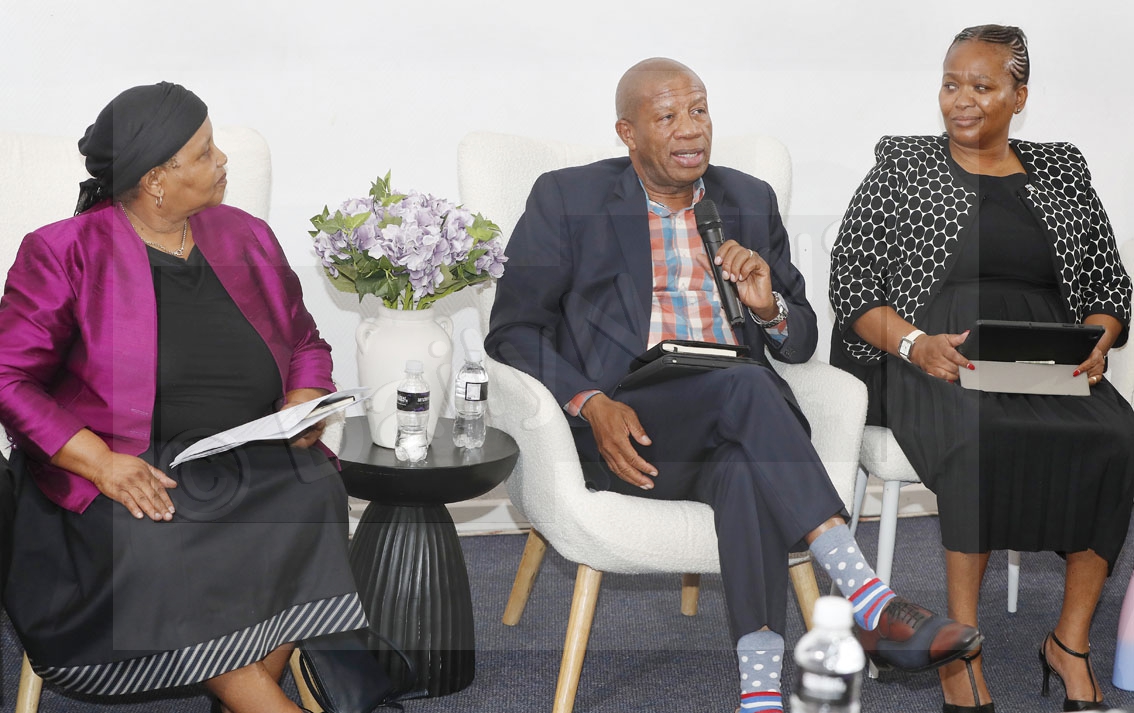
    The Parliamentary Caucus on Women has been informed that many people are unknowingly committing cyber offences by sharing harmful online content.

    Director of the Gender and Child Protection Branch in the Botswana Police Service, Senior Assistant Commissioner Goitseone Ngono, told a caucus panel discussion in Gaborone on Monday that some users ‘innocently share content, unaware that so doing is a criminal offence.’

    The shared content, she said called for stronger prevention and public education on digital gender-based violence (GBV).

    “There is a need to educate and create awareness for all members of the community to be well informed,” Ms Ngono said.

    While noting that the police appreciated the opportunities offered by the digital space, she said some users “glorify and validate its negativity,” and urged that online platforms be used constructively “to mediate or create awareness that builds peace.”

    Ms Ngono said offences registered by the police included child pornography, cyberstalking and defamation of character. Most victims of cybercrime were women and children, though men were also affected.

    In 2024, Ms Ngono said that six per cent of GBV victims were males, indicating that men were also coming forward to report GBV. She noted that the police were finding ways to channel and prioritise resources to combat GBV and officers were trained to identify and address GBV, with documented standard operating procedures in place. 

    Ms Ngono highlighted that over 2 000 digitally facilitated GBV reports had been processed, most resulting from ignorance. She mentioned that many GBV cases were assault-related, like unlawful wounding. Out of 2 248 reported GBV offences in 2024, only 575 were confirmed to be GBV-related. Additionally, of the 337 murder cases registered that year, 172 were GBV-related.

    The Chairperson of the Parliamentary Caucus for Women, Ms Helen Manyeneng, stated that digital violence against women and girls was destructive. She described digital violence as invisible, occurring in the digital space, and emphasised the need for collaborative efforts to combat it, as many lives and opportunities were lost due to such violence.

    Ms Manyeneng pointed out that while digital spaces offered educational opportunities, perpetrators of GBV often exploit women seeking these opportunities. She warned that digital violence could affect individuals, even leading to suicide.

    Therefore, she urged parents to monitor their children’s activities in the digital realm to mitigate potential harm. 

    Mr Arnold Somolekae, President of the Gaborone West Customary Court, attributed digital violence to unemployment and an unstable economy, noting that many young girls were lured into prostitution through digital platforms with false promises of employment. He called for interventions to hold these perpetrators accountable.

    Renowned lawyer Mr Uyapo Ndadi stressed the need for the government to establish women’s shelters across the country for the safety of GBV victims. 

    While Ms Lydia Mafhoko-Ditsa of UN Women Botswana reported that a UN study indicated that 67 per cent of women experienced digital violence through miscommunication, while 73 per cent of journalists were also victims. She revealed that 300 million children had been affected by online exploitation in the past two years, noting that while these statistics were alarming, many cases go unreported.

    Ms Mafhoko-Ditsa advocated for learning from the HIV/AIDS epidemic, where community capacity enhancement helped eliminate harmful cultural practices. 

    She also emphasised the importance of assessing the economic impact of GBV, pointing out that the European Union spends €329 billion annually to address it, raising the question of what this means for Botswana’s national economic situation. 

    “We need to analyse the cost implications of GBV,” she said.

  • Integrate Youth into Governance to Bolster Anti-Corruption Efforts

    Integrate Youth into Governance to Bolster Anti-Corruption Efforts

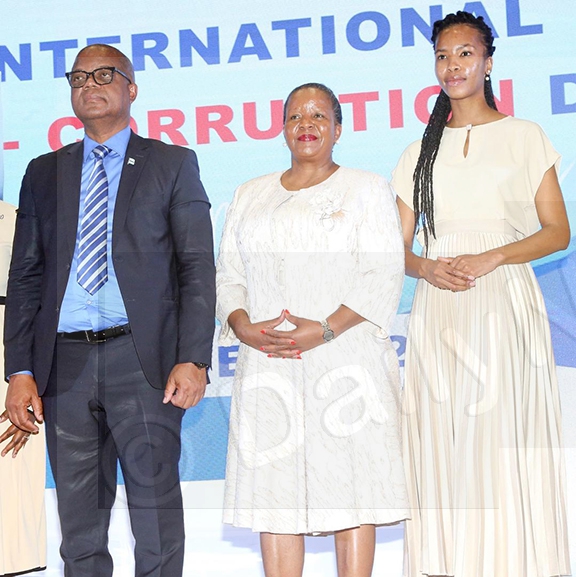
    Botswana must harness the energy and innovation of its young people to build a culture of integrity, the Minister for State President, Mr Moeti Mohwasa, has said. Delivering a keynote address during the International Anti-Corruption Day Commemoration in Gaborone on December 10, Mr Mohwasa stressed the need for the country to recalibrate its anti-corruption machinery and fully integrate young people into national governance.

    “Corruption has no place in our society. We are implementing reforms that will empower the Directorate on Corruption and Economic Crime (DCEC) and other institutions to safeguard our national resources with renewed vigour,” he said.

    Drawing from historical examples such as the Soweto Uprising, the Arab Spring and Kenya’s #RejectFinanceBill protests, the minister noted that organised youth movements had the power to hold governments accountable and transform societies. “Our young people are informed, engaged, and ready to make their mark,” he added.

    Despite Botswana’s reputation as one of Africa’s least corrupt countries, Mr Mohwasa warned that integrity indicators were declining. He cited growing administrative lapses and weakening deterrence mechanisms as areas of concern, emphasising the importance of educating the youth about the country’s anti-corruption history including scandals and commissions of inquiry that led to the

    establishment of the DCEC.

    Connecting the anti-corruption drive to the national development vision, he reiterated government’s transformative agenda anchored on restoring trust, revitalising the economy and building equity. These goals, he said, could not be achieved without strong integrity systems and robust public accountability. He also welcomed the participation of Commonwealth Africa Anti-Corruption Agencies

    in the commemoration. Mr Mohwasa said this year’s theme was timely and relevant, noting that the annual event highlighted the link between corruption, underdevelopment, insecurity and economic inequality, while reaffirming Botswana’s commitment to international efforts to curb corruption.

    For her part, the Minister of Youth and Gender Affairs, Ms Lesego Chombo, reinforced the message, warning that corruption continued to weaken institutions and deprive young people of opportunities.

    “Corruption denies our young people scholarships, jobs, business opportunities and land,” she said. Ms Chombo called for youth participation in governance to be institutionalised rather than symbolic, urging that young people be included in decision-making positions from community structures to

    parliament. She highlighted technology and innovation as critical tools for transparency, encouraging young digital creators to develop solutions that strengthen accountability. Furthermore, she urged young people to take advantage of ongoing initiatives such as youth anti-corruption clubs, leadership boot camps and creative arts platforms aimed at promoting ethics and

    civic values. The minister also appealed for moral responsibility, challenging youth to reject nepotism, bribery and shortcuts. “Integrity begins with small choices. You may not control those who ask for bribes, but you control your answer,” she emphasised. ENDS

    Both ministers underscored Botswana’s commitment to the United Nations Convention Against Corruption, which the country acceded to in 2011. They encouraged young people to take a national

    integrity pledge, noting that their leadership was essential to building a fair, transparent and

    accountable nation.

    Held under the theme: Uniting with Youth Against Corruption: Shaping Tomorrow’s Integrity, this year’s commemoration aimed to raise awareness about corruption. The event marked a departure

    from the traditional marches and speeches, bringing together youth groups, civil society, local stakeholders and representatives from Commonwealth Africa Anti-Corruption Agencies for a full-scale

    anti-corruption conference.

  • Ramguttee Hails Botswana Efforts

    Ramguttee Hails Botswana Efforts

    Resident Representative for the United Nations Development Programme (UNDP) in Botswana, Ms Lovita Ramguttee has hailed Botswana’s efforts towards inclusion of persons with disabilities.

    Speaking at a recent UN International Day for Persons with Disabilities commemoration held in Jwaneng, Ms Ramguttee said developing several frameworks such as the Persons with Disability Act,

    Revised National Policy on Disability and Recruitment Policy, among others, were testament to the country’s commitment to promoting human rights and enhancing sustainable development.

    “These achievements for us reflect Botswana’s unwavering commitment to building a society where no one is left behind. The United Nations here in Botswana has been very happy and supports the government on this journey, whether it is in relation to legal framework, all the way to training parliamentarians on the issue of the Convention on Persons with Disabilities and capacity building,” she said.

    Nonetheless, she acknowledged that public awareness, data collection, employment opportunities, stigma and inaccessible infrastructure were some of the areas with gaps that hindered the overall goals of inclusion and full participation of persons with disabilities. She underscored the need for stakeholders to collaborate efforts to address these challenges.

    “Addressing these challenges will require collaboration, innovation and sustained investments through the whole of government and the whole of society. Today let us reaffirm our commitment to the principle of Leaving No One Behind, which is a core principle of the achievement of the Sustainable

    Development Goals, which is central in human rights centric administration,” she noted.

    She implored institutions to align their policies, programmes and financial planning initiatives with the  inclusion concept in order to enhance equality and dignity for persons with disabilities. She also reassured the UN’s support towards operationalisation of the Persons with Disability Act of 2024, which was declared officially commenced during the event.

    Permanent Secretary in the Ministry for State President, Ms Goitsemang Morekisi said government was committed to advancing disability inclusion as a national priority as evidenced by the creation of a clear blue print for all stakeholders.

    Ms Morekisi said government had invested in various frameworks over the years, with the objective of enhancing the lives of persons with disabilities.

    She applauded Debswana for taking the lead in implementing the Affirmative Action, which she said should also be effectively implemented in government structures.

    She also said there was need to involve persons with disabilities in decision making processes to inform the policies and programmes.

    She urged all stakeholders to collaborate their efforts in implementing the frameworks to advance the rights of persons with disabilities and create a fully inclusive society.

    “I urge all of you to join hands and play a role in ensuring that all the frameworks I talked about are actually implemented,” she said.

    Debswana Chief People Officer, Ms Matlhogonolo Mponang noted that through their robust Diversity and Inclusion Strategy, the company had increased the number of differently-abled employees from 18 in 2020 to the current 113 deployed in various roles of their operations. She said the strategy also emphasised the concept of belonging by all employees, irrespective of their differences.

    She noted that such inclusion and belonging was also reflected in their investment initiatives aimed at accommodating all employees.

    “It is also important to note that we have actively spent capital to ensure that the environment speaks to belonging.

    There has been serious investment in software that enables others that need it to be able to work, we are in the process of outfitting and retrofitting braille technology, and we continue to ensure that we have access,” she said.

    One of the caregivers, Ms Julia Dibeela emphasised the importance of patience and dedication as key factors to overcome the challenges that came with caring for persons with disabilities.

  • Experts Scrutinise Patriarchy

    Experts Scrutinise Patriarchy

    A diverse group of experts convened in Gaborone on Saturday at the call of host, Ms Njiramanda Mbewe-Boatey, to examine the influence of patriarchy on gender-based violence (GBV).
    Held under the theme, From Blame to Accountability, The Great Debate, the patriarchy and GBV edition 2025, brought together individuals from law, religion and other fields, igniting a critical dialogue on systemic gender inequalities.
    In her welcoming remarks, Ms Mbewe-Boatey emphasised that the time to address GBV was now. She urged participants to interrogate patriarchy amid soaring statistics of suicides and passion killings.
    She lamented that progress had been slow and systems remained stagnant, but was hopeful that the debate would enable attendees to trace where failures occurred and explore remedies to restore peace, which was currently under threat.
    Court of Appeal Judge, Lot Moroka explained that while patriarchy contributed to GBV, it cannot be solely blamed.
    Judge Moroka noted that patriarchy underpinned many societal foundations, including law, particularly common law such as marital law.
    However, he highlighted that the legislative progress was gradually dismantling patriarchal structures, with statutory law progressing in that regard. On GBV, he urged people to resist conditioning to abuse, warning that tolerance had led to lives lost, describing GBV as a crime in all its forms.
    Media personnel, Mr Kealeboga Dihutso attributed the breakdown of family structures to a vacuum left by changing societal dynamics.
    Mr Dihutso observed that children today were often raised by single mothers, whereas in the past, raising children was a community effort involving extended family members like uncles.
    Botswana Council of Churches (BCC) vice president, and a human rights activist, Reverend Thabo Mampane, said patriarchy existed within the church, citing biblical origins where man was created first and woman from man’s rib.
    He acknowledged that church leadership had historically been male-dominated but emphasised the need for growth and inclusion, clarifying that the church was the hospital of the soul. Speakers including Dr Morena Rankopo, a social educator at the University of Botswana, Kgosi Mosadi Seboko, Paramount Chief of Balete and psychologist, Mr Leshomo Sebati stressed that much work remained to break inequality barriers.
    They called for early interventions to change perpetrators’ mindsets and urged research to address trauma responses that continued to haunt men.

  • Government Commits to Modernise BDF

    Government Commits to Modernise BDF

    Government’s commitment to maintaining a robust, modern and professional Botswana Defence Force (BDF) while simultaneously prioritising national development goals was the central theme at the recent BDF Senior Commander and Staff Programme, Class 17 of 2025, graduation ceremony in Gaborone.

    Minister for State President, Mr Moeti Mohwasa, said the BDF must evolve its defence capabilities in line with emerging threats, critically maintaining a balance with other vital national priorities, including health, education, infrastructure and social welfare.

    Minister Mohwasa emphasised the need for foundational role of a strong security apparatus in achieving national aspirations.

    He added that the strength of security institutions was fundamental to the success of the national Vision 2036, Sustainable Development Goals (SDGs) and the Botswana Economic Transformation Programme (BTEP.

    He commended the Commander-in-Chief of the Armed Forces for his unwavering support of professional military education, owing to the exceptional quality of officers being produced.

    He also highlighted that a modern and responsible defence force necessitated a significant investment in human capital to position it as a cornerstone of military leadership.

    Thus, he urged the graduating officers to embody the qualities demanded by their profession, including integrity, accountability, courage, humility, empathy and resilience.

    He further stated that their strategic thinking, innovation and problem-solving skills would be essential in environments where prudence and efficiency were not optional, but imperative.

    On the graduation, he said the ceremony was a testament to the continent’s shared commitment to collective security, with participants from across the region.

    Minister Mohwasa highlighted the importance of the continental participation, stating that it demonstrated the strength of continental bonds and played a crucial role of military diplomacy.

    For his part, Commandant of the BDF Defence Command and Staff College, Colonel Dumisani Ndzinge, expressed gratitude to the staff for their commitment to excellence and for creating a conducive learning environment.

    Col. Ndzinge said the curriculum ensured that graduates were prepared for the complex modern threat landscape.

    He said the Strategic Studies curriculum, delivered by the University of Botswana’s Department of Political and Administrative Studies, alongside the core Military Curriculum, was key to such effort.

    He explained that such collaboration ensured that they produced robust war fighters who were also academically skilled with deep understanding of the geopolitical and strategic environment within which the military operated.

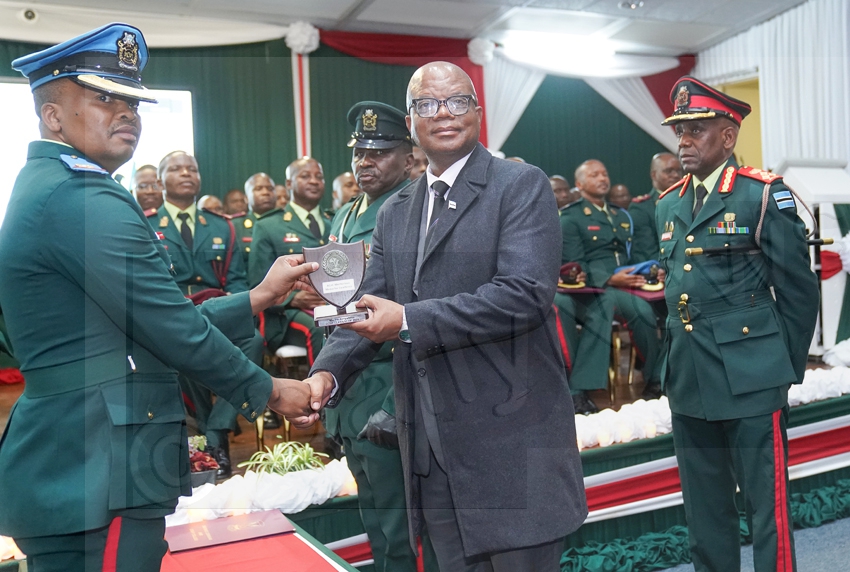
    A key highlight of the event was the presentation of the best research paper award to Major Kehumile Modimoosi, whose work focused on the assessment of psychological stress on officers returning from war zones.

    Inspired by her role as a mother, Major Modimoosi’s research shed light on how post-deployment challenges can significantly affect an officer’s cognitive mentality and prevent them from executing their duties effectively.

    She emphasised that there was critical need  for the organisation to formally address traumas, noting her focus on the issue of extended separation from families and the subsequent difficulty of reintegration due to changed family dynamics.

    Major Modimoosi acknowledged the BDF’s proactive measures, including established programmes to assist remaining families and conducting orientations prior to deployment.

    Meanwhile, the graduating cohort comprised 60 officers, a group that included civil servants from local institutions like the Ministry of International Relations, Botswana Police Service and the Directorate on Corruption and Economic Crime.

    The cohort included military officers from Lesotho, Kenya, Malawi, Nigeria, Rwanda, Zambia and Zimbabwe.

  • BOB Maintains 3.5 Per Cent Monetary Policy Rate

    BOB Maintains 3.5 Per Cent Monetary Policy Rate

    The  Bank of Botswana (BOB) has maintained the Monetary Policy Rate at 3.5 per cent, citing the need to manage inflation and support economic stability. Speaking during a Monetary Policy Committee (MPC) media briefing Governor Moseki said the MPC met at a time when the global economy continued to face shifting trading patterns and heightened geopolitical tensions.

    Despite these challenges, he noted that the global economy had shown stronger-than-expected resilience in 2025.

    “Domestically, increased uncertainty and continued weakness in the diamond market have put pressure on Botswana’s fiscal and external buffers,” he said.

    Looking ahead, Mr Moseki stressed that accelerating growth-enhancing initiatives and economic diversification efforts, as outlined in the Botswana Economic Transformation Programme (BTEP) and National Development Plan 12, was essential for supporting a sustainable recovery in 2026.

    He added that Botswana’s strong institutions and sound macroeconomic policy framework provided an opportunity to attract investments capable of driving economic transformation.

    The Governor also revealed that Botswana’s real Gross Domestic Product (GDP) contracted by three per cent in the 12 months to June 2025,a sharper decline compared to the 0.6 per cent contraction reported at the end of 2024.

    “The weak performance was mainly due to the continued contraction in mining output and subdued non-mining sector activity,” he explained.

    On inflation, Mr Moseki said headline inflation rose slightly from 3.7 per cent in September to 3.9 per cent in October 2025, remaining within the medium-term objective range of three to six percent.

    “The marginal increase in inflation was attributable to higher price increases for alcoholic beverages, tobacco and transport, mainly due to price pressures stemming from the July 2025 adjustment of exchange rate parameters,” he noted.

    The MPC forecasts inflation to increase into medium term averaging 2.7 per cent in 2025 and 5.3 per cent in 2026. However, Mr Moseki cautioned that the overall risk of inflation exceeding current projections remains elevated.

    He added that the economy is expected to continue operating below full capacity in the short to medium term, which should limit demand-driven inflationary pressures.  The Governor announced that the MPC has also directed that the seven-day Bank of Botswana Certificates, repos and reverse repos will be conducted at the policy rate of 3.5 per cent.

    The standing deposit facility (SDF) rate will remain at 2.5 percent with 100 basis points below the policy rate. Commercial banks have been instructed not to increase their prime lending rates.

  • BEC to Issue New BGCSE Certificate

    BEC to Issue New BGCSE Certificate

    The Botswana Examinations Council (BEC) is in the process of developing a new Botswana General Certificate of Secondary Education (BGCSE) certificate, as the education parastatal will no longer be offering joint certification with Cambridge University Press and Assessment (CUPA).

    This was revealed by the Minister of Child Welfare and Basic Education, Ms Nono Kgafela-Mokoka while delivering a statement in Parliament on December 4.

    Ms Kgafela-Mokoka said subsequent to a BEC board resolution of August 2024 to approve a strategy to gradually withdraw from the CUPA Accreditation with Certification contract, a decision, which was endorsed by cabinet in October, BEC entered into a new contract with the British institution.

    “BEC entered a three-year Accreditation without Certification contract. This was done to ensure that BEC continues to receive independent quality assurance of the assessment operations for the delivery of credible qualifications. This is a scaled down contract, which will cost about £562 000 (P10 million) annually compared to the previous contract, which cost P27 million annually,” Ms Kgafela-Mokoka said.

    She clarified that the amendment of the contract meant that from the 2025 examination series, BEC and Cambridge would no longer issue a joint certificate to BGCSE candidates and that BEC would independently design and issue a new certificate under their own authority.

    Ms Kgafela-Mokoka said the BEC board had approved the new design of the 2025 BGCSE certificate at their sitting in August, and that the current Accreditation without Certification CUPA contract would run until the 2027 examination cycle.

    “While the down scaled quality assurance contract is running, BEC has begun the process of identifying a local partner with capacity to assume the role of external quality assurance to the BEC qualifications starting 2028 examination cycle,” Ms Kgafela-Mokoka said.

    She said external quality assurance of assessment processes was critical as it ensured that standards for both the assessment and its associated curriculum did not drift overtime as well as instilling confidence stakeholders had in the qualification.

    Ms Kgafela-Mokoka said BEC, a parastatal under the ministry, was mandated to manage and conduct examinations and assessments in general education, technical vocational education and training and to award certificates in respect of the said examinations and assessments.

    She further said the BEC and CUPA partnership dated back to the time BEC functions were operated by the Examinations, Research and Testing Division division of the then Ministry of Education.

    Over the years CUPA assisted government to replace the then Cambridge Overseas School Certificate (COSC) by developing a localised qualification that was recognised internationally and also equivalent to International General Certificate of Secondary Education (IGCSE) as recommended in the Revised National Policy on Education of 1994.

    This led to the establishment of the (BGCSE).

    Further to developing BGCSE, CUPA was to monitor the application of assessment standards across all examination processes on a yearly basis to ensure that the BGCSE qualification maintains international recognition and global competitiveness.

    From 1999 to 2011 the ERTD and later BEC, worked in collaboration with CUPA across all examination processes.

    “Since inception of the relationship, BEC pays an annual fee that is currently around £1,400 000, about P27 million, subject to exchange rate at the point of payment. The main cost driver in this agreement is certifying at individual candidate level. The cost has escalated to a level that is unsustainable to BEC. Further to that, BEC has matured overtime and now has the capacity to conduct some of the examination processes without support from CUPA. It is on the basis of the forgoing that the council found it prudent to scale down further and gradually withdraw from the accreditation agreement,” Ms Kgafela-Mokoka said.

    She stressed that other than the engagement of local external quality assurance, BEC would participate in the regional quality assurance processes of the Southern Africa Association for Educational Assessment (SAAEA), a network of Southern African examination bodies.

    Ms Kgafela-Mokoka said the ministry and BEC would engage in stakeholder engagement.

    Commenting on the update, Molepolole North MP, Mr Shima Monageng was concerned that learners should be paying less examination fees since BEC would be paying less to CUPA.

    Kanye North legislator, Mr Prince Mosasana raised a further concern of BEC being a parastatal engaging teachers to assist with the invigilation and marking of examinations but their payments occasionally being processed late.