Category: Daily News

  • Inclusive Growth Central to Addressing Social Challenges

    Inclusive Growth Central to Addressing Social Challenges

    Achieving inclusive economic growth requires a multi-faceted approach, and when attained, it can bring about solutions to many of the country’s problems.

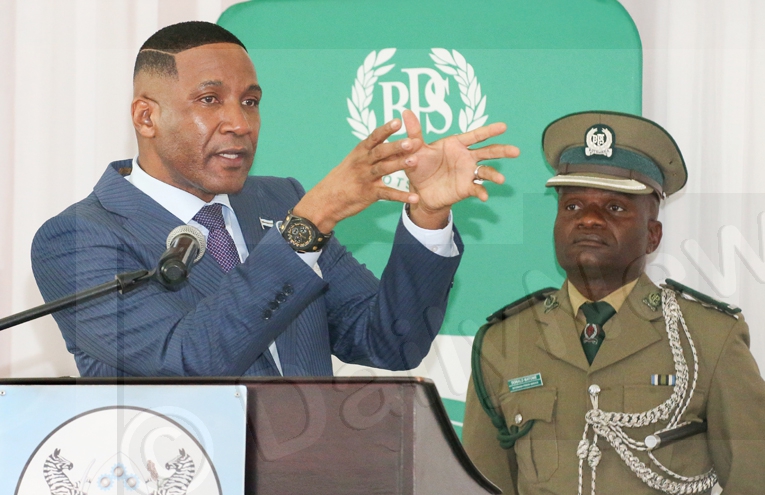
    Speaking during the official opening of Botswana Prison Service senior officers conference themed: Strengthening Leadership, Operational Discipline and Offender Rehabilitation in a Secure Humane Environment yesterday, President Advocate Duma Boko said it was government’s vision and priority to attain an inclusive economic growth.

    He said such a move would make Botswana Prisons Service’s job easier given that some offenders committed crimes because of economic hardships.
    To this end, he said the attainment of an inclusive economic growth would mean providing opportunities for people to make a decent living so as to keep them busy or engaged in order to frustrate crime.

    However, the President said that realising an inclusive economic growth remained elusive and had been always challenging to attain.

    He said the reality of the country was that Botswana ranked among countries with glaring disparities in economic inclusion, alongside countries such as Namibia, noting that the disparity translated into an exclusion of a large proportion of the people from meaningful economic activity.

    In addition, President Boko said the economically marginalised were condemned, side-lined and exist on the margins of the mainstream economy, which led to an interconnected web of daily challenges for societies.

    Therefore, President Boko said some of them reacted to such a status quo by drifting into crime, while others try to shield themselves from the harsh reality by drifting into drugs and substance abuse, which in turn created a lot of social ills such as violence of all forms and disregard for the wellbeing of others.

    He said society had collectively failed to mould such individuals, resulting in the Botswana Prison Service having to carry the burden of rehabilitating them into responsible citizens of the country – free from re-offending.

    For his part, acting Minister of Justice and Correctional Services, Mr Augustine Nyatanga urged the nation to understand that the work of the prison service was restorative in nature as it sought to rehabilitate offenders and re-shape their character.

    Mr Nyatanga, who is also MP for Mahalapye East, commended President Boko for his message on leadership, saying it was timely and relevant to the work and responsibilities carried by senior officers at the Botswana Prison Service.

    He said leading effectively was a collective responsibility of all team members and that possession of great leadership skills would drive the prison service’s aspiration to realise and even exceed its objectives.

    He called on the senior officers to take to heart President Boko’s message and use it as guiding light for the organisation’s operations going forward.

    Mr Nyatanga also spoke of the need to attain more from little resources, explaining that with that in mind, the Botswana Prison Service would accomplish its objective of effectively transforming offenders placed under its care. 
  • Land Issues Dominate Habu Consultations

    Land Issues Dominate Habu Consultations

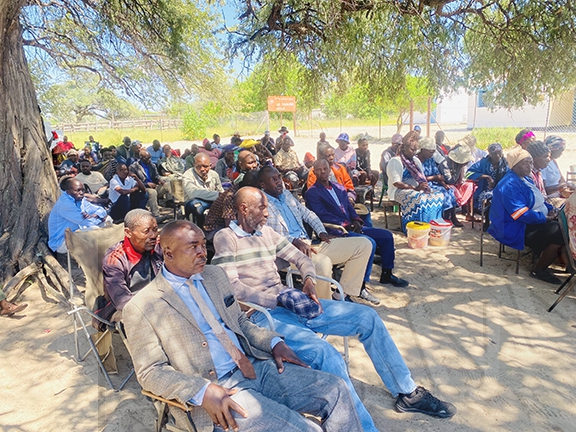
    Some residents of Habu have expressed support for the proposed Constitutional Court, hoping it will address what they describe as longstanding injustices related to land ownership.

    Their comments came during consultations conducted by Assistant Minister of Trade and Entrepreneurship, Mr Tiroeaone Ntsima recently.

    One resident, Mr Uauanaro Kandjou highlighted escalating land conflicts in the village, pointing to instances where the Land Board had allocated the same plots to multiple individuals particularly farmland.

    Mr Kandjou argued that inheritance laws contributed to such disputes as some beneficiaries claimed plots as inherited property to the benefit of certain groups. He suggested that inheritance laws be reviewed or phased out to resolve such anomalies.

    Speaking on behalf of the Basarwa community, Ms Keikanetse Letshabamang said they were relocated from their ancestral land decades ago to make way for tourism concessions. She said they were yet to receive formal allocations given that the land board had suspended allocations in Habu for 17 years.

    Mr Lasaro Reakae emphasised the need for Botswana laws to reflect the cultures and traditions of all tribes to ensure that the rights of indigenous groups such as the Basarwa were protected.

    Meanwhile, Mr Uatjia Nguvauva raised concerns about Human-Wildlife conflict, noting that current compensation laws failed to cover losses, injuries or fatalities, leaving affected families without support.

    Some residents, including Mr Eric Alin, welcomed the establishment of Constitutional Court, noting that it should hold superior powers over the President to safeguard human rights effectively.

    In response, Assistant Minister Ntsima explained that the Constitutional Court would serve as a supreme court focused on protection of human rights.

    He said matters related to land administration, tourism management, socio-economic traditions, agriculture and natural disasters must align with the Constitution because they impacted citizens’ rights.

    He added that the ConCourt would also strengthen Botswana’s integrity to make the country more attractive to international investors. He assured residents that the Constitutional Court would operate independently from the President and be led by appointed judges. 

  • Moswaane Urges Objective Thinking Over Partisan Judgement

    Moswaane Urges Objective Thinking Over Partisan Judgement

    The Assistant Minister of Local Government and Traditional Affairs, Mr Ignatius Moswaane has called on stakeholders to work in unison in the interest of the proposed Constitutional Court.

    He said overcoming partisan differences was crucial for the country to realise the objective of having a Constitutional Court.

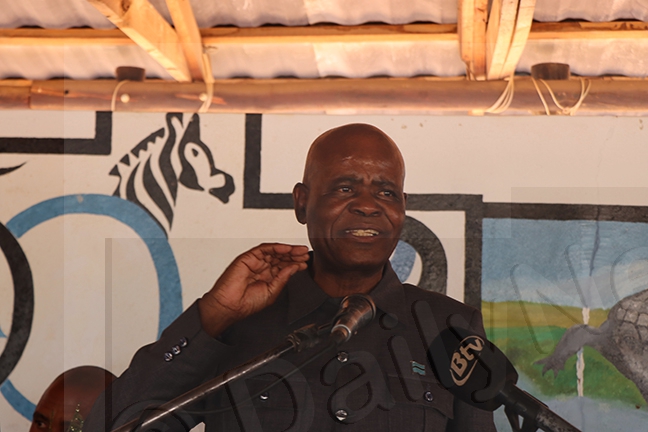
    Mr Moswaane was addressing a kgotla meeting in Selebi Phikwe recently, where he solicited meaningful discussions around the initiative and reassured attendees that establishing the court did not mean that government would neglect pressing issues the country was facing.

    Instead, he said it was a development that sought to strengthen the country’s legal framework , including the protection of human rights. Nonetheless, residents held different opinion on the matter, some for, and others against the proposal.

    Mr Abale Ketsitile said government should consider reviewing and amending the Constitution. He also Batswana ought to have adequate knowledge about the institution, first and foremost

    Mr Ketsitile elaborated on the numerous concerns regarding the constitution that had left many Batswana feeling dissatisfied.

    Mr Batani Rauwee agreed to the establishment of the Constitutional Court on the basis that it would safeguard human rights.

    Member of Parliament for Selebi Phikwe West, Mr Reuben Kaizer said rather than investing substantial resources into a referendum aimed at establishing the court, an initiative he believed could impose further financial strain on the already struggling economy, practical measures should be implemented to address the concerns of the populace.

    He advocated for exploring alternative strategies to bridge any perceived gaps in the legal system, focusing on approaches that would ensure immediate needs of the citizens were met without exacerbating the country’s fiscal challenges.

  • Residents Eager for Concourt Establishment

    Residents Eager for Concourt Establishment

    Consultations on the establishment of Constitutional Court were met with high expectations, as Mmathethe residents expressed eagerness for the court’s immediate takeoff.

    During a meeting addressed by the Minister of Labour and Home Affairs, Major General Pius Mokgware, recently community members requested specific updates on the implementation timeline, viewing the court as a significant step toward greater transparency and government accountability.

    In her comment, Ms Cathrine Moabankwe described the court as long overdue, stressing that the community had struggled to find closure on unresolved legal issues. Similarly, Ms Gabanthate Kemoabe expressed hope that the court would resolve long-standing tribal grievances.

    She highlighted historical disputes regarding leadership, noting that her tribe had lived under the Bangwaketse rather than the Barolong and was hopeful that the court would restore their rights.

    On one hand, the potential for the court to address social grievances was also a key theme. Mr Joseph Baipili raised the plight of men forced to pay maintenance for children who were not biologically theirs. He suggested the court could offer a path to justice for fathers who discovered the truth only after years of financial support.

    Conversely, Ms Omphile Motlapele urged government not to lose sight of basic needs. While not opposing the court, she questioned the consultation process, noting that the proposal seemed to originate in Parliament before reaching the public. She emphasised that daily challenges facing citizens should remain government’s priority.

    Earlier on, the minister, Maj. Gen. Mokgware, assured residents that once established, Constitutional Court would provide a vital platform for justice.

    He noted that under current laws, Batswana faced limitations such as the inability to choose preferred burial site and that customary law was yet to be fully incorporated into the Constitution.

    “Anyone who feels their case has not been adequately addressed by the Constitution may take it to the Constitutional Court, the Minister stated, emphasising that the court would serve those seeking clarity on their fundamental rights,” he said. 

  • New Office to Combat Financial Crime

    New Office to Combat Financial Crime

    Government has established the National Coordination Office on Anti Money Laundering, Combating the Financing of Terrorism, and Proliferation Financing.

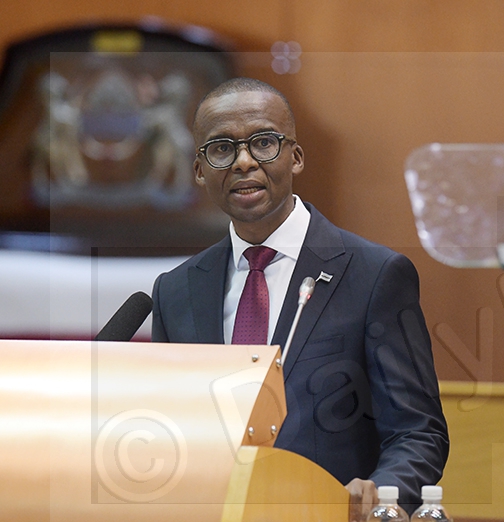
    Minister of Finance, Mr Ndaba Gaolathe said during presentation of 2026/27 budget that this comes at a defining juncture as Botswana intensified preparations for the Eastern and Southern Africa Anti-Money Laundering Group Mutual Evaluation scheduled for January 2027.

    He said the establishment of this office demonstrated government’s resolve to adopt a whole-of-government approach to financial crime risk management.

    The office serves as the central mechanism for driving national coordination, strengthening inter-agency collaboration, and ensuring that Botswana’s legal, regulatory, and institutional frameworks fully comply with Financial Action Task Force (FATF) requirements.

    Parliament also learnt that government has commenced the review of the Public Procurement Act, 2021, to align it with global best practices and strengthen transparency and accountability.

    Mr Gaolathe said the review sought to improve efficiency, reduce delays, and create a deliberate and structured pathway for previously underrepresented groups, including local manufacturers and other key sectors, to participate meaningfully in public procurement without distorting the economy.

    Other reforms, the minister said, include, the review of the Public Finance Management Act, that aims to strengthen accountability, oversight, management and control of public funds.

    The Act would ensure compliance with international best practices, including anti-money laundering and counter-terrorism financing standards.

    Mr Gaolathe said the review of the Financial Reporting Act, 2020 which commenced in October 2025 would also introduce regulatory measures to promote fair competition between multinational and local audit firms.

    The Act would futher encourage joint audits between eight multinational and local audit firms for Public Interest Entities and empower the Botswana Accountancy Oversight Authority with adequate resources to conduct regular inspections of multinational firms.

    Mr Gaolathe said the review of the Public Procurement Act, Public Finance Management Act and the Financial Reporting Act would be tabled during the 2026/2027 financial year.

    He said the reforms aimed at addressing the declining performance on the global Corruption Perceptions Index. To this end, he said, urgent steps were being taken to operationalize the independence of the Directorate on Corruption and Economic Crime.

  • Makopong Community Unite to Shield Zone 13 from FMD Threat

    Makopong Community Unite to Shield Zone 13 from FMD Threat

    Residents of Makopong in Kgalagadi South have launched a grassroots border protection initiative to safeguard Botswana’s livestock industry from the Foot and Mouth Disease (FMD) outbreak currently escalating in neighbouring South Africa.

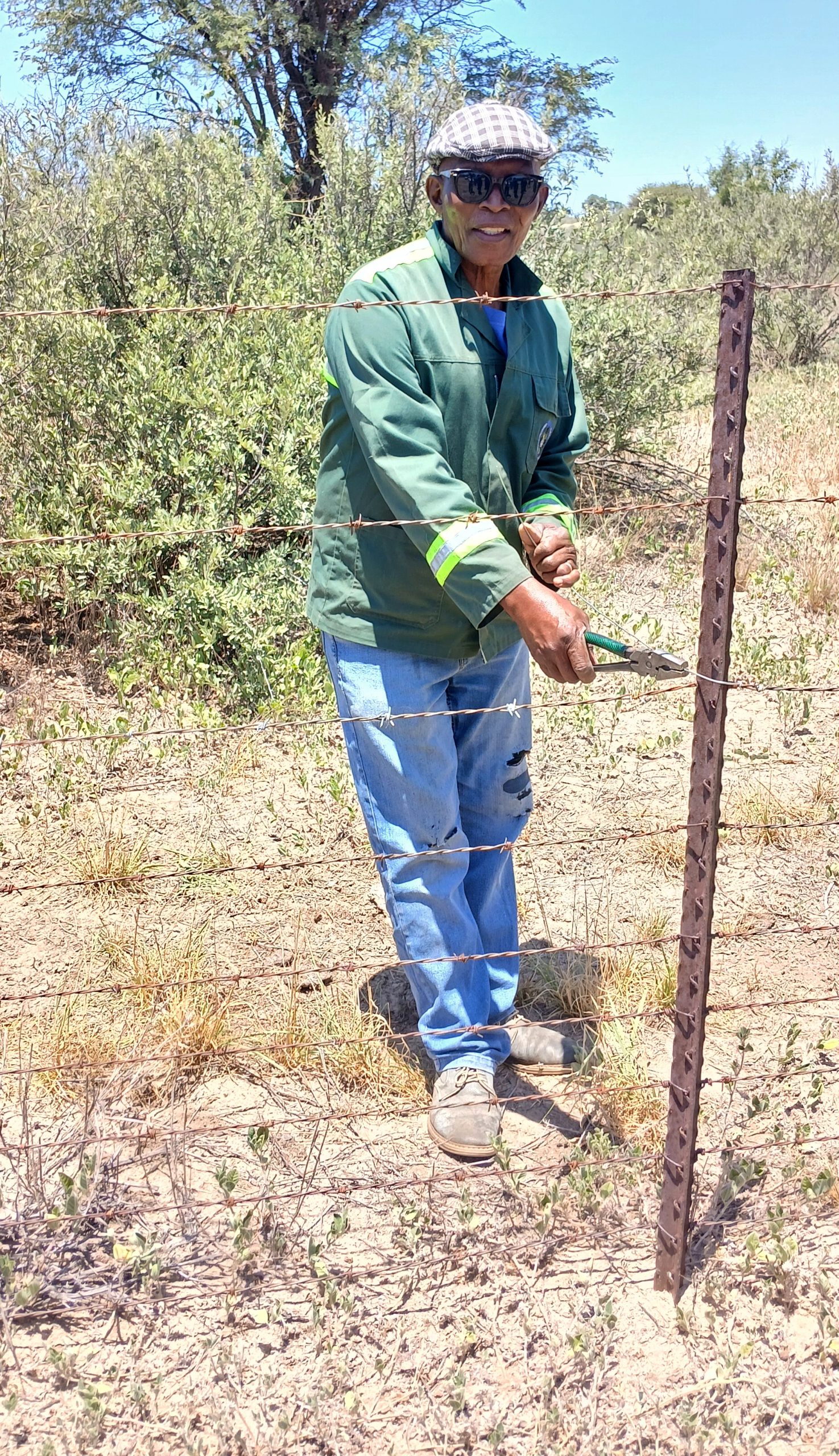
    Led by the Makopong Farmers Committee, the community began a strategic fortificati on of the international borderline on January 27. The move comes as a response to the threat the virus poses to livelihoods and the national economy. The primary goal is to maintain the status of Zone 13 as an FMD free ‘Green Zone’, a region recognised as one of the nation’s most vital contributors to beef production.

    Speaking on the urgency of the situation, Councillor for Makopong area, Mr Shimane Bimbo, emphasised that the time for total reliance on government had passed.

    “ It is the duty of every responsible citizen to stand and step up during times like this and be wholeheartedly patriotic to our country without looking and relying solely on the government,” Councillor Bimbo said.

    He explained that the committee’s resolution to inspect and repair the border fence served as an essential precautionary measure to prevent cloven-hoofed animals from crossing between Botswana and South Africa.

    Th e community -led project has identified critical vulnerabilities along the border, including a shortage of 1.6-meter standard poles, a need for fresh barbed wire, and several burrow pits under the existing barrier fence.

    Furthermore, Mr Bimbo explained that the patrol road had become largely inaccessible due to the overgrown of the invasive Prosopis mesquite (Sexanana) tree.

    To address these gaps, he said residents had already begun making individual contributi ons of P200 or more to fund materials and provide food for the volunteer workforce.

    Despite the high level of commitment, Mr Bimbo said the committee had reported a significant shortage of equipment, including chainsaws, shovels, and axes.

    He noted that there was also an urgent request for a grader to clear and demarcate the patrol line, which was essential for monitoring prohibited crossings in ungazetted areas.

    The community was hopeful that their patriotic efforts would be bolstered by additional support to ensure that the newly established funds for FMD were used to fully erect a secure cordon fence, permanently protecting the cattle-rich Zone 13.

    Adding his voice to the call for national solidarity, Makopong Tribal Representative, Kgosi Obenne Matshogo urged other communities along the borderline to follow Makopong’s example.

    He warned that the fight against FMD was a collective responsibility, as an outbreak in a single zone could lead to a nationwide agricultural crisis.

    Kgosi Matshogo noted that preventing the spread of the disease into the country was a task for every citizen, stressing that benchmarking from proactive communities like Makopong, was key to securing Botswana’s economic future.

  • Power, Profits and Prescriptions : Inside The Elite Capture of Botswana’s Health System

    Power, Profits and Prescriptions : Inside The Elite Capture of Botswana’s Health System

    On a Thursday evening, Minister of Health Dr Stephen Modise walked into the Btv studio to address the nation.
    He appeared composed, almost Zen-like. T is was striking for a man widely known within political circles as The Hurricane: restless, kinetic, always in motion.
    On this night, however, the storm had slowed. The posture was calm. The language measured. The reassurance deliberate.
    But the 30-something-year-old minister is burdened with a crisis that did not begin with him, nor with his administration. It did not even begin with the political moment that brought him to office.
    It is a crisis decades in the making, shaped under a political order that governed Botswana continuously for 58 years, the era of the Botswana Democratic Party.
    This matters, because much of the anger now directed at a new generation of leadership is historically misdirected.
    The collapse now visible in hospitals and clinics was designed, normalised, and defended long before this minister was born, through policies, procurement choices, and administrative cultures entrenched over successive administrations.
    For a long time, Botswana’s health system survived on trust. Trust that the clinic would be there. Trust that the referral hospital would function. Trust that illness, though frightening, would not automatically become punishment. That trust did not disappear suddenly. It was worn down through repeated exposure to institutional harm, one missing drug at a time, one broken machine left unrepaired, one referral that felt less like care and more like abandonment.
    What citizens experienced was not a single failure, but a pattern of injury, repeated, predictable, and largely uncorrected.
    A Crisis with a Political Lineage
    From the late 1990s through to the end of BDP rule, Botswana’s health system was shaped under successive presidencies, those of Festus Mogae, Ian Khama and Mokgweetsi Masisi.
    These administrations differed in style, rhetoric, and political temperament. What they shared was institutional continuity : the same ruling party , overlapping political elites, entrenched procurement systems, and a bureaucratic culture shaped by long incumbency. It was during this period that key features of the current crisis hardened:

    • Procurement systems that tolerated fragmentation and opacity,
    • Maintenance regimes that allowed public infraastructure to decay,
    • Referral pathways that quietly redirected patients into private care,
    • Policy choices that insulated commercial intermediaries from competition and consequence.
      These were not momentary lapses. They were governance choices sustained overtime.
      What the Record Shows
      Over successive years, Botswana’s own oversight institutions raised alarms. The Auditor General repeatedly documented weaknesses in health-sector procurement and contract management, delays, irregularities, poor value for money, and the normalisation of emergency purchasing that bypassed safeguards. Findings reappeared across audit cycles, recommendations acknowledged but not implemented, weaknesses identified but left structurally intact.
      The Office of the Ombudsman investigated cases of maladministration in public hospitals, identifying equipment failures, dysfunctional referral systems, and administrative neglect that directly harmed patients.
      These reports were produced, tabled, and debated during the BDP’s long tenure in government. The evidence was available. The patterns were visible. Th e corrective action was partial at best. Individually, these findings read like technical shortcomings. Taken together, they reveal something more serious: a system that absorbed damage without resisting it, because the damage did not threaten those with the power to change it.
      From Failure to Capture
      It is tempting, convenient even, to explain Botswana’s health crisis as incompetence, capacity strain, or fiscal pressure. But such explanations collapse under scrutiny. Botswana was not uniquely poor during this period. It did not lack trained professionals. It did not lack rules, audits, or warnings. What it lacked was the political will, across administrations, to dismantle a system that increasingly rewarded private gain from public failure.
      This is where the language of elite capture becomes unavoidable. Elite capture describes a condition in which public institutions are bent toward the interests of a narrow, powerful group, even as they continue to operate in the name of the public. It does not require overt illegality. It requires self-seeking behaviour protected by proximity to power. Under prolonged one-party dominance, that proximity became stable, predictable, and difficult to challenge.
      Collaborative Destruction under Long Rule
      There was no dramatic dismantling of public healthcare under BDP rule. What occurred was more dangerous: collaborative destruction. Political elites controlled policy direction and appointments. Commercial actors positioned themselves to profit from shortages, breakdowns, and the steady outsourcing of care.
      Bureaucratic discretion expanded where enforcement weakened. Each group benefited differently, but all benefited from the same harm. When medicine was unavailable, patients suffered. When equipment remained broken, treatment was delayed. When referrals became routi ne, families absorbed the cost. Th is harm was not accidental. It was reproduced through tolerance.
      The Eco system That Endured
      By the time BDP rule ended, the health sector had become an ecosystem of extracti on. Public hospitals failed reliably. Private providers expanded predictably. Public money followed pati ents out of the system. This did not require conspiracy. It required time, continuity and greed disciplined by access to power.
      Why This Series Matters Now
      This article marks the beginning of a six-part investigati e series that will examine Botswana’s collapsed health system as a product of historical governance, not recent surprise.
      Over the coming weeks, the series will trace:
    • how political power under long BDP rule converged with commercial interests,
    • how procurement became a site of extraction,
    • how public hospitals were allowed to decay,
    • how professionals and insurers navigated, and benefited from, the harm,
    • how key policy decisions protected profiteers, • and ultimately, who did what, when, and how. This is not an exercise in partisan score-settling. It is an effort to restore historical accuracy. The crisis confronting the current minister was not inherited from the election cycle. It was inherited from 58 years of accumulated decisions. The evidence is not hidden. The timeline is clear. The responsibility is structural and traceable. What has been missing is the courage to say so plainly.

  • Hope Remains for Pandamatenga Farmers Recovery

    Hope Remains for Pandamatenga Farmers Recovery

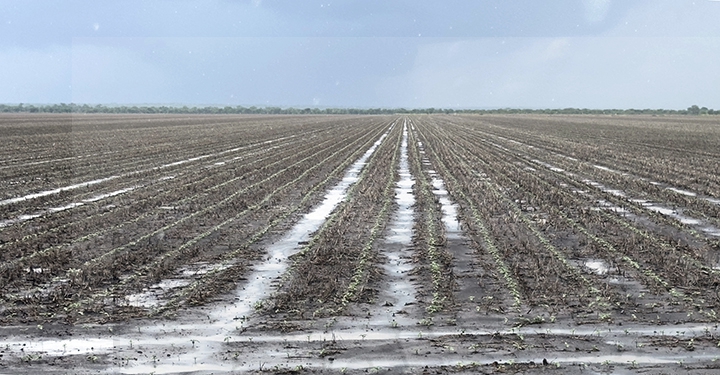
    Following the recent heavy downpours in Pandamatenga that left farms submerged in water, the path to recovery for Botswana’s food basket hinges on water to recede and soil moisture to reach a workable consistency.
    The one-in-200- years’ storm on January 21 which dropped over 150mm of rain submerged over 8,000 hectares of crops from sorghum, sunflower, maize, onion, tomatoes, beans.
    Pandamatenga remains critical to national food security contributing 47 per cent to Botswana’s national crop production mostly sorghum, millet, beans, wheat, chickpeas supported by the 90,000 metric tonnes grain storage silos hosted in Pandamatenga.
    Department of Crop Production- agronomist for Pandamatenga Commercial Farmers, Ms Emeliah Magosi told BOPA that there was hope for Botswana’s food basket, as the window for replanting remained open to February and March for Pandamatenga.
    However she said replanting would be enabled by a shift from heavy rains to scattered showers and warmer temperatures for the cotton soils to hold just adequate moisture.
    Farmers might be compelled to change cropping plans, to suit the high soil moisture and ideally plant wheat, chickpeas, sunflower and mung- beans, Ms Magosi said.
    She explained that it was premature to analyse the damages suffered by the 8,000 hectares planted crops as mostly were still submerged in water. This translates to a variation of risks from nutrients loss, stunted growth, and rotting.
    Hope remains for farmers to return to full operations and optimise on their equipment because they have sufficient farming implements to accelerate production.
    With Pandamatenga being a floods prone area, Ms Magosi said government installed drainage and roads infrastructure within the commercial farms to address such occurrences.
    “The purpose of the drainage system in the farming area was to address unfavourable conditions such as floods and its only that the recent rains were a rare occurrence and without the trenches it could have been a calamity,” she said.
    Consequent to heavy rains, Ms Magosi said risked to be expected include pests outbreak, mostly quelea birds and army worms. High humidity also poses a risk of fungus which demands a lot of output from farmers to spray their crops.
    Recapping on last season’s performance, Ms Magosi remarked that a total of 27,247 hectares of sorghum was planted by commercial farmers producing 81,369 tonnes.
    She said a total of 5 568 hectares of cowpeas was planted producing 4,338 tonnes while 2,032 hectares of beans was planted and 1,902 tonnes harvested.

  • Government Sets Aside P97M for FMD Interventions

    Government Sets Aside P97M for FMD Interventions

    Government has approved the Foot and Mouth Disease (FMD) response plan for immediate implementation with P97 million allocated for urgent interventions.
    This was revealed by acting Minister of Lands and Agriculture, Mr David Tshere on Tuesday when addressing the public on government’s FMD preparedness control.
    Also, the minister announced an initiative toward a shared financial responsibility model, with the Business Botswana having pledged P1 million already.
    The National Development Bank has been appointed to administer funds contributed by the private sector development partners and members of the public.
    As the FMD outbreaks in South Africa and Zimbabwe continued to pose a risk of incursion into Botswana, Mr Tshere noted that Botswana’s intention was to ensure that FMD was controlled at a regional level, adding that the transition moved away from a government-driven model to one that actively involved communities, farmers and the private sector.
    As such, he called on Batswana to partner with government in controlling the disease including providing financial support amid prevailing fiscal constraints.
    As part of mitigation efforts, he said government had established a Foot and Mouth Disease Command Centre, chaired by the Office of the President to coordinate inter-ministerial responses. 
    The centre operates a call centre with both a toll-free line and a WhatsApp contact, he said. 
    Furthermore, he said community participation would be central to disease prevention and control efforts, including regulating livestock movement through kraaling and herding animals away from high-risk areas.
    Mr Tshere said response teams had been deployed along border areas to restrict the movement of cattle from South Africa and Zimbabwe into Botswana.
    “Movement restrictions have been imposed in border villages in Ramotswa, Borolong, Kgatleng, Bobirwa, Tutume and the North East District. Disease surveillance has been intensified in these areas, with livestock movement permitted only for animals destined for slaughter and subject to authorised movement permits,” he said.In a move to reduce the risk of FMD transmission, he said the holding period for stray cattle had been reduced from three months to 14 days, adding that unclaimed stray cattle would be slaughtered at the Botswana Meat Commission abattoir, with proceeds directed towards FMD control measures.
    Mr Tshere said government continued to enforce strict veterinary protocols for livestock that strayed into neighbouring FMD-affected zones.
     As of January, he said 48 cattle had been destroyed after crossing into South Africa and Zimbabwe.
    Mr Tshere highlighted that compensation of P700 would be paid to cattle owners and P200 for goats if animals cross into red zones or show signs of FMD.
    The exercise, he said, was being carried out in collaboration with the Ministry of Lands and Agriculture, cattle producers and non-cattle producers.
    Mr Tshere emphasised that FMD posed a severe threat to agriculture due to its high contagiousness and environmental resilience. 
    He also encouraged dikgosi to use mophato systems to help control the spread of FMD, citing Bobirwa as an area where the approach had yielded positive results.
    A dedicated communication team has also been established to disseminate information, while sensitisation through kgotla meetings has already been conducted in villages including Ramotswa, Borolong, Mochudi and Tutume Districts.

  • Letsholathebe Records Improved Medical Supplies

    Letsholathebe Records Improved Medical Supplies

    Letsholathebe Memorial Hospital in Maun is showing signs of recovery as availability of medicines including essential ones and other medical supplies has improved from 15 per cent to 30 per cent, with another consignment expected before the end of this week.
    This was revealed by the hospital superintendent, Dr Lebogang Mokotedi during Minister for State President, Defence and Security, Mr Moeti Mohwasa’s tour of the hospital on Tuesday. 
    “Drugs availability and other medical commodities have gradually improved this year as compared to last year and we are expecting more orders before the end of the month.Despite the shortage, we have been trying our level best to offer quality services with the little we had,” revealed Dr Mokotedi.
    It was reported in December that the hospital was experiencing shortage of drugs and non-drug commodities and that inconsistent supplies of the required commodities affected patient management, especially those requiring to be assisted on emergency basis.
    By then, vital drugs were reported to be at 75.5 per cent, essential drugs at 63.9 while necessary drugs remained at 52.1 per cent with an order fill rate of 21 per cent from the Central Medical Stores.
    She also apprised the minister that they had ensured the security of medicines in the facility as all medication storage was restricted to only authorised personnel. 
    To further strengthen security, she stated that their intention was to install alarms and CCTV cameras in drug storage areas.
    Regarding feeding of patients, she said it also remained a serious challenge due to financial constraints citing that they operated under a tight budget where allocation of funds for food services was limited.
    Another challenge was shortage of ambulances as only six out of 18 were functional, saying the shortage affected the flow of referrals to both Francistown and Gaborone.
    Dr Mokotedi also reported a shortage of medical specialists, among them a surgeon, a gynaecologist and a physician, explaining that currently they were operating with one gynaecologist, whose services patients waited 24 to 26 months to access.
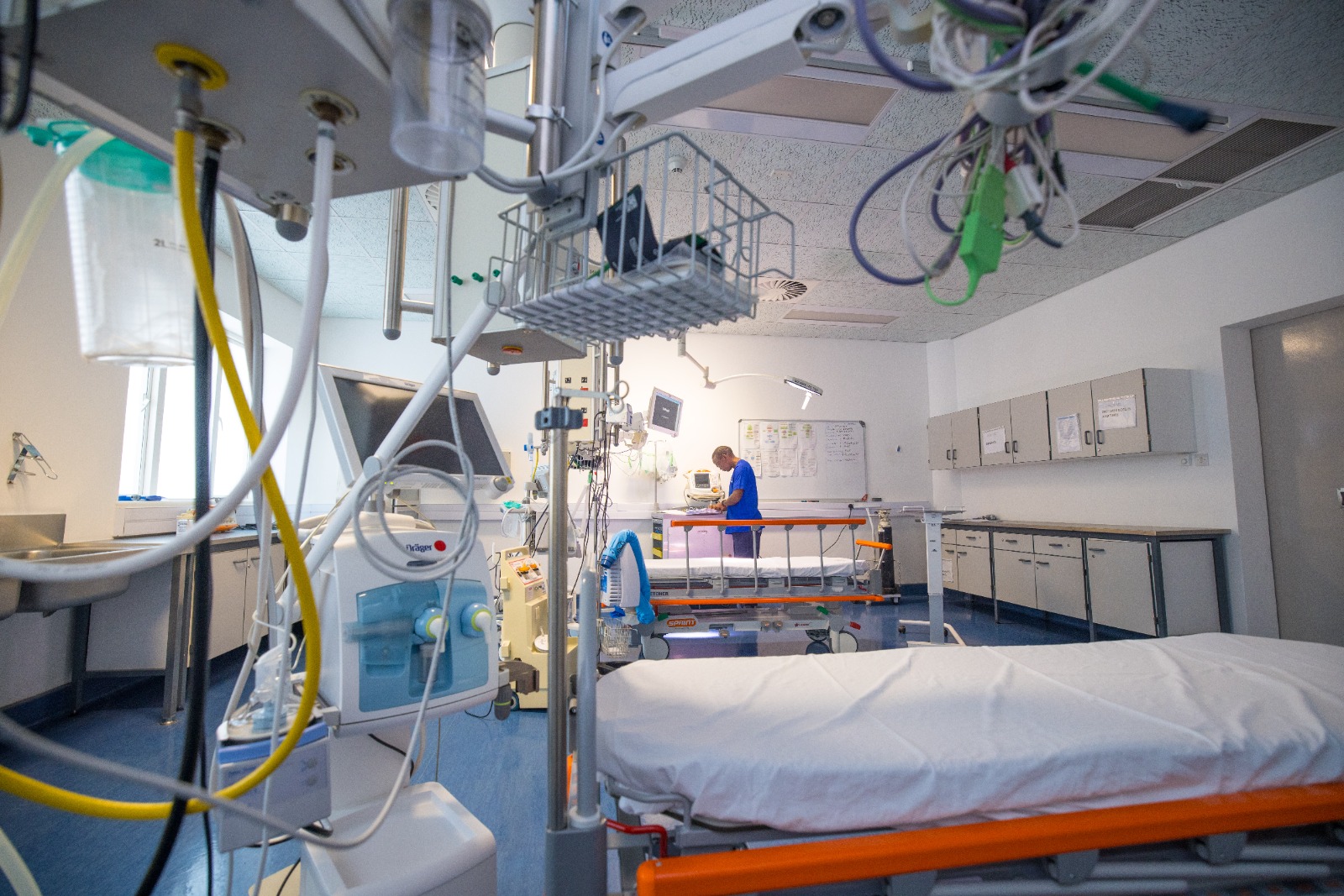
    Despite the challenges, she shared some of their achievements citing that facility recently underwent refurbishment for both the Intensive Care Unit (ICU) and the theatre to improve service delivery.
    The ICU, which was officially opened last year August had not been fully operational due to structural anomalies and equipment issues.
    Currently, the hospital management has procured equipment and awaiting staff and its functionality was hailed as a major milestone for the hospital, enhancing critical care capabilities for Maun and surrounding districts.
    “The introduction of this unit is a significant upgrade to the hospital’s capacity to handle critically ill-patients locally. We now need a doctor who will man the unit,” Dr Mokotedi said.
    In addition, she informed the minister that a new haemodialysis unit was also introduced, which was being operated on a public-private partnership basis.
    For a long time, patients had to travel long distances to as far as Francistown to access kidney health services and Dr Mokotedi praised government efforts to bring quality health services including highly specialised ones.
    For his part, Minister Mohwasa praised employees of the hospital for their resilience and high level of commitment in delivering quality services despite working under difficult conditions.
    He appreciated that staff had demonstrated resilience and a strong sense of moral duty to maintain quality patient care in the face of several challenges, which include drug shortages.
    Mr Mohwasa assured the hospital management that the Ministry of Health was working around the clock to address the challenges at hand so as to improve service delivery. 
    He said the ministry was working hard to address the issue of shortage of medicines by ensuring that they reached every hospital and clinic across the country on time.
    Mr Mohwasa admitted that there was shortage of drugs, which he partly blamed on corruption by suppliers and an inefficient procurement system.
    He emphasised that government was however working tirelessly to improve the efficiency of the medicine supply chain.
    The minister and his entourage toured some sections of the hospital including the pharmacy, some laboratories, and specialised units to appreciate challenges.
    He also visited the outpatient department where he interacted with patients queuing for services.