Author: Daily News

  • Find Alternative Transport for Learners

    Find Alternative Transport for Learners

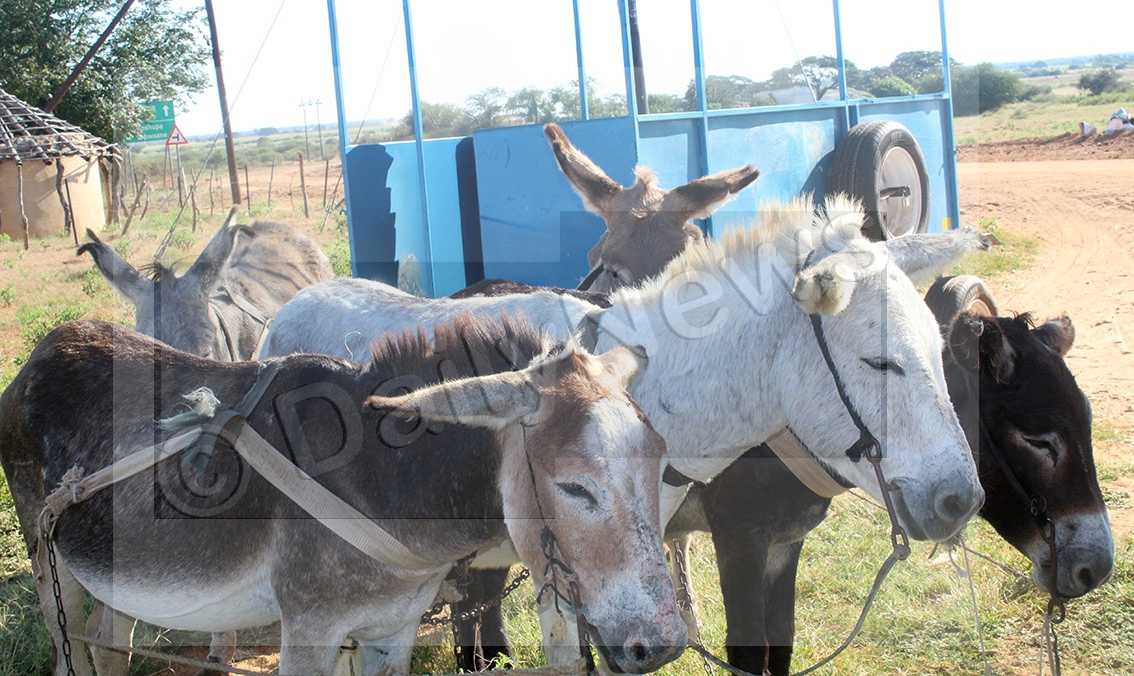
    Local authorities have been instructed to find alternative modes of transport following government’s resolve that donkey carts are unsuitable for ferrying learners. 

    The decision stemmed from concerns that donkey carts exposed learners to safety risks, including road accidents and harsh weather conditions. 

    Minister of Local Government and Traditional Affairs, Mr Ketlhalefile Motshegwa, said this answering a question from Member of Parliament for Mmopane-Metsimotlhabe, Ms Helen Manyeneng in Parliament on Tuesday. 

    Minister Motshegwa stated that the use of donkeys for learner transportation was being abolished and therefore councils were now required to implement alternative arrangements that met acceptable safety standards, specifically citing the need for roadworthy and properly covered vehicles. 

    Ms Manyeneng had asked the minister if he was aware that learners from Dintoroko, Gamononyane and Mmamhiko were being transported to Metsimotlhabe via donkey carts. 

    She highlighted the serious safety risks involved and wanted to know whether the ministry would commit to providing safer and sheltered vehicles to ensure the protection and well-being of the children.

  • BVI Sets up Lab to Scale up Production

    BVI Sets up Lab to Scale up Production

     In an effort to address ageing infrastructure and unlock additional capacity, a new Blending and Filling Laboratory is currently under development at the Botswana Vaccine Institute (BVI).

    The 2026 budget speech highlights that the investment will significantly increase production capacity, ensure full compliance with Good Manufacturing Practices and enable the diversification of vaccine products, thereby positioning BVI to strengthen regional supply chains and contribute meaningfully to export-led growth.

    The facility is expected to be completed in the 2026/2027 financial year. 

  • Govt Launches Strategic Policy Instrument

    Govt Launches Strategic Policy Instrument

    Government will launch the Botswana Mercantile Exchange (BMX) as a strategic policy instrument to support economic diversification.

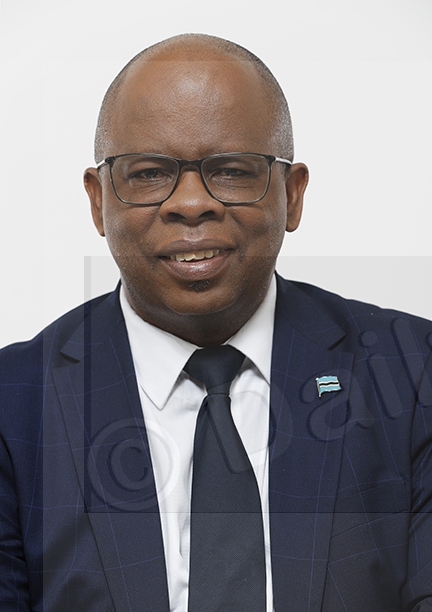
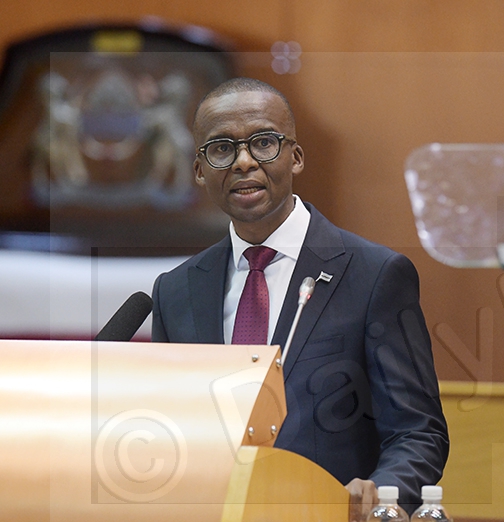
    Minister of Finance, Mr Ndaba Gaolathe outlined in the 2026 budget speech on Monday that the BMX would introduce an organised, market-driven pricing mechanism for commodities such as sorghum and beef, aligning domestic prices with international benchmarks.

    This is expected to reduce income volatility for local producers and to improve price discovery, he said.

    Minister Gaolathe added that the BMX would contribute to reducing Botswana’s over-reliance on diamonds by creating new value chains, positioning the country as a regional trading hub, and strengthening integration into global trade networks.

  • Mohwasa Sets the Record Straight on Concourt

    Mohwasa Sets the Record Straight on Concourt

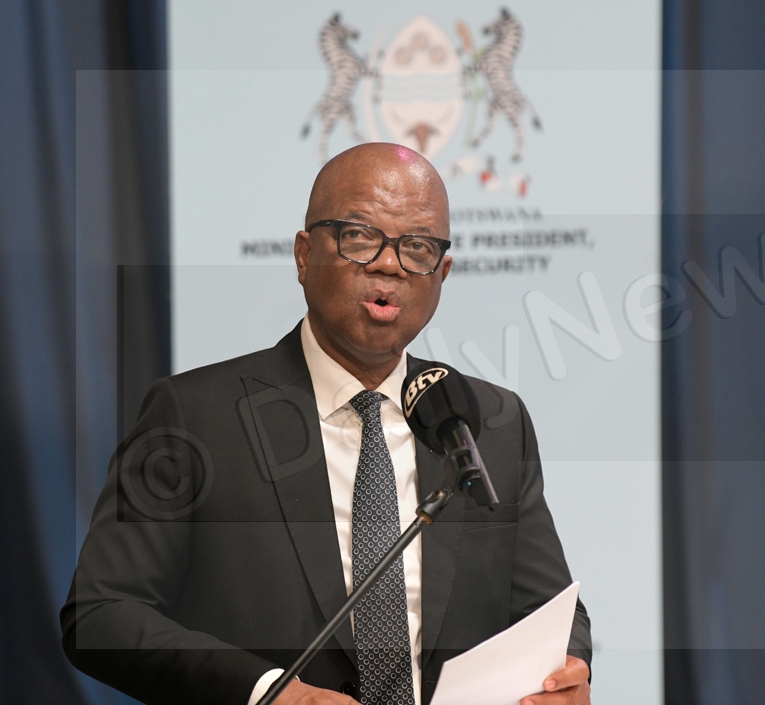
    Establishing the constitutional court is not about addressing same-sex marriages or abolishing the death penalty as some allege.

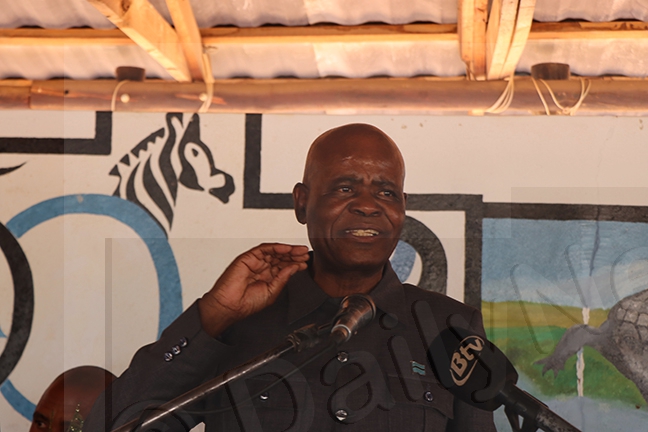
    The court would instead be all-encompassing in addressing constitutional and human rights violations, Minister for State President, Defence and Security, Mr Moeti Mohwasa, explained on Monday when addressing Civil Society and Non-Governmental Organisations.

    He cautioned against public misinformation by those with agendas, adding that there were civil society members who were meeting with politicians to solidify positions against the constitutional court. The court would serve to protect the rights of all people, as the government is a human rights-based government, it would be a body to oversee the review of the constitution, Mr Mohwasa said.

    The minister clarified that the creation of the constitutional court was not anyhow kick-starting the processes of the envisaged constitutional review.

    Minister Mohwasa said after passing a two-thirds majority vote by Members of Parliament, there would be a referendum for Batswana to have an input on the creation of the constitutional court.
    Civil society and non-governmental organisations’ members varied on the establishment of thec court.

    Mr Keabetse Sesenao opined that the country desperately needed the court to safeguard the rights and wellbeing of its people, while Ms Tumisang Seabo called for people-driven and transparent consultations, since Batswana were never consulted on whether they wanted a constitutional court to oversee the constitutional review.

    Although Batswana in the Dibotelo Commission indicated they wanted a constitutional court, the reasons they advanced differed from those advanced by the government, she said.
    In the Dibotelo Commission, Batswana wanted a concourt to help in the speedy delivery of justice and to relieve the High Court.

    She further noted that under the current laws, the ConCourt would operate under the same laws which limit the High Court and the Court of Appeal, thus not having any significant impact.

    Another contributor, Ms Lorato Mphusu, said the country faced significant morality and lifestyle detention issues, and wondered how the ConCourt would help to uphold or erode those.

    Thus, she called for the protection of the moral fabric of society.

    Mr Mohwasa noted that the problem of morality was not a legal issue but a societal problem.

    Generally, the minister said Batswana were an angry society, which bred intolerance leading to violence.

    “The anger also manifests in falsehood and, at times, vulgarity, which borders on criminality directed at the leadership.”

    Minister Mohwasa promised further consultations with civil and non-governmental organisations, adding that the government remained open to dialogue and consultations.

    BOCONGO board chairperson, Ms Cindy Kememi, stated that the civil society appreciated the opportunity to engage on the constitutional reform, noting that the process must be founded on meaningful, structured, and inclusive public participation.

    She said the dialogue reaffirmed the importance of engagement between civil society and government in strengthening constitutionalism and democratic governance.

    Ms Kememi noted that the concerns of civil society reflected the expectations and aspirations of society, adding that consultations must go beyond mere formality.

    She called for the publication of clear and accessible information on the constitutional court, including its mandate, jurisdiction, composition, and implications for existing judicial structures.

    She also urged for broader public consultations and sufficient time to be allowed for consultations and engagement, among other things. 
  • Inclusive Growth Central to Addressing Social Challenges

    Inclusive Growth Central to Addressing Social Challenges

    Achieving inclusive economic growth requires a multi-faceted approach, and when attained, it can bring about solutions to many of the country’s problems.

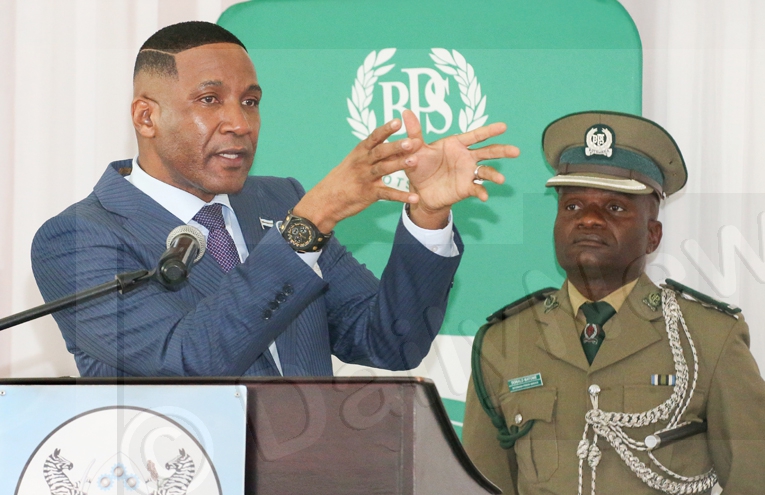
    Speaking during the official opening of Botswana Prison Service senior officers conference themed: Strengthening Leadership, Operational Discipline and Offender Rehabilitation in a Secure Humane Environment yesterday, President Advocate Duma Boko said it was government’s vision and priority to attain an inclusive economic growth.

    He said such a move would make Botswana Prisons Service’s job easier given that some offenders committed crimes because of economic hardships.
    To this end, he said the attainment of an inclusive economic growth would mean providing opportunities for people to make a decent living so as to keep them busy or engaged in order to frustrate crime.

    However, the President said that realising an inclusive economic growth remained elusive and had been always challenging to attain.

    He said the reality of the country was that Botswana ranked among countries with glaring disparities in economic inclusion, alongside countries such as Namibia, noting that the disparity translated into an exclusion of a large proportion of the people from meaningful economic activity.

    In addition, President Boko said the economically marginalised were condemned, side-lined and exist on the margins of the mainstream economy, which led to an interconnected web of daily challenges for societies.

    Therefore, President Boko said some of them reacted to such a status quo by drifting into crime, while others try to shield themselves from the harsh reality by drifting into drugs and substance abuse, which in turn created a lot of social ills such as violence of all forms and disregard for the wellbeing of others.

    He said society had collectively failed to mould such individuals, resulting in the Botswana Prison Service having to carry the burden of rehabilitating them into responsible citizens of the country – free from re-offending.

    For his part, acting Minister of Justice and Correctional Services, Mr Augustine Nyatanga urged the nation to understand that the work of the prison service was restorative in nature as it sought to rehabilitate offenders and re-shape their character.

    Mr Nyatanga, who is also MP for Mahalapye East, commended President Boko for his message on leadership, saying it was timely and relevant to the work and responsibilities carried by senior officers at the Botswana Prison Service.

    He said leading effectively was a collective responsibility of all team members and that possession of great leadership skills would drive the prison service’s aspiration to realise and even exceed its objectives.

    He called on the senior officers to take to heart President Boko’s message and use it as guiding light for the organisation’s operations going forward.

    Mr Nyatanga also spoke of the need to attain more from little resources, explaining that with that in mind, the Botswana Prison Service would accomplish its objective of effectively transforming offenders placed under its care. 

  • Land Issues Dominate Habu Consultations

    Land Issues Dominate Habu Consultations

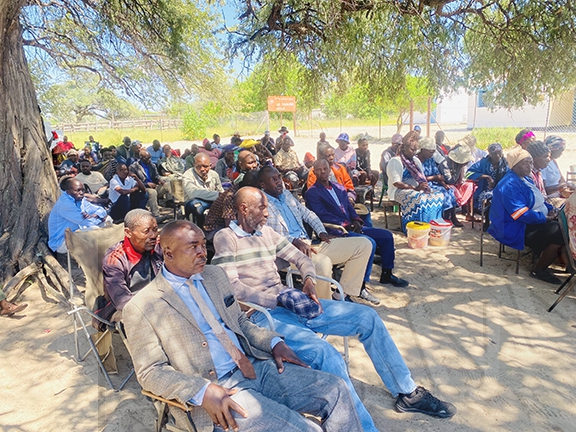
    Some residents of Habu have expressed support for the proposed Constitutional Court, hoping it will address what they describe as longstanding injustices related to land ownership.

    Their comments came during consultations conducted by Assistant Minister of Trade and Entrepreneurship, Mr Tiroeaone Ntsima recently.

    One resident, Mr Uauanaro Kandjou highlighted escalating land conflicts in the village, pointing to instances where the Land Board had allocated the same plots to multiple individuals particularly farmland.

    Mr Kandjou argued that inheritance laws contributed to such disputes as some beneficiaries claimed plots as inherited property to the benefit of certain groups. He suggested that inheritance laws be reviewed or phased out to resolve such anomalies.

    Speaking on behalf of the Basarwa community, Ms Keikanetse Letshabamang said they were relocated from their ancestral land decades ago to make way for tourism concessions. She said they were yet to receive formal allocations given that the land board had suspended allocations in Habu for 17 years.

    Mr Lasaro Reakae emphasised the need for Botswana laws to reflect the cultures and traditions of all tribes to ensure that the rights of indigenous groups such as the Basarwa were protected.

    Meanwhile, Mr Uatjia Nguvauva raised concerns about Human-Wildlife conflict, noting that current compensation laws failed to cover losses, injuries or fatalities, leaving affected families without support.

    Some residents, including Mr Eric Alin, welcomed the establishment of Constitutional Court, noting that it should hold superior powers over the President to safeguard human rights effectively.

    In response, Assistant Minister Ntsima explained that the Constitutional Court would serve as a supreme court focused on protection of human rights.

    He said matters related to land administration, tourism management, socio-economic traditions, agriculture and natural disasters must align with the Constitution because they impacted citizens’ rights.

    He added that the ConCourt would also strengthen Botswana’s integrity to make the country more attractive to international investors. He assured residents that the Constitutional Court would operate independently from the President and be led by appointed judges. 

  • Moswaane Urges Objective Thinking Over Partisan Judgement

    Moswaane Urges Objective Thinking Over Partisan Judgement

    The Assistant Minister of Local Government and Traditional Affairs, Mr Ignatius Moswaane has called on stakeholders to work in unison in the interest of the proposed Constitutional Court.

    He said overcoming partisan differences was crucial for the country to realise the objective of having a Constitutional Court.

    Mr Moswaane was addressing a kgotla meeting in Selebi Phikwe recently, where he solicited meaningful discussions around the initiative and reassured attendees that establishing the court did not mean that government would neglect pressing issues the country was facing.

    Instead, he said it was a development that sought to strengthen the country’s legal framework , including the protection of human rights. Nonetheless, residents held different opinion on the matter, some for, and others against the proposal.

    Mr Abale Ketsitile said government should consider reviewing and amending the Constitution. He also Batswana ought to have adequate knowledge about the institution, first and foremost

    Mr Ketsitile elaborated on the numerous concerns regarding the constitution that had left many Batswana feeling dissatisfied.

    Mr Batani Rauwee agreed to the establishment of the Constitutional Court on the basis that it would safeguard human rights.

    Member of Parliament for Selebi Phikwe West, Mr Reuben Kaizer said rather than investing substantial resources into a referendum aimed at establishing the court, an initiative he believed could impose further financial strain on the already struggling economy, practical measures should be implemented to address the concerns of the populace.

    He advocated for exploring alternative strategies to bridge any perceived gaps in the legal system, focusing on approaches that would ensure immediate needs of the citizens were met without exacerbating the country’s fiscal challenges.

  • Residents Eager for Concourt Establishment

    Residents Eager for Concourt Establishment

    Consultations on the establishment of Constitutional Court were met with high expectations, as Mmathethe residents expressed eagerness for the court’s immediate takeoff.

    During a meeting addressed by the Minister of Labour and Home Affairs, Major General Pius Mokgware, recently community members requested specific updates on the implementation timeline, viewing the court as a significant step toward greater transparency and government accountability.

    In her comment, Ms Cathrine Moabankwe described the court as long overdue, stressing that the community had struggled to find closure on unresolved legal issues. Similarly, Ms Gabanthate Kemoabe expressed hope that the court would resolve long-standing tribal grievances.

    She highlighted historical disputes regarding leadership, noting that her tribe had lived under the Bangwaketse rather than the Barolong and was hopeful that the court would restore their rights.

    On one hand, the potential for the court to address social grievances was also a key theme. Mr Joseph Baipili raised the plight of men forced to pay maintenance for children who were not biologically theirs. He suggested the court could offer a path to justice for fathers who discovered the truth only after years of financial support.

    Conversely, Ms Omphile Motlapele urged government not to lose sight of basic needs. While not opposing the court, she questioned the consultation process, noting that the proposal seemed to originate in Parliament before reaching the public. She emphasised that daily challenges facing citizens should remain government’s priority.

    Earlier on, the minister, Maj. Gen. Mokgware, assured residents that once established, Constitutional Court would provide a vital platform for justice.

    He noted that under current laws, Batswana faced limitations such as the inability to choose preferred burial site and that customary law was yet to be fully incorporated into the Constitution.

    “Anyone who feels their case has not been adequately addressed by the Constitution may take it to the Constitutional Court, the Minister stated, emphasising that the court would serve those seeking clarity on their fundamental rights,” he said. 

  • New Office to Combat Financial Crime

    New Office to Combat Financial Crime

    Government has established the National Coordination Office on Anti Money Laundering, Combating the Financing of Terrorism, and Proliferation Financing.

    Minister of Finance, Mr Ndaba Gaolathe said during presentation of 2026/27 budget that this comes at a defining juncture as Botswana intensified preparations for the Eastern and Southern Africa Anti-Money Laundering Group Mutual Evaluation scheduled for January 2027.

    He said the establishment of this office demonstrated government’s resolve to adopt a whole-of-government approach to financial crime risk management.

    The office serves as the central mechanism for driving national coordination, strengthening inter-agency collaboration, and ensuring that Botswana’s legal, regulatory, and institutional frameworks fully comply with Financial Action Task Force (FATF) requirements.

    Parliament also learnt that government has commenced the review of the Public Procurement Act, 2021, to align it with global best practices and strengthen transparency and accountability.

    Mr Gaolathe said the review sought to improve efficiency, reduce delays, and create a deliberate and structured pathway for previously underrepresented groups, including local manufacturers and other key sectors, to participate meaningfully in public procurement without distorting the economy.

    Other reforms, the minister said, include, the review of the Public Finance Management Act, that aims to strengthen accountability, oversight, management and control of public funds.

    The Act would ensure compliance with international best practices, including anti-money laundering and counter-terrorism financing standards.

    Mr Gaolathe said the review of the Financial Reporting Act, 2020 which commenced in October 2025 would also introduce regulatory measures to promote fair competition between multinational and local audit firms.

    The Act would futher encourage joint audits between eight multinational and local audit firms for Public Interest Entities and empower the Botswana Accountancy Oversight Authority with adequate resources to conduct regular inspections of multinational firms.

    Mr Gaolathe said the review of the Public Procurement Act, Public Finance Management Act and the Financial Reporting Act would be tabled during the 2026/2027 financial year.

    He said the reforms aimed at addressing the declining performance on the global Corruption Perceptions Index. To this end, he said, urgent steps were being taken to operationalize the independence of the Directorate on Corruption and Economic Crime.

  • Court Remands Kgoro Gang Rape Accused in Custody

    Court Remands Kgoro Gang Rape Accused in Custody

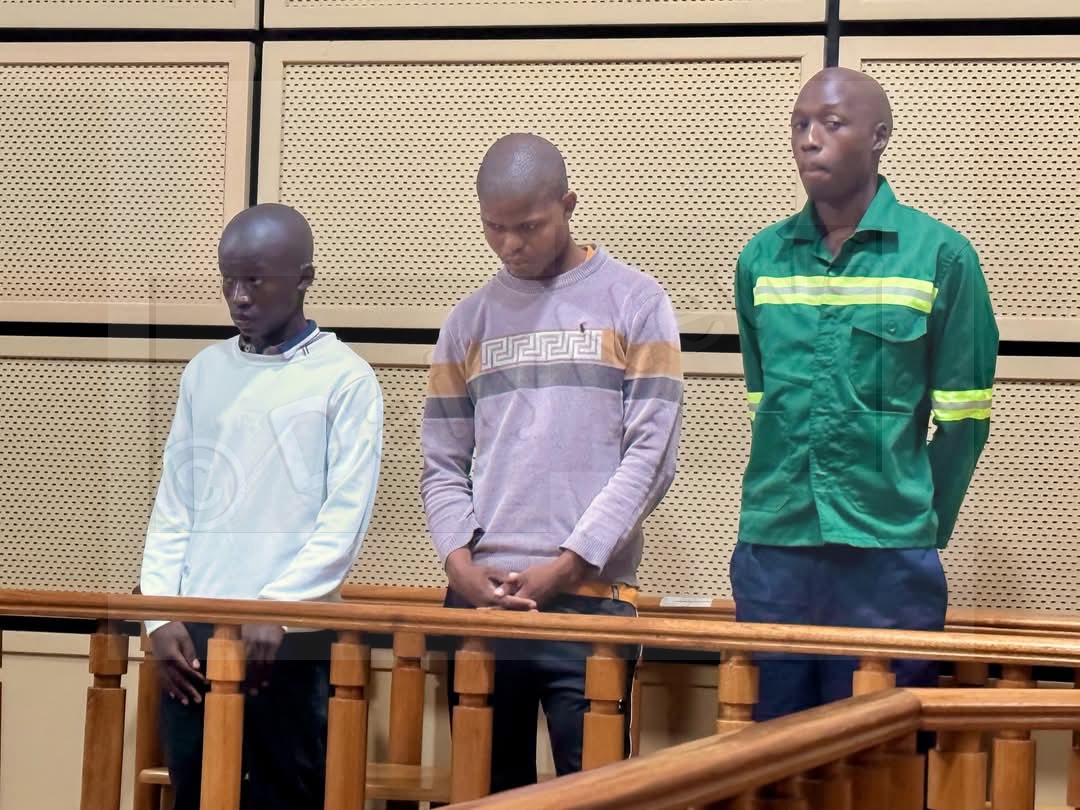
    The trio accused of gang raping a 13-year-old minor at Kgoro in Good Hope District on July 11, 2025 have been further remanded in custody.
    ‎They appeared before Lobatse Magistrates Court, senior magistrate Mr Tshoganetso Atamelang on Monday who further remanded first accused Wabile Mohlomi of Kgoro, 30, second accused Phenyo Khubitla of Good Hope, 19, and third accused 17-year-old minor of Good Hope charged with a single count of rape contrary to section 141 of the penal code of the Laws of Botswana.
    ‎Their incarceration was further extended to February 17, after Ms Vanzoline Machikiche for prosecution pleaded with the court that prosecution had completed investigations but needed to tie any loose ends on their part adding that the docket had been completed but they were left with gathering the video evidence as well as a statement from the social worker.
    ‎Regarding the accused bail application, Ms Machikiche said the prosecution shall avail the minor victim’s guardian to hear the bail application in line with compliance to the new Bail Act, section 15.
    ‎ “The prosecution intends to bring the complainant’s guardian, the docket is complete, the social worker will avail her report next week,” she said.
    ‎However, Magistrate Atamelang expressed that investigations were taking longer than expected before trial could commence.
    ‎He said the accused have been in custody and therefore did not interfere with the investigations. He thus urged prosecution to wrap up their investigation as he had given them sufficient time to do so, so that the matter could proceed to trial.
    ‎Both, Mohlomi and Khubitla pleaded with the court to grant them bail, promising that they will respect the integrity of the court process. Second accused maintained his plea with the court to release him on bail for him to be able to find an attorney, he reasoned that this was his first offense adding that he needed the services of an attorney.
    ‎Meanwhile, magistrate Atamelang reminded the accused that it was necessary to comply with the new Bail Act adding that the court needed to hear the position of the Investigating Officer and that of the complainant’s guardian regarding their bail application.
    ‎The trio will appear again in court on 17 February 2026.