Author: Daily News

  • Model Supports Nature-Based Economies

    Model Supports Nature-Based Economies

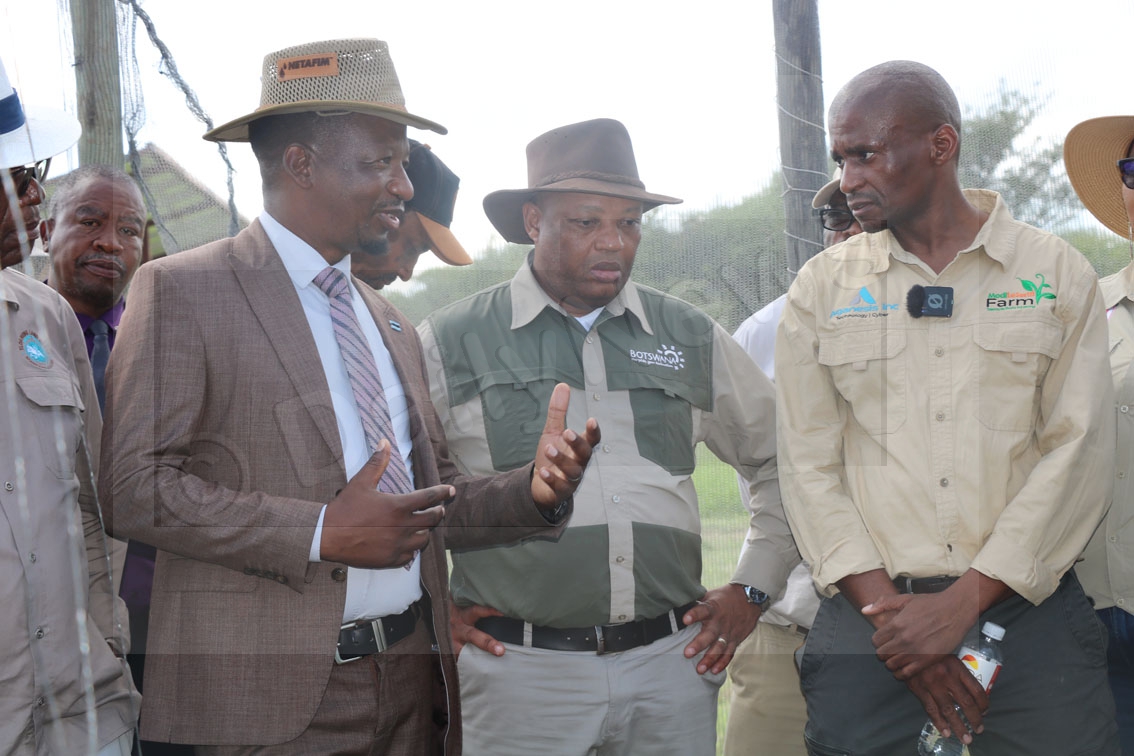
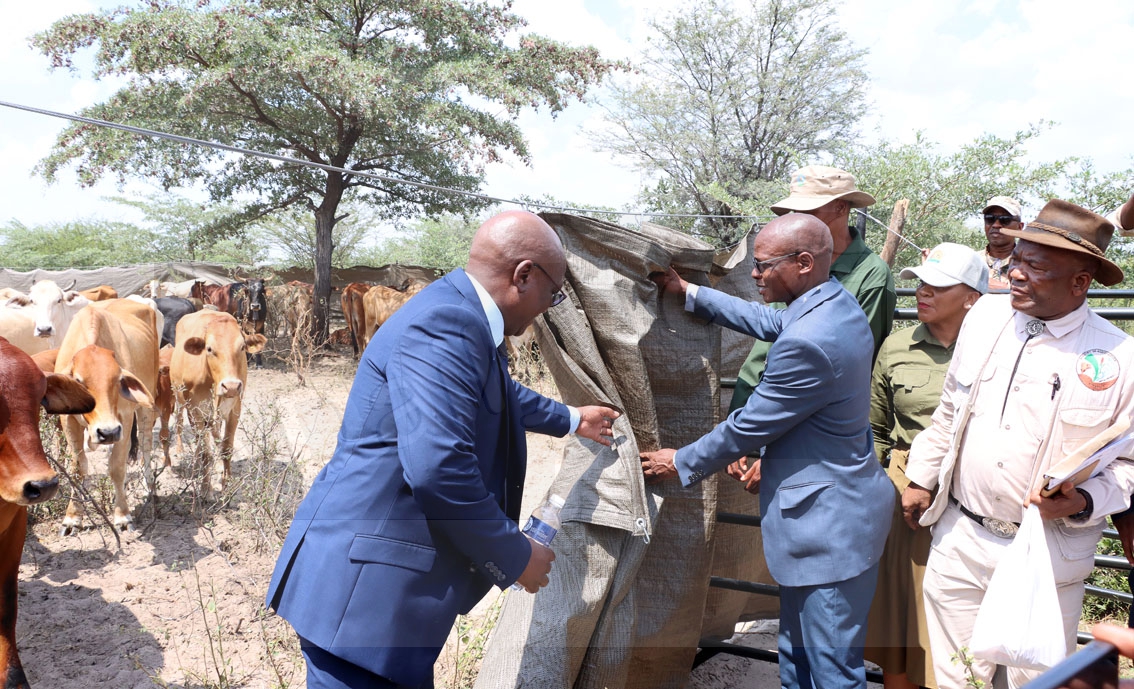
    Residents of Phuduhudu in North West District have been implored to embrace the newly launched herding for health programme and realise its full benefits. 

    Supported by Conservation International and the Green Climate Fund to the tune of P600 000, the programme directly supports household incomes through herding for health. 

    It develops enterprise plans for the beef value chain, new market opportunities and a wildlife-friendly grass fed beef brand. 

    Speaking at the programme launch in Phuduhudu recently, Conservation International (CI) senior vice president-Africa Field Division, Mr Jimmiel Mandima said communities in Botswana were facing the direct effects of climate change such as drought, bush encroachment, water scarcity and veld fires, threatening livestock and the livelihoods that depend on them.

    As such, he said the programme offered  a solution as it restored rangelands, improved livestock management and strengthened communities to cope with climate stress. 

    “It is not just a conservation programme; it is a livelihood and resilience programme and Phuduhudu will become a learning centre where other communities can see how restoration and improved livestock management can work in practice. Its success depends on your leadership, your knowledge and your commitment to restoring the land that sustains you,” he added. 

    He also emphasised that strengthening local institutions as a key feature of the programme was a sign of strong governance. 

    Furthermore, he noted that CI in partnership with the Botswana University of Agriculture and Natural Resources (BUAN) were developing a national curriculum for eco rangers, restoration workers and graduate monitors creating lifelong opportunities for young people and farmers alike. 

    “Conservation International role is to strengthen these institutions with training and tools to support climate resilient grazing and rangeland rehabilitation to ensure the programme continues long after project funding ends,”he said. 

    Vice president, Conservation International-Green Climate Fund Agency (GCF), Mr Steve Panfill said the programme brought resources from the Green Climate Fund to compliment the government’s efforts in building climate resilience of its people. 

    He said the fund was mandated to support countries to raise ambitions and realise their Nationally Determined Contributions (NDC) toward low-emissions and climate-resilient development pathways. 

    “All GCF projects must set mitigation or adaptation targets, measured as tons of reduced greenhouse gas emissions or by the number of people whose resilience to climate change has increased. The project that we launched is a special one, in that it is cross-cutting, seeking to both reduce emissions and to directly build the resilience of farmers whose livelihoods depend on healthy, drought resistant herds,” he said.

    Mr Panfill said the model that was being applied builds on the idea that if ecosystems were well cared for, they will in turn care for those who depend on them. 

    Kgosi Johane Ngwengare of Phuduhudu expressed gratitude that the programme has the potential to curb stock theft and predation, improve livestock and rangeland management, and control animal movement in the event of disease outbreaks. 

    He said the programme was also ideal since it encourages conservation efforts something which he said resonates well with his community as traditionally, they were conservationists as they managed the wilderness through sustainable hunting and gatherer lifestyle. 

    However, he called on implementers to secure more funding to support the initiatives implemented through the model to ensure sustainability. 

    “This model has the potential to improve livelihoods and address challenges faced by local farmers and I plead with you to secure more funding to ensure continuity and roll it out across the country,” said Kgosi Ngwengare. 
  • Fast-Track Completion of Paperwork -Maele

    Fast-Track Completion of Paperwork -Maele

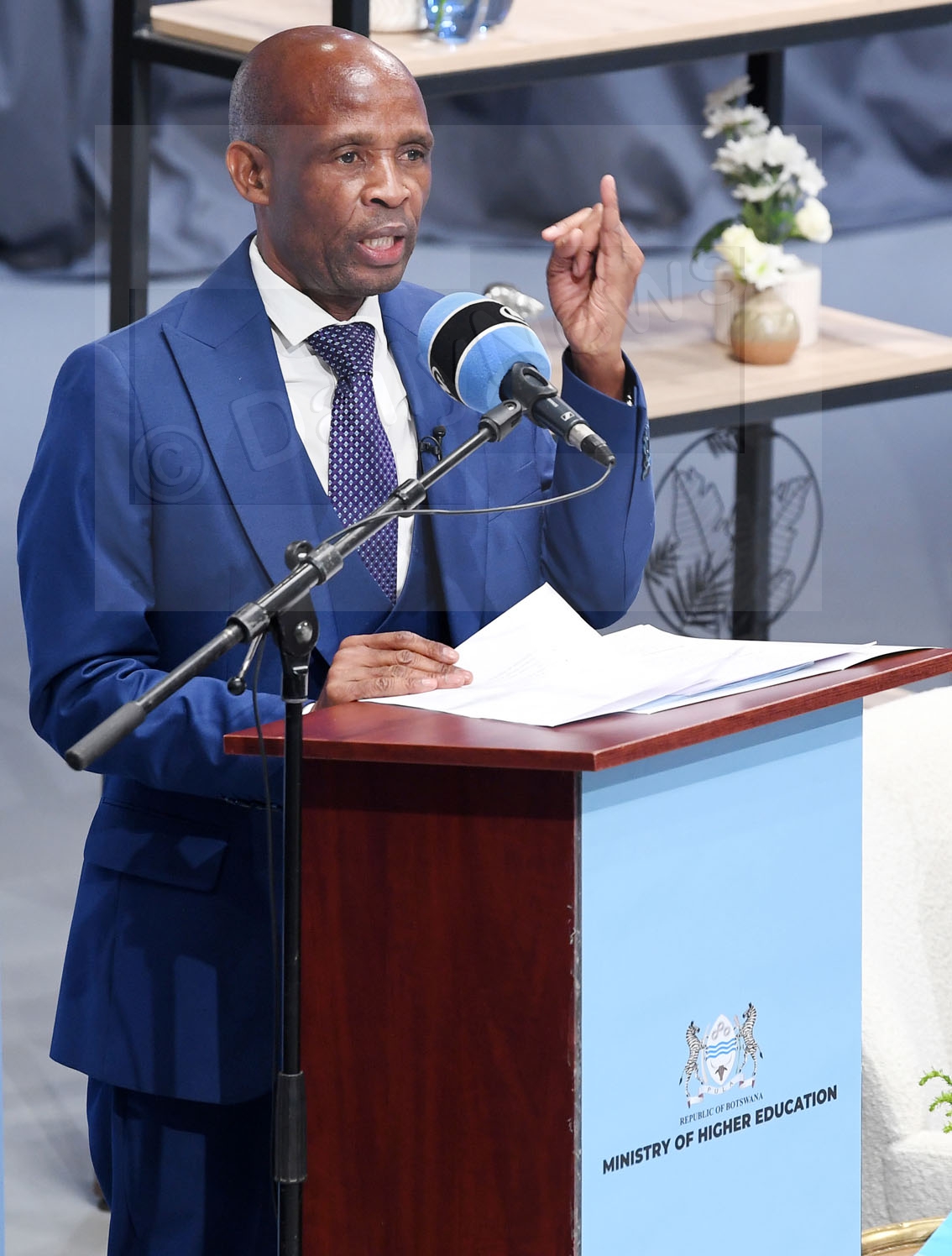
    The Minister of Higher Education, Mr Prince Maele has urged Tuli Conservation Trust to fast-track completion of paperwork needed to start infrastructural development at Bobonong Brigades’ satellite site in Molalatau. 

    The infrastructural development in question would upgrade the then satellite institution into a fully-fledged institute that intends to offer conservation, tourism and hospitality as well as auto-mechanics courses at the initial stages. 

    Tuli Conservation Trust will solely foot the bill of the whole infrastructural development which, after completion, will be handed to Ministry of Higher Education to run since the trust, by own admission, lacked the expertise in education. 

    The mooted project, whose memorandum of understating was already undergoing rigorous inspection at the ministry’s legal unit, has been stalling for over three years yet without moving explanations, according to community leaders and the trust’s  representative. 

    The trust has been knocking on the doors of the district leadership with the sole purpose of building them the institution. 

    Kgosi Joel Masilo of Bobonong, who also represents Bobirwa at Ntlo Ya Dikgosi, confirmed meetings with the Trust in the past, but to no success. 

    It was against this backdrop that Minister Maele propped the Trust, through their representative, Mr Morulaganyi Kokole, to move with  speed and ensure the project was delivered to the community. 

    The minister expressed shock that such a magnanimous gesture stalled for over three years, especially that the ministry’s only contributions would be provision of teaching and administration staff, and sponsorships to students while the whole construction costs fell squarely on the Trust. 

    Even though the project is yet to be cost, awaiting the design, which will inform the said costs, the minister said he brought the ministry’s administrative team to the site so they could make a decision on site over a project that sounded and seemed too lucrative to let go. 

    “Why should we take long to make a decision? Go and tell your principals that we are ready… Build like yesterday,” Minister Maele said.  

    However, the minister said he was only awaiting plans and costs to table before cabinet for approval.

    He was upbeat it would not take long to approve and wanted to be furnished with the costs in order to appreciate the magnitude of the project. 

    “This is an opportunity we cannot get anywhere. Initially we had this idea for Maun and if someone proposes this project for us this side and funds it, then we have to change our thinking,” Mr Maele said and added that he needed to engage with the community for their input. 

    Presenting before the minister and his entourage, Trust representative, Mr Kokole said that the business in Northern Tuli wanted to build the institution as part of their corporate social responsibility. 

    The project, he said, was meant to create an impact in the communities in their vicinity. 

    “We realised that majority of our skilled and qualified staff came from outside this area and this birthed the idea of establishing an institution that will equip and give priority, in some way, children from Bobirwa community to learn skills that can position them to get jobs in our businesses,” he said. 

    Mr Kokole said that they had already carried a feasibility study and with the green light from the ministry, upon completion of the requirements, would build an institution that would also provide accommodation facilities to learners on the 11-hectare plot. 

    Meanwhile, Minister Maele and his entourage from the ministry toured Bobonong Brigades facility in Bobonong where he said that the ministry intended on scrapping the name brigades and replacing it with vocational centre. 

    He observed that the noun brigade carried a stigma that needed to be done away with. 

    Mr Maele said that part of the ongoing transformation was paying brigades students an equal amount of living allowances to those at other higher institutions.  The said P1900 living allowance would be increased, funds permitting, until it reached the promised P2500. 

    Minister Maele said the increase in living allowance from the initial P300 to P1900 has seen a spike in applications for brigades. 

    The minister conceded that the institutions they have toured so far presented challenges since many of them presented dilapidated facilities and out of use equipment. 

    He said that that brigades should start producing graduates who could be self-employed and employ others in the process. 

    To achieve this, he said that brigades would offer entrepreneurial skills amongst other things.

  • Structural Challenges Demotivate Staff

    Structural Challenges Demotivate Staff

    An  assessment across government departments in Masunga has revealed   that systemic challenges are affecting service delivery, particularly lack of progression, severe shortage of staff accommodation and staff shortages in key departments.

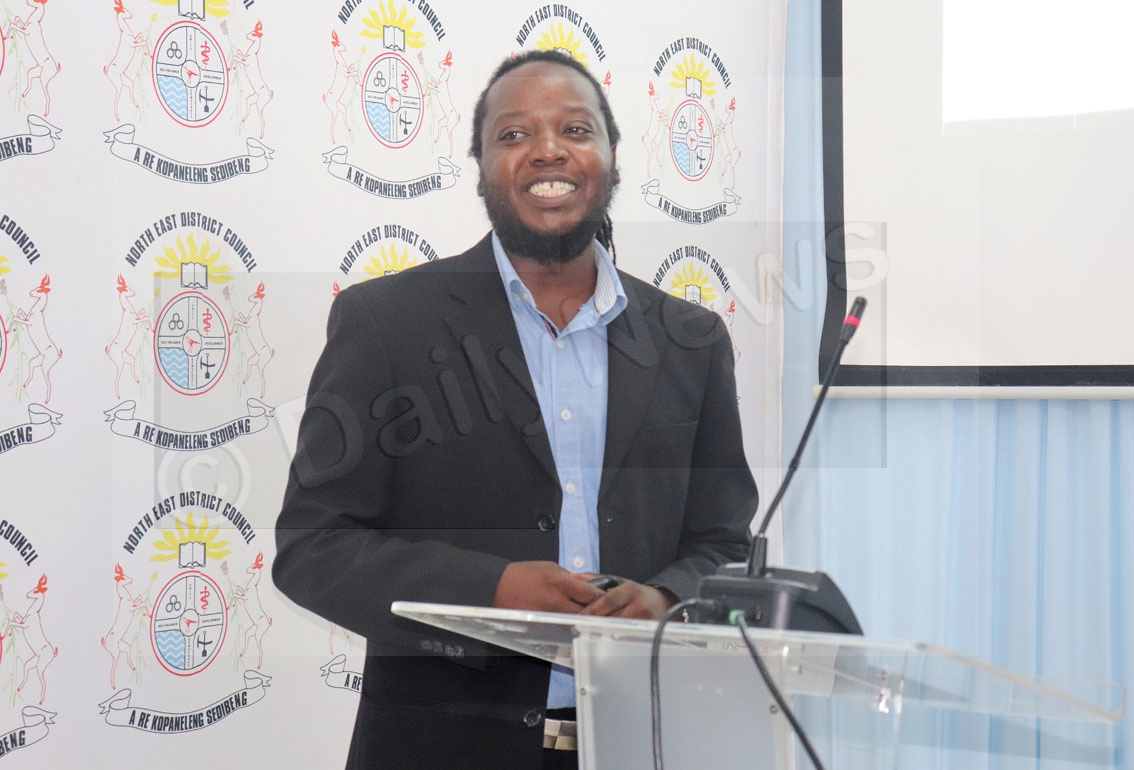
    Addressing North East District full council meeting recently, Botswana Public Employees Union (BOPEU) Raphael Sikwane regional chairperson, Mr Tambona Jopi said other challenges were non-operational or inadequate transport.

    He said dilapidated infrastructure, poor working conditions and staff overstay was another common challenge affecting service delivery across the entire district.

    Mr Jopi stated that shortage of supplies, ICT equipment, shortage of office furniture, poor drainage and poor sanitation systems were challenges that could affect employees’ mental health.

    “There are also problems like irregular implementation of regulations that includes per diem, acting appointments and overtime pay,” he said adding that these challenges were directly impacting efficiency, morale and public service delivery in the district.

    Moreover, Mr Jopi indicated that there were some critical government departments in the district that were highly impacted and specified that the Department of Wildlife and Natural Resources had four vehicles that were currently grounded, resulting in their daily operations being severely affected.

    He said the department was in dire shortage of staff as there was no administration officer, revenue officer and support staff.

    “There is no air conditioning, furniture is old, no office space, shortage of computers,” he said, noting that the situation impacted human/wildlife protection, revenue collection and that field operations were almost paralysed.

    Mr Jopi stated that at the Departments of Veterinary Services, and that of Crops and Animal Production, there were 67 employees, and six vacant posts, adding that the fleet had three vehicles which were not operational.

    He said there was no revenue collector and that revenue collection work was being performed by veterinary officers.

    Further, he said there was also severe office congestion as officers were sharing offices.

    The impact has resulted in compromised agricultural support services to farmers affecting food security and rural livelihood development in the district, he said.

    “At Masunga Senior Secondary School, 72 houses are fully occupied while 70 staff members are on the waiting list. There are 21 vacant posts, and there is severe shortage of infrastructure like classrooms, boarding facilities, offices, office equipment and 1 of 2 vehicles is defective,” said Mr Jopi.

    He noted that the challenges were undermining staff welfare and compromised the quality of education and pupil welfare.

    On other issues, Mr Jopi said there were no fire services at the district council and no Emergency Medical Services at Masunga Primary Hospital.

    He said this exposed the district to serious risks in cases of fire outbreaks, and increased risks to human life in the event of medical emergencies.

    Mr Jopi also said delayed response to fires, accidents and medical emergencies left communities vulnerable and unprotected.

    For their part, councillors wanted to know whether the union had measures in place to protect its members from becoming financially embarrassed, especially since it also disbursed money to members through loans.

    They also asked if BOPEU would consider selling shares to its members so that they could benefit from their membership through dividends.

    Kgosi Maruje III cautioned trade unions against what he termed animosity amongst them, calling for them to build and promote a sense of trust.

  • Barutabana ba Borwa ba Ipelela Phenyo

    Barutabana ba Borwa ba Ipelela Phenyo

    Barutabana ba sekole se segolwane sa Borwa Junior Secondary mo Kgatleng, ba akgoletswe go bereka ka natla, go bo sekole sa bone se dikile se dirile sentle thata mo ma duong a Junior Secondary ka ngwaga wa 2025.

    Mo moletlong wa go lemoga tiro ya barutabana wa dietsele, dijo le dino, mogokgo wa sekole Mme Thatayotlhe Motswagothata o boletse fa go feta seelo sa kgaolo sa 40 per cent se ba neng ba se beetswe, ele maduo a go dira ka natla le go itlhora boroko ga barutabana.

    Mme Motswagothata a re moletlo wa go lemoga barutabana o botlhokwa thata mo dinakong tsa gompieno tse go tsholediwa maemo ma ditirong go seng bonolo.

    A re ele barutabana ba Borwa ba bone gore ba iteboge gore ba tswelele ba tokafatsa maduo a tsweletseng ka go wela tlase lefatshe ka bophara.

    “Ke tsaya nako e go le leboga ka jaana ga go na se ke ka le se direlang, mme gore re bo re kgobokane fa go itumela, ke yone tebogo e kgolo e ke ka e kgonang, A re tsweleleng go bopa bana mmogo,” ga buwa jalo mme Mootswagothata.

    Moeteledipele wa dikole tsa Dawn Bell Academy, Mme Ndiko Muzila ene o rotloeditse barutabana gore ba seka ba tsenwa  ke boitlhobogo, ka fa tlase ga diemo tse di bokete tsa itsholelo, le gore ba eteletse Modimo mo go tsotlhe.

    Mme Muzila o boletse fa go ruta bana ba ba tswang kwa malwapeng a farologaneng go se bonolo, mme a lebogela popagano ya barutabana le go dira ka natla.

    O ne a abela sekole mpho ya P10 000 gore ba ithuse mo go tse di tlhokwang, a ba a solofetsa fa atla nna a ba tela go iponela le go lemoga dikgwetlho tse ba di ralalang,

    Kgosi ya Bokaa, Kgosi Sue ene o boletse fa ele sekao sa dialogane sa sekole sa Borwa, mme a bolela fa sekole se se tsweletse ka go iteka go dira bontle.

    Le ene o ne a opela barutabana legosi a re ba tswelele ba dira ka natla. Sekole sa Borwa se dikile se fetile seelo sa 40 per cent (pass rate) mo matshwaong a A, B, le C a baithuti ele selo se se neng se beetswe kgaolo ya thuto ya Kgatleng.

  • U-14 National Tennis Team in Egypt

    U-14 National Tennis Team in Egypt

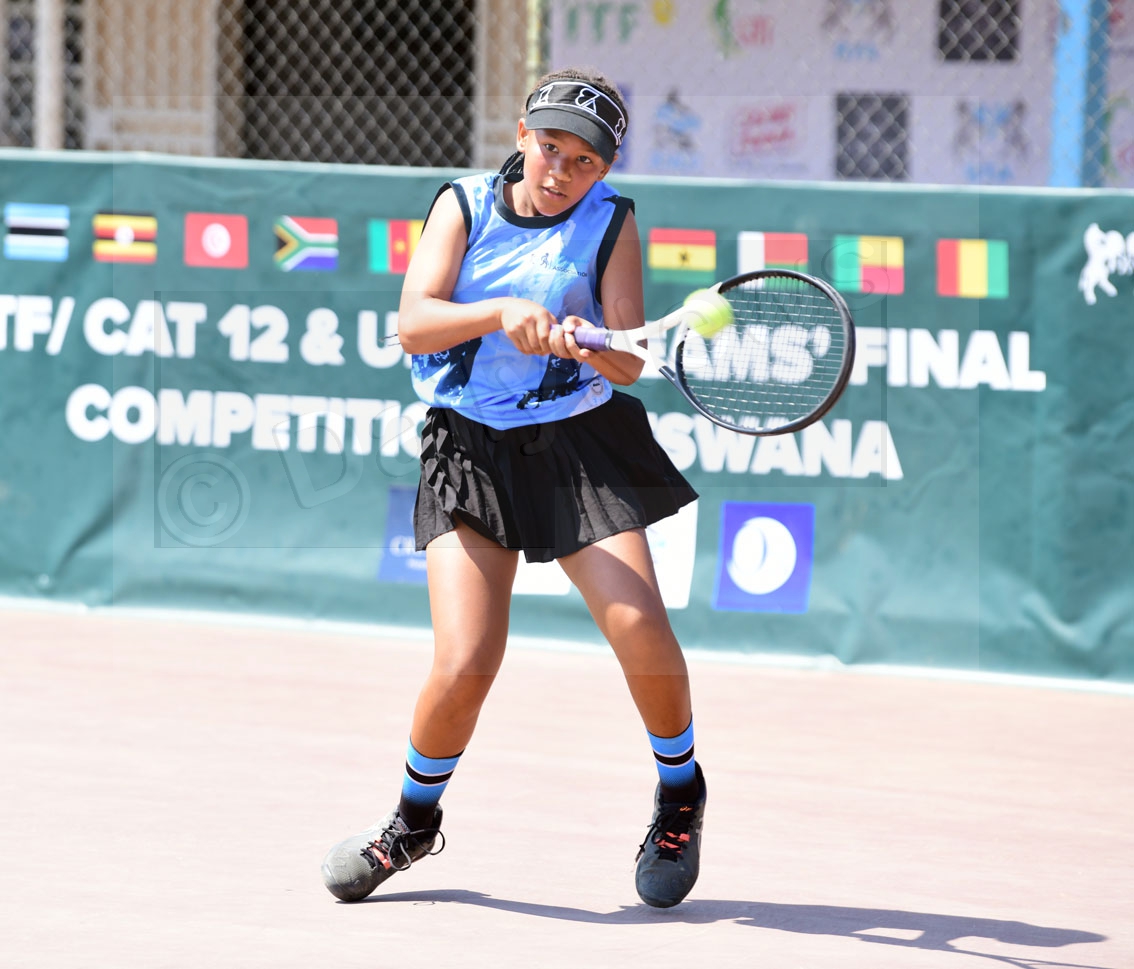
    Botswana U-14 tennis national team is in Egypt for the ITF/CAT African Junior Championships on Clay Court (AJCCC)scheduled for April 6 to 11.

    The continental event is one of the important competitions on the junior tennis calendar. It brings together top young players from across Africa to battle for ranking points and continental honours.

    Ahead of the main event, the team is participating in a warm up tournament, which kicked off yesterday and will run until Saturday.

    Botswana Tennis Association (BTA) vice president, Nonofo Othusitse said the preparatory competition was expected to offer players practice on clay courts.

    He said BTA was confident that the early exposure would enhance the players’ readiness and sharpen their competitive edge. Othusitse further said BTA had sent a solid team, confident enough to fully compete with their peers.

    The national squad consist of Tinashe Phatshwane, Malak Macheng, Camilla Seetso and Angel Chakanyuka.

    Othusitse said the players had been training intensively in recent weeks, focusing on physical conditioning, technical drills, and tactical play suited for clay court tennis.

    “The players have been part of the core national team for some time now and this makes us believe that the group has the potential to deliver strong performances and represent the country with pride,” he said.

    Following the Egypt championships, Tinashe will head straight to the African Regional Training Centre (ARTC) in Tunisia, where he will be based following awarding of a scholarship by the ITF to study and play tennis.

    He joins Malak at the same centre, who left early this year. The African Regional Training Centre is well known for producing top tennis players.

  • BNOC Targets Seven Medals

    BNOC Targets Seven Medals

    Botswana National Olympic Committee (BNOC) is targeting seven medal at the coming Glasgow 2026 Commonwealth Games. 

    The games will be held from July 23 to August 2 and Team Botswana will compete Athletics, Boxing Judo, Lawn Bowling, Weightlifting, and Swimming. The targeted seven medals comprises two Gold, two Silver and three Bronze.

    Botswana has also assembled a youth team that will represent the country at the Dakar 2026 Youth Olympic Games slated for October 31 to November 13. The team will compete in Athletics, Boxing, Judo, and Swimming.

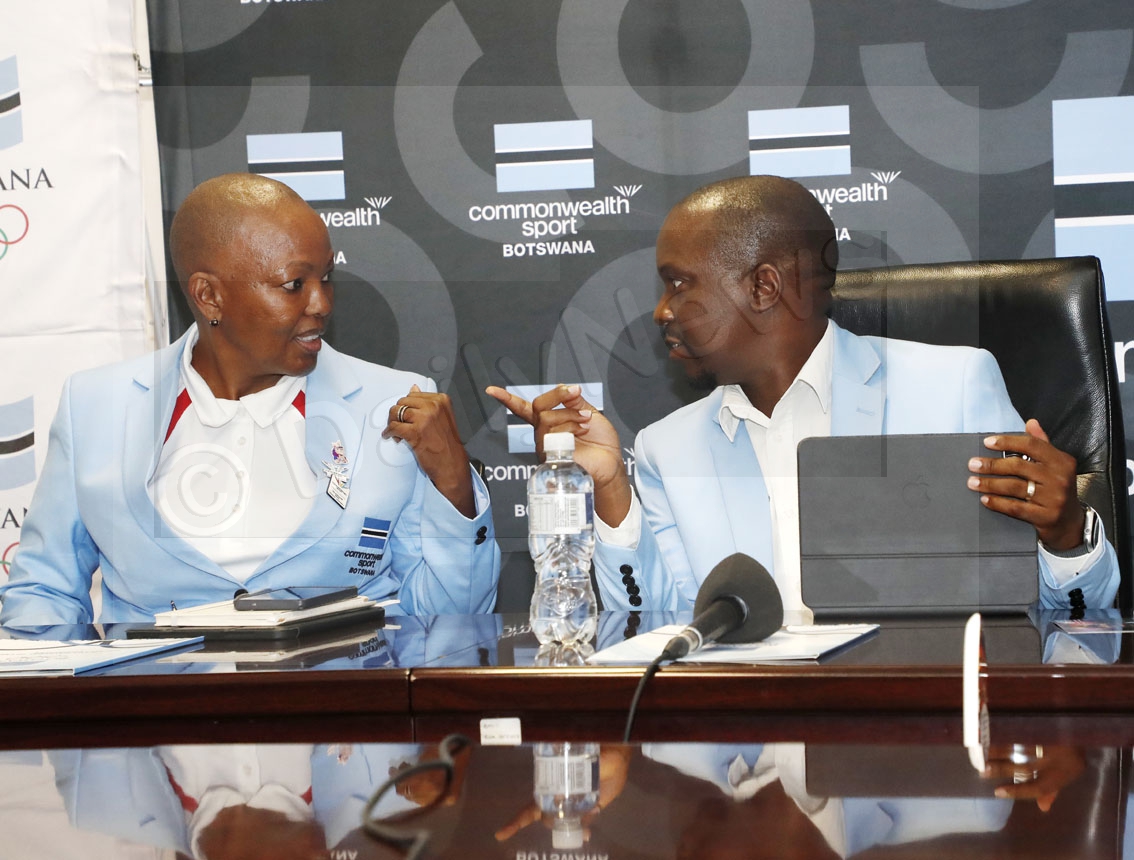
    Addressing a press conference, BNOC president, Tshepo Sitale said the Commonwealth Games bound team would be led by Tebogo Ntesang, while Master Luza would lead the Youth Olympics as Chef De Mission

    Sitale said the two were chosen on merit, following a rigorous interview process.

    BNOC chief executive officer, Dorothy Tlagae-Gaseitsiwe said the BNOC had submitted a proposed budget of over P16.5 million to Ministry of Sport and Arts toward preparations and participation in the Dakar 2026 Youth Olympic Games.

    She said the committee had so far received over P2.6 million.

    “Follow-ups have been made, and the BNOC is currently awaiting feedback from the Ministry. The commonwealth sports also contributed supported preparations with a grant of P751, 000 which was used in the preparations,” she said.

    Tlagae-Gaseitsiwe said part of the grant would go toward funding the Weightlifting team for their qualification events in Samoa on April 25 and Egypt on May 10 to 17.

    She added that the plan was to organise training camp during the school holidays. Tlagae-Gaseitsiwe said the grant would also cater for athletes who would be participating at the Sepeng Invitational Challenge on April 5 to 8, and local training camp form June 22 to July 03.

    Tlagae-Gaseitsiwe said the Debswana World Athletics Relays Gaborone 26 would also act as an important preparation event for the games.

    Additionally, she said boxing was also assisted in preparing to participate at the U19 World Fixtures Cup in Bangkok, Thailand.

    She added that Judo team recently participated in the Dakar African Open Judo Championships, while Bowling would have local training camps as well as being part of the Nest Training Clinic Indoor green in Pretoria, South Africa.

  • National Championships Attracts Elite Athletes

    National Championships Attracts Elite Athletes

    Batswana will have a rare opportunity to watch the country’s elite track athletes compete at the Botswana Athletics National Championship billed for the National Stadium on April 3 to 5.

    The national championship will be used to select a final team that will represent the country at the coming Debswana World Athletics Relays 26.

    So far, the 4×400 men’s relays team comprising Letsile Tebogo, Lee Eppie, Bayapo Ndori, Collen Kebinatshipi, and Justice Oratile has confirmed participation.

    Other athletes to watch are 800 meters runners Ketlhobogile Haingura, Tshepiso Masalela and Kemorena Tisang.

    Botswana Athletics Association acting president, Oabona Theetso was impressed that elite athletes would compete at the national championship.

    He said it was unfortunate that in the past, most of the national championships clashed with other athletics events in Europe.

    Theetso also said this year’s nationals followed a series of athletics events that were hosted by different clubs such as Jwaneng Athletics Association and Twin Towers.

    He said the events were used as championship qualifiers, adding that each event at the championships would only admit top 24 athletes. “What I can assure Batswana is that the Nationals are capable of producing good times,” he said.

    Theetso said it was important for Batswana to come and support their own, adding that from the ladies category, they were expecting the likes of Same Mohutsiwa, Naledi Monthe and Nancy Buzwane to give spectators value for their money.

    Tickets were sold at P50 grand stand, P30 elsewhere and free entry for children under 15 and were to sit at elsewhere stands.

  • Botswana Signs SADC Development Agreement

    Botswana Signs SADC Development Agreement

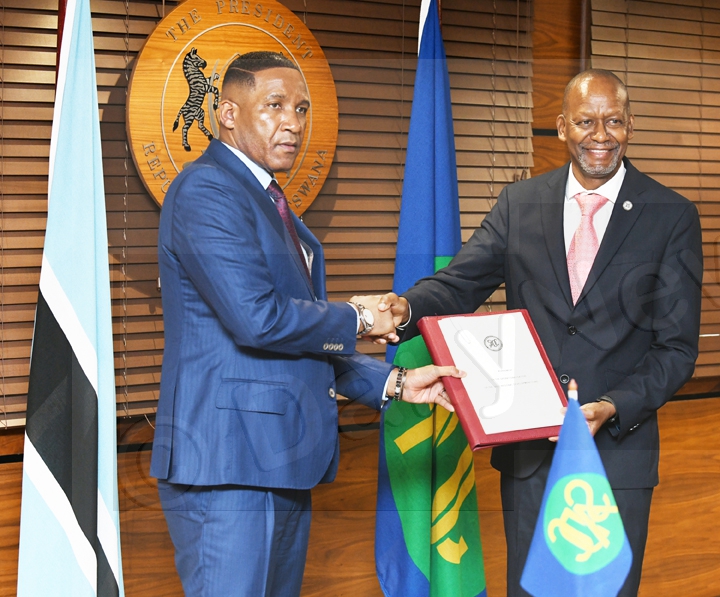
    Botswana has signed the Agreement on the Operationalisation of the SADC Regional Development Fund (RDF) and the Agreement Amending the SADC Protocol on Finance and Investment.

    The RDF is a special fund aimed at supporting economic development and sustainable growth in SADC, and consists of contributions from member states and receipts from regional and non-regional sources.

    Speaking during the signing ceremony at the Office of the President yesterday, President Advocate Duma Boko said Botswana’s commitment to the protocol would help close off micro networks that facilitated money laundering and intensified efforts to fight corruption.

    He urged other member states to sign the protocol as that symbolised commitment.

    The agreement on the operationalisation of the RDF was signed in 2016 and President Boko expressed concern in the delay, noting that governments needed to commit quickly to such obligations.

    He stressed the effectiveness of the implementation of SADC financial framework, saying it was critical for advancing regional infrastructure development.

    Improved infrastructure, President Boko said was essential to enhance connectivity across the region and support broader continental integration including those aligned to the Africa Continental Free Trade Area, President Boko said.

    SADC executive secretary, Mr Elias Magosi said Botswana’s commitment to signing of the agreement, reflected the country’s unwavering commitment to strengthening regional mechanisms that drove development financing, economic integration and financial stability.

     He said Botswana was among the few countries that took a bold and decisive step to implement one of the aspirations of the SADC Treaty that established the RDF.

    The RDF, Mr Magosi said had the potential to enhance the region’s stability to mobilise resources for infrastructure, industrialisation and socio-economic transformation, and hence the 2025 SADC Summit urged member states to accelerate national roadmaps and complete signature and ratification processes.

    Furthermore, Mr Magosi said the secretariat had advanced preparations for full operationalisation of the Fund in partnership with African Development Bank (AfDB), with three key components of Proof-of-Concept operationalisation of the Fund; Institutional strengthening, policy dialogue and project management.

    “This initiative will support member states in operationalising the RDF and developing a pipeline of bankable regional infrastructure projects. It will also enhance SADC’s institutional capacity to facilitate policy dialogue and foster consensus,” said Mr Magosi.

    The next phase will involve establishing robust governance structures, policies, and procedures, while mobilising seed capital from member states, donors, Multilateral Development Banks, and Development Finance Institutions.

    In addition, Mr Magosi said positive progress had been made in implementing various provisions of the Agreement Amending the SADC Protocol on Finance and Investment (FIP). The Protocol, Mr Magosi said sought to harmonise financial and investment policies across member states, ensuring alignment with SADC objectives and preventing destabilising policy divergence.

    To advance regional integration and accelerate investment flows requires harmonised financial and investment policies therefore, creating predictable and enabling environment, the region can attract investors and fully realise the objective of the SADC Protocol on Finance and Investment.

  • Parliament Reaffirms Commitment to Regional Cooperation

    Parliament Reaffirms Commitment to Regional Cooperation

    The National Assembly has reaffirmed Botswana’s commitment to regional cooperation, democratic accountability, and social development as it deepens its engagement with the Southern African Development Community Parliamentary Forum (SADC PF).

    Deputy Speaker of the National Assembly, Ms Helen Manyeneng, stated this during a courtesy call by the SADC PF Standing Committee on Human and Social Development and Special Programmes (HSDSP) in Gaborone on Friday.

    “Botswana remains an active participant in the forum’s work, influencing regional policy and strengthening parliamentary diplomacy,” Ms Manyeneng said.

    The country has been actively involved in SADC PF activities, contributing to policy harmonisation and fostering dialogue among legislatures.

    Ms Manyeneng highlighted key initiatives, including a Memorandum of Understanding signed in January to implement a Sexual and Reproductive Health and Rights (SRHR) and HIV Governance Project.

    Parliament’s committee system plays a crucial role in oversight, scrutinising government ministries and addressing issues such as health, agriculture, and education.

    Botswana is also a member of regional and international parliamentary bodies, including the Inter-Parliamentary Union and the Commonwealth Parliamentary Association.

    The country’s parliamentary committees align with SADC PF structures, focusing on areas like health, HIV, local government and social welfare.

    In terms of domestic developments, Ms Manyeneng said the inauguration of the 13th Parliament in November 2024 marked a significant milestone in Botswana’s democratic journey, following a historic political transition after nearly six decades. 

    The new Parliament, she said was focused on building a strong, independent institution that sat at the centre of democratic governance and national development. 

    “Our vision is to transform the National Assembly into a high-performing institution anchored on effective oversight, robust lawmaking and responsiveness to the needs and aspirations of our people,” she added. 

    She also outlined an ambitious reform agenda aimed at strengthening the capacity of Members of Parliament (MPs) and staff, improving institutional systems and enhancing accountability mechanisms. 

    Key priorities, she said included; diversifying funding sources, strengthening monitoring and evaluation frameworks, expanding public access and awareness of parliamentary work, promoting inclusion of women, youth and persons with disabilities as well as preserving parliament’s institutional heritage. 

    In addition, Ms Manyeneng called for deeper collaboration between Botswana and regional counterparts, particularly through the SADC PF’s Human and Social Development structures. 

    She said areas of cooperation could include joint training programmes on governance and oversight, policy exchanges in education, health and social protection, coordinated initiatives targeting youth and vulnerable groups and strengthened research and data support to promote evidence-based lawmaking. 

    “These partnerships are critical to strengthening oversight, improving the quality of legislation and ensuring that our programmes deliver measurable impact for our citizens,” she stressed. 

    The courtesy call formed part of a broader programme of engagements by the SADC PF Statutory Committee on Human and Social Development and Special Programmes, while in Gaborone. 

    The committee later convened its meeting of the Standing Committee on HSDSP on Friday. 

    It  was then followed by public hearings meant to provide an opportunity for stakeholders to contribute to regional discussions on health, social development and related programmes. 

    Ms Manyeneng assured members that Botswana looked forward to continued collaboration with regional partners and to hosting parliamentarians from across the SADC region in future engagements aimed at advancing shared development goals. 

    For his remarks, the SADC PF Standing Committee on HSDSP chairperson, Mr Mope Khati expressed gratitude for the warm hospitality they had received since arriving in Botswana. 

    Botswana, he said provided an ideal setting for hosting the three-day event, acknowledging the leadership and political support the country provided to the forum’s regional agenda. 

    Led by the SADC PF secretary general, Ms Boemo Sekgoma, Mr Khati added that the delegation had brought together MPs from 15 SADC nations to share experiences, from different countries, and address regional topics, including education, employment and human capital resilience.

  • Minister Notes Progress in Horticultural Production

    Minister Notes Progress in Horticultural Production

    Government has taken a deliberate decision through targeted import restrictions, investment in irrigation and strengthened extension services to create an enabling environment for local farmers to grow and compete.

    Assistant Minister of Trade and Entrepreneurship, Mr Baratiwa Mathoothe made this assertion during the Tlokweng Horticultural Farmers Association field day at Modi le Seriti farm near Tlokweng on Thursday.

    Mr Mathoothe said government’s interventions were bearing fruit as horticultural production from April 2025 to January 2026 had reached approximately 140 881 tonnes including 114 080 tonnes of vegetables, surpassing national demand by 1.8 per cent.

    “Fruit production stands at 26 800 tonnes, representing about 67 per cent of national demand. Total planted area now exceeds 5 192 hectares. This progress clearly demonstrates that Botswana is moving in the right direction,” he said.

    Minister Mathoothe said however, that work was not complete as Botswana remained a net importer of horticultural produce due to seasonal gaps, climate variability, water scarcity, high input costs and limited storage and processing infrastructure.

    He said these were structural challenges that required both policy direction and practical solutions.

    Mr Mathoothe said with 24 horticultural projects mostly small holder farmers operating on just one to three hectares, Tlokweng District was producing approximately 800 metric tonnes annually.

    He said it was indeed a strong message that small scale farmers, when organised and supported, could make a significant contribution to the national production.

    Mr Mathoothe said he was impressed by the adoption of the drip irrigation systems as the technology was essential in a water scarce area and key to improving yields while conserving water.

    “The diversity of crops produced, ranging from citrus, mangoes and avocado to cabbage, tomatoes, onions and leafy vegetables demonstrates both resilience and market potential. However, increasing production alone was not enough, we must now shift our focus towards productivity, quality and affordability,” said Mr Mathoothe.

    He highlighted that one of the biggest challenges farmers faced was access to markets and urged them to strengthen the value chain.

    The farmers’ association chairperson Mr Kutlwano Mpudi said their collaboration with South Africa-based agro experts company NETAFIM was a special partnership as the latter were global giants in horticultural production.

    He said they had engaged the company as technical partners as they had assisted in the technical aspect of their business.

    Mr Mpudi said horticultural farmers were faced with challenges among them lack of proper access to markets, which was reversing their gains.

    He said however there was light at the end of the tunnel as they had been in talks with some of those they supplied and they were waiting to sign some agreements.

    Acting District Agriculture Coordinator Mr Orman Roy noted that the engagement of the technical experts was to expedite quality production and shift focus to exports.

    He said some challenges which included climate change called for the deployment of technological practices. He said NETAFIM was engaged in order to impart knowledge to local farmers on the soil-plant relations for best quality production.

    Mr Roy said the supply chain sector was also part of the day’s events in order to advice on market shares. 

    He said horticulture was a high risk endeavour that required perfect standards to avoid losses in the line of business. He said they were working on a plan to send farmers to South Africa on a benchmarking exercise to appreciate how large-scale farmers went about with their production.

    NETAFIM representative, Mr Martin Bahnemann urged farmers to maintain consistency in quality and quantity from their produce. He said water was a vital component in horticulture and urged the farmers to develop reliable irrigation systems for better production.