Botswana Beach Volleyball Team made the nation proud after winning gold at the CAVB Zone 6 Beach Volleyball 2nd Series held in Mozambique last weekThe gold medal was won by Sekao Jack and George Chiswaniso after beating the host Mozambique 2-0 in the final.The junior team Trevor Mandua and Baleofi Mosiiwa, also displayed a good performance only to be knocked out by Mozambique 2-0 in the quarterfinals.Botswana Volleyball, vice president beach volleyball Pogiso Osupile said they were happy with the players’ performance, given that they were preparing for LA 28 Olympics, Nordic Beach Volleyball Competition to be hosted in Angola from April 5 to 13 and Africa Games Qualifiers.“The junior team was knocked out in the quarterfinals by the senior team, that was beaten by Jack and George in the finals, that alone shows that we have depth,” he said.
Author: Daily News
-
Hamilton Movie to Celebrate Democracy
As the United States of America celebrates its 250th independence anniversary this year, the US embassy in Gaborone will mark this historic milestone with events that showcase America’s journey, its enduring values, and the remarkable individuals who shaped the country’s destiny.
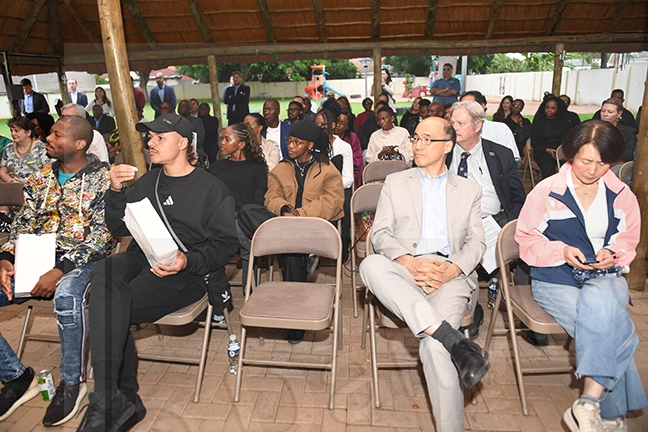
To kick-start those activities, the embassy screened Hamilton movie to invited guests on Thursday. Hamilton, is a blend of hip-hop, jazz and RnB with Broadway musical theatre style by Lin-Manuel with focus to Alexander Hamilton, one of America’s extraordinary leaders, and it also introduces the audience to other leaders such as George Washington, Aaron Burr, the Marquis de Lafayette and James Madison.
Hamilton is a blending history with artistry, capturing the spirit of ambition, resilience, and hope that defined the founding era. The film centres around one of America’s extraordinary leaders, Alexander Hamilton who was a driving force behind the creation of America’s Constitution and financial system as a lawyer and Secretary of the Treasury and also considered a war hero and brilliant thinker.
The movie covers a wide span of American history, from the Revolution to the first administrations of the new government. It highlights important moments and the role of Alexander Hamilton, who believed in strong government led by capable elites and that government should use its power to develop the economy and maintain order. In the film, his economic plan shows how he supported an urban America with developed manufacturing.
An immigrant to the US, born in British West Indies, Hamilton opposed slavery as shown in the film, and the production shows that later in his career he supported anti-immigration policies.
“Immigration played a significant role in building the colonial population, mostly from Western Europe, and it was only just before the Revolution that people began to identify as Americans rather than by their birth nations,” said US Deputy Public Affairs officer Megan Boccardi about the movie.
The US Deputy Chief of Mission Christopher Gunning appealed for reflection on the enduring principles of liberty, self-governance and unity as well as the sacrifices made, then and now, to advance those principles as America celebrates Freedom 250.
The two-hour original Broadway musical production is available for streaming on YouTube and Disney. It has won multiple awards including a Grammy, Pulitzer Prize for Drama as well as an unprecedented special citation from Kennedy Centre Honors.
-
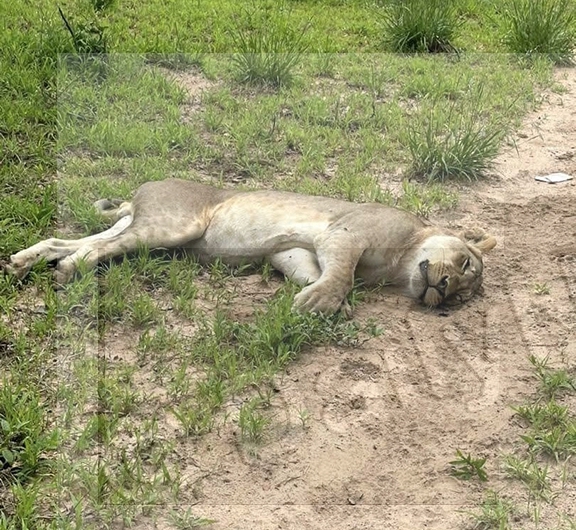
Hunting Quota to Address Human-lion Conflict
Government has introduced an experimental spatial lion hunting quota as part of efforts to address the growing human-lion conflict in Botswana.
The experimental hunting quota, which allocates nine lions across the country, forms part of broader efforts to balance biodiversity conservation with the livelihoods of communities living alongside wildlife. The initiative is also expected to generate resources that would support conflict mitigation initiatives in affected areas.
This came to light during the Lion Conservation Strategy and Action Plan (2026–2036) workshop in Maun, where the Department of Wildlife and National Parks, principal wildlife officer, Mr Kenosi Nkape, said increasing incidents of livestock predation had resulted in retaliatory killings of lions, particularly in areas where farmers suffered repeated losses.
Lions remain among the predators responsible for a significant proportion of human-wildlife conflict incidents in Botswana, posing challenges for communities whose livelihoods depend on livestock farming.
Botswana University of Agriculture and Natural Resources conservation biologist, Mr Gosiame Mahupeleng, said human-lion conflict continued to pose a major conservation challenge and called for more research to identify practical coexistence strategies.
“Understanding the drivers of conflict would assist in developing effective mitigation measures and improving long-term conservation planning,” he said.
Conservation of Natural Ecosystems Trust conservation director, Dr Robynne Kotze, highlighted that Botswana’s lion population had declined from about 3,500 in 2015 to approximately 2,800, noting that monitoring wildlife populations across the country remained difficult due to limited research resources and the vastness of the landscape.
He recommended increased capacity building for research students and conservation practitioners to strengthen scientific monitoring and support strategic wildlife management.
Representing farmers, Hainaveld farmers associate, Mr Kealeboga, Tudor welcomed the introduction of the experimental hunting quota, saying farmers in wildlife areas continued to incur significant livestock losses while retaliatory killings of lions also threatened the ecosystem.
“Our proposal is that funds generated from the quota could assist in erecting border fences between Ngamiland, Central and Ghanzi districts to regulate animal movement and reduce the spread of diseases and potential killings,” he said.
He added that the funds could also be used to support farmer education workshops aimed at promoting improved livestock protection methods and coexistence with wildlife.
Xwiskurusa Trust chairperson, Mr Onosi Dithapo, emphasised the importance of collaboration between government and communities in addressing human-wildlife conflict.
He noted that low compensation for livestock losses often left farmers frustrated and sometimes forced them to resort to killing lions to avoid further losses.
“The estimated P300,000 – P500,000 revenue from the lion hunting quota will help communities to strengthen or erect strong kraals inaccessible to lions and other predators hence reducing conflict,” he said.
Meanwhile, in Kgalagadi District, approximately 200 lions were killed over a two-year period while lions claimed 289 livestock, highlighting the escalating human-wildlife conflict that threatens the ecosystem.
-
Remain Steadfast in Faith – First Lady
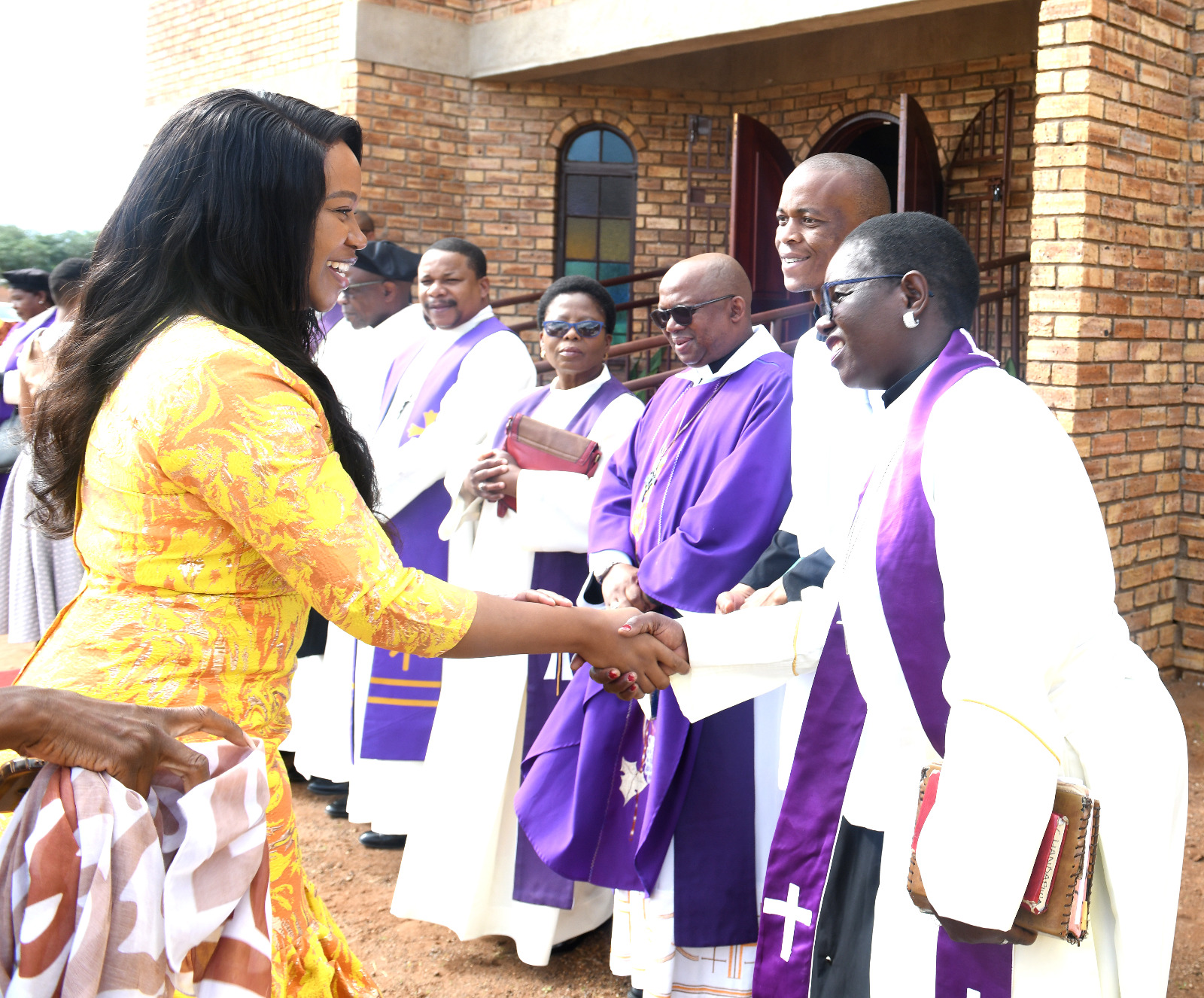
First Lady Kaone Boko has emphasised the importance of the true gospel and having faith in God.Ms Boko was speaking at the Evangelical Lutheran Church of Botswana (ELCB) 10th homecoming church service anniversary in Ramotswa on Sunday. She told the congregants to remain steadfast in faith and hope as the church was the only place that offered such in turbulent times.Ms Boko assured the gathering that she had seen the true might of God’s will and power after navigating the muddy waters in her own life, urging the church members to trust in God who would not forsake them.“We serve a living God and the faith I have in our living God is in abundance. You should embrace that faith and that faith could move mountains,” she said.Ms Boko said the nation should embrace the hardships of the Biblical Job who trusted in God against all odds. She said God made her in the image of Job whose story in the Bible was a profound exploration of suffering and faith.“Our faith will heal us and even do the things you cannot even imagine. As a human being I want our people to remember me as a believer in God’s will. Let us learn to call to God all the good and the bad times,” she added.She said people should not lose hope as God would give them the desires of their hearts. One of the church elders, Mr Victor Tlhaselo said the church was humbled by the presence of the First Lady.He said homecoming was conceptualised in an effort to revive the church as it was disenfranchised, therefore it was important to come together in prayer.He said prayer was a powerful tool as the nation navigated trying and tough times.The ELCB 10th homecoming church service anniversary was held under the theme: The Power of Faith: Transforming Uncertainty into Certainty.
-

Women Football Gains Recognition
Women football in Botswana has over the years grown from humble beginnings into a vibrant and competitive ecosystem.
What started as a small movement driven by passion and love for the game has now developed into a structured and respected competition through the BH National Women’s League.
The league has become the foundation upon which the Botswana Football Association (BFA) is building the future of women’s football in the country. Many players who wear the colours of their clubs today represent a generation that refused to give up on their dreams.
They trained on difficult pitches, travelled long distances to play matches, and continued to believe in football even when resources were limited. As a result of their commitment and perseverance, Botswana stands in a position where women’s football is gaining the recognition and support it deserves.
In his campaign for the BFA presidency, Tariq Babitseng vowed to take women’s football seriously and give it the attention it deserved, noting that it was a low-hanging fruit as evidenced by the Mares’ back-to-back qualifications for the Women’s Africa Cup of Nations (WAFCON).
His ambition now is to ensure that the Mares make history by qualifying for the FIFA Women’s World Cup. In that regard, the BFA on Wednesday handed over playing kits to 20 women’s football clubs competing in the BH National Women’s League.
Speaking during the handover ceremony, Babitseng said FIFA had placed women’s football at the pinnacle of its priorities and had therefore provided financial support specifically for the development of the women’s football. He said the federation remained committed to strengthening women’s football at all levels, from grassroots development to elite competition.
Their goal, he said, was to create an environment where every girl who dreamt of playing football had the opportunity to do so. “A football kit may appear simple, but in reality it carries powerful meaning. When a team walks into the pitch wearing their colours, they are not only representing their club. They are representing their communities, their families, and the dreams of many young girls watching from the sidelines.”
Acting BFA chief executive officer, Kago Mosinyi, said the BH National Women’s League had become an important platform for developing talent, nurturing competition, and providing opportunities for women and girls across Botswana to participate in football at a high level. He said the dedication shown by clubs, players, coaches and administrators had played a critical role in elevating the standard of the game.
“Today’s ceremony also highlights the importance of partnership in football development. We are grateful to our league technical sponsor, WUSA Clothing, for their support and commitment to the league. Their contribution helps ensure that our teams are properly equipped and able to represent their clubs with pride and professionalism,” he said.
Mosinyi said as the federation handed over the kits, they were also celebrating the spirit of unity and progress within the league. He encouraged the teams to continue demonstrating the passion, discipline and sportsmanship that defined the beautiful game.
“Your efforts on and off the field continue to inspire young girls across Botswana who dream of one day playing football at the highest level,” he said.
-

Lefika Track Event to Test Teams Ahead of World Relays
Six countries have so far confirmed their participation in the Lefika International Relays 2026, which will be held on March 28 at the National Stadium.
The event will serve as one of curtain raisers, as the country is preparing to host the World Athletics Relays. Spectators should therefore brace themselves for a spectacular track event which has attracted countries like Poland, South Africa, Zambia, Zimbabwe and Lesotho.
Botswana, Zambia, Nigerian and South Africa will field teams in the 4x100m women relay, while the 4x100m men relay will feature the trio of Botswana, Zambia and Nigeria.
So far, Botswana, Zambia, Nigeria, South Africa and Poland have confirmed their participation in the 4x100m mixed relay.Botswana, Zambia and Nigeria will be in the 4x400m women and men relays, while 4x400m mixed relays will feature the host Botswana, Lesotho, Zimbabwe, Zambia and Nigeria.
Lefika Athletics Club secretary, Dineo Basitang said preparations were going well. She said the only challenge they were facing was lack of sponsors. However, she emphasised that this year’s event would be big, given that they were expecting more countries to confirm their participation. Basitang said countries will use the Lefika Relays to gauge their readiness for the World Relays as well as to acclimatise.
She said the event was of high magnitude as it would be used as the 2026 World Athletics Relays qualifier, hence they were expecting more countries who were yet to qualify for the World Relays to try their luck at the event. Also, she said the relays would also be used as a dry run for the 2026 World Athletics Relays to be held in Gaborone on May 2-3.
“We are expecting the World Relays to access the referees, volunteers and all other logistics to identify areas that needed more attention before the World Relays,” she said.
Basitang said the event would be recorded in the history books of Lefika Relays, as for the first time the number of countries that confirmed their participation had increased satisfactorily, compared with only two that featured in the last edition. She said tickets were already on sale online and the VVIP stand was P500, premium stands tickets sell at P200 while other stands sell at P50.
-
Former Speakers Dies at 78
“And when great souls die, after a period, peace blooms. Our senses, restored, never to be the same, whisper to us… ‘They existed. They existed. We can be. Be and be better. For they existed.”
Those words from “When Great Trees Fall,” a poem by African-American poet, writer and civil rights activist, the late Maya Angelou, offer a poignant lament as the nation learned of the death of Ambassador Gladys Kokorwe, formerSpeaker of the National Assembly, who died in hospital on Wednesday night at the age of 78.
Trailing in the footsteps of Dr Gaositwe Chiepe, Ms Kebatshabile Disele and Ms Clara Olsen, the first generation that pioneered female representation in the National Assembly in the 1970s and 1980s, Ambassador Kokorwe served political office and the diplomatic service for a quarter of a century between 1994 and 2019, as a Member of Parliament (MP), cabinet minister, diplomat and in the parliamentary speakership.
In an interview, former cabinet minister Daniel Kwelagobe, whose 45 years in the National Assembly between 1969 and 2014 make him the country’s longest-serving MP, recalled Ambassador Kokorwe as a hardworking servant of the people.
“Even before she joined politics I knew her personally from her home village Thamaga, as well as my own home Molepolole where she was married into the Kokorwe family. In official duty, I recall working with her in Parliament and in the cabinet, where she was a hardworking representative and an outstanding Speaker of the National Assembly,” Mr Kwelagobe said.
Born Gladys Keitumetse Theresa Botlhoko on November 20, 1947 in Cape Town, South Africa, where her Motswana father was working, she returned home to the then Bechuanaland Protectorate at the age of 10. She attended primary school in Thamaga and later secondary school at Moeng College.
After completing her formal education, she joined the civil service in the newly independent Botswana, working as a typist and clerical officer. Over time, she rose through the ranks in local government, serving at Lobatse Town Council, later becoming town clerk at Sowa Town and Gaborone, before serving as secretary of the Kgatleng District Council.
Ahead of the 1994 general elections, Ambassador Kokorwe contested the Botswana Democratic Party (BDP) primary elections for the Thamaga constituency. Youth leader Kabo Morwaeng insisted he had won the contest, but the party’s Committee of 18 Electoral College confirmed Kokorwe as the BDP candidate.
“When the BDP was established in the 1960s we initially had a sub-committee that included the likes of Messrs Amos Dambe and Englishman Kgabo that identified suitable candidates for the party countrywide. Then we had the
Committee of 18 forming our electoral college. Pursuant to their decision over Thamaga in 1994, the tension between the candidates Kokorwe and Morwaeng developed. We later had to introduce Bulela Ditswe to further democratise the process,” Mr Kwelagobe said.
She was elected MP for Thamaga in 1994 and re-elected in the 1999 and 2004 general elections. Over the years, she served as Assistant Minister of Local Government, Minister of Youth, Sport and Culture, Ambassador to Zimbabwe, Deputy Speaker of the National Assembly and later Speaker of Parliament during her 25 years in active politics.
During her second term in office (1999-2004), she was part of a wave of female representatives who made up close to 20 percent of the National Assembly, at the time made up of 40 elected constituency MPs, and four Specially Elected
MPs. Ambassador Kokorwe, Dr Margaret Nasha, Ms Joy Phumaphi, Ms Tebelelo Seretse, Ms Pelonomi Venson-Moitoi, Ms Lesego Motsumi, Ms Daisy Pholo and Ms Shirley Segokgo were all a part of that eighth Parliament during the presidency of Dr Festus Mogae.
Mr Kwelagobe, a former BDP chairperson and secretary general, said Ambassador Kokorwe was known for effectively articulating the needs of her constituents and demonstrating principled leadership throughout her career.
After her many years of dedicated service to the public service and politics, she retired in 2019, and nigh on seven years later, departs to the hereafter her footprints and that of her generation well marked, a path for posterity. For current and future female political representatives to step on and echo Angelou’s poesy narration, “We can be better…for they existed.”
-
IEC Replaces Old System with High-Tech
The Independent Electoral Commission (IEC) has successfully designed and installed a new Elections Management System replacing the old one, which has since become obsolete.
Minister for State President, Defence and Security, Mr Moeti Mohwasa revealed this in his presentation of the 2026/27 budget request for the IEC on Wednesday. Minister Mohwasa told Parliament that the new system would be used by the commission to manage huge electoral data.
“The new system has more capacity, as well as improved security and workflow features. The IEC has also completed migration of data from the old system to the new system,” he said.
He added that as part of advance preparations for the general elections for 2029 and at the same time addressing some of the issues raised by stakeholders during the evaluation of the 2024 general elections, the IEC had just opened an office at Lerala, utilising the offices of the Department of Information Services.
Other places targeted for opening of IEC offices, he said included Sefhare and Mabutsane by the end of April and June this year respectively, following completion of procurement processes relating to office space and other requirements.
Mr Mohwasa said plans were in place to decongest Thamaga, Shoshong, Mogoditshane and Mahalapye IEC offices.
“Now, what the IEC is doing is commendable and very much in sync with their strategy of bringing electoral services closer to communities. Our hope is that this would improve voters’ participation rate in electoral processes,” he said.
Parliament also learnt about the need for reforms regarding the laws governing the conduct and management of elections.
Mr Mohwasa said once the Constitution had been reviewed comprehensively, subsidiary legislations such as the Electoral Act would be reviewed as well, to create the necessary alignment and address issues of transparency in electoral processes.
Meanwhile, Parliament approved the requested P434.4 million for IEC’s recurrent and development budget estimates for 2026/27 financial year, with a P102.5 million for recurrent budget and P336.8 million for development budget.
A total of P1,092,090 would be used to cover gratuities for contract officers, whose contracts expired through effluxion of time during the 2026/2027 financial year while the sum of P2.1 million would cater for local travel and subsistence costs, petrol, oil and lubricants.
Over P11 million would fund among others, postal charges, service charges including utilities, uniform and protective clothing and printing of election materials for by-elections, if any including office and warehouse rentals .
The sum of P1.8 million would cover maintenance services for recording and visual aid equipment, computer systems and consumables and vehicle spare parts and general maintenance of the IEC’s fleet.
Under the development budget, P336.8 million would cater for the ongoing review of electoral processes project estimated at the cost of P50 million.
The project involved installation of electronic voter registration systems and may straddle two or three financial years due to its technical complexities.
Over P11.6 million had been proposed for the construction of new office block and staff houses at Bobonong, as well as staff houses at Shakawe.
The bulk of the budget would be allocated towards facilitation of an anticipated National Referendum on the establishment of a Constitutional Court at an estimated cost of P275 million.
-
Ministry Resolves to Phase Out Ageing X-Ray Machines
The Ministry of Health has resolved to phase out and replace aging Tecmed 2000 X-ray machines across government hospitals and prioritise new procurement over increasingly expensive repairs.
Assistant Minister of Health, Mr Lawrence Ookeditse told Parliament on Wednesday that the ministry’s ultimate goal was to replace the units, which were now over 15 years old, as the cost of maintenance had become disproportionately high compared to their current value.
In the interim, Mr Ookeditse said the department had resolved to only approve repairs that were not financially prohibitive. On the maintenance backlog at Sekgoma Memorial and Tutume Primary Hospitals, Mr Ookeditse revealed that there was currently no active framework service contract for the Tecmed equipment.
He indicated that previous maintenance tender (No. POU/MOH/HSM/SER/0073/08072024) was cancelled on 10 April, 2024 due to technical reasons, following expiration of a two-year comprehensive upgrade contract in 2020.
“The failed X-ray tube was never replaced by the previous contractor because the parent company retracted the sole dealership,” he explained.
He added that while the dealership was transferred to another company, the subsequent cancellation of the tender prevented further maintenance. Despite the mechanical failures, the assistant minister assured Parliament that healthcare delivery remained stable.
He said while the Tecmed 2000 machine at Sekgoma Memorial Hospital became faulty in July 2022, radiology services continued to be offered through an alternative X-ray machine while at Tutume Primary Hospital critical parts, including the CPU PCB1X and various control boards, were previously replaced.
He said a functional tube was installed in September 2021 via Floritech Investments and a collimator was recently replaced at a cost of P77,000 through Hypex Medical.
Member of Parliament for Serowe South, Mr Leepetswe Lesedi had asked the minister to update Parliament on the maintenance and procurement history of Tecmed 2000 X-ray machines at Sekgoma Memorial and Tutume Primary Hospital.
Mr Lesedi had also sought clarity on the non-functional status of equipment and raised concerns regarding potential overcharging by contractors. He questioned the transparency of tender awards and noted apparent conflicts in approval decisions between hospital-based biomedical engineers and the ministry headquarters.
-
Mohwasa Confirms Legality of 2011 Public Service Strike
Minister for State President, Defence and Security Mr Moeti Mohwasa has told Parliament that the 2011 public service strike met the legal requirements of a lawful industrial action, although participation by workers in essential services was considered unlawful.
Responding to a parliamentary question from Member of Parliament for Maun East, Mr Goretetse Kekgonegile, Minister Mohwasa said the industrial action arose from a salary dispute between government and public service unions under the umbrella of the Botswana Federation of Public, Private and Parastatal Sector Unions (BOFEPUSU).
Mr Mohwasa explained that under the Trade Disputes Act and the Public Service Act, public servants had the right to withdraw their labour provided that a strike notice was issued to the Commissioner of Labour.
“The 2011 industrial action met the requirements for a legal strike,” he said.
However, he noted that government maintained that employees classified under essential services were not permitted to participate because interruption of such services could endanger the life, safety or health of the public. He revealed that a total of 2 802 employees were dismissed as a result of the strike, out of which 2 700 applied for re-employment and 1 834 were re-employed into the public service in November 2011.
Minister Mohwasa said some dismissed employees did not apply for re-employment because they had already secured employment elsewhere, including outside the country before government announced its decision.
He further stated that in 2019, government made another decision to re-employ those who had missed the earlier opportunity, resulting in 245 former employees being re-employed. The minister clarified that none of the workers dismissed during the strike were reinstated but were re-employed on two-year contracts.
“Workers aged 58 years and above were offered two-year contracts because they were approaching the compulsory retirement age while those who had already reached retirement age were granted waivers to allow them to serve on 24-month contracts,” he explained.
Mr Mohwasa added that all employees dismissed in 2011 were paid their terminal benefits in accordance with dismissal procedures, meaning they were not entitled to benefits associated with reinstatement. However, he said government remained open to engagement with former employees who still felt aggrieved.
Maun East MP had asked the minister to brief Parliament on the repercussions and lessons learned from the 2011 BOFEPUSU industrial action, including its legality, the number of dismissed and re-employed workers and possible compensation for those affected.