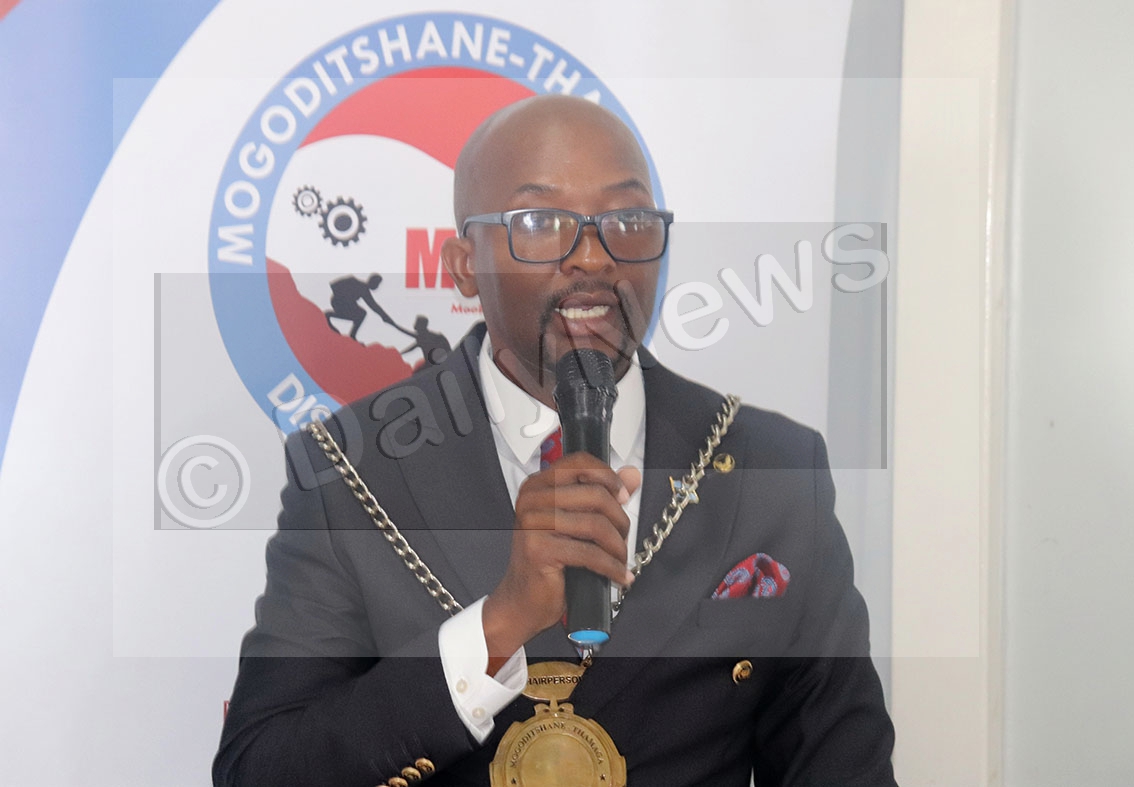
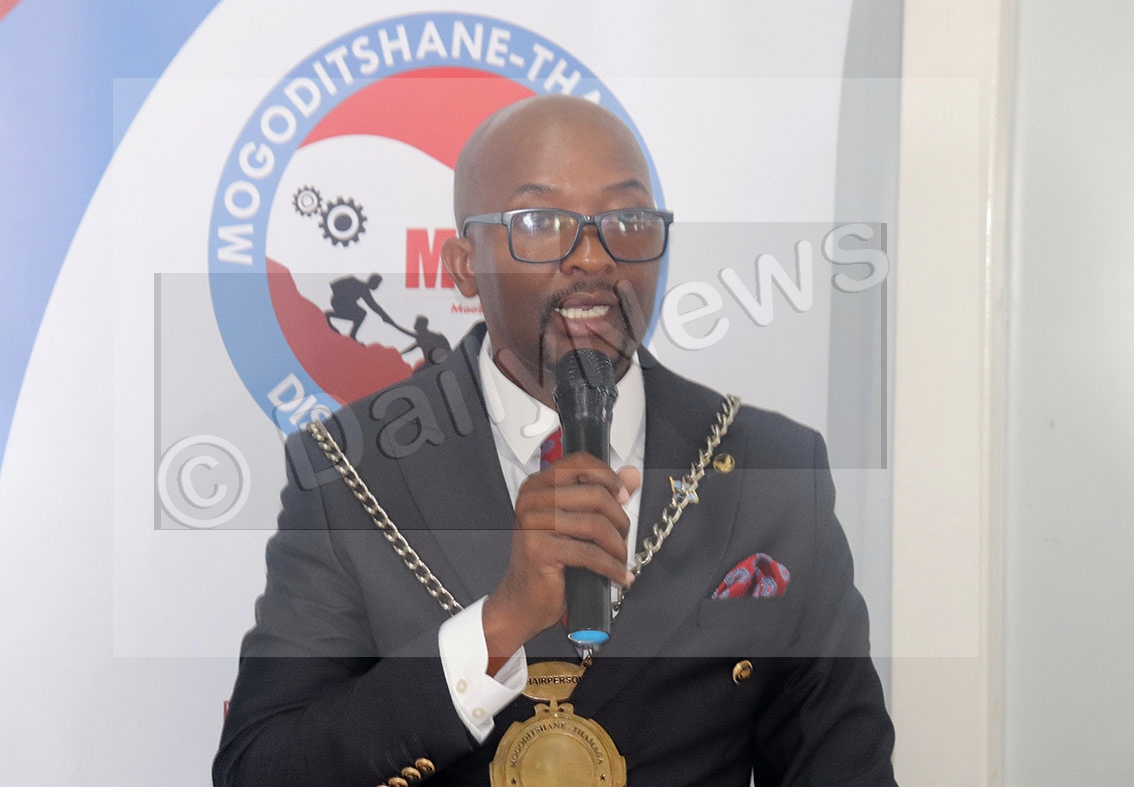
Government’s plan to restructure the Mogoditshane/Thamaga District into two new administrative districts has received support from the community, the district council chairperson, Mr Molatedi Selala has revealed.
Addressing a full council session in Mogoditshane on Monday, Mr Selala said extensive consultations conducted under phase II of the Local Government restructuring reform indicated that residents of the affected villages largely supported the proposed division. He said the aim was to improve access to government services.
“The proposal seeks to divide the district into Kweneng South and Kweneng East to enhance administrative efficiency and bring services closer to the people,” he said.
Under the proposal, Kweneng South will include Thamaga, Gakgatla, Kubung, Ramaphatle, Kumakwane and Mmankgodi, while Kweneng East will cover Mogoditshane, Mmopane, Gabane, Metsimotlhabe, Mmokolodi and Tloaneng.
Mr Selala said the restructuring follows concerns raised during earlier consultations about the district’s vastness, rapid population growth and difficulties faced by residents in accessing services. While support for the split was widespread, Mr Selala noted that communities raised some key concerns required further consultations and consideration.
“These include proposed district names, possible realignment of some villages and fears that the new districts may face staffing and budget constraints if not adequately resourced,” he said.
Mr Selala also revealed mixed reactions regarding the proposal to upgrade Mogoditshane to assume township status.
“Residents of Mogoditshane expressed reservations, particularly around the potential impact on traditional leadership structures and land tenure systems,” he said.
He said other concerns included fear of increased cost of living and perceptions that consultations were not sufficiently comprehensive. Mr Selala said all views gathered during the consultations will inform government’s next steps in the proposed reform process
The Gaborone City Council (GCC) has identified 373 illegal advertisement cases that have been submitted for legal proceedings.
“Of these, 160 involve advertisement boards belonging to unidentified owners, while the remaining 213 belong to known entities whose lease agreements have expired,” said Gaborone City Mayor Oarabile Motlaleng during the council session on Monday.
He reiterated that the council held the exclusive mandate to approve the erection of advertisement structures within the city.
Even though the council had submitted illegal advertisements cases for legal action, Mr Motlaleng said they continued to face the challenge of new advertisement boards being erected without the involvement or approval of the authority.
Nonetheless, he said the council remained committed to eliminating illegal advertisements in the capital, despite continued challenges.
On the growing number of unauthorised billboards, Mr Motlaleng said the council had adopted a stricter enforcement approach based on legal advice.
“The law permits the council to intervene and demolish any unlawful erection without the need for a court order if construction is ongoing,” he said.
Mr Motlaleng warned individuals and companies involved in erecting illegal advertising structures that the council would enforce provisions of the Town and Country Planning Act and the Gaborone City Council (General) Byelaws.
He said the rapid spread of illegal advertisement boards deprived the city of much-needed revenue required to fund social services.
“We want to warn all those involved in these illegal activities that we will not tire of doing what is right,” he said.
As part of the council’s long-term strategy, Mr Motlaleng said some advertisement spaces would be reclaimed and managed through the council’s investment company, wholly owned by GCC, to generate additional revenue while ensuring proper regulation of outdoor advertising.
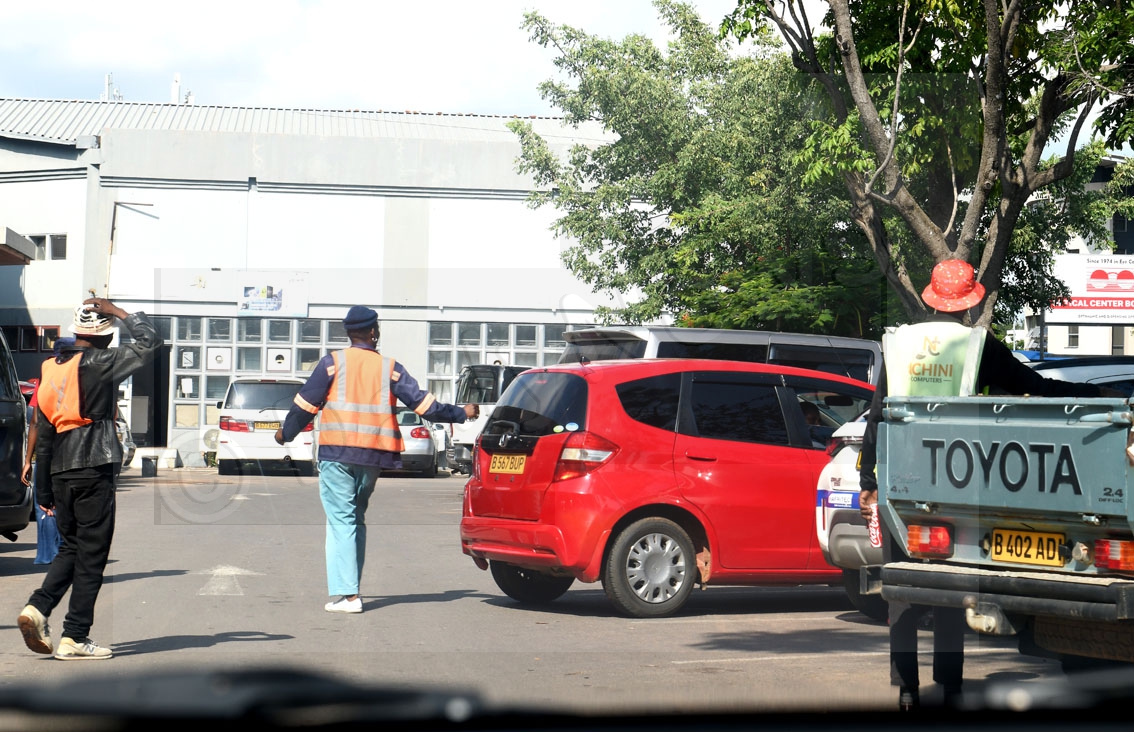
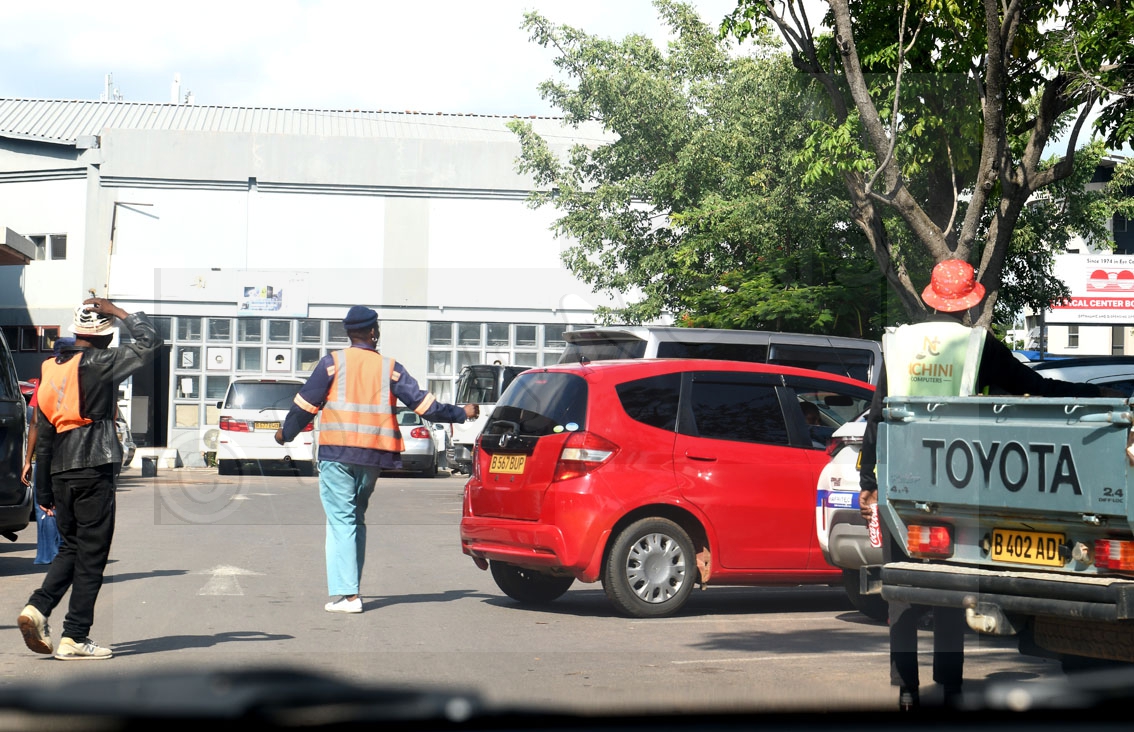
Mr Motlaleng also announced stricter enforcement measures to address the growing problem of self-appointed parking assistants and abandoned roadside structures across the capital.
He said the council had received numerous complaints from residents and motorists about individuals who had taken it upon themselves to act as informal parking assistants.
“Many of these individuals aggressively demand payment from motorists, litter in public spaces and disturb drivers,” he said, adding that some vehicles had allegedly been damaged when motorists refused to pay.
Mr Motlaleng said law enforcement officers had been instructed to take action against the illegal practice.
He also raised concerns about abandoned and illegal roadside structures, saying they negatively affected the city’s cleanliness and appearance.
While acknowledging the importance of the informal sector, Mr Motlaleng said traders must operate within regulations.
He added that hawkers were required to use portable structures that must be removed after business hours, failing which the council would remove them.
He urged residents and traders to cooperate with authorities as enforcement intensifies.
Thus, Mr Maele said the transformation required collective leadership rather than fragmented efforts.
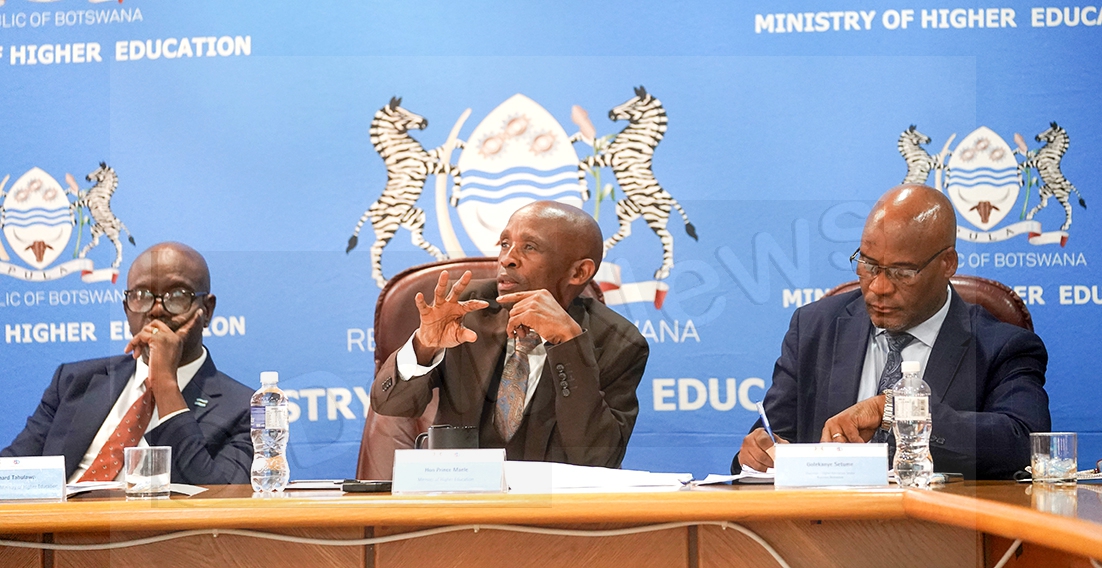
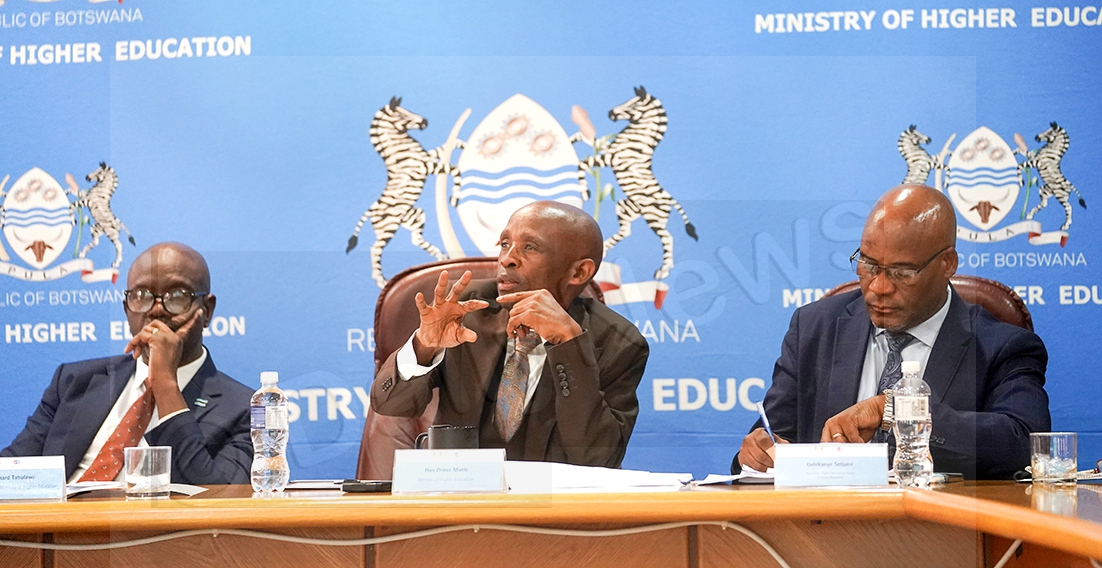
Placing human capital development at the centre of national transformation, Mr Maele said higher education must be repositioned from a social service to a strategic economic sector capable of driving innovation, productivity and diversification.
He further noted that Botswana’s long-standing reliance on a consumption-driven economy must transition toward a production-oriented model, an evolution that depended heavily on a responsive and agile education system, particularly higher education and Technical and Vocational Education and Training.
He further commended participants from government, academia and the private sector for their presence at the Sub-HLCC, saying the ministry was the first to establish such a platform, positioning it as a model for cross sector collaboration.
He said the Sub-HLCC would serve as a structured platform to strengthen collaboration between government and industry in shaping policies, programmes and investments aligned with Botswana’s economic transformation agenda.
He emphasised the need to maintain momentum ahead of the main High-Level Consultative Council (HLCC) meeting scheduled for September, proposing July 7 as the next engagement to allow stakeholders to consolidate positions and present a unified strategy.
He added that the forum should play a critical role in tracking reform progress and ensuring accountability among stakeholders.
Also, he said the Sub-HLCC must evolve beyond a discussion forum into a results-driven platform capable of translating policy into implementation and commitments into measurable outcomes.
The minister also highlighted systemic inefficiencies that continued to constrain the sector, including delays in programme accreditation, misaligned student sponsorship frameworks, infrastructure limitations and regulatory bottlenecks.
Calling for a renewed culture of collaboration, the minister outlined complementary roles for key stakeholders.
Government, he said, must provide clear policy direction and enabling frameworks, adding that higher education institutions must deliver quality education and foster innovation while the private sector must take a more active role in shaping the skills ecosystem
Born in Otse, a village nestled among the hills of Mmalladiepe, Mannyelanong, and the famed Lentswe La Baratani (Mountain of Lovers), Elsie Ntshonono has grown into one of Botswana’s dynamic voices in theatre, education, and broadcasting.
Her journey in stage theatre began in 2001 under the mentorship of Prophet Joel Keitumele alias ‘Ntsoro’, who introduced her to the foundations of acting, stage discipline, and performance.
“Under his mentorship, I developed confidence and discovered the powerful role that storytelling plays in shaping minds and inspiring communities,” Ntshonono recalled.
Her passion for communication deepened under her former teacher, Kristian Mmusi, who trained her in public speaking and debate.
This mentorship sharpened her ability to think critically, engage audiences, and appreciate the transformative power of communication.
One defining moment came when she portrayed the character Beauty, a role that revealed to her that the arts were not only about performance but also about education, storytelling, and empowerment.
This realisation inspired her to script children’s literature, write short stories, and produce educational content for television and radio.
Beyond acting and writing, Ntshonono expanded into the corporate space as a Master of Ceremonies (MC) and motivational speaker, using storytelling to inspire diverse audiences. Her profession as a teacher has been equally pivotal.
“Every day in the classroom feels like an audition, not for personal recognition, but for the opportunity to identify and nurture young talent,” she said.
Ntshonono mentors learners in public speaking, debate, talk shows, news anchoring, and television reporting. One of her proudest achievements she said was coaching students who won first position at the Southern Africa Broadcasting Summit 2025 in Lesotho.
Her creative outreach extends to music education, in collaboration with the Arts Trust Council, encouraging children to explore instruments and performing arts.
She also founded a distinctive day-care and babysitting centre, blending the Montessori curriculum with STEM education and literacy readiness to foster independence and creativity from an early age.
Looking ahead, Ntshonono said she was preparing to launch a children’s television talk show, a platform designed to amplify young voices, showcase talent, and develop broadcasting skills.
Ultimately, her journey, from stage theatre to education, broadcasting, and early childhood development, has been driven by a singular vision: to use the arts, education, and media as powerful tools to empower young people, nurture creativity, and help children discover their voices as they shape the future.
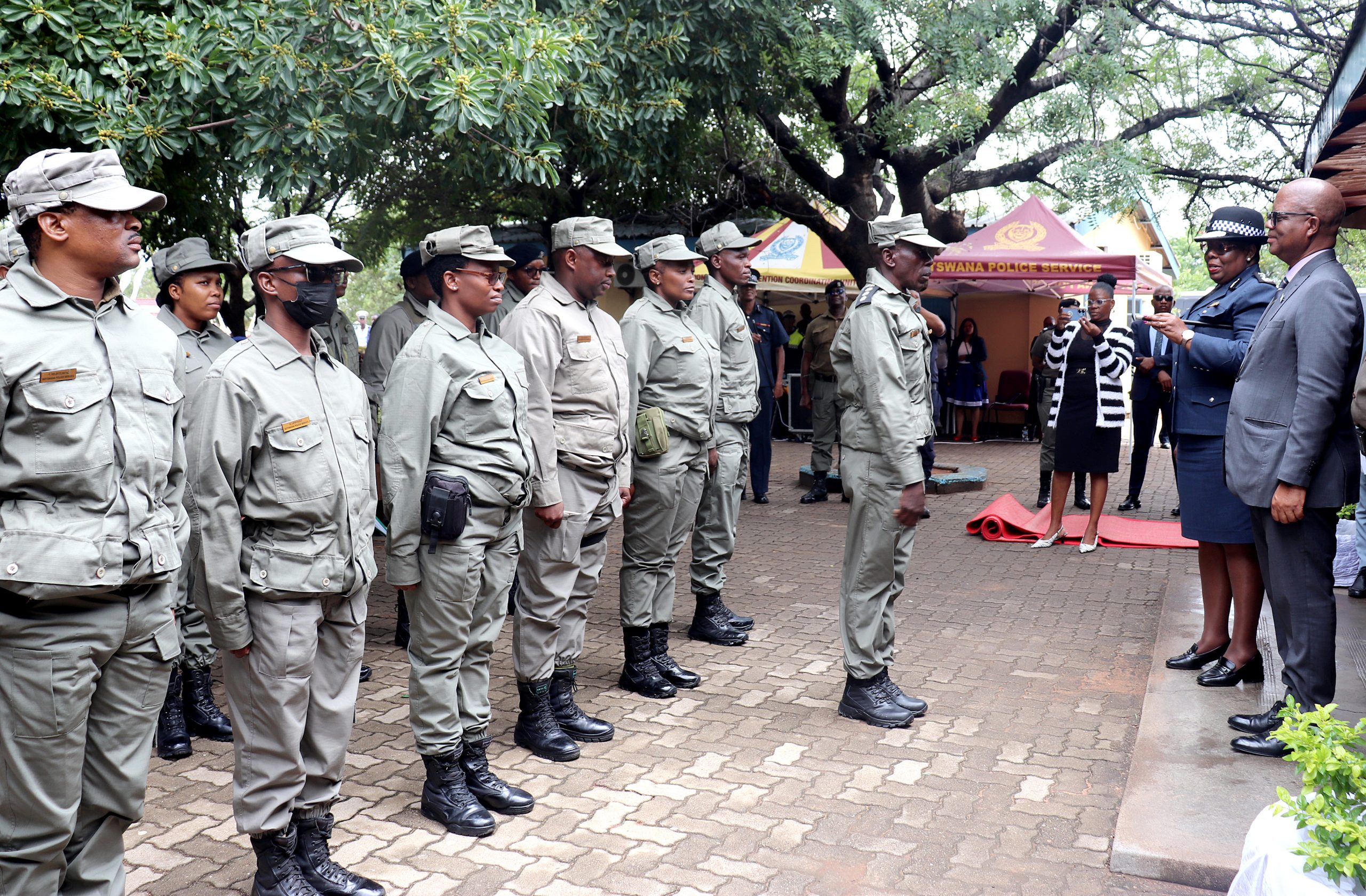
The deployment of the 23 Special Support Group (SSG) unit in Mahalapye symbolised the strength of national institutions and a collective commitment to safeguarding communities.This was said by Minister for State President, Defence and Security, Mr Moeti Mohwasa at the launch of a contingent of 23 SSG officers in Mahalapye on Monday.Mr Mohwasa said their deployment was strategic, given the village’s location along the North-South corridor, which made it critical for policing operations.He said they would also assist in responding to specialised incidents and natural disasters when necessary, stressing that their presence was meant to enhance security and not intimidate the community.“Our people, including children, must see the police as protectors and partners in building safe communities,” he said.He noted that the SSG already maintained a presence in Palapye, Jwaneng and Orapa, while base camps had also been set up along borders to combat crimes such as smuggling, stock theft, illegal migration and wildlife poaching, particularly in sensitive areas like the Central Kalahari Game Reserve.While the main SSG base remained in Gaborone, Minister Mohwasa said plans were underway to establish a fully-fledged camp in Francistown to strengthen operations in the northern region.He further assured the nation that despite current financial and cash flow challenges, the government remained steadfast in its commitment to maintaining peace, stability and national security.He emphasised that public security was central to national development, noting that safety and stability were critical in building investor confidence and creating an environment where businesses and opportunities could thrive.He said as a ministry responsible for governance, peace and security, they remained fully committed to ensuring that the safety of people continued to receive the attention it deserved.Mr Mohwasa highlighted that the government would continue investing in strengthening law enforcement capabilities, including enhancing partnerships within the Botswana Police Service and adopting modern technologies to effectively combat organised crime, criminal syndicates and emerging cross-border threats.He further underscored the link between security and economic growth, saying the government would continue engaging stakeholders to develop innovative programmes aimed at reviving, transforming and diversifying the economy to create sustainable jobs.For her part, Botswana Police Commissioner Dinah Marathe expressed appreciation to the Mahalapye community for its collaboration in advancing community policing efforts, adding that the deployment of the 23 officers would strengthen operations and improve response to crime.“These officers are trained and disciplined to advance community policing principles and promote public security throughout Mahalapye and its environs,” she said.Commissioner Marathe further acknowledged the government for providing the necessary resources to support the strategic deployment.
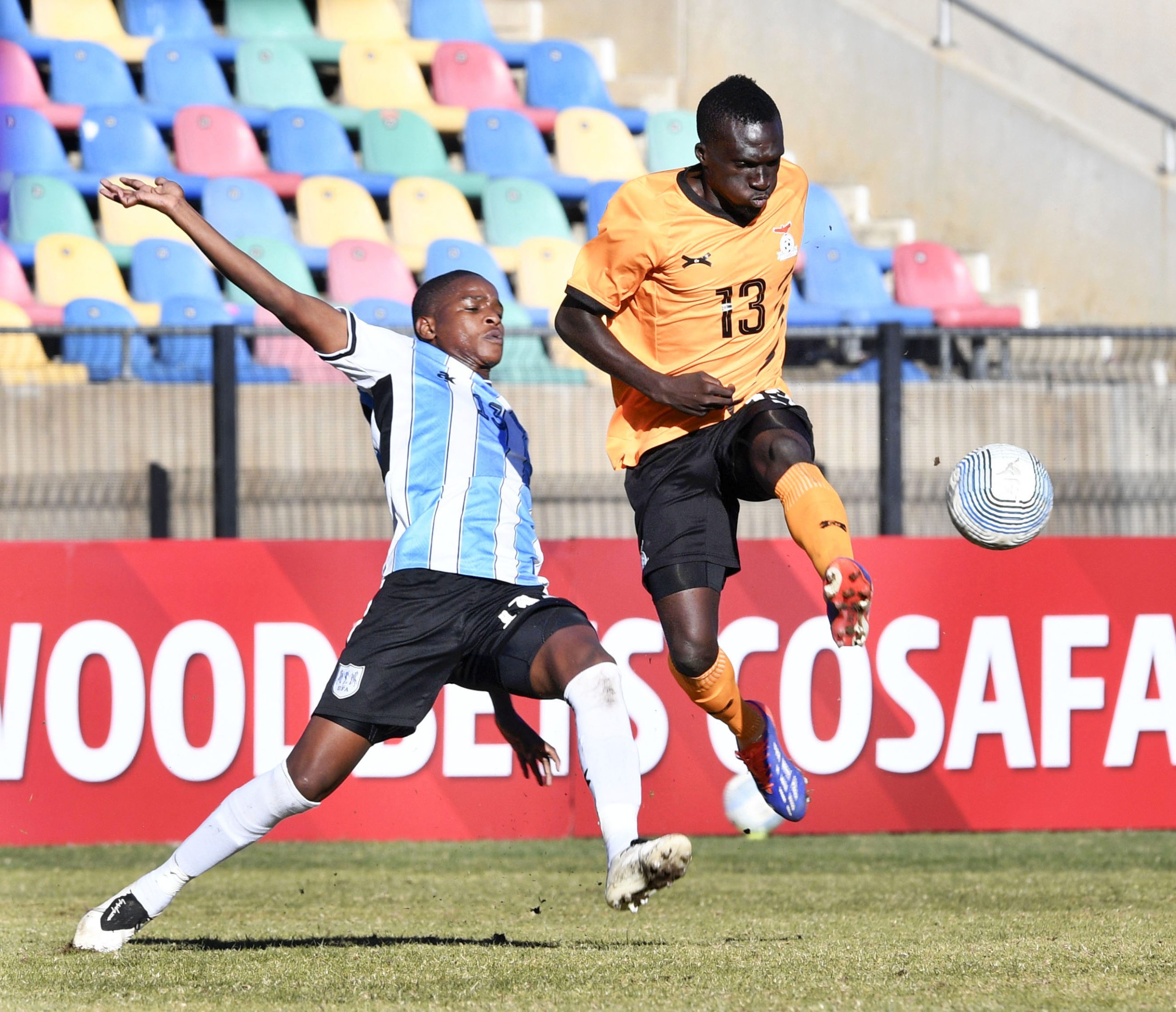
Francistown will next week host a football competition dubbed Four Nations Tournament comprising Botswana, Zambia, Zimbabwe and Malawi.
The competition which promises to be a thrilling regional showdown, will be played at the Obed Itani Chilume Stadium from March 28 to March 31.
Speaking in an interview, Botswana Football Association (BFA) general manager, Monnakgotla Mojaki said preparations were going well and the draw would be March 24.
The aim of the tournament is to give the teams a chance to play at least two matches during the FIFA break as per FIFA guidelines.
It will also serve as a platform for the Botswana team coach to give all players including new ones, an opportunity to have game time.
Mojaki said they chose to play the stated nations since they were tough opponents and top teams with quality players, adding that the tournament might in future be an annually event. He encouraged football fanatics to come in numbers and enjoy good play.
Meanwhile, the Zebras Coach, Morena Ramoreboli, has unveiled the preliminary squad for the Four Nations Tournament.
Goal keepers: Ramoreboli called in Thabo Motswagole from Gaborone United, Cedrick Ramojela Tonota FC, Goitseone Phoko Jwaneng Galaxy, Karamelo Kgosipula Township Rolers and Kenneth Mmoko Sua Flamingoes.
Middlefilders: Theo Kgosikwena Santa Green, Thapelo Babedi BDF X1, Tony Mogotsi Nico United, Tsholofelo Speakson TAFIC FC, Kamogelo Moloi Gaborone United, Philip Kaku Township Rollers, Theo Shadikong Mochudi Centre Chiefs, Monty Enosa Mochudi Centre Chiefs, Bofelo Motswagole Sua Flamingoes, Nonofo Dikutu Matebele FC, Omphile Ramoagi GaboronreUnited, Keitumetse Samunzala Jwaneng Galaxy, Shaun Theron TAFIC FC, Thabo Marumo Extension Gunners, Gape Thibedi Dinare FC.
Attackers: Boikobo Matakule – Police XI, Losika Ratshukudu – NK Slaven Belupo, Omphile Phale – Dinare, Thero Bubi – Black Lions, Kotso Radithongwa – Jwaneng Galaxy, Tshepo Keselebale – Jwaneng Galaxy Thapelo Balatheng -Township Rollers, Thomama Kayaba-Tafic FC, Boikobo Rannyena-BDF XI, Godfrey Tauyatswala-Gaborone United, Morgan Dick- Calender Stars, Mmoloki Galetshetse- Jwaneng Young Stars, Eric Ookame- Mouloud Oujda.
Defenders: Larona Modisaemang-Jwaneng Galaxy, Thabo Babusi-Orapa United, Tebogo Kopelang -Jwaneng Galaxy Benson Mosokobanji-Santa Green, Ricky Rathogo – Orapa United, Utlwang Ramakathi-Township Rollers, Tlamelo Kolagano- Jwaneng Galaxy, Botsile Sakana -Orapa United, Tirelo Ratanang-Sankoyo Bush Bucks, Mompati Tshoganyetso-Sankoyo Bush Bucks, Floyd Motheo-Matebele, Brain Tafhi-Mochudi Centre Chiefs, Botshelo Motsheja – Morupule-Wanderers and Doctor David -Black Lions.
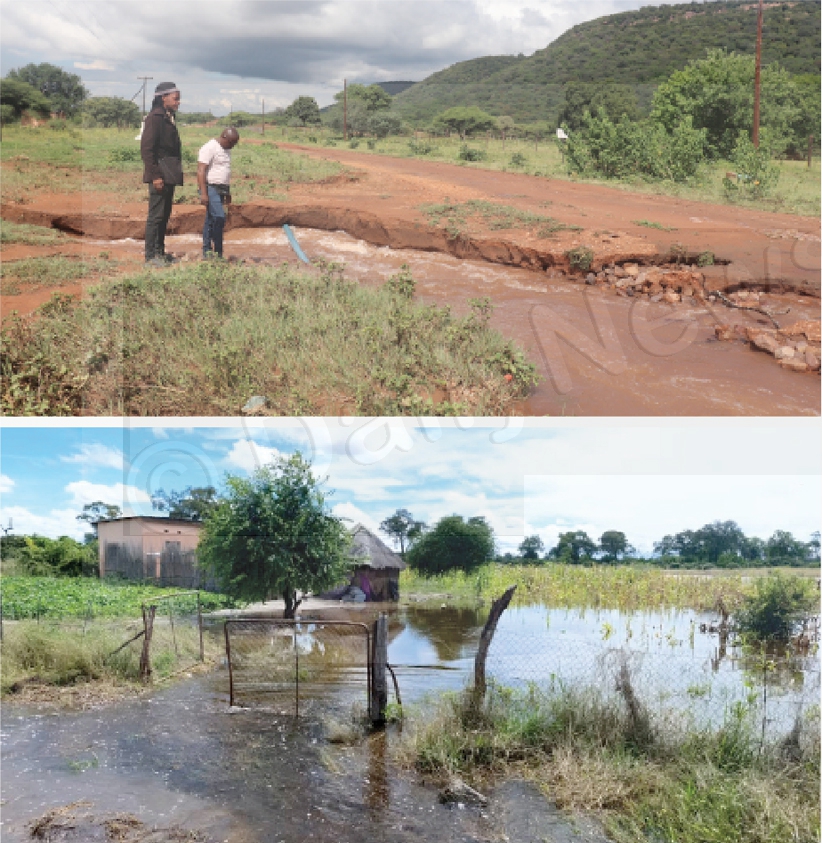
As massive rains continue to lash various parts of the country, Lerala and its surroundings have suffered significant damage, with the true extent of the destruction unfolding in the aftermath of flooding.Speaking in an interview, Ms Mogametsi Ratlale, Community Development Officer I-Extension, Palapye District Council, said three houses in Lerala had collapsed without causing fatalities.‘’We have also received various reports of dead livestock,’’ she said, adding that it is mostly reports of goats that drowned in their kraals. So far three farmers have lost a total of 62 goats, 111 chickens, a fence and water melons that have been washed due to the torrential rains in Lerala.Ms Ratlale stated further that six houses at various ploughing fields in Lerala had collapsed as a result of the continuing cloudburst. With further substantial damage anticipated to both property and livestock.Ms Ratlale has made calls to Lerala residents and the nearby areas to contact her office so that assessments could be carried out with a view to bringing in interventions where necessary.Schools in Lerala have also been temporarily closed until the situation improves.‘’I would also like to plead with people to exercise caution in areas where there is still a lot of water and urge them to call authorities for assistance,’’ she said, adding that the most affected ploughing fields were the Lephane fields situated along the Majwaneng/Steinberg road.For his part, Assistant Superintendent Kemang Masoka of Maunatlala Police said heavy rainfall that started in the early hours of Sunday in and around Seolwane had dealt internal roads and homesteads a hard-blow, forcing the police to rescue three people from cattle posts in the area from life-threatening waters.According to Superintendent Masoka, 10 houses in Mosweu and 42 individuals have been affected, resulting in an estimated P4,000 worth of damage to property.“In Seolwane, 21 households have been affected, with P8,400 worth of damage reported,’’ he said, adding that Maunatlala was also counting losses estimated to be slightly over P3,200 to date. …as flooding leaves trail of destruction in KhwaiThe flood situation in Khwai is worsening with about 37 households affected, of which 17 have been relocated to safer places.Khwai was hit by a severe flood early March, displacing families, disrupting access to education, shelter and healthcare services.In an interview, North West assistant district commissioner, Ms Omphile Mogorosi said more families were rescued from low-lying areas to safer places.She said the residents were hopeful that the floodwater would subside so that they could return to their normal lives, but the situation continued to worsen increasing the risk of disease outbreaks, among others.Ms Mogorosi highlighted that the overflowing water had surrounded the village causing significant distress requiring urgent and collective rescue efforts.She however appreciated the disaster management team for assisting affected families with the necessary relief while ensuring readiness for potential exacerbation of the crisis.While some families had been given tents, she said some found refuge at the Trust office.She further said efforts to resume lessons for 12 Standard 7 pupils was still ongoing, as they wanted to ensure that the learners were not affected as the primary school was still temporarily closed.In addition, he said the flood situation had also affected some tourism camps operating in the area, adding that Khwai area was a hotspot for safari camps offering everything from luxury tents to guesthouses.Some camps, she said, were surviving the waterflows because they used suspended wooden decks to ensure their structures remained dry while surrounded by water.Water resource engineer from department of Water and Sanitation, Mr Kesie Marovu pointed out that they were anticipating more possible flooding this year as the water continues to rise in the delta.Almost all the channels across the delta, he said were overflowing due to the torrential rains experienced, noting that as from December to date, Mohembo River water level was high.He also pointed out that the outflow channels of Thamalakane and Boteti rivers were flowing, citing that the flood head along the Thamalakane river reached Borolong plant and since then water levels had been gradually increasing to date.He pointed out that the flood head along the Boteti channel had reached Makalamabedi bridge in October while the Matsebe and Xudumo floods head stopped at 12km and 17km from buffalo fence.“As we anticipate a good hydrological year, our finding underscores the importance of continued vigilance and proactive measures to manage water resources effectively and mitigate potential impacts on communities and ecosystems. As a department, we remain committed to our mission of safeguarding water resources and fostering sustainable water management practices for the benefit of all stakeholders,” added Mr Marovu.
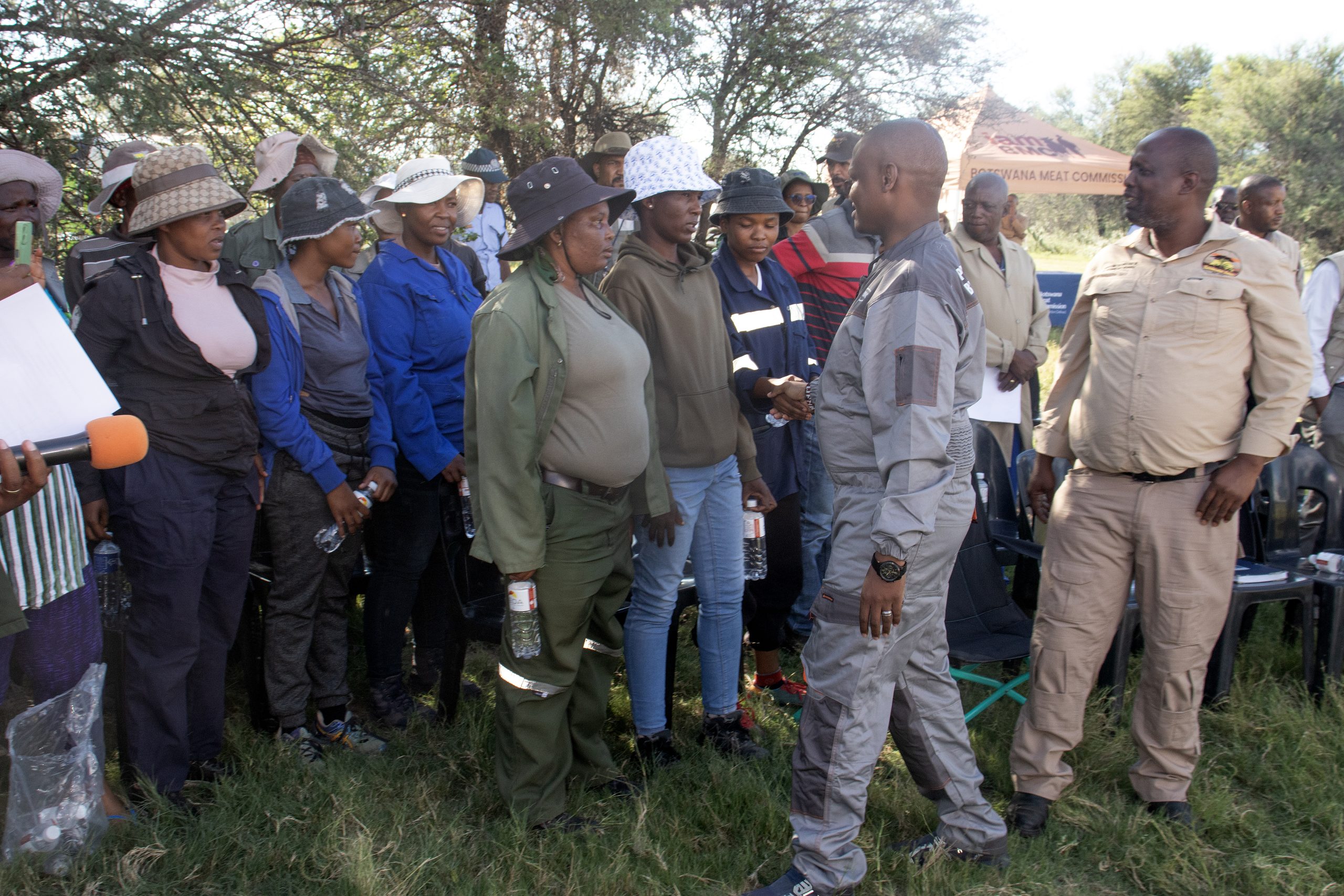
Consultations on sub-dividing Zone 11 are ongoing, says acting Minister of Lands and Agriculture Dr Edwin Dikoloti.Dr Dikoloti revealed in an interview in Loporung on Friday that the said zone, which covers the Southern part all the way to Dibete Gate and up to Kuke Cordon Fence, needed to be sub-divided such that outbreaks would be manageable.Dr Dikoloti was in Loporung to visit volunteers from different villages of Borolong and Ngwaketse, who were clearing bushes along the cordon fence.He said Zone 11 was vast hence they were trying to come up with measures of how to manage it easily. Furthermore, he revealed that the ministry and other stakeholders were looking into creating buffer zones along the cordon fence, which is approximately 182km.Creating the buffer or compartments in form of feedlots, piggery or vegetable gardens, he said would ensure that communal livestock did not come close to the border fence or even cross it.The compartments, Dr Dikoloti said were expected to meet certain bio-security measures, saying that would be one way of de-risking and minimising chances of the disease to cross into Botswana.He further applauded farmers and communities across the country for working in unison with government to ensure that the Foot and Mouth Disease did not spread into Botswana from neighboring countries.If the disease was to spread in the country, he said it would not have affected farmers only, but the national economy as well.Even though there were calls for vaccination of cattle in Zone 11 instead of culling some animals, he said that would not be a wise move as that would change the status of the zone and downgrade the value of animals.He asserted that it would even change the title of the zone, as it would be now referred to as ‘FMD free with vaccination’.He said the move would also change access to the market.Dr Dikoloti said Botswana Meat Commission was still selling at the European market and Norway save for the meat from the zones where the disease was recently reported.Such zones, he said, were 3c, 6B, 6A and zone 7 because of its proximity to Zimbabwe.He further said President Advocate Duma Boko had urged the ministry to find ways of how best they could work with Zimbabwe to help them vaccinate their cattle, such as looking at reducing the vaccine prices.The move, he said could help in reducing the risk of exposure to the disease.
Many remember the late former Speaker of the National Assembly, Gladys Kokorweas one of the country’s rare breeds with an an illustrious and distinguished career in both the public service and politics. But for her siblings, she served as a guide and coordinator who has directed their lives in the right direction.
As an elder sister, she assumed the role of a unifier in the family, always advocating for love and care for one another.
“Mma Stompie, the eldest of the seven siblings carried the weight of the family and gave us motherly care. We enjoyed her love, care and compassion,” said one of the siblings, Mr Tuelo Botlhoko in an nterview.
Kokorwe, affectionately called Mma Stompie, passed away on March 11, 2026, at the age of 78, leaving behind a legacy that spanned over five decades.
She was a distinguished politician, diplomat, and civil servant who served as the Speaker of the National Assembly of Botswana from 2014 to 2019. In December 2009, President Lt Gen. Dr Seretse Khama Ian Khama appointed her as Botswana’s Ambassador to Zimbabwe, a post she held until 2014.
Reflecting on the life of Kokorwe in the yesteryear, Mr Botlhoko recalled how she brought positive change to the Peleng community in Lobatse, to an extent that one could liken her role to that of a social worker as she believed in nurturing and developing the lives of young people.
Mr Botlhoko said her passion toward community development would forever be etched in the lives of the people she touched and worked with.
Her sister, Ms Pelonomi Moima said Kokorwe was a phenomenal woman and a great motivator who believed in hard work. She described the former speaker as a leader, who understood leadership and management in all its diversity.
She said Kokorwe encouraged them to be who they are today. “I stayed with her in Lobatse when she I was doing Standard 4 up until I went to Lobatse Secondary School. She instilled in me the zeal to face life situations level headed,” she said.
Despite the love she extended to her siblings, Ms Moima said her sister never compromised discipline, as she did all in her power to instill law and order. “She wanted well behaved children and we had to obey and respect her as she wanted was best for us,” said Ms Moima.
Ms Moima described her as a great giver and helper who reached out to both family members, community and the church, driven by love to help those in need, a value intertwined in her life as a a staunch Seventh Day Adventist Church member who believed in the second coming of the Savior and Lord Jesus Christ.
She said even at a time when she was tasked with various leadership roles in government, she served the nation with honour and respect and people loved her character and demeanor.
She said the family would forever cherish the moments they shared with her vouching to continue where she left off as a unifier. “I can proudly say as her siblings, we are united and face life challenges together as family. Even when she was not well, we were together to make sure she was taken care of and still we are together during this period of loss,” she said.
A published authority on Botswana history and former senior civil servant, Dr Jeff Ramsey said he had known Kokorwe as a strong level headed woman who excelled in her leadership positions and stood for what she believed was right.
He said what made the former speaker stand out among many was that she was an easy-going person who loved everyone.
“She was a loving and polite person who never spoke down on anyone and was not afraid to share her views on issues which she believed were beneficial to the nation,” he said.
Dr Ramsey said during the time when Kokorwe was the Assistant Minister of Local Government, she was able to interact with many people which made her work easier.
A stalwart of the Botswana Democratic Party (BDP), her political journey includes being elected as the Member of Parliament for Thamaga/Kweneng South Constituency in 1994.
Dr Ramsey added that from the first election she won in Thamaga, she stood up for women empowerment and promotion of female representation in Parliament.
“Her relentless energy on women empowerment pushed her party, the Botswana Democratic Party (BDP) to give women positions of leadership. As more women began to challenge men for leadership positions, a generation of women rose among them Ms Tebelelo Seretse, Dr Margaret Nasha, Ms Pelonomi Venson, and Ms Joy Phumaphi,” he said.
He said it was within this framework that Kokorwe proved her worth and that put her among strong women leaders in the country.
She was born on November 28, 1947, in Cape Town, South Africa, where her father was working at the time and she later returned to Botswana to attend primary school in Thamaga in the Kweneng District.
Kokorwe completed her secondary education at Moeng College and later pursued further studies, including a Diploma in Development Administration from the University of Connecticut in the United States.
Before entering the political arena, she rose through the ranks of the Botswana civil service where she started as a typist and clerical work.
She eventually held senior positions in local government, serving as the Town Clerk for both Sowa Town and Gaborone, and as the Commercial Officer for Lobatse.
Kokorwe served as the Assistant Minister of Local Government from 1999 to 2004 and Minister of Youth, Sport and Culture from 2008–2009.
In 2008, she became the first Member of Parliament in Botswana’s history to have a Private Member’s Bill passed into law, the Domestic Violence Act, which provides critical protection for victims of abuse.
During her tenure as Speaker of the National Assembly, succeeding Dr Margaret Nasha, she launched an initiative called Taking Parliament to the People which was geared at educating citizens in rural areas about the functions of the legislature and during that period, many Batswana were illuminated on the functions of Parliament.
Ambassador Kokorwe pushed for the live broadcasting of parliamentary proceedings and advocated for the use of Setswana in debates to make the proceedings more accessible to the general public.
As a gender activist, she was a vocal proponent of increasing women’s representation in politics, frequently pointing out the disparity between women’s success in the judiciary and the civil service versus their low numbers in Parliament.
Kokorwe will forever be remembered for her tenacity and commitment to social issues and a trailblazer who set the tone for women in Botswana’s political landscape.
Vunani Annual Botswana Women Sports Awards has announced the fourth edition nominees ahead of its awards ceremony scheduled for March 27.Speaking at nominee’s announcement event recently, Ministry of Sport and Arts deputy permanent secretary, Boineelo Hardy said the announcement was more than just the revealing of nominees.She said it represents recognition, inspiration and progress for women in sport in Botswana.Female athletes, administrators, coaches and volunteers, she said continue to break barriers, challenge stereotypes and inspire the next generation to believe that their dreams in sport are valid and achievable. She said the Ministry of Sport and Arts remains fully committed to the development and empowerment of women and girls in sport.“Platforms such as these awards are critical because they highlight excellence, celebrate dedication and encourage greater participation of women at all levels of sport,” she said. Co-Founder and Organiser of the Vunani Annual Botswana Women Sports Awards Portia Olopeng- Mlilo said when they established the Vunani Annual Botswana Women Sports Awards, their goal was clear to recognise, celebrate and elevate the achievements of women in sport.For many years, she said women had contributed immensely to the growth of sport in the country, as athletes, administrators, coaches, officials and media professionals.She said the awards exist to ensure that their dedication and excellence do not go unnoticed, adding that the platform was not just about trophies and recognition. She said it was about telling the stories of resilience, determination and success that inspire young girls across Botswana to believe that they too belong in sport.The fourth edition categories and nominees are:Sportswoman of the Year; Oratile Nowe – Athletics, Sethunya Buhle Majama – Athletics, Natalie Katlo Banda – Chess. Young Promising Athlete; Pine Moresele – Judo, Nalamalpu Saishanvi Reddy Chess, Same Mhutsiwa – Athletics. Sportswoman of the Year with Disability; Boitshepo Disele Paralympics, Omphile Bothasitse Tennis, Tlamelo Mogomotsi Special Olympics. Coach of the Year; Grace Mmolai Boxing, Kebafhore Gakekgonwe Paralympics, Bonang Otlhagile-Mosetha Football. Umpire of the Year; Gaone Poane Tennis, Naledi Chabe Rugby, Ritalh Nthaga Table Tennis. Administrator of the Year; Sharon Keakae – Special Olympics, Daphne Rakobe – Basketball, and Game Mompe – Cycling. HeForShe Champion; Molefhi Obenne – Sports Administrator, Chilume Ntshwarang – Athletics. Team of the Year; Karate, Badminton, Tennis. Volunteer of the Year; Goseng Nkwe, Gorata Kokole. Champion for Equality; Absa Botswana, Choppies, and First National Bank Botswana.