Author: Daily News

  • Mathiba – Living Bridge Between Old and Modern Botswana

    Mathiba – Living Bridge Between Old and Modern Botswana

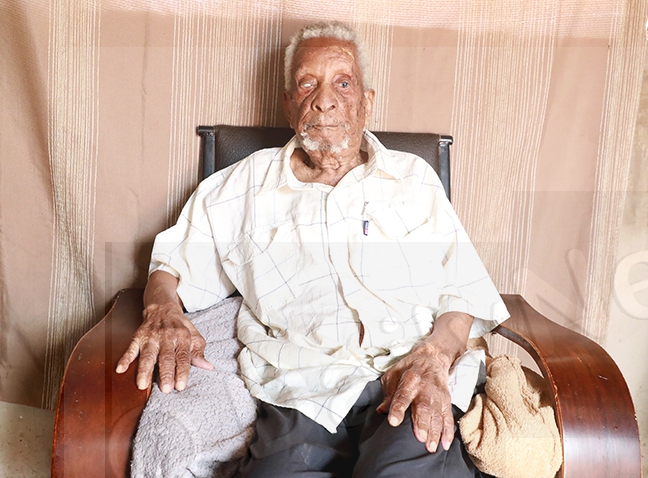
    Born before the invention of sliced bread, 104-year-old Mr Okanokile Mathiba is a rare testament to human resilience.

    As a centenarian, he belongs to an elite group of ‘exceptional survivors’ who defy the typical trajectory of aging. While most experience a long period of decline, individuals like Mathiba exhibit a compression of morbidity, staying remarkably healthy and vibrant until the very sunset of their lives. 

    A resident of Tshikinyega ward in Serowe, he is more than just a survivor, he is a living bridge between the Bechuanaland Protectorate and the modern Republic of Botswana. As a royal uncle to the Bamangwato chieftainship, Mathiba’s life has been inextricably linked with the leadership of Botswana. 

    He served as a contemporary and civic cohort to the founding father, Sir Seretse Khama. While many of his peers were called to the front lines of World War II, Mathiba was tasked with a different mission, remaining behind as a key advisor and guardian of the chieftainship. His son and family spokesperson, Moshawa Mathiba, describes his father as a treasure trove of experience and a living encyclopaedia. 

    “My father is an oral historian well-versed in Ba-Gammangwato history and culture,” his son says. 

    ‘Under the instruction of Kgosi Tshekedi Khama, he was sent to Nswanzi to help weld together the communities of the Central District, a mission of social embroidery that created the diverse tapestry of wards we see in Serowe today.’

    This knitting together of communities explains why Serowe contains wards such as Mapoka, Marobela, and Sebina. In the Makolojwane ward, families who migrated from the Bokalaka area remain a testament to this history of unbroken unity. 

    Mathiba’s eloquence is not limited to history. Despite only reaching ‘Sub-B’ in formal schooling, he is a self-taught linguist. His years working the mines of Pretoria and Bloemfontein in South Africa gifted him fluency in English, Shona, Sekalaka, Naro and Fanakalo. 

    Upon his return to Botswana, he dedicated himself to the Malekantwa regiment, a group of community builders who transformed Serowe’s infrastructure. His commitment to the nation was literal, he famously donated cattle to fund the construction of the University of Botswana and the establishment of the Khama III Memorial Museum.

    A renowned master of mixed farming, Mr Mathiba’s longevity may be rooted in the red soil of Taukome and Makwa. For decades, he practiced a self-sustaining cycle, his livestock provided manure for his crops and his crop residues fed his animals. 

    Even the founding President sought his expertise. He assisted with the Masota, communal fields belonging to the chief, where grain was harvested and stored in granaries to feed the underprivileged and provide a safety net during droughts. 

    Today, he has transitioned from labourer to mentor, urging his children to utilise his pastoral wisdom to help restore the country’s cattle herd and bolster national food security.  What is the secret to reaching 104? Mathiba’s son attributes his father’s long life to a formula of optimism, humour and a traditional diet. 

    “He grew up on Setswana delicacies: sorghum, maize meal, beans and morogo wa dinawa,” he explains. 

    “These are low-processed, nutrient-dense foods free from the sugars and preservatives that shorten lifespans today.” 

    Dr Refilwe Monggae, a specialist family physician at Sekgoma Memorial Hospital, confirms that while genetics play a role, lifestyle is the great equaliser. Dr Monggae emphasises a diet rich in legumes, whole grains and healthy fats, alongside a history of consistent physical labour (farming) thwarts chronic disease. 

    Other factors include high health literacy, strong community ties and low exposure to chronic stress. While the average life expectancy in Botswana is roughly 69.9 years, Dr Monggae notes that the nation’s robust primary healthcare and ART rollout have helped more citizens push toward the global average. 

    As Botswana continues to modernise, Mathiba stands as a reminder of the values that built the nation including compassion, self-reliance and deep respect for the land. He is not just a centenarian, but the personification of Botswana’s journey from one of the world’s poorest protectorates to a stable and prosperous republic. 

  • Gaolathe pledges support to Dichaba Group

    Gaolathe pledges support to Dichaba Group

    Vice President Ndaba Gaolathe has pledged free consultancy to Dichaba Group.

    Dichaba Group, which has three companies; Dichaba Consumer Electronics, Caleb Motors and Dichaba Energy is located at the at the Botswana Innovation Hub, Science and Technology in Gaborone.

    Touring the Dichaba Consumer Electronics on Friday, Mr Gaolathe said it was clear that the management of the Dichaba Group had a clear vision for the future.

    It is evident that the management of Dichaba Group has a clear vision that they have overtime worked on and clarified to meet the market demands and this is most gratifying,” he said. He said knowledge was another fundamental aspect toward success in the business world.

    Dichaba Consumer Electronics is an Original Equipment Manufacturer (OEM) and technology solutions provider.

    The company specialises in consumer electronics and smart technology for local and regional markets, combining innovation, affordability and reliability to empower individuals and organisations.

    Laying out the company’s profile, Dichaba Consumer Electronics chief executive officer, Mr Thatayaone Dichaba said the company was the orchestration of precision, reliability and technical mastery. 

    He noted that Dichaba Electronics operated through a dual-market strategy, serving both consumers and businesses.
    “Our Business-to-Consumer (B2C) Division empowers tech-savvy individuals and households with a range of quality products, including smartphones, smart home devices and wireless connectivity solutions,” he said.

    This hybrid model, he said allowed the company to drive technological adoption across the entire ecosystem, from the home to the enterprise.

  • Government addresses fuel security concerns

    Government addresses fuel security concerns

    Government is working round the clock to address the country’s fuel security concerns, says President Advocate Duma Boko.

    Addressing the 2026 Botswana National Front leadership forum in Francistown on Saturday, President Boko, who is also the party leader, revealed that Botswana had only nine days’ worth of fuel reserves, far below the standard 90 days.

    He stressed that fuel security was a critical issue impacting the country’s overall security.

    “We are beginning to build a robust economy with good policies and programmes, and captive markets,” President Boko said, highlighting the administration’s efforts to diversify the economy beyond diamonds, minerals, SACU revenues and taxation.

    The President outlined several reforms and initiatives, including the national schools feeding programme, which aims to support local farmers and stimulate economic growth. He also cited the turnaround of the Botswana Meat Commission, which was now making profits and paying farmers promptly.

    “The Botswana Agricultural Marketing Board has also paid farmers over P500 million, and we are transforming the Citizen Economic Development Agency to support economic diversification,” President Boko said.

    Addressing health concerns, the President acknowledged the challenges faced by the sector, but noted progress in addressing drug shortages and upgrading healthcare facilities, including the Sir Ketumile Masire Teaching Hospital.

    President Boko highlighted the disparity in Intensive Care Unit (ICU) bed capacity between Princess Marina Hospital and Sir Ketumile Masire Teaching Hospital.

    “Princess Marina Hospital, which serves as a major referral hospital in Gaborone, has only eight ICU beds, whereas Sir Ketumile Masire Teaching Hospital, with its modern equipment, has 36 ICU beds that remain under-utilised,” he said.

    The President explained that the government took steps to address this imbalance by upgrading Sir Ketumile Masire Teaching Hospital to a fully-fledged healthcare facility, aiming to alleviate the pressure on Princess Marina Hospital and improve healthcare services in the region.

    This move, he said, was expected to enhance the country’s critical care capacity and provide better healthcare outcomes for patients.

    “We have made significant strides in addressing health issues, and our efforts will continue to ensure quality healthcare for all Batswana,” he said.

    President Boko also highlighted other achievements, including the absorption of former special constables into the Botswana Police Service and plans to insource jobs previously outsourced to private companies.

    The Ipelegeng programme is set to be renamed Ikageng, with participants’ stipends increasing to P2,500, effective April.

  • Botswana honours fallen police officers

    Botswana honours fallen police officers

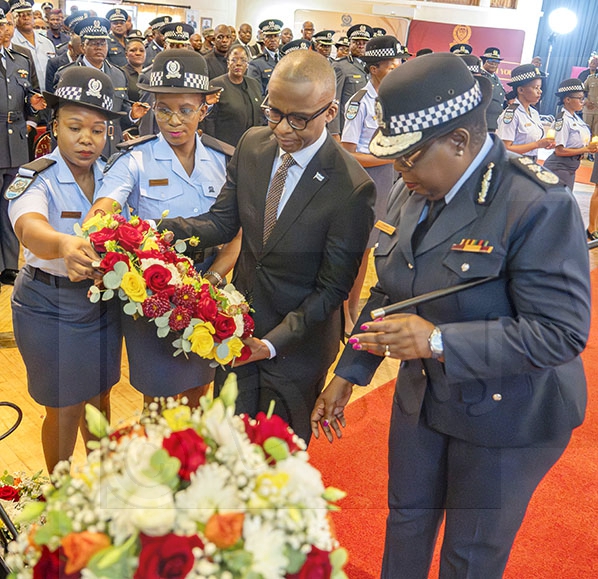
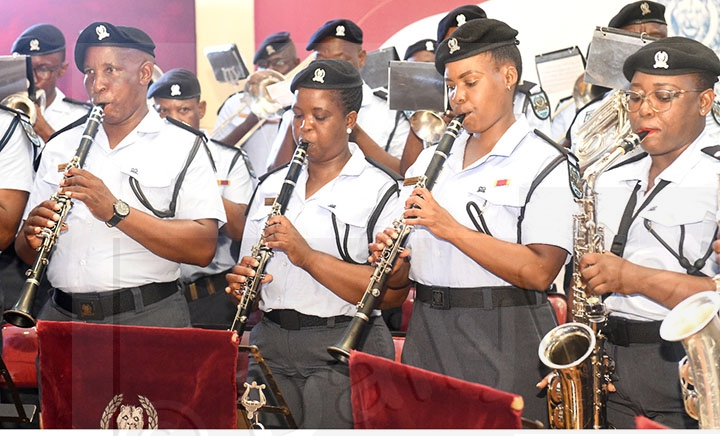
    The INTERPOL International Day of Remembrance for Fallen Police Officers serves as a reminder of the courage, sacrifice and unwavering commitment demonstrated by law enforcement officers in upholding the rule of law and safeguarding society, says Botswana Police Commissioner Dinah Marathe.

    The Remembrance Day held at the Special Support Group Parade Ground in Gaborone, brought together members of the police service, government officials and families of the deceased to pay tribute to the bravery, sacrifice and dedication of fallen officers.

    Ms  Marathe said the day was observed annually under the auspices of INTERPOL to recognise police officers in Botswana who had died while carrying out their duties and protecting communities.

    This is the second time the Botswana Police Service commemorated the day, following its inaugural observance last year.

    Vice President Ndaba Gaolathe was among guests who graced the event. 

  • Miss Millennium 2026 pageant called off due to bad weather

    Miss Millennium 2026 pageant called off due to bad weather

    The much-anticipated Miss Millennium 2026 beauty pageant has been cancelled due to bad weather, event organiser and producer, Zenzele Hirchfield has said.

    The pageant was scheduled to take place on Saturday at Millennium Jazz Restaurant in Mogoditshane, under the theme: Glitz and Glamour.

    However, persistent heavy rains experienced over the past few days forced organisers to call off the event.

    In an interview, Hirchfield said the decision was taken in the interest of safety for contestants, guests and service providers.

    “We have been experiencing heavy rains over the past few days and the conditions have not been favourable for hosting the event. As organisers we felt it was safer to cancel the pageant,” she said.

    Hirchfield added that all tickets that had already been purchased would remain valid once the event was rescheduled.

    “We would like to assure our supporters that all purchased tickets will remain valid for the rescheduled event,” she said.

    Earlier during a sponsors’ reveal and media engagement event held on February 23, organisers had announced that the pageant, traditionally staged in February, had been moved to March 7.

    The change was meant to align the event with activities leading up to the commemoration of International Women’s Day, observed globally on March 8.

    Miss Millennium is one of the entertainment highlights hosted by Millennium Jazz Restaurant, bringing together fashion, beauty and music while offering women over 40 a platform to showcase confidence, talent and social awareness.

  • Khwai hit by flooding

    Khwai hit by flooding

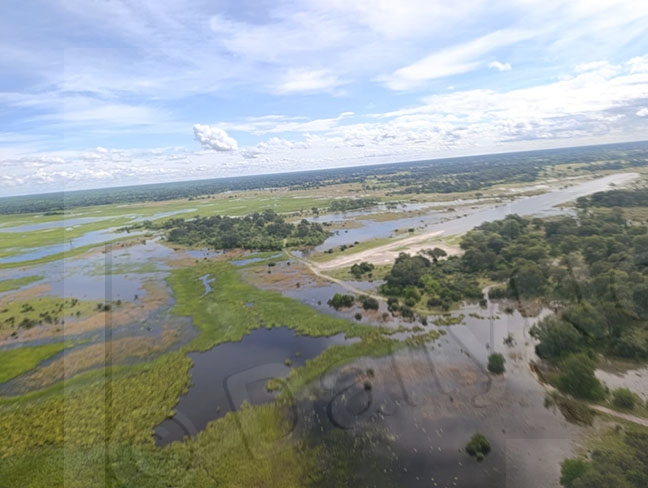
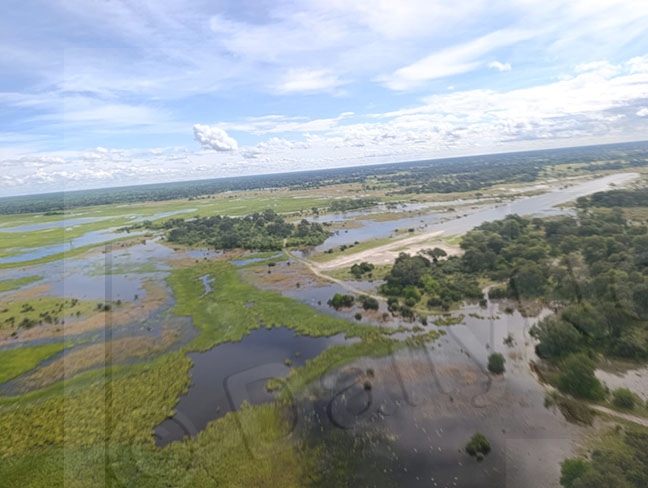
    Khawi, situated in the heart of the Okavango Delta, is experiencing flooding as the channel passing through the village is overflowing due to flood in the delta rendering some roads and homesteads inaccessible.

    Already the District Disaster Management Committee has visited the affected area to assess the impact and found about 20 households affected.

    A decision, according to North West district commissioner, Mr Thabang Waloka, was therefore taken to temporarily close the primary school as it was submerged.

    He said they had engaged with other stakeholders to ensure that arrangements were made to ensure that learning for Standard Seven pupils was not affected.

    “We have identified evacuation points for the affected families and currently mobilising resources and emergency aid as they needed food and other relief items to cope with the situation,” he said.

    Khwai is situated in flood plain area and serves as a buffer between Moremi Game Reserve and the Mababe Depression.  

    Currently, the Ministry of Environment and Tourism has closed Moremi Game Reserve for three weeks due to flooding as a result of the ongoing heavy rains.

    According to a statement from the ministry, the closure is necessary to ensure the safety of the public as many routes are currently inaccessible. 

    The ministry promised to monitor the situation and update accordingly.

    Mr Waloka also warned residents using the Shorobe-Mababe-Khwai road to be vigilant as it was in a terrible damaged by the rains. 

    He said the road was impassable as vehicles got stuck in the mud and wished residents could reduce movement until the situation improves.Khawi, situated in the heart of the Okavango Delta, is experiencing flooding as the channel passing through the village is overflowing due to flood in the delta rendering some roads and homesteads inaccessible.

    Already the District Disaster Management Committee has visited the affected area to assess the impact and found about 20 households affected.

    A decision, according to North West district commissioner, Mr Thabang Waloka, was therefore taken to temporarily close the primary school as it was submerged.

    He said they had engaged with other stakeholders to ensure that arrangements were made to ensure that learning for Standard Seven pupils was not affected.

    “We have identified evacuation points for the affected families and currently mobilising resources and emergency aid as they needed food and other relief items to cope with the situation,” he said.

    Khwai is situated in flood plain area and serves as a buffer between Moremi Game Reserve and the Mababe Depression.  

    Currently, the Ministry of Environment and Tourism has closed Moremi Game Reserve for three weeks due to flooding as a result of the ongoing heavy rains.

    According to a statement from the ministry, the closure is necessary to ensure the safety of the public as many routes are currently inaccessible. 

    The ministry promised to monitor the situation and update accordingly.

    Mr Waloka also warned residents using the Shorobe-Mababe-Khwai road to be vigilant as it was in a terrible damaged by the rains. 

    He said the road was impassable as vehicles got stuck in the mud and wished residents could reduce movement until the situation improves.

  • Avani Mosha Spa celebrate women

    Avani Mosha Spa celebrate women

    Avani Gaborone Resort & Casino, in partnership with Mosha Spa, gathered a group of women including professionals in different fields, entrepreneurs as well as young girls and students to celebrate the International Women’s Day in Gaborone on March 6.

    Avani Gaborone Resort & Casino public relations and marketing executive, Samantha Bogopa, said the event was about connection, inspiration and celebration of the strength that existed when women supported each other.

     “This gathering is part of a tradition we proudly continue each year in partnership with Mosha Spa, where together, we create a platform dedicated to empowering women. Through conversations, shared experiences, and meaningful connections, we aim to uplift, inspire, and support women across different stages of life andh career,” Bogopa said.

    This year’s International Women’s Day is themed: Give To Gain.

  • Same-Sex Couple Pushes for Marriage

    Same-Sex Couple Pushes for Marriage

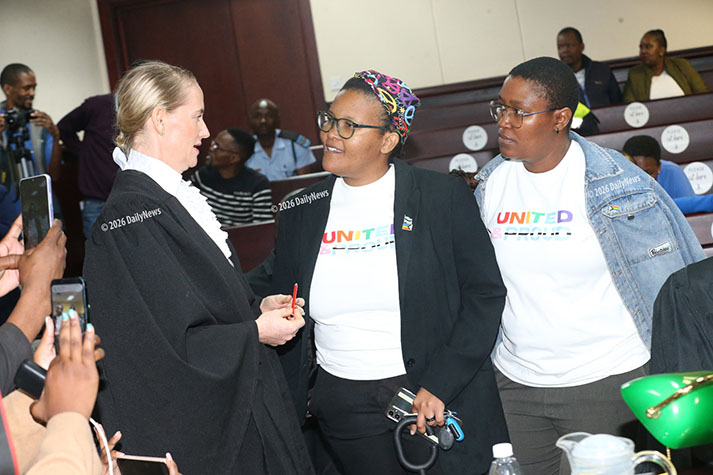
    A same sex couple has approached the High Court challenging the constitutionality of the Marriage Act, arguing that it is unconstitutional for the Act to outlaw same-sex marriages.

     The couple, Bonolo Selelo and Tsholofelo Kumile, who have approached the High Court and their case has been scheduled for July 14 -15 before a full bench of the High Court.

    The marriage also faces opposition from Dingwetsi Association of Botswana, the Evangelical Fellowship of Botswana, and the Botswana House of Prayer and Transformation, who made a joinder application before the court on Friday.

     The groups are expected to file their papers ahead of the commencement of the case commence.

    The organisations have argued that they stand for the sanity of marriage and protection of the current status quo, where a married couple comprises a woman and a man.

    However, in response to the joinder application, Selelo in an interview said it was awkward that the church and Dingwetsi Assoication of Botswana had chosen to oppose their marriage, noting that Batswana were known to have a history of fighting for love, and thus they would not give up to pressure.

    The applicant cited the case of the founding President, Sir Seretse Khama, and his marriage to Ruth, which, despite opposition, eventually took place.

    “It is our culture to fight for love,” Selelo said.

    It is not the first time the country has faced cases of such nature, following the 2019 High Court decision that ruled that laws criminalising same-sex relations were unconstitutional, a decision upheld by the Court of Appeal in 2021.

    The court ruled that criminalisation of consensual same-sex activities violated constitutional rights of gays, lesbians, bisexuals, and transgender people, ruling in favour of a gay man, Letsweletse Motshidiemang, who had taken the state to task.

    When dismissing the government’s appeal of the High Court decision, the then President of the Court of Appeal, Justice Ian Kirby, said the High Court was correct to strike down Sections 164(a), 164(b), and 165 of the Penal Code (Cap 08:01) as they breached the fundamental rights to privacy.

    “Sections 164(a) and 164(c) of the Penal Code (Cap 08:01), Laws of Botswana, are hereby declared ultra vires sections 3, 9, and 15 of the Constitution and are accordingly struck down. At present, they serve only to stigmatise gay men unnecessarily, which has a harmful effect on them, and as far as I am aware, there has never been any prosecution of a woman or even any thought of doing so, for the offence of sodomy,” he said.

    The two sections, he said outlived their usefulness and served only to allow law enforcement agents and others to become keyhole peepers and intruders into the private space of citizens, which he said was neither in the public interest nor in the nature of Batswana. He noted that many countries had recognised the right to same-sex relationships and had international instruments to which Botswana was a party, such as the Universal Declaration of Human Rights of the United Nations and the International Covenant on Civil and Political Rights. 

  • Speakers pay tribute to Mooketsi

    Speakers pay tribute to Mooketsi

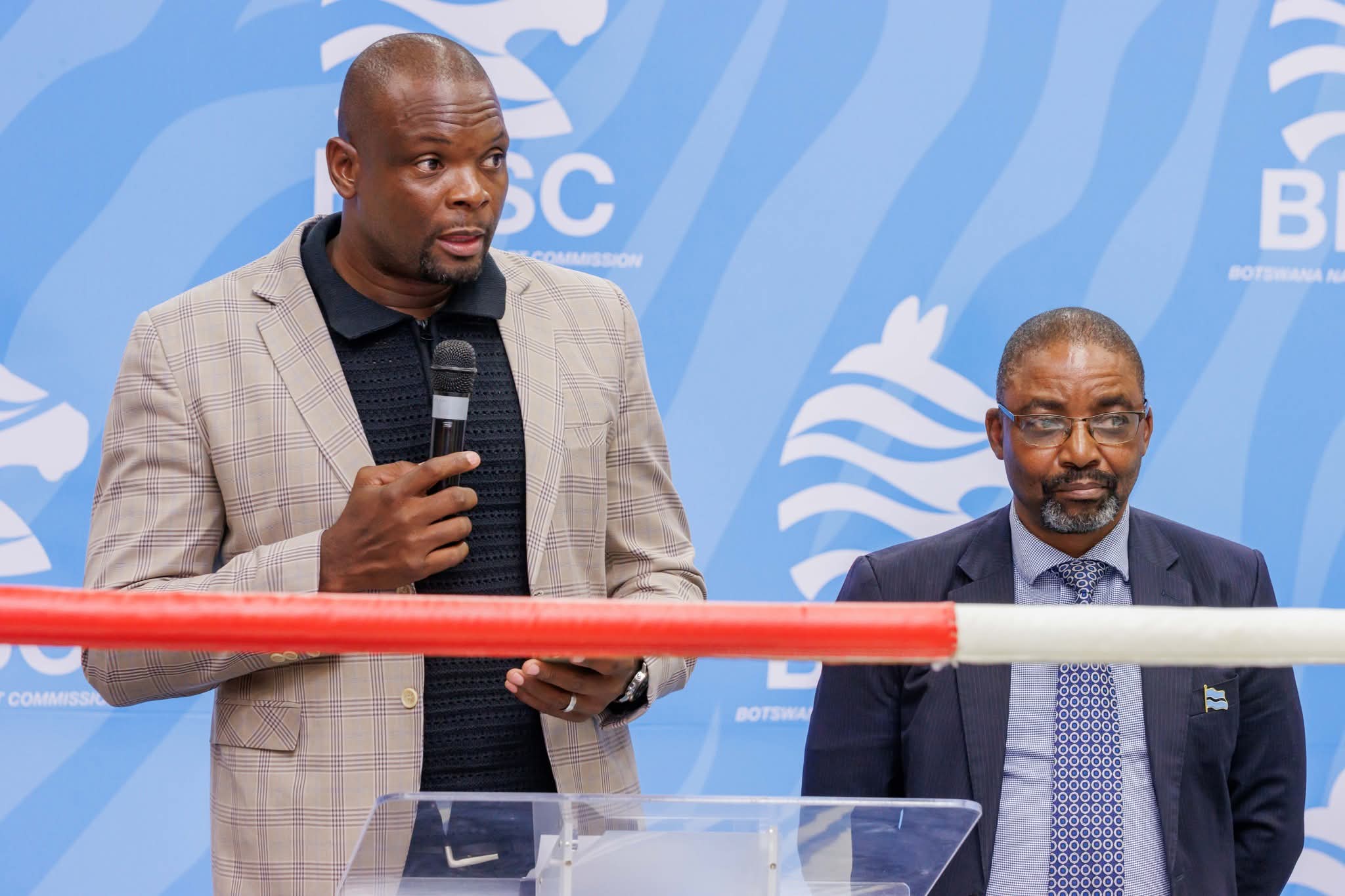
    Different speakers have described former women boxer, Pearl ‘Tsitsi’ Mooketsi as a loving, caring and dedicated person.

    Mooketsi, who died on Monday, will be buried in Serowe on Saturday.

    Mooketsi, who worked at the Botswana National Sports Commission (BNSC) as Boxing Development Officer, was the only woman in Botswana with Star 3 coaching qualification.

    BNSC director of sports development, Peaceful Seleka, described her as a dedicated employee who left an inedible mark in their organisation.

    He said she embodied the spirit of excellence and passion for sports development.

    She said her experience as a former national team boxer gave her a unique perspective, which she leveraged to inspire and empower others.

    Seleka said her sudden departure had left a void in their department and the broader sports community.

    “We mourn the loss of a colleague, a friend, and a true sports enthusiast,” he said.

    National team boxer Lethabo Modukanele said she first encountered Mooketsi’s loving and caring nature when she made it to the national team in 2017.As an upcoming boxer back then, she said she looked up to Mooketsi. 

  • Living between vigilance and hope

    Living between vigilance and hope

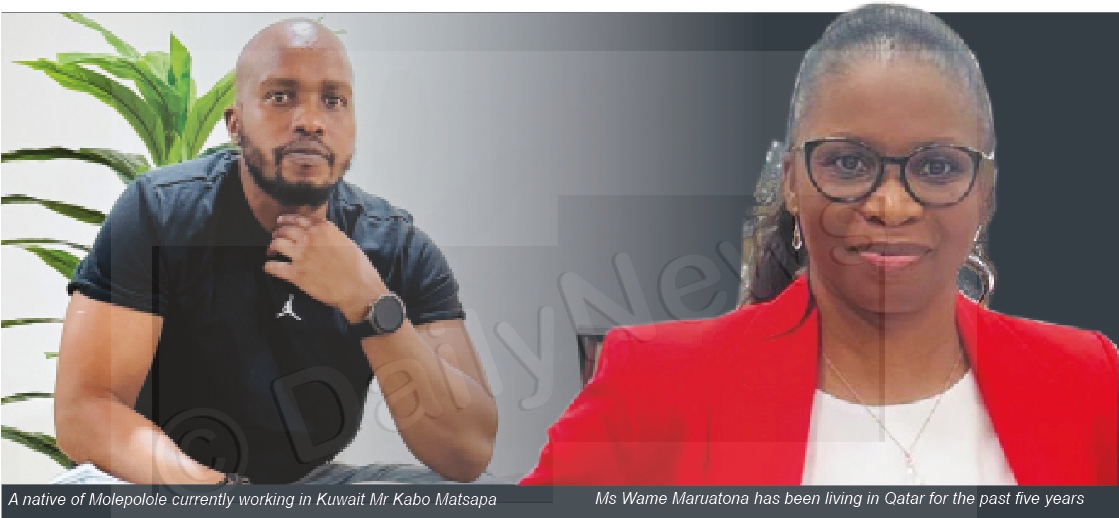
    For Wame Maruatona, mornings in Qatar often begin with a quiet moment of reflection before the day’s routine starts. Like many expatriates, she moved abroad in search of opportunity and stability. But in recent days due to the war between Israel/United States of America and Iran, life has taken on a different rhythm one shaped by vigilance, uncertainty and resilience.

    For the Motswana who has lived in Qatar for the past five years, daily life still appears calm on the surface. Supermarkets remain stocked, communication networks function normally and people continue with work, often from home. Yet beneath this sense of order lies a subtle but persistent tension.

    “Coming from a place where I am not accustomed to war, missiles or interceptors, hearing loud bangs sometimes early in the morning or while asleep is emotionally draining and very unsettling,” she says in an interview with BOPA.

    For Ms Maruatona, the sounds are often the most unsettling part. When buildings tremble and windows rattle, instinct takes over.

    She explains that when buildings shake and glass rattles, her first reaction is often shock, followed by prayer and a quick check of official updates.

    Authorities in Qatar have urged residents to remain indoors when necessary, avoid standing near windows and rely only on verified information. While such guidance is meant to ensure safety, Ms Maruatona admits it does little to ease the emotional strain.

    “Every little sound can make you jump.” 

    Despite the anxiety that occasionally surfaces, life continues with a degree of normalcy. Supermarkets operate around the clock, pharmacies remain open and many businesses have shifted to remote work arrangements.

    “There are no visible shortages of food or medicine,” she explains. “The biggest change is movement. People are encouraged not to go out unnecessarily, so like many others I work from home.”

    But beyond the routines of daily life lies the psychological weight of living in a region experiencing heightened tensions.

    “It is the heightened awareness, the unexpected sounds, the occasional fear and panic. Even watching the news can increase anxiety,” notes Ms Maruatona.

    In moments like these, community has become a vital source of comfort.

    Among Batswana living in Qatar, there is a strong sense of solidarity. Social media platforms and messaging groups have become lifelines, connecting people who check on one another regularly.

    Botswana’s embassy in Doha has also remained accessible, coordinating with citizens through communication platforms and providing updates where necessary.

    “On a daily basis we check on one another, which is reassuring,” says Ms Maruatona , adding that colleagues at the commercial bank where she works and members of her church have also provided emotional support.

    Yet amid the reassurance, an unspoken question lingers among many expatriates: what would happen if tensions escalate further?

    Still, she says one of the most striking aspects of her experience has been the empathy shown by ordinary people.

    “Most people I interact with clearly distinguish between military targets and civilians. There is a shared understanding that ordinary people are often caught in broader geopolitical tensions beyond their control.”

    While uncertainty remains, she believes the situation is being managed responsibly.

    Her hope, like that of many others, is for diplomacy and de-escalation.

    “Clear and sustained de-escalation would allow us to feel fully at ease again,” she quips.

    Until then, life continues structured, cautious and supported by community, even as the background hum of uncertainty persists.

    Thousands of kilometres away in Kuwait, another Motswana shares similar feelings.

    Mr Kabo Matsapa, originally from Molepolole, has spent years working across the Gulf region, including time in Saudi Arabia. Like many expatriates, he travelled abroad seeking better economic opportunities. But the reality of living in a region facing security tensions has been far more challenging than he anticipated.

    “It is a disheartening experience to find yourself in a war-torn place. We came here for greener pastures, but now we are living in fear.”

    Mr Matsapa works as a professional firefighter attached to a refinery, a job that already carries significant risks even in stable conditions.

    “Working at a refinery where there are gases and oils, we must ensure that no fire breaks out,” he explains. “It is already a dangerous environment, and it is even more worrying now.”

    Although he has been trained to respond to emergencies, the uncertainty surrounding the broader security situation is something he finds difficult to manage.

    “As firefighters we are trained to deal with crises, but this is different. Sometimes when we go to sleep we do not know if we will wake up safely the next day.”

    When sirens sound, instinct and fear collide.

    “You find yourself looking up, trying to understand what is happening and at the same time looking for somewhere to hide,” he said.

    Returning home, however, is not a straightforward option.

    Like many expatriates, Mr Matsapa says economic realities remain a powerful factor in the decisions people make about where to live and work.

    “The truth is we came here because opportunities are limited back home. With the unemployment rate in Botswana, going back would make it very difficult for us to survive.”

    For now, hope remains the thread holding many expatriates together, hope that tensions will ease, diplomacy will prevail and life will once again feel ordinary.

    Until then, people like Ms Maruatona and Mr Matsapa continue to navigate daily life between vigilance and hope, holding on to the belief that stability will eventually return