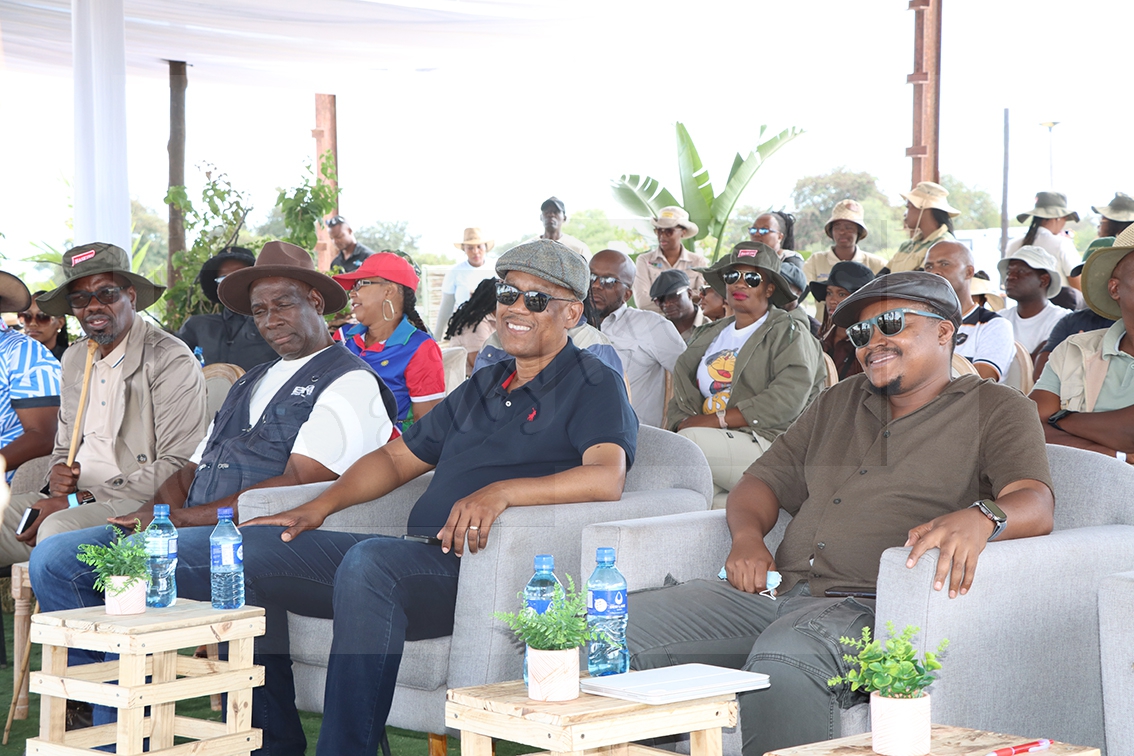
Minister for State President, Defence and Security has informed Parliament that the Department of Broadcasting Services has partnered with France 24 since 2011 and the agreement has allowed for the free distribution of France 24 English on the department’s Direct-To-Home (DTH) and Digital Terrestrial Television (DTT) platforms, remaining in effect until either party terminates.
Author: Daily News
-
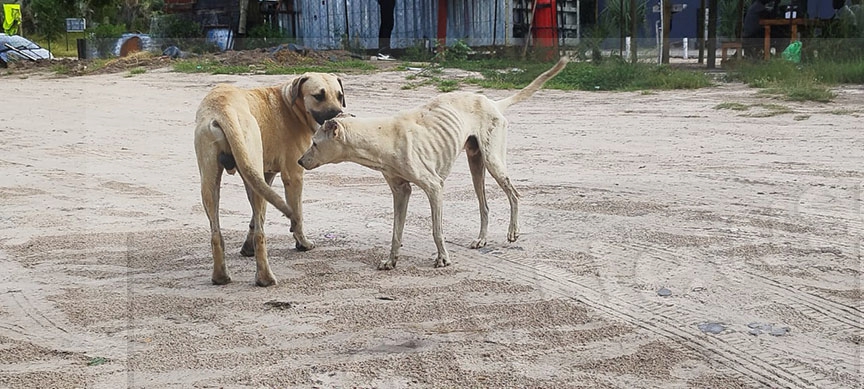
Dept Culls Pets to Prevent Rabies Spread
Following three recorded deaths linked to rabies disease, the Department of Veterinary Services has taken a decision to interrupt the rabies transmission chain by culling all pets roaming the streets in the North West district.
The department had been authorised by the North West District Council to carry out humane destruction of dogs and pigs roaming the streets. Authorisation has been granted for a period of a year subject to review as the exercise is intended to be carried out annually to manage pet population, eliminate human rabies and to promote responsible pet ownership among the general public.
Currently, the department has issued a public seven-day notice as the culling exercise is scheduled to commence on April 14.
Principal veterinary officer, Dr Bruce Mafonko reiterated that three deaths involving children had been recorded last month, adding that the decision to put down roaming dogs to manage public health risks and improve safety was meant to avert a repeat of the incidents.
Dr Mafonko said from January to date, about 16 positive rabies cases in dogs and seven incidents of dog bites had been recorded.
“We have been authorised by the local council to embark on the exercise following the rabies outbreak. The district has a high number of pets estimated at around 20 000 as compared to 15 000 recorded during the 2020 outbreak,” he explained, and added that pigs would be kept at Matimela kraals.
While the collaborative vaccination campaign continues with the support of private organisations, Dr Mafonko said so far, 6 937 dogs had been vaccinated, and he encouraged members of the community to bring their pets for vaccination at veterinary offices from Monday to Friday.
He said rabies was a concern that required all stakeholders to put more resources to control and contain it.
Community health nurse, Ms Cindrella Gaebowe from the North West District Council concurred that they anticipated more positive cases of rabies looking at the number of incidents of dogs biting people in the past months.
She said they had recorded 87 cases and three deaths, all linked to incidents of dog bites that occurred in February and March.
Ms Gaebowe said if a patient was symptomatic and diagnostic testing confirmed rabies, the disease was nearly always fatal, explaining that treatment was typically supportive, with the only effective treatment being post exposure prophylaxis within 24 hours and immediate wound cleaning with soap and water.
“This disease is spread by contact with infected saliva from a bite, and scratches of infested animals and dogs also carry rabies and are responsible for 97 per cent of human rabies and deaths worldwide,” she said.
To mitigate the situation locally, Ms Gaebowe said community mobilisation continued at health facilities citing that members of the community were advised to tether their dogs until veterinary officers come for assessment.
For his part, North West District Council chairperson, Mr Itumeleng Kelebetseng also expressed displeasure with the recorded deaths linked to rabies and attested that they had authorised the relevant authority to carry out humane destruction of dogs and pigs roaming the streets as they posed a danger to community members’ lives.
He said the authorisation was in accordance with Bye-Law 5 (3) and 7(2) of the North West District Council.
With respect to pigs, he said the operation would be conducted in line with the 2014 byelaw on the control of livestock and other animals, which requires that pigs be detained prior to destruction.
Mr Kelebetseng warned members of the public to vaccinate their pets and keep pigs outside the village as reports had indicated that the rabies outbreak was believed to threaten hundreds more due to close human-animal interaction and lack of awareness about rabies.
-
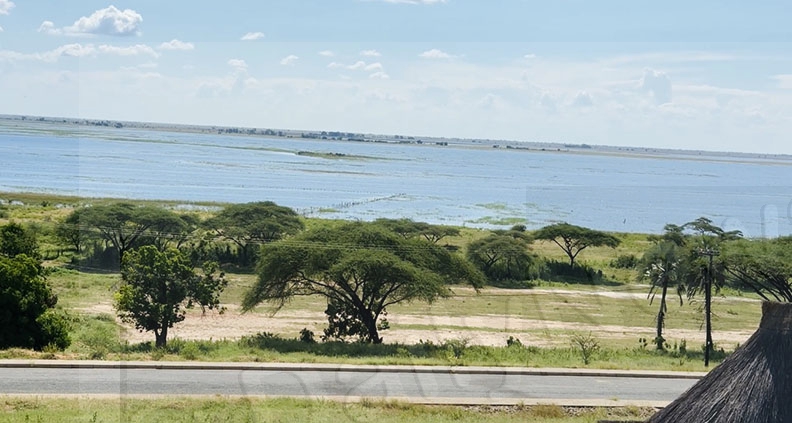
Residents on High Alert as Chobe River Levels Rise
Residents in flood prone areas are on high alert as Chobe River water levels continue to rise triggering widespread floods.
Department of Water and Sanitation’s chief water and sanitation officer at Kasane station, Mr Otlaathusa Tshekiso said water levels in the Chobe River recorded the highest readings in five years resulting in over spilling from the main river channel into floodplains.
He explained that this year’s hydrological patterns mirrored the high rainfall years of 2009/10, 2017/18 and 2019/20 raising alarms for flood prone communities.
Mr Tshekiso said in the aforesaid rain seasons the water levels at Mowana station, which was used for reporting weekly national hydrological situation, exceeded the 5.35 metres threshold.
He said the increasing water levels in the Chobe River were driven by a regional surplus in rainfall and strong inflows from the upstream Zambezi catchment.
Mr Tshekiso indicated that lodges near Shoprite and Chobe Big Five Lodge in Kasane were sitting in a flood prone area hence flooding during a surge in water levels.
Moreover, he said the Kachikau-Satau road as well as Satau village were highly vulnerable to isolation and inundation during Chobe River peak flows.
Mr Tshekiso said the District Disaster Management Committee (DDMC) was conducting a community sensitisation through public announcement and schools outreach to alert students on the threats that were posed by rising water levels and possible floods.
He said the DDMC was equally engaged in mobilising resources and putting in place mitigation measures to manage envisaged closure of flood-prone roads inside Chobe National Park.
Furthermore, he said the DDMC would continue to conduct risk assessments in flood prone areas and educate residents to be on high alert, adding that currently no one had been displaced by the inflows.
-

Re Imetswe the Hidden Weight Carried by Many
In the bustling streets of Botswana’s cities, towns and villages, a phrase echoes through the crowds, ‘Eish, re imetswe’. It is a silent scream, a whispered plea, a desperate cry for relief. ‘Re imetswe,’ is a phrase commonly used almost everywhere; it is used in situations where folks are fighting battles on multiple fronts.
Broken relations from romantic to family relationships, unemployment, the weight of high bills, inflation squeezing everyone’s wallet, health battles, low business and the state of being broke, are many battles that many find themselves entangled in.
Different people react differently to the challenges, but many feel a heavy weight on their shoulders; they carry a burden so heavy it feels unshakeable.
For Fela Maela, a beautiful lady in her late 30’s, an entrepreneur, a graduate and a hustler, it’s a reality check that hits home every day.
Every morning before dawn, she drags herself out of bed. Her body screaming from fatigue, but because the day will not wait for her weak body to recover, she gets up to face her daily reality.
Around 8am she is already by her stall in front of Ntshe House in Francistown, ready to serve customers with her commodities ranging from perfumes, pre-loved clothes, drinks and an assortment of snacks and sweets.
Having been operating her stall for more than five years now, Maela, a Bobonong native, feels the impact of the economic meltdown as she now experiences low sales as people tend to spend less in the current state.“Most of my customers are government employees who work in Ntshe House. Their buying power has really dropped, this means reduced sales and revenue on my side,” she said. As a mother of two, depending on this business to care for her children, this really disheartens her, making life more difficult than it has ever been.
With many other small hustlers also out to eke a living, this saturates the market even further, making the few remaining customers a market way too small for the countless hustlers.
“Everyone tends to have a small business. Even government employees opt to have side hustles as their salaries no longer sustain them hence they resort to selling the same items that we sell like snacks, clothes and perfumes, “she added.
There are times when Maela knocks off without having sold much, and the days of almost zero sales are becoming too common, and their frequency is affecting her ability to take care of her bills which include rental, groceries and other necessities.
This, coupled with other incidents that she sometimes experiences such as her stock being stolen, customers not paying for goods taken on credit as well as unfavourable weather conditions make her situation gloomier.
The business being her sole source of income adds salt to the wound, and while she can easily hide her sorrow behind her beautiful smile, a storm of uncertainty is usually raging deep within her soul.
Maela carries exhaustion, despair and the bitter taste of life’s realities.
“Indeed re imetswe, we are under a lot of pressure; the low and unstable income caused by selling without profits is draining us. Nako tse dingwe o kgona go tswa le P10 tota o sa mo rekisa,” she said.With the cost of living getting out of reach every day for many people, people are left with no money and Maela believes this plays a role in affecting thee poor mental of many people.
“We stay in survival mode, we live from hand to mouth, we don’t have savings. We toil and toil just so that we can pay rentals and buy groceries,” she explained.
Maela acknowledges that this reality is also hitting hard on families, with unemployed women venturing into all sorts of small businesses to augment their husbands’ and partners’ salaries. However, the small businesses often fail to help because they struggle from the onset due to market constraints.
Also, with unemployment taking its toll on the majority of the citizens especially the youth, she believes Batswana are indeed overwhelmed.
However, with the situation escalating daily, Maela feels Batswana should brace themselves for even tougher times as it seems the road ahead will be longer than thought.
Re imetswe is not just a phrase, it speaks to the back-breaking burden that many Batswana are carrying just to survive any given day.
Meanwhile, a mental health and psychosocial support practitioner, also a counsellor, Dr Blinkie Oteng said the phrase ‘re imetswe’ is more than a statement but a psychological and emotional distress signal. Dr Oteng perceive the statement to be reflecting a population carrying invisible burdens, financial pressure, relationship pain, grief and unmet expectations.
“When people say re imetswe, they are not just tired, they are overwhelmed beyond their coping capacity, and if not addressed, this state can significantly affect mental, physical and social wellbeing,” she remarked. Nonetheless, Dr Oteng agrees that even in that state of being overwhelmed, help is possible.
“When we speak, when we are heard supported; the weight begins to lift.
-

Ten Benefit from KAGO Scholarship
New Era College has sponsored 10 beneficiaries through the KAGO Scholarship, a new initiative aimed at equipping young people with practical, industry-relevant training. Speaking at the launch event in Gaborone recently, the college’s public relations and partnerships manager, Mr Kgosi Moremong said the beneficiaries were selected through a transparent and merit-based process.
He said the KAGO Scholarship targeted members of the Gaborone community and aimed to bridge the skills gap by providing hands-on training in construction-related fields.
The programme offered training in key areas including bricklaying, plastering, painting, ceiling installation and design.
Also, he pointed out that beyond technical instruction, the programme also incorporated industry attachment and job placement support to enhance employability.
“This initiative is very close to our hearts, it allows us to give back to the community we serve, not only by offering education but by ensuring that participants gain meaningful opportunities in the workforce,” Mr Moremong said.
In addition to community beneficiaries, he noted that the college had extended the scholarship opportunity to two members of its own grounds and maintenance staff, enabling them to upgrade their skills while continuing their employment.
The course instructor in the Construction Department, Mr Edmore Dupwa expressed optimism that the KAGO Scholarship would contribute to building a more skilled workforce while strengthening ties between the institution and the community.
He said they would strengthen practical skills within the construction sector and introduced a hands-on short course focused on equipping participants with essential building techniques and safety knowledge.
Mr Dupwa said the six months course was designed to ensure that learners acquired critical competencies that directly impacted the quality and safety of construction projects, adding that learners must first understand tools, their uses and maintenance before engaging in fieldwork.
“We do not just take you into the field immediately. You must first understand the tools, their uses and their maintenance. Safety in the construction industry is very important,” Mr Dupwa noted.
He said the course followed a structured progression from classroom-based theory to real-world practice, ensuring that students not only learned concepts, but also applied them effectively.
“From tool handling to setting out and executing construction tasks, every aspect is reinforced through hands-on experience,” he said.
By combining theory with fieldwork, Mr Dupwa said the training initiative aimed to produce skilled, safety-conscious builders capable of meeting modern construction standards.
He said as Botswana continued to develop its infrastructure, such programmes were expected to play a vital role in shaping a competent and reliable workforce in the building industry.
Also speaking at the event, Kgosi Kenneth Thari expressed gratitude to the selected cohort and encouraged them to remain disciplined and committed to their studies.
He reminded beneficiaries that the opportunity came at no cost and urged them to adhere to school rules and avoid absenteeism.
Kgosi Thari said as Botswana continued to expand its infrastructure, initiatives such as the KAGO Scholarship were expected to play a critical role in addressing youth unemployment and developing a competent, safety-conscious workforce within the construction sector.
The KAGO Scholarship Programme, valued at over P250 000, provided full tuition for the Building and Construction Programme.
It is a flagship Corporate Social Responsibility initiative developed in partnership with the Office of the Member of Parliament for Gaborone Bonnington North and the Block 8 Kgosi’s Office.
-

Top Athlete Eye Botswana Golden Grand Prix
Top athletes have shown appetite in competing at the coming Botswana Golden Grand Prix billed for the National Stadium on April 26.
Those who have confirmed participation include Canadians Andre De Grasse and Jerome Blake, Kenya’s Ferdinand Omanyala, Mark Otieno, Isaac Omurwa as well as South Africa’s Bradley Nkoana, Wayde Van Niekerk who will be competing in the 200 meters men category.
In the 200 meters women, the 2024 Olympic champion from USA, Gabby Thomas will be in the house with the duo of Leah Bertrand and Eyayu Mekuanent from Trinidad and Tobago.
The host country is not left behind as the duo of its rising athletics stars being Tshepiso Masalela and Kethogile Haingura having confirmed their participation in the 800 meters distance.
BGGP spoke person, Calistus Kolantsho said preparations were at an advanced stage, adding that their aim was to re-claim their golden status.
Kolantsho said the event title sponsors and other sponsors will be unveiled in the coming days. He however said most of their sponsors were not new to the event as they have been working with them in the past years.
He said with the caliber of athletes they were bound to attract, they were confident to sell tickets in large numbers and fill the stadium to full capacity.
“The past two events Lefika Athletics Relays and Orange Botswana Athletics National Championships has challenged us to be very robust in our marketing strategies, because we have observed that people did not turn up in large numbers,” he said.
-
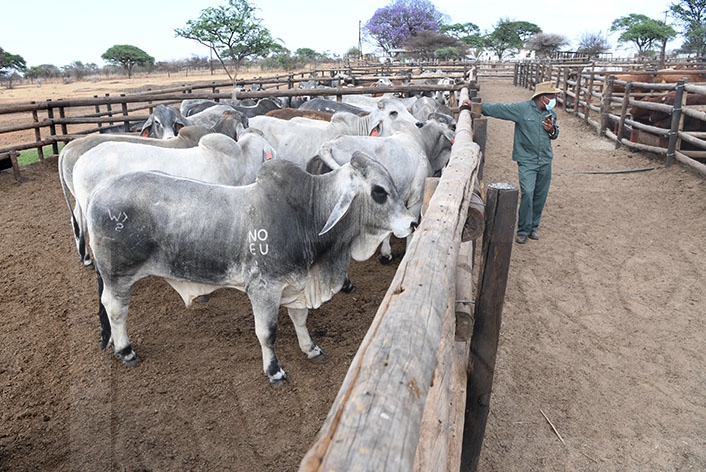
Thirty-four Bulls Test Positive For FMD
At least 34 bulls have tested positive for the Foot and Mouth Disease (FMD) at the Ramatlabama Artificial Insemination Training Centre in Zone 11. The affected animals are part of the 65 bulls, which have been trained for semen tapping.
According to Foot and Mouth Disease coordinator at the Ramatlabama Artificial Insemination Training Centre, Dr Odireleng Thololwane bulls were currently quarantined in their own paddock, so as to ensure that they did not come into contact with other animals, which had not been infected.
Also, he said all the affected bulls had been vaccinated, adding that the Department of Veterinary Services would continue with surveillance in and out of the ranch.
He pointed out that the results of the surveillance would guide the way forward on what needed to be done.
In addition, he said there were no signs of new infections so far.
Ramatlabama Artificial Insemination and Training Centre is home to over 200 animals, which includes goats and cattle.
Recently, the Acting Minister of Lands and Agriculture, Dr Edwin Dikoloti told the Ramatlabama residents in an emergency kgotla meeting that despite efforts to curb spread of the disease from South Africa, some animals at the centre were infected.
While investigations are underway to determine where the disease came from, the ministry have since issued prevention control measures effective immediately that no cloven-hoofed animals shall be slaughtered or transported across zone 11 for any use or social events.
Movement of cloven-hoofed animals were prohibited in zones 3c, 4a, 4b, 5, 6b, 8, 9, 10, 11, 12 and 13 while in within disease control zone 2 (Ngamiland and Okavango) and zone 1 (Chobe) is allowed.
Still at the meeting, Dr Dikoloti also said importation and in-transit of all cloven-hoofed animals was suspended and permits were revoked with immediate effect.
Furthermore, the acting minister pleaded for cooperation between the community and other stakeholders in order for the disease to be controlled.
“This is a sad day for the beef industry and the economy of our country because even Botswana Meat Commission has now stopped operating,” he said.
-

Bogosi Pinagare Ya Setshaba- Motshegwa
Go tswa go Lowe, bogosi ke pinagare ya setshaba ka jaana le motheo wa go tsamaisa lefatshe o agetswe mo go jone, ka jalo, bo tshwanetse go tlotliwa, mme ebile go sa kgoreletswe ditsamaiso tsa ditlhabololo tsa sesha.
Seo, se builwe ke tona wa lephata la dikgaolo le tsa ngwao, Rre Ketlhalefile Motshegwa, jaaka a ne a buisa phuthego ya kgotla mo Ghanzi bosheng, mabapi le seemo sa bogosi jwa motse oo, se se ntseng se sa robalelwa ke ditlhokwa.
Tona Motshegwa o ne a tlhalosa fa bogosi jwa Ghanzi bo tlholegile e le jwa Setswana mme morago jwa fetolelwa kwa go jwa sekgoa ka fa tlase ga tsamaiso ya boeteledipele jwa setoropo.
Le fa go ntse jalo, Rre Motshegwa o ne a supa fa ba ne ba amogela boikuelo jwa banni ba Ghanzi, kgang kgolo e le kopo ya gore puso e fetole tshwetso eo, go busetswe bogosi jwa Setswana.
A re mabaka a bone a ne a ikaegile ka go sireletsa ngwao ya setswana mo motseng wa bone, e ba neng ba dumela e nyelela ka monokela.
O ne a tlhalosa fa goromenete a ikemeseditse go sireletsa ditshwanelo tsa batho gammogo le go rotloetsa therisanyo.
Rre Motshegwa a re ba ne ba ntsha lekoko la magosi a le mararo le le neng la filwe boikarabelo jwa go buisana le morafe ka kgang ya bogosi le gore ba eletsa e ka nna jwa sebopego se se ntseng jang.
A re tiro e, e tsamaile ka bonokopila le manontlhotlho le mororo go seke go tlhokafala dilabe.
Rre Motshegwa o ne akgola lekolo leo, le le neng le akaretsa, Mothusa Kgosi wa Bakwena, Kgosi Lawrence Mhaladi,Kgosi Thabo Mathiba wa Mmathethe, Kgosana wa Otse Omphitlhetse Mphaphi,ba tshwaragane le ba lekgotla la Ditshwanelo .
A re therisanyo eo, e ne ya simolola kgwedi ya Tlhakole e tlhola malatsi a ferabongwe go ema e le malatsi a le lesome le boraro monongwaga.
Rre Motshegwa o ne a iteela kobo moroko mafoko a lekoko leo, ka go gatelela tshwetso ya gore boeteledipele jwa bogosi jwa Ghanzi bo tla nna jwa Setswana, ka fa tlase ga boeteledipele jwa lwapa loora Thamae, e le ba letso la Basarwa, mme bathusi ba bone e tla nna boora Setima e le ba letso la Bakgalagadi, e le maemo a tla jewang boswa otlhe. A re maemo a kgosana one, a tla nna a a tlhophelwang go tswa mo merafeng e mengwe e mo motseng.
Rre Motshegwa o ne a ikuela mo morafeng, go fokotsa dikubetsano tsa maemo a bogosi, ka jalo, a ba gwetlha go kwala ditso tsa merafe gammogo le dikgotla tsa bone mme di bo di rurifadiwa mo lekgotleng morago ga go buisana le morafe ka kakaretso.
A re seo, se tlaa thusa go menagane go itsa ketsaetsego ya tatelano ya maemo a bogosi mo isagong.
Mo mafokong a gagwe a kamogelo, Moemedi kwa ntlong ya Dikgosi, Kgosi Esau Molehele, o ne a amogela tshwetso ya tharabololo ya kgang ya bogosi mo sebakeng sa kgwedi tse tharo, tshwetso e a supileng e sa bolo go goga dingwaga go sena nko e tswang lemina.
A re morafe o ne o le kgatlhanong bogosi jwa setoropo jaaka ba ne ba dumela gore bo a ba patika go tsosolosa le go somarela ngwao ya bone, a supa fa ba na le tshaimaelo jananong ya go tsosolosa serodumo sa dingwao tsa bone ka tshosologo.
Morafe o ne wa itela legofi tshwetso e e tserweng mme ba rurifaletsa tona fa ba tla tshwaraganela go bopa le go dibela se ba sa bolong go se eletsa.
Mo mafokong a gagwe a malebo, Modulasetilo wa kgaolo ya Ghanzi, Rre Thabiso Kebadile, o ne a iteela legofi tshwetso a re e tlaa nonotsha kagiso le ledula mo motseng wa bone. O ne a gwetlha morafe go nna seopo sengwe, ba kgaphele kwa thoko dipharologanyo tsa semorafe mme ba amogele tshwetso ya puso ba dibele bogosi jwa bone jwa Setswana mme gape ba tshwaragane le makgotla a mangwe a tsamaisang puso. -
Kelebeng Appreciates Namibia Support
The third edition of Masa Easter Cup held at Masa Racing Park, Samedupi on Saturday drew crowds from all walks of life for Easter of celebration and unity.
The event has proven to be a family affair as the excitement swept all, showing how deeply horse racing is woven into the fabric of everyday life. The thrilling event attracted diverse crowd from high profile celebrities to local fans cheering from their comfortable corners of the track.
Themed “Hoofprints Never Fade – Honouring the Brave Horses Who Ran Before Us,” the event saw Botswana and Namibia horses battling out in a highly classic, vibrant and competitive race with top horses in the likes of the locally prominent, Western Bypass, Sliver Sky, Prince and After Shock among others.
Amongst the multitudes, was the Minister of Sports and Arts, Jacob Kelebeng who acknowledged that horse racing occupies a unique and cherished place in the society as it connects generations, sustains livelihoods, and unites people across communities and borders.
The remarkable event, he said not only celebrates the thrilling sport of horse racing, but also showcases the strength of the communities, the richness of their culture and the growing economic opportunities within the nation.
He also appreciated the Namibian participation saying their presence strengthens regional cooperation and affirms the unifying power of sport within the Southern African Development Community (SADC) family. While appreciating efforts made so far in terms purchasing of starting gates, he said a lot needs to be done recognising the industry as a potential driver of economic growth and diversification as well as rural development.
“This is an investment project that can generate more revenue for locals even for government and private sector as there is betting. It also positively impacts on livelihoods of the locals,” he said.
Western Bypass horse from Motokwe did not disappoint its fans as it retained its title as the MASA Easter Cup champion in the 2400 meters grand race winning P20 000 followed by Pee Jay from Namibia and After Shock in position two and three, pocketing P15 000 and P10 000 respectively.
In the 2000 meters thoroughbred category, Action Time from Namibia scooped position one while Botswana’s Diamond Dust and Red Summit took position two and three respectively.
In the 1 600 meters thoroughbred, Whisper from Namibia clinched first price, cashing P10 000 while local horses After Shock and Silver continued their impressive form taking position two and three worth P8 000 and P6 000 in that order.
-
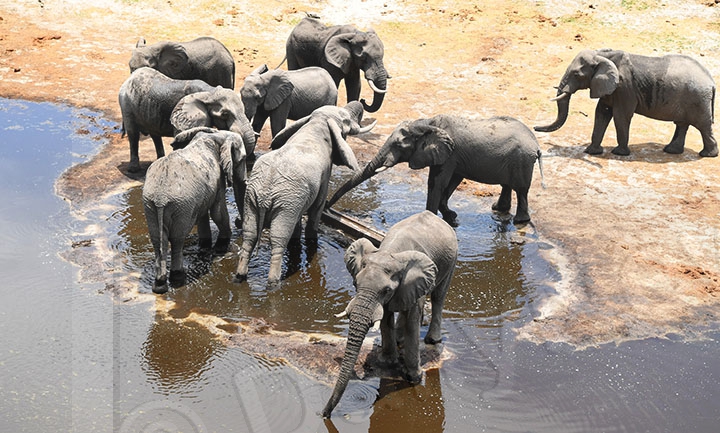
Elephant Quota Sales Boost Five Villages
The five villages of Gumare, Tubu, Danega, Nokaneng and Habu will each receive P450,000 from the sale of the recently awarded nine-elephants quota.
Okavango District commissioner, Mr William Keareng made the announcement when addressing residents of Gumare during a recent kgotla meeting.
To this end, Mr Keareng has called on residents of the five villages to revive farmers’ committees and an umbrella farmers’ association so that they benefit from the agricultural hunting quota, which was designed to mitigate human-wildlife conflict challenges.
Also, Mr Keareng advised the communities to devise suitable projects that would reduce human-wildlife conflict and also benefit the communities economically.
In the past, he said, the quota was coordinated by community trusts, which were not aligned with the quota’s core purpose, which promoted farmers’ associations’ close collaboration with farmers’ committees in each village to ensure proper coordination.
Meanwhile, Gumare residents welcomed the quota, saying it would benefit the communities while reducing human-wildlife conflict.
Some residents called for the establishment and electrification of a communal farm for growing fruits and vegetables and their value chains to supply supermarkets, which they said would promote agriculture while benefiting communities.
Others suggested drilling of boreholes in wildlife management areas to water elephants and maintenance of buffalo fences to curb human-wildlife conflict.
They also suggested that part of the funds should be channeled toward addressing challenges such as animal diseases in the area.