Category: Daily News

  • Refreshed DailyNews Receives Thumbs Up

    Refreshed DailyNews Receives Thumbs Up

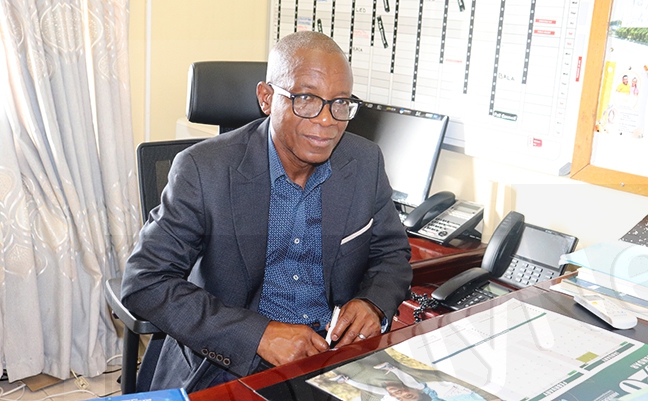
    Readers warmly embraced the revamped DailyNews newspaper, with many celebrating it as a modern and more engaging evolution of a paper that has long shaped Botswana’s public conversation.Among those impressed were Mr Duncan Balothanyi and Mr Benson Goatweng, who both applauded the cleaner layout, richer visuals and expanded editorial depth, noting that the refreshed design felt more contemporary while still honouring the publication’s heritage. Their reactions echoed a broader public sentiment that the new look not only revitalised the reading experience, but also reinforced the DailyNews’ enduring role as a unifying national voice and a platform for storytelling across the country. 

  • Disability Act Comes to Effect

    Disability Act Comes to Effect

    The Minister for State President, Mr Moeti Mohwasa has declared the official commencement of Persons with Disability Act of 2024, which aims to advance the rights of persons with disabilities and promote inclusion and equal opportunities.

    He said in addition to aligning with the United Nations Convention on the Rights of Persons with Disabilities, which Botswana was party to, the legislation also resonated with the government’s commitment to being human rights-based.

    “This historic moment signifies that the rights of persons with disabilities are now fully recognised and enforceable under the law,” said the minister at the UN International Day of Persons with Disabilities Commemoration held in Jwaneng yesterday.

    Consequently, Mr Mohwasa noted that the official commencement of the Act implied that the Disability Coordination Office and the National Disability Council were fully operational, while the regulations defining a person with disability had been finalised. He noted that this development paved way for the effective implementation of the statute, urging all institutions to immediately align their operations with the Act.

    The Minister underscored the need to adopt inclusive programmes through providing accessibility in all public buildings and transport to cater for persons with disabilities, as well as getting rid of all barriers that were against the new framework.

    “With the Act now in force, we call on all institutions, communities and citizens to take immediate action. Public buildings, businesses and transport must meet accessibility standards. All forms of communication must be inclusive and the attitudinal barriers that hinder full participation must be dismantled,” he said.

    Furthermore, Mr Mohwasa implored persons with disabilities to unapologetically stand by their rights as espoused by the law and utilise all opportunities availed to them. He also appreciated the role played by care givers of persons with disabilities.

    However, while he appreciated that Botswana had made strides in advancing the rights of all citizens, he said there was need for further action to close all gaps to ensure no one was left behind.

    “We are committed to creating systems that respond to the need of every citizen, particularly those who are historically faced with barriers to opportunities,” he said.

    For her part, the Disability Coordination Officer Director, Ms Peggy Garebaitse noted that creating an inclusive society called for celebrating diversity and promoting full participation of persons with disabilities.

    She noted that this also extended to ensuring equal access to health services, education and social protection, among other essentials for the benefit of the larger society.

    “Inclusive societies amplify the voices of the marginalised groups, empowering them to contribute to sustainable development and advancement of human rights,” she noted.

    Ms Garebaitse said Botswana had a significant number of persons with disabilities, and therefore excluding them from full participation was tantamount to hindering the collective growth of the country. The commemoration was held under the theme: Fostering Disability-Inclusive Societies for Advancing Social Progress.

  • Refreshed DailyNews Legacy of Nation-Building

    Refreshed DailyNews Legacy of Nation-Building

    Founded with the clear ambition to drive and document Botswana’s development across infrastructure, politics, technology and entertainment, the DailyNews has a storied history, chronicling the nation’s journey from its pre-colonial days as the Bechuanaland Protectorate to its post-independence growth.

    On December 2, a refreshed look of the DailyNews and an expanded editorial vision, one designed to elevate feature storytelling and amplify voices from across Botswana, was launched in a bold rebrand that honoured its origins while embracing modern journalism.

     Telling its story, the former DailyNews managing editor, Mr Keboeletse Nkarabang, who served from 1973 to 2004, recalled that the publication started from a single A4-sized page and had since navigated challenges, celebrated milestones and continued to thrive as a vital voice in the country.

    Mr Nkarabang said the latest relaunch was set to strengthen that legacy further.

    Delivering the keynote address, Minister for State President, Mr Moeti Mohwasa, said for decades the DailyNews had informed, guided and inspired generations while connecting government to citizens.

    With its new design, enhanced editorial focus and increased space for citizen perspectives, Mr Mohwasa said the publication would now be a platform for dialogue, reflection and participation for every Motswana.

    The Minister also lauded the newly launched Mass Media Website, which brings together all government media – BTV, Radio Botswana, Kutlwano and Daily News, into a single and mobile-friendly digital destination.

    He indicated that commercialising government media would generate revenue, foster partnerships and enable reinvestment into quality local content production.

    “Today is not simply about launching a newspaper or a website, but about making a statement that government media will not only inform, but inspire and create history while preserving it,” said Mr Mohwasa, adding that the media belonged to the entire nation and not any single entity.

    For his part, secretary for public administration in the Ministry for State President, Mr Richard Molosiwa, said the new DailyNews design amplified the paper’s long-standing mandate to inform and educate, this time with a fresh, competitive and contemporary appeal.

    Mr Molosiwa noted that the strengthened editorial approach, featuring deeper analysis and richer visual storytelling, will reinforce the DailyNews’ role as a platform for digital dialogue and community engagement nationwide.

    On the Mass Media website, Mr Molosiwa highlighted its advantage as an integrated hub for all government media content, positioning it strongly in an evolving media landscape and establishing government media as a central pillar in the creative industry.

    “The goal is to generate new revenue, reinvent content and ensure that government media remains strong, modern and supportive of Botswana’s creative sector,” he said. 

  • MAELE Urges African Universities to Lead Development

    MAELE Urges African Universities to Lead Development

    African higher education leaders have been urged to strengthen university leadership, deepen collaboration and accelerate innovation to help drive the continent’s socio-economic transformation.

    Speaking at the 21st Regional Universities Forum for Capacity Building in Agriculture (RUFORUM) Annual General Meeting (AGM) in Gaborone on Monday, Minister of Higher Education Mr Prince Maele said Africa’s development challenges demanded a new model of university engagement, one that moved beyond traditional roles and prioritises real-world impact.

    He identified youth unemployment, climate change, food insecurity, low value addition, sluggish economic growth and rising insecurity as persistent barriers undermining Africa’s progress.

    “Our science output must receive a catalytic boost. Universities must evolve from centres of teaching and research into mission-driven institutions that generate solutions, technologies, products and services aligned with national and regional priorities,” he said.

    Minister Maele described the conference theme: Positioning Africa’s universities and the higher education sector to effectively impact development processes on the continent as timely and forward-looking, reflecting growing recognition that African universities must be more proactive in shaping national and regional development.

    “The theme clearly recognises that it is through innovation that higher education can build resilient societies and advance economic development,” he added.

    Mr  Maele challenged institutions to lead Africa’s transition to a green and climate-resilient economy, noting that the continent currently secured only 3.6 per cent of global climate finance, far below what was needed.

    He urged universities and the private sector to critically assess the bottlenecks limiting Africa’s participation in global climate financing and to scale efforts to attract investment into clean energy, climate-smart agriculture and green job creation.

    The minister also commended long-standing development partners, including the Mastercard Foundation, Bill & Melinda Gates Foundation, the African Development Bank and the World Bank, for sustained investment in Africa’s higher education sector, and appealed for continued support to help build work-ready graduates and resilient economies.

    Botswana University of Agriculture and Natural Resources (BUAN) Vice Chancellor Professor Ketlhatlogile Mosepele echoed the call for cohesion and purposeful partnerships, describing the conference as “a historic convergence of knowledge, action and purpose.”

    Prof. Mosepele stressed that Africa’s agricultural and higher education transformation depended on stronger collaboration between universities, governments, communities and industry.

    He urged public universities to demonstrate measurable impact and ensure society received a meaningful return on investment.

    He further said universities must redesign curricula, embed entrepreneurship, strengthen inclusion for women and youth, and ground research in real community challenges.

    Prof. Mosepele also highlighted digital transformation and leadership development as critical levers for building globally competitive African institutions.

    The five-day meeting has attracted delegates from 175 universities across more than 40 African countries, with discussions focusing on higher education reform, climate-responsive agriculture, innovation ecosystems and strategies to strengthen Africa’s human capital for sustainable development.

    As the conference progresses, leaders have reiterated that Africa’s universities were not just academic institutions as they were vital engines for innovation, resilience and economic growth. 

  • Young People at Risk of HIV Infection

    Young People at Risk of HIV Infection

    KANYE – Alcohol and substance abuse have been identified as major drivers of new HIV infections in Botswana, particularly among young people, the Minister of Health Dr Stephen Modise warned during the national World AIDS Day commemoration held in Kanye yesterday.

    In 2024, an estimated 4 120 people contracted HIV in Botswana. Of these 1 118 cases representing 27 per cent occurred among adolescent girls and young women aged 15–24.

    Minister Modise highlighted a worrying decline in condom use among the youth. “Young people face challenges in negotiating safer sex due to power imbalances, limited access to HIV prevention information, and scarce resources especially in remote areas,” he said.

    Dr Modise announced that the Ministry of Health would intensify targeted prevention programmes for adolescent girls and young women, as well as key populations and young men, to close the remaining gaps in achieving the UNAIDS 95-95-95 targets.

    Botswana has already reached approximately 95-95-95 status seven years ahead of the 2030 deadline with 95 per cent  of people living with HIV knowing their status, 95 per cent of those diagnosed on treatment, and 95 per cent of treated individuals virally suppressed.

    This year’s World AIDS Day theme: Overcoming disruption, transforming the AIDS response, reflects recent global funding uncertainties that have disrupted Botswana’s HIV prevention and treatment services. Dr Modise urged all stakeholders including government, civil society, faith-based organisations, the private sector and development partners to innovate new resource-mobilisation strategies and eliminate wastage in health service delivery.

    He stressed the need to protect hard-won gains and prevent any regression in the national HIV response.

    The minister also drew attention to the growing threat of non-communicable diseases (NCDs). Conditions such as diabetes, cancer, cardiovascular diseases and chronic respiratory illnesses now account for over 70 per cent of global deaths (41 million annually).

    Lifestyle changes linked to urbanisation, including tobacco use, excessive alcohol consumption, unhealthy diets and physical inactivity, were driving a similar rise in NCD risk factors in Botswana, said Dr Modise.

    In a separate announcement, the minister assured Kanye community that the long-awaited district hospital was envisaged to be delivered through a public-private partnership model despite current economic challenges.

    United Nations Acting Resident Coordinator, Mr Malviya Alankar, commended Botswana’s leadership in the regional and global HIV response but warned that the country could not afford complacency.

    With around 4 000 new infections annually and one in five adults living with HIV, he described the current infection rate as “unacceptable” for an upper-middle-income country.

    Mr Alankar emphasised that ending AIDS by 2030 required more than health services alone; it demands education, sustainable livelihoods, human rights, gender equality, community engagement and strong multi-sectoral partnerships. World AIDS Day 2025 served as both a remembrance of lives lost to HIV/AIDS and a renewed global pledge to end the epidemic once and for all.

  • Forensic Land Audit to Cover Land Allocations

    Forensic Land Audit to Cover Land Allocations

    The National Assembly on Friday voted in favour of a motion by Mogoditshane East MP, Mr Letlhogonolo Barongwang for a forensic land audit to cover land allocations in across the country over the past 15 years.

    Legislators from across the parliamentary isle were unanimous in approving Mr Barongwang’s motion, ‘that this honourable House requests government to consider instituting a forensic land audit in Botswana covering all land allocation in the past 15 years covering land board officials and employees; councilors, MPs and tribal administration senior staff.’

    Mr Barongwang had initially intended the land audit to focus on Mogoditshane, but fellow legislators, including Maun West MP, Mr Caterpillar Hikuama and the Minister of Labour and Home Affairs, Major General Pius Mokgware called for it to broadly cover land boards across the country.

    Voicing his support for the motion, Assistant Minister of Trade and Entrepreneurship, Mr Baratiwa Mathoothe, speaking on behalf of the absent Minister of Lands and Agriculture, Dr Edwin Dikoloti confirmed that the historical problem of land in Mogodishane had not been addressed over the past few decades.

    He pointed to the Kgabo Commission of 1991 which reviewed the extent of unauthorised allocation of land in Mogodishane and other peri-urban villages, culminating in the government white paper number one of 1992.
    He further alluded to the 2021 dismissal of 38 Mogoditshane sub-land board employees on account of fraudulent land dealings and insider trading.

    “Following the Kgabo Commission, efforts were made to address the maladministration and related corruption, in part resulting in the formation of the Directorate on Corruption and Economic Crime (DCEC). The Land Tribunal is among those institutions seized with fighting this malaise and providing a platform for recourse,” said Mr Mathoothe.

    He added that the Kweneng Land Board had two posts of deputy land board secretary and a programme on the construction of record centres, intended to assist with dealing with the land administration and governance challenges.

    “The Ministry of Lands and Agriculture has received representation from individuals and groups registering complaints against the land board. Internal audits have revealed issues of plots with no evidence of allocation, double allocations, abandoned plots, those that remained undeveloped for years as well as encroachments,” said Mr Mathoothe.

    He thus said the ministry responsible for lands supported the motion as efforts to solve the land challenges of Mogoditshane and other peri-urban areas could not be more appropriate as they had lingered on for decades.

    The Minister of Water and Human Settlements, Mr Onnetse Ramogapi said land transfers were a major challenge in Mogoditshane. He recalled at the turn of the century, then President Mr Festus Mogae and former Cabinet minister, Mr Jacob Nkate had to attend to frustrated Mogoditshane residents who had resorted to squatting in areas such as Nkoyaphiri and Tsolamosese.
    Mr Ramogapi said some people spent decades awaiting for their plot allocations to be approved, while others got theirs processed quicker due to favoritism and maladministration.

    Gabane-Mmankgodi MP, Mr Kagiso Mmusi said there were many complaints that reached his constituency office regarding land allocation challenges. Among these, as greater Gaborone grows, he said people in the periphery of the capital were encouraged to handover their farming lands to convert them to residential plots, which reduces their food security.

    Mr Mmusi said many plots allocated by land boards ended up in the hands of foreigners, whereas tribal land was generally intended for emancipating citizens.

    The mover of the motion, Mr Barongwang proposed that after being passed, action should be promptly taken to follow up the implementation of the land audit in order to resolve the land allocation challenges that had plagued the country.

  • Ministry Drills Employees on Sign Language

    Ministry Drills Employees on Sign Language

    The Ministry of Child Welfare and Basic Education in Francistown held a five-day training on basic sign language for its officers in different sections for the purpose of inclusivity.

    Speaking at the end of the workshop, Chief Education Officer, Ms Kedisaletse Tshukudu said the initiative came about after the realisation that a substantial number of customers and clients who visited the ministry were deaf.

    Also, Ms Tshukudu relayed that the Francistown region had two schools that have learners with deafness as well as staff members who were suffering the same. 

    She said the initiative was aimed at embracing people with deafness so that they too could benefit from the services provided by the ministry without any difficulty. 

    The region’s Chief Public Relations Officer, Mr Keane Tebele, said the training attracted 15 officers from different departments within the ministry.

    He said as one of the ministries with a huge number of people with disabilities, especially the deaf, who throng to seek services, it was important to hold the training.

    Mr Tebele explained that the training was interactive initiative, which the officers enjoyed.

    He explained that the expectation was for the graduates to take the newly acquired skills to the community, shops, and schools to make communication with the deaf effectual.

    One of the participants, Ms Mishingo Botsoma, who is a switchboard operator, said the training would help her communicate effectively and easily, as a frontline officer, with her customers.

    She explained that she received many such customers on a daily basis and that the training was a welcome development in her work. The rigorous training was held in partnership with the Botswana Society for the Deaf as well as  the Centre for the Deaf Education Schools. 

  • Tlamelong Equips Learners with Disabilities

    Tlamelong Equips Learners with Disabilities

    Tlamelong Rehabilitation Centre has conferred certificates to its Class of 2025, celebrating 36 dedicated learners living with disabilities who completed two years of intensive training in textiles and horticulture.

    Speaking at the graduation ceremony recently, Botswana Red Cross Society (BRCS) chief executive officer, Dr Kutlwano Mukokomane, said the organisation’s mandate, which entailed to complement national laws and government efforts in health, social welfare and disaster management, with a focus on vulnerable and marginalised communities, aligned strongly with the purpose of the celebration.

    Dr Mukokomane said BRCS was committed to ensuring that all people, especially those living with disabilities, had the opportunity to reach their full potential and lead dignified lives.

    He commended Tlamelong Rehabilitation Centre for its 51 years of service, offering life skills, physiotherapy and other support to individuals with special needs, while equipping learners with practical skills in textile production and horticulture.

    “This training goes beyond technical skills, it instils confidence, independence and opens doors to new opportunities,” he said.

    He commended graduates for their patience and resilience in reaching such milestone, saying their hard work was both an achievement and a contribution to a more inclusive future, one that proved that inclusion was not merely an aspiration, but a reality that can be built through collective effort.

    “You have shown that when people with disabilities are given equal opportunities, they can thrive, create value and inspire others. Disability does not define ability,” he said, adding that the skills the graduates acquired were tools for a brighter future if put into use.

    For his part, textile graduate, Mr Simon Kelebogile, who lives with a disability and relied on a crutch, expressed gratitude to his trainers for equipping them with skills he never had before. “I learnt to cook, farm, paint and develop other sustainable skills during my time here,” said Mr Kelebogile, adding that his time at Tlamelong was an opportunity he did not take for granted.

  • Withdrawal of Cases Fuel Stock Theft

    Withdrawal of Cases Fuel Stock Theft

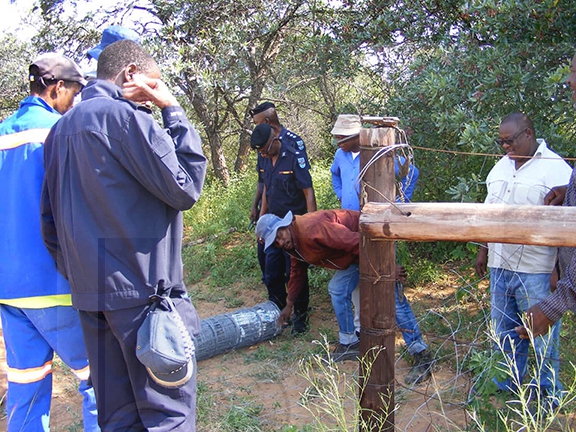
    Lack of compensation to farmers who have lost their livestock to criminals is reportedly mounting frustration among farmers in Sehithwa policing area.

    The situation is driving many farmers to withdraw cases, a trend worrying police and likely worsening stock theft in the area.

    Speaking during a crime-prevention workshop on Thursday, Toteng resident, Mr Keaitsiwe Bonang said some farmers no longer see value in pursuing stock theft cases as their loss was not compensated.

    “Victims do not benefit when culprits are jailed because they serve time in prison and come back to steal again, while we remain with nothing. That is why many now prefer settling matters directly with thieves so they can recover at least some financial value,” he said.

    However, the police have warned that withdrawing cases emboldens criminals and undermines efforts to curb the growing scourge. Anti-stock theft team member, Constable Keabetswe Mogale expressed concern that this year alone, 10 cases have already been withdrawn.

    “When cases are withdrawn, perpetrators feel untouchable and it becomes difficult for us to stop repeat offenders because they know they will be forgiven,” he said.

    He also noted that late branding and poor livestock identification made livestock vulnerable to theft.

    “Branding and ear tags are crucial because they are your animals’ identity and without them, tracking stolen stock becomes nearly impossible,” he said.

    Constable Mogale further advised farmers that the law does allow them to make a formal claim for compensation in stock theft cases. He explained that such demands could be placed before the court and depending on the circumstances of the case, the court may grant such a claim.

    Constable Mogale urged farmers not to lose confidence in the legal system, emphasising that withdrawing cases strengthened offenders and weakened the community’s fight against stock theft.

    Sehithwa Station Commander, Superintendent Molly Lebala-Moduke  said  that stock-theft cases had surged from 23 in 2024 to 34 so far in 2025. She emphasised the need to revive crime-prevention committees for tighter community-police collaboration.

    Attendees also raised alarm over escalating child sexual abuse, which Supt. Lebala-Moduke described as a growing and deeply worrying trend. She condemned parents who leave young children unattended while tending to livestock, running errands, or engaged in alcohol drinking spree.

    “Most perpetrators are people close to the child so parents must be vigilant and take full responsibility for their children’s safety,” she said.

    She further highlighted rising drug-abuse cases, which have increased from four in 2024 to seven this year, calling for more community involvement.

    Chairperson of District 5 Crime Prevention Committee and also Kgosi of Phuduhudu village, Mr Johane Ngwengare urged collective action in fighting social ills.

    “Crime prevention is not the job of the police alone, it needs all of us to be actively involved if we want to win this fight,” he said.

    He also condemned adults who prey on minors, insisting that no child deserved to be robbed of their innocence.

    Community member, Ms Keoleboge Garebamono raised concern about growing negligence of children under five, noting that some parents leave toddlers alone or take them to drinking spots.

    She also pleaded with parents to guide teenagers engaging in transactional relationships with older men, warning that such lifestyles often derail young lives.

  • NCDS Threatens Workplace Performance

    NCDS Threatens Workplace Performance

    Employers across Ngamiland have been urged to introduce routine blood glucose screening and health education in the workplace as the region battles a growing burden of diabetes.

    Family Medicine Specialist, Dr Phenyoyaone Moloko of Matshwane Clinic said non-communicable diseases such as diabetes were now affecting thousands of residents and threatening productivity. Dr Moloko shared the advice during the World Diabetes Day commemoration in Shorobe on Thursday.

    He warned that diabetes was no longer a distant, slow-moving condition, but a growing public health emergency that was already straining families, clinics and workplaces.

    According to Dr Moloko, Ngamiland currently recorded 2 756 diabetes patients, 89 of whom were new diagnosed cases, while 434 patients were already battling severe complications such as chronic wounds, kidney failure, loss of sight and nerve damage.

    “These numbers show us that diabetes is not just a health issue but rather a workplace issue, an economic issue and a family issue,” he said.

    He highlighted the need for workplace screening and awareness campaigns that will help enable people to be at the forefront of their health

    “We need workplaces to contribute actively by offering screening, education and creating environments that support healthier choices,” he said.

    Dr Moloko emphasised that early detection remained the most effective tool in preventing lifelong complications.

    “When diabetes is caught early, it can be controlled easily but the challenge is that many of our people seek help only when the disease has progressed and by then, treatment becomes costly and difficult,” he said.

    Dr Moloko further encouraged companies and institutions to organise awareness campaigns, adding that the workplace was one of the most strategic channels to reach the population.

    For his part, Kgosi Boingotlo Nonyane of Shorobe, expressed gratitude that such vital services had reached the village, noting that many residents delayed seeking help because of the long distance between Shorobe and Maun.

    Councillor for Matlapana–Shorobe ward, Mr Kobamelo Baikgodisi, echoed similar sentiments, urging residents to prioritise routine screening even when they feel healthy.

    “Most of our young people think diseases like diabetes are for older adults, but illness knows no age hence screening is vital for everyone,” he said.

    He encouraged youth to take responsibility for their wellbeing, warning that lifestyle diseases were increasingly affecting younger populations due to poor diet and inactivity.