Author: Daily News

  • Khoemacau Expansion to Drive Jobs

    Khoemacau Expansion to Drive Jobs

    The expansion of the Khoemacau Copper Mine is set to transform Botswana into a key global copper exporter and inject substantial employment and training opportunities into the local economy. 

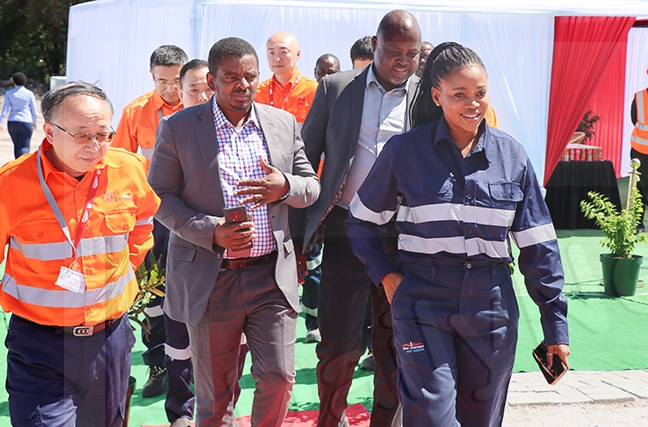
    The project, which officially broke ground last Friday, centres on the development of three new mines. The next phase of growth directly fulfils the promise made by MMG Limited during its 2023 acquisition to create a long-life operation with a lifespan exceeding 20 years. 

    Speaking at the ground-breaking ceremony, MMG CEO, Mr Zhao Ivo, said the expansion was designed to align with Botswana’s national development agenda through several high-impact initiatives, including long-term employment. 

    Mr Zhao assured that the next two years would see a significant increase in local hiring, with impacts extending far beyond direct mine labour.  Additionally,  MMG was launching a new programme alongside government, international universities and technical partners. 

    The initiative, Mr Zhao said aimed to address labour shortages by creating talent pipeline of job-ready Batswana graduates through accelerated certification and practical experience. 

    He added that it also aimed to support a low-carbon future given that the company was progressing with pre-feasibility work for a future 200 000+ tonne per annum expansion. 

    “This includes studies into electric surface haulage trucks and bulk solar power initiatives,” Mr Zhao said. 

    Again, he said by strengthening the base-metals sector, the project bolstered Botswana’s reputation as a premier mining investment destination. 

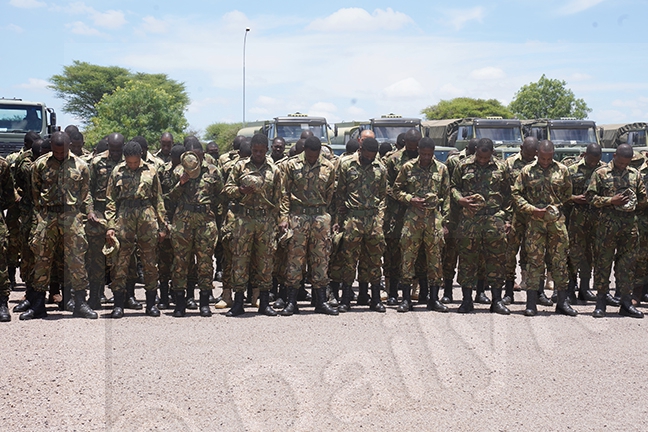
    The ground-breaking ceremony at the Zone 5 site was attended by the Minister of Minerals and Energy, Ms Bogolo Kenewendo, Chinese Ambassador to Botswana, Mr Fan Yong and North West district leadership. 

    Furthermore, Mr Zhao described the milestone as a long-term commitment to building a modern and high-performing copper operation that would create enduring value. 

    He emphasised that the mine’s vision was built on the pillars of safety, operational excellence and environmental stewardship. While the economic outlook was positive, the event also highlighted the importance of worker welfare. 

    Maun East MP, Mr Goretetse Kekgonegile, welcomed the expansion’s timing during a difficult economic period but urged management to prioritise employee working conditions. 

    “The Ministry of Labour is overwhelmed by complaints from employees and Botswana Mines Workers Union against unfair working conditions,” Mr Kekgonegile said. 

    In response, MMG CEO reaffirmed its commitment to ensure that every person returned home safe every day as well as working closely with the Ministry of Labour and the Botswana Mine Workers Union to address concerns regarding fair conditions. 

    Mr Zhao further indicated that the company would maintain strict adherence to international safety and footprint management expectations. 

    Meanwhile, the expansion represented the realisation of the ambitious outlook MMG presented in 2023.  Supported by its major shareholder, China Minmetals Corporation, MMG aims to leverage world-class Chinese and international expertise to turn the Kalahari Copper Belt into a sustainable powerhouse for the essential minerals the world increasingly depends on. 

  • Botswana Economic Slowdown Demands Structural Reforms

    Botswana Economic Slowdown Demands Structural Reforms

    Botswana’s economic slowdown is no longer just about diamonds. It is now a story of weak productivity, fragile private-sector growth and an urgent race to diversify before structural cracks widen further.

    Presenting the 2026 Budget Speech on Monday, Finance Minister, Mr Ndaba Gaolathe painted a sobering picture of an economy that shrank by 2.8 per cent in 2024 and was expected to remain in negative territory in 2025 and the better part of 2026, with growth projected at minus 0.4 per cent.

    While the downturn was triggered by a slump in diamond activity, the minister made it clear that the country’s deeper problem lied in the limited strength of its non-mining sectors.

    Manufacturing, construction, transport and storage industries that should be absorbing shocks from mining volatility, he said, had instead slowed, weighed down by the country’s dependence on government spending financed by diamond revenues.

    “Growth is rebounding to 3.1 per cent in 2026, but without structural reforms, the economy will continue operating below potential,” he said.

    A major red flag, he said was the continued decline in Total Factor Productivity (TFP), a key measure of how efficiently labour and capital were used.

    Minister Gaolathe stated that Botswana’s TFP fell to minus 1.0 per cent in 2024, reversing earlier modest gains. He said the decline signaled that businesses were producing less value from the same inputs, a trend linked to aging infrastructure, regulatory bottlenecks, weak skills alignment and slow private-sector expansion.

    Also, he said poor infrastructure maintenance, in particular, was quietly eroding returns on investment, making it harder for firms to expand competitively.

    However, he mentioned that government now would now scale back its direct footprint in the economy and push harder for private-sector-led growth under the Botswana Economic Transformation Programme (BETP).

    He said planned interventions included regulatory streamlining, targeted skills development and improved value-chain productivity.

    After a period of low inflation, he said price pressures were now resurfacing. He said inflation stood at 3.9 per cent in December 2025, up from 1.7 per cent a year earlier, driven by higher utility tariffs, fuel price adjustments and exchange rate changes that raised the cost of imports. 

    Nonetheless, he said inflation was expected to temporarily breach the upper limit of the Bank of Botswana’s three to six per cent target range in 2026 before easing later in the year.

    Minister Gaolathe further stated that the central bank had already raised the Monetary Policy Rate to 3.5 per cent, signalling a cautious stance as it balanced price stability with weak economic growth.

    While the financial sector remained stable, the minister said government was increasingly concerned about rising household indebtedness.

    Therefore, he said government planned to promote a stronger savings culture and expand financial literacy programmes to reduce long-term vulnerability among citizens.

    He added that the Financial Stability Council also flagged climate risks and uneven liquidity distribution in the financial system as emerging pressure points.

     “Without faster diversification, improved productivity and a stronger private sector, future downturns in diamonds could have even sharper consequences,” he said.

    The next phase of reform, the minister suggested, would determine whether Botswana’s economy regains momentum or remains stuck in a low-growth cycle.

  • Private Sector to be at the Centre of Economic Transformation

    Private Sector to be at the Centre of Economic Transformation

    Government has placed the private sector at the centre of Botswana’s economic transformation.

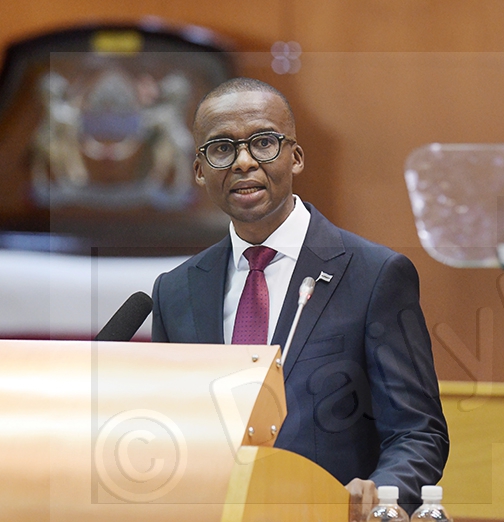
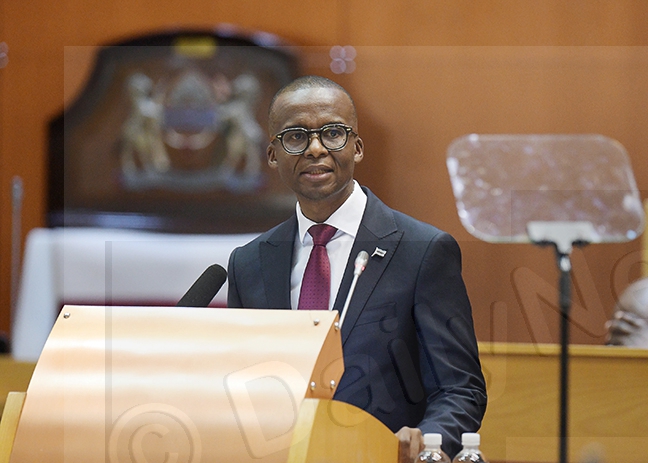
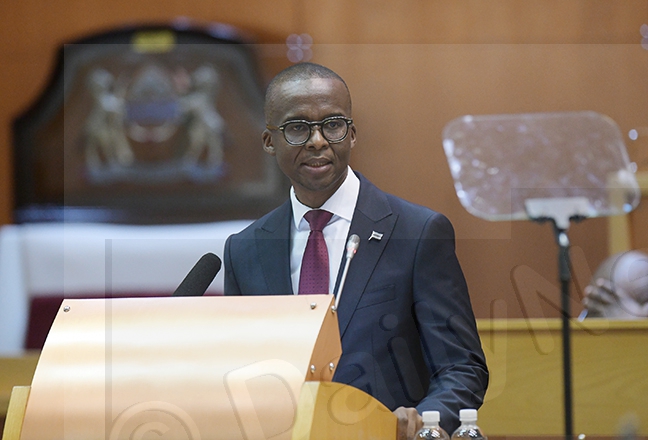
    This was said by Vice President and Minister of Finance, Mr Ndaba Gaolathe, delivering the 2026 Budget Speech before Parliament yesterday.

    Outlining a reform and investment programme aimed at diversification, export growth and long-term economic resilience, he said government remained steadfast in its resolve to deepen private sector participation as the primary driver of a diversified and export-oriented economy.

    He said the strategy focused on improving enterprise competitiveness, accelerating the growth of scalable firms and expanding Botswana’s footprint in regional and global markets.

    Also, he said a key pillar of the budget was repositioning of agriculture from subsistence production and import dependence to a modern, agro-industrial and export-focused sector.

    He said under the Botswana Economic Transformation Programme (BETP), government was implementing 26 transformative agriculture projects spanning crop and livestock production, agro-processing, cold-chain logistics and market access.

    Mr Gaolather also indicated that through clustering models, processing hubs and integrated logistics systems, Botswana aimed to convert its land, water resources and farmer base into competitive exports in meat, horticulture, nutraceuticals and other high-value crops.

    He cited a BETP agriculture-based cluster project set to make its first confirmed export of Moringa to Germany in February 2026, describing it as a tangible validation of the cluster-based approach and Botswana’s ability to meet stringent international standards.

    Manufacturing, he said was also being strengthened as the bridge between primary production and exports. He further said under BETP, government prioritised 22 manufacturing projects focused on assembly-based manufacturing, resource-based heavy industry, clean technologies and precision manufacturing.

    “These projects are designed to link agriculture, mining and energy into higher-value goods, retain value domestically, deepen supply chains and create skilled employment. This shift moves our economy decisively up the value chain and reduces vulnerability to external shocks,” he said.

    He said significant progress had also been recorded in Special Economic Zones (SEZs ) and that government had invested P714 million in land servicing and the construction of four advanced factory units at the Sir Seretse Khama International Airport SEZ.

    Additionally, he said a P63 million grain dryer and related facilities were under development at the Pandamatenga SEZ to support agro-industrial value chains.

    To support geographically balanced growth, he said the Revised National Investment Strategy (2025-2030) was expected to be completed by March 2026.

    He indicated that it would decentralise investment by embedding local economic development approaches, developing district-specific investment profiles and strengthening competitive value chains, with implementation led by the Botswana Investment and Trade Centre (BITC) in partnership with local authorities.

    “Investor facilitation reforms will continue through BITC and the Botswana One Stop Service Centre, with measures to simplify permits, licenses, and approvals, and introduce direct issuance of investor visas,” he added.

    On regional trade, he announced that Botswana completed its National AfCFTA Implementation Strategy in July 2025.

    “The strategy positions Botswana to tap into the African market of 1.3 billion people, expanding export opportunities and value-chain integration,” he said.

    On human capital development, he said Botswana currently spent an average of 7.1 per cent of Gross Domestic Product on education, among the highest levels for upper-middle-income countries in the region.

    However, he acknowledged that outcomes had lagged behind spending, creating an efficiency gap that constrained growth.

    “To address this, government has introduced a new Tertiary Education Financing Policy, a Higher Education Act and a dedicated TVET Act. These reforms aim to align skills development with labour-market demand, embed digital and green skills and reposition technical and vocational education as a first-choice pathway into employment,” he said.

    Under healthcare, he said government was shifting toward a stronger primary healthcare model, adding that a major reform program would transform the Central Medical Stores (CMS), with expected savings of 30 to 40 per cent in medical supply expenditure within five years.

    Furthermore, he said work was underway on National Health Insurance, with the enabling Bill scheduled to be tabled during the current parliamentary sitting.

    Meanwhile, Mr Gaolathe highlighted that infrastructure remained a central enabler. Under BETP, he said government had prioritised 26 projects across energy, water and transport.

    “Currently, domestic electricity generation meets only 63 to 70 per cent of demand, with imports costing approximately P3.4 billion annually. This has prompted the accelerated implementation of the revised Integrated Resource Plan and increased private sector participation in power generation,” he said.

    Such reforms, he said, represented a decisive shift toward a more productive, inclusive and resilient economy anchored by private investment and modern infrastructure.

  • Fiscal Outlook Downward as Government Tightens Consolidation Measures

    Fiscal Outlook Downward as Government Tightens Consolidation Measures

    Vice President and Minister of Finance, Mr Ndaba Gaolathe has announced a downward revision of Botswana’s medium-term fiscal outlook, citing persistent global and domestic economic headwinds that continue to strain the country’s public finances.

    Delivering the 2026 Budget Speech in Gaborone yesterday, Mr Gaolathe said the revision reflected the urgency of strengthening fiscal and external buffers while maintaining policy credibility in an increasingly challenging macro-fiscal environment.

    “The macro-fiscal environment remains difficult, characterised by declining mineral revenues, rising expenditure pressures and growing demands for social and economic support,” he said, adding that those factors continued to place strain on the fiscal position.

    Despite the pressures, Mr Gaolathe reaffirmed government’s commitment to a coordinated fiscal consolidation strategy aimed at restoring fiscal sustainability, rebuilding buffers and safeguarding macroeconomic stability.

    He said key measures included tighter expenditure prioritisation, improved efficiency in public spending, strengthened domestic revenue mobilisation and accelerated reforms of state-owned enterprises (SOEs).

    Mr Gaolathe further emphasised that consolidation efforts would be implemented in a balanced and growth-supportive manner, with essential social spending protected and critical investments preserved to support long-term economic transformation.

    The minister warned that Botswana’s medium-term outlook was subject to significant macro-fiscal risks, both external and domestic.

    Externally, he said, slower global growth, continued weakness in the diamond market, volatile commodity prices, heightened geopolitical tensions and climate-related shocks could prolong economic recovery.

    “Such developments could widen fiscal and current account deficits and undermine efforts to rebuild buffers.”

    Domestically, he said growth risks remain skewed to the downside, particularly if the diamond market fails to recover. While the non-diamond sector is expected to cushion the economy, Mr Gaolathe cautioned that its stabilising effect was limited.

    He also highlighted the potential economic fallout from delays in containing the Foot and Mouth Disease (FMD) outbreak, which could lead to production losses, higher livestock mortality, reduced beef export receipts and threats to national food security.

    In addition, he said the slower-than-anticipated implementation of the Botswana Economic Transformation Programme (BETP) could impede progress on diversification and the broader transformation agenda.

    On the fiscal front, Mr Gaolathe said revenue risks were mounting as mineral earnings were projected to remain well below long-term averages, offering only modest upside.

    “The persistent shortfall is widening fiscal gaps and intensifying financing pressures,” he said.

    At the same time, Mr Gaolathe said expenditure risks remained elevated, with both recurrent and capital spending continuing to outpace revenue growth.

    “Without credible consolidation, structural deficits are likely to persist, increasing reliance on borrowing,” he said, adding that as a result, debt vulnerabilities were becoming more pronounced.

    While public debt remains within statutory limits, Mr Gaolathe warned that sustained fiscal slippage could place debt on a steeper trajectory, undermining sustainability and increasing exposure to future shocks.

    He said additional risks identified included rising inflation pressures, climate-related disruptions, SOE fiscal risks, weak implementation of public-private partnership projects, supply-chain disruptions, cyber-security threats and volatility in food and energy prices.

    To mitigate the risks, he said government planned to strengthen fiscal risk management, enhance policy coordination and accelerate economic diversification anchored on private-sector-led growth.

    He said that advancing diversification, deepening private-sector participation and boosting productivity were central to building a more resilient, diversified and sustainable economy.

    Mr Gaolathe said sustained medium-term growth would require faster implementation of economy-wide reforms across key sectors, given their potential to lift productivity and competitiveness.

    He added that further expenditure measures, including containing the public wage bill, simplifying and better targeting social benefits and improving the governance and operational efficiency of SOEs, were necessary to deepen fiscal discipline.

    “To secure long-term fiscal and economic sustainability for Botswana, the path ahead demands discipline, coordination and reform,” Mr Gaolathe said.

  • State President Receives Largest Share of Budget Allocation

    State President Receives Largest Share of Budget Allocation

    The Ministry for State President, Defence and Security has been allocated the largest share of the proposed Ministerial Recurrent Budget.

    The P13.05 billion stake is an increase of P502.77 million or 4.01 percent over this year’s approved budget.

    Delivering the National Budget for the financial year 2026/2027 in Gaborone on Monday, Vice president, also Minister of Finance, Mr Ndaba Gaolathe said the proposed budget would largely cover operational requirements of the Botswana Defence Force (BDF) and the Botswana Police Service (BPS), reflecting government’s continued commitment to safeguarding national security.

    The proposed budget will also finance the absorption of Special Constables into Regular Constable Cadre as well as procurement of their uniform. In addition, provisions have been made for Termination Allowances; Service Charges and Static Plant under the Directorate on Corruption and Economic Crime (DCEC).

    The two security organs have been incorporated into the Ministry for State President while National Aids and Health Promotion Agency (NAHPA) has been transferred back to the Ministry of Health following the rescission of the earlier decision to transfer it to the Ministry for State President, Defence and Security.

    The second largest share, P12.99 billion, is allocated to the Ministry of Local Government and Traditional Affairs, representing an increase of P1.71 billion or 15.2 per cent, compared to the allocation for the previous financial year.

    Mr Gaolathe said the substantial allocation underscored government’s commitment to strengthening social development and enhancing service delivery within local government structures and traditional affairs.

    The allocation is intended to improve the ministry’s operational capacity, ensure effective functionality and sustained provisions of essential services to communities across the country, he said, adding that the significant growth was primarily attributable to the transfer of funding from the Ministry of Health to support the Primary Health Care function, which was reassigned to the Ministry of Local Government and Traditional Affairs as part of the 2024 rationalisation of ministerial portfolios.

    Further, a substantial portion of the budget is also allocated to the social welfare programmes, which continue to experience significant growth.

    These, the minister said, included Destitute Allowances, Old Age Pension Scheme, Orphan Care Programme and the newly introduced Sanitary Ware Support Initiative for mothers and babies, which is scheduled for roll out this budget year.

    The Revenue Support Grant (RSG) will likewise continue to receive increased subvention in response to rising demands. However, to mitigate escalating pressure on the RSG, Mr Gaolathe urged local authorities to expedite the review and valuation of properties in districts such as Gamalete and Palapye.

    This initiative is expected to broaden the revenue base, strengthen local revenue mobilisation and reduce over-reliance on Government funding.

    The third largest share of the proposed budget is allocated to the Ministry of Child Welfare and Basic Education, amounting to P11.83 billion, an increase of P147.85 million or 1.3 per cent over the current year’s approved budget.

    It will cover teachers’ salaries and allowances, the development and implementation of Child Welfare policies and programmes, the payment of service charges in schools and operational costs for SOEs under the ministry.

    It also provides for temporary teaching staff necessitated by the expansion of schools. The budget will also cater for service charges for the Department of Secondary Education as well as funding to pilot the Project Bula Buka.

    This initiative, undertaken jointly with the Botswana Open University College and Open Schooling and Youth Empowerment Education Trust, aims to expand educational access, provide skills training, build character among out-of-school Junior Certificate leavers and offer remediation opportunities to BGCSE leavers.

    The Ministry of Health has been allocated the fourth-largest share of the proposed budget amounting to P7.51 billion, representing a 16.4 per cent decline over the current year’s approved budget.

    The decline in the ministry’s budget, the minister said, was mainly attributed to the transfer of personnel-related funds to the Ministry of Local Government and Traditional Affairs, following the reassignment of the Primary Health Care function during the 2024 rationalisation of ministerial portfolios.

    The proposed budget will cover essential health sector requirements, including the procurement of drugs, vaccines, laboratory supplies and equipment as well as medical and surgical equipment.

    It will also cover Public Officers’ Medical Aid Scheme and fees for medical specialists. The proposed budget further includes funding for NAHPA and provision for the establishment of the NHI.

    The fifth largest share of the proposed budget is allocated to the Ministry of Higher Education with a total of P7.37 billion, representing an increase of P2.70 billion or 58 per cent over the current year’s budget allocation.

    The bulk of the budget covers tuition fees, now transferred from the Ministry of Finance alongside student allowances, feeding and book provisions as well as operational costs for SOEs under the ministry.

    The significant growth in the allocation is primarily due to increased provisions for tuition fees to accommodate the rising number of new tertiary students.

    The Ministry of Lands and Agriculture has been allocated the sixth largest share of the proposed budget amounting to P2.41 billion, representing a decline of P28.34 million or 1.2 per cent compared to the current year’s approved budget.

    Despite this modest decline, the proposed budget remains strategically aligned to national priorities aimed at enhancing food security through support for agricultural production, promoting self-reliance by empowering farmers, strengthening extension services and investing in climate-resilient farming practices.

    The allocation further supports initiatives to expand employment opportunities across the agricultural value chain. In addition, the proposed budget provides for the continued formulation, implementation, monitoring and management of land polices to ensure equitable access to land, enhance productivity and promote sustainable land use.

    The Ministry of Transport and Infrastructure has been allocated the seventh largest share of the proposed budget amounting to P1.93 billion. This represents a decrease of P7.98 million or 0.4 per cent, compared to the current year’s approved budget.

    The bulk of the allocation will cater for the procurement of petrol, oil and lubricants required to operate the entire Central Government vehicle fleet. Then follows the Ministry of Trade and Entrepreneurship, which is allocated the P1.20 billion. This represents an increase of P30.35 million or three per cent increase over the current year’s budget.

    The Ministry of Finance has been allocated P1.14 billion, a significant decline of P1.92 billion, or 62.68 per cent compared to the current year’s approved budget, largely due to the transfer of the tuition fees vote back to the Ministry of Higher Education.

    The proposed budget also provides for the establishment of a National Coordination Office to strengthen national efforts in combating Anti-Money Laundering and Counter-Financing of Terrorism (AML/CFT) in alignment with international standards.

    This office, Mr Gaolathe said, would play a key role in facilitating Botswana’s participation in the third round of Mutual Evaluation, scheduled for 2027.

    Furthermore, the allocation includes provisions for the establishment of the Banking Tribunal in accordance with the new Banking Act and its accompanying regulations, which came into effect in August 2025.

    The remaining share of the Ministerial Recurrent Budget allocation of P8.12 billion or 12 per cent has been recommended to be shared among other ministries and extra-ministerial departments.
  • Fiscal Position Remains Unchanged

    Fiscal Position Remains Unchanged

    Since the mid-year budget review, updated information indicates that the fiscal position for the 2025/2026 financial year is broadly expected to remain unchanged with a deficit estimated at over P25 billion.

    Presenting the 2026/2027 budget speech in Parliament on Monday, Minister of Finance, Mr Ndaba Gaolathe said total revenues and grants had been revised downward to P71.22 billion from the P75.49 billion in the original budget.

    “This revision primarily reflects a decline in mineral revenue which has decreased from P15.75 billion to P12.06 billion. SACU revenue has been revised upwards by P631.1 million from P24.36 billion in the original budget to P24.99 billion while VAT revenue has increased by P1.62 billion from P12.10 billion to P13.71 billion,” he said.

    Mr Gaolathe said non-mineral income tax had been revised downward by P2.69 billion from P19.01 billion in the original budget to P16.32 billion.

    He said profits from Bank of Botswana, if any, would be communicated at the appropriate time and would provide an important additional revenue stream, helping ease fiscal pressures and narrow the fiscal deficit.

    Mr Gaolathe said total expenditure and net lending had been revised downward to P96.70 billion from the original budget of P97.61 billion.

    “Of this amount, recurrent expenditure estimates are maintained at their original budget levels while development expenditure estimates have been revised downward by P903.32 million to P22.85 billion,” he added.

    He said total revenues and grants for the financial year 2026/2027 were projected at P77.22 billion and that SACU receipts were expected to remain the largest revenue source at P26.79 billion followed by non-mineral income tax which was forecast at P19.76 billion.

    Mr Gaolathe said VAT collections were expected to be the third largest contributor at P15.10 billion. He added that mineral revenue was projected to broadly remain the same at P12.21 billion while the remaining P3.36 billion was expected to come from other revenues and grants.

    Minister Gaolathe said total expenditure and net lending for 2026/2027 was projected at P103.58 billion.

    He said of this amount, total recurrent expenditure was expected to reach P80.32 billion, reflecting government’s ongoing commitment to operations and service delivery, adding that the development expenditure was estimated at P23.38 billion while net lending was minus P121.92 million.

    Mr Gaolathe said total statutory expenditure for 2026/27 was estimated at P27.26 billion, representing a 20 per cent increase from the revised allocation of P22.70 billion in the 2025/26 financial year.

    He said the provision covered government statutory obligations including debt financing, pension contribution for civil servants and other statutory commitments.

    “The allocation towards pensions, gratuities and compensations is primarily driven by the recalculated transfer value of P5 billion for members of the Botswana Defence Force (BDF), an amount of P673.60 million required to rectify transactions related to government’s capital injection into DeBeers, an obligation initially settled directly through Bank of Botswana in 2019 as well as anticipated pension contribution arrears of P5 million for C band employees arising from a Court of Appeal judgement on multiple grading of the positions,” he said.

  • Botswana Faces Rising Debt Risks and Reserve Pressures – Gaolathe

    Botswana Faces Rising Debt Risks and Reserve Pressures – Gaolathe

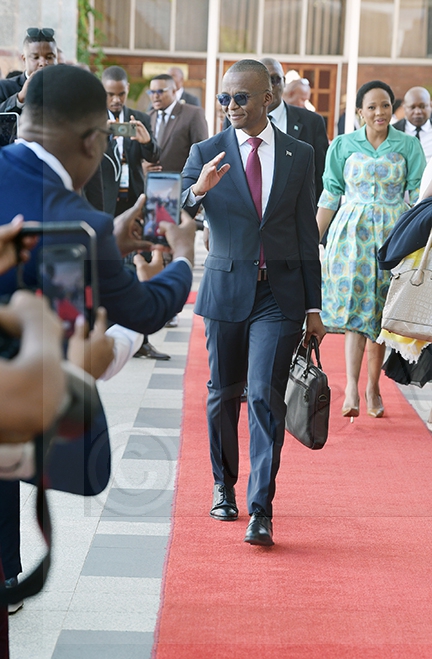
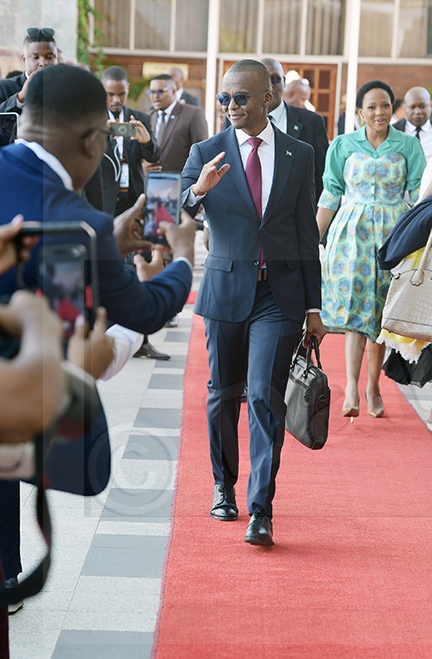
    Botswana’s once-formidable financial buffers have thinned dramatically, leaving the country navigating tighter fiscal space, declining reserves and mounting debt risks, Finance Minister Mr Ndaba Gaolathe warned in his 2026 Budget Speech on Monday.

    The Government Investment Account (GIA), long a symbol of Botswana’s fiscal prudence, has fallen to just P2.91 billion, down sharply from its P37.2 billion peak in 2014. At the same time, the country’s Net Financial Asset position has swung from a surplus of 40 per cent of GDP in 2008 to a negative 30.1 per cent in 2024.

    This shift according to minister Gaolathe reflected years of budget deficits, weaker mineral revenues and growing reliance on borrowing.

    He  stated that the medium-term fiscal outlook had been revised downward, with government acknowledging that mineral revenues were unlikely to recover quickly, while spending pressures remain high.

    Without consolidation, Mr Gaolathe said structural deficits were expected to persist, pushing public debt onto a steeper trajectory. Although debt remains within legal limits, the minister cautioned that continued slippage could threaten long-term sustainability.

    However, he said government’s response would centre on gradual fiscal consolidation, prioritising essential spending, improving efficiency, reforming State-Owned Enterprises and strengthening domestic revenue mobilisation.

    He nonetheless stated that social protection and growth-driving investments were expected to be shielded to avoid derailing economic recovery.

    Minister Gaolathe further explained that external pressures are compounding fiscal challenges. For instance, he said Botswana recorded a P15.32 billion trade deficit between January and November 2025 as export earnings weakened and imports of fuel and food remained high.

    Foreign exchange reserves, he said also declined from six months of import cover in 2024 to five months in 2025, tightening liquidity in the forex market.

    The minister revealed that without recent exchange rate policy adjustments, projections showed that the pace of reserve depletion would have exhausted the country’s foreign exchange by mid-2026.

    Policy changes introduced in July 2025 and January 2026 he said have since reduced pressure on reserves and improved interbank foreign exchange trading. New asymmetric exchange rate margins are also intended to make exports more competitive and support reserve rebuilding.

    However, Mr Gaolathe said the fiscal outlook remained vulnerable to several risks including prolonged weakness in the diamond market, global economic slowdowns, climate shocks and domestic threats such as delays in economic reforms and the spread of Foot and Mouth Disease, which could hit beef exports and rural livelihoods.

    Revenue shortfalls he mentioned remained the biggest concern, while rising recurrent spending and large infrastructure commitments pose additional strain.

    With that being said the minister cautioned that the country now faced a delicate balancing act, rebuilding fiscal buffers while still supporting growth and protecting vulnerable households.

    The success of this strategy minister Gaolathe stressed, depended heavily on accelerating economic diversification, improving public spending efficiency and restoring investor confidence.

    The era of easy fiscal cushions, the minister made clear, was over. What lies ahead he suggested was a period of careful repair, disciplined spending and structural reform aimed at restoring the country’s financial resilience.

  • Fiscal Discipline and Revenue Reform Core of 2026/27 Plan

    Fiscal Discipline and Revenue Reform Core of 2026/27 Plan

    Fiscal consolidation, discipline and the rebuilding of financial buffers are at the core of fiscal strategy for the 2026/2027 financial year as government moves to strengthen debt sustainability and restore economic resilience.

    Presenting the 2026 Budget Speech in Gaborone yesterday, Finance minister, Mr Ndaba Gaolathe, emphasised that the approach focused on broadening the revenue base, enhancing tax compliance and improving the efficiency of tax administration, while ensuring that public expenditure is firmly aligned with national priorities and delivers value for money.

    Mr Gaolathe said the strategy underscored accountability, results-driven spending and prudent fiscal management as key pillars to advancing Botswana’s economic transformation in a manner that was inclusive and sustainable.

    He stressed that adequate domestic revenue was essential for effective service delivery and national development.

    “Taxation is not a form of punishment, it is a collective investment in our shared development,” he said, adding that improving revenue performance was not solely about increasing tax rates, but deploying smarter systems and building institutional capacity for effective revenue mobilisation.

    He reaffirmed government commitment to maintaining relatively low tax rates, while acting pragmatically when circumstances demand.

    “A well-designed tax policy is fundamental to sustaining a healthy and competitive economy,” he noted.

    Mr Gaolathe pointed out that the urgency for comprehensive tax reform was highlighted by recent data from the 2025 Organisation for Economic Co-operation and Development (OECD) Report, which shows that Botswana’s tax-to-GDP ratio declined from 13.8 per cent in 2022 to 13.4 per cent in 2023.

    He said it remained below the African average of 16.1 per cent and significantly lower than the Southern African Customs Union (SACU) average of 20.5 per cent.

    “These comparatively low levels of domestic revenue mobilisation clearly demonstrate the need to modernise our core tax systems, address under-taxed activities, strengthen compliance and broaden the tax base,” Mr Gaolathe said.

    He cited international examples to illustrate what was achievable through sustained reform, saying Morocco, for instance, increased its tax-to-GDP ratio to 28.5 per cent in 2023 through strengthened tax administration, improved compliance, rationalisation of tax exemptions and the digitisation of tax processes.

    Mr Gaolathe pointed out that Botswana had already begun a similar reform journey, saying the Value Added Tax (Amendment) Act of 2025 was a milestone in modernising the country’s tax framework and enhancing revenue mobilisation.

    He highlighted that the Act introduces VAT on remote services and mandates electronic invoicing, aligning Botswana with international best practice. He said implementation was progressing well, supported by extensive stakeholder consultations and ongoing system upgrades.

    He said the rollout of electronic invoicing, anticipated in April 2026, was expected to enable real-time transaction monitoring, reduce revenue leakages, strengthen compliance and enhance revenue assurance as part of the broader digital transformation of tax administration.

    Mr Gaolathe said as part of a comprehensive multi-year reform agenda, government would table four key pieces of legislation during the current February sitting of Parliament.

    He said those include the Value Added Tax Bill (2025), the Income Tax Bill (2025), the Customs Amendment Bill (2025) and a new Tax Administration Bill (2025).

    He said the holistic review aims to modernise and harmonise Botswana’s tax framework, simplify procedural and administrative provisions and ensure full alignment with the new Tax Administration Act.

    Mr Gaolathe further said government also addressed proposals announced in the 2025 Budget Speech, which included a 1.5 per cent increase in corporate income tax and the top bracket of personal income tax.

     “After further reflection and consultation, government now proposes a revised top-earner threshold of P400,001 and above per annum, which will attract an additional 2.5 per cent tax. Additional proposals include a three per cent increase in corporate income tax and a reduction of the zero-rated VAT list to raise the effective VAT rate,” he said. He said detailed provisions of each Bill would be presented during upcoming parliamentary debates.

    Reaffirming commitment to inclusive policymaking, Mr Gaolathe announced plans to convene a Tax Pitso that would bring together businesses, labour, civil society, technical experts and members of the public.

     “This inclusive engagement will help us build a tax system that is fair, efficient and capable of supporting Botswana’s long-term development goals,” said Mr Gaolathe. 

  • Government Modernises Land Administration Systems

    Government Modernises Land Administration Systems

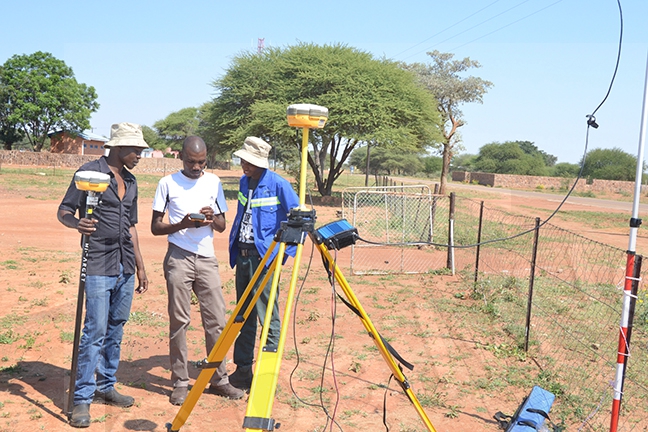
    The transformation addresses long-standing challenges, including outdated systems, fragmented data, weak inter-agency coordination, and delays in the issuance of Secure Land Titles and their registration under the Deeds Registry.

    It is of recognition that as Government drives economic transformation, getting land administration right is one of the most powerful levers for change in Batswana and the economy at large.

    Vice president and finance minister said this during a Budget Speech presentation in Gaborone yesterday . Mr Gaolathe said it was for this reason that, in the 2026/2027 financial year, Government would commence the modernisation of Botswana’s land administration systems through the Geospatial Information Centre.

    “This marks the first phase of a four-year programme to upgrade the Land Information System, strengthen the Integrated Geographic Information System, and enhance governance and project management capacity across the land sector,” he said.

     The transformation, he said, directly addresses long-standing challenges, including outdated systems, fragmented data, weak inter-agency coordination, and delays in the issuance of Secure Land Titles and their registration under the Deeds Registry. He stated that the reform was both people centred and transformation-driven.

    For citizens, it will mean clearer processes, reduced waiting times, fewer disputes, and timely access to secure land titles enabling families to plan, inherit with certainty, and use land as collateral to access finance,” Mr Gaolathe said.

    He also noted that for the economy, it would unlock land as a productive asset, accelerate project approvals, improve investment facilitation, and support the shift toward a more diversified, private-sector-led growth model.

  • Gaolathe Proposes P23.38 Billion Development Budget

    Gaolathe Proposes P23.38 Billion Development Budget

    The proposed P23.38 billion development budget for the 2026/2027 is expected to prioritise projects premised on high return on investment, Finance Minister, Mr Ndaba Gaolathe has said.

    Minister Gaolathe, who was delivering the 2026/27 national budget in Gaborone, yesterday, noted that the Ministry of Minerals and Energy was allocated the largest share of P5.23 billion, intended to stabilise electricity supply and strengthen the national grid’s resilience in the midst of rising demand and the challenges facing the regional electricity supply.

    “The provision is intended to cover several critical allocations, including P2.270 billion for BPC power imports, P730 million to meet the loan obligations to the Industrial and Commercial Bank of China, P200 million for the Cross-Border Electricity Supply Project, and P100 million for the Power Distribution Network Reinforcement,” he explained.

    He noted that the North-West Transmission Grid Phase, which will connect the Chobe District and enable exports to the ZIZABONA market, was among the major projects earmarked for the financial year at a cost of P1.37 billion.

    Furthermore, he said other priorities for the ministry included Rural Village Electrification and Network Extension, as well as the Integrated Resource Plan.

    He said these projects were aimed at expanding access to electricity by rural communities as well as contributing to the country’s aspiration of achieving a 50 per cent renewable energy contribution by 2030. Additionally,

    Mr Gaolathe said plans were underway to commission the expansion of the Francistown and Ghanzi Petroleum Depots in April and August respectively, in an endeavour to secure petroleum product supply as a key component in sustaining economic growth.

    In alignment with the government’s commitment to transform the country into a regional transport hub, the second largest budget proposal of P3. 86 billion would be allocated to the Ministry of Transport and Infrastructure.

    In addition to improving the national road network, the budget would go towards developing the Mmamabula-Lephalale and Mosetse-Kazungula-Livingstone railway lines, as well as part of the Southern Sfrican Development Community (SADC)’s Strategic Plan of the North-South Corridor.

    Mr Gaolathe said from the proposed ministry budget, a total of P3.02 billion was to be allocated to various ongoing road projects across the country, as well as those at various stages and phases. He said other infrastructure developments were also expected to benefit from this budget.

    “The budget will also finance a range of Built Infrastructure projects, including the refurbishment of Tonota College of Education, Molepolole College of Education, Department of Building Maintenance Area Offices in Gaborone West, Department of Building Maintenance Area Offices in Broadhurst, DRTS Serowe office and refurbishment of Old Supplies in Gaborone. In addition, part of the ministry’s allocation will support the implementation of Rail and Aviation Infrastructure, ICT projects and Air Botswana Finances projects,” he noted.

    With a budget allocation of P3.62 billion, the Ministry of Water and Human Settlement is expected to prioritise completion of major water supply and sanitation projects which are currently in their final stages.

    The projects include the North-South Carrier pipeline, Mmamashia Water Treatment Plant, Lobatse Water Supply Master Plan, Molepolole-Gamononyane NSC connection and Kanye Sanitation.

    The minister also underscored the urgent need to refurbish and expand the Mambo Wastewater Treatment Plant in Francistown, Maun Water and Sanitation Phase II, as well as the Kgalagadi North Water Supply and Molepolole Water Suppply and Distribution, which are new water supply pipeline projects. He said the social housing projects, which include all Bonno housing components, was allocated P702.96 million.

    Furthermore, he said a development budget of P2.86 billion was allocated to the Ministry of Local Government and Traditional Affairs for the implementation of various programmes and projects.

    He said while the Social Welfare Programmes accounted for 69. 9 per cent of the ministry’s total budget, there was need to expedite the implementation of the Single Social Registry (SSR) to avoid duplication.

    “To enhance efficiency and reduce duplication across interventions, there is an urgent need to accelerate the rollout of the SSR, Proxy Means Testing as a targeting tool. The SSR project will be supported by the World Bank, which will undertake an assessment to identify bottlenecks, improve system performance and enhance citizen experience,” he noted.

    He noted that 56.2 per cent of the Ministry for State President, Defence and Security’s P1.99 billion budget was directed towards the security organs, while P60 million would go towards the establishment of rehabilitation centres in Maun and Lobatse. He said P266 million would facilitate the creative industry, with the new Air Support project budgeted for P250 million.

    Mr Gaolathe said the bulk of the P1.77 billion budget allocated for the Ministry of Lands and Agriculture would go towards supporting ongoing management projects across the country.

    He also said part of the budget was expected to fund emerging national priorities and programmes such as the Cannabis Production and Regulatory Framework. He said in order to support the country’s food security and export goals, the government intended to invest in agricultural value chains and enhancing the commercialisation of livestock production.

    He further said the cultivation and use of industrial hemp and medicinal cannabis would be implemented in phases in an endeavour to diversify the economy.

    He noted that the remaining P4.05 billion would be allocated through the rest of the government ministries and departments towards the construction and refurbishment of facilities in different sectors, while also funding research and innovation projects.